Stable water. Calm fish. Consistent care.
Complete Guppy Care Guide
Build a healthy guppy aquarium with a cycled tank, stable water, dependable filtration, sensible stocking, varied food, compatible tank mates and a repeatable maintenance routine.
Quick answer: Healthy guppy care starts with a mature, biologically filtered aquarium; stable temperature and water chemistry; no detectable ammonia or nitrite; modest feeding; compatible tank mates; and routine observation. Test the water and adjust maintenance to the aquarium’s actual stocking and waste load instead of chasing perfect-looking numbers or relying on one universal schedule.
Care at a glance
The practical standards that matter most
Use these as starting points, then adjust according to your tank size, fish source, test results and maintenance capacity.
Cycled aquarium
Establish biological filtration before adding fish. Clear water alone does not prove a tank is safe.
Stable water
Keep ammonia and nitrite at zero and avoid sudden shifts in temperature, pH or mineral content.
Small varied meals
Offer modest portions, adjust frequency to life stage and food type, and remove excess before it degrades water quality.
New-arrival plan
Use a separate observation system when appropriate and follow qualified, current guidance instead of assuming one universal duration.
| Care area | Practical starting point | What to watch |
|---|---|---|
| Tank capacity | Choose capacity from the adult fish count, filtration, feeding, maintenance plan and expected fry. | Avoid tiny, unfiltered containers; reassess capacity before adding fish. |
| Temperature | Keep a stable, species-appropriate range verified with a separate thermometer. | Rapid shifts, heater failure and warm water with low oxygen. |
| Ammonia / nitrite | No detectable reading in a mature system. | Respond promptly and evaluate the biological filter, stocking and recent changes. |
| Nitrate | Track the trend and keep it controlled through maintenance. | Stocking, feeding, plant growth and water-change pattern; no single target fits every system. |
| pH and hardness | Use stable source water compatible with the fish and system. | Avoid chasing numbers with repeated chemical corrections. |
| Water changes | Make regular partial changes guided by measurements, waste and bioload. | Adjust the amount and timing to the aquarium’s evidence. |
| New-arrival observation | Plan a separate system when appropriate. | Setup and duration depend on context; use qualified, current guidance. |
Foundation first
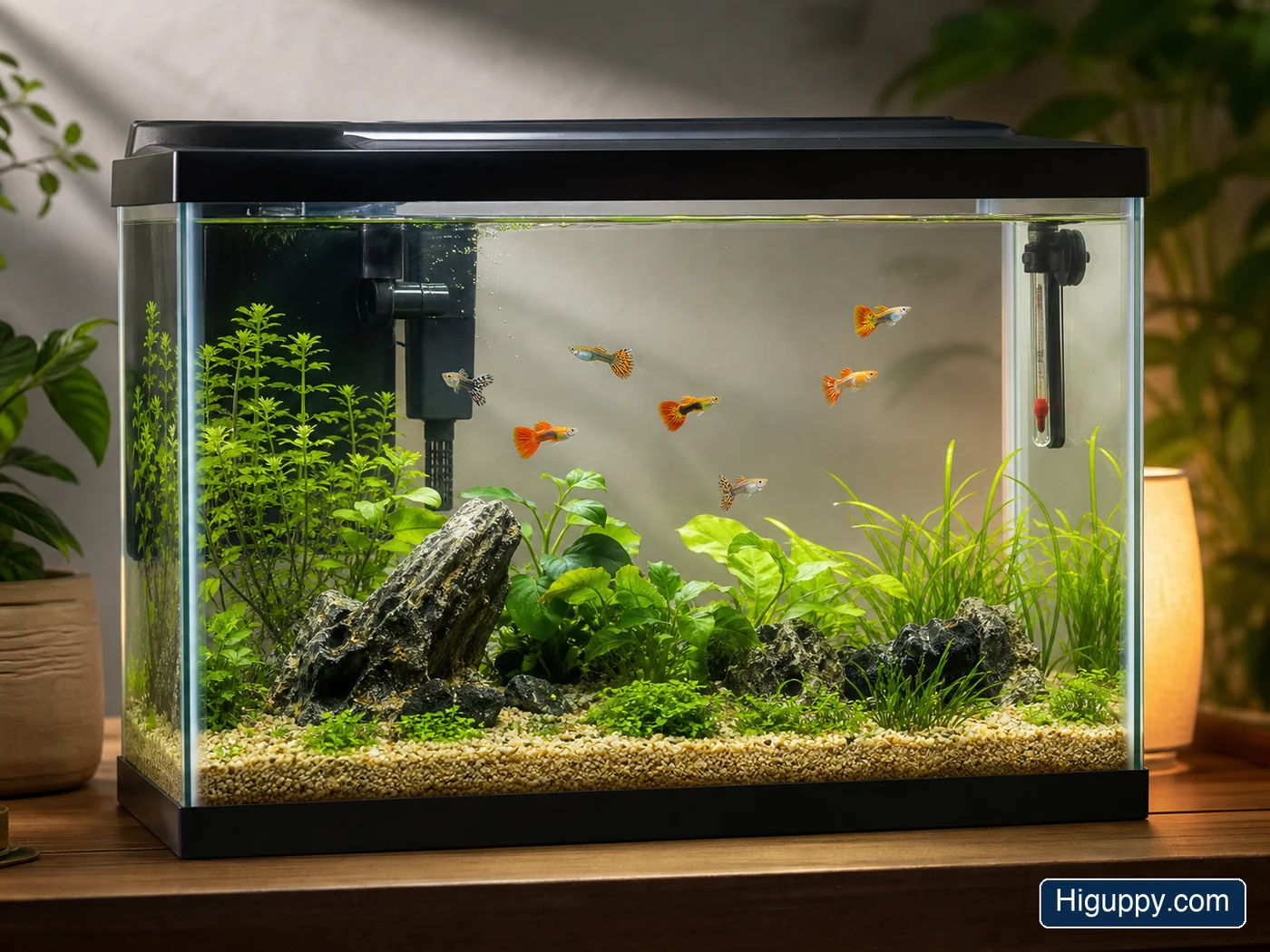
Start with a cycled, appropriately stocked aquarium
The nitrogen cycle converts toxic ammonia into nitrite and then into nitrate. A new aquarium can look clean while still lacking enough beneficial bacteria to process fish waste.
- Cycle the filter before the fish arrive.
- Add livestock gradually instead of filling the tank at once.
- Use a filter with enough biological capacity and gentle, distributed flow.
- Protect filter intakes when fry or very small juveniles are present.
- Plan for adult size, breeding and future population growth.
Read the detailed beginner guppy tank setup guide before purchasing equipment or fish.
Water and equipment
Prioritize stability over perfect-looking numbers
Test consistently, make measured corrections and investigate the cause of a change instead of repeatedly dosing products to force a chart value.
Water quality
Test ammonia, nitrite, nitrate, temperature and pH. Understand general hardness and carbonate hardness when source water is very soft or unstable.
Filtration and oxygen
Choose dependable biological filtration and maintain surface movement. Crowding, heat, decaying waste and medication can reduce available oxygen.
Heater and thermometer
Use a heater when room temperature would otherwise fall or fluctuate. Verify it with a separate thermometer rather than trusting the dial alone.
Important: Avoid replacing all filter media or deep-cleaning every surface at the same time. Doing so can remove much of the biological capacity the aquarium depends on.
For a deeper explanation, use the Guppy Water Parameters Guide.
Food and social structure
Feed lightly and choose tank mates with care
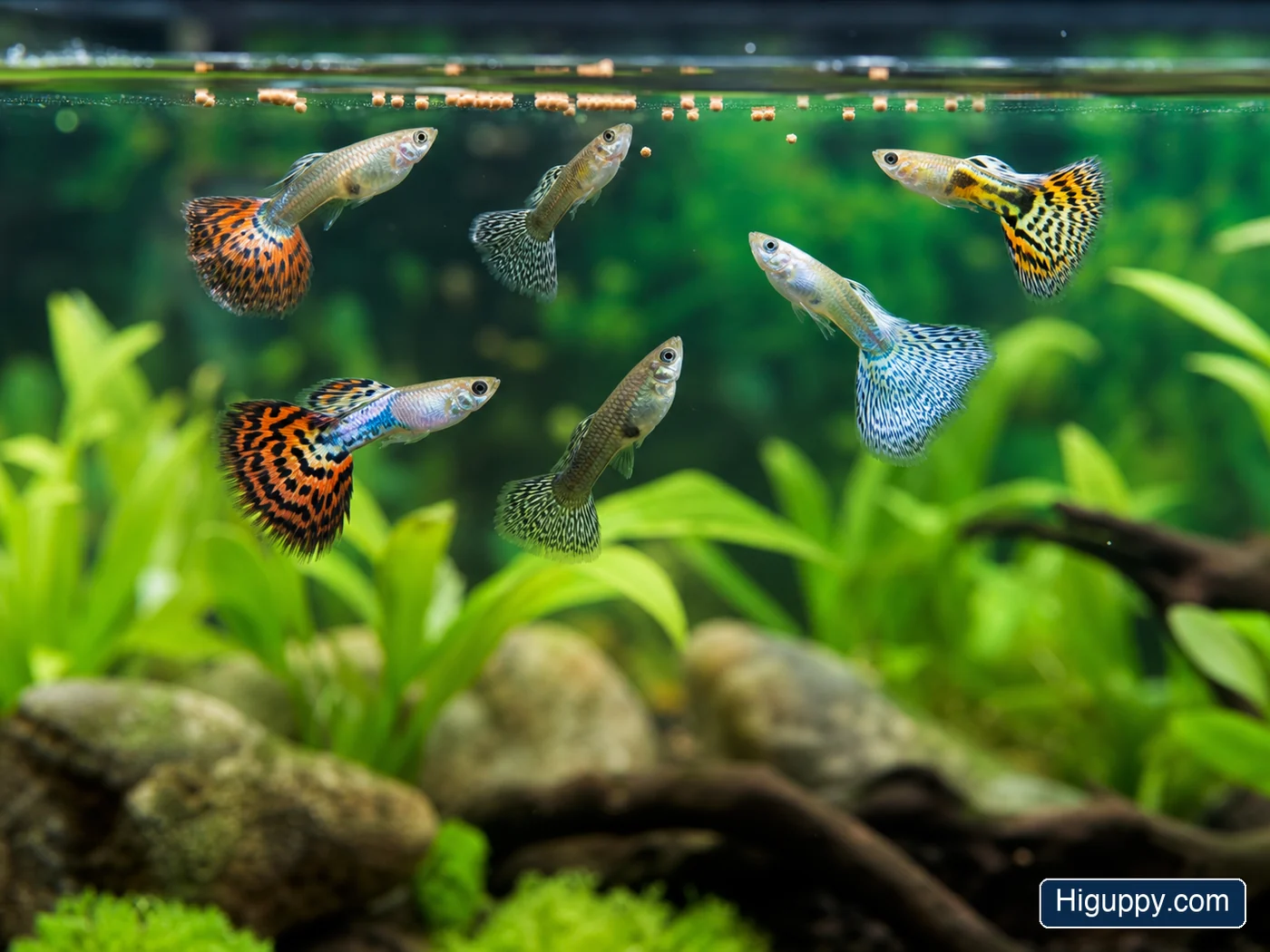
Offer small portions that the fish consume promptly. A quality staple can be rotated with suitable frozen, live or specialty foods from safe sources. Fry need smaller and often more frequent meals, which makes filtration and maintenance especially important.
- Adjust modest portions and feeding frequency to life stage, food type, consumption and the aquarium’s waste trend.
- Remove uneaten food before it breaks down.
- Avoid chronic overfeeding and fasting as a substitute for water maintenance.
- Choose peaceful tank mates with compatible temperature and water needs.
- Avoid persistent fin nippers and fish large enough to eat guppies.
Mixed-sex groups need a deliberate reproduction and social-management plan. Provide space and visual cover, and respond to persistent chasing or a fish that cannot rest or feed. Male-only groups also require observation and enough room to manage social pressure.
See the detailed feeding guide and tank-mate compatibility guide.
Repeatable routine
A repeatable maintenance plan protects the fish
The correct schedule depends on stocking, feeding, plants, tank volume and test results. Start conservatively and adjust from evidence.
Routine observations
- Check appetite, breathing and swimming.
- Confirm filter and heater operation.
- Remove dead plant matter and uneaten food.
Scheduled checks
- Test water and record unusual results.
- Make a partial water change when measurements and accumulated waste indicate it is due.
- Vacuum accessible waste without sterilizing the tank.
As conditions require
- Rinse media in removed aquarium water when flow or debris indicates maintenance is needed.
- Trim plants and inspect intake guards.
- Review stocking before adding more fish.
New arrivals
Use current dedicated guidance for new arrivals
This care pillar does not define packing, live-arrival, acclimation or quarantine-duration procedures. Before a purchase or transfer, read the current dedicated guidance; when instructions differ, the current policy or seller direction governs.
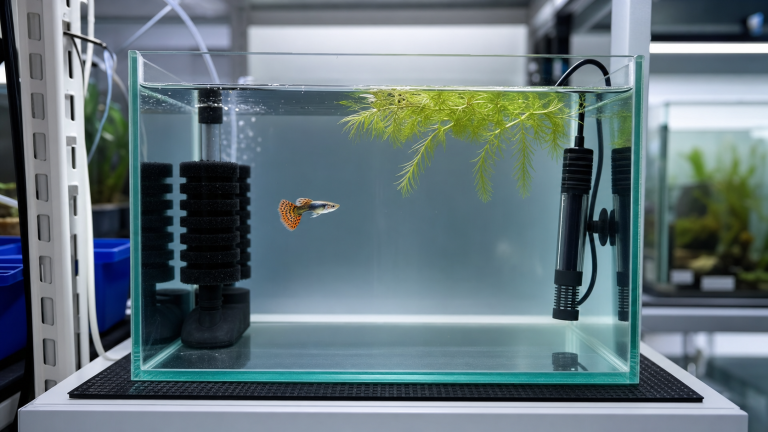
- Prepare a biologically mature destination or separate observation system as appropriate.
- Verify equipment, water conditions and capacity before the fish arrive.
- Keep the current guidance and contact path accessible.
- Seek qualified help for severe or persistent signs rather than improvising treatment.
Before acting, consult the current Acclimation Guide, Quarantine & Health Process and Live Arrival Policy.
Watch for persistent stress or illness signs
Clamped fins, isolation, gasping, loss of balance, unusual swimming, refusal to eat, rapid weight loss, lesions, heavy mucus, flashing or sudden deaths deserve investigation.
A single symptom rarely identifies one condition. First check water quality, temperature, oxygen, recent maintenance, new livestock, toxins, equipment failure and aggression.
When to isolate a fish
Isolation may be appropriate when a fish is being attacked, cannot compete for food, shows a potentially contagious condition or needs closer observation.
Use the Common Guppy Diseases Guide for first checks. Seek qualified aquatic-veterinary help for an individualized assessment and treatment decisions.
Frequently asked questions
Common guppy care questions
Do guppies need a heater?
A heater is useful when room temperature would otherwise fall below the fish’s suitable range or fluctuate. Verify temperature with a separate thermometer rather than relying on a heater dial.
How often should I change the water?
Use test results, stocking, feeding, tank volume and waste accumulation to set the amount and interval. The Guppy Water Change Guide explains the test-led method.
Can I keep only male guppies?
Yes. Male-only groups are common, but adequate space, visual cover and observation are still needed to manage chasing and social pressure.
How many guppies can live in a 10-gallon tank?
There is no responsible number without considering adult size, sex, filtration, plants, maintenance and fry. Start conservatively and review the 10-gallon stocking guide.
Why are my guppies producing so many fry?
Females can store sperm and mixed-sex groups may reproduce frequently. Plan grow-out space, separation and responsible placement before keeping males and females together.
Should I add salt to every guppy tank?
No universal additive belongs in every aquarium. Use salt only for a specific, well-understood purpose and consider plants, tank mates, dosage and the underlying cause of the problem.
Keep learning
Related guppy care resources
Use this pillar for the complete care framework. Follow How to Care for Guppies for the ordered routine, How Long Do Guppies Live? for lifespan context, and the Guppy Water Change Guide for the maintenance method.
Prepare the aquarium before choosing the fish
Match the group to your tank size, experience, new-arrival plan and long-term capacity—not only to color or price.
Last reviewed: August 13, 2026. This guide is educational and does not replace an individualized assessment or treatment plan from a qualified aquatic veterinarian.