The HiGuppy Journal
Guppy Pregnancy Stages and Gestation Guide
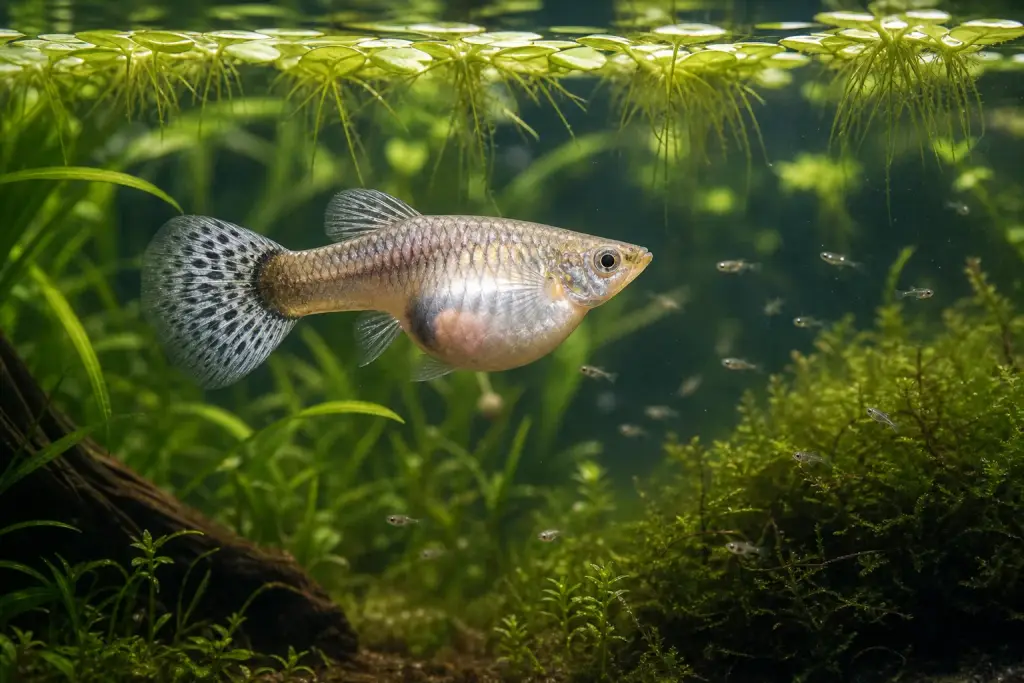
Quick answer: Guppy gestation is commonly about 25–35 days, but temperature, age, health, genetics, stress, and previous mating history can change the timing. Use body shape, behavior, and steady observation as clues—not an exact countdown. Prepare fry cover early and avoid repeatedly moving or squeezing a pregnant female.
Guppies are livebearers: embryos develop inside the female and she gives birth to free-swimming fry. A female can also store sperm and produce later broods without a recent visible mating, so the date she entered your aquarium may not be the start of pregnancy.
Guppy pregnancy stages at a glance
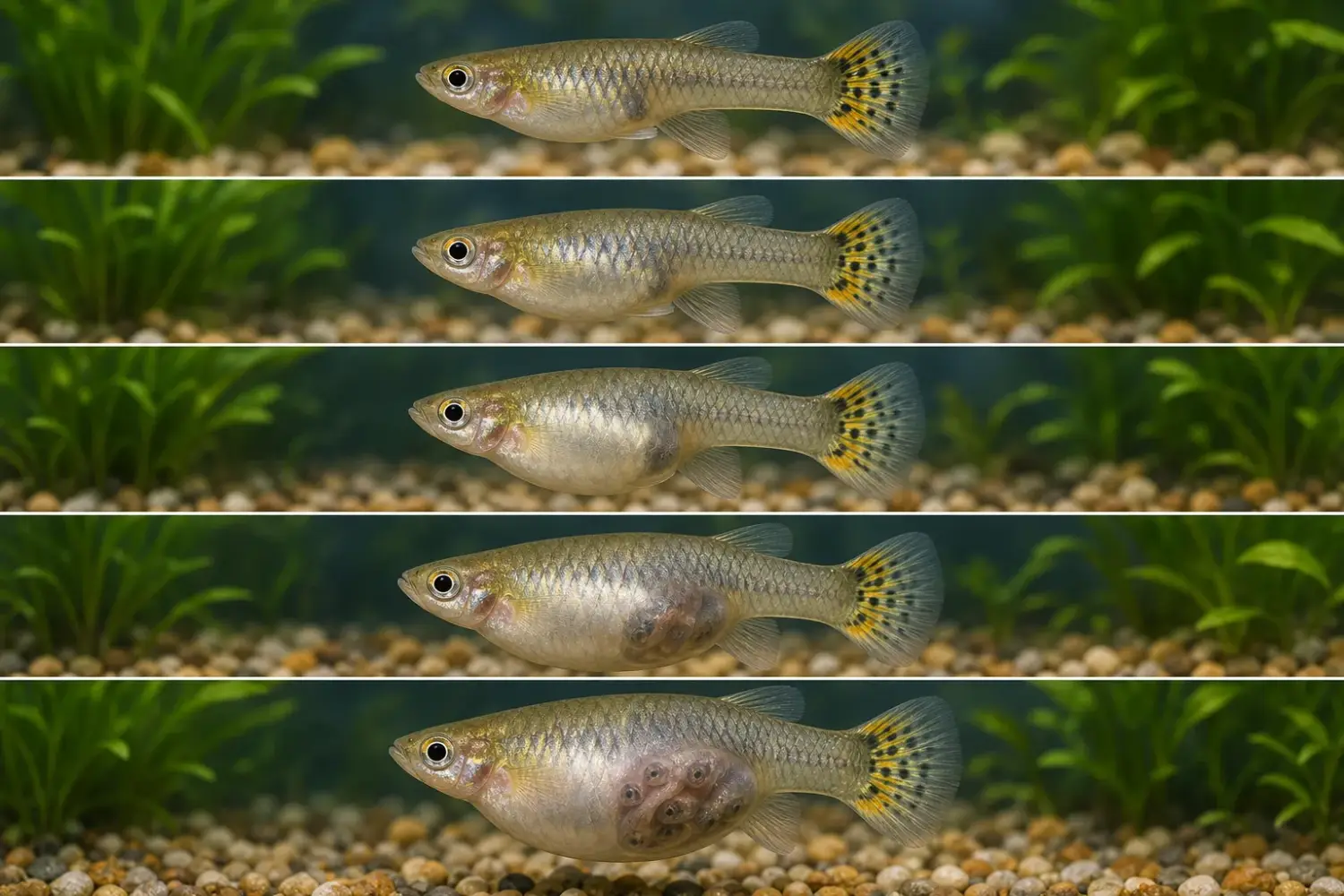
| Observable stage | Common clues | Keeper action |
|---|---|---|
| Early | Subtle abdomen change; gravid area may become more noticeable | Maintain stable care; do not overfeed |
| Middle | Steadier abdominal growth and stronger appetite | Prepare plants, fry cover, and a grow-out plan |
| Late | Fuller or more squared rear abdomen; gravid area often darker | Keep disturbance low and watch behavior |
| Birth approaching | May seek cover, reduce activity, or separate from the group | Observe calmly; avoid unnecessary capture |
| Post-birth | Abdomen reduces; free-swimming fry appear | Feed fry appropriately and protect water quality |
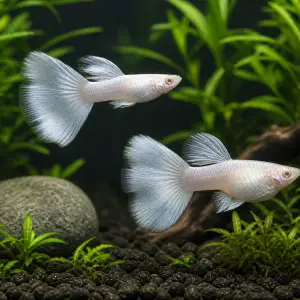
These are observational stages, not a diagnostic calendar. Pale-bodied strains may show the gravid area differently, and a large meal, constipation, illness, or normal body shape can be mistaken for pregnancy.
How long are guppies pregnant?
A published guppy breeding study reported gestation ranging from 25 to 35 days, with an average near 28 days in its conditions. Home aquariums will vary, so a single due date should be treated as an estimate rather than a promise.
- Temperature: influences metabolism, but raising temperature to force faster birth can add stress.
- Age and condition: young, older, or stressed females may not follow the same pattern.
- Genetics and line: body form and reproductive timing differ.
- Nutrition and water quality: poor conditions can affect both the female and fry.
- Stored sperm: later broods may occur without a new male in the tank.
Signs birth may be getting closer
Body clues
- A fuller abdomen that may look more squared near the rear
- A more visible gravid area in some females
- Reduced abdominal fullness after fry are delivered
Behavior clues
- Seeking plant cover or a quieter area
- Changes in appetite or activity
- Greater sensitivity to chasing and disturbance
Do not diagnose pregnancy from one sign. Rapid swelling, raised scales, loss of balance, gasping, clamping, or other illness signs need water testing and closer health assessment—not a pregnancy countdown.
How to prepare for guppy fry
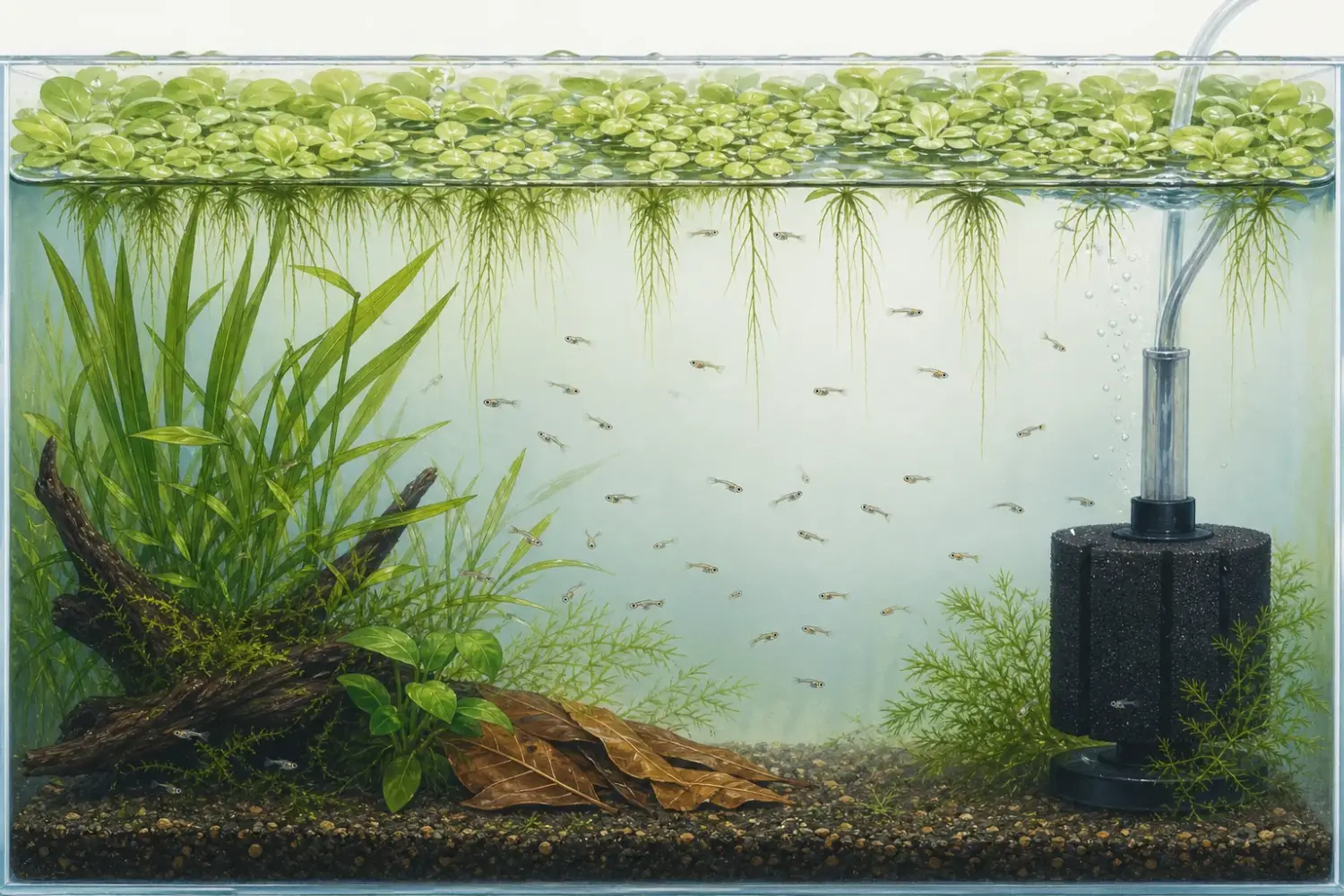
- Stabilize the aquarium. Ammonia and nitrite must remain at zero.
- Add safe cover. Guppy grass, java moss, and floating roots can give fry places to hide.
- Protect filter intakes. Use fry-safe sponge protection where needed.
- Choose a management plan. Decide whether fry remain in a planted community, move to a cycled grow-out, or are separated by another low-stress method.
- Prepare suitable food. Fry need appropriately sized food in small portions while water quality stays clean.
- Plan capacity. Repeated broods can overcrowd a tank quickly.
Use Raising Guppy Fry Guide for feeding and grow-out. If you are still choosing adults, compare male vs female guppies and the educational pair-vs-trio guide. If the question involves a shipped order or an unclear health concern, use the Contact Us page rather than treating this educational guide as a diagnosis.
Should you use a breeding box?
A breeding box can protect fry in some setups, but long or repeated confinement can stress a female. Do not move her based only on an uncertain due date. A mature, planted tank or a separate cycled setup may offer more room, depending on your system and experience.
Guppy pregnancy FAQ
How can I tell if a guppy is pregnant?
Look for progressive abdominal growth and a visible gravid area in a mature female, then compare over time. One photo or a round belly alone is not definitive.
How many days is guppy gestation?
A common range is about 25–35 days, but individual and environmental variation means an exact due date cannot be guaranteed.
Can a female guppy give birth without a male present?
Yes. Female guppies can store sperm from earlier matings and may produce later broods after males are removed.
How many fry will a guppy have?
Brood size varies with the female’s age, size, health, genetics, and conditions. Do not plan tank capacity around one guaranteed number.
Why is my pregnant guppy hiding?
She may be seeking relief from chasing or approaching birth, but hiding can also signal stress or poor water quality. Check the environment and other symptoms.
For the complete process, continue with How to Breed Guppies or browse the Guppy Breeding learning hub.
Technical reference
Gestation range reviewed against a guppy reproductive biology study published in the Journal of the Asiatic Society of Bangladesh, Science.
Related support: Use the Guppy Breeding Guide for broader breeding context and the Guppy Care Guide for general aquarium stability. For a question about an individual fish or order, contact HiGuppy rather than treating this guide as a diagnosis.
If you are planning a breeding group, compare current pair and trio formats on the Breeding Pairs and Trios page; this article does not guarantee a timing or breeding outcome.
Behind the care guides
Care begins with steady systems
Our guppy guides focus on practical routines: keep water stable, observe fish closely and allow for natural variation.
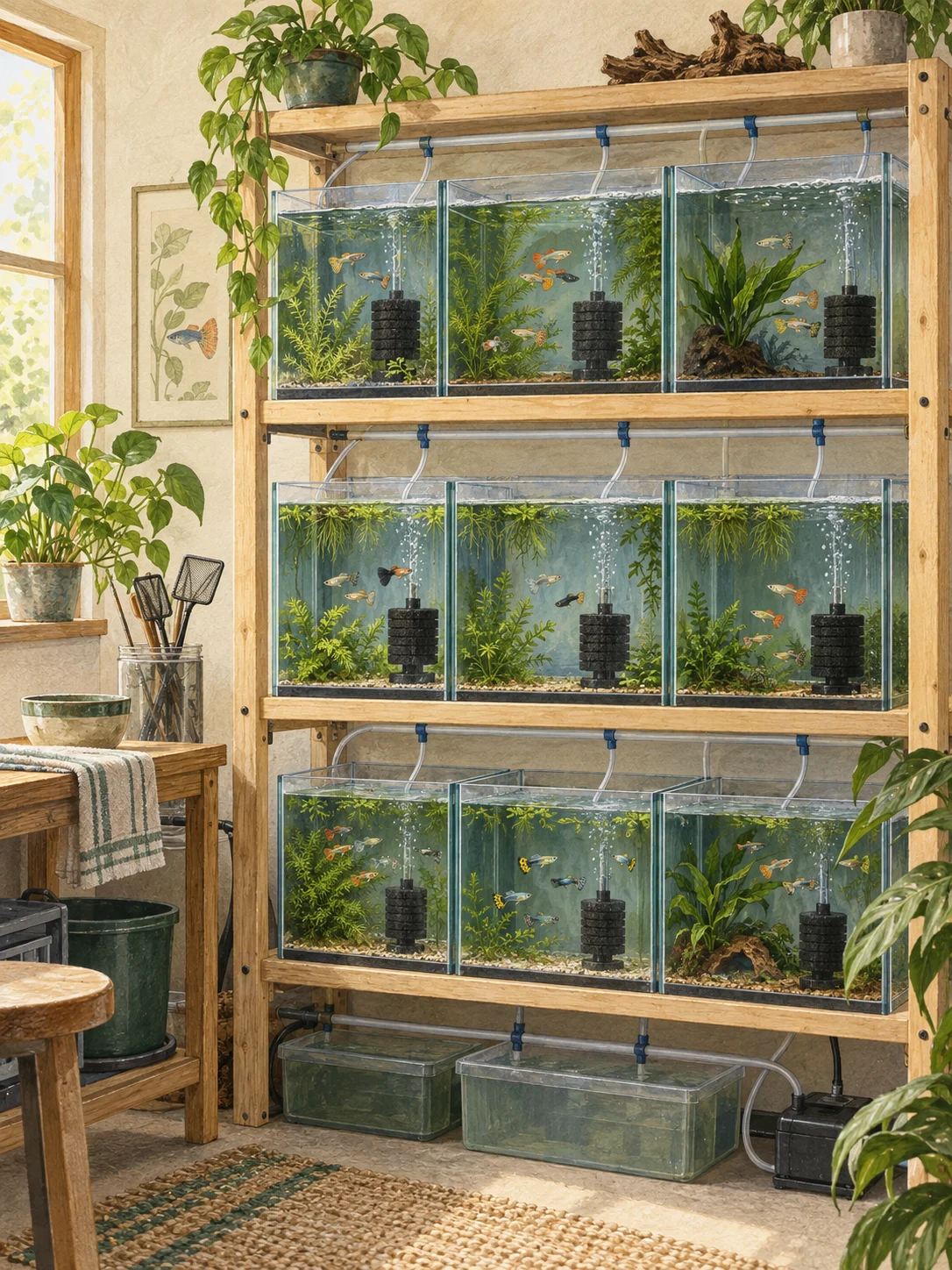
Care systems
Steady water, thoughtful care
Gentle filtration and regular observation support healthy aquarium routines.
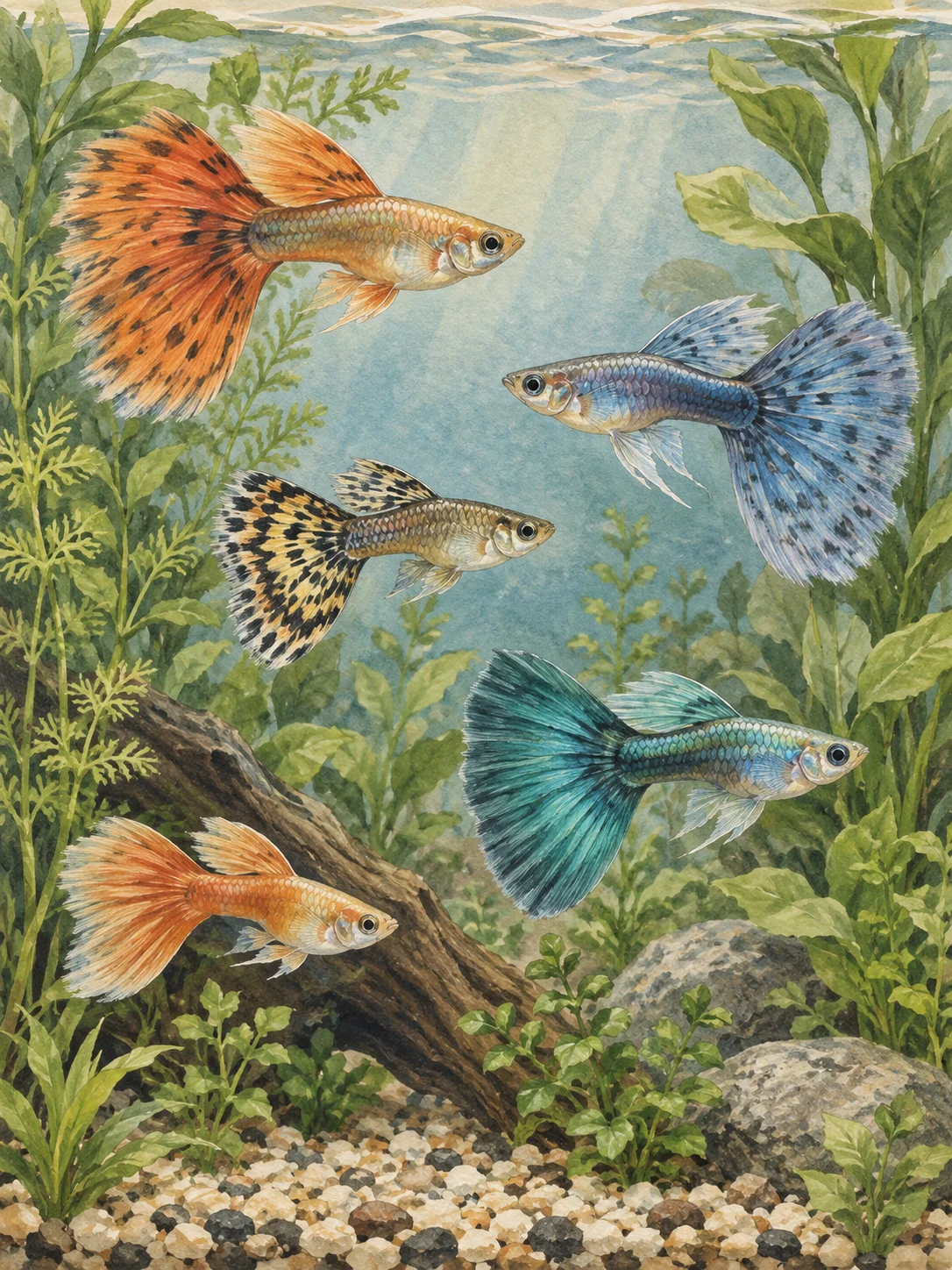
Natural variation
Every guppy is different
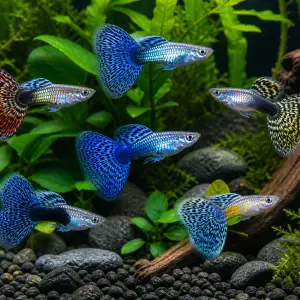
Color, size and fin shape vary with strain, age and each individual fish.
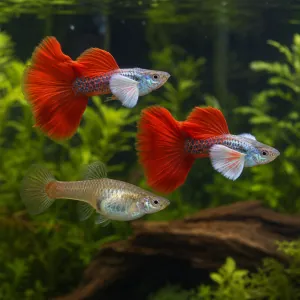
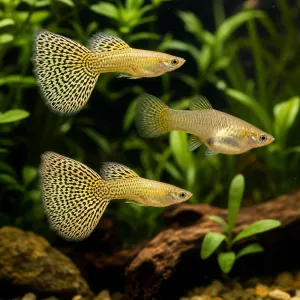
Editorial illustrations for context; they do not depict HiGuppy's exact facility or current fish stock.