The HiGuppy Journal
Why Is My Guppy Staying at the Top or Bottom?
Quick answer: Why is my guppy staying at the top or bottom? A guppy may stay near the top for food, low oxygen, gill irritation, or unsafe water; it may stay near the bottom while resting, hiding from stress, struggling with temperature, or feeling unwell. Position alone is not a diagnosis. If several fish are gasping, breathing rapidly, losing balance, or refusing food, increase aeration, test the water, and inspect the filter and heater right away.
Start by observing the whole tank rather than focusing on one moment. A healthy guppy can visit every level of the aquarium. The warning pattern is a persistent change combined with rapid breathing, clamped fins, loss of appetite, unusual posture, damaged skin, or several fish behaving the same way.
Top, bottom, or normal behavior?
| What you see | What it may mean | Best first check |
|---|---|---|
| Active near the surface before feeding | Normal food anticipation | Confirm normal breathing and swimming afterward |
| Several fish gasping or “piping” at the surface | Low oxygen, nitrite, gill irritation, or another water emergency | Add aeration and test water immediately |
| One fish hiding near the bottom after a move | Transport or social stress | Dim lights and observe without chasing it |
| Fish resting low after lights-out | Normal rest may be possible | Recheck after the normal light cycle begins |
| Fish on the bottom with rapid breathing or clamped fins | Water-quality stress, temperature problem, injury, or illness | Test water and inspect the fish closely |
| Floating, sinking, rolling, or unable to stay level | A buoyancy problem rather than simple location preference | Reduce strong current and seek a more specific assessment |
What to do in the first 10 minutes
- Look at every fish. One affected guppy suggests an individual problem; most or all fish behaving alike points first to the shared environment.
- Check breathing. Rapid gill movement, flared gills, or repeated surface gulping makes the situation more urgent.
- Increase gas exchange. Aim the filter return toward the surface or add an air stone without creating a current that throws weak fish around.
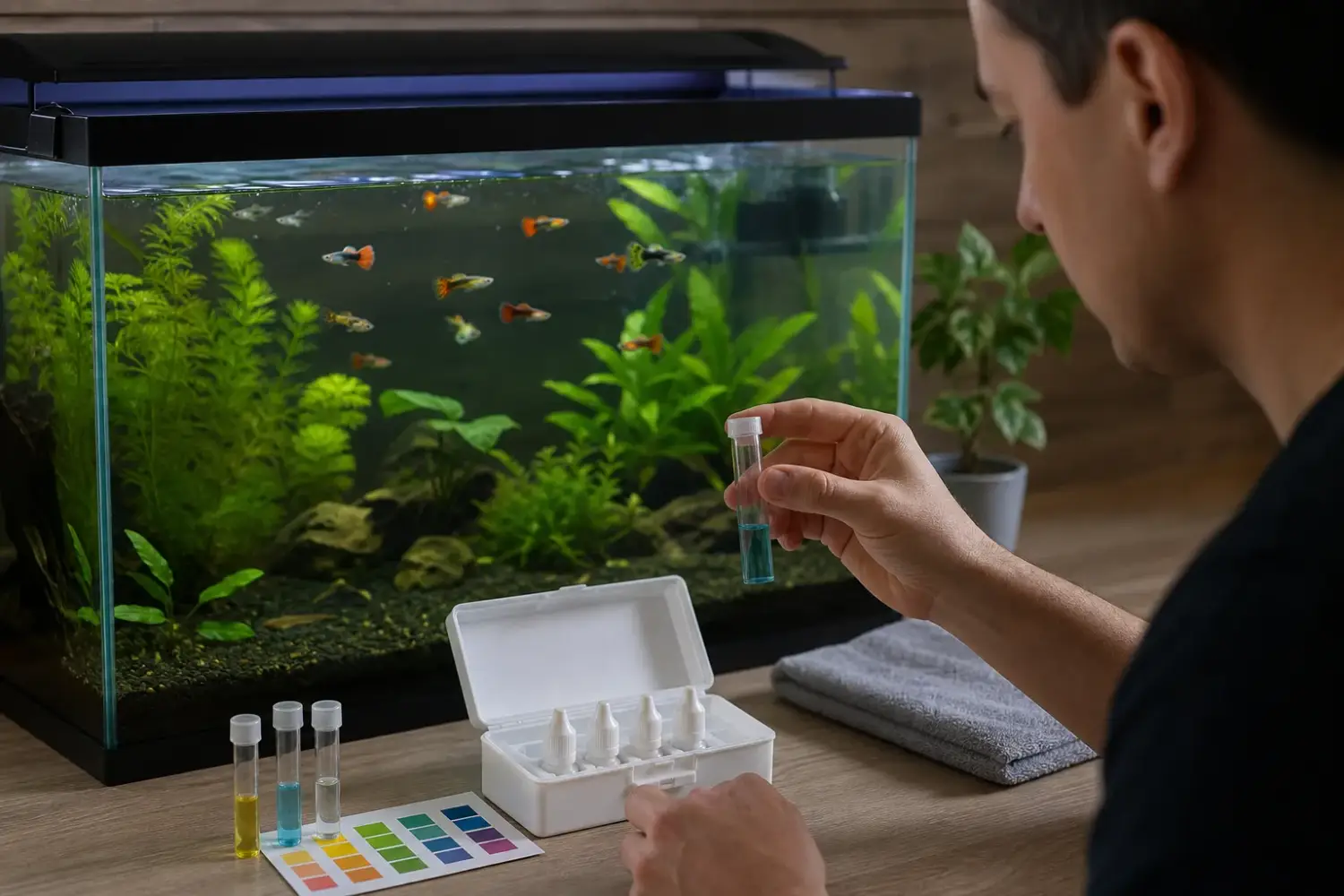
- Test the water. Check ammonia, nitrite, nitrate, pH, and temperature with reliable tests.
- Inspect equipment. Confirm the filter is flowing, the heater is operating normally, and nothing has contaminated or blocked the tank.
- Use conditioned replacement water when needed. If ammonia or nitrite is detectable, or a contaminant is suspected, perform an appropriate partial water change with temperature-matched, dechlorinated water.
Use the Guppy Water Parameters Guide to interpret the results. Ammonia and nitrite should be undetectable in a stable, cycled aquarium. Avoid making a large pH or temperature correction without understanding why the value changed.
Why guppies stay at the top
Normal feeding behavior
Guppies quickly learn where food appears and may gather at the surface when a person approaches. This is usually brief, energetic behavior. They should return to normal swimming and breathe comfortably when feeding ends.
Low dissolved oxygen or poor surface movement
Fish may gather where oxygen exchange is greatest when the tank lacks gas exchange. Warm water holds less dissolved oxygen than cooler water, while overcrowding, decaying material, medication, or reduced filter flow can increase demand. Surface gasping by multiple fish is an urgent warning sign, not proof that an air pump alone will solve the underlying cause.
Ammonia, nitrite, or gill irritation
Unsafe nitrogen compounds and other irritants can interfere with normal gill function. Test results matter because clear water can still be unsafe. Recent filter disruption, overfeeding, a newly set-up tank, a dead animal, untreated tap water, or a sudden increase in stocking can all justify an immediate water-quality check.
Stress after shipping or maintenance
A recently shipped or moved guppy may remain high in the tank while it recovers from handling and adjusts to new water. Dim lighting, gentle flow, stable conditions, and quiet observation are more useful than repeated netting. Follow the quarantine guide and the seller’s current acclimation instructions.
Why guppies stay at the bottom
Resting or sleeping
Guppies may become less active and rest lower in the aquarium during the dark period. Rest is more likely when posture and breathing remain normal and the fish becomes active again after the regular light cycle begins.
Social or environmental stress
A chased, newly introduced, or frightened fish may hide low behind plants or decorations. Check for persistent harassment, fin damage, excessive current, lack of cover, and competition at feeding time. Do not assume a fish is “shy” if its appetite or breathing is also abnormal.
Temperature trouble or general weakness
An unexpected temperature change can reduce activity and add stress. Confirm the actual temperature with a separate thermometer rather than trusting the heater dial. Lethargy at the bottom can also accompany poor water quality, injury, infection, parasites, or advanced weakness, so look for additional signs instead of choosing medication from position alone.
A buoyancy or balance problem
A fish that sinks, floats, tilts, rolls, or cannot remain level has a different pattern from a guppy simply choosing the bottom. Possible contributors include digestive pressure, injury, deformity, infection, or systemic illness. Reduce unnecessary current, document the posture, and seek qualified fish-health help when the problem is severe or persistent.
One guppy versus the whole tank
One fish affected
- Check injury, bullying, pregnancy, appetite, waste, and body condition.
- Photograph visible changes for comparison.
- Prepare a cycled observation or hospital tank if separation is needed.
Several fish affected
- Prioritize oxygen, water tests, temperature, filter function, and contamination.
- Review the most recent feeding, maintenance, livestock, and product changes.
- Do not add new fish until the cause is understood and conditions are stable.
What not to do
- Do not add several medications “just in case.” Treatments can reduce oxygen, affect biofiltration, or obscure the original problem.
- Do not replace all the water or make a sudden chemistry correction unless a specific emergency requires it.
- Do not clean all filter media under untreated tap water during a suspected cycle problem.
- Do not keep feeding normally when uneaten food is accumulating or ammonia is present.
- Do not buy more fish until the tank is stable. When it is ready, review the current HiGuppy shop rather than planning around unverified stock.
If the behavior started after delivery
Record the delivery time, package condition, water temperature, acclimation steps, and clear photos or video before making major changes. Use the current Shipping Policy and Live Arrival Guarantee for order-specific requirements. General aquarium advice does not replace the seller’s written claim procedure. For an order-specific question, use the Contact Us page.
When to seek qualified help
Contact an aquatic veterinarian or experienced fish-health professional when a guppy cannot remain upright, breathing remains rapid after water and aeration problems are corrected, several fish decline quickly, sores or swelling are progressing, or the cause remains unclear. The guppy mortality troubleshooting guide can help organize the observations, but it is not a diagnosis.
Guppy top-or-bottom FAQ
Why are all my guppies at the top of the tank?
Check oxygen exchange and water quality first. Several fish gasping or breathing rapidly can indicate low dissolved oxygen, nitrite exposure, gill irritation, high temperature, or another shared tank problem.
Why is one guppy sitting on the bottom?
One fish may be resting, stressed, injured, bullied, or unwell. Compare breathing, posture, appetite, fins, skin, waste, and response to feeding with the other fish.
Should I add an air stone when guppies gasp?
Increasing aeration is a useful immediate step, but it does not replace testing. Ammonia, nitrite, temperature, contamination, filter failure, or gill disease may still need attention.
Can guppies rest at the bottom at night?
They may rest lower in the tank during the dark period. Normal rest should not include persistent gasping, loss of balance, clamped fins, or failure to become active after the regular light cycle begins.
Should I medicate a guppy that stays at the top or bottom?
Not from position alone. Test the environment and look for a specific pattern first. Unnecessary medication can add stress and may interfere with oxygen or biological filtration.
For prevention and routine care, continue to the Guppy Care learning hub.
For follow-up observation, compare the Guppy Diseases Guide, Water Parameters Guide, and Quarantine & Health page; symptom position alone is not a diagnosis.
Use the whole-tank pattern before assuming illness
A guppy choosing the top or bottom of the aquarium is not a diagnosis by itself. The more useful question is whether the position is persistent and whether it appears with rapid breathing, loss of balance, reduced appetite, clamped fins, or several fish behaving the same way. The Merck Veterinary Manual overview of environmental disease in aquatic animals explains why environmental conditions can produce tank-wide signs, while the RSPCA aquarium water-quality guidance emphasizes testing and biological filtration rather than judging water by appearance alone.
- One fish, brief behavior: observe before assuming a problem.
- Several fish near the surface: check aeration, filtration and measured water quality promptly.
- Persistent bottom sitting plus abnormal breathing or balance: treat it as a warning pattern and investigate the tank and fish together.
- Recent equipment, water or stocking change: include that change in your timeline instead of guessing from location alone.
If filtration or circulation is part of the concern, compare the options in our Best Filter for Guppies guide. If the issue is broader and fish are being lost rather than simply changing position, use the separate Why Are My Guppies Dying guide to work through the tank history systematically.
Behind the care guides
Care begins with steady systems
Our guppy guides focus on practical routines: keep water stable, observe fish closely and allow for natural variation.
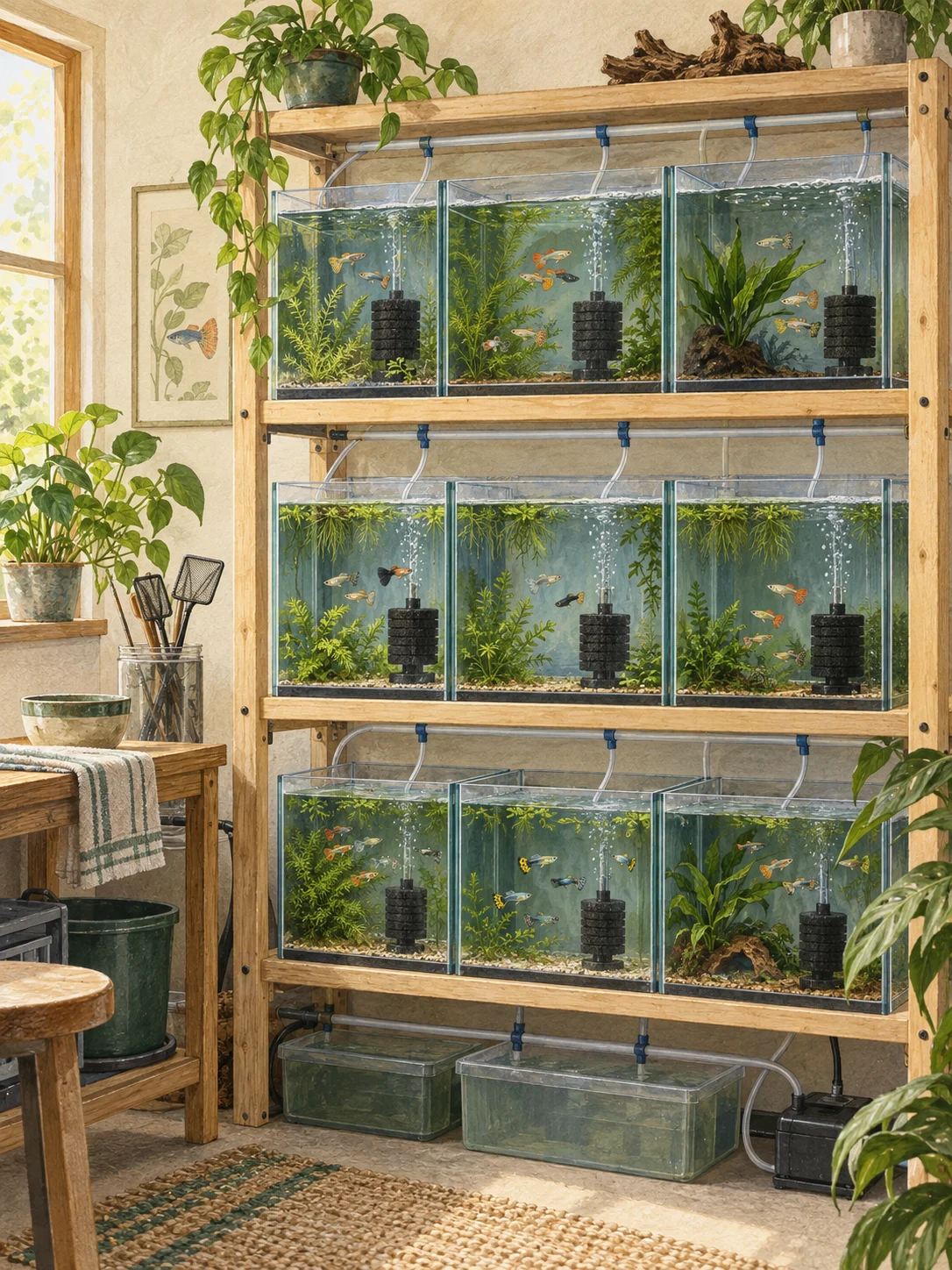
Care systems
Steady water, thoughtful care
Gentle filtration and regular observation support healthy aquarium routines.
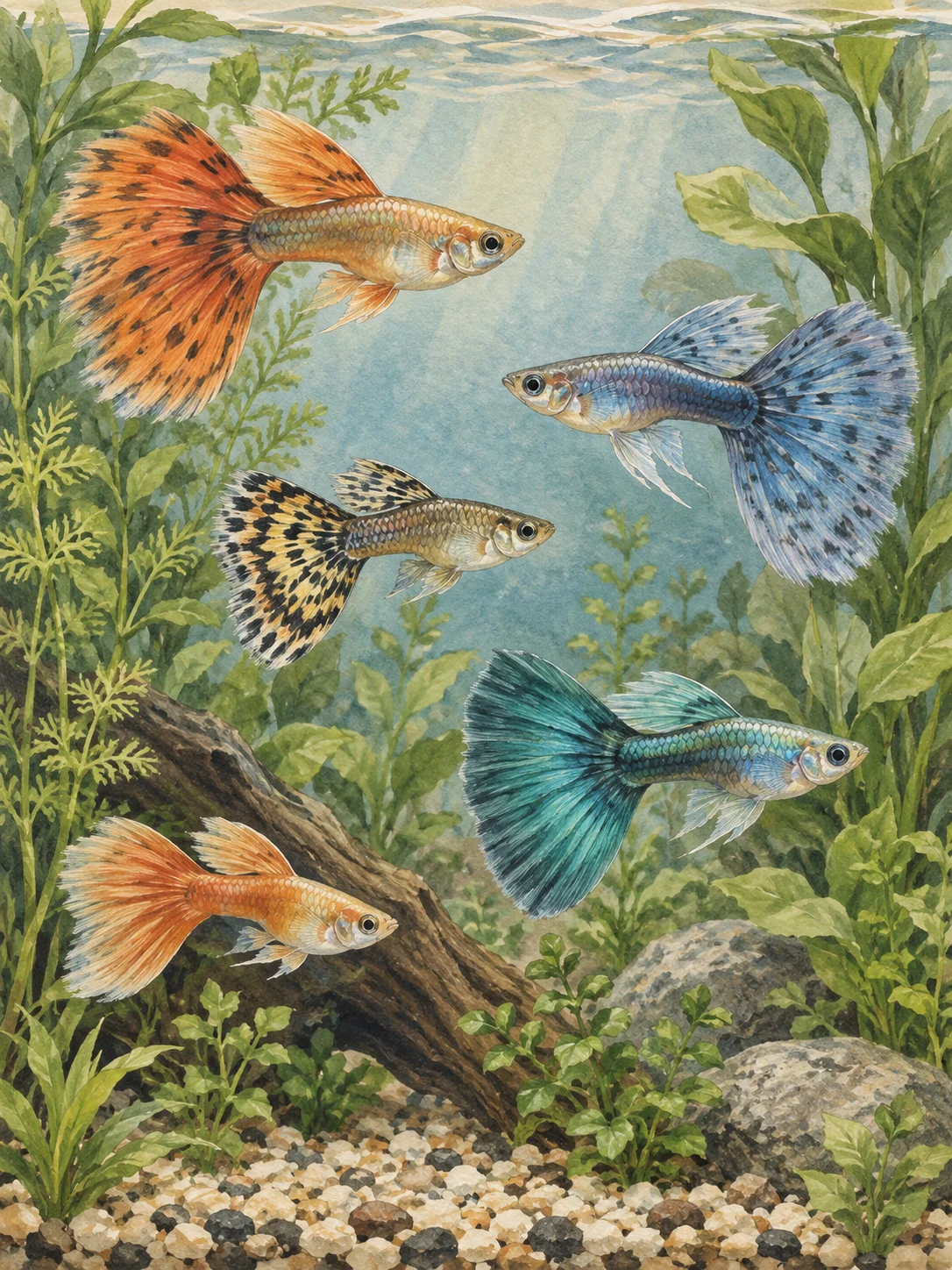
Natural variation
Every guppy is different
Color, size and fin shape vary with strain, age and each individual fish.
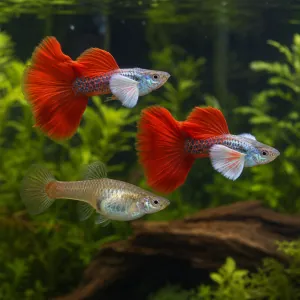
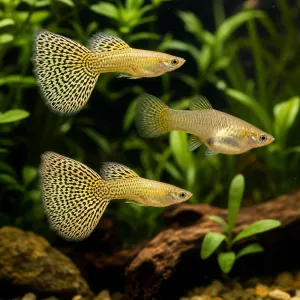
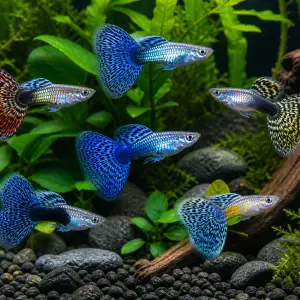
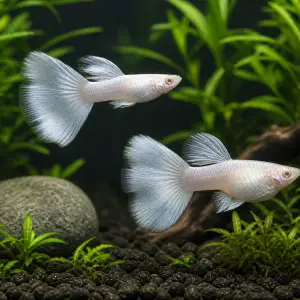
Editorial illustrations for context; they do not depict HiGuppy's exact facility or current fish stock.