GUPPY HEALTH & DISEASE GUIDE
Guppy disease signs: what to check before you treat.
A white spot, torn fin, swollen belly or gasping fish can have more than one cause. Start with the aquarium, the timeline and the number of fish affected. Then use visible signs as clues—not as a diagnosis by themselves.
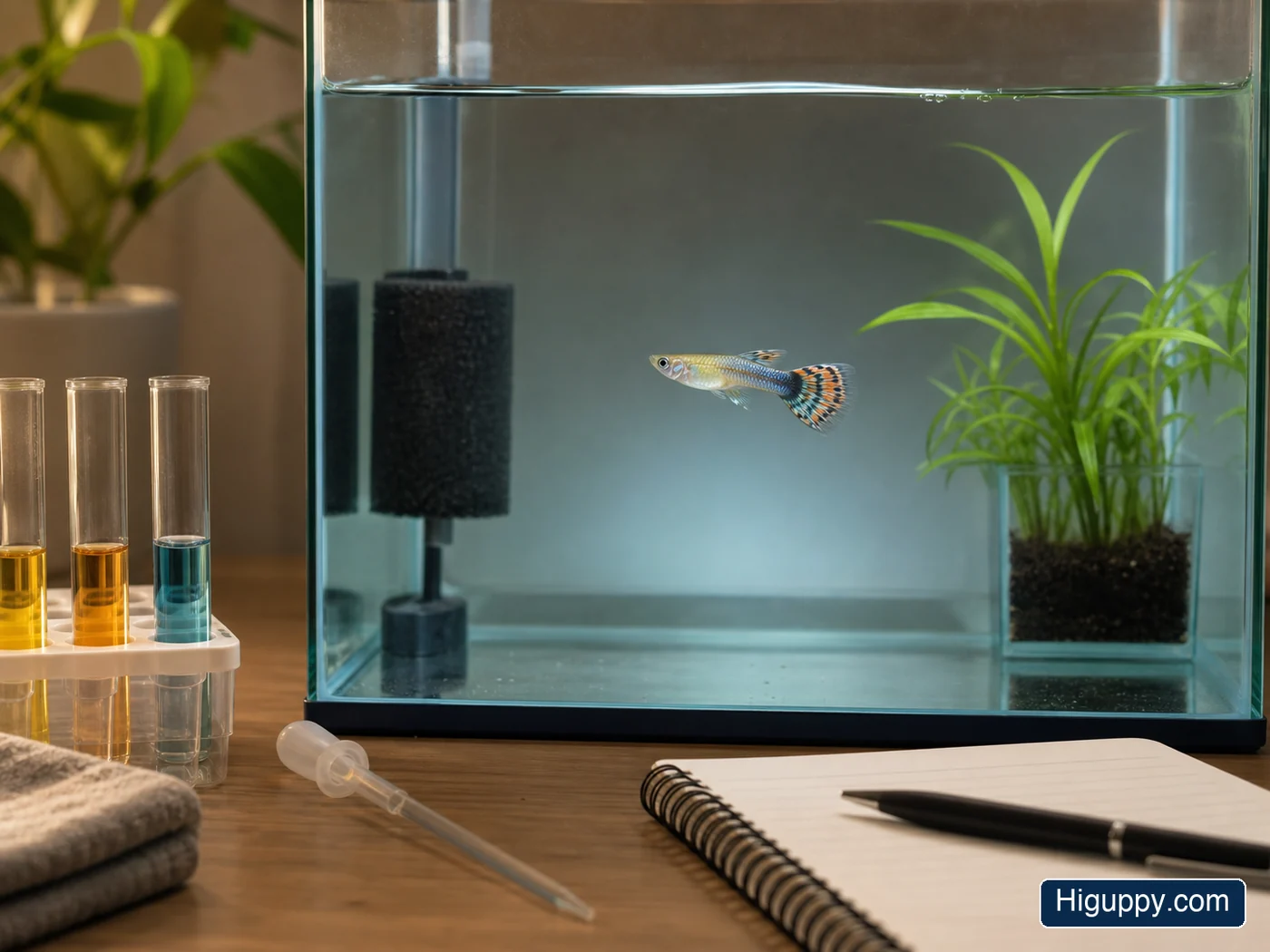
Check water quality, oxygenation, equipment and recent changes before reaching for medication. Poor water quality and other environmental problems can cause illness directly, amplify infectious disease and produce signs that overlap with infection.
START HERE
Some patterns need action before you know the exact diagnosis.
When several fish change at once, think about a shared environmental problem first. When one fish is deteriorating rapidly, protect the rest of the aquarium and document what is happening.
Several fish are gasping
Increase surface agitation, verify filter and heater operation, then test ammonia, nitrite, temperature and the water source. Low oxygen, toxic nitrogen compounds, chlorine/chloramine exposure and excessive heat can all cause respiratory distress.
Distress began after maintenance
Review the water change, conditioner, temperature match, cleaning products, sprays, damaged equipment and anything newly added to the aquarium. A shared timing clue can be more useful than one visible symptom.
Rapid swelling or raised scales
Move the fish to a quiet observation or hospital system when that can be done safely. Pineconing and severe swelling are signs of serious illness or organ dysfunction, not a diagnosis by themselves.
Fast-spreading lesions or deaths
Stop moving water and equipment between systems, separate affected fish when practical, photograph the progression and contact an aquatic veterinarian, fish-health professional or diagnostic laboratory promptly.
Do not diagnose from one sign. Parasites, bacteria, injury, nutrition, toxins, water-quality problems and systemic disease can create overlapping appearances.
BEFORE MEDICATION
A six-step first response gives you better evidence before treatment.
- 01
Observe before changing the scene
Note breathing, swimming, appetite, fins, skin, belly shape, waste and whether one fish or the whole tank is affected.
- 02
Test the aquarium
Check ammonia, nitrite, nitrate, pH and temperature. Compare with recent normal readings and, when relevant, the source water used for changes.
- 03
Check oxygen and equipment
Confirm filter flow, surface movement, heater function and whether heat, crowding or a surface film may be reducing oxygen availability.
- 04
Correct unsafe conditions carefully
Use conditioned, temperature-matched water for an appropriate partial change when readings or recent events support it. Avoid an abrupt full reset unless a known emergency requires one.
- 05
Separate when practical
A stable observation or hospital tank can make monitoring easier and reduce exposure to established livestock. Use dedicated equipment where possible.
- 06
Record the timeline
Photograph changes and note new fish, foods, plants, maintenance, aggression, previous medications and when each sign began. Good history improves diagnosis.
SYMPTOM PATTERNS
Use signs to narrow possibilities—not to name a disease with certainty.
White grains or flashing
Ich is one possibility when distinct white spots occur with rubbing or faster breathing, but confirmation and the full aquarium history still matter.
Frayed fins or tail loss
Damage can come from nipping, sharp decor, filter injury or transport as well as infection. Look for progression, redness, ulcers and the source of physical damage.
Pale, fuzzy or cotton-like lesions
Fungal growth is possible, but bacterial lesions and damaged tissue can look similar. Fast-moving mouth or saddle-like lesions deserve prompt professional evaluation.
Dusty sheen, rubbing or excess mucus
External parasites such as velvet are one possibility. Gill involvement can make breathing difficult, so oxygenation and timely identification matter.
Weight loss or sunken belly
Underfeeding, competition, chronic stress, systemic disease and internal parasites are all possibilities. White/stringy waste alone does not prove worms.
Swelling or a rounded belly
Pregnancy, overeating, digestive problems, fluid accumulation, infection and organ dysfunction can overlap. Pineconing is a serious sign and should not be treated as simple constipation.
Floating, sinking or loss of balance
Water toxins, low oxygen, digestive pressure, injury, infection, deformity and neurologic disease can all alter buoyancy or swimming.
Surface gasping or rapid gill movement
Check oxygen, heat, ammonia, nitrite, chlorine/chloramine exposure and equipment immediately. Gill parasites or systemic disease remain possible after environmental causes are reviewed.
COMMON CONDITIONS
What the common labels mean—and where hobby diagnosis can go wrong.
Ich / white spot
Ich is a freshwater protozoan parasite. Characteristic spots can be helpful clues, but microscopic examination is the stronger confirmation method. If treatment is needed, use a product labeled for the identified or strongly suspected condition and follow its directions exactly.
Fin rot vs. physical damage
Progressive fin loss with inflammation can involve infection, while clean tears may come from aggression or equipment. Correct water quality and the source of injury first; seek help when tissue loss is rapid or accompanied by ulcers or deaths.
Fungal-looking vs. bacterial lesions
Do not assume every fuzzy patch is fungus. Damaged tissue and some bacterial diseases can appear pale or cotton-like. Clear photos, water results and professional diagnostics are more useful than layering multiple medications.
Velvet / external parasites
A dusty sheen, rubbing, mucus and respiratory distress can fit external parasitism, but similar signs occur with other irritants. Isolation, oxygenation and correct identification are more important than guessing from color alone.
Wasting / internal disease
Track actual food intake, competition, body condition and feces over time. Internal parasites are one possibility, but chronic bacterial disease, nutrition and social stress can also produce weight loss.
Dropsy is a sign, not one disease
Fluid accumulation and pineconing can occur late in several serious disorders. Focus on supportive conditions, isolation and qualified evaluation rather than treating “dropsy” as one pathogen with one cure.
TREATMENT SAFETY
Medication should be targeted, measured and secondary to husbandry.
- Correct ammonia, nitrite, oxygen, temperature and other unsafe environmental conditions first; medication cannot compensate for a failing system.
- Avoid prophylactic or “just in case” medication when you do not know the likely problem. Unnecessary treatment can complicate diagnosis and stress fish or filtration.
- Do not stack products unless their labels explicitly allow the combination or a qualified fish-health professional directs it.
- Read the full label, calculate actual water volume and follow the labeled concentration, duration, water-change and filtration instructions.
- Increase aeration when appropriate and monitor ammonia/nitrite during treatment because sick fish and some treatments can reduce the system’s margin for error.
- Antibiotics and other prescription-level decisions belong with a veterinarian or qualified fish-health professional, especially when the cause is uncertain or multiple fish are affected.
About aquarium salt: salt is not a universal cure. Species, concentration, exposure time, plants, invertebrates, tankmates and the actual condition all matter. Do not substitute a generic salt recipe for diagnosis or product/veterinary guidance.
LONG-TERM HEALTH
Prevention is mostly stable husbandry and good biosecurity.
Use a quarantine plan
Keep unfamiliar fish separate from established livestock long enough to gather useful observation. Duration should reflect source history, condition, system risk and professional guidance rather than one universal HiGuppy number.
Maintain a cycled system
Track ammonia, nitrite, temperature and other relevant parameters. Stable water, dependable filtration and good sanitation reduce both direct environmental illness and opportunistic disease.
Control chronic stress
Avoid crowding, unstable temperature, persistent aggression and poor oxygenation. Provide appropriate swimming space, cover and social ratios for the aquarium you keep.
Feed for condition, not waste
Use suitable foods in controlled portions and watch whether each fish actually eats. Overfeeding can worsen water quality while underfeeding or competition can mask as disease.
PROFESSIONAL SUPPORT
Get qualified help when the pattern is severe, persistent or unclear.
- Fish are dying rapidly, several tanks are affected or the same problem keeps returning.
- There are severe ulcers, bleeding, gill damage, pineconing, loss of balance or marked respiratory distress.
- Water quality and equipment problems have been corrected but the signs continue or worsen.
- You are considering antibiotics, cannot distinguish likely parasites/bacteria/fungal disease, or need a diagnostic test.
- A valuable breeding line is involved and guessing could spread a problem through multiple systems.
Record aquarium size, stocking, temperature, water-test results, maintenance, new arrivals, foods, previous medications, clear photos/video and the timeline. Diagnostic guidance from UF/IFAS and Merck emphasizes that history and water/environment data are central to fish-health assessment.
REVIEW BASIS
Authoritative references used for this guide.
Merck Veterinary Manual — Disorders and Diseases of Fish
Background on environmental, parasitic, bacterial, fungal and systemic fish disease, with emphasis on water quality, quarantine and professional diagnosis.
Merck Veterinary Manual — Management of Aquarium Fish
Clinical history, diagnostic techniques, treatment considerations, water quality, quarantine and biosecurity for ornamental fish.
UF/IFAS — Introduction to Fish Health Management
Fish-health prevention, daily observation, water quality, stress, sanitation and why medication cannot substitute for good husbandry.
UF/IFAS — Submission of Fish for Diagnostic Evaluation
Why fish disease is commonly misdiagnosed and which history, behavior, physical changes and water information improve diagnostic evaluation.
COMMON QUESTIONS
Guppy disease FAQ
What is the first thing to check when a guppy looks sick?
Start with water quality, temperature, oxygenation, equipment and recent changes. Environmental stress can cause many of the same signs as infection and can make any underlying disease harder to manage.
Should I treat the whole aquarium or move one fish?
It depends on the likely cause, how many fish are affected and whether the rest of the system has been exposed. A stable hospital/observation tank can be useful for one fish, while some contagious problems require a system-level plan. Avoid choosing solely from one visible symptom.
Can I combine ich medicine, antibiotics and aquarium salt?
Do not combine treatments automatically. Products can interact, change oxygen demand, stress fish or affect filtration. Follow product labels and qualified fish-health guidance for combinations.
Does white or stringy feces prove internal parasites?
No. It can occur with reduced feeding, stress, diet changes and several internal problems. Use the fish’s body condition, actual feeding, other signs and diagnostic evaluation when needed.
How long should I quarantine a new guppy?
HiGuppy does not use one universal duration as a guarantee of health. A quarantine plan should consider source history, group condition, water quality, feeding response, visible changes, new additions during the observation period and the risk to your established aquarium. See the current Quarantine & Observation page for the full approach.
Can damaged guppy fins grow back?
Minor clean damage may regrow when the fish is otherwise stable and the cause of injury or aggression is removed. Rapid tissue loss, inflammation, ulcers or worsening condition needs closer evaluation.
Should I raise the temperature for every suspected disease?
No. Temperature changes alter fish metabolism and oxygen availability, and the correct approach depends on the species, system and actual problem. Do not use heat as a universal treatment.
Prepare the evidence before you guess at a treatment.
Test the aquarium, record the timeline, separate fish when practical and keep clear photos or video. If the problem is severe, spreading or uncertain, use qualified fish-health help rather than stacking treatments.
Last reviewed: September 12, 2026. This page provides general aquarium husbandry and observation guidance. It does not replace examination, diagnostic testing or treatment by a qualified aquatic veterinarian or fish-health professional.