Guppy Care Article
Guppy Dropsy: Pinecone Scales, Swelling, Causes & Supportive Care
Guppy dropsy is a symptom pattern involving abnormal fluid buildup, not one single disease. The classic warning sign is a swollen body with scales lifting outward like a pine cone. By the time pronounced pineconing appears, the underlying illness may already be serious, so the priority is to isolate the fish, check water quality, reduce stress, and seek qualified fish-health guidance rather than guessing at a single cause.
Quick answer
If a guppy is swollen and the scales are beginning to stand out, move the fish to a stable, aerated observation or hospital setup when practical, test ammonia and nitrite immediately, document the progression, and avoid combining medications “just in case.” Dropsy can be associated with systemic bacterial disease, organ dysfunction, chronic stress, parasites, or other internal problems, so the appearance alone cannot identify the exact cause.
What does dropsy look like in a guppy?
Early swelling can be subtle. The most important visual clue is whether the scales remain flat or begin to project outward from the body, especially when the fish is viewed from above.
- Abdominal or generalized body swelling
- Scales lifting outward in a “pinecone” pattern
- Bulging eyes in some cases
- Pale gills, redness, skin lesions, or ulcers
- Reduced appetite or refusal to eat
- Hiding, lethargy, or loss of normal schooling behavior
- Difficulty swimming, balancing, or maintaining position
- Abnormal feces or reduced fecal output
- Fast or labored breathing in advanced illness
These signs overlap with other problems, so use Higuppy’s Guppy Diseases Guide when the full symptom pattern is unclear.
Dropsy vs pregnancy, constipation, or simple bloating
| Feature | Dropsy / fluid buildup | Pregnancy | Constipation or dietary bloating |
|---|---|---|---|
| Scale position | May lift outward or pinecone | Usually remains flat | Usually remains flat |
| Body shape | Generalized swelling can involve much of the body | Abdomen enlarges as fry develop and may become boxier near delivery | Often more localized abdominal bloating |
| Behavior | Often lethargic, hiding, or eating poorly | Can remain alert and active | May show reduced appetite or fecal changes |
| Other signs | Possible eye, skin, breathing, or balance changes | Gravid spot and other normal pregnancy signs | Usually no pineconing or systemic lesions |
If the fish is female and pregnancy is plausible, compare the signs with Higuppy’s Guppy Pregnancy Stages and Gestation Guide. Pineconing, marked lethargy, or eye and skin changes are not normal pregnancy signs.
Why “dropsy” is not one diagnosis
Fluid accumulation can occur when the body can no longer regulate fluid normally. In aquarium fish, that may happen for several different reasons. Merck Veterinary Manual describes abdominal fluid accumulation (“dropsy” or “pinecone disease”) among the signs that can occur with bacterial disease such as Aeromonas, while other internal, renal, parasitic, viral, or organ-related conditions can produce similar swelling.
That means two guppies can look similarly swollen while having different underlying problems. A visual diagnosis alone cannot tell you which antimicrobial—or whether an antimicrobial at all—is appropriate.
Possible causes of guppy dropsy
- Systemic bacterial infection: bacterial disease can cause fluid accumulation, ulcers, redness, and other systemic signs.
- Kidney or liver dysfunction: damaged organs may be unable to maintain normal fluid balance.
- Chronic poor water quality: ammonia, nitrite, high organic load, oxygen problems, or long-term instability can weaken fish and predispose them to disease.
- Internal parasites or chronic inflammation: some internal problems can produce wasting, swelling, or abnormal feces.
- Reproductive complications: retained fry or other reproductive problems can sometimes mimic abdominal disease.
- Tumors or other internal masses: less common, but possible when swelling is asymmetric or persistent.
Because these causes require different management, “treating dropsy” as if it were a single pathogen can lead to poor results.
What to check immediately
- Test ammonia and nitrite. Correct any detectable levels carefully. Also review nitrate, pH, and temperature using the Guppy Water Parameters Guide.
- Check oxygenation. Increase surface movement or aeration if breathing is fast or oxygen may be low.
- Inspect the fish from above. Pineconing is easier to see from the top than from the side.
- Document progression. Take photos at the same time and angle each day and record appetite, feces, breathing, and swimming ability.
- Review recent stressors. New arrivals, transport, temperature swings, aggression, overstocking, or a recent water-quality event can matter diagnostically.
- Check the rest of the tank. If multiple fish show swelling, ulcers, lethargy, or rapid breathing, the problem may be environmental or infectious rather than isolated to one guppy.
Should you isolate a guppy with dropsy?
Isolation is often useful because it protects a weak fish from competition and bullying, makes observation easier, and reduces exposure while the cause is uncertain. A hospital setup should be stable, heated appropriately, filtered or otherwise managed for ammonia, and well aerated.
Match temperature and pH carefully when moving the fish; a sick guppy can be harmed by abrupt changes. Keep hospital-tank tools separate from the display aquarium. Higuppy’s quarantine and observation process provides a useful framework for isolation hygiene.
Supportive care priorities
- Keep water parameters stable and ammonia/nitrite controlled.
- Maintain good aeration and gentle water movement.
- Reduce handling, bright light, and unnecessary disturbance.
- Offer small, easily eaten meals only if the fish is interested.
- Remove uneaten food promptly so it does not degrade water quality.
- Avoid large, abrupt water changes that create temperature or pH shock.
- Track whether swelling, pineconing, appetite, and swimming ability are improving or worsening.
Supportive care does not replace diagnosis, but it removes common stressors that can make systemic disease worse.
Should you medicate dropsy?
There is no single medication that “cures dropsy” because dropsy is not one pathogen. Merck’s aquarium-fish guidance recommends targeted therapy and notes that bacterial diagnosis and sensitivity testing are preferable when antimicrobial treatment is needed.
Avoid stacking multiple medications, antibiotics, salts, or chemical treatments without a clear reason. Combining products can stress an already compromised fish and may make water quality harder to control. If a veterinarian or qualified fish-health professional recommends treatment, follow that plan and the exact product directions.
What not to do
- Do not assume every swollen female is pregnant.
- Do not assume every swollen fish has a bacterial infection.
- Do not combine several medications “just in case.”
- Do not make abrupt temperature or pH changes during isolation.
- Do not force-feed a fish that cannot swallow or maintain normal position.
- Do not return a symptomatic fish to the community tank simply because swelling briefly decreases.
What is the prognosis for a guppy with dropsy?
The outlook depends on the underlying cause and how advanced the internal damage is. Mild swelling caught early may have a better prognosis than pronounced pineconing accompanied by loss of balance, severe lethargy, ulcers, or respiratory distress.
When a fish cannot eat, swim, or breathe comfortably and continues to decline despite stable supportive care, professional advice is appropriate. A veterinarian familiar with aquatic species can help with diagnostic testing and, when recovery is unlikely, humane options.
If abnormal swimming is the main symptom rather than generalized swelling, compare the pattern with Higuppy’s Why Is My Guppy Staying at the Top or Bottom? guide.
How to reduce future risk
- Cycle new tanks before stocking.
- Maintain regular water testing and consistent maintenance.
- Avoid overcrowding and chronic organic waste buildup.
- Quarantine new fish before mixing them with established stock.
- Keep temperature stable during shipping, acclimation, and water changes.
- Feed a balanced diet and avoid chronic overfeeding.
- Respond early to appetite loss, clamped fins, ulcers, or abnormal breathing instead of waiting for severe swelling.
For day-to-day prevention fundamentals, use the Complete Guppy Care Guide.
Frequently asked questions
Is dropsy contagious?
Dropsy itself is a symptom pattern, not a contagious organism. The underlying cause may be infectious or noninfectious, so isolation is prudent until the cause is better understood.
Can a guppy recover from pineconing?
Some fish recover when the underlying problem is caught early and treatable, but pronounced pineconing often indicates serious internal dysfunction and carries a guarded prognosis.
Can overfeeding cause dropsy?
Overfeeding can cause bloating and constipation, but true pineconing suggests abnormal fluid balance or more serious internal disease rather than simple overfeeding alone.
Is a swollen female guppy always pregnant?
No. Pregnancy usually causes abdominal enlargement while the scales remain flat. Pineconing, severe lethargy, ulcers, or bulging eyes point away from normal pregnancy.
Should the whole tank be treated if one guppy has dropsy?
Not automatically. First test the shared environment and inspect the other fish. Whole-tank treatment without identifying an infectious cause can expose healthy fish unnecessarily.
References: Merck Veterinary Manual, Disorders and Diseases of Fish; Bacterial Diseases of Fish; and Management of Aquarium Fish.
Educational note: This article is not a veterinary diagnosis or prescription. Dropsy can reflect serious internal disease; rapid decline, breathing distress, severe pineconing, or multiple affected fish warrants aquatic veterinary or diagnostic help.
Real HiGuppy photographs
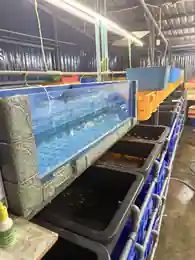
Inside the facility behind our guppy guides
These photographs show real HiGuppy holding, breeding and observation work. They document our facility and fish stock; they are not presented as the exact individual fish or strain discussed on every page.