The HiGuppy Journal
Torn Guppy Tail: Causes, Safe Care & Recovery Checks
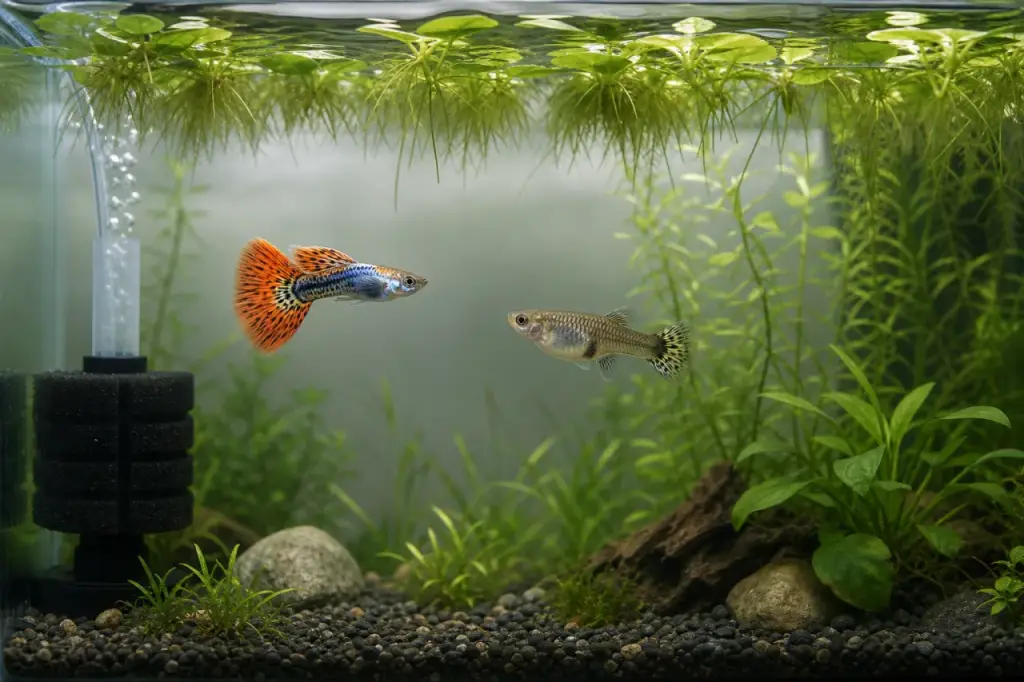
What should you do if your guppy tail is torn? A torn guppy tail may result from fin-nipping, chasing, sharp decorations, rough netting, or an equipment snag. First check ammonia, nitrite and temperature, then look for active bullying or objects that could catch the fin. A clean split that stops worsening may recover with stable care, but spreading fraying, inflamed edges, lethargy or lost appetite need further assessment. Do not medicate a tear automatically.
A new split in a guppy’s flowing tail can look dramatic, especially in a large-finned male. The important questions are what caused the damage, whether the fish is otherwise behaving normally and whether the edges change over time. A torn tail is a visible finding, not a diagnosis of an infection. This guide focuses on preventing further mechanical injury, documenting what happens next and knowing when ordinary home observation is no longer enough. For a deeper explanation of disease-like fin erosion, read HiGuppy’s fin rot versus torn fins guide.
What a torn guppy tail may look like
A physical tear may appear as a narrow split running inward from the tail edge, an isolated missing piece, or a new notch after a chase, netting session or snag. Some fin shapes naturally have extensions or irregular margins, so compare the fish with an earlier photograph when possible. A single still image cannot tell you whether the tear occurred from décor, a tankmate or a health problem.
- Look for a localized change: one new split or notch may point toward physical trauma, especially after an observed incident.
- Check the entire fish: steady breathing, balance, swimming and appetite are as important as the tail edge.
- Compare over time: is the area stable, or are more edges becoming ragged, pale, inflamed or shortened?
- Keep alternative explanations open: a bitten fin can later develop a secondary problem, and fin disease can sometimes resemble a tear at first.
Do not cut a tail to make it “even,” rub it with a household antiseptic or assume that a guppy is healthy solely because it is still brightly colored.
First ten minutes: safe actions when you notice a torn tail
- 1. Observe the fish. Watch breathing, balance, feeding and whether another fish repeatedly targets it. Avoid chasing it with a net just to photograph the damage.
- 2. Test the water. Check ammonia and nitrite immediately, then temperature and other parameters. A stable, cycled aquarium is the foundation of recovery.
- 3. Scan for the physical cause. Inspect rough plastic plants, decorations, equipment openings and strong current, but do not dismantle a running electrical device.
- 4. Stop repeated aggression. If you witness nipping or persistent harassment, reduce the conflict or move the affected fish into a suitable established observation tank.
- 5. Take one clear photo. Capture a side-view image under similar lighting so you can compare size and edge condition without repeatedly handling the fish.
- 6. Set a recheck time. Monitor the fin and overall behavior later that day and over the following week; escalating symptoms require more attention.
If ammonia or nitrite is measurable, address the water quality and filter conditions promptly. Do not replace all tank water with untreated water or move fish into an uncycled bowl as an automatic first response.
Torn tail versus fin rot: the quick comparison
The strongest clue is often progression: a newly observed localized split that stops changing behaves differently from an edge that progressively erodes. There is overlap, and a fin injury may be followed by infection. Use this comparison as a way to decide what to monitor, not as a diagnosis.
| What you see | More consistent with a physical tear | A reason to investigate disease or deterioration |
|---|---|---|
| Edge shape | One relatively distinct split or notch following a possible snag or nip | Multiple edges progressively fraying, receding or changing color |
| Timing | Damage appears after a chase, transfer or decoration incident | Damage continues advancing between observations without an obvious new incident |
| Fish behavior | Swimming, feeding and breathing remain normal | Lethargy, clamped fins, poor appetite or abnormal breathing accompany the change |
| Water quality | Tests remain stable at suitable guppy levels | Detectable ammonia/nitrite, abrupt parameter changes or waste buildup are present |
| Next step | Remove physical hazards and document improvement | Investigate water and health, and obtain appropriate fish-health advice |
HiGuppy already explains guppy fin rot versus torn fins in detail. That article is the right next resource if edges keep receding or appear inflamed; this article is primarily about a new physical tail tear and how to prevent another one. Aquarium Co-Op’s fin rot guide also describes the importance of environmental checks when damage worsens.
Common causes of a guppy tail tear
Long ornamental fins can catch on objects or attract fin-nipping behavior. The exact cause is often not visible after the event, so look for evidence rather than assuming blame.
| Possible cause | Clue that may support it | Safer change to consider |
|---|---|---|
| Persistent chasing or fin nipping | One fish is repeatedly cornered or bitten during feeding or rest | Assess the group and separate repeated aggression in a properly established setup |
| Sharp artificial plant or rough decoration | The tear appears after a fish passes a particular object | Remove or replace the unsafe object; keep soft plant cover |
| Netting or transfer handling | Damage appears immediately after moving the fish | Minimize future netting and use gentle, controlled transfer |
| Strong flow or intake hazard | The fish struggles near equipment or has repeated contact with an opening | Adjust flow and protect intake where appropriate without impairing filtration |
| Overcrowding or insufficient hiding places | Fish cannot avoid one another or rest without harassment | Review tank stocking, sex balance, swim space and sheltered areas |
| A progressive fin condition | Fraying continues and other signs develop | Use the fin rot guide and consult an aquatic animal-health professional if worsening |
It is possible for two risks to coexist, such as a sharp ornament in a crowded aquarium. Address observed hazards, and avoid wholesale changes to the tank when you cannot identify a problem.
Bullying and fin-nipping: what to observe
Guppy chasing is not always aggression. The concern is repeated targeting that prevents one fish from feeding, resting or using normal swimming space, especially if you see actual fin bites. Look for which fish is doing the chasing, where it happens and whether the injured fish can retreat.
Adding dense but manageable plants and restoring adequate swimming room can reduce conflict in some aquariums. However, plants are not guaranteed to stop a persistently aggressive tankmate. Read Guppy Bullying Signs for behavioral observations and options before moving fish.
If you must separate a fish, use an established tank with matched suitable water rather than isolating it in a tiny unfiltered container. Aggression should be handled without injuring or starving the fish involved.
Water quality: the first check before adding anything
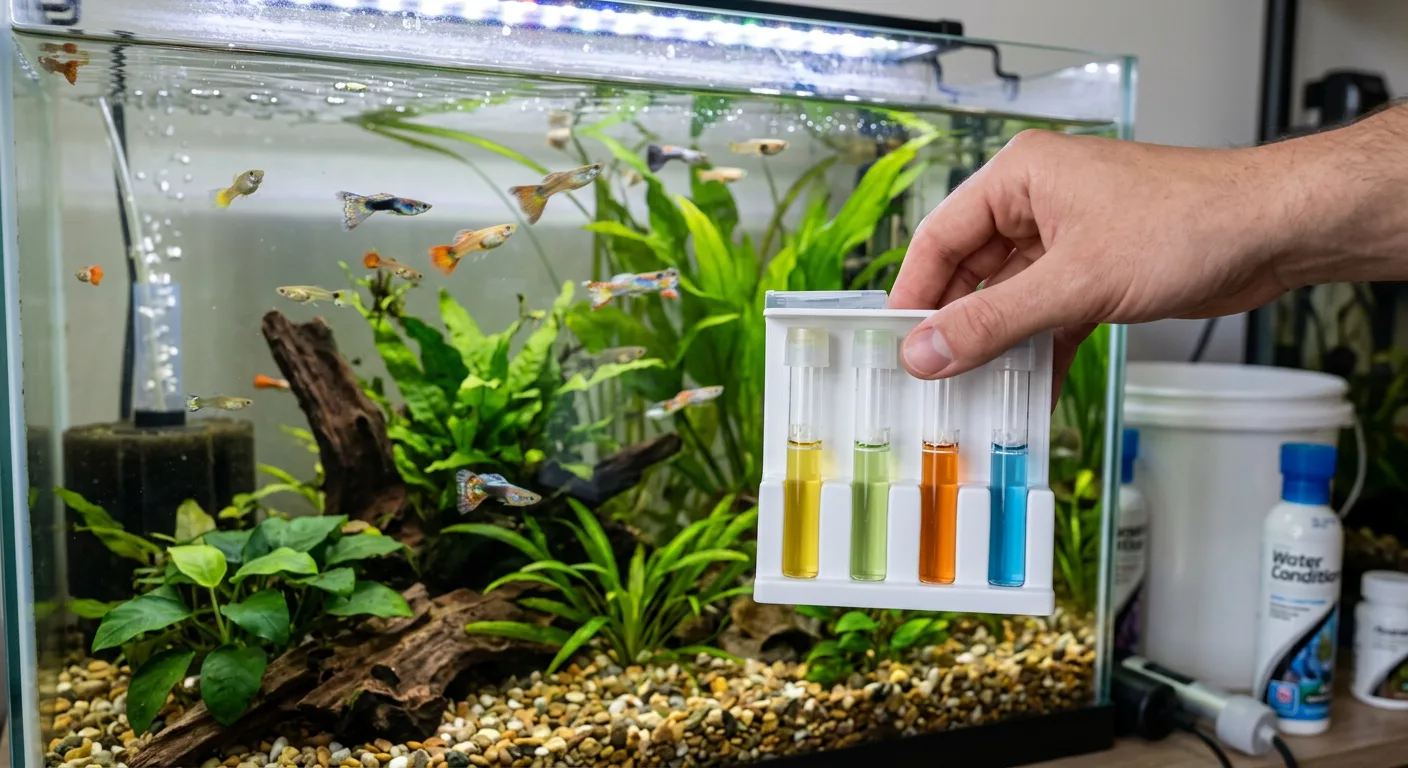
A tear may be purely mechanical, but poor water quality can make any injured fish harder to manage. The Ornamental Aquatic Trade Association (OATA) guppy/molly care sheet recommends an established aquarium with ammonia and nitrite at zero, temperature around 20–28°C, pH about 7.0–8.0 and GH about 8–18 dGH. These are general aquarium conditions, not a medicine or a guaranteed fin-regrowth formula.
| Water or tank check | What you want | If a result is concerning |
|---|---|---|
| Ammonia and nitrite | 0 ppm in a mature cycled tank | Investigate filtration and waste promptly; perform suitable conditioned, temperature-matched water changes |
| Temperature | Stable and appropriate for guppies | Check heater/thermometer rather than making a rapid correction |
| pH and hardness | Suitable and reasonably stable | Avoid chasing one ideal number through sudden chemical changes |
| Nitrate and visible debris | Manageable levels and a maintained substrate | Review feeding, stocking and partial water-change routine |
| Filter flow and oxygenation | Normal swimming and breathing without exhausting current | Check equipment condition and surface movement without overcorrecting |
For general care, OATA suggests partial water changes of about 25% weekly, adjusted to water readings and stocking. Use dechlorinated, temperature-matched replacement water, and preserve the biological filter. A sudden total water replacement or untreated additives can make a difficult situation worse.
Make the aquarium safer while the fin is vulnerable
Guppies with elaborate tails benefit from gentle current, unobstructed swimming paths and planted cover. Inspect every decorative object for rough surfaces, sharp plastic leaves and narrow gaps that may catch a fin. When adjusting equipment, follow manufacturer instructions and isolate electrical power before opening a filter or pump.
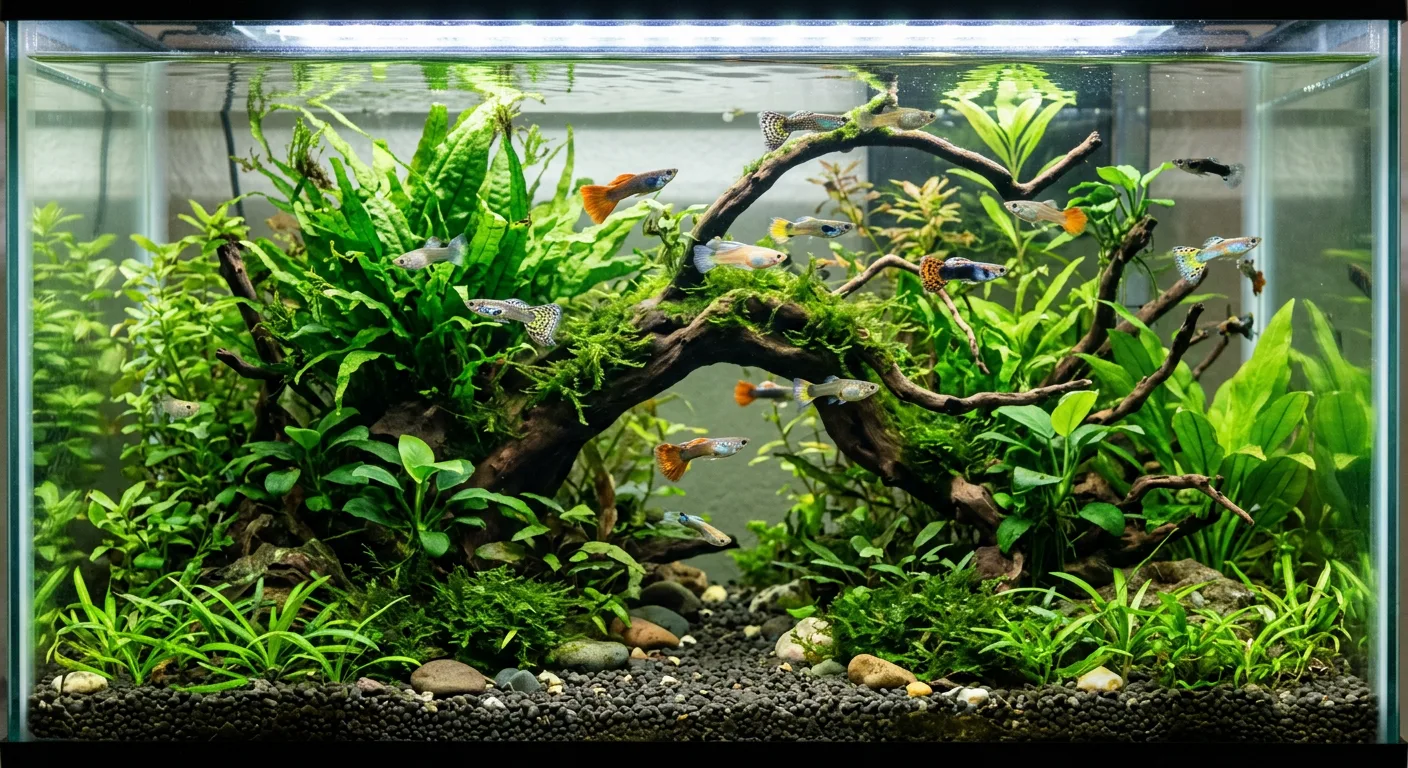
The OATA guppy care sheet specifically cautions against sharp or very rough artificial ornaments around long-finned fish. A safer layout will not prove what caused the original tear, but it can remove an avoidable risk for future injuries.
- Replace sharp artificial plants with smooth, aquarium-safe decorations or suitable live plants.
- Make sure the fish can move through and around equipment without getting trapped.
- Use a suitable gentle filter flow, particularly for large-tailed fancy males.
- Leave shaded cover and open space for normal swimming and feeding.
- Observe the group again after changes rather than assuming the first adjustment solved every problem.
Should you move a guppy with a torn tail into quarantine?
Not every isolated, stable tear requires moving the fish. A transfer can create its own stress, especially if the replacement water or filter is unprepared. Separation becomes more useful when the fish is being repeatedly bullied, cannot feed normally or requires closer observation because condition is worsening.
Choose an established, appropriately sized, filtered observation tank with compatible water. Use gentle handling and avoid repeated transfers between containers. Read HiGuppy’s quarantine guide for preparation and monitoring; a bare glass jar is not a mature quarantine system.
If the fish has severe injury or other concerning symptoms, involve an aquatic veterinarian or knowledgeable fish-health professional rather than inventing an isolation treatment plan.
Will a torn guppy tail grow back? What recovery may look like
Fish fins can sometimes repair damaged tissue when the fish remains healthy and the cause of damage has stopped. Whether the tail returns to its earlier size, shape or coloration depends on the extent of injury and the fish’s overall condition; full regrowth cannot be guaranteed. Even if an edge starts to look smoother, continue to monitor behavior and the environment.
Signs that the situation may be stabilizing include the split no longer growing, no new damage, normal feeding and swimming, and—sometimes—a lighter or translucent-looking margin as tissue changes. A light edge alone is not proof of recovery or infection: compare photographs under the same lighting and pay attention to the trend.
A worsening edge, redness, fuzzy material, progressive tissue loss, clamped fins, gasping or inability to feed is a reason for further assessment. Do not promise that every fin heals within a particular number of days.
A simple seven-day photo and behavior log
The purpose of a seven-day log is to spot improvement or deterioration, not to set a required healing deadline. A phone photo taken from the same side and similar distance can help compare edges, but do not repeatedly trap the fish just to get a perfect picture.
| Observation time | What to record | What the observation helps answer |
|---|---|---|
| Day 0: first noticed | Photo, size and location of tear, water readings, appetite and observed chasing | Was there one new event or a problem already progressing? |
| Next day | Repeat water/behavior check; note any new fin splits or harassment | Has the physical cause been removed? |
| Days 2–3 | Compare fin edge, swimming, appetite and aggression | Is the injury stable, improving or getting worse? |
| Days 4–7 | Photo in comparable lighting, water trends, overall condition | Is there a reassuring pattern or a reason to seek further advice? |
| After day 7 if still concerned | Continue reasonable monitoring; note any recurring tears or systemic symptoms | Does the fish need professional assessment or a more durable tank change? |
If the fish becomes clearly unwell at any point, do not wait for the scheduled end of the log. Record the warning signs, address measurable water problems and seek qualified advice.
What about food and supplements?
Offer a balanced, appropriately sized guppy staple diet and moderate feeding. Normal nutrition supports health but cannot instantly repair damaged fin tissue or replace appropriate water care. Avoid overfeeding “for healing”; uneaten food decomposes and increases waste in the aquarium.
Routine broad-spectrum medication, salt, antifungal drops or other chemicals should not be used simply because a tail has one clean split. The correct response depends on the cause, severity, species mix and overall fish health; seek expert guidance for suspected infection. Treating an unconfirmed disease can add avoidable risk to the fish and tankmates.
If a product is marketed to “regrow a tail overnight,” treat that claim cautiously. Focus instead on fish condition, stable water, removal of the hazard and documented changes over time.
When a damaged tail needs urgent attention
- The fish struggles to swim upright, is gasping or cannot feed.
- Fin loss extends rapidly, with obvious inflamed tissue, bleeding, ulcers or abnormal growths.
- Several fish develop similar damage or unusual behavior at once.
- Ammonia or nitrite is detectable and the fish show distress.
- The injury continues to worsen despite removing obvious mechanical hazards.
- The fish is being repeatedly attacked and cannot rest safely.
These situations call for prompt water and welfare checks and, where available, an aquatic-animal veterinarian or experienced fish-health professional. A photograph or online checklist cannot identify the cause with certainty. For broader health-warning patterns, read Signs of Stress in Guppies.
Prevent repeated tears in long-finned guppies
Good prevention means balancing attractive aquascaping with safe swimming room, appropriate companions and a stable water routine. A planted aquarium is useful, but adding plants cannot replace suitable stocking or a safe filter arrangement.
- Check décor: replace jagged surfaces and overly rigid sharp plastic leaves.
- Watch tankmates: avoid known fin-nippers and investigate persistent chasing.
- Control equipment risks: maintain a safe filter intake and gentle-enough current for the fin shape.
- Transfer gently: avoid rough netting and repeated handling.
- Maintain water: cycle the filter, test ammonia/nitrite, and match replacement water.
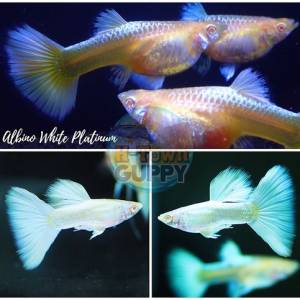
- Inspect new fish before purchase: recent real video of intact fins, normal breathing and swimming is more useful than heavily edited catalog art.
If you are comparing guppy strains with especially large tails, remember that wider fins may demand more care around strong flow, decorations and active tankmates. A vendor’s representative image is not proof that every individual fish in stock has uninjured fins; ask to see the actual available fish.
Torn guppy tail FAQ
Is a torn guppy tail always fin rot?
No. A tail can split after nipping, snagging or rough handling. Progressive erosion, changing fin edges or other illness signs deserve a closer look; a photo alone cannot diagnose the cause.
Will my guppy tail grow back completely?
Some fin tissue may regenerate when the fish is healthy and the damage stops, but full restoration of size, color or shape cannot be guaranteed. Monitor for a stable or improving trend.
How long does a guppy tail take to recover?
There is no universal healing timeline. The depth of damage, repeated injury, water conditions and fish health all matter. A seven-day observation log is for tracking, not a promise that healing is finished in one week.
Should I add aquarium salt or antibiotics for one torn tail?
Not automatically. A localized tear without other concerning signs is not proof of infection. Check water and physical hazards first, and seek qualified guidance before medication or salt treatments.
Can sharp artificial plants tear guppy fins?
Yes. OATA advises avoiding sharp or rough ornaments for long-finned guppies and mollies. Replace unsafe décor and provide open swimming space plus suitable cover.
Should I isolate a guppy with a torn tail?
Consider separation if it is repeatedly nipped, cannot feed, or needs closer assessment. Use a stable, cycled and appropriately sized aquarium; moving a fish into unfiltered new water can create additional stress.
What if the tear keeps getting bigger?
Test water, observe for active nipping and review equipment hazards. Progressive fin loss, inflamed edges, abnormal breathing or poor appetite require timely fish-health assessment rather than waiting for a fixed recovery date.
Sources and related guides
For guppy care and avoiding sharp decorations: OATA — How to Look After Guppies and Mollies. For progressive fin erosion and environmental checks: Aquarium Co-Op — Fin Rot in Aquarium Fish. HiGuppy-specific reading: Fin Rot vs Torn Fins, Guppy Bullying Signs, and Signs of Stress. This educational guide does not establish a diagnosis or prescribe medication for an individual fish.
Behind the care guides
Care begins with steady systems
Our guppy guides focus on practical routines: keep water stable, observe fish closely and allow for natural variation.
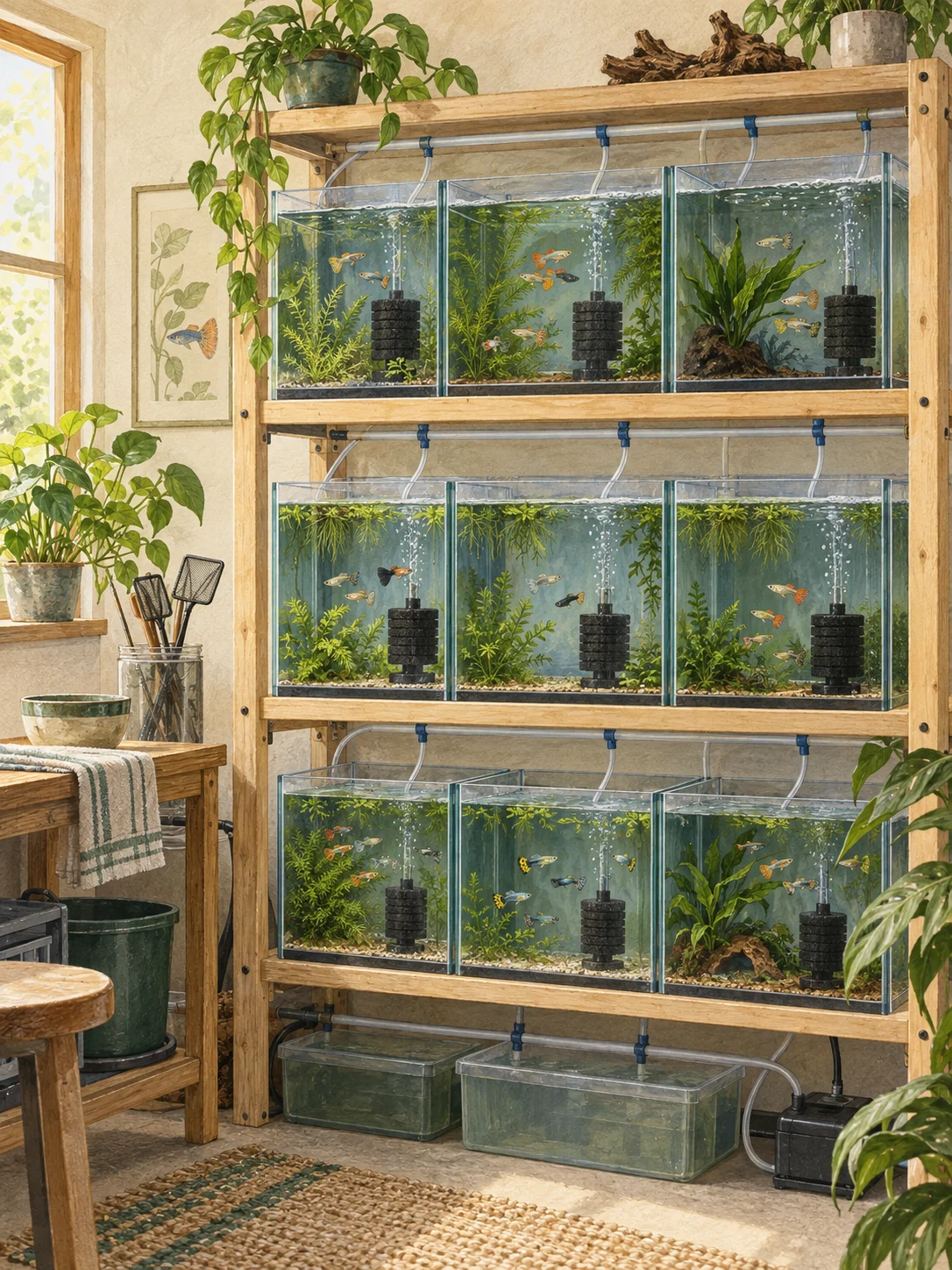
Care systems
Steady water, thoughtful care
Gentle filtration and regular observation support healthy aquarium routines.
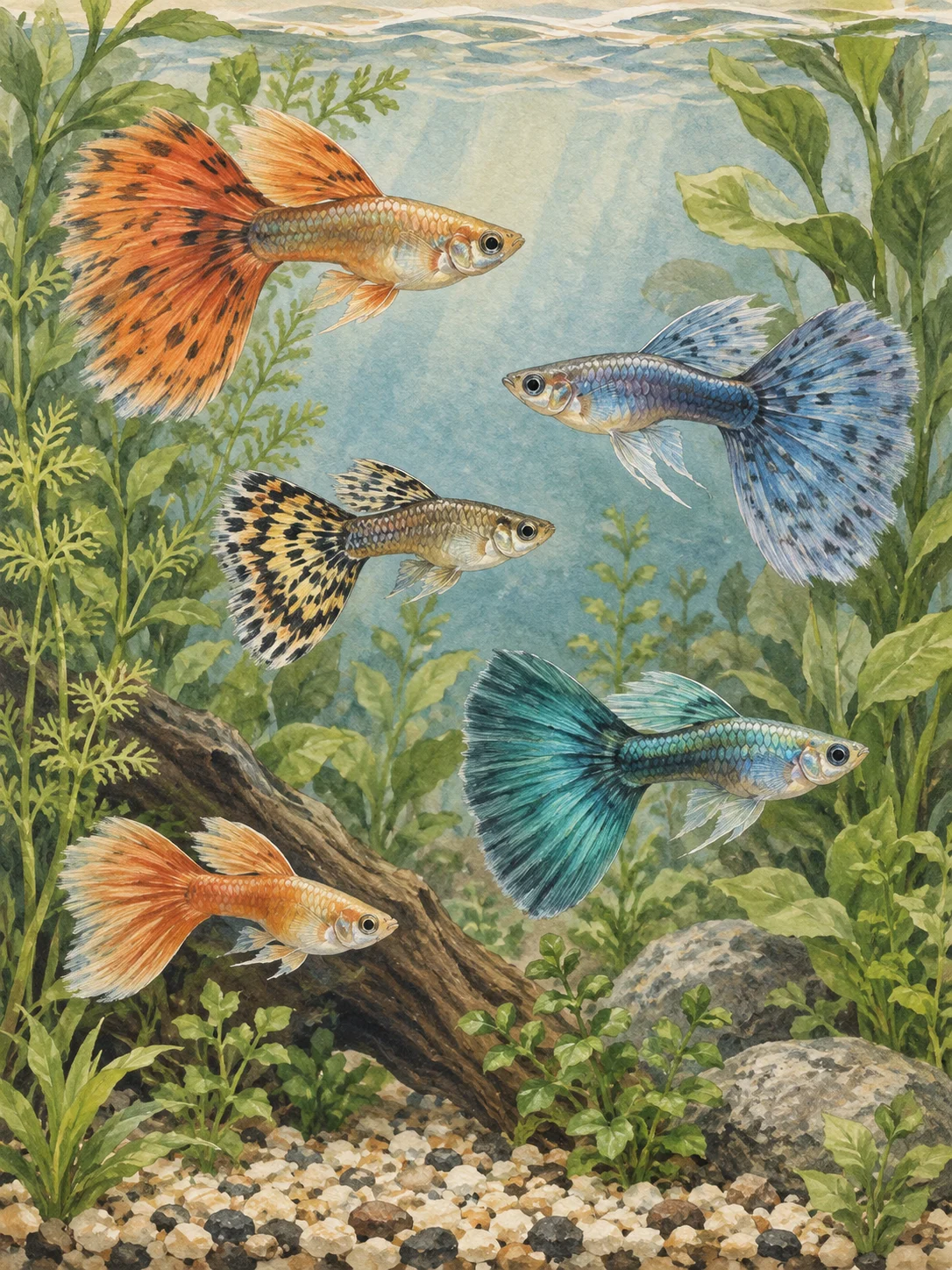
Natural variation
Every guppy is different
Color, size and fin shape vary with strain, age and each individual fish.
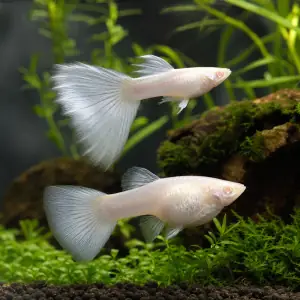
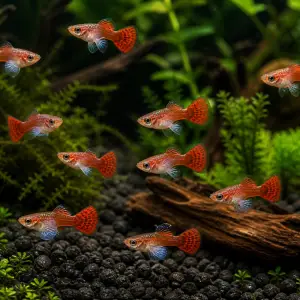
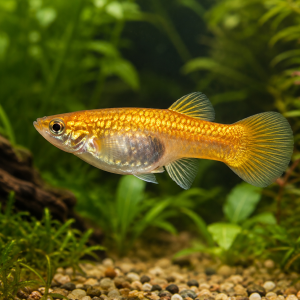
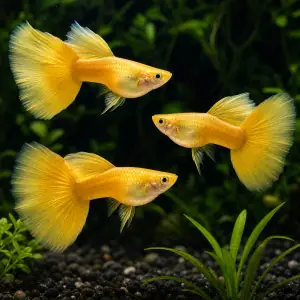
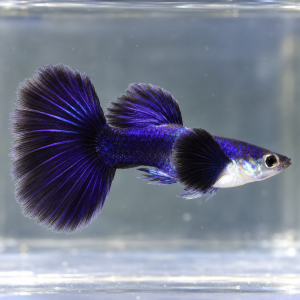
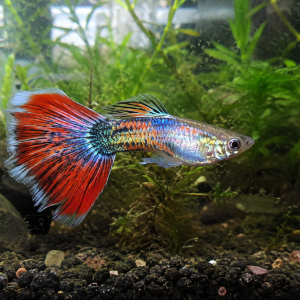
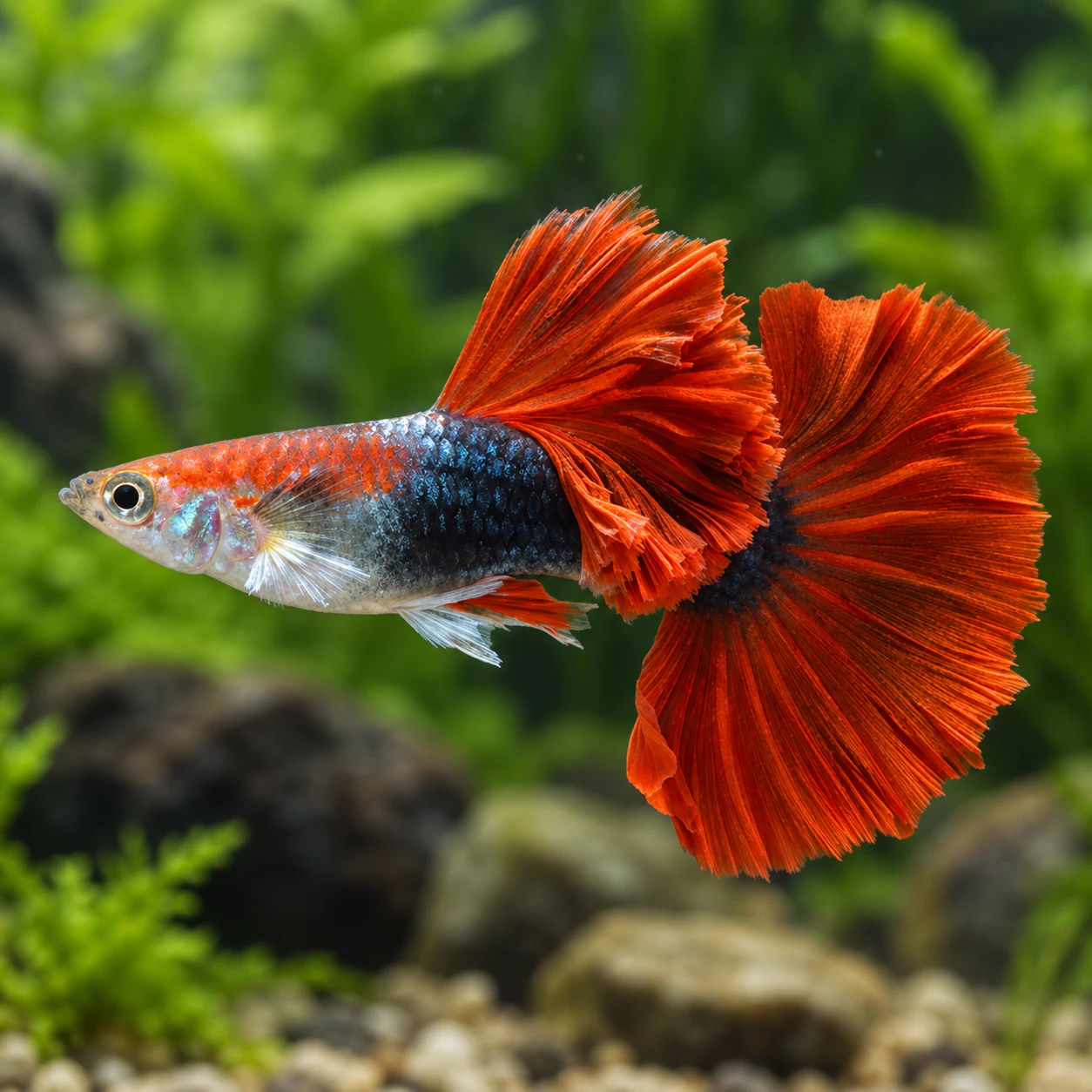
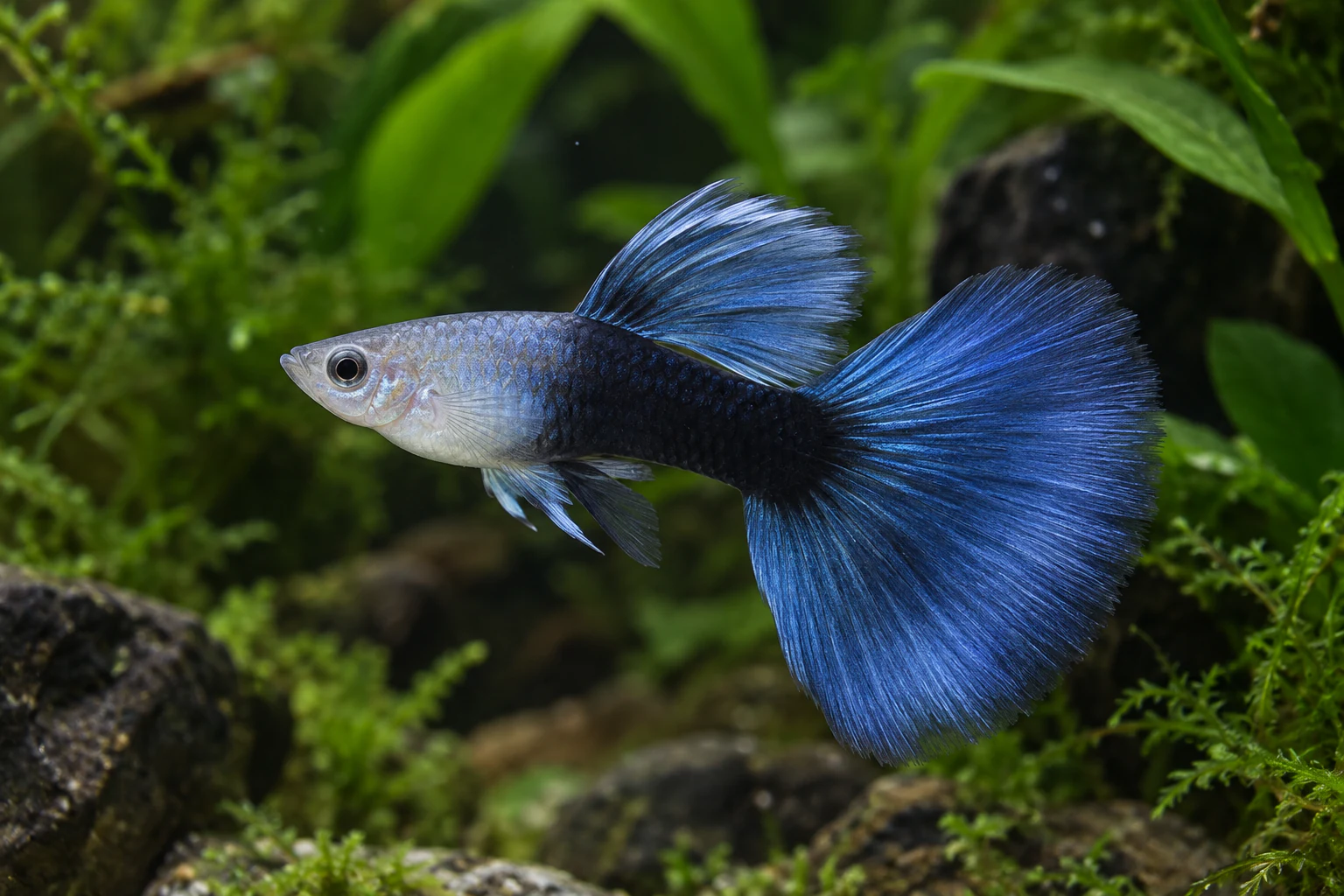
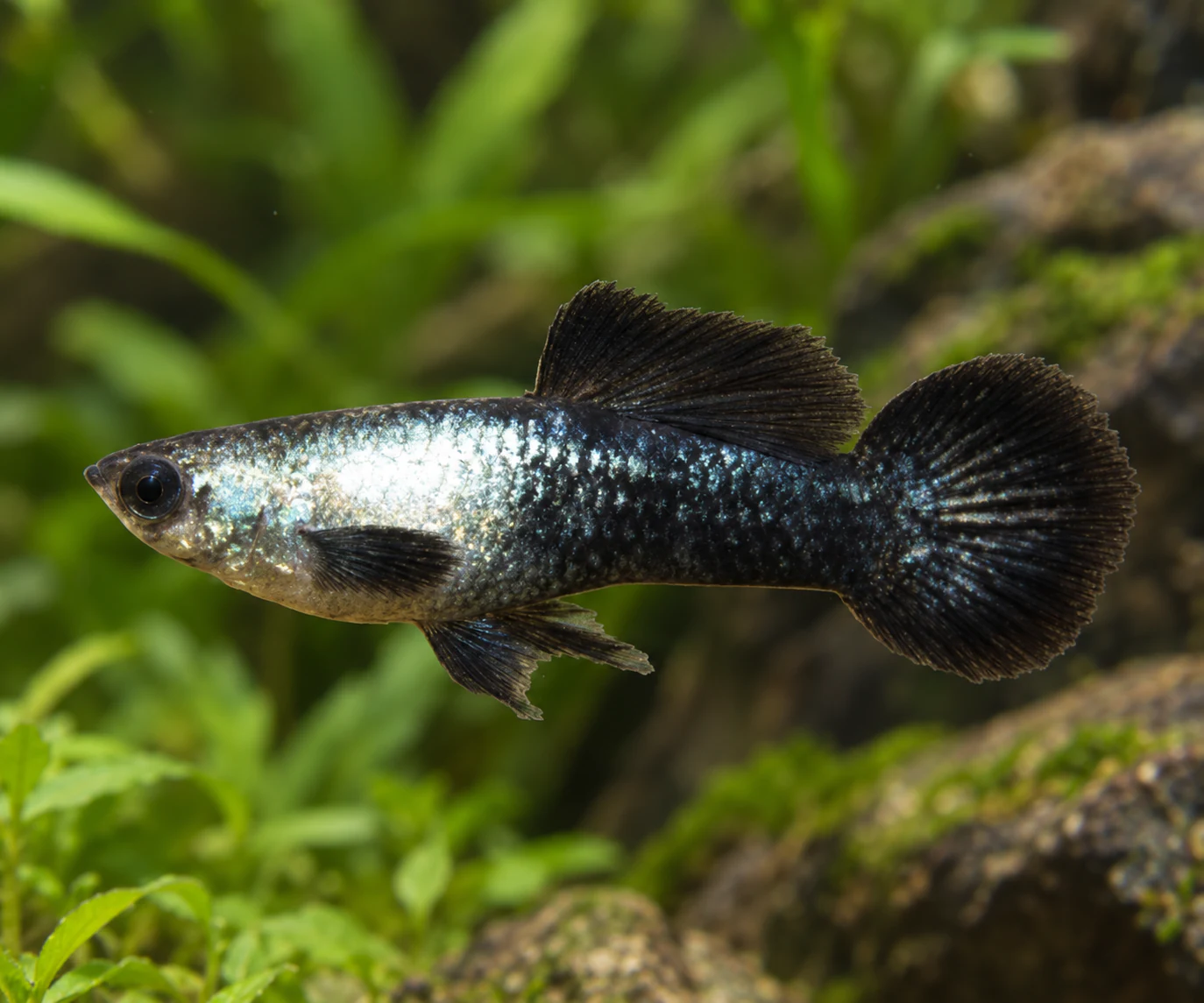
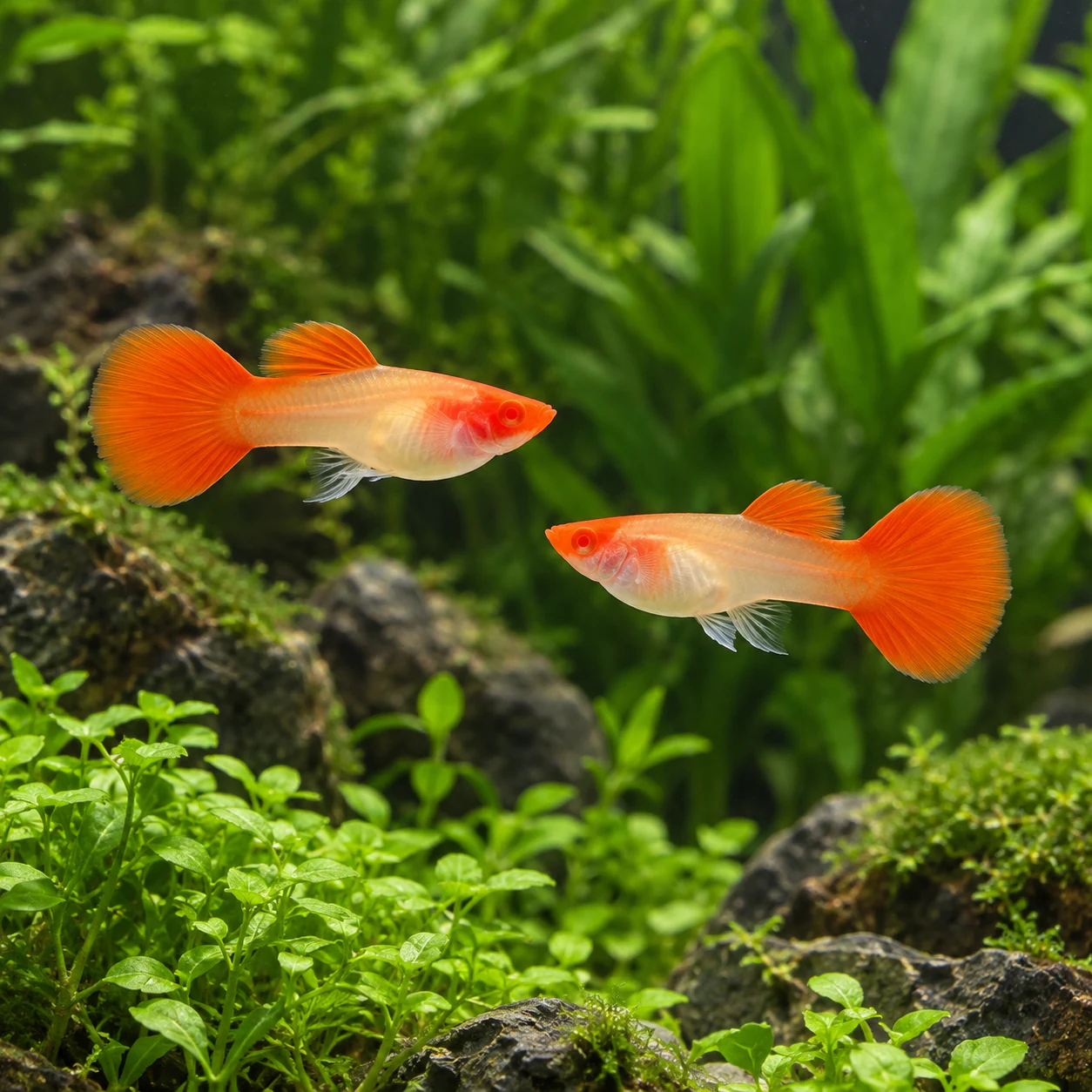
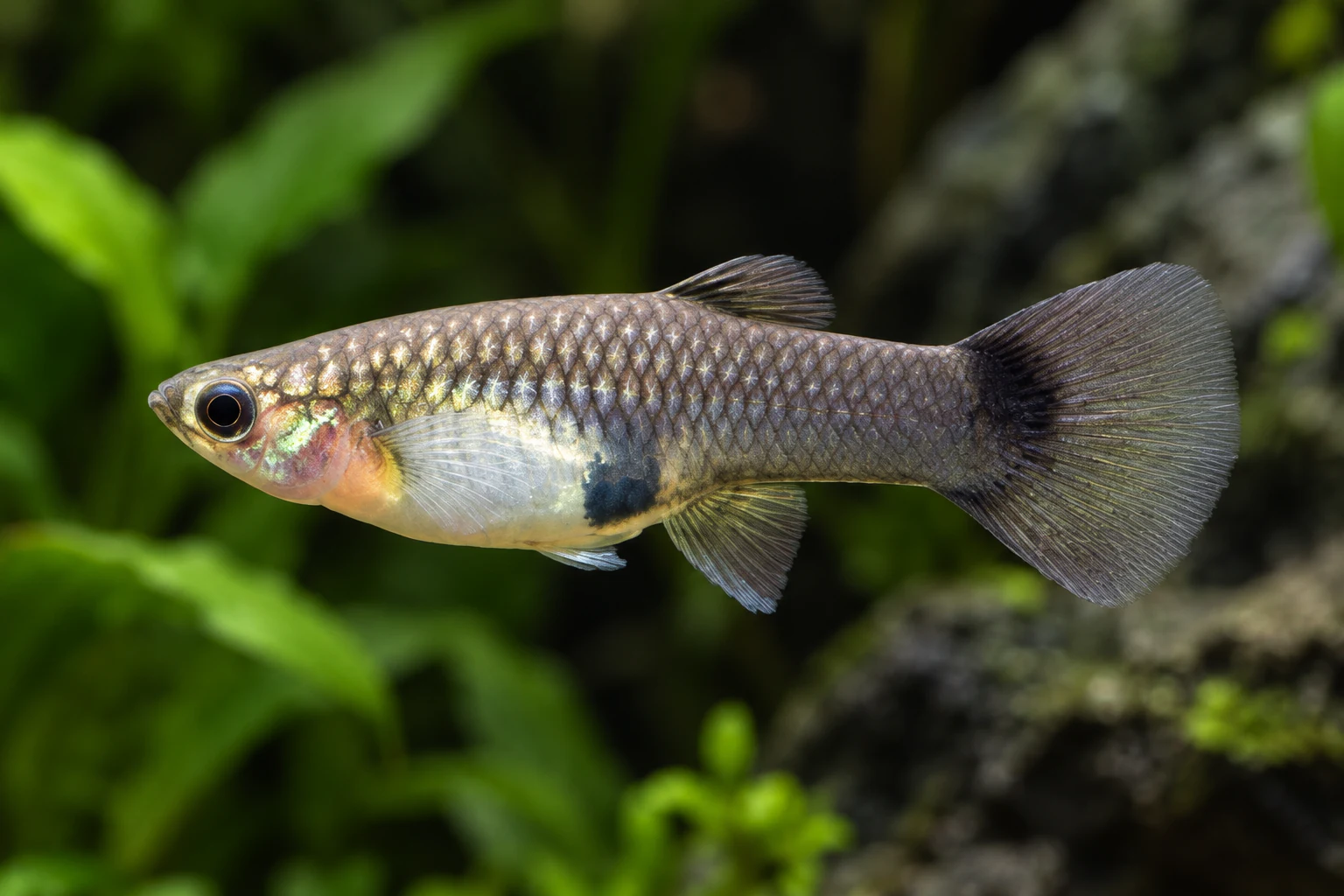
Editorial illustrations for context; they do not depict HiGuppy's exact facility or current fish stock.