LIVE-FISH ARRIVAL CARE
Acclimate shipped guppies with a calm, prepared plan.
Receiving shipped guppies starts with a prepared tank, sealed-bag inspection, a controlled temperature transition, and a clean transfer. For international orders, follow the professional transshipper’s terms for the final domestic leg.
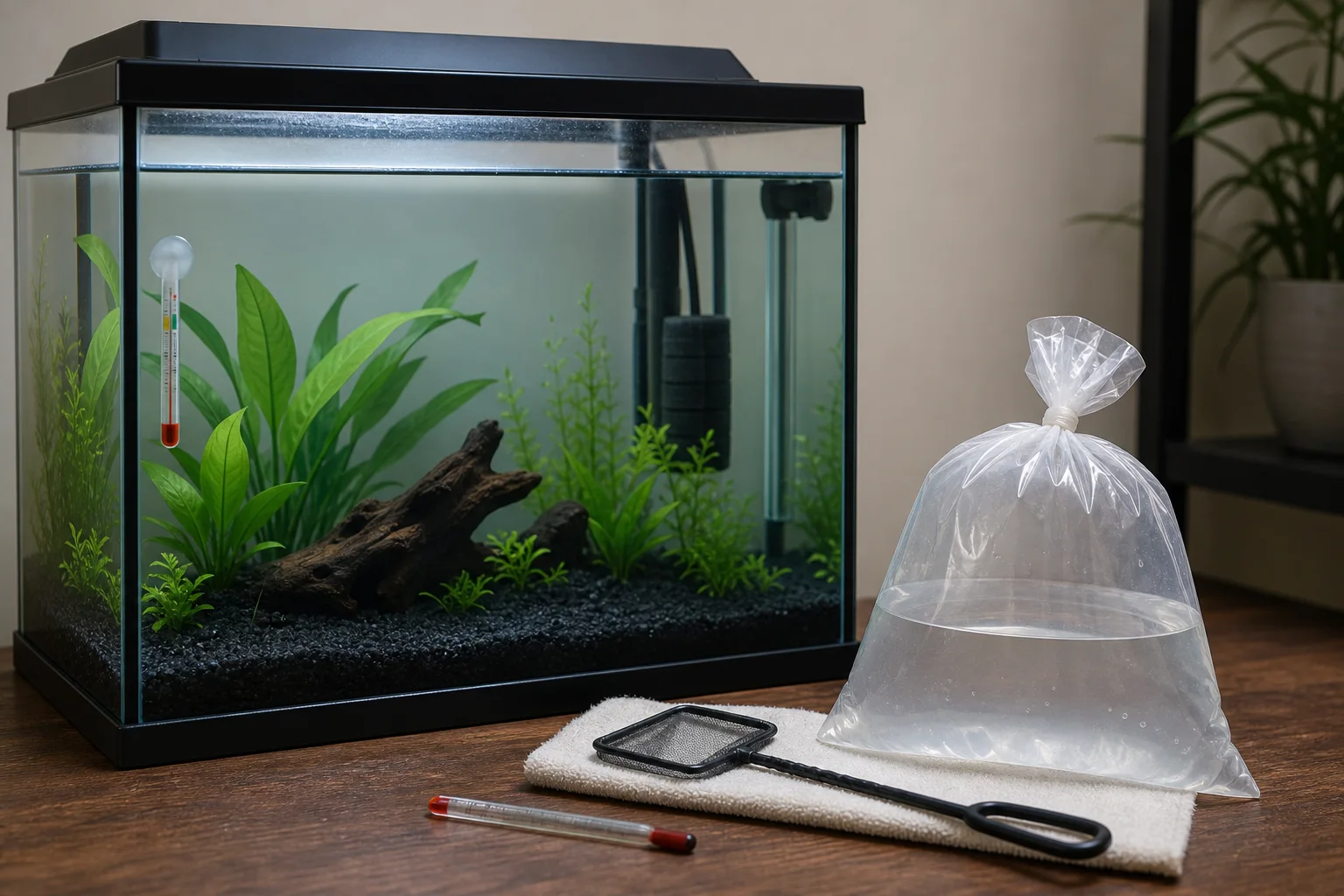
Bring the box indoors, inspect every sealed bag, match temperature while sealed, then transfer the guppies into clean prepared water. Do not add shipping water to the aquarium.
BEFORE DELIVERY
A safe arrival starts before the box is at the door.
Do not wait until delivery day to cycle a tank or find basic equipment. A simple stable setup is more useful than a complicated emergency setup.
Mature receiving tank
Use a cycled aquarium with conditioned water, functioning filtration and stable temperature. A separate quarantine tank makes observation easier.
Delivery-day tools
Have a clean net or specimen cup, towel, thermometer and water-test kit ready before opening the shipping box.
Low-stress environment
Dim the aquarium light, keep the room calm and avoid placing a newly opened box in direct sun, cold drafts or heavy foot traffic.
Policy first
Know which policy applies to your shipment stage. HiGuppy’s DOA policy is for the international leg at professional-transshipper inspection; the final domestic delivery follows the transshipper’s live-arrival terms.
STEP BY STEP
Five steps for a shipped-guppy arrival.
- 01
Receive promptly
Bring the package indoors and move it to a quiet, temperature-stable area. Lower the aquarium lighting before unpacking.
- 02
Inspect sealed bags
Before opening, check movement, posture, leaks and bag damage. If you are the final buyer, preserve any evidence required by the professional transshipper’s domestic live-arrival policy before opening a suspect bag.
- 03
Match temperature while sealed
Keep the bag sealed while its temperature comes closer to the prepared aquarium. Temperature is a better guide than treating a timer as an absolute rule.
- 04
Transfer into clean water
Open the bag only when the destination tank is ready. Gently net or cup the fish into the aquarium and discard shipping water outside the tank.
- 05
Observe, then feed lightly
Keep lighting low and watch breathing, balance, posture and activity. Offer only a small feeding after the fish are upright and responsive, and remove leftovers.
FIRST 48 HOURS
Stability matters more than constant intervention.
First 1–2 hours
Keep lighting low and confirm the fish can remain upright, breathe steadily and move normally without being chased or repeatedly netted.
Arrival day
Watch temperature and water quality. Avoid heavy feeding and avoid making several large parameter changes at once.
Next 24–48 hours
Observe appetite, fins, color, breathing, waste, isolation and aggression. Record photos and water-test results if a concern develops.
AVOID COMMON MISTAKES
Keep shipping water and unnecessary stress out of the receiving tank.
- Do not pour shipping water into the aquarium.
- Do not introduce new fish into an uncycled tank.
- Do not combine several medications “just in case” without a specific reason.
- Do not overfeed immediately after a long trip.
- Do not discard an affected bag or required evidence before completing the live-arrival instructions that apply to your shipment stage.
Something looks wrong on arrival?
Complete the evidence required by the policy for your shipment stage before opening a suspect bag. HiGuppy’s DOA policy covers the international leg at professional-transshipper inspection; final domestic-arrival claims follow the transshipper. For continuing care concerns, include tank details, water-test results and clear photos.
COMMON QUESTIONS
Guppy Acclimation Guide FAQ
How long should I acclimate shipped guppies?
Use the fish and temperature difference as the guide rather than a rigid total time. Complete sealed-bag inspection first, bring the sealed bag close to the prepared aquarium temperature, then make a calm, prompt transfer into clean water.
Should I pour shipping water into my aquarium?
No. Transfer the fish with a clean net or suitable cup and discard shipping water outside the aquarium.
Should shipped guppies go straight into my display tank?
A separate, cycled quarantine or receiving aquarium is strongly recommended because it gives new fish a calmer place to recover and lets you observe them before they join an established collection.
Why can guppies look pale after shipping?
Darkness, transit stress and a new environment can temporarily mute color. Stable water, low stress and observation are more useful than changing several things at once. Persistent abnormal breathing, balance or posture deserves attention.
When should I feed newly arrived guppies?
Wait until the fish are upright, responsive and swimming normally, then offer a small amount and remove uneaten food. Heavy feeding immediately after transit can reduce water quality.






