The HiGuppy Journal
Rare Guppy Strains: 5 Stunning Colors (Pink Tuxedo, Sky Blue & More)
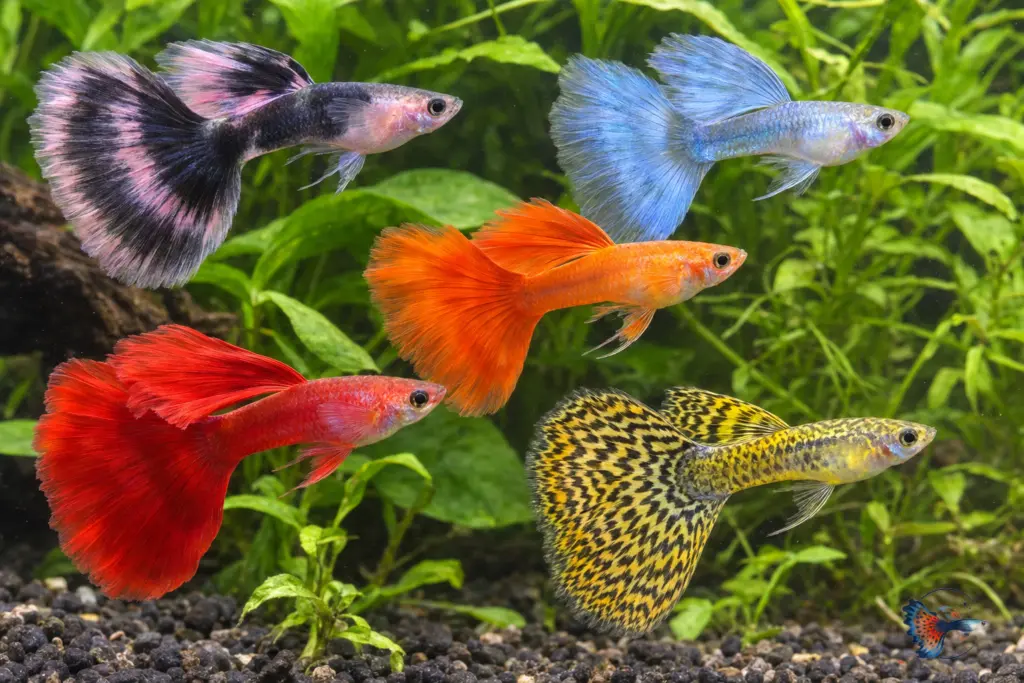
Quick answer: The five rare guppy strains most keepers ask about are the pink tuxedo guppy, sky blue guppy, orange guppy, red flamingo guppy and yellow king cobra guppy. Each is a selectively bred colour or pattern line of Poecilia reticulata — not a separate species — so all five share the same care: a cycled, filtered tank of at least 45 litres, stable water at 24–26°C, pH 7.2–8.0 and moderate hardness. Tell them apart by where the colour sits (body, tail, or a dark rear patch) and always judge the actual fish, not the listing name.
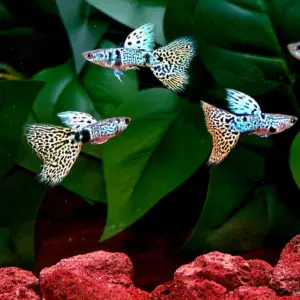
If you have scrolled through guppy listings and wondered whether a “pink tuxedo” is really different from a plain pink guppy, you are not alone. Rare guppy strains are named lines that breeders have fixed over many generations for a specific colour, pattern or fin shape, and the names can be confusing because a single fish may carry two or three labels at once. This guide breaks down five of the most eye-catching strains — pink tuxedo, sky blue, orange, red flamingo and yellow king cobra — with clear identification markers, honest notes on availability and price, shared care requirements, and a buying checklist that keeps you from paying strain prices for an ordinary fish. The photos in this article are illustrative references; always confirm exact appearance and availability against current listings.
Quick ID Facts: The Five Rare Guppy Strains at a Glance
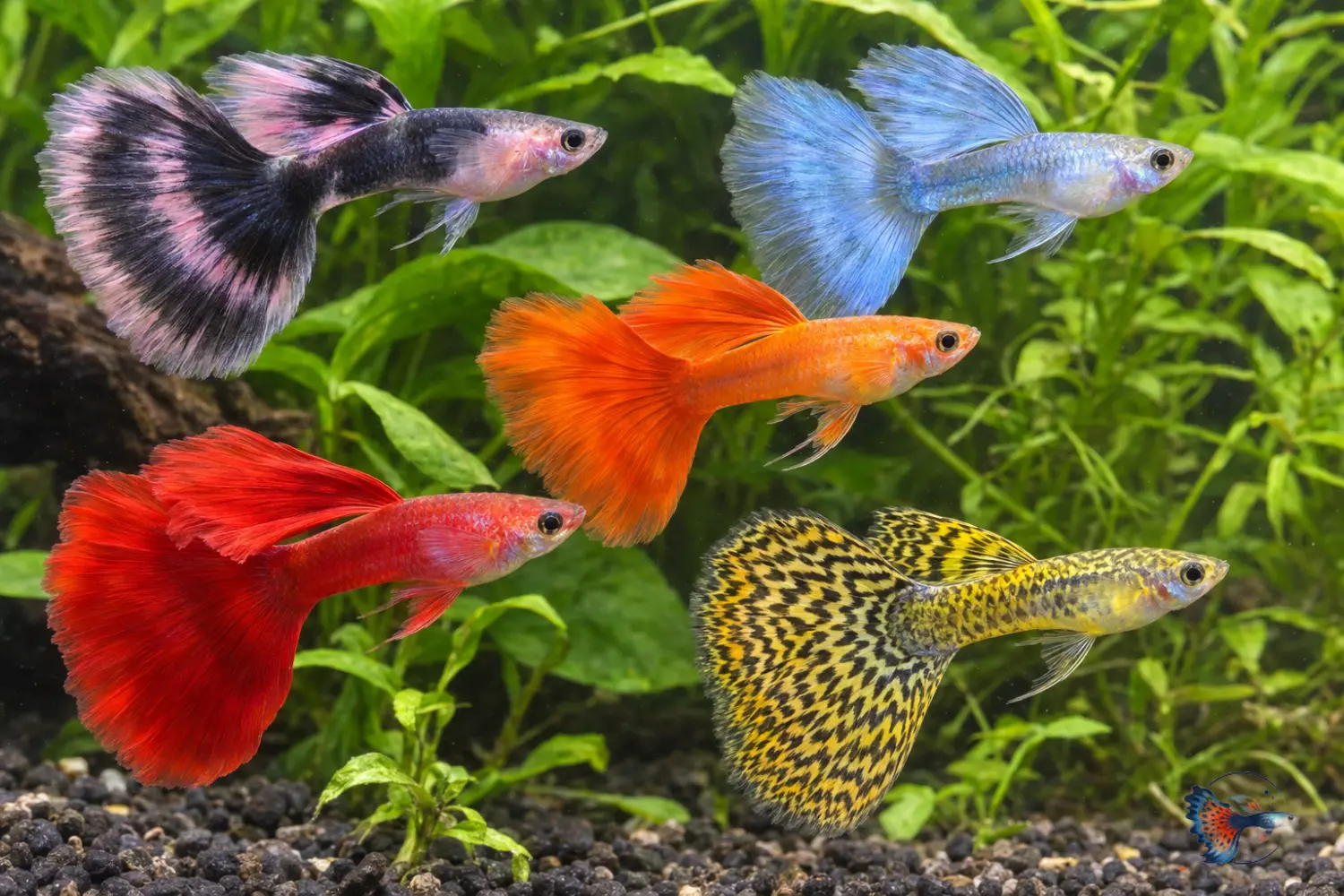
Before the details, here are the markers that separate these rare guppy strains at a glance — the same things a breeder checks when sorting a grow-out tank:
- Pink tuxedo guppy — a soft pink front half against a dark, almost charcoal rear body; the “tuxedo” is the dark patch, not the pink.
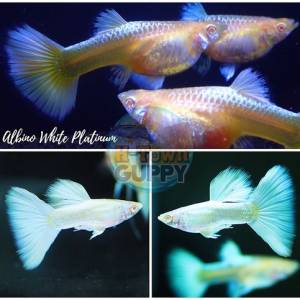
- Sky blue guppy — a pastel, slightly metallic baby-blue sheen over the body and fins; often carries albino genetics, so check the eyes.
- Orange guppy — saturated pumpkin to tangerine colour on the tail and often the rear body; sits between red and yellow lines genetically.
- Red flamingo guppy — a deep, even solid red across body and fins; albino versions show the classic red-with-red-eyes look.
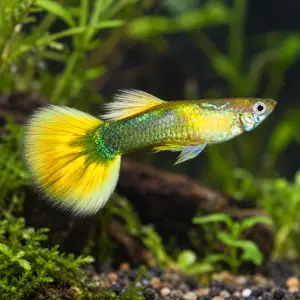
- Yellow king cobra guppy — yellow fins and body overlaid with the fine snakeskin “cobra” rosette pattern, usually clearest on the tail.
- Shared trait — males carry the show colours; females of every strain are larger-bodied but noticeably duller.
- Shared care — all five are ordinary guppies under the paint: same water, same diet, same 2–3 year lifespan.
Rare Guppy Strains Comparison Table
Use this table when you are comparing listings or sorting fry. The “first check” column is the fastest way to confirm or reject a seller’s label.
| Strain | Signature look | Commonly confused with | First check before buying |
|---|---|---|---|
| Pink tuxedo | Pink front half, dark rear patch, pink-tinged fan tail | Half black, plain tuxedo | Dark patch covers rear third to half of body — fins alone don’t count |
| Sky blue | Even pastel metallic blue, body and fins | Blue topaz, japan blue, neon blue | Blue should read soft and even, not electric or only on the tail |
| Orange | Pumpkin-orange tail, often orange rear body | Red strains, yellow strains, albino full red | Compare under neutral light — orange drifts red or yellow in photos |
| Red flamingo | Deep uniform red across body and fins | Red lace, red dragon, koi guppy | Flamingo is solid red; pattern or marbling means a different strain |
| Yellow king cobra | Yellow base with lace-like cobra rosettes on tail and body | Snakeskin, yellow mosaic, grass guppy | Rosettes should form closed chain-links, not random speckles |
How Guppy Strain Names Actually Work
Guppy names are layered, and understanding the layers keeps you from overpaying. Most listing names combine up to three elements: a base colour (pink, sky blue, orange, red, yellow), a pattern (tuxedo, cobra, snakeskin, grass, mosaic) and sometimes a fin or body trait (dumbo ear, ribbon, albino, half black). “Pink tuxedo” is colour plus pattern. “Albino red flamingo” is a pigment trait plus a colour line. Because trade names are not governed by any single registry, two sellers can describe the same guppy strains differently — which is why every section below ends with what to verify on the actual fish.
The pattern and colour genes behave differently in breeding, too. A colour line like red flamingo breeds fairly true when both parents carry it, while pattern traits such as cobra or tuxedo can strengthen, weaken or skip a generation. That matters if you plan to breed these guppy strains: buy a proven pair or trio, and expect to cull or re-home fry that drift off-type. Our fancy guppy strain guide explains how breeders keep lines consistent, and the guppy strain list maps every colour, pattern and fin trait we carry.
1. Pink Tuxedo Guppy
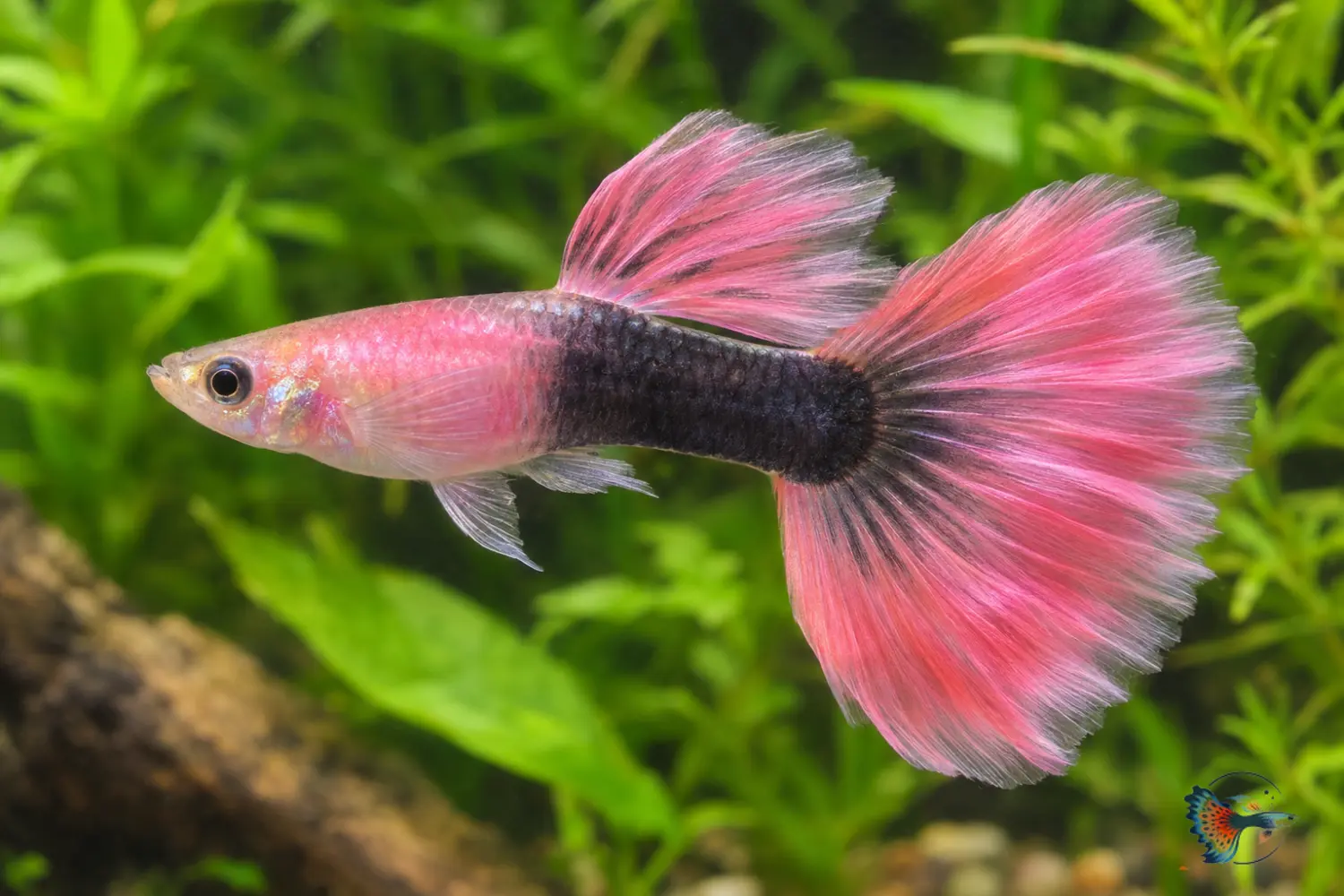
The pink tuxedo guppy is exactly what the layered name says: a pink colour line paired with the tuxedo body pattern. The front half of the body is a warm, slightly translucent pink — ranging from pale rose to salmon — while the rear third to half carries the signature dark patch in charcoal, near-black or deep grey. On a good male, the boundary between pink and dark is sharp and vertical, the tail is a wide fan washed with the same pink, and the dorsal fin echoes the tail colour.
What makes the strain unusual is contrast. Most guppy strains are judged on how much colour they carry; the pink tuxedo is judged on where the colour stops. A weak example fades to grey rather than holding a clean dark patch, or shows pink only at the peduncle. Females are subtler: expect a pale pink-grey body with the dark rear patch still visible, but none of the male’s fin colour.
Identification checklist: pink front body, unbroken dark rear patch covering at least a third of the body length, fan tail matching the front colour. If the dark region is only a tail-root smudge, you are looking at a pink guppy, not a pink tuxedo. For the pattern family in detail, see our tuxedo guppy strain guide.
2. Sky Blue Guppy
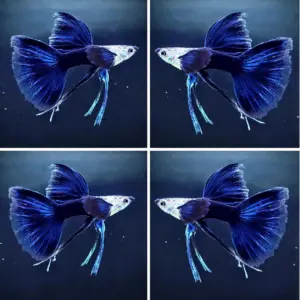
Among the blue guppy strains, sky blue trades saturation for softness. Where a blue topaz or japan blue hits electric or neon tones, a true sky blue reads as a gentle, even pastel — closer to iridescent powder blue than to sapphire. The colour should cover the body and fins evenly, often with a slight metallic shimmer from the iridophore layer under the scales. Under warm tank lighting they can look almost lavender-silver; under daylight LEDs the blue deepens.
Two things to watch. First, many sky blue lines are built on albino genetics, which removes melanin and lets the blue shine — but also produces red or pink eyes and somewhat lighter vision. That is normal for the strain, not a defect. Second, “sky blue” is one of the most abused trade names in the hobby: any washed-out blue male tends to get the label. Ask for a side-view photo in neutral white light and compare it against deeper blues like blue topaz or japan blue before paying a premium.
Identification checklist: even pastel blue across body and fins (not just the tail), metallic sheen rather than flat grey, and — on albino-based lines — pinkish eyes. If the blue is only in the tail or reads navy/electric, it belongs to a different blue line.
3. Orange Guppy
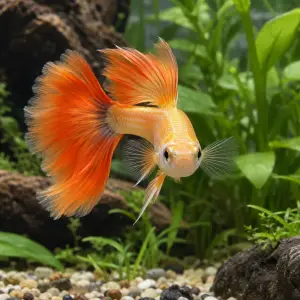
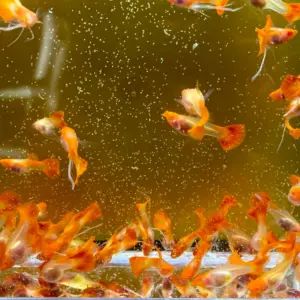
The orange guppy occupies a narrow band of the spectrum that sellers constantly blur. True orange sits between the reds and the yellows — think pumpkin, tangerine or carrot tones — and in a good male it saturates the tail and rear body evenly. Because orange lines are often selected from red or yellow breeding stock, you will meet fish listed as “orange” that are really light reds or deep yellows; the difference matters most when you want a tank that visibly contrasts with standard red guppy strains.
Judge orange under neutral light. Warm-spectrum shop LEDs push red fish toward orange and orange fish toward yellow, which is exactly how mislabeled listings happen. On a genuine orange male the colour holds its hue across the tail without red edging, and the body shows at least a warm wash of the same tone. Albino orange variants exist as well — bright, almost glowing fish with red eyes — and they photograph differently again.
Identification checklist: pumpkin-to-tangerine hue (not crimson, not lemon), even coverage on the tail and rear body, and consistent colour in both bright and shaded parts of a photo. If in doubt, ask the seller which side of the red–yellow line the parent stock sat on.
4. Red Flamingo Guppy
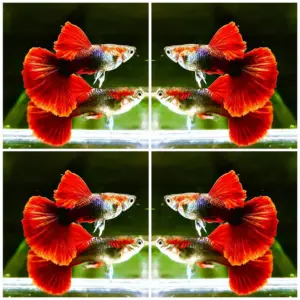
Red flamingo is the strain name for the deepest, most uniform solid red in the guppy hobby — think flame rather than cherry. Where patterned reds like koi or red lace carry white zones, marbling or lace-work, a red flamingo male is red head-to-tail: red body, red tail, red dorsal, with the colour staying even rather than concentrating on the fins alone. The albino red flamingo variant is the famous one — brilliant red with pink-red eyes — but non-albino flamingo lines exist and show darker eyes.
Buyers most often confuse red flamingo with three neighbouring guppy strains. Red lace adds white lace markings over the red. Red dragon describes a red body with heavier, often darker or patterned fins. And a plain “red guppy” may be red only on the tail. If a listing photo shows patches of white, silver or black, the fish is not a flamingo — flamingo is defined by what it does not have. Our red guppies care and buying guide compares the red lines side by side.
Identification checklist: uniform deep red across body and fins with no white, silver or marbled zones; red or pink eyes mark the albino variant. Density of red — not just presence — is the quality marker.
5. Yellow King Cobra Guppy
The yellow king cobra combines a yellow colour line with the cobra pattern — the fine, interlocking rosettes named for their resemblance to snakeskin or chain mail. On a strong male the cobra links cover the tail and creep onto the rear body in a closed, lace-like network, all overlaid on a warm yellow base that ranges from lemon to golden. It is the busiest-looking of these five guppy strains: where flamingo is a wall of colour, king cobra is texture on texture.
Pattern quality is the whole game here. Weak king cobra males show broken speckles instead of closed rosettes, or cobra markings confined to the tail with a plain yellow body. Females carry a subtler version — the rosette texture on the tail without the male’s heavy colour. The strain also sits close to the snakeskin and yellow mosaic guppy strains, so verify that the markings form linked chains rather than random dots or patchy mosaic blocks. We keep a dedicated king cobra guppy guide for the pattern family as a whole, and the yellow guppies guide covers the colour side.
Identification checklist: yellow base colour on body and fins, closed chain-link rosettes (not speckles), pattern strongest on the tail and extending onto the rear body.
Care Requirements: The Same for All Five Strains
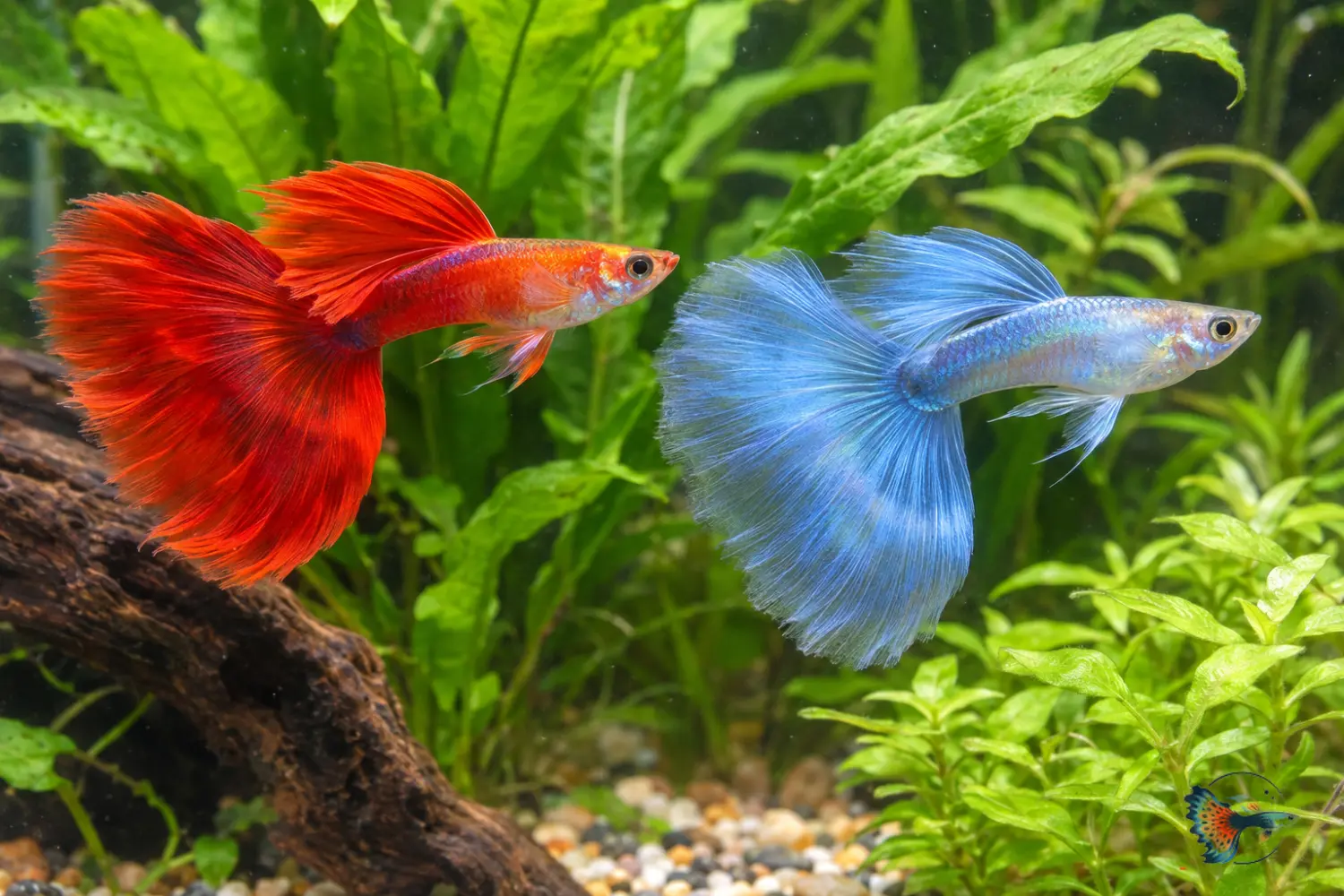
Here is the practical good news: rare guppy strains are fancy guppies in fancy clothes, and their care is identical to any other Poecilia reticulata. Pay for looks, not for a different species.
Tank and water. Keep these guppy strains in a cycled, filtered aquarium of at least 45 litres (about 12 US gallons) for a small group — larger if you plan to breed, since fry arrive whether you plan or not. Target 24–26°C (75–79°F), pH 7.2–8.0, and general hardness around 8–15 dGH; guppies are a hard-water livebearer and do poorly in soft, acidic tanks. Ammonia and nitrite must read 0 ppm, and nitrate should stay under 40 ppm with weekly 25–30% water changes. Full numbers are in our guppy water parameters guide, and our beginner tank setup guide walks the whole build.
Diet. A quality flake or micro-pellet as the staple, plus frozen or live foods two or three times a week — brine shrimp, daphnia, bloodworms — to keep colour density up. Pigmentation is literally built from diet: carotenoid-rich foods visibly deepen reds and oranges within weeks.
Tankmates and stress. All five guppy strains are peaceful community fish. Keep males and females at a 1:2 or 1:3 ratio to spread male attention, avoid known fin-nippers, and give the tank plant cover — especially if females are present and fry are likely. Fancy males with big tails are slower swimmers, so keep filter flow gentle.
Lifespan and breeding. Expect 2–3 years. Females drop 10–50 fry roughly every 4–6 weeks once mature, and these guppy strains cross freely with each other — a red flamingo female paired with a cobra male produces mixed-pattern fry, which is fun for a home tank but ruins a breeding line. Keep strain groups separated if purity matters.
How to Choose and Buy a Rare Guppy Strain: A 7-Step Checklist
Named guppy strains cost more than mixed fancy guppies, so verification is where your money lives. Work through this before ordering:
- Match the label to the checklist markers above. Pink tuxedo needs the dark rear patch; flamingo needs solid red; king cobra needs closed rosettes. Each of these guppy strains has one marker that settles the ID, and the listing name alone proves nothing.
- Ask for a side-view photo in neutral white light. Side-on shots show body pattern that top-down photos hide, and neutral light stops reds masquerading as orange.
- Request the adult line reference. A photo of the parent male tells you what a juvenile will become; young males are always duller than adults.
- Confirm sex mix. Pairs and trios suit breeding; male-only groups suit display. Check our breeder stock guide for the trade-offs.
- Check the seller’s live-arrival policy. Rare guppy strains ship like any guppy, but you want the DOA and acclimation terms in writing before a box leaves a facility — our published packing process shows what good looks like.
- Plan quarantine before the fish arrive. Two weeks minimum in a separate tank protects your existing stock; new fish are how disease enters clean tanks.
- Price-check against the market. Named guppy strains typically run higher than mixed fancy stock — the guppy price guide gives realistic ranges so you can spot both bargains and markups.
If you are new to ordering live fish online, our checklist for choosing healthy guppies online covers eye condition, fin quality and belly shape in detail.
Keeping Rare Strain Colours Vibrant
In rare guppy strains, colour is genetic, but its expression is environmental — the same fish can look washed out or spectacular depending on the tank. Four levers matter most:
- Water stability over water chasing. A stable pH of 7.6 beats daily tinkering toward a printed target; swings fade colour within days via stress.
- Carotenoid-rich food. Reds, oranges and pinks deepen on diets containing natural pigments — look for krill, spirulina or astaxanthin on the ingredient list.
- Full-spectrum lighting on a timer. 8–10 hours of consistent light shows and supports colour; chaotic schedules dull it.
- Low chronic stress. Crowding, harassment and fin-nipping tankmates suppress colour faster than any diet fixes it. A stressed male goes pale before he goes sick.
The guppy colour enhancement guide covers each lever with numbers and schedules.
Frequently Asked Questions
Are rare guppy strains harder to keep than regular guppies?
No. A pink tuxedo or red flamingo has the same needs as a $5 mixed fancy guppy — cycled water, stable parameters, peaceful tankmates. The only real difference is that heavily selected guppy strains are sometimes slightly less robust than wilder stock, so stable water matters a little more.
Can I keep all five strains in one tank?
Yes — a mixed-strain display tank is one of the nicest ways to keep fancy guppies, and it is why a comparison guide like this exists. All five share identical care needs. The only caveat is breeding: these guppy strains interbreed freely, so offspring will blend traits and the fry won’t match either parent strain.
Why does my strain look different from the listing photo?
Usually lighting, age or stress. Shop photos are taken under tuned lighting on mature males; your fish may be younger, freshly shipped, or photographed under warm LEDs that shift hue. Give a new arrival 1–2 weeks of clean water and good food before judging — colour returns as stress drops.
Do female guppies show the strain colours?
Partly. Females carry the genetics and show a muted version — the tuxedo patch, the pastel sheen, the warm body wash — but not the male’s saturated tail and fin colour. This is normal for all of these guppy strains and not a sign you bought the wrong fish.
How much do rare guppy strains cost?
Expect to pay more than mixed fancy stock but less than show-quality bred stock — the exact range depends on strain, quality and whether you buy singles, pairs or trios. Our guppy price guide breaks down fish, shipping and setup costs so you can budget the whole picture.
Will the fry match the parents’ strain?
If both parents are the same established strain, most fry will match closely, with some natural variation breeders cull out. If the parents are different guppy strains — or one is a mixed-background guppy — fry will blend traits unpredictably. Keep strain groups in separate tanks if you want lines to stay true.
Which of the five strains is best for beginners?
Of the five guppy strains, orange and red flamingo are the most forgiving — the colour is easy to verify, lines are well established, and both read clearly even to an untrained eye. Pink tuxedo and king cobra ask you to judge pattern quality, which takes practice. Our hardy strains for beginners list has more starter picks.
Are these strains available at HiGuppy?
Availability rotates with what our breeder lines produce. Check the live listings on our collections page for current stock, or browse the full guppy strain list to compare every colour and pattern we carry.
Final Thoughts
Rare guppy strains reward the keeper who reads past the name. Learn the five markers — the tuxedo’s dark patch, sky blue’s even pastel, orange’s pumpkin hue, flamingo’s solid red, king cobra’s closed rosettes — and you can judge any listing in seconds. From there it is ordinary guppy keeping done well: stable hard water, a varied carotenoid-rich diet, quarantine for newcomers, and a tank layout that keeps stress low and colour high.
For the underlying species biology and distribution these guppy strains are bred from, FishBase’s Poecilia reticulata profile remains the standard scientific reference. And when you are ready to see what these fish actually look like in person, our live guppy collections show current stock with real arrival guarantees — start with the strain whose marker you can spot fastest, and let the tank convince you of the rest.
Behind the care guides
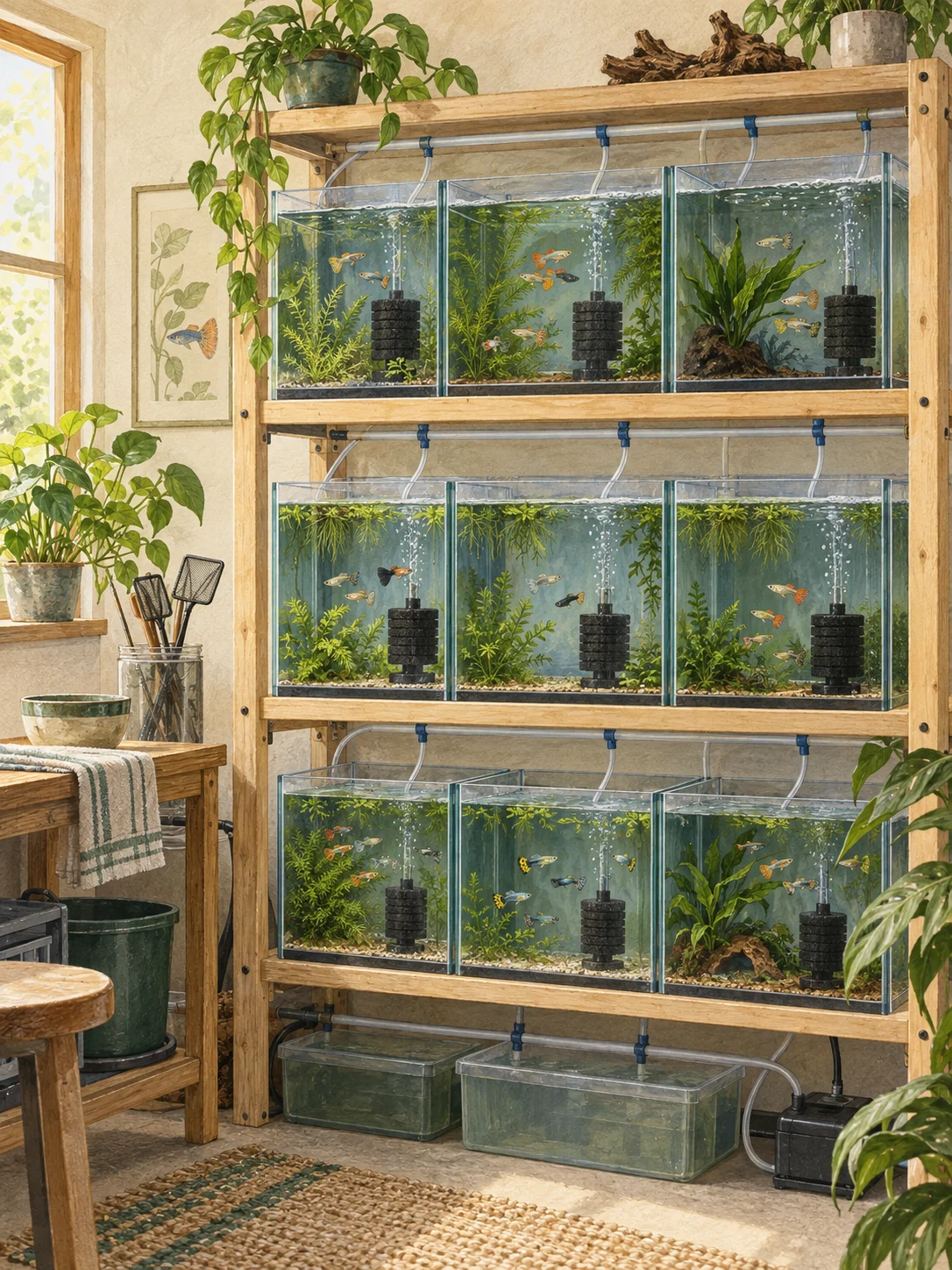
Care begins with steady systems
Our guppy guides focus on practical routines: keep water stable, observe fish closely and allow for natural variation.
Care systems
Steady water, thoughtful care
Gentle filtration and regular observation support healthy aquarium routines.
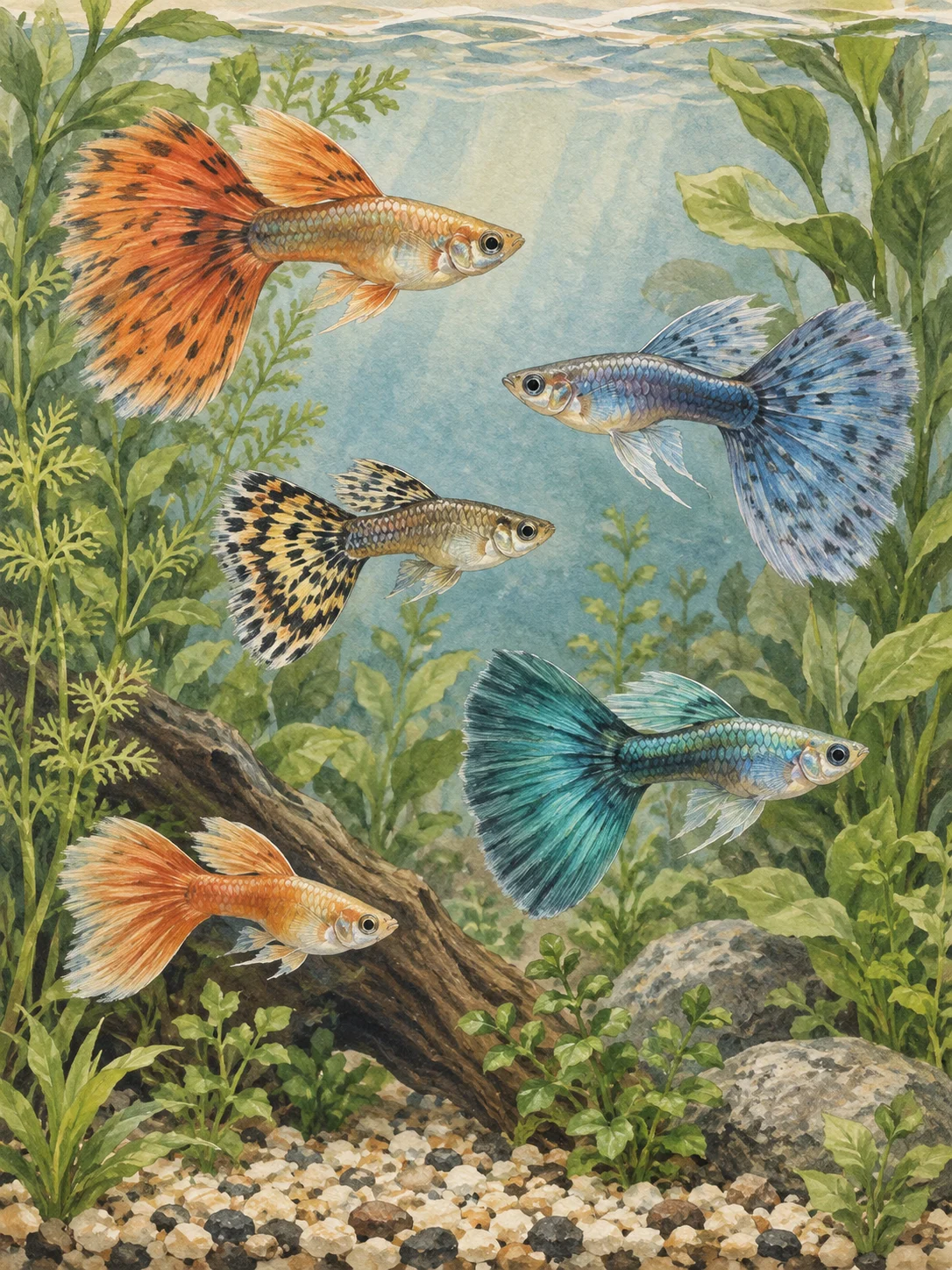
Natural variation
Every guppy is different
Color, size and fin shape vary with strain, age and each individual fish.
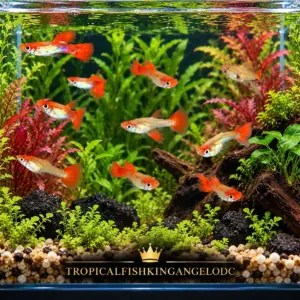
Editorial illustrations for context; they do not depict HiGuppy's exact facility or current fish stock.