A practical strain-navigation hub
Guppy Strains & Types: Colors, Patterns, Fins & Eyes
Learn how guppy names are built, compare visible traits and use current listing photos—not the strain name alone—to choose fish for display, beginner care or breeding projects.
Quick answer: A guppy strain name may combine a base color, body or tail pattern, fin trait, eye type and pack format. Naming is not perfectly standardized between breeders, so the current product description and photos control what is actually offered.
Decode the label
How to read a guppy strain name
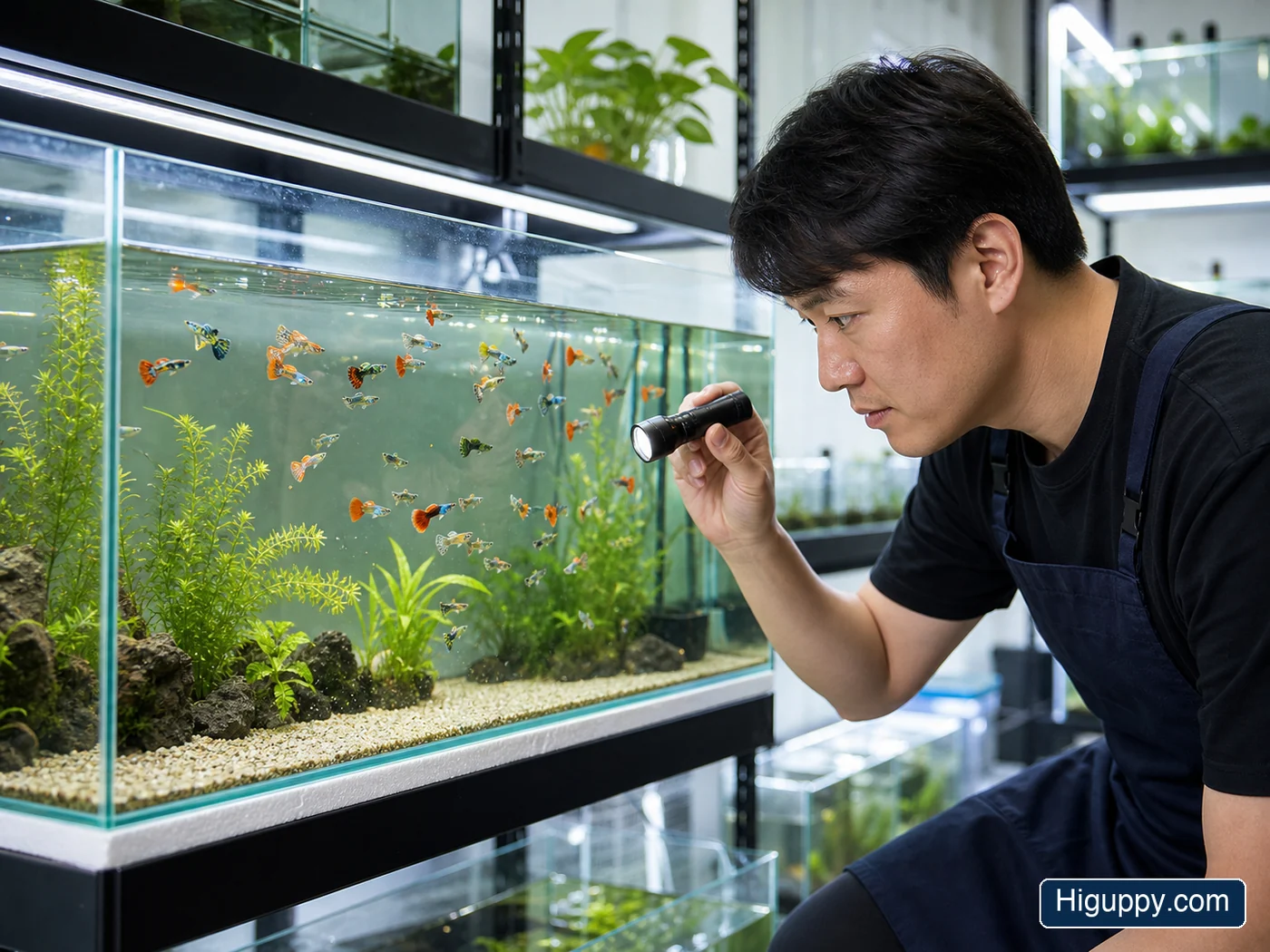
One name can describe several independent traits. Not every fish will express each trait with identical intensity.
| Name component | What it usually describes | Examples |
|---|---|---|
| Color or base | The dominant body, tail or overall color family. | Full Gold, Blue, Purple, Red, Black |
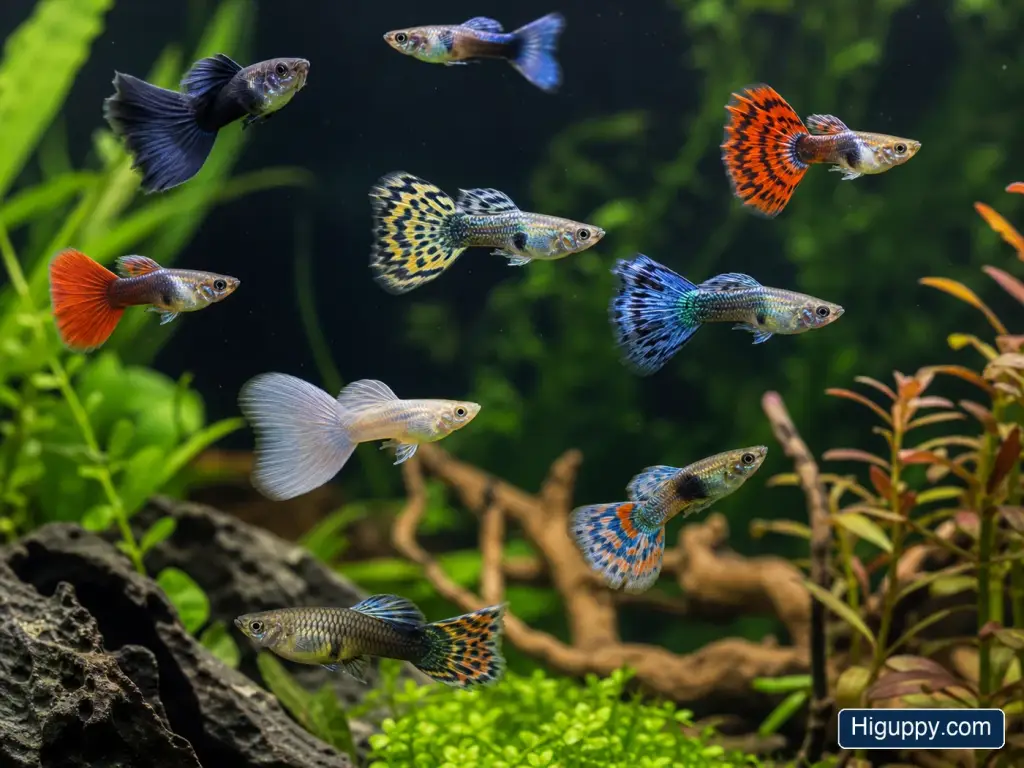
| Pattern | How color or markings are arranged on the body or fins. | Mosaic, Grass, Dragon, Tuxedo, Koi |
| Fin or body trait | A selected structural feature rather than a color. | Dumbo ear, Delta tail, Ribbon, Lyretail |
| Eye or pigmentation type | Visible eye and pigment characteristics. | Albino, normal-eye, light-body |
| Pack format | The number and stated sex composition sold. | Male, female, pair, trio, group |
Browse by visible trait
Four useful ways to compare fancy guppies
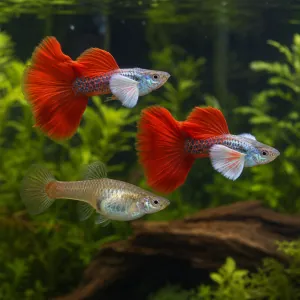
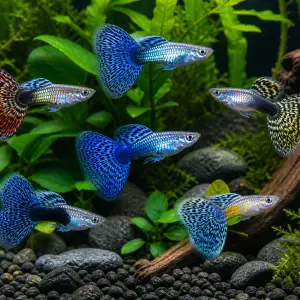
Color families
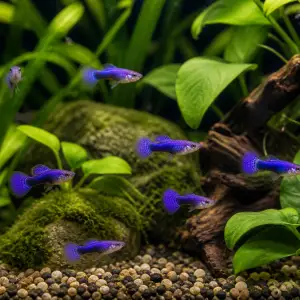
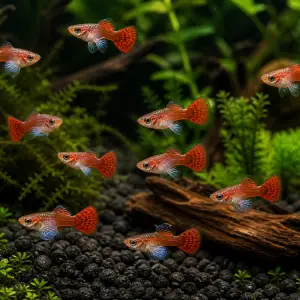
Gold, red, blue, purple and black names describe broad color directions. Maturity, sex, lighting and transport stress can change intensity.
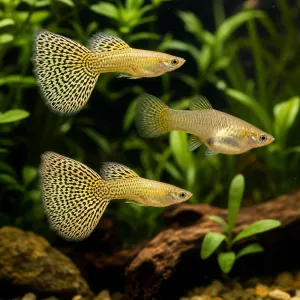
Pattern families
Mosaic, grass, dragon, tuxedo and koi labels describe marking styles. Pattern placement and coverage naturally vary.
Fin traits
Dumbo, delta, ribbon and lyretail describe selected fin features. Elaborate fins may need gentle flow and careful tankmates.
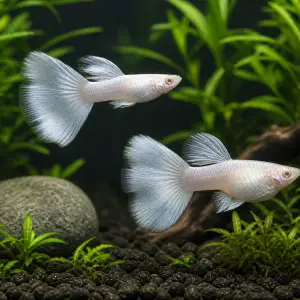
Eye and pigment traits
Albino and normal-eye lines can differ in eye appearance and pigmentation. Confirm the offered trait from the listing photos.
Current shopping paths
Browse active categories and listings
Availability changes with live inventory. Product and category pages control current stock, price, photos and fish format.
Full Gold Guppies
Explore the current Full Gold category when inventory is available.
Dumbo Red Tail Trio
Review a listing combining a dumbo-fin trait, red-tail color and trio format.
Red Dragon Breeder Trio
View the current breeder-trio listing and its stated photos and composition.
Breeder Trios
Compare current strain options sold in a trio format.
Collections
Browse curated HiGuppy shopping paths and collection themes.
All Live Guppies
Use the shop as the source of truth for purchasable inventory.
Photos and natural variation
Representative photos show a strain direction—not a clone
Unless a listing says the exact pictured fish is sold, photos may represent a strain, sex, age or quality range.
- Exact-fish listings should identify the pictured individual.
- Representative listings can include natural variation.
- Color may look softer immediately after shipping.
- Juveniles can develop more color and fin expression.
- Lighting, cameras and screens affect appearance.
Use the listing—not the name alone
Read the current description, photo notes, sex format and variation statement. See Our Fish Quality for realistic selection limits.
Choose for the keeper
Beginner-friendly and breeding-oriented are not fixed strain labels
A practical beginner choice
- Healthy current stock with clear listing details
- A cycled, stable aquarium
- Flow and tankmates suited to the fins
- Quarantine and observation capacity
- Realistic expectations about variation
A breeding-oriented choice
- A clear trait or line goal
- Parent and fry-batch records
- Separate quarantine and grow-out tanks
- Acceptance that outcomes are not guaranteed
- A population-management plan
What can differ
Natural variation within one named strain
| Trait | Common reasons it varies |
|---|---|
| Color intensity | Age, sex, maturity, stress, diet, health, lighting and genetics. |
| Pattern placement | Individual genetic expression and development. |
| Fin size and shape | Sex, age, line selection, condition and normal variation. |
| Body size | Age, sex, growth history, nutrition and genetics. |
| Appearance after arrival | Dark transport, motion, temperature transition and acclimation stress. |
Related guidance
Continue from strain research to responsible care
Pairs, Trios & Groups
Choose a format that fits the project and tank capacity.
Complete Care Guide
Tank, water, feeding, maintenance and health guidance.
Quarantine Process
Observe new fish before adding them to an established system.
Fish Quality Standards
Understand selection, photos and realistic quality limits.
Frequently asked questions
Guppy strain FAQ
How many guppy strains are there?
There is no universal count. Breeders combine colors, patterns, fins, eye traits and line names.
Are strain names standardized?
Not completely. Use the listing description and photos to understand what a seller means.
Will every fish match the representative photo?
No. Natural variation is expected unless the listing states that the exact pictured individual is sold.
Which strain is best for beginners?
Choose healthy current stock with care needs that match a prepared tank. Preparation matters more than the name alone.
Can same-strain parents produce identical fry?
No exact outcome is guaranteed. Fry can vary in color, pattern, fins, sex and quality.
What if a strain is described here but not in the shop?
This hub can explain traits without current inventory. The shop is the source of truth for purchasable fish.
Choose from current fish—not from a name alone
Compare listing photos, natural-variation notes, fish format and care needs before checkout.
Featured strain pages
Last reviewed: July 17, 2026. Product pages control availability, photos, price, fish format and order-specific terms.