The HiGuppy Journal
Dumbo Ear Guppy Strain Profile: What Makes Them Special

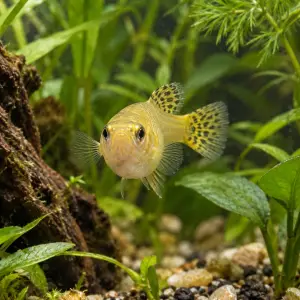
Dumbo ear guppies draw attention to the paired fins just behind their gills. These enlarged pectoral fins spread outward as the fish moves, creating the familiar “ear” effect. Dumbo ear is an ornamental fin trait and hobby label within fancy guppies, not a separate taxonomic species or a guarantee of health.
For a keeper, the useful questions are practical: can the fish swim comfortably, reach food, and live without repeated fin damage? This guide explains how to recognize the trait, assess an individual fish, and plan a suitable aquarium.
What the Dumbo Ear Name Describes
Start by finding the correct fins. The pectoral fins sit on the sides near the head; the dorsal fin is on the back, and the caudal fin is the tail. A large tail alone does not identify a dumbo ear guppy. Aquarist Annie Roi’s guide to guppy varieties describes the Dumbo, Big Ear, and Elephant Ear names in relation to broad, developed pectoral fins.
A listing can combine several kinds of description. “Dumbo Red Tail,” for example, points to pectoral finnage and tail color. A tail-shape term answers another question. The Brazilian guppy breeders’ confederation lists its Big Ear show class across different caudal shapes and colors, illustrating why these features should be assessed separately.
Traditional fancy guppies belong to Poecilia reticulata, identified in the University of Florida’s ornamental-fish overview. Use HiGuppy’s Guppy Strains and Types overview to compare the naming groups without assuming every breeder uses an identical label.
Compare Fish of a Similar Sex and Age
Adult male guppies generally have smaller bodies and brighter colors than females. A mature male’s anal fin forms a gonopodium; the female’s is triangular. These are general guppy distinctions described by OATA, not proof of Dumbo ancestry.
Ask the seller for the age or size range and footage of the fish being offered. Compare a juvenile with others at a similar stage, rather than treating an adult showcase photograph as its current specification. Do not infer a female’s breeding background from resemblance to a pictured male. For breeding stock, request the breeder’s records and photographs of both sexes from the relevant line.
Water Flow and Tank Layout
Use a cycled, filtered aquarium. OATA recommends at least 45 litres for a small guppy group, with more space as numbers increase. Its general guppy guidance gives 20–28°C, pH 7.0–8.0, medium-hard water, and gentle current. Discuss the fish’s existing conditions before purchase; these broad ranges are not a special Dumbo formula.
Provide plants, smooth decor, and open swimming space. Watch whether fish can hold position and reach food without being swept away. If one outlet dominates the aquarium, redirect or diffuse it while maintaining filtration and aeration. Recheck swimming and feeding after the adjustment.
Do not judge water quality by clarity. UF/IFAS explains that ammonia requires testing, including when appearance, behavior, or feeding changes. Keep a record of results rather than relying on how clean the tank looks.
Feeding Routine and Access to Food
Use a suitable complete guppy food in a particle size the fish can swallow. Small flakes or granules are convenient, with appropriate frozen foods adding variety. The IFGA’s basic-care guidance emphasizes balanced nutrition, although its intensive show-rearing schedules should not be copied automatically into a home display aquarium.
Observe the entire meal. Does each fish actually take food, or does a more assertive tankmate collect everything first? Try distributing the same modest portion between two accessible spots. Adjust the placement before simply adding more food. Remove uneaten leftovers and review portions if waste accumulates.
Food is part of routine care, not a promised treatment for torn fins. If a fish stops eating, check the environment and seek advice rather than repeatedly adding food that it ignores.
Choosing Aquarium Companions
A guppy-focused aquarium makes it easier to watch feeding and fin condition. Even then, monitor interactions rather than assuming that matching names guarantee peaceful behavior. Leave room to separate a fish if persistent chasing prevents it from eating or resting.
Platies may be candidates for a larger community aquarium after checking the actual temperature and hardness overlap. OATA describes platies as generally peaceful, but they need their own swimming room and add to the tank’s population. This is a conditional stocking choice, not a promise that any platy group will suit any Dumbo tank.
Exclude fin-nippers and potential predators. Check each proposed companion’s adult size, social needs, and feeding behavior rather than relying on a “community fish” label.
Watching Fin Condition Without Guessing a Diagnosis
Make observation repeatable: view both sides during normal swimming and compare photographs taken under similar conditions. Record a new split, missing fin tissue, persistent one-sided movement, or an obvious change in appetite. A single photograph may catch a fin folded against the body, so use a short video before deciding that it is permanently smaller.
Fin appearance alone cannot establish the cause of a problem. The Merck Veterinary Manual’s fish-health guidance describes environmental and infectious causes of illness and the need for testing to diagnose bacterial disease. Check water results, equipment, and tankmate behavior; seek aquatic-veterinary help promptly for worsening damage, breathing difficulty, or loss of balance.
Follow HiGuppy’s new-guppy quarantine guide before adding arrivals to an established group.
Breeding Means Planning for More Fish
Before buying a mixed-sex group, decide where young fish will grow and who can responsibly take them. Leave capacity for continued care if those homes are delayed. A small breeding box does not replace a long-term grow-out plan.
Female guppies can store sperm across reproductive cycles, as documented in University of Western Australia research. A female purchased without a male may therefore still produce young. Removing males does not establish the parentage of subsequent broods.
For a deliberate breeding project, record parent identities, dates, and offspring observations. The IFGA breeding guide highlights recordkeeping and the space commitment involved. Do not promise a fixed percentage of large-eared fry or exact adult colors from the label alone. HiGuppy’s step-by-step guppy breeding guide covers the broader process.
Questions to Ask Before Buying
- Are these the actual fish, a current batch sample, or a representative image?
- What are their approximate age, size, and sex, and what exactly is included in the pack?
- Can I see both sides and a short feeding video under ordinary lighting?
- What food and water conditions are they accustomed to?
- Have females been housed with males, and what breeding records are available?
- Does the seller observe any recent fin damage or changes in feeding?
For wholesale groups, also confirm how fish are grouped by size and sex. Clear answers make comparisons more useful than an undefined “premium” or “show quality” description.
Frequently Asked Questions
Are dumbo ear guppies harder to keep?
Fin size alone cannot predict how an individual will fare. Start with established guppy care, then use swimming, food access, and fin condition to judge whether the setup needs adjustment.
Does Dumbo Ear mean a particular color?
No. Check the pectoral fins for the Dumbo feature and read the rest of the listing for body pattern, tail color, and other traits.
Will bigger ears always mean a better fish?
Choose a fish you can care for comfortably. Fin size should not outweigh balanced movement, regular feeding, and a suitable home.
Ready to compare options? Browse current HiGuppy listings and confirm the fish format and current details before choosing.
Related guides and policies: Guppy Care Guide · Acclimation Guide · Shipping Policy · DOA Policy · Our Fish Quality.
Behind the care guides
Care begins with steady systems
Our guppy guides focus on practical routines: keep water stable, observe fish closely and allow for natural variation.

Care systems
Steady water, thoughtful care
Gentle filtration and regular observation support healthy aquarium routines.

Natural variation
Every guppy is different
Color, size and fin shape vary with strain, age and each individual fish.
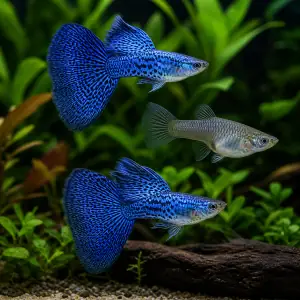
Editorial illustrations for context; they do not depict HiGuppy's exact facility or current fish stock.