Guppy Care Article
Safe Decorations for Guppy Tanks: What to Use & Avoid
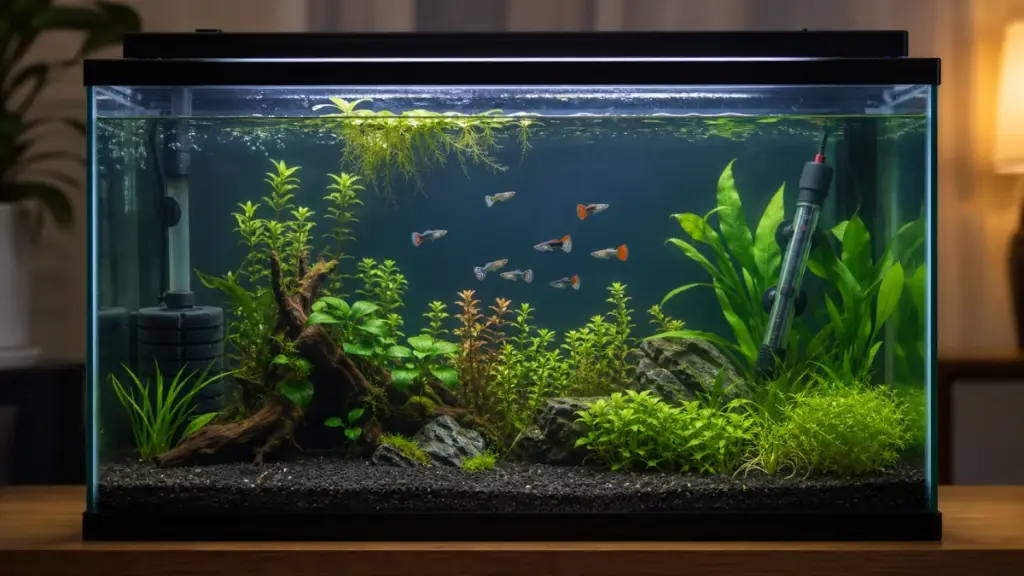
Quick answer: Safe decorations for guppy tanks should be smooth, aquarium-safe, easy to clean, and arranged so fish still have open swimming space. Avoid sharp plastic edges, unknown metals, flaking coatings, tiny openings that can trap fish, and unstable rocks or ornaments.
Decorations are more than styling. In a guppy aquarium they can provide cover, break up lines of sight, protect shy fish and make fry feel less exposed. The wrong ornament can also snag fins, collect waste or create cramped dead zones. The safest approach is to choose decor based on material, shape, stability and how easy it is to inspect.
Safe Guppy Tank Decoration Checklist
- Smooth: no sharp seams, points or abrasive surfaces that can catch long fins.
- Aquarium-safe: use materials sold or confirmed for aquarium use rather than unknown painted, coated or metallic objects.
- Stable: rocks, wood and ornaments should not tip, collapse or shift when you clean around them.
- Open: caves and holes should be large enough that a guppy cannot wedge itself inside.
- Cleanable: you should be able to lift or siphon around the object without dismantling the whole aquarium.
- Compatible with water chemistry: avoid unknown stone or shell material if you do not know how it may affect hardness or pH.
Best Types of Decorations for Guppies
Live plants
Live plants are one of the most useful forms of cover because they soften the layout, create visual breaks and give fry places to retreat. Easy choices such as Anubias, Java fern, Java moss, guppy grass and floating plants can be arranged without filling the entire swimming area. See the best live plants for guppies guide for plant-selection details.
Smooth aquarium rocks
Rounded aquarium-safe stones can create low structure without snagging fins. Make sure stacked pieces are secure. If a rock has unknown mineral content, test or verify it before placing it in a tank where you are trying to keep pH and hardness stable.
Aquarium-prepared driftwood
Prepared driftwood can provide cover and plant-attachment points. Sand or avoid sharp projections, make sure the piece cannot shift, and remember that natural wood can change the visual color of water as tannins are released.
Soft artificial plants
If you do not want live plants, soft silk-style aquarium plants are usually safer for long fins than rigid, sharp plastic leaves. Run your fingers along edges and stems before adding them.
Wide, open hides
Hides can be useful for new arrivals, stressed females and fish that need a visual break. Choose open designs that are easy to inspect and too large for a guppy to become trapped inside.
Decorations to Avoid or Inspect Carefully
| Decoration risk | Why it can be a problem | Safer approach |
|---|---|---|
| Sharp plastic plants | Can snag or scrape fins | Use live plants or softer aquarium plants |
| Flaking paint or unknown coatings | Material safety is uncertain | Use products made for aquarium use |
| Unknown metal objects | Corrosion or leaching may be unsafe | Avoid unless specifically aquarium-safe |
| Tiny holes and narrow caves | Fish can wedge fins or bodies inside | Choose wide, visible openings |
| Unstable rock stacks | Can shift during maintenance | Use secure, low structures |
| Very rough decor | Can worsen physical fin damage | Choose smoother surfaces |
How Much Decor Should a Guppy Tank Have?
Guppies benefit from both cover and open water. A useful layout often places taller plants or decor toward the back and sides, leaving an open front or center swimming zone. In mixed-sex or crowded groups, extra visual barriers can help reduce constant chasing, but decor cannot fix severe overstocking or an unsuitable sex ratio by itself.
If chasing or harassment is the real problem, use the guppy bullying signs guide rather than simply adding more ornaments.
Decor for Fry, Breeding and Quarantine Tanks
Fry tanks
Prioritize soft cover and easy cleaning. Floating plants, moss and removable cover work well because fry can hide while you can still siphon the tank. In a bare bottom grow-out setup, keep decorations simple enough that leftover food remains visible.
Breeding tanks
Use cover to reduce pressure on females and give fry refuge, while preserving clear swimming and observation areas. The guppy breeding tank setup gives the broader layout.
Quarantine and hospital tanks
Keep decor minimal and removable. The goal is easy observation, cleaning and separation of equipment. A simple hide or floating plant may reduce stress, but heavily decorated quarantine tanks are harder to inspect. See how to quarantine new guppies and the sick guppy hospital tank guide.
Can Decorations Cause Torn Fins?
Yes, physical damage can happen when a fish catches a fin on a sharp edge or is forced through a tight opening. However, frayed or deteriorating fins can also be associated with aggression, water-quality problems or disease. If the fin edge is progressively worsening instead of looking like a clean injury, compare the signs in the guppy fin rot guide.
How to Test a Decoration Before Adding It
- Confirm it is intended for aquarium use.
- Run your fingers over every edge, seam and opening.
- Check that openings are much larger than the fish’s body and fins.
- Rinse according to the manufacturer’s instructions; do not use soap.
- Place it securely and verify it cannot fall when you siphon nearby.
- After installation, watch whether guppies repeatedly scrape, wedge themselves or lose swimming space.
Decorations, Substrate and the Full Tank Layout
Decor should work with the rest of the aquarium rather than being chosen separately. The guppy substrate guide, bare bottom guppy tank guide and maintenance schedule can help you build a layout that is attractive without becoming difficult to clean.
Before Buying New Guppies
Finish and test the aquarium before delivery day. Decorations should already be stable, filter flow should be working and water parameters should be checked. Review the pre-purchase tank checklist; once the aquarium is ready, you can browse current fish in the HiGuppy shop.
FAQ: Safe Guppy Tank Decorations
Do guppies need decorations?
They do not need ornaments specifically, but they benefit from cover, visual breaks and an environment that reduces stress while preserving swimming space.
Are plastic plants safe for guppies?
Some are, but rigid or sharp plastic leaves can snag fins. Smooth or soft artificial plants are a safer choice when live plants are not used.
Can I put random rocks or metal decor in a guppy tank?
It is safer to use materials known to be aquarium-safe. Unknown rocks can affect water chemistry, while unknown metals or coatings may corrode or leach.
How do I know if a cave is too small?
If a guppy can enter but may not be able to turn around or exit without fins catching, use a larger opening. Wide, visible hides are easier to inspect and clean.
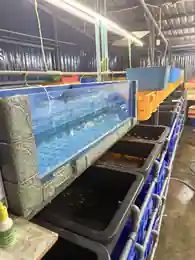
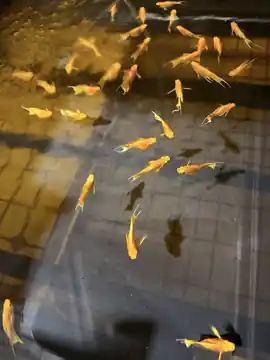
Real HiGuppy photographs
Inside the facility behind our guppy guides
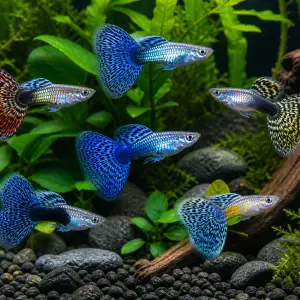
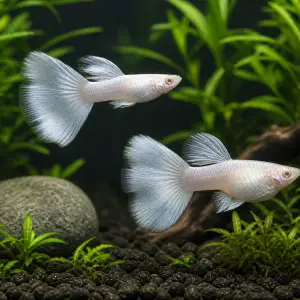
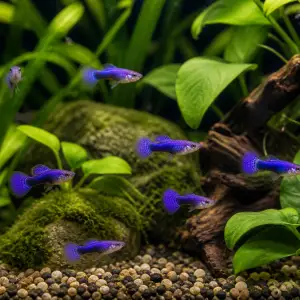
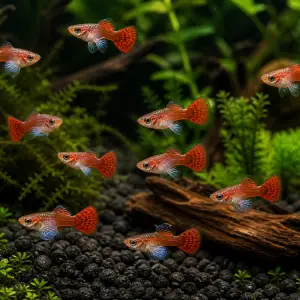
These photographs show real HiGuppy holding, breeding and observation work. They document our facility and fish stock; they are not presented as the exact individual fish or strain discussed on every page.