Guppy Care Article
Best Live Plants for Guppies: Easy Choices for Fry Cover & Water Quality
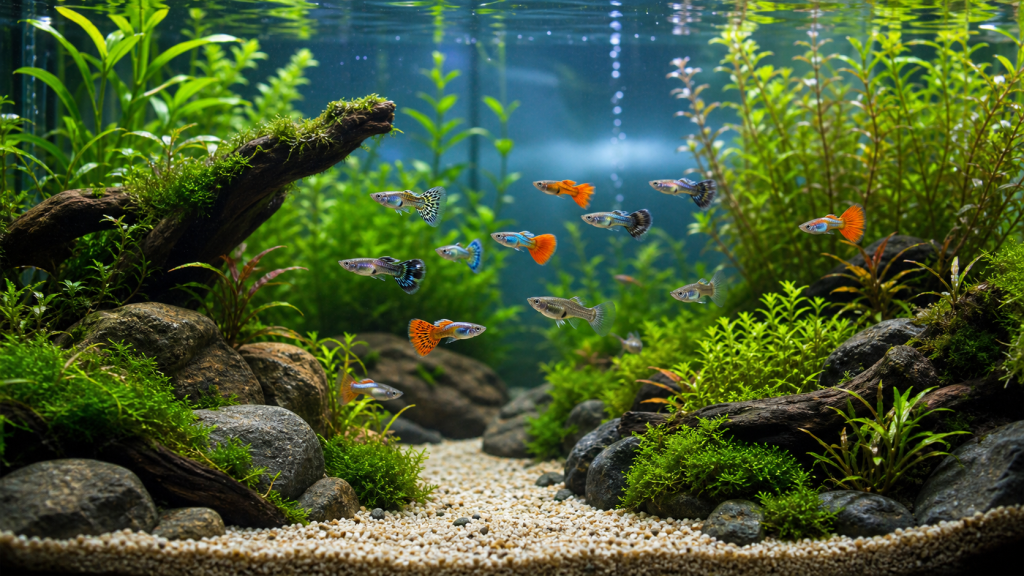
Quick answer: The best live plants for guppies are hardy species that match your light level and maintenance routine. Good beginner choices include anubias, Java fern, Java moss, guppy grass, water sprite, hornwort, and suitable floating plants. Dense growth is especially useful for fry, while broad-leaf plants and open swimming lanes work well for adults.
Plants can improve habitat and use some dissolved nutrients, but they do not replace a cycled filter, sensible stocking, water testing, or regular maintenance.
Why live plants work so well with guppies
Guppies are active fish that also benefit from places to pause, hide, and break line of sight. Live plants create structure without turning the aquarium into a maze. They are particularly valuable in breeding tanks because newborn fry can shelter among fine leaves and roots.
Healthy plant growth also competes for some nutrients in the water and can make an aquarium feel more stable. For the full layout, see our Best Planted Tank Setup for Guppies. This guide focuses specifically on choosing the plants.
Best beginner plants for guppies
Anubias
Anubias is slow-growing, durable, and suitable for lower-light aquariums. Attach the rhizome to rock or wood instead of burying it. Its broad leaves create resting surfaces and visual cover without filling the whole tank.
Java fern
Java fern is another hardy epiphyte that works well in simple guppy tanks. Like anubias, its rhizome should remain above the substrate. It tolerates a wide range of beginner conditions and is easy to position around hardscape.
Java moss
Java moss is excellent for fry because its fine branching structure creates dense shelter and surfaces where tiny organisms can grow. It can be attached to rock, wood, or mesh and trimmed as needed. A dedicated article on Java moss can serve as a deeper supporting guide, while this page remains the broad plant-selection hub.
Guppy grass
Guppy grass grows quickly and can be floated or anchored depending on the setup. Dense stems give newborn fry a place to escape adult fish. Because it can become thick rapidly, regular thinning keeps swimming space and circulation open.
Water sprite
Water sprite can be rooted or floated and creates fine, branching cover. It is useful for fry and for softening bright open areas, but fast growth means it benefits from regular trimming.
Hornwort
Hornwort is a fast-growing stem plant that provides plenty of texture and cover. It can be floated or weighted. Keep an eye on shedding or decaying growth and remove loose material before it accumulates.
Floating plants
Floating plants create shade and hanging root cover near the surface, which can be valuable for shy fish and fry. The key is moderation: do not let floaters completely seal the surface or block filter flow and gas exchange. A separate floating-plants article can target that narrower search intent.
Best plants for guppy fry
If fry survival is the priority, choose fine, dense growth rather than only large decorative leaves. Java moss, guppy grass, water sprite, and floating roots provide more hiding opportunities than sparse stem plants.
Plants alone do not guarantee fry survival in a mixed tank because adult guppies may still eat newborns. For a more controlled setup, see our Guppy Breeding Tank Setup and Raising Guppy Fry Guide.
Best low-maintenance combination
A simple beginner layout can use anubias or Java fern on wood or rock, a patch of Java moss or guppy grass on one side, and a small amount of floating cover. Leave an open central swimming area so adult guppies can move freely.
This gives you three useful zones: stable hardscape plants, dense fry cover, and open water.
Plants, oxygen and filtration
Plants photosynthesize when they receive sufficient light, but they also respire. They should not be treated as a guaranteed replacement for aeration or filtration. Maintain visible surface movement and reliable filtration, especially in warm or heavily stocked tanks.
For those decisions, see Do Guppies Need an Air Pump? and Do Guppies Need a Filter?.
How plants can affect water quality
Actively growing plants use nutrients, including nitrogen compounds, but the effect varies by plant mass, growth rate, lighting, and stocking. They do not make nitrate or waste management irrelevant. Continue testing and performing partial water changes based on the aquarium’s actual conditions.
Use the Guppy Water Parameters Guide and Guppy Water Change Guide as your maintenance baseline.
How to add new plants safely
- Inspect leaves and roots for obvious pests, decay, or hitchhikers.
- Rinse plants appropriately before adding them.
- Remove dead or melting leaves promptly.
- Avoid burying rhizomes on anubias and Java fern.
- Keep some open surface area around filter outlets.
- Trim fast-growing plants before they block circulation or feeding access.
If you use chemicals or dips on plants, follow plant-safe instructions carefully and never improvise concentrations around live fish.
Common mistakes in planted guppy tanks
Using too much floating cover
A completely covered surface can interfere with feeding, light penetration, and gas exchange. Thin floating plants regularly.
Choosing plants only by appearance
A beautiful high-demand plant can fail in a low-light beginner tank. Match the species to your lighting, substrate, and willingness to fertilize or prune.
Letting dead leaves accumulate
Decaying plant material adds organic waste. Remove failing leaves as part of routine maintenance.
Eliminating all open swimming space
Guppies are active mid- and upper-water swimmers. Keep a clear lane rather than filling every part of the aquarium with stems.
Simple planting plan for a guppy tank
- Place taller plants toward the back or corners.
- Attach anubias or Java fern to hardscape.
- Add Java moss, guppy grass, or water sprite where fry need cover.
- Use a limited amount of floating plants for shade and surface shelter.
- Keep the center open for swimming and feeding.
- Trim regularly and remove damaged growth.
FAQ
Do guppies eat live plants?
Guppies may graze on plant surfaces and occasionally nibble soft material, but healthy guppies usually do not destroy established hardy plants.
What is the best plant for guppy fry?
Java moss and guppy grass are among the most useful because their dense, fine structure creates many hiding spaces. Floating roots can provide additional shelter near the surface.
Are floating plants good for guppies?
Yes, in moderation. They provide shade and root cover, but leave enough open surface for feeding, circulation, and gas exchange.
Do planted guppy tanks still need a filter?
Most beginner setups should still use reliable filtration. Plants can support water quality, but they do not make cycling, biological filtration, or maintenance unnecessary.
Do planted guppy tanks still need water changes?
Yes. The frequency depends on stocking, feeding, plant growth, and measured water quality rather than on the presence of plants alone.
Once the tank is cycled, planted, and stable, you can browse available guppies and choose fish only after the aquarium is ready for delivery.
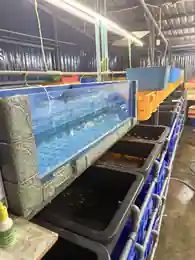
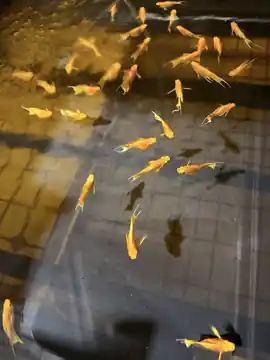
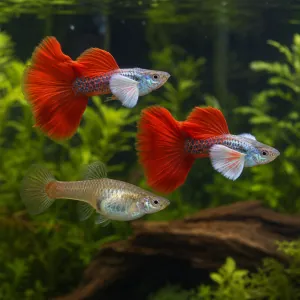
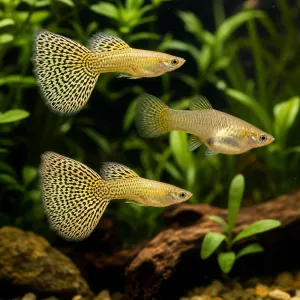
Real HiGuppy photographs
Inside the facility behind our guppy guides
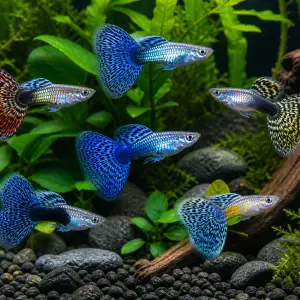
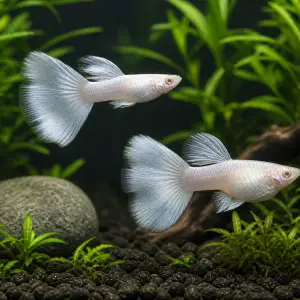
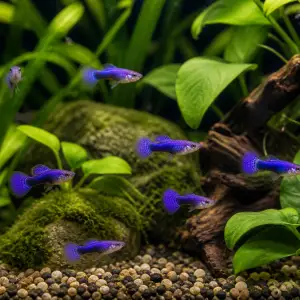
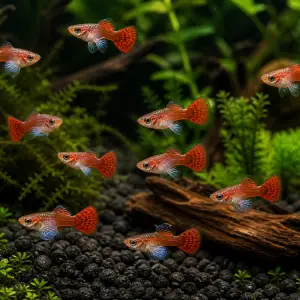
These photographs show real HiGuppy holding, breeding and observation work. They document our facility and fish stock; they are not presented as the exact individual fish or strain discussed on every page.