Guppy Care Article
Best Planted Tank Setup for Guppies: Plants, Light & Layout
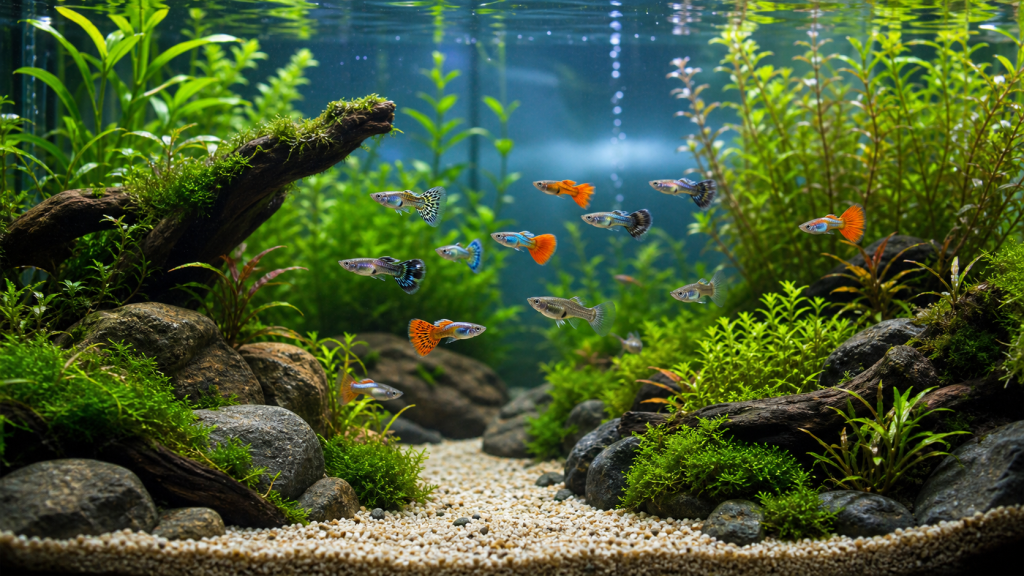
Quick answer: A beginner planted guppy tank needs a fully cycled aquarium, reliable filtration, stable warm water, open swimming space, and hardy plants that tolerate regular maintenance. Use plants as cover and nutrient support—not as a replacement for water testing, sensible stocking, or routine water changes.
Why plants work well with guppies
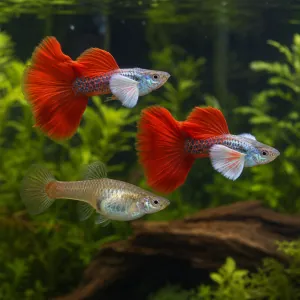
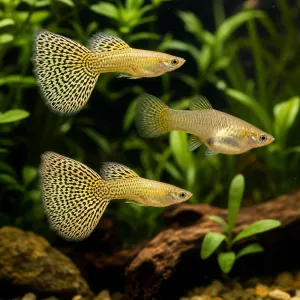
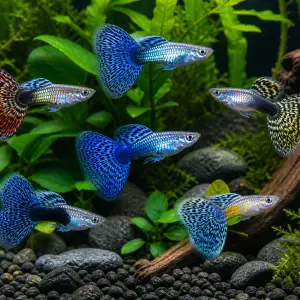
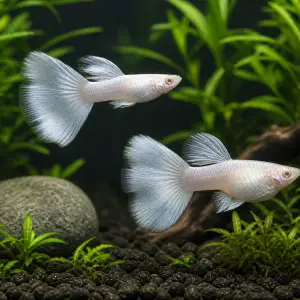
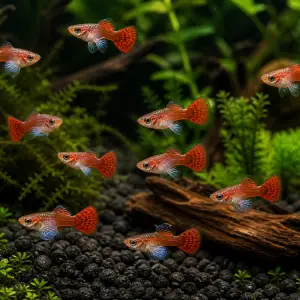
Guppies are active fish that use the middle and upper areas of an aquarium. Plants create shaded resting zones, break lines of sight, and give females and fry places to retreat. Healthy plant growth can use some dissolved nutrients, but plants do not make an uncycled or overcrowded tank safe.
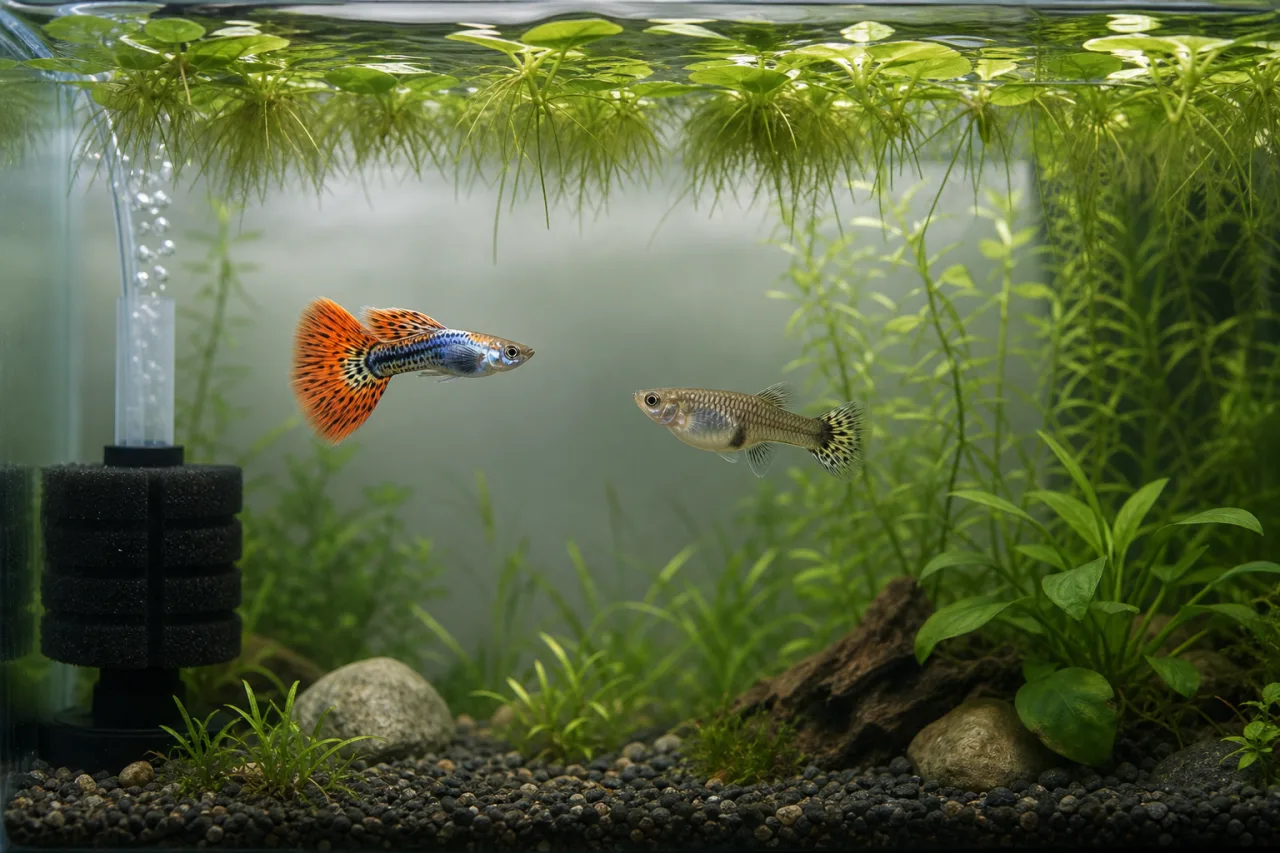
Planted guppy tank checklist
| Part | Beginner-friendly approach |
|---|---|
| Tank | Choose enough water volume for the planned adult stock and future fry |
| Filter | Use reliable biological filtration with a protected intake |
| Heater | Maintain a stable guppy-appropriate temperature |
| Light | Use a timer and a consistent moderate schedule |
| Plants | Combine rooted, attached, and floating cover |
| Testing | Confirm ammonia and nitrite are 0 ppm before adding fish |
Good plant types for a guppy aquarium
Attached plants
Anubias and Java fern can be attached to rock or wood instead of burying the rhizome. They suit low-tech layouts and leave substrate open for cleaning.
Rooted plants
Cryptocoryne, Vallisneria, and similar rooted plants create background structure. Match the substrate and fertilizer plan to the plant rather than dosing blindly.
Floating or dense cover
Floating plants, mosses, and fine-leaved stems provide useful cover, but leave open surface area for gas exchange and feeding.
Step-by-step setup
- Plan the adult stock. Mixed-sex guppies reproduce quickly, so decide how fry will be managed before choosing the tank.
- Position hardscape and substrate. Keep a clear front area for feeding and observation.
- Plant heavily but preserve swimming room. Place dense cover at the sides and rear.
- Install the filter, heater, lid, and light timer. Protect small fish and fry from filter intakes.
- Cycle the aquarium fully. Test water rather than relying on a fixed number of days.
- Add fish gradually. Follow the acclimation guide and observe feeding and breathing.
Lighting, algae, and maintenance
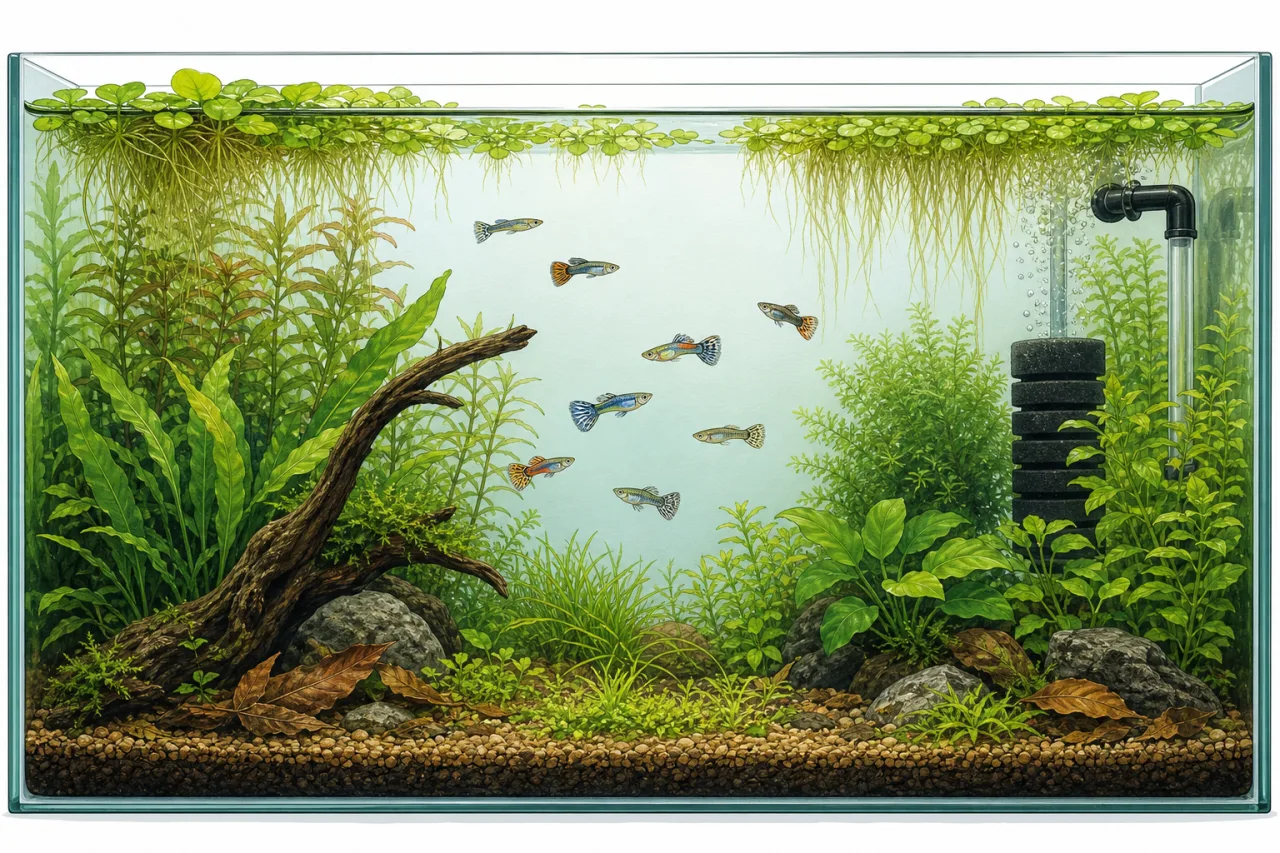
Start with a consistent moderate photoperiod and adjust from actual plant growth and algae response. More light is not automatically better. Remove damaged leaves, trim plants before they block circulation, and continue routine partial water changes. Test water if fish behavior changes or plant decay increases.
For the full aquarium process, use How to Set Up a Guppy Tank. For stocking, see how many guppies fit in a 10-gallon tank. The Care Guide remains the hub for ongoing maintenance.
Planted guppy tank FAQ
Do guppies need live plants?
No, but live plants can provide cover and structure. A safe tank still depends on cycling, filtration, testing, and maintenance.
Can a planted guppy tank work without CO2 injection?
Yes. Many hardy aquarium plants grow in a low-tech tank without injected CO2 when light and nutrients are balanced.
Will guppies eat aquarium plants?
They may peck at surfaces and soft material, but healthy guppies generally do not destroy established hardy plants.
Are floating plants safe for guppies?
Yes, if they do not cover the entire surface or prevent feeding, circulation, and gas exchange.
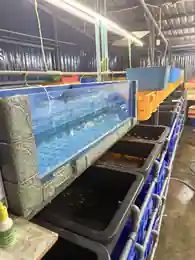
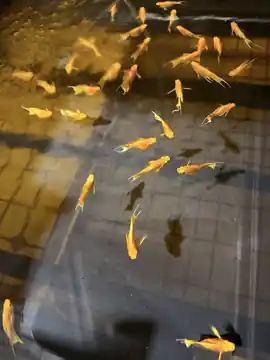
Real HiGuppy photographs
Inside the facility behind our guppy guides
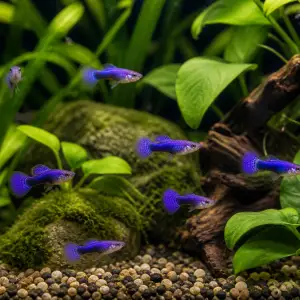
These photographs show real HiGuppy holding, breeding and observation work. They document our facility and fish stock; they are not presented as the exact individual fish or strain discussed on every page.