The HiGuppy Journal
How to Set Up a Guppy Tank for Beginners
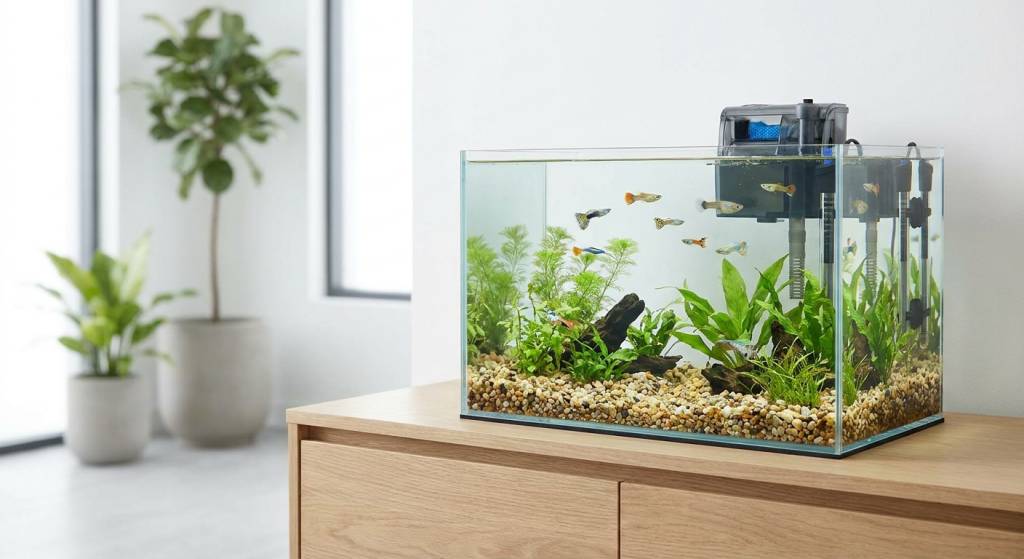
Setting up a guppy tank carefully from day one can reduce avoidable stress and make maintenance more manageable. Guppies are often kept by beginners, but they still require an appropriately sized aquarium, a fully cycled filter, and stable water parameters. Adding fish to a brand-new, untested setup can create avoidable water-quality problems.
In this comprehensive guide, we will walk you through exactly how to set up a guppy tank for beginners. We will cover everything from choosing the ideal tank size and installing the right equipment to understanding the critical nitrogen cycle and properly acclimating your new aquatic pets to their home.
1. Choose a Tank Size and Location
One of the most common beginner mistakes is assuming guppies can live in tiny bowls or one-gallon cubes. Guppies are highly active swimmers and prolific breeders. To give them the swimming space they need and to keep the water quality stable, you must start with an appropriate tank.
A 5-gallon aquarium leaves little margin for stocking changes or unexpected fry, so choose the group based on adult size, filtration, maintenance capacity, and whether breeding is planned. Many beginners prefer a 10-gallon or 20-gallon long aquarium because the extra water volume can make routine maintenance more forgiving, but no tank size removes the need for testing and water changes. Compare the 5-gallon stocking guide before adding fish.
When selecting a location for your new aquarium, keep these placement rules in mind:
- Avoid Direct Sunlight: Placing your tank right next to a sunny window will cause rapid temperature fluctuations and trigger massive green algae blooms.
- Stay Away from Drafts and Vents: Keep the tank away from air conditioning vents, radiators, and exterior doors to ensure the water heater can maintain a stable temperature.
- Ensure Structural Support: Water is heavy. A standard 10-gallon tank weighs over 100 pounds when filled. Ensure your stand or furniture can support this weight permanently.
2. Set Up Essential Guppy Tank Equipment
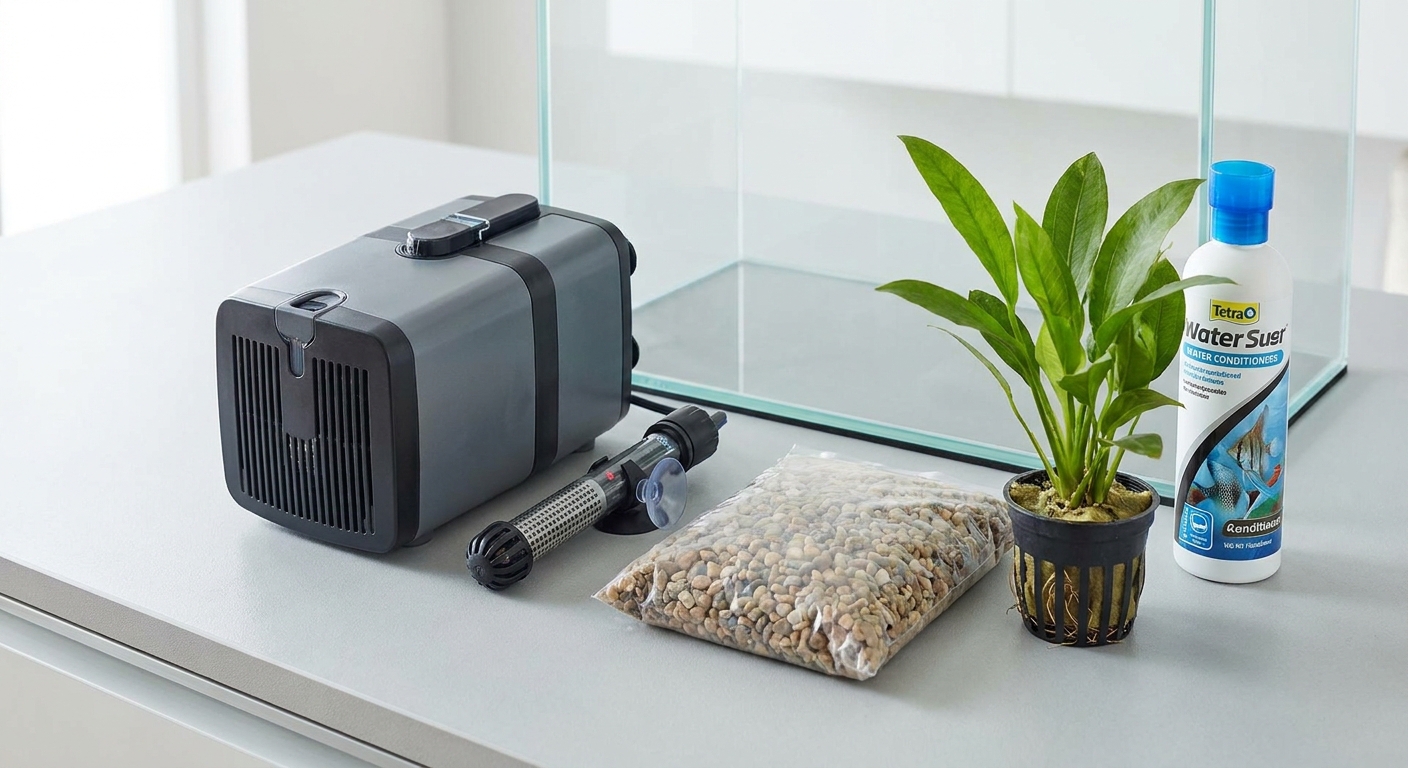
Before adding water, you need to gather the foundational equipment that will keep your artificial ecosystem running. A successful guppy setup relies on three main mechanical components: a filter, a heater, and appropriate lighting.
1. Filtration with Gentle Water Flow
Guppies, especially males with long, flowing tails, are not strong swimmers against heavy currents. A strong filter will exhaust them, leading to stress and illness. A sponge filter paired with an air pump is widely considered the best option for a guppy tank. It can provide gentle biological filtration and aeration, but any intake still needs to be protected and observed when fry are present. If you prefer a Hang-On-Back (HOB) filter, ensure it has an adjustable flow rate and place a pre-filter sponge over the intake tube.
2. Submersible Aquarium Heater
Guppies are tropical fish native to warm waters in South America. They require a stable water temperature between 72°F and 82°F (22°C – 28°C). You will need an adjustable submersible heater to maintain this range. Choose a heater according to the manufacturer’s guidance and the room and tank conditions; do not treat a watts-per-gallon shortcut as a guarantee. Always pair your heater with a reliable glass aquarium thermometer placed on the opposite side of the tank to verify the temperature.
3. Aquarium Lighting
A standard LED aquarium light is perfect for guppies. Lighting helps regulate the fish’s day-and-night cycle and allows you to view their vibrant colors. If you plan to keep live plants, you may need a light specifically rated for plant growth. Aim to keep the lights on for 8 to 10 hours a day. Leaving lights on 24/7 will stress the fish and cause severe algae outbreaks.
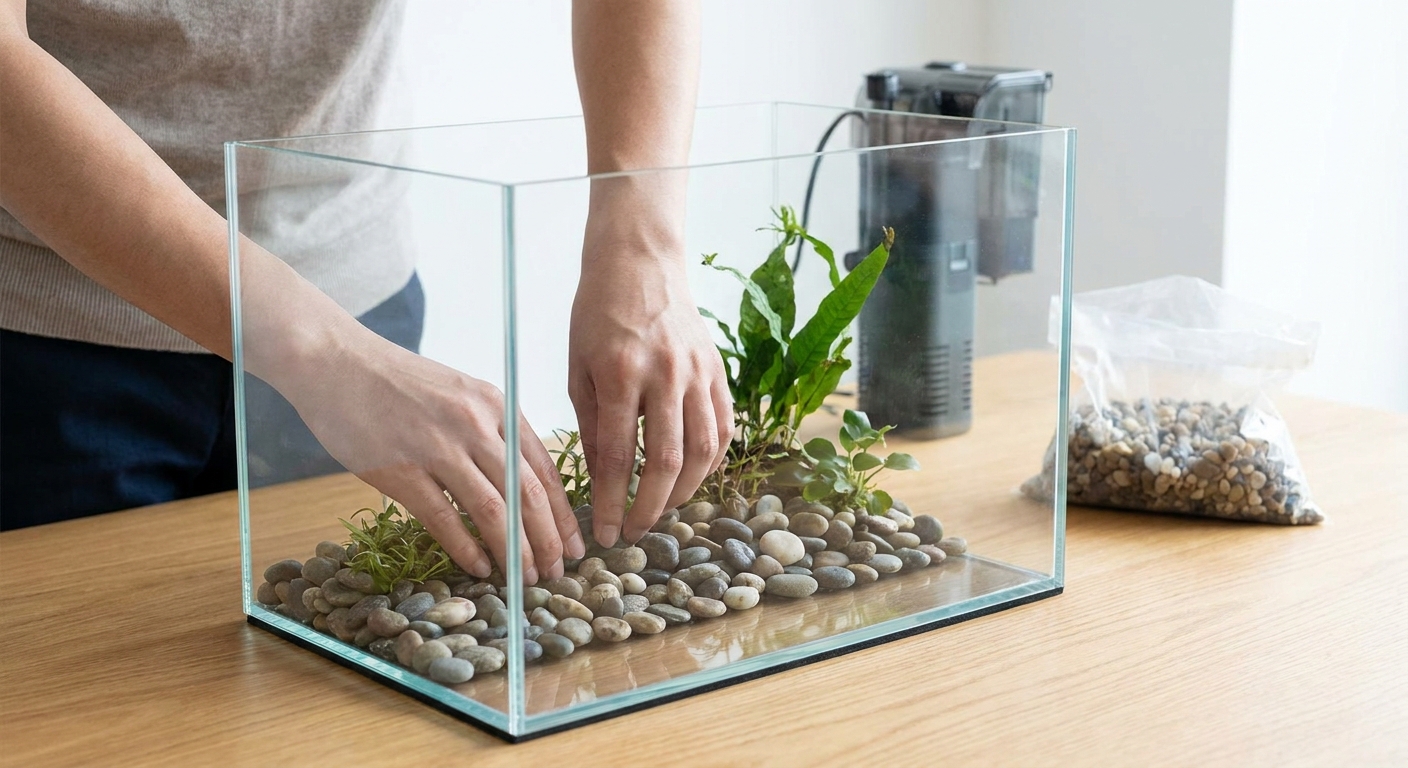
3. Add Substrate, Plants and Hiding Spaces
Decorating your tank is not just about aesthetics; it is about providing a natural, stress-free environment for your fish. The bottom layer of your tank is called the substrate. For guppies, fine gravel or aquarium sand works perfectly. Darker substrates often make the vibrant neon colors of male guppies pop beautifully.
Live plants are highly recommended for beginners because they absorb toxic nitrates from the water, provide natural hiding spots, and oxygenate the tank. If you are intimidated by live plants, do not worry—there are several virtually indestructible species that require very little light or maintenance:
🌿 Best Beginner Plants for Guppies
Guppy Grass (Najas guadalupensis): A fast-growing plant that can be planted in the substrate or left floating. It provides the ultimate hiding space for newborn fry.
🌿 Java Fern and Anubias
These plants have thick, hardy leaves. They should not be buried in the sand; instead, tie or glue them to rocks and driftwood.
4. Cycle the Filter and Check Water Parameters
This is the most critical part of setting up a guppy tank: You cannot add fish on the same day you fill the tank with water. Tap water contains chlorine and chloramine, which are lethal to fish. You must add a liquid water conditioner (dechlorinator) to make the water safe.
More importantly, you must establish the Nitrogen Cycle. Fish excrete waste in the form of ammonia, which is highly toxic. In a healthy aquarium, colonies of beneficial bacteria live inside the filter sponge. These bacteria eat the ammonia, converting it into nitrites (also toxic), and finally into nitrates (much less toxic, which you remove via weekly water changes).
Buy a liquid master test kit before buying your fish. Your tank is fully cycled and ready for guppies ONLY when your readings consistently show: 0 Ammonia, 0 Nitrite, and some Nitrates (usually 5-20 ppm). This cycling process typically takes 3 to 6 weeks. Guppies prefer a pH between 6.8 and 7.8, and moderately hard water.
5. Prepare to Acclimate Your New Guppies
Once your tank is cycled and the water temperature is stable, you can finally bring your guppies home. The transition from the pet store (or a shipping box) to your tank must be slow and gentle. Shipping live fish naturally causes them stress, and dropping them immediately into different water parameters can induce shock.
Follow these simple acclimation steps:
- Float the Bag: Float the sealed bag of fish in your aquarium for 15 to 20 minutes to equalize the temperature.
- Mix the Water: Open the bag and roll down the edges so it floats. Every 5 minutes, add a small splash of your aquarium water into the bag. Do this for about 30 minutes to slowly introduce them to your specific pH and water hardness.
- Net the Fish: Use a soft fish net to scoop the guppies out of the bag and gently release them into the tank. Discard the store water down the drain; do not pour it into your aquarium to avoid transferring potential pests or diseases.
6. Start Feeding and Daily Observation
Guppies are omnivores with small, upturned mouths designed for surface feeding. A high-quality tropical flake food or micro-pellet should form the base of their diet. You can supplement this a few times a week with freeze-dried or frozen bloodworms, brine shrimp, or daphnia to boost their coloration and overall vitality.
The most common beginner mistake is overfeeding. Guppies will constantly act like they are starving, begging at the glass whenever you walk by. Do not give in. Feed them only what they can entirely consume in under two minutes, once or twice a day. Uneaten food sinks to the bottom, rots, and creates toxic ammonia spikes.
Another major mistake is improper filter maintenance. Never wash your filter sponge under untreated tap water, as the chlorine will kill all your beneficial bacteria and crash your tank’s cycle. When the filter flow slows down, simply squeeze the sponge out gently in a bucket of dirty aquarium water during your weekly water change.
Frequently Asked Questions (FAQ)
How many guppies should I start with?
For a 10-gallon tank, a great starting group is 3 to 5 guppies. Always maintain a ratio of at least two females for every male. Male guppies relentlessly chase females to mate; having more females spreads out the harassment and keeps stress levels low. If you want to avoid breeding entirely, you can keep an all-male tank.
When can I add more fish?
After your initial group has lived in the tank for a few weeks, test the water. If ammonia and nitrites are perfectly at zero, you can safely add a few more fish. Adding too many fish at once overloads the biological filter, so always stock your tank slowly.
Do I need an air pump?
If you are using a sponge filter, an air pump is required to run it. If you are using a Hang-On-Back filter that agitates the water surface well, a dedicated air stone is optional but generally recommended, as it increases oxygen levels and improves water circulation.
Ready to Build Your Guppy Community?
Now that you know exactly how to set up a guppy tank for beginners, it is time to bring your underwater world to life. Ensure your tank is cycled, your parameters are stable, and you are ready for the rewarding journey of fish keeping.
Before buying fish, compare the Guppy Tank Setup Guide, Water Parameters Guide, Water Change Guide, and Guppy Care Guide, then browse the current Shop only after the aquarium is ready.
Tank readiness is more than waiting a fixed number of days
A beginner setup is easier to manage when the steps stay in order: install equipment, establish filtration, test the water, confirm stable operation, then stock gradually and observe. The RSPCA aquarium water-quality guidance explains that biological filtration depends on beneficial bacteria and that a new aquarium or filter may not yet be biologically established. That is why a calendar alone cannot prove a tank is ready.
The RSPCA tropical-fish care guidance also emphasizes matching the aquarium to the needs of the fish. For guppies specifically, the Aqueon livebearer guide can provide additional general livebearer context without replacing your own water testing and stocking decisions.
Once the tank is stable, choose filtration based on the aquarium’s stocking and maintenance needs with our Best Filter for Guppies guide. If you plan a community aquarium, review the Best Tank Mates for Guppies guide before adding additional species so space, behavior and group requirements are considered before purchase.
Behind the care guides
Care begins with steady systems
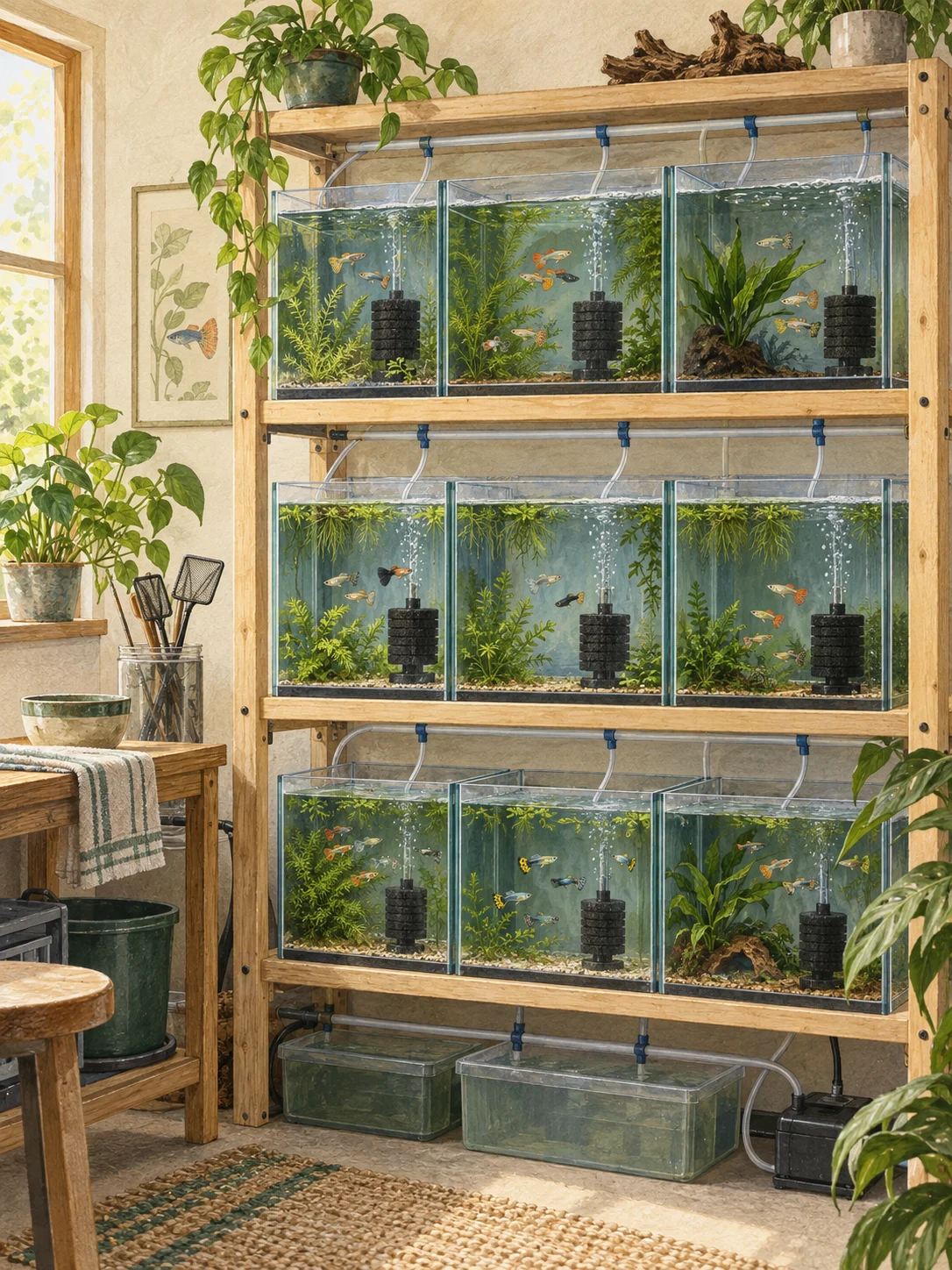
Our guppy guides focus on practical routines: keep water stable, observe fish closely and allow for natural variation.
Care systems
Steady water, thoughtful care
Gentle filtration and regular observation support healthy aquarium routines.
Natural variation
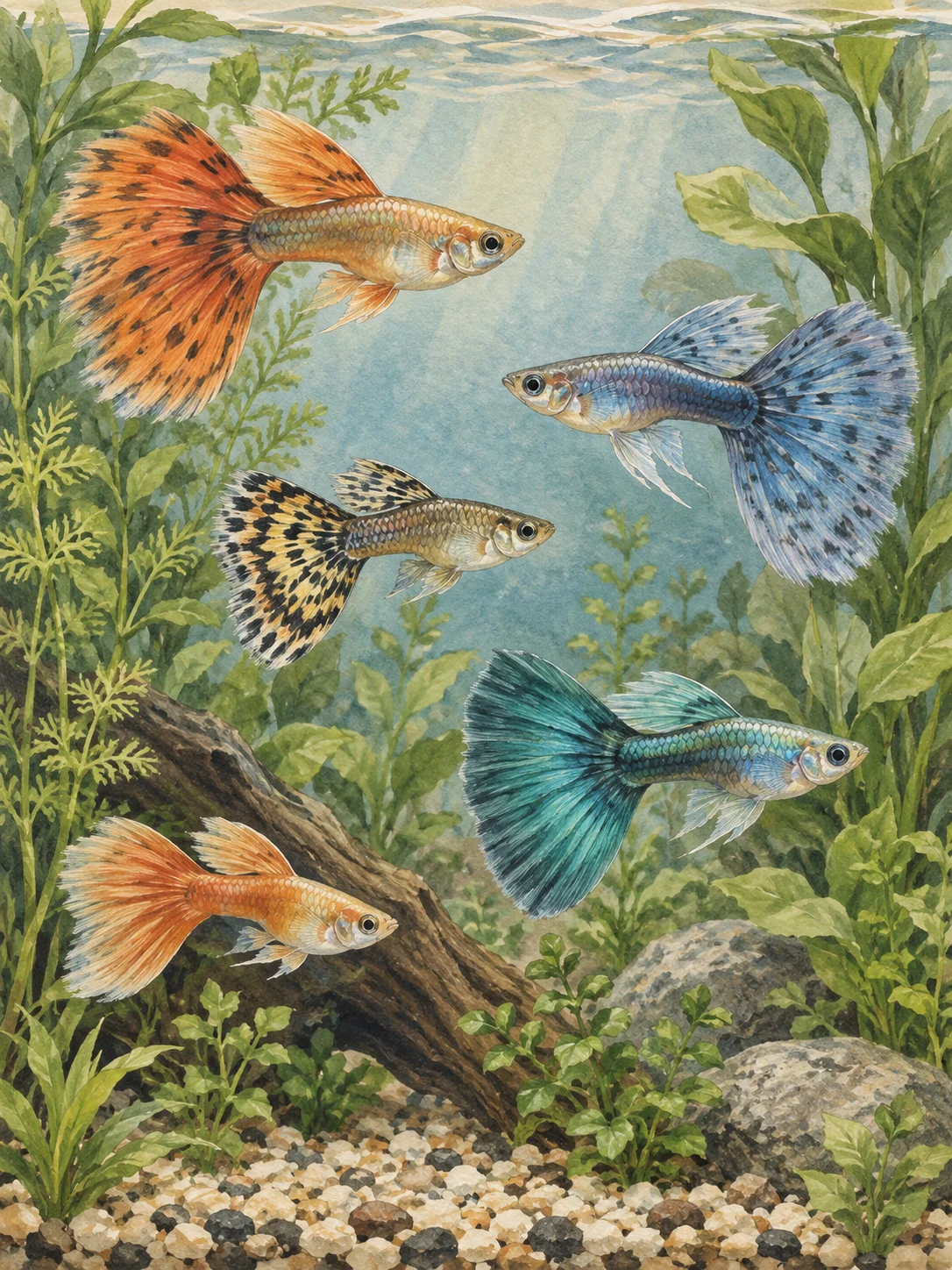
Every guppy is different
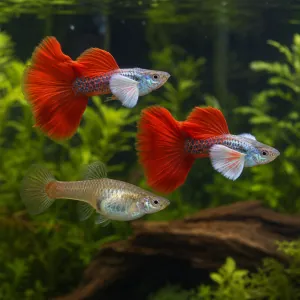
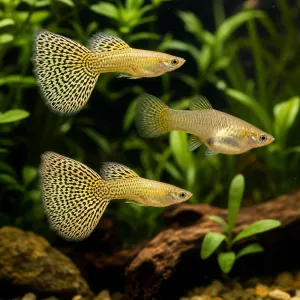
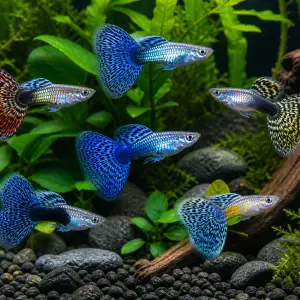
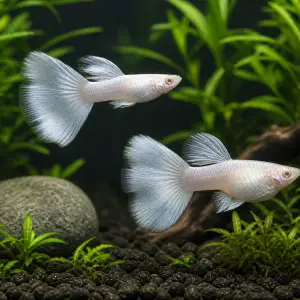
Color, size and fin shape vary with strain, age and each individual fish.
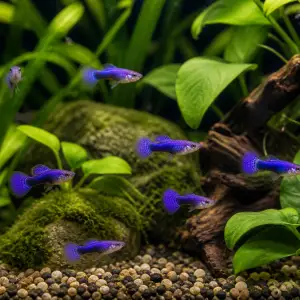
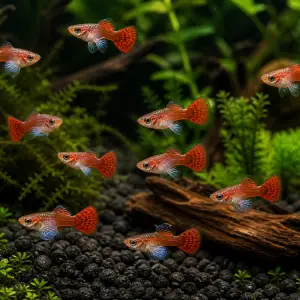
Editorial illustrations for context; they do not depict HiGuppy's exact facility or current fish stock.