The HiGuppy Journal
Red Lace Guppy Strain Guide: Pattern, Care & Breeding
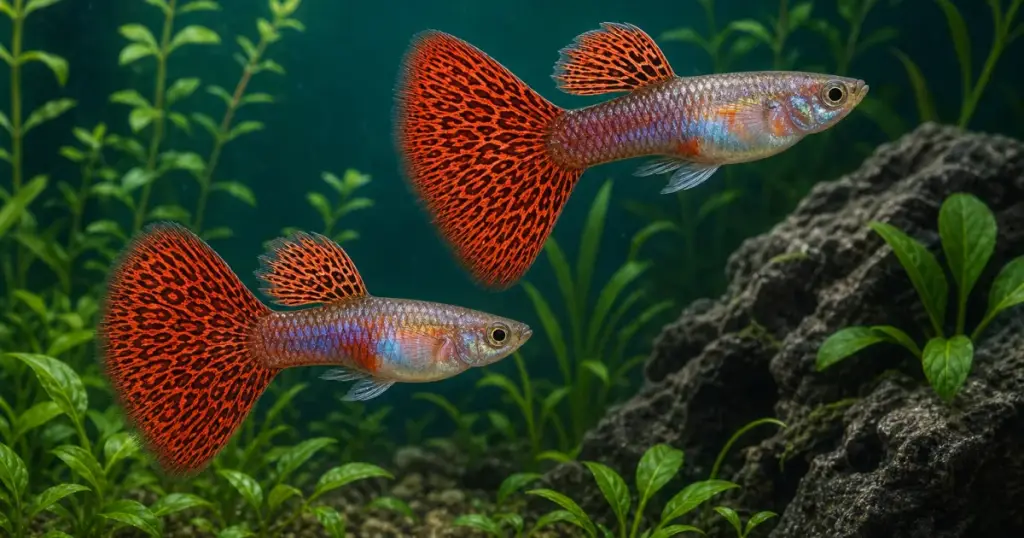
Quick answer: A Red Lace Guppy combines red-to-orange fin color with a fine lace-like network of darker markings, usually across the tail and dorsal fin. The best examples show a readable repeated pattern and healthy fin structure. They need standard fancy-guppy care, not a special red-color treatment.
How to identify a Red Lace Guppy
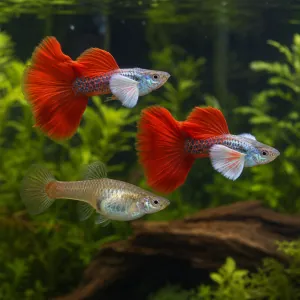
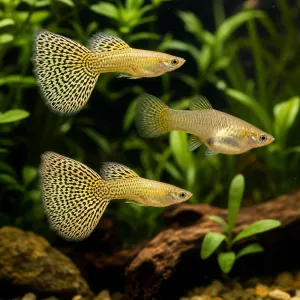
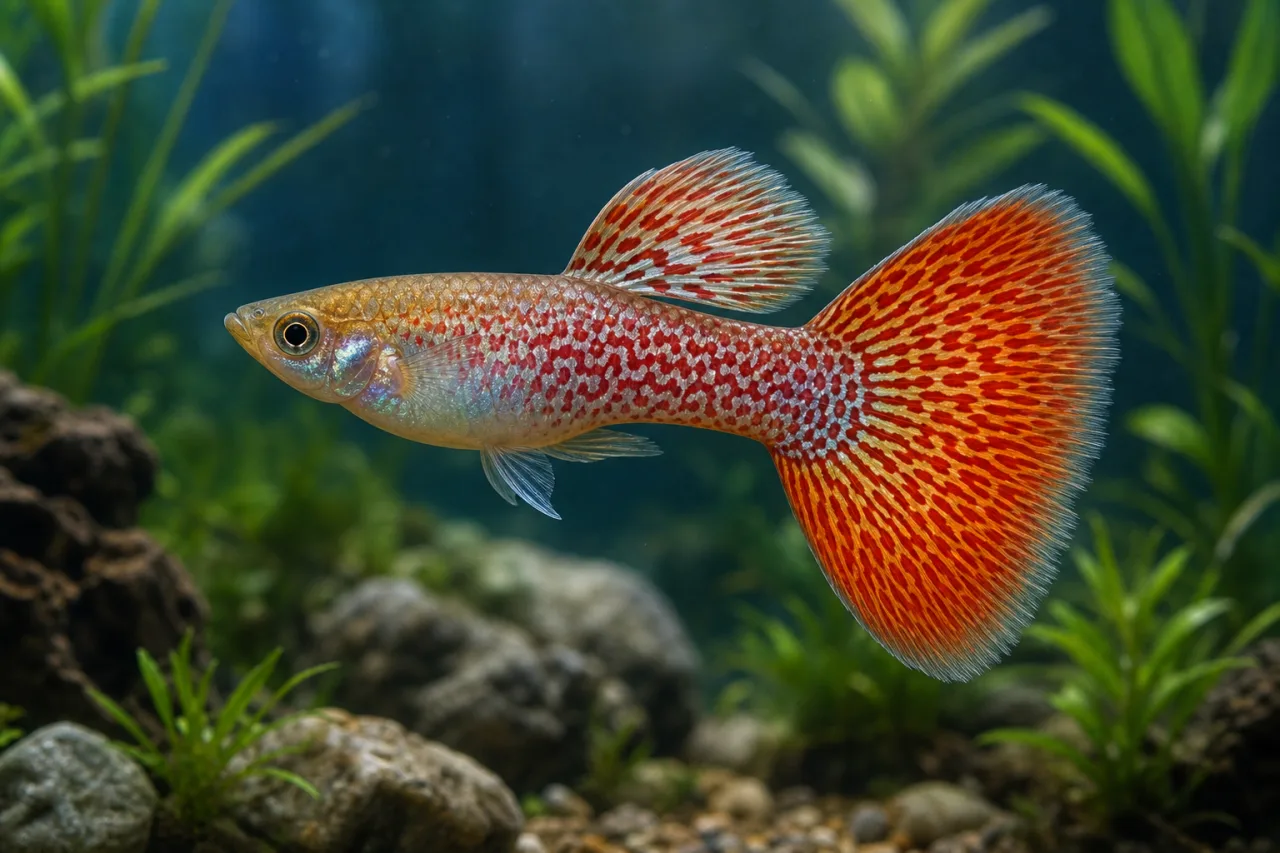
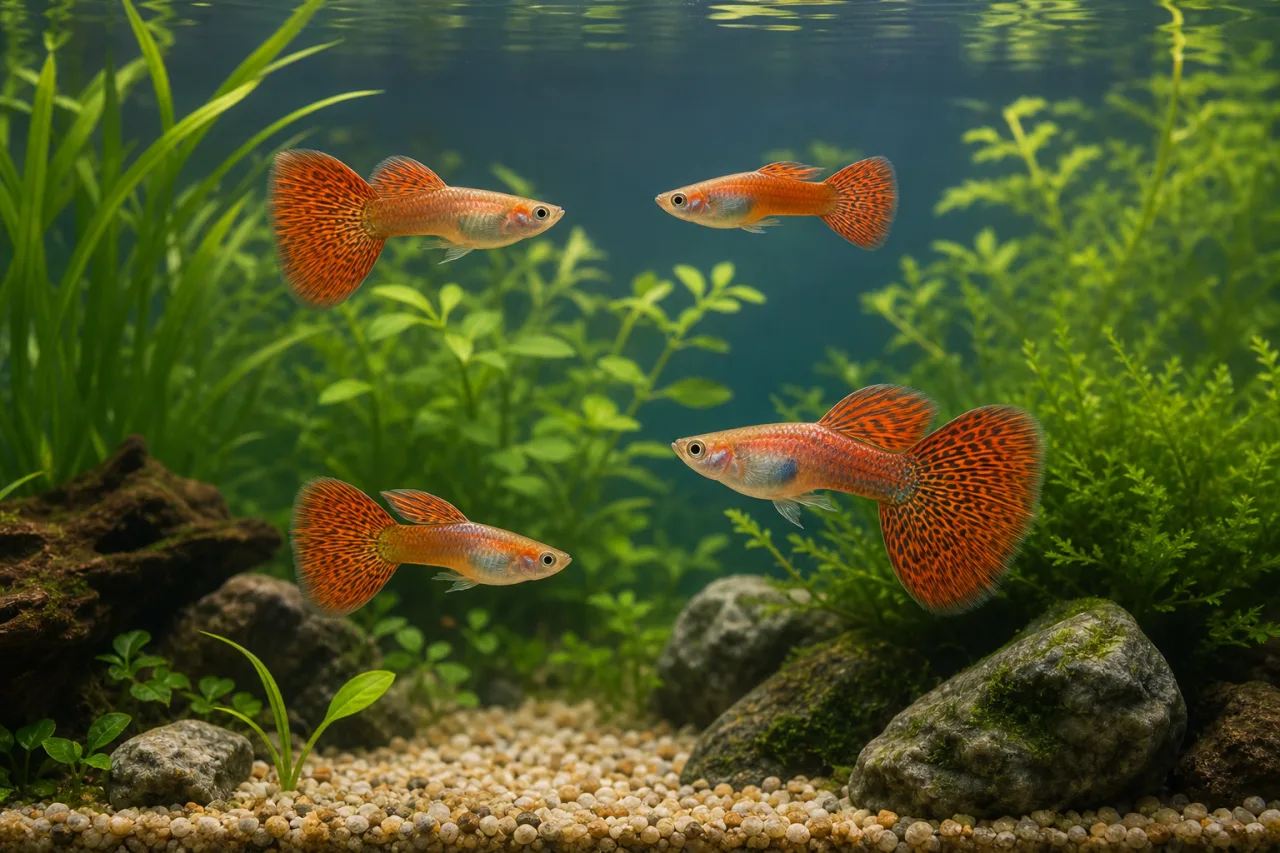
Red Lace is a visual strain label. “Red” describes the main fin color; “lace” describes fine, repeated lines or net-like marks. Some fish show orange-red, brick-red, or mixed red areas. Pattern coverage may extend from the tail into the dorsal fin and rear body.
Fine lace network
Look for repeated narrow lines or cells rather than a few broad patches.
Red fin base
The tail may range from orange-red to deeper red; lighting can change how saturated it looks.
Tail and dorsal balance
A repeated pattern across both fins often creates a more finished appearance.
Lace should remain fine and repeated; large irregular patches are more often described as mosaic or mixed pattern.
Red Lace Guppy care table
| Care factor | Practical target |
|---|---|
| Temperature | About 72–80°F (22–27°C) |
| pH | Approximately 7.0–8.0 |
| Ammonia / nitrite | 0 ppm |
| Filtration | Reliable, with flow appropriate for the fins |
| Tank mates | Peaceful fish; avoid known fin nippers |
| Diet | Balanced staple plus varied suitable foods |
Stable water and appropriate nutrition support normal color expression, but no food can repair poor genetics or an unhealthy aquarium. Use the care hub, food guide, and water parameters guide.
Male, female, and selection notes
Male
- Usually smaller with stronger red
- Often has a larger patterned tail
- Has a pointed gonopodium
Female
- Usually larger and deeper-bodied
- May have softer color and pattern
- Has a fan-shaped anal fin
Choose fish that hold their fins open, swim normally, and have a tail that is proportionate to the body. For a lace line, pattern fineness and even distribution may be more useful than selecting only for the deepest red.
Breeding Red Lace Guppies
Red Lace Guppies are livebearers. Fry can vary in red coverage, lace density, body color, and fin shape. Keep records, evaluate multiple broods, and avoid selecting weak swimmers simply because their color is intense. Plants provide resting areas and fry cover.
Start at the breeding hub, then use the detailed breeding guide. The educational pair vs trio article explains group tradeoffs.
Shipping and temporary color loss
Red color may look pale after transit because of darkness, fasting, and stress. Follow the acclimation guide, keep lighting calm, and allow the fish to settle before evaluating it. Refer to the shipping policy and live-arrival policy for current rules.
Red Lace Guppy FAQ
What is the difference between Red Lace and Red Mosaic?
Red Lace usually has finer repeated lines or cells. Red Mosaic tends to show larger, bolder shapes. Labels can overlap, so inspect the actual pattern.
Will color food make every Red Lace Guppy deep red?
No. Balanced food supports health and normal color, but genetics, age, sex, stress, lighting, and water quality all affect appearance.
Do Red Lace Guppies need special water?
No. Use stable guppy-appropriate water in a fully cycled aquarium and avoid abrupt changes.
Can Red Lace Guppies live with other strains?
Yes, if the fish are healthy and compatible. Mixed-strain breeding will not preserve a predictable Red Lace line.
Compare additional patterns in the Guppy Strains & Types hub. Current fish, if available, appear on the shop page.
Behind the care guides
Care begins with steady systems
Our guppy guides focus on practical routines: keep water stable, observe fish closely and allow for natural variation.
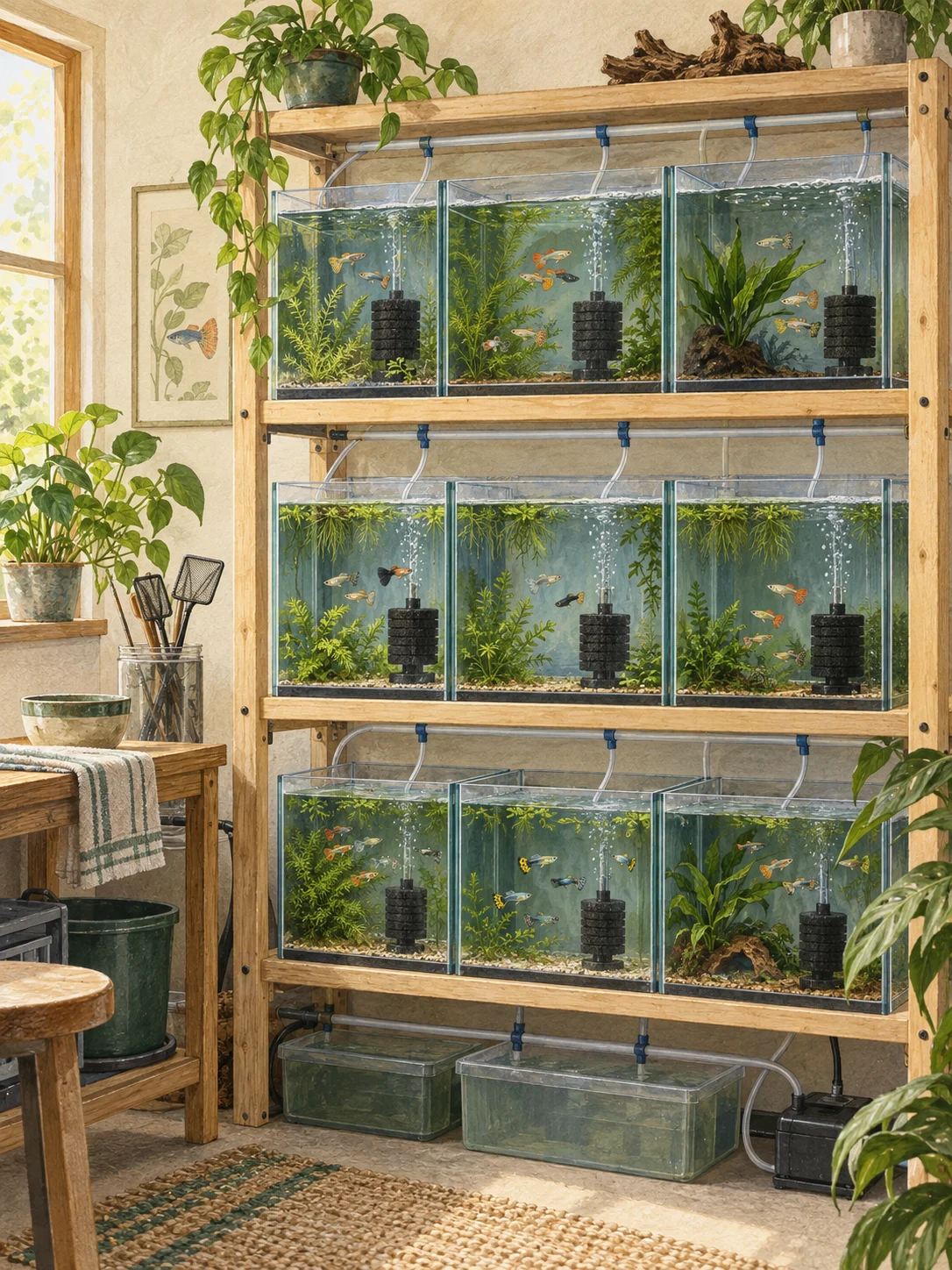
Care systems
Steady water, thoughtful care
Gentle filtration and regular observation support healthy aquarium routines.
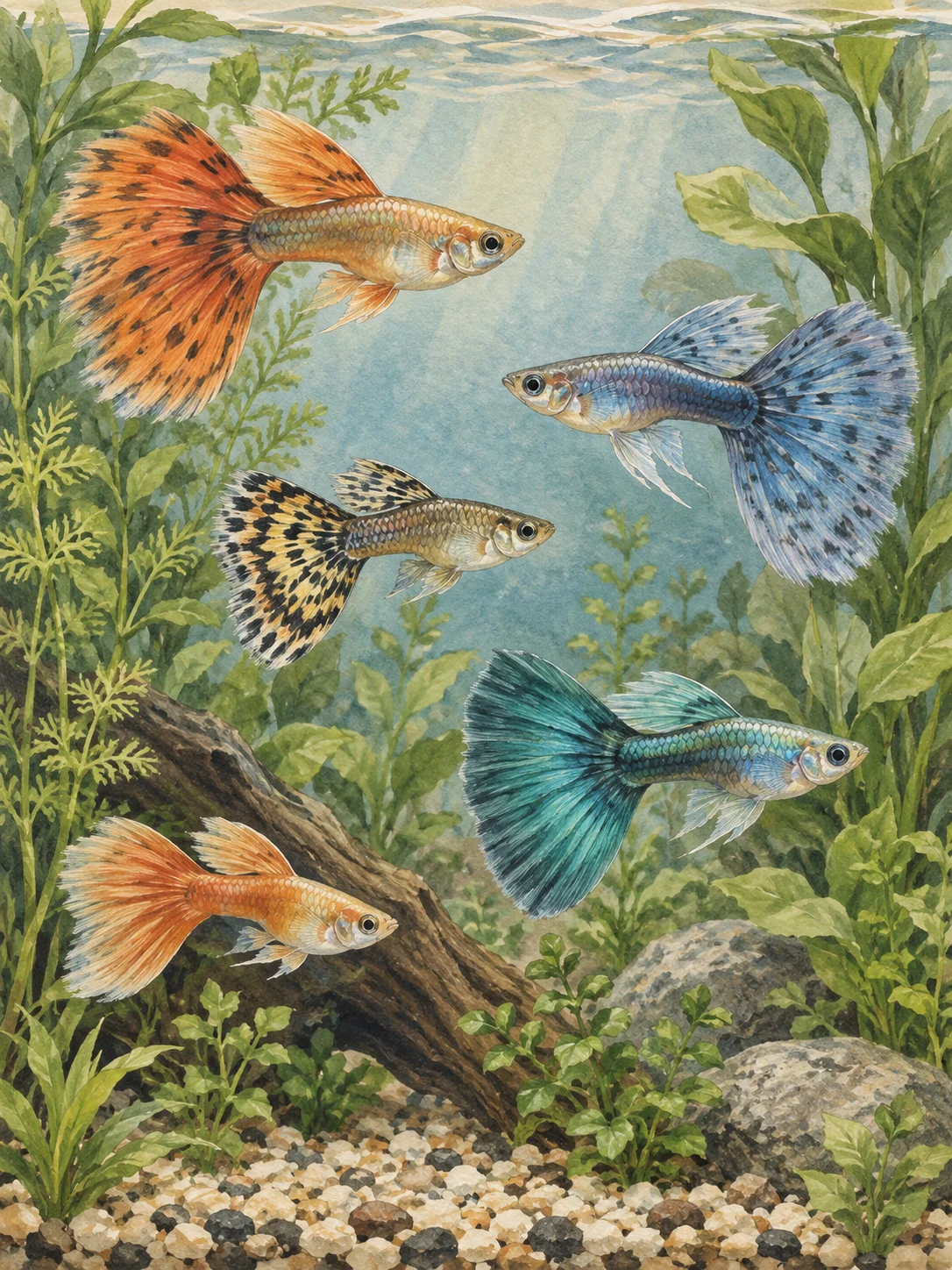
Natural variation
Every guppy is different
Color, size and fin shape vary with strain, age and each individual fish.
Editorial illustrations for context; they do not depict HiGuppy's exact facility or current fish stock.