The HiGuppy Journal
Pair vs Trio for Guppies: Which Should You Choose?

Quick answer: A guppy trio can suit a prepared mixed-sex breeding setup; a pair can suit a closely managed pairing with separation available. Choose by adult space, female welfare and capacity for future fry. A smaller package does not make an undersized aquarium suitable, and neither format guarantees parentage or peaceful behavior.
What do guppy pair and trio mean?
A breeding pair usually means one male and one female. A breeder trio often means one male and two females. These are common listing conventions, not universal definitions: confirm the exact fish count and sex composition before ordering.
Also check life stage. An unsexed juvenile group is not equivalent to a confirmed adult breeding group. Ask how the fish were sexed and whether the females have previously lived with males. Their history matters as much as the package name.
Guppy pair vs trio comparison
| Decision factor | Pair, if confirmed as 1 male + 1 female | Trio, if confirmed as 1 male + 2 females |
|---|---|---|
| Starting group | Two adults | Three adults |
| Initial care demand | Usually lower with otherwise comparable fish | More adult space, food and waste to manage |
| Female attention | One female may receive persistent attention | Attention may be divided, but unevenly |
| Breeding records | One potential mother is easier to track | Separate records are needed to distinguish mothers |
| Fry planning | Allow for repeated broods | Allow for overlapping broods from both females |
| Parentage | Previous matings can complicate paternity | The same risk applies to both females |
| Best fit | Supervised pairing with separation ready | Mixed-sex group with sufficient capacity |
When a pair makes sense
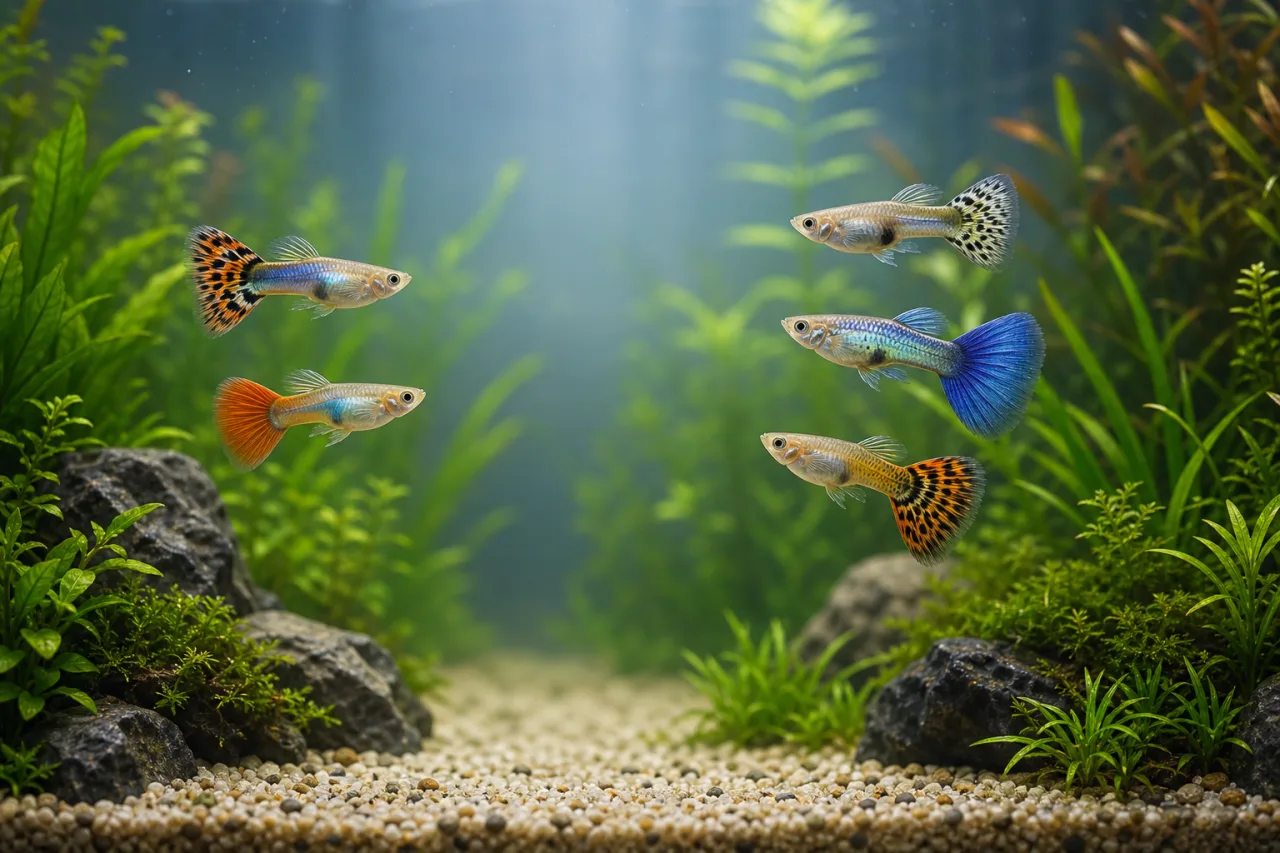
A pair can be useful when you want to observe a particular female and record her broods separately. It also starts with fewer adults to accommodate. Those advantages work best in a managed breeding project, where keeping the fish together is a decision you can change.
Prepare a suitable separation option before introducing them. If the male repeatedly interrupts the female’s feeding or leaves her unable to rest, the fact that they were sold together is no reason to keep them together. A pair is a buying format, not a promise of compatible behavior.
When a trio makes sense
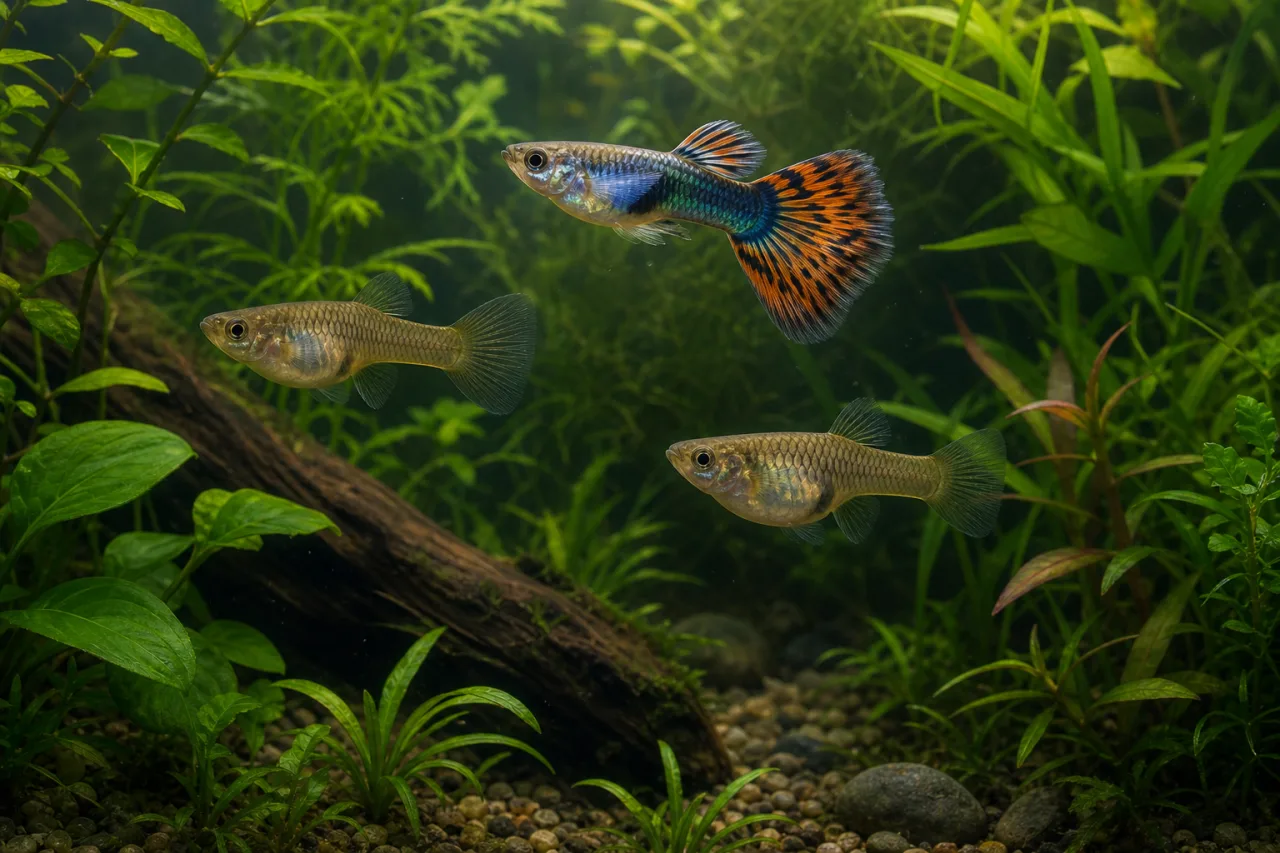
A trio is worth considering when you want a mixed-sex group and can accommodate both females and their offspring. OATA’s guppy and molly care guidance suggests at least three fish, with two females per male, as a general welfare reference.
That ratio does not guarantee that the male will divide his attention equally. Research on guppies documents the energetic burden of avoiding male harassment; adding a female is not a substitute for watching the fish. University of Glasgow research summary
Keep checking whether each female can feed, swim and rest without repeated pursuit. Do not add more fish to an already crowded tank to try to repair the ratio.
Check adult space, separation and grow-out capacity
Think about three different needs before choosing either group:
- Adult housing: OATA recommends at least 45 litres, about 12 US gallons, for a small group of the smaller livebearers. This is a starting reference, not a guarantee that a tank can also hold successive broods. Existing tankmates, usable swimming space and filtration affect the decision.
- Separation: Know where a fish can go if chasing becomes persistent. A secure divider must leave adequate room and water circulation on both sides. It shares the tank’s water, so it does not provide disease quarantine.
- Grow-out: Identify the actual aquarium space available as fry grow. An empty spare tank is not ready merely because it can hold water. Biological filtration needs to be established before it receives fish. UF/IFAS aquarium preparation guidance
Do not count one spare aquarium simultaneously as quarantine, emergency separation and occupied fry housing. If those needs overlap, what is your backup? If the only argument for a pair is that a trio would overwhelm your setup, review the breeding plan before buying either.
A pair does not guarantee known parentage
A purchased female may already be pregnant. Female guppies can also store sperm and use it across later reproductive cycles, so removing a male does not immediately rule out further broods. Research has examined competition between stored and newly inseminated sperm in guppies. Gasparini, Daymond and Evans, 2018
The practical consequence is important: the male delivered beside a female is not automatically the father of her next fry. Keeping a female alone after purchase, or introducing a different male, does not establish paternity.
For a controlled project, ask for documented mating history and how females were kept separate from males before they could mate. If the history is unknown, record that uncertainty. Do not promise a particular cross or strain purity from the pack label alone.
Likewise, two females are not necessarily two unrelated lines. A trio offers two potential mothers; evidence about their ancestry is a separate question for the seller.
Three practical buying scenarios
You have one display aquarium and do not want fry. Neither mixed-sex option fits that goal well. Consider a correctly sexed male-only group appropriate to the aquarium, while still allowing for observation and possible chasing.
You want to follow one female’s offspring. A pair may fit a supervised project with separate housing and clear records. Record the mother, known mating history and birth dates; leave the father unconfirmed when the history cannot support it.
You have adult housing and ready grow-out space. A trio may fit your capacity, provided two females producing fry would remain manageable. Ask yourself whether that is still true if rehoming takes longer than expected.
Plan for fry before choosing more females
Do not budget only for the fish arriving in the bag. More breeding females can mean more young to raise, but a trio does not guarantee exactly twice a pair’s output.
Have appropriately sized fry food ready and check that filtration cannot draw newborn fish into an unprotected intake. Adults may eat fry, so choose a suitable protected rearing arrangement if you intend to raise them. OATA recommends separate rearing with suitable fry foods; a small breeding box is not a long-term grow-out plan. OATA care guidance
Decide how you will separate sexes as the young develop and where fish will go when you cannot keep them. Confirm a willing recipient rather than assuming a shop will accept every surplus fish. Never release aquarium fish outdoors. For the wider process, use the step-by-step breeding article and Breeding Guide hub.
Before buying either option
- Confirm the exact count, sexes and approximate age or life stage.
- Ask about the females’ previous exposure to males and any documented parentage.
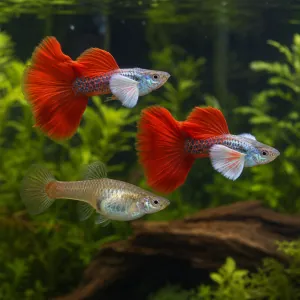
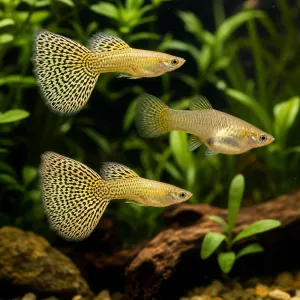
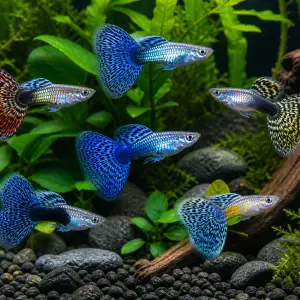
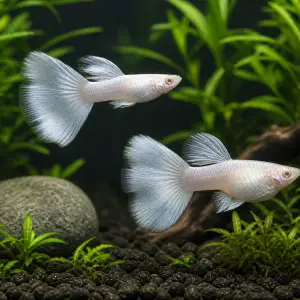
- Check whether photographs show the actual fish, representative stock or an illustration.
- Confirm that adult housing and any receiving aquarium are cycled and ready.
- Arrange quarantine before adding newcomers to established fish; UF/IFAS recommends this to reduce disease introduction.
- Identify a usable separation option and realistic fry capacity.
- Budget for ongoing food, testing, maintenance and additional housing, not just the pack price.
Use the Guppy Breeding Pairs & Trios page to explore buying formats, then confirm the individual listing in the HiGuppy shop. Before ordering, read the Shipping Policy, Live Arrival Guarantee and DOA Policy and Acclimation Guide. Current listing and policy details take priority over a general comparison.
Pair vs trio FAQ
Is a trio always one male and two females?
No. That is a common breeding-listing convention, but the seller must confirm the composition of the particular pack.
Is a pair safer for a small tank?
Fewer starting adults do not solve inadequate space, an immature filter or future crowding. Choose suitable housing first, including a plan for separation and offspring.
Will a trio stop the male chasing females?
No. Monitor both females individually. If either cannot feed or rest normally because of persistent pursuit, use the prepared separation option and reassess the setup.
Can females have fry after the male is removed?
Yes. Existing pregnancy and stored sperm mean further broods remain possible. A female-only group with unknown mating history is not a reliable way to avoid fry.
Does a trio guarantee a stronger breeding line?
No. Fish count alone does not establish unrelated ancestry, fertility, health or consistent offspring traits. Ask what is documented and keep your own breeding records.
Sources and further reading
- OATA: How to look after guppies and mollies
- University of Glasgow: Female guppies become better swimmers to escape male sexual harassment
- Gasparini, Daymond and Evans: Extreme fertilization bias towards freshly inseminated sperm in a species exhibiting prolonged female sperm storage
- UF/IFAS: The Ornamental Fish Trade, including responsible aquarium ownership
Behind the care guides
Care begins with steady systems
Our guppy guides focus on practical routines: keep water stable, observe fish closely and allow for natural variation.
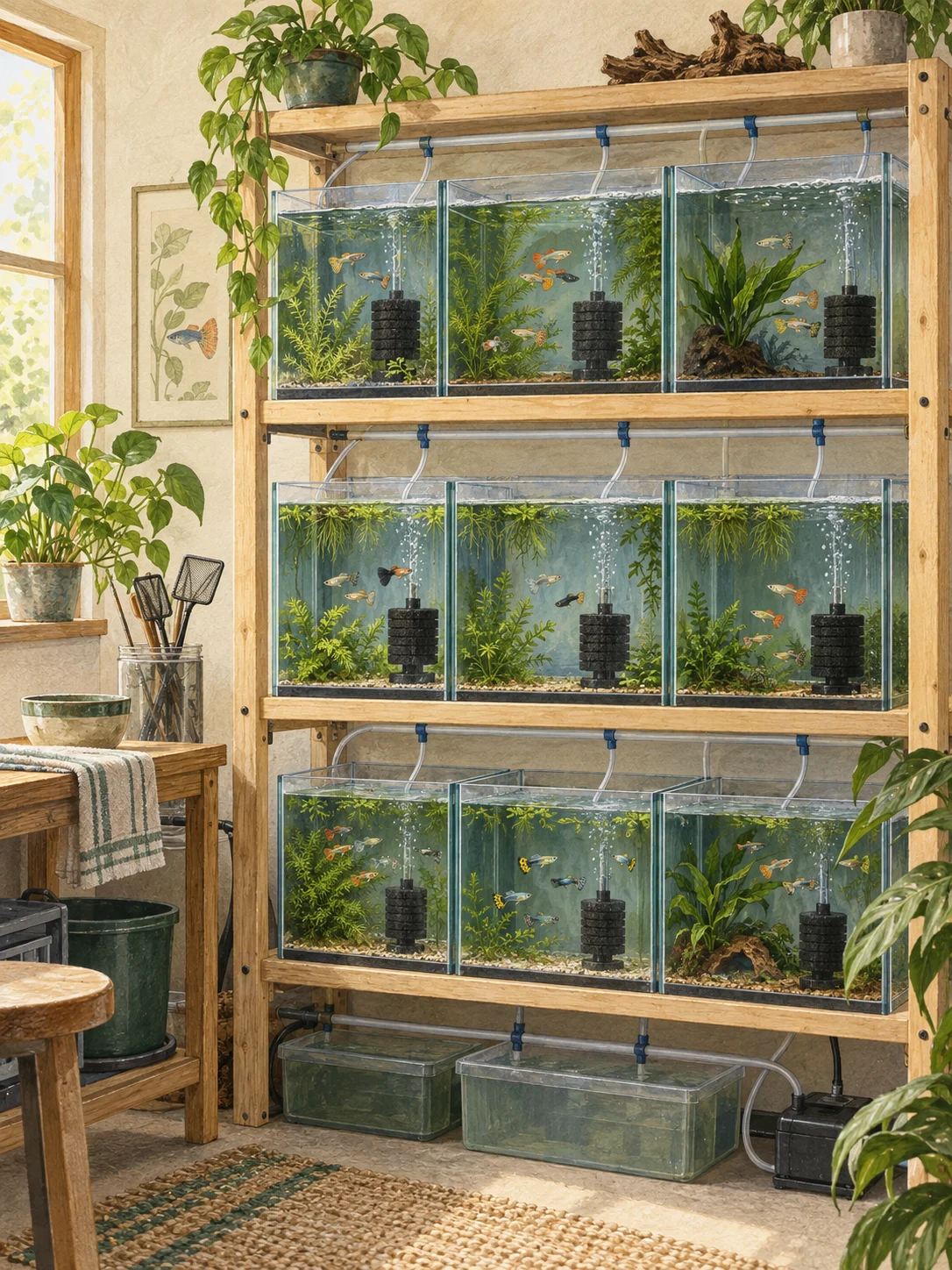
Care systems
Steady water, thoughtful care
Gentle filtration and regular observation support healthy aquarium routines.
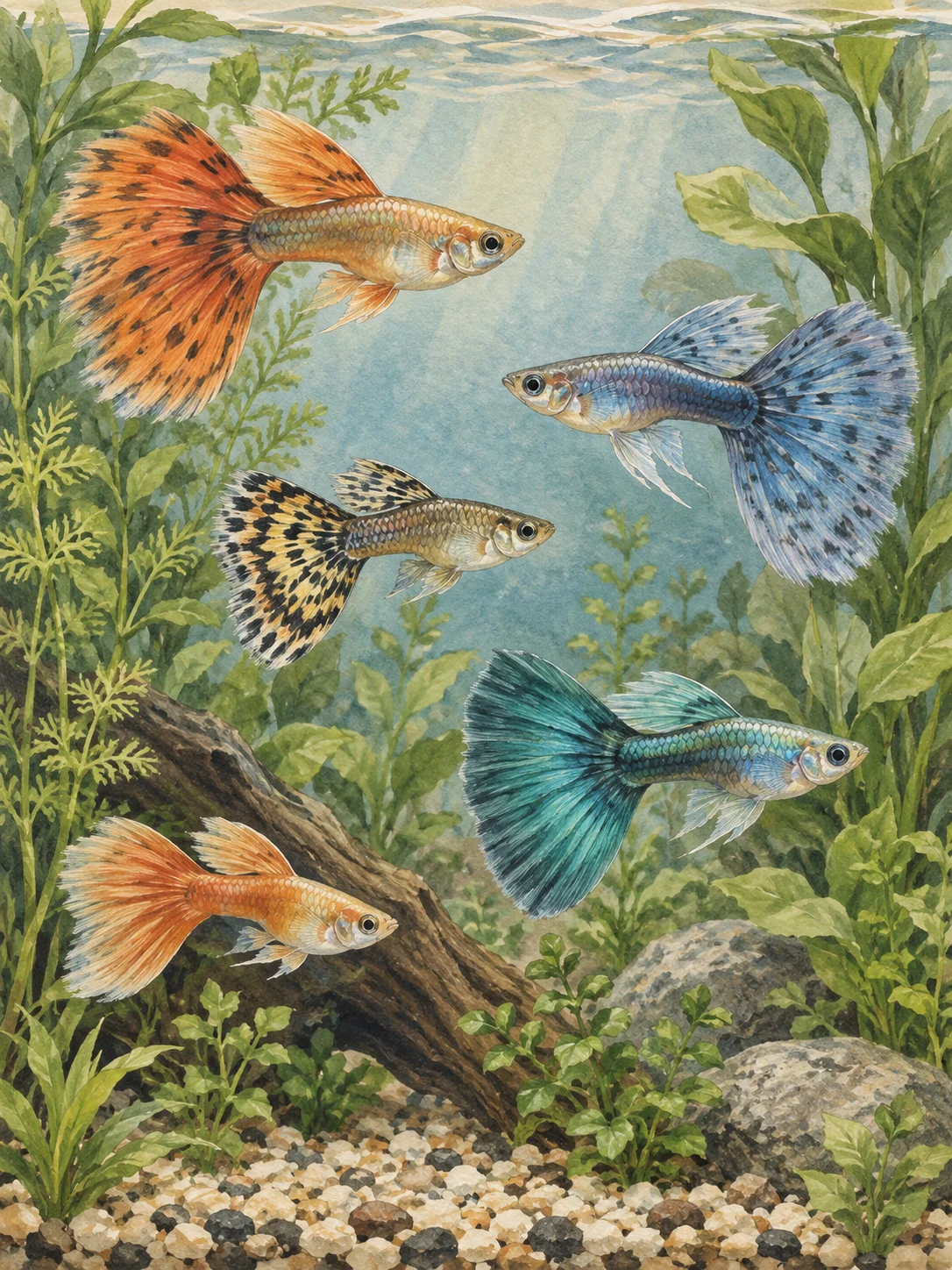
Natural variation
Every guppy is different
Color, size and fin shape vary with strain, age and each individual fish.
Editorial illustrations for context; they do not depict HiGuppy's exact facility or current fish stock.