The HiGuppy Journal
What to Do With Guppy Fry: 10 Smart Options for Extra Babies
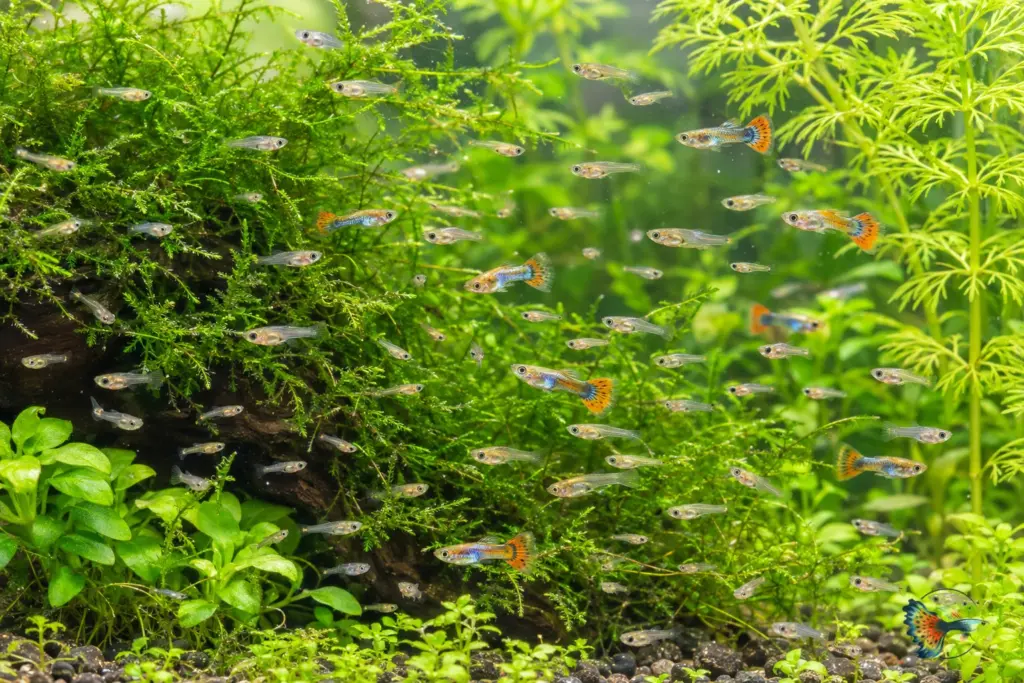
Quick answer: Practical options include raising fry in a prepared, appropriately filtered aquarium or arranging responsible rehoming. If a fry appears unwell or differs in appearance, consult an aquatic veterinarian before making a care decision; appearance or sale value is not a diagnosis. Most keepers mix several options. A single female drops 20–50 fry every 4–6 weeks, so decide early, before your tank is overrun.
If you keep guppies for more than a few weeks, fry are not a possibility — they are a certainty. Females store sperm and produce brood after brood, and even a single pair can fill a tank faster than most beginners expect. What to do with guppy fry is therefore one of the most practical questions in the hobby: the answer touches tank space, water quality, ethics, and sometimes a little pocket money. This guide walks through ten real options, the first-48-hour survival steps, a decision checklist, and a week-by-week timeline so you can choose what to do with guppy fry confidently — whether you have five unexpected babies or five hundred.
Guppy Fry Key Facts: Numbers Behind the Decision
Before picking a plan for what to do with guppy fry, keep these numbers in mind — they decide how urgent your situation really is:
- Brood size — a healthy female produces 20–50 fry per drop; young females start closer to 10–20 and large females can exceed 80.
- Frequency — expect a new brood every 4–6 weeks in warm water.
- Stored sperm — females keep producing fry for up to 6–8 months after their last contact with a male, so removing males does not stop fry immediately.
- Survival in a community tank — survival varies with cover, adult behavior and tank conditions; do not rely on a percentage or predation to control population.
- Sexing window — fry can be sexed reliably at 4–6 weeks, which is also when most stores will accept them.
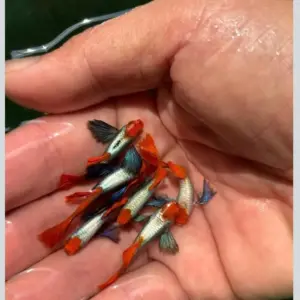
- Sellable size — most shops and buyers want juveniles of 2.5–4 cm (1–1.5 inches), reached at 8–12 weeks with good feeding.
- Tank capacity — there is no universal litres-per-fish formula. OATA recommends at least 45 litres for a small group of smaller guppies; larger groups need more space, and a filter is essential. This is a general reference, not a guarantee for every setup.
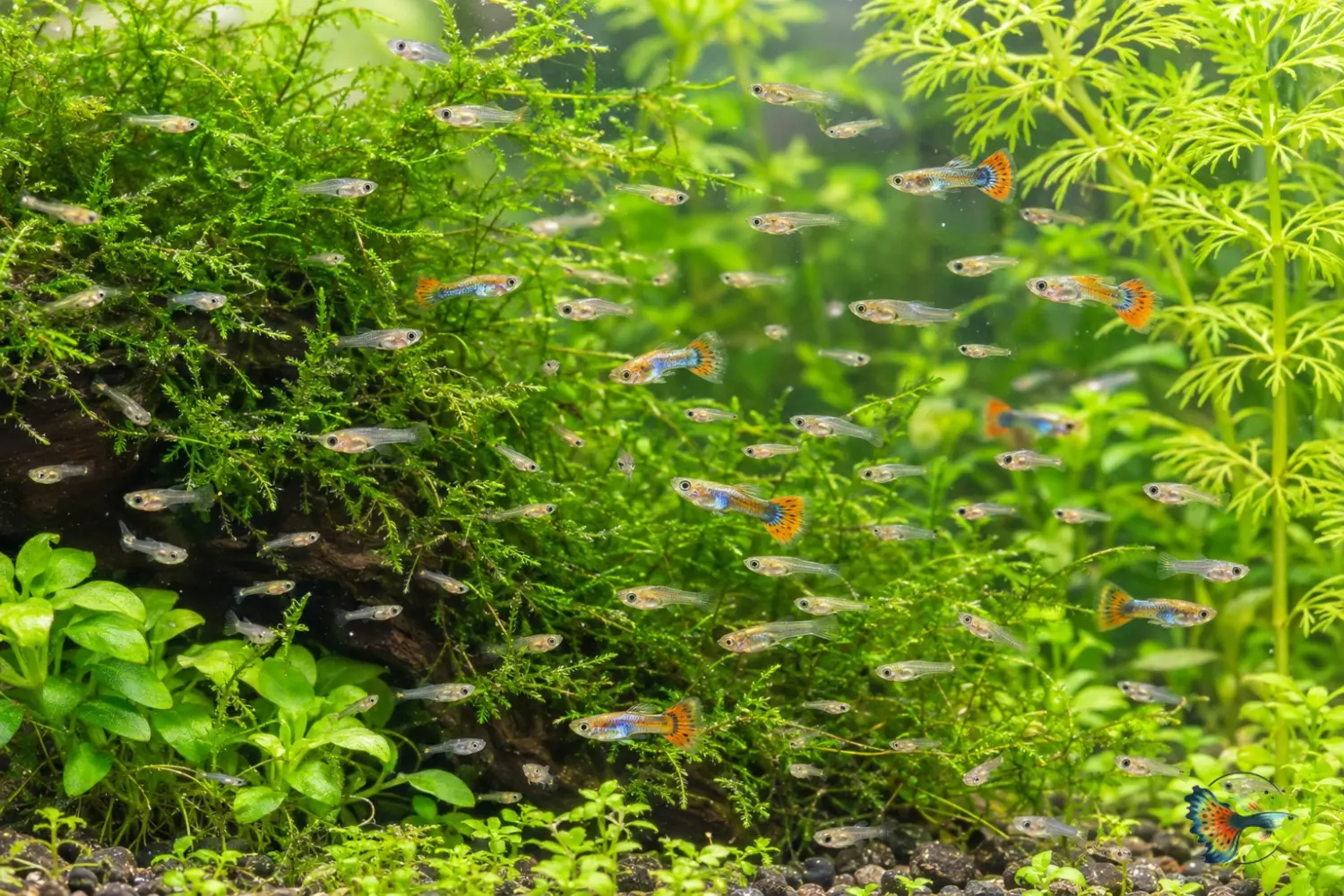
What to Do With Guppy Fry: Your 10 Options at a Glance
Every plan for what to do with guppy fry falls into one of ten buckets. Scan this table first, then read the section that matches your situation:
| Option | Best when | Effort | Outcome |
|---|---|---|---|
| 1. Raise fry in a grow-out tank | You want to keep or sell quality juveniles | Moderate | More control over feeding and observation; outcomes vary |
| 2. Leave fry in the main tank with cover | You want a few survivors, zero extra work | Very low | Fry numbers are unpredictable; not a population-control plan |
| 3. Keep the best for a breeding line | You breed a strain and want improvement | Moderate | Better stock each generation |
| 4. Give fry to hobbyists or clubs | You have healthy extras and no store nearby | Low | Fry rehomed, goodwill earned |
| 5. Sell fry to a local fish store | A shop nearby buys or credits juveniles | Low–moderate | Store credit or small cash return |
| 6. Sell fry online | You have a desirable strain and can ship | High | Best prices per fish |
| 7. Bulk-sell to a reseller or wholesaler | You produce large numbers regularly | Moderate | Lower price, zero retail work |
| 8. Move fry to a pond or summer tub | Warm season and outdoor space available | Low | Cheap, high-volume grow-out |
| 9. Seek veterinary advice for a fry that appears unwell | You are concerned about a fry’s health or welfare | Varies | Qualified assessment before a care decision |
| 10. Prevent the next brood | You want no more fry at all | Very low | Problem stops in 6–8 months |
What to Do With Guppy Fry in the First 48 Hours
Whatever your long-term answer to what to do with guppy fry, the first two days decide how many fry you even have to plan around. Newborn fry are about 6–8 mm long, swim immediately, and hide near the surface or inside plants. Adult guppies — including the mother — will hunt them.
Step 1: Count roughly. Look along the top of the tank, inside plant thickets, and behind the filter output. A rough count tells you whether you are managing 15 fry or 60.
Step 2: Give cover or separate. If you leave fry in the main tank, add floating plants or a clump of java moss immediately — the best live plants for guppies list shows which ones double as fry cover. If you separate, move fry with a small cup or turkey baster, never a net, and match the destination water exactly. The guide on how to separate guppy fry walks through stress-free moves.
Step 3: Feed small, often. Fry eat within hours of birth. Offer finely crushed flakes, powdered fry food, or newly hatched baby brine shrimp 3–5 times daily in amounts cleared within five minutes. The guppy fry feeding schedule has portions by age.
Step 4: Protect water quality. Fry are fragile; ammonia spikes kill faster than hunger. Keep the sponge filter running and change 10–15% of the water with matched, conditioned water every few days.
What to Do With Guppy Fry: Option 1 — Raise Them in a Grow-Out Tank
A dedicated grow-out aquarium can make it easier to feed and observe fry. The suitable volume depends on the number of fish, their growth, filtration and water quality; no single tank size can be called comfortable for every brood. Plan additional space or responsible rehoming as the group grows.
Keep the setup simple: a sponge filter (safe for fry that can be sucked into hang-on-back intakes), a heater holding 24–26°C, bare bottom or fine sand for easy cleaning, and one clump of moss for security. Full equipment lists and stocking logic are in the guppy fry grow-out tank setup guide.
A prepared grow-out tank lets you feed and observe fry more easily. Survival depends on the setup and care; there is no verified percentage that applies to every grow-out.
What to Do With Guppy Fry: Option 2 — Leave Them in the Main Tank
Keeping fry with adults can lead to unpredictable numbers. Plants and other cover provide places to hide, but do not rely on predation or a survival estimate as population control.
If you keep fry with adults, plan for the possibility that more may survive than expected. Keep suitable cover and decide in advance how you will provide adequate space or responsibly rehome healthy surplus fry.
What to Do With Guppy Fry: Option 3 — Keep the Best for a Breeding Line
If you keep a named strain, you can choose which healthy fish to use as future breeders. Make a plan to house or responsibly rehome the other healthy fry; selection for a breeding line is not a reason to euthanize fish based on appearance alone.
Keep records of which parents produced which traits, and compare your juveniles against the guppy strain list so you know what “correct” looks like for your line. The remaining fry are not wasted — they become option 4, 5 or 6 stock. Selection is how a strain stays a strain instead of drifting back to generic mixed guppies.
What to Do With Guppy Fry: Option 4 — Give Fry to Hobbyists and Clubs
Not every plan for what to do with guppy fry needs a price tag. Local aquarium clubs, fish-keeping Facebook groups, school classrooms with tanks, and neighbors who keep fish all take healthy juvenile guppies — often gratefully, since guppies are the classic beginner fish.
Bagger or small container, conditioned tank water, and a same-day handoff is all it takes. Post a clear offer with strain name, age, and count: “40 mixed fancy juveniles, 8 weeks, free to local pickup.” Fry given away locally avoid every shipping risk, and the goodwill usually returns as advice, trades, or future homes for the next brood.
What to Do With Guppy Fry: Option 5 — Sell Them to a Local Fish Store
The most practical paid answer to what to do with guppy fry is your local fish store. Many independent shops buy healthy juvenile guppies for store credit or cash — typically a fraction of retail price, since the shop feeds and houses them until sale.
Call before visiting: ask whether they accept hobbyist fish, the minimum size (usually 2.5–4 cm), and whether they want mixed or sexed groups. Bring fry in a clean, clearly labeled container with a count. Shops pay more for recognizable strains than for unlabeled mixed fry — a named line sells itself. Keep expectations modest: this option clears tank space and recovers food costs, not a second income.
What to Do With Guppy Fry: Option 6 — Sell Fry Online
For desirable strains, the highest-value answer to what to do with guppy fry is selling online: hobbyist marketplaces, auction sites, forum classifieds, and social groups. Named strains with clear photos can bring several dollars per juvenile, and pairs or trios sell better than single fish.
Presentation does the selling. Photograph juveniles against a clean background — the guide to photographing guppies for sale shows exactly what buyers look for. List strain, age, size, sex mix, and water parameters honestly.
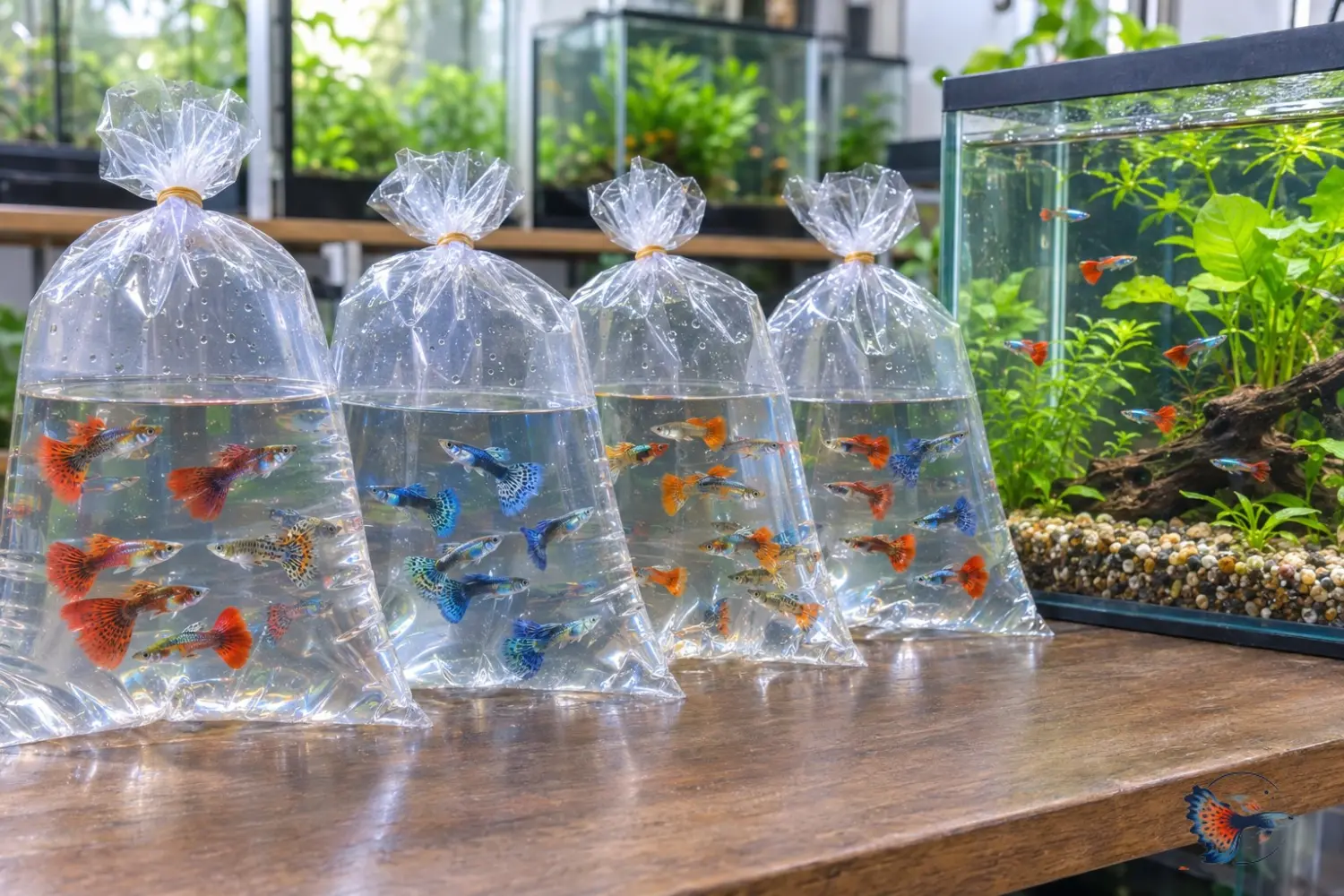
The hidden cost is shipping. Live fish need oxygenated bags, insulation, and heat packs in cold weather — the walkthrough on how live guppies are packed for shipping covers the method professionals use. Factor supplies and carrier costs into your price, and start with local-pickup-only listings until your packing is proven.
What to Do With Guppy Fry: Option 7 — Bulk-Sell to a Reseller or Wholesaler
Keepers who run multiple breeding tanks face a different version of what to do with guppy fry: volume. When broods arrive by the hundred, retailing each fish is impractical. Resellers and small wholesalers take mixed juveniles in bulk — dozens or hundreds at a time — at lower per-fish prices but near-zero effort.
This suits steady producers: agree a size, count method, and delivery schedule with the buyer, then treat it as a pipeline. Record batches so you can trace any health complaint back to a breeding tank. Bulk selling will never match online prices per fish, but it converts an overwhelming fry population into predictable, low-effort returns.
What to Do With Guppy Fry: Option 8 — Move Fry to a Pond or Summer Tub
In warm months, an outdoor pond, stock tub, or even a large planted container answers what to do with guppy fry cheaply and at volume. Outdoor water rich in natural microfauna grows fry fast, and sunlight plus plant cover produce strong colors.
The limits are climate and predators: guppies need roughly 18°C or warmer, nights included, so this only works for frost-free stretches. Screen against birds and dragonfly larvae, bring fry in before autumn, and never release guppies into natural waterways — they are an introduced species almost everywhere and releasing them is illegal in many regions. A covered patio tub used May through September is the realistic version for most keepers.
What to Do With Guppy Fry: Option 9 — Get Advice When a Fry Appears Unwell
A visible difference or change in behavior does not by itself establish whether a fry is suffering or whether a health concern is treatable. Check the aquarium conditions and contact a veterinarian with aquatic experience before making a care decision. Do not treat appearance or sale value as a diagnosis.
Do not attempt a home euthanasia procedure or an untrained physical method. The RSPCA advises consulting a veterinarian with aquatic experience before considering euthanasia and notes that methods are not suitable for every fish. If you are worried about a fry, seek qualified advice first.
What to Do With Guppy Fry: Option 10 — Prevent the Next Brood
Sometimes the real answer to what to do with guppy fry is making sure there is no next batch. Three approaches work, alone or combined:
- Separate the sexes. A male-only group prevents new matings within that group once any already-expected broods have passed. Identify fish carefully and plan for fry already on the way.
- Plan for existing pregnancies. Females may continue to produce broods after separation; plan suitable space and rehoming while you wait.
- Plan capacity and rehoming. Keep appropriate cover and arrange space or responsible rehoming for healthy surplus fry; do not rely on adult predation to manage population.
Preventing future matings and caring for fry already born are separate tasks. Keep a suitable environment for the fry you have and make a responsible space or rehoming plan.
How to Decide What to Do With Guppy Fry: A Practical Checklist
Use this five-step checklist when a new brood arrives and you need to decide what to do with guppy fry this week, not someday:
- Count and age the fry. Rough count today; note the birth date. Decisions get easier once you know whether fry are newborns or 6-week juveniles.
- Check capacity and water quality. Do not use a fixed litres-per-fish formula. OATA recommends at least 45 litres for a small group of smaller guppies, with more space as the group grows; a filter is essential. Arrange space or responsible rehoming before conditions deteriorate.
- Choose a care and placement plan. Raise the healthy fry you can accommodate and arrange responsible rehoming for healthy surplus. If a fry appears unwell, consult an aquatic veterinarian (option 9).
- Match effort to reward. Online sales pay best but cost packing and time; local stores and giveaways are fast and free. Pick the channel you will actually follow through.
- Set the prevention plan. Whatever you choose, decide now whether the next brood gets the same plan — or whether option 10 stops it entirely.
What to Do With Guppy Fry: Week-by-Week Timeline
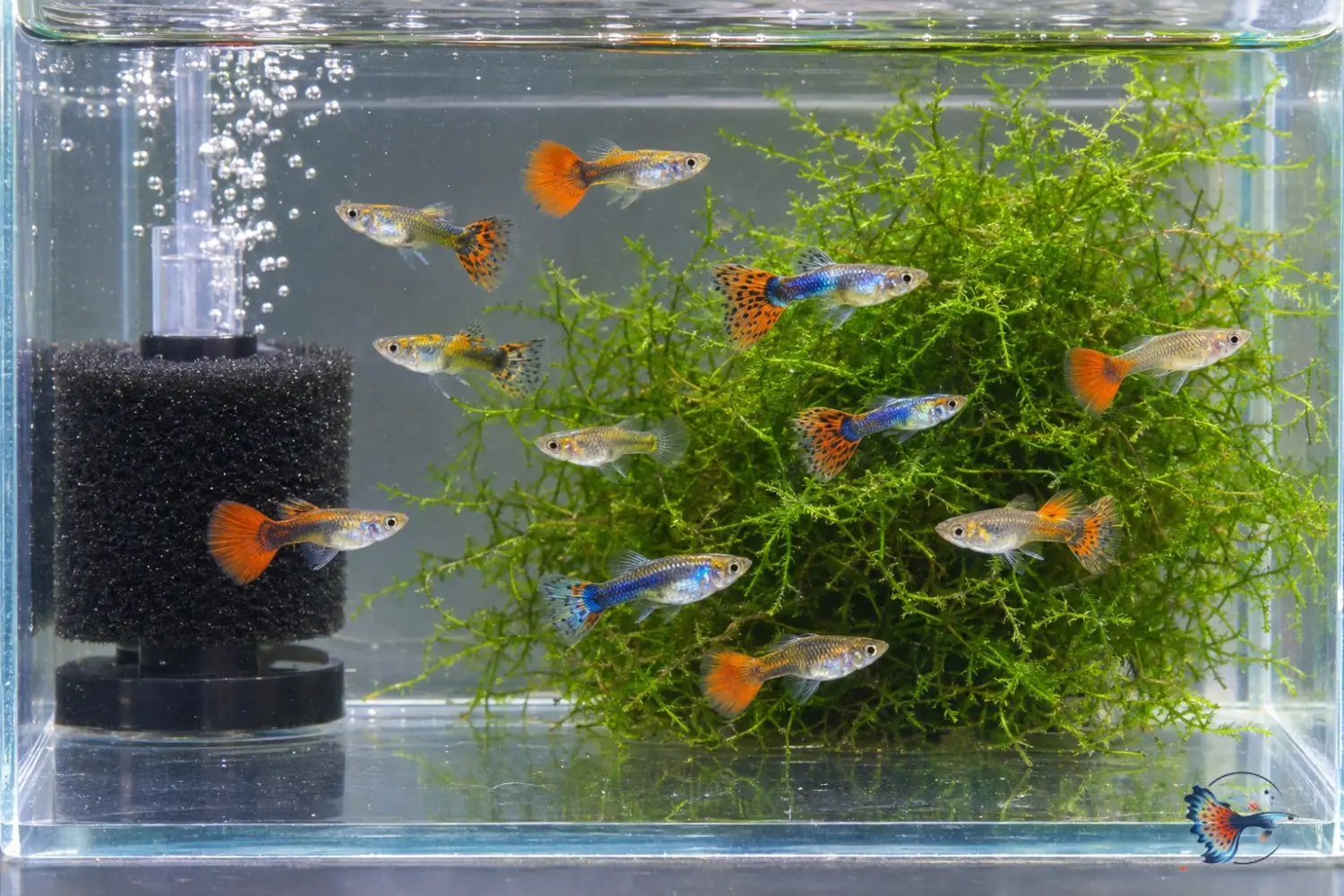
Timing answers half of what to do with guppy fry. Here is the schedule most broods follow at 24–26°C:
- Week 0–1: Fry hide near the surface; feed powdered food or baby brine shrimp 4–5 times daily; predators are the main threat.
- Weeks 2–3: Fry explore the whole tank; introduce crushed flakes; first visible size differences appear between strong and weak growers.
- Weeks 4–6: Sexing becomes possible — males develop a gonopodium and first color; first development review; assess housing and welfare before deciding where fry can live. See when guppy fry can join adults for size rules.
- Weeks 8–10: Juveniles hit 2.5–4 cm; male color develops fast; the window most stores and buyers accept.
- Weeks 10–14: Sellable young adults; move them before males mature enough to breed with siblings.
Fry raised on schedule reach each milestone predictably; fry raised hungry or crowded lag by weeks. Our raising guppy fry guide covers daily care in more depth.
Mistakes to Avoid When Deciding What to Do With Guppy Fry
Most fry problems come from a short list of repeat mistakes:
- Waiting too long to decide. “Later” turns into 200 juveniles in a 40-litre tank. Choose a channel in week one.
- Overfeeding the grow-out. Fry need frequent feeding, but fouled water kills faster than hunger; match portions to appetite.
- Selling fry too small. Stores reject fry under ~2.5 cm; shipping tiny fry raises losses and complaints.
- Releasing fry outdoors permanently. Never release guppies into wild waterways — illegal in many places and harmful to native species.
- Keeping every fry forever. Sentiment fills tanks fast; even good stock needs an exit plan.
- Ignoring stored sperm. A female-only tank still drops broods for months — plan around it.
Frequently Asked Questions
What to do with guppy fry if I don’t have a second tank?
Do not treat a small unfiltered container as housing for weeks or assume daily water changes make it suitable. Prepare an appropriately filtered grow-out aquarium for the number of fry you can care for, or arrange responsible rehoming for healthy surplus. Cover can provide hiding places, but it does not predict how many fry will survive.
What to do with guppy fry that are deformed?
A visible difference alone cannot show whether a fry is suffering or whether a health concern is treatable. Ask a veterinarian with aquatic experience before making a care decision. Do not treat appearance or sale value as a diagnosis, and never release guppies into wild waterways.
What to do with guppy fry when the tank is already overcrowded?
Arrange an appropriately filtered setup that can support the fry or contact a responsible local keeper or fish store about rehoming healthy surplus. Avoid moving fry into an unfiltered container as a weeks-long solution. Separate the sexes to prevent future matings, while planning for any broods that may already be expected.
How many babies should I expect at once?
Brood size varies, so do not plan around a fixed count. Prepare suitable filtered capacity for the fry you have and arrange responsible rehoming for healthy surplus.
Can I leave guppy fry with adult fish?
It is possible to keep fry with adults, but the number that survive is unpredictable. Provide suitable cover and plan for the space needed if more fry survive than expected; do not rely on predation to manage population.
What to do with guppy fry I want to sell — when are they ready?
Most buyers and shops want 2.5–4 cm juveniles, typically weeks 8–12 in a well-fed grow-out. Fish younger than that travel and sell poorly. Photograph them at that size and price by strain — named lines justify higher prices than mixed fry.
Should I euthanize a fry that looks unwell or different?
Do not make that decision from appearance or sale value alone. Consult a veterinarian with aquatic experience; the appropriate care decision depends on the individual fish and its condition. Do not use a home euthanasia recipe or attempt an untrained physical method.
Final Thoughts
What to do with guppy fry comes down to matching the brood you have to the space, effort and outlets you actually have: raise what you want, rehome or sell the healthy extras, arrange responsible rehoming for healthy surplus and seek qualified advice if a fry appears unwell, and decide whether the next brood gets the same plan. A female’s 6–8 months of stored sperm mean fry are a pipeline, not an event — the keepers who stay ahead of it are the ones who pick a channel in week one.
For species background on the fish behind every brood, FishBase’s Poecilia reticulata profile remains the standard scientific reference. And when your own plan points toward quality over quantity, our live guppy collections show current stock — including the strains worth building a breeding line around.
Behind the care guides
Care begins with steady systems
Our guppy guides focus on practical routines: keep water stable, observe fish closely and allow for natural variation.
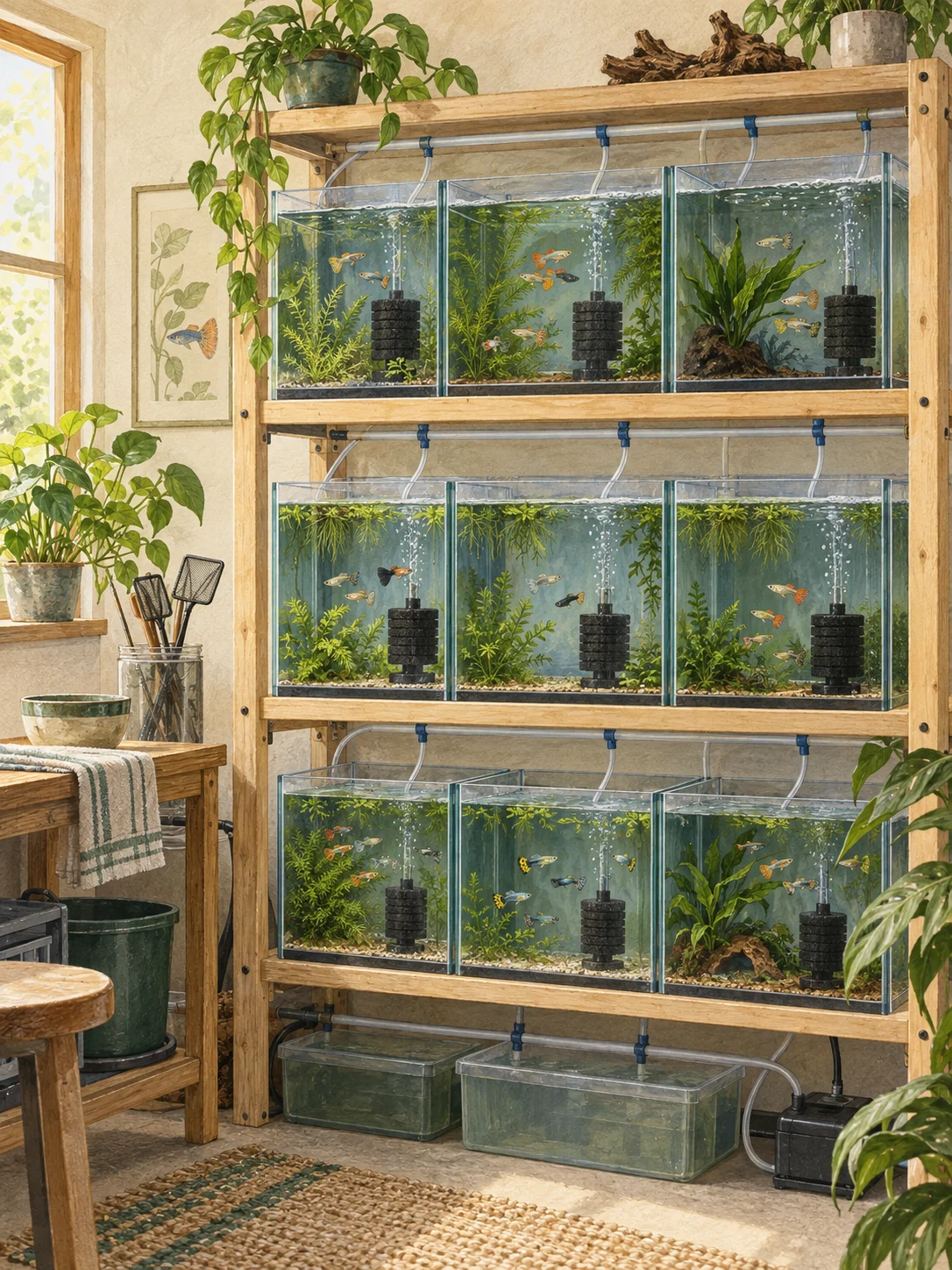
Care systems
Steady water, thoughtful care
Gentle filtration and regular observation support healthy aquarium routines.
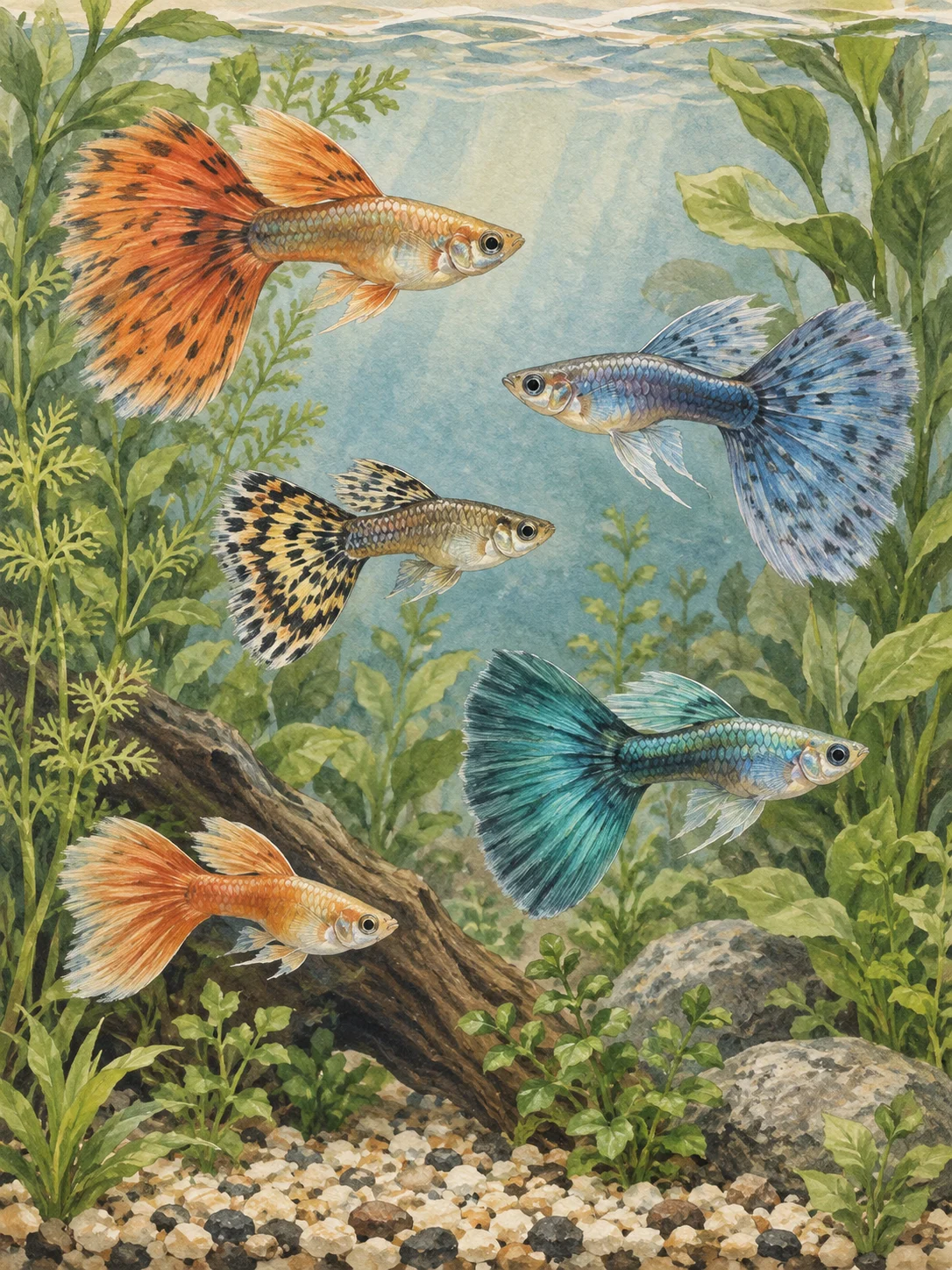
Natural variation
Every guppy is different
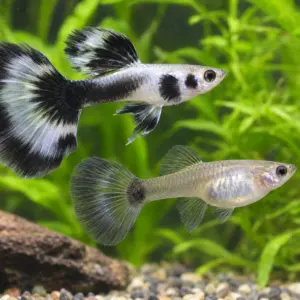
Color, size and fin shape vary with strain, age and each individual fish.
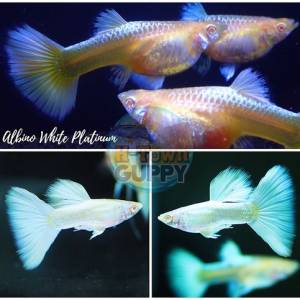
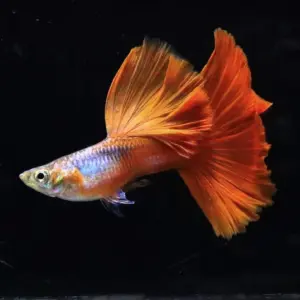
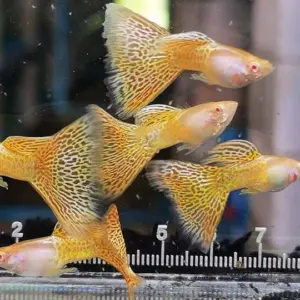
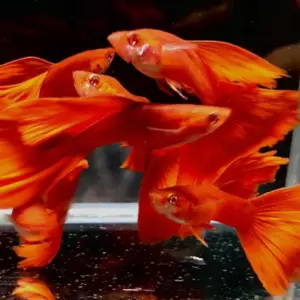
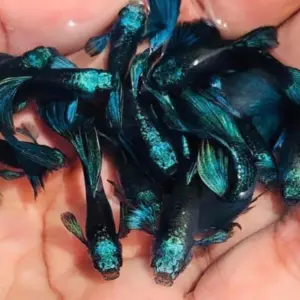
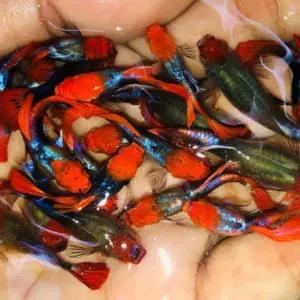
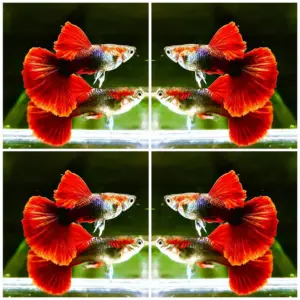
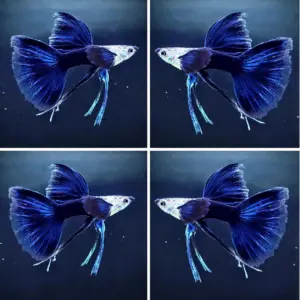
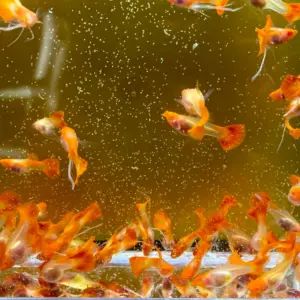
Editorial illustrations for context; they do not depict HiGuppy's exact facility or current fish stock.