The HiGuppy Journal
When Can Guppy Fry Join Adult Guppies?
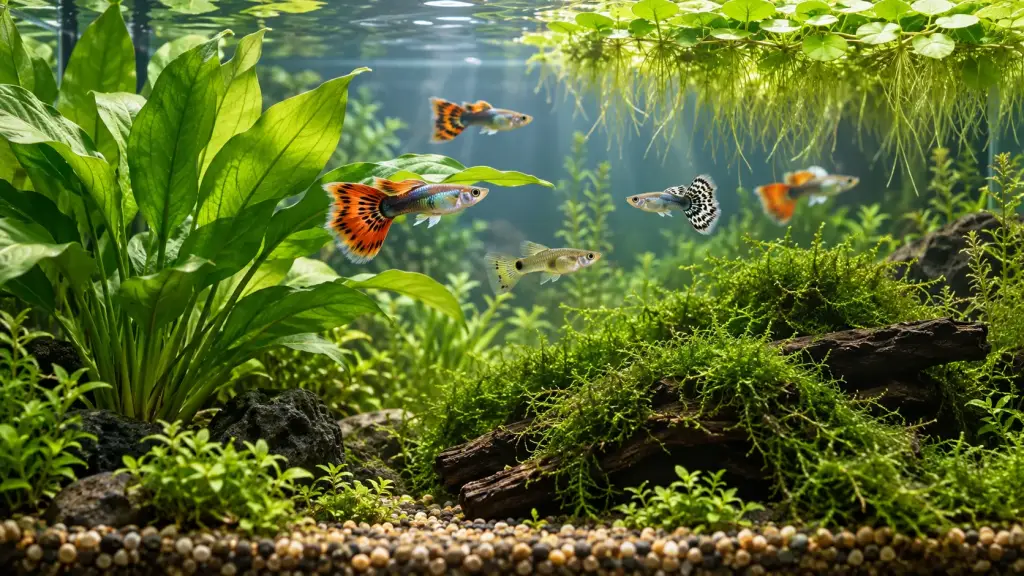
When can guppy fry join adults? There is no fixed age when guppy fry become safe with adults. Look at each juvenile’s relative size, confident swimming, ability to reach suitable food, adult behavior, hiding options, and the receiving tank’s tested capacity together. Transfer only a manageable group and observe it during normal feeding and quiet periods. Separate the young fish again if chasing is persistent or they cannot feed.
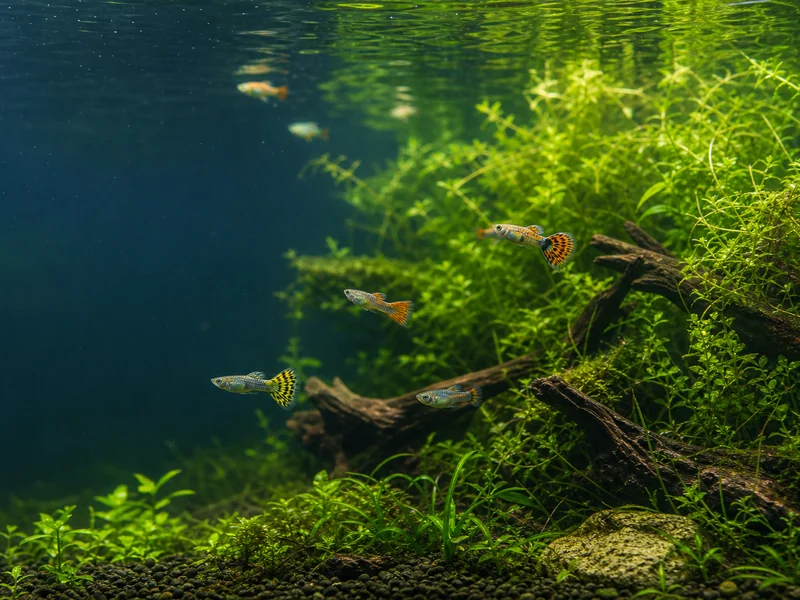
Age is easy to count, but it cannot show whether a particular fry can avoid a particular adult, compete for food, or cope with the destination aquarium. The practical question is not “How many weeks old are they?” It is “Can these juveniles function in this tank, and can I respond quickly if they cannot?” There is no single answer that protects every strain, group, or aquarium.
Why a calendar age is not a safety test
Guppies do not all grow at one rate. In a guppy study on male development, age and size at sexual maturity varied with food availability and growth conditions; that research was about development, not about when fry survive with adults. Maturity, age, and safe-to-mix size are different questions. Use observation of the actual fish rather than treating a week count as a guarantee. (Reznick, 1990)
There is direct guppy evidence that predation risk is not one-size-fits-all. An aquarium trial compared females and juveniles from two Trinidad populations. Cannibalism depended on relative size, and the relative results differed with fish origin and whether refuges were present. That is useful evidence for caution, not a ready-made home-aquarium threshold: the trial did not tell keepers that fry of a certain age, length, or body shape are safe in every community tank. (Nilsson et al., 2011)
Another guppy study was specifically about hatchery-style breeding tanks. It used mesh to separate adult fish from a safe section and tested light to draw newborns toward that section. Its time-dependent results show that an engineered hatchery setup can change exposure to adults; they do not establish that extra lighting, a breeder net, or a planted home tank guarantees survival. (Barki et al., 2014)
The Ornamental Aquatic Trade Association (OATA) gives a practical guppy-specific care boundary: rear fry separately with specialist foods until they can feed freely and are not easily eaten. That wording deliberately leaves room for the size of the adults, the behavior of the group, and the fishkeeper’s setup. It is not a universal measurement. (OATA guppy and molly care sheet)
For hands-on feeding and grow-out care, see the Raising Guppy Fry Guide.
Use a readiness checklist, not one sign
Before moving any fry, check the following points together. A pass on one item does not cancel a concern on another.
1. Compare the juveniles with the adults in this tank
Look at the smallest fry you plan to move, not only the biggest one. Compare their bodies with the mouths and overall size of the adults that will share the aquarium. A juvenile that looks “large” in its grow-out tank may still be small beside a large female or another fish. If an adult repeatedly lunges at a juvenile or attempts to take it into its mouth, treat that as a clear reason to postpone that group. There is no validated millimeter ratio that makes the interaction safe.
Size is only one part of the screen. Watch whether the fry can swim steadily through open water, turn away from movement, and use cover without getting trapped. A weak swimmer may be more exposed even when it looks similar in length to a more confident juvenile. Do not chase, net, or repeatedly handle a fry just to measure it; the decision can be based on careful viewing through the glass.
2. Check that the fry can feed in the presence of adults
Watch a normal feeding before the move. Can the smallest juveniles find and eat a food that is appropriate for their size while adults are present? Do they remain at the surface, mid-water, or near cover long enough to take food, or are they consistently pushed away? During the first days after any move, watch more than the adults’ feeding response: verify that the young fish actually get access too.
Do not overfeed to distract the adults. Uneaten food breaks down and can affect water quality; OATA advises feeding aquarium guppies only what they can eat within a few minutes and removing the temptation to leave excess food. Keep the established food routine and check both adult and fry intake instead of using a large meal as a safety strategy. (OATA feeding guidance)
3. Evaluate adult behavior over more than one moment
Observe the adult group on more than one day and at ordinary feeding times. Look for repeated pursuit, repeated lunges toward fry, or a pattern that keeps juveniles from leaving cover to eat. One peaceful feeding, a full adult stomach, or adults ignoring the fry for a few minutes is not proof that the group will remain safe later. Individual fish and conditions vary.
If the aquarium contains other species, consider them separately. Guppy-specific evidence cannot tell you whether a tetra, cichlid, or other tankmate will eat or harass the fry. Check reliable guidance for every species in the aquarium and postpone the move if a tankmate is large enough to eat the juveniles or is known to nip or chase them. OATA specifically cautions that guppies should not be kept with species that may nip their fins, and that small fish must be assessed against tankmate size. (OATA compatibility guidance)
4. Give juveniles routes to cover, not a promise of protection
Plants, moss, or other safe structure can provide places to retreat. Arrange cover so that fry can reach it while retaining open swimming space for the group. Remove sharp or rough decorations that could injure long fins, and avoid closing every route with dense hardscape. OATA recommends cover or shelter and space to swim in guppy aquariums. These features improve the environment, but the research does not show that a specific plant, quantity, or layout prevents all predation. (OATA aquarium guidance; Nilsson et al., 2011)
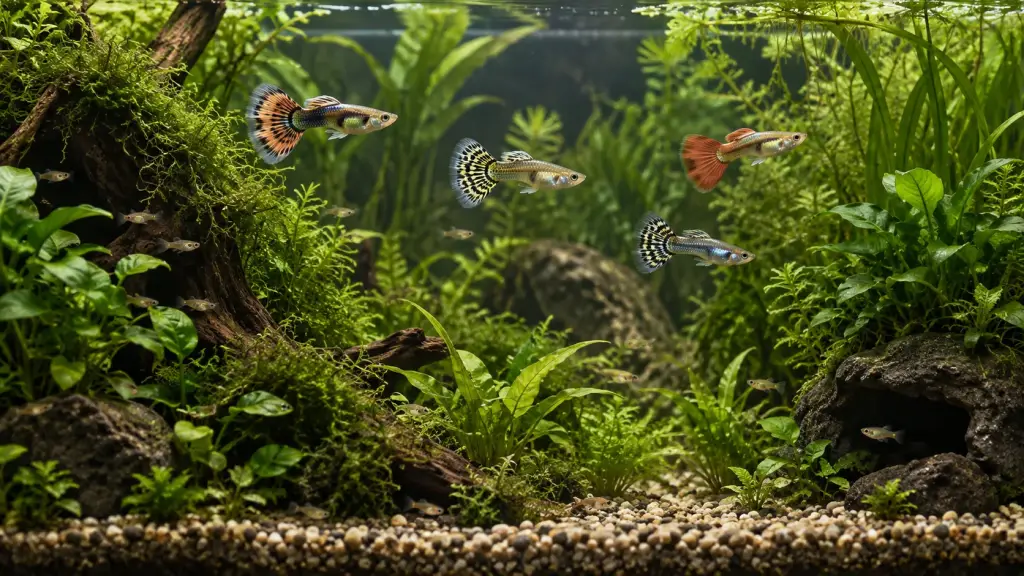
Check filter intake openings and guards before moving small fish. Keep filtration functioning; do not wrap or block an intake in a way that reduces flow or traps debris. If the intake appears accessible to the smallest fry, use only a manufacturer-compatible guard or ask an aquarium professional how to protect it without compromising filtration. This is a practical equipment check, not a research-backed fry-size cutoff. A filter remains essential for guppy aquariums under OATA guidance. (OATA aquarium guidance)
5. Confirm the receiving aquarium can handle more fish
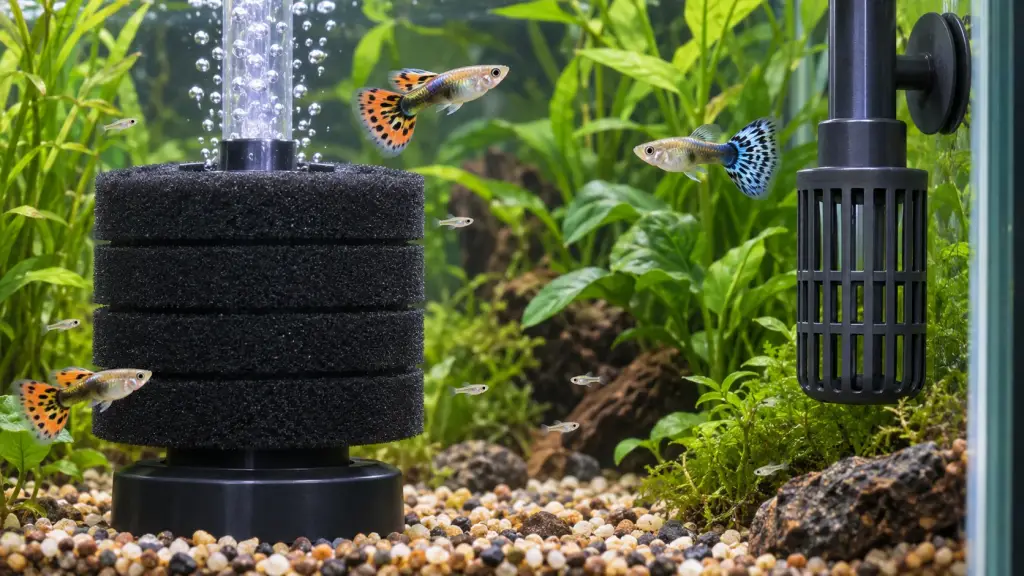
Before increasing the group, check that the aquarium is established and that recent water tests are stable. OATA’s guppy/molly sheet lists zero ammonia and zero nitrite and advises increasing fish numbers slowly, because the beneficial bacteria in the filter need to respond as fish and feeding increase. A tank that is already crowded or showing water-quality instability is not a safe shortcut for a crowded grow-out tank. (OATA water and stocking guidance)
Capacity includes more than the water volume written on the aquarium. Consider the number and size of existing fish, feeding load, filter condition, swimming space, and your ability to maintain the system. Do not add fry merely because the adults’ aquarium looks larger. If your current grow-out setup is crowded, plan adequate filtered space or responsible rehoming rather than shifting the pressure to another tank.
For a broader check of a cycled aquarium, water conditions, and capacity, see the Guppy Tank Setup Guide. For filter choice and placement, see Best Filter for Guppies.
If the checklist passes, introduce a manageable group
Prepare a way to separate the juveniles before starting. That could mean keeping their established grow-out environment available or having a suitable, already prepared divided or separate space. Do not plan to improvise a bowl or unfiltered holding container if the introduction goes poorly.
Move a manageable group rather than transferring every fry simply to empty one aquarium. There is no research-backed number of juveniles per introduction. A smaller first group is easier to see and count, but it does not guarantee a successful outcome. Match the water conditions carefully and avoid an abrupt environmental change. If you cannot monitor the tank after the move, wait until you can.
Keep the normal day-night routine. Do not leave the aquarium brightly lit overnight or change its lighting to try to herd fry away from adults. The guppy hatchery experiment used a deliberately divided mesh tank and a specific light arrangement; its result cannot be translated into a home lighting treatment. (Barki et al., 2014)
What to watch after the move
Observe the adults and juveniles during the first period after transfer, the next usual meals, and a later quiet period. Look for whether the fry leave cover, swim normally, and reach food. Watch the smallest transferred fish separately if possible. A calm first hour is encouraging but does not prove that the whole group will do well under every light, feeding, or activity condition.
Pause and separate the young fish if an adult repeatedly chases or snaps at them, a juvenile is cornered or injured, or the fry cannot reach food. Do not wait for a fish to become exhausted to “see if it settles.” Reassess the group, cover, filtration, available space, and whether a protected grow-out aquarium is the better option. If the only concern is that one fish briefly investigates a fry, keep observing; one moment alone does not establish an injury or diagnosis.
Persistent unusual behavior, repeated failure to eat, abnormal breathing, loss of balance, visible injury, or deaths need a health and water-quality review, not an automatic diagnosis of predation. Check the aquarium’s tested water conditions and seek advice from a qualified aquatic veterinarian or fish-health professional when concerning signs persist or affect more than one fish. Merck notes that fish signs can have different causes and that laboratory testing is needed to diagnose some conditions; do not self-prescribe medication based on a behavior or photograph. (Merck Veterinary Manual: Disorders and Diseases of Fish)
Keep a simple introduction record
A short log makes changes easier to notice and prevents a later guess from turning into a rule for every batch. Record:
- the date and approximate number of juveniles moved;
- a size note or side-view comparison made through the glass, without handling fish to measure them;
- the adults and other tankmates present;
- whether fry reached food at the next normal meals;
- chasing, hiding, injury, missing-fish observations, or need for separation; and
- the receiving tank’s recent ammonia and nitrite readings and any unusual maintenance or stocking changes.
If you use photographs for comparison, take them from the same viewing angle and distance where possible. A photo helps you compare your own cohort over time; it is not a calibrated measurement unless a scale is positioned reliably outside the aquarium. Do not treat one successful batch as proof that later fry, adults, or a larger group will have the same outcome.
Frequently asked questions
At what age can guppy fry join adult guppies?
No universal age threshold is established. The cited guppy study measured maturity under different growth conditions; it did not test safe introductions. Judge the actual group and aquarium, not the calendar. (Reznick, 1990)
How large should fry be before they join adults?
The sources reviewed do not establish a universal length cutoff. OATA recommends rearing fry separately until they can feed freely and are not easily eaten; compare them with actual tankmates without treating size as a guarantee. (OATA guppy and molly care sheet)
Will plants keep every fry safe?
No. Cover offers hiding places but cannot guarantee survival. A two-population trial found size-dependent cannibalism, with patterns differing by population and refuge availability. Pair cover with observation and a separation plan. (Nilsson et al., 2011)
Should I move all the fry at once?
Not just to empty a crowded tank. Check receiving capacity first; a manageable group is easier to monitor, but no tested transfer size guarantees success.
What if adult guppies chase a fry?
Repeated chasing, injury, or blocked food access calls for separation and reassessment. Persistent abnormal signs warrant water checks and qualified fish-health advice; behavior alone cannot diagnose a cause.
Do I need to raise guppy fry separately?
Separate rearing gives more control over food access and adult contact. OATA recommends it until fry feed freely and are not easily eaten. Community-tank survival remains uncertain; keep an alternative ready. (OATA guppy and molly care sheet)
Does feeding adults first make the move safe?
No. One normal meal cannot predict later behavior. Observe whether fry can also feed; do not overfeed adults as a safety measure.
Related guppy care guides
For breeding-group and future-fry planning, continue with the Guppy Pair vs Trio Guide. For broader day-to-day care, see the Guppy Care Guide. Use these pages alongside the tank-setup and filtration guidance above; no single guide replaces observation of the actual fish and aquarium.
Behind the care guides
Care begins with steady systems
Our guppy guides focus on practical routines: keep water stable, observe fish closely and allow for natural variation.
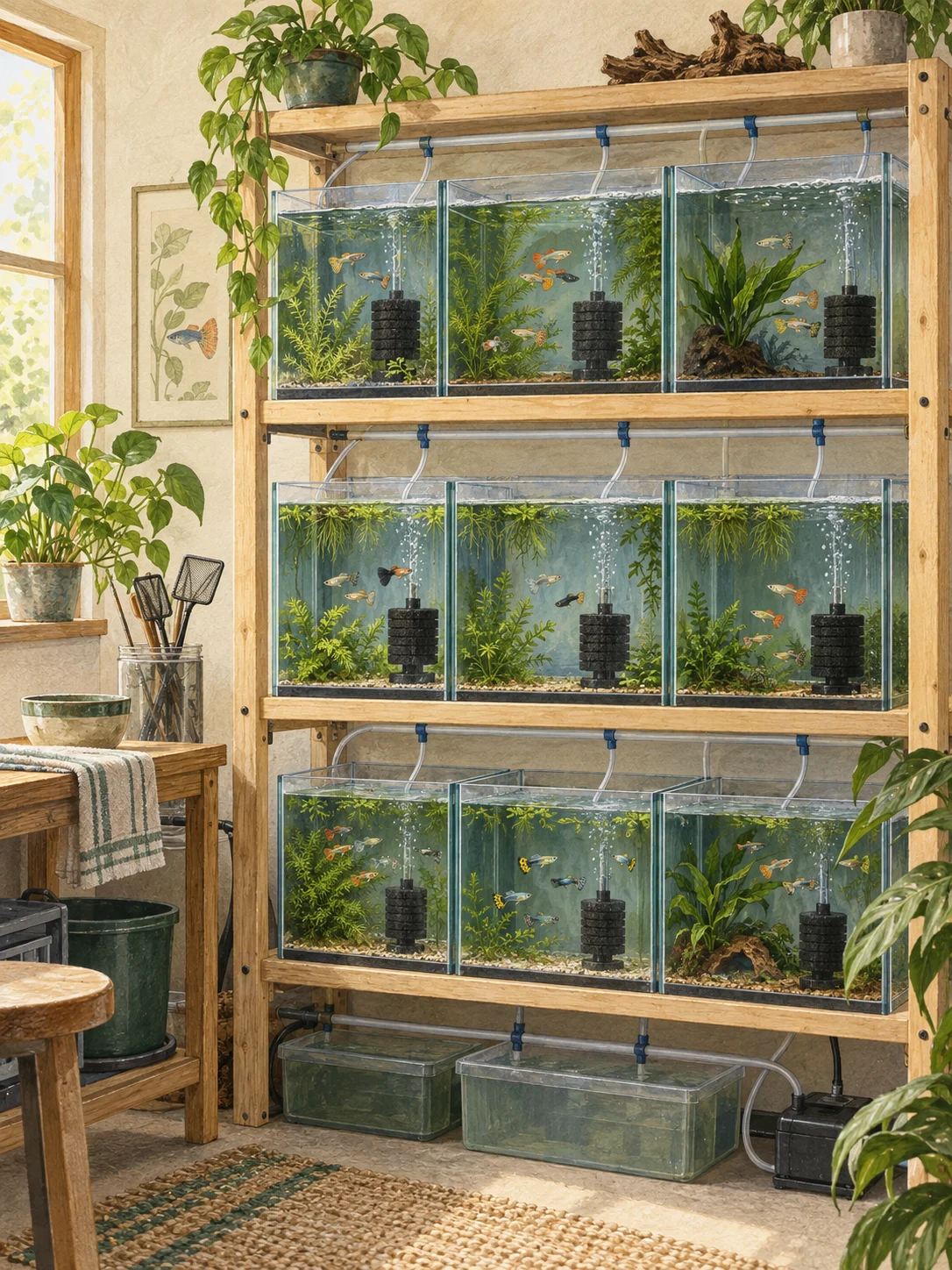
Care systems
Steady water, thoughtful care
Gentle filtration and regular observation support healthy aquarium routines.
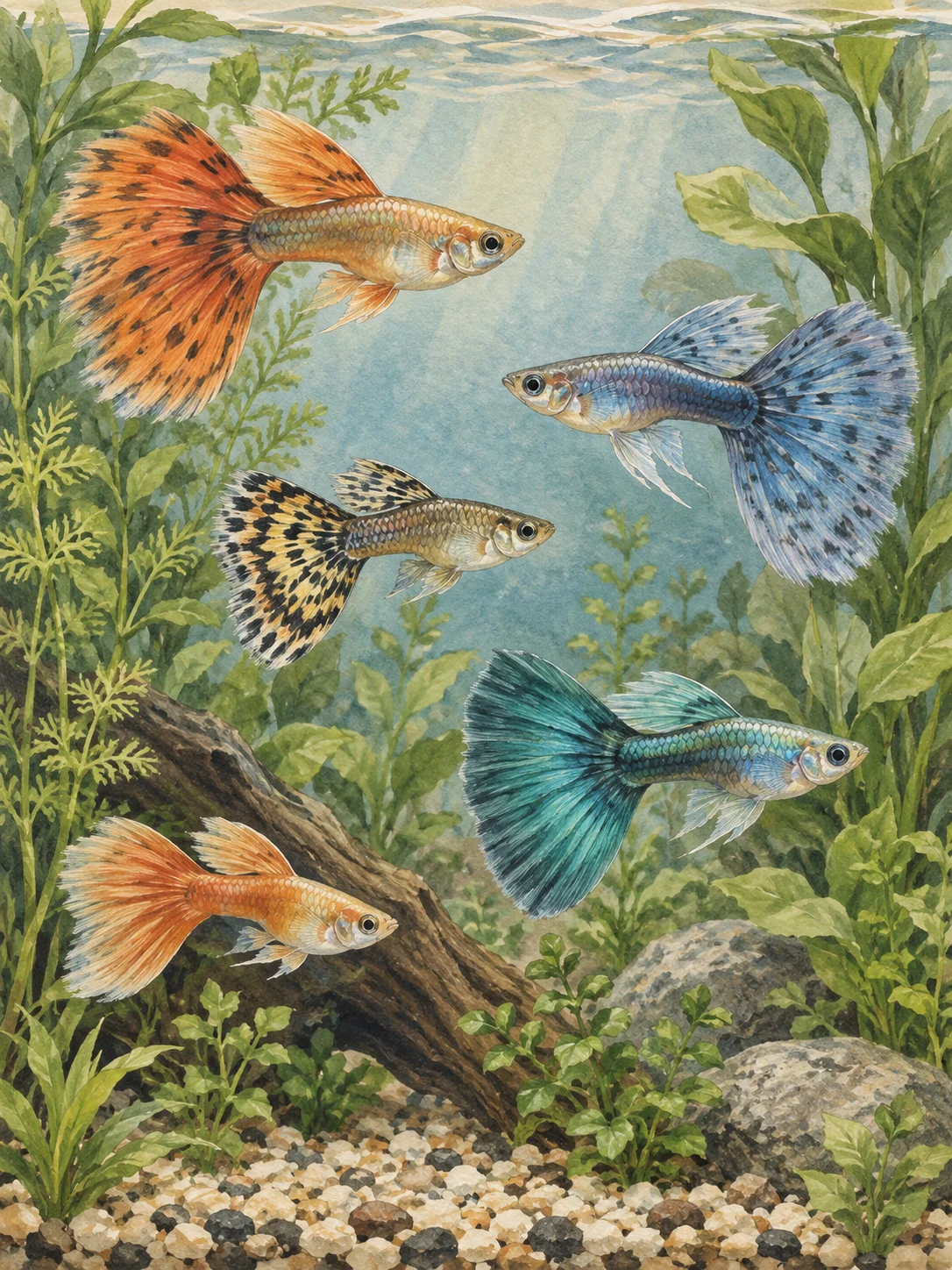
Natural variation
Every guppy is different
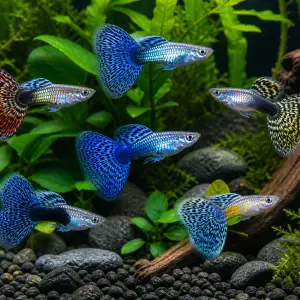
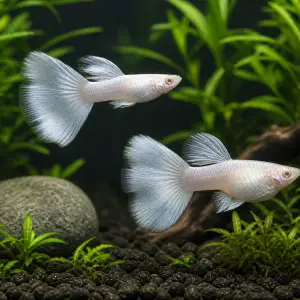
Color, size and fin shape vary with strain, age and each individual fish.
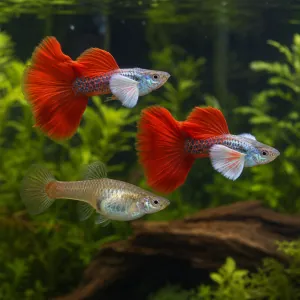
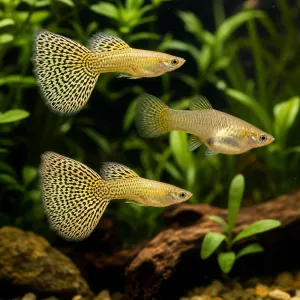
Editorial illustrations for context; they do not depict HiGuppy's exact facility or current fish stock.