The HiGuppy Journal
Guppy Breeding Tank Setup: Simple Guide for Healthy Fry
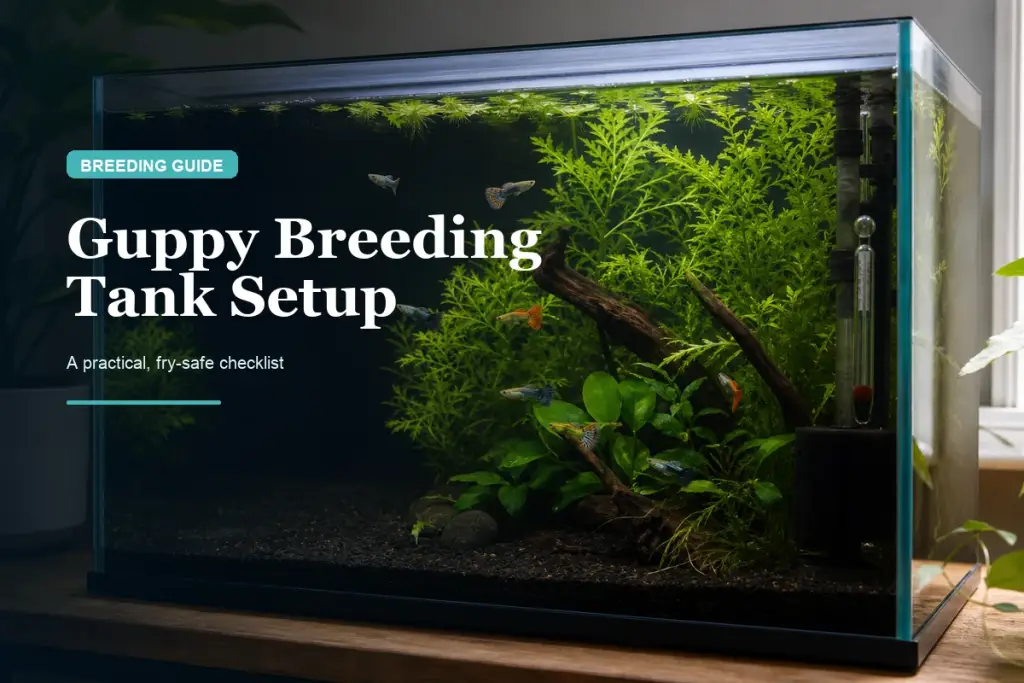
Guppies are famous for breeding easily, but raising healthy fry takes planning. A good guppy breeding tank setup protects females from stress, gives fry places to hide, and keeps water stable while the population grows.
This guide shows beginners how to set up a simple guppy breeding tank before buying pairs, trios, or female guppies.
Quick Answer
A good guppy breeding tank should be cycled, gently filtered, planted or covered with moss, and stocked with a balanced male-to-female ratio. Plan for fry before breeding starts because guppies can multiply quickly.
Best Tank Size for Breeding Guppies
A 10 gallon tank can work for a small breeding group, but a 20 gallon tank is more forgiving. More water volume means more stability, more space for females, and more room for fry to hide. If you plan to raise fry seriously, prepare a separate grow-out tank as well.
The tank should be cycled before fish arrive. Breeding increases the biological load, so filtration and maintenance need to be ready from day one.
Use Gentle Filtration
Sponge filters are popular for guppy breeding tanks because they provide gentle flow and reduce the risk of fry being pulled into the filter. If you use a hang-on-back filter, cover the intake with a sponge pre-filter.
Good filtration should keep the tank clean without pushing females and fry around the aquarium. Guppies like movement, but newborn fry need calmer areas.
Add Plants and Fry Cover
Plants make a breeding tank more natural and safer. Java moss, guppy grass, floating plants, and dense stem plants give fry hiding places. Cover also helps females rest when males are too active.
A bare breeding tank may be easy to clean, but it gives fry fewer places to escape. If you want better fry survival, add soft cover before the female gives birth.
Choose the Right Breeding Ratio
A common beginner ratio is one male with two or three females. This spreads attention across multiple females and can reduce stress. A single female with several males is usually a poor setup because she may be chased constantly.
If you want a planned strain project, start with healthy fish from the same strain. Review Higuppy’s Breeding Pairs & Trios page before choosing your group.
Breeding Tank Checklist
- Cycled tank with stable water.
- Sponge filter or protected filter intake.
- Heater if your room temperature is not stable.
- Moss, plants, or floating cover for fry.
- Small high-quality foods for adults and fry.
- Separate grow-out plan for young guppies.
- Quarantine plan for any new breeding stock.
Should You Separate the Fry?
If you want the highest survival rate, a separate fry tank can help. If you prefer a low-maintenance natural approach, a heavily planted tank can allow some fry to survive without moving the female. The best choice depends on your goal: casual breeding or serious strain development.
For new arrivals, always follow Higuppy’s Guppy Acclimation Guide before adding breeding fish to the tank.
FAQ
Do guppies need a separate breeding tank?
Not always, but a separate breeding or fry tank gives you more control and usually improves fry survival.
How many females per male guppy?
A common beginner ratio is one male with two or three females to reduce pressure on each female.
What filter is best for guppy fry?
A sponge filter is a strong choice because it is gentle and fry-safe when properly maintained.
Start your breeding project with healthy fish from Higuppy and prepare the tank before the first pair or trio arrives.
Behind the care guides
Care begins with steady systems
Our guppy guides focus on practical routines: keep water stable, observe fish closely and allow for natural variation.
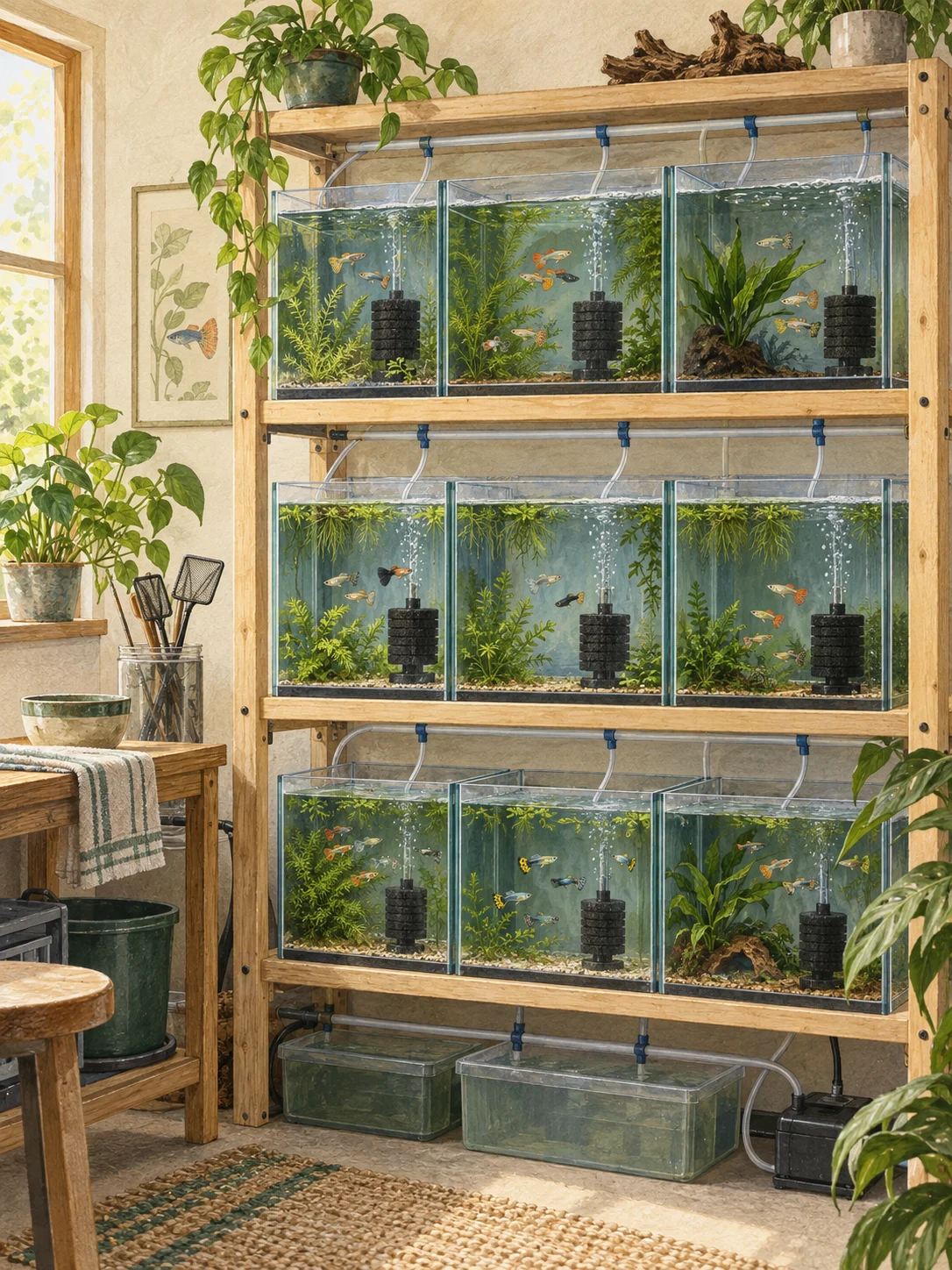
Care systems
Steady water, thoughtful care
Gentle filtration and regular observation support healthy aquarium routines.
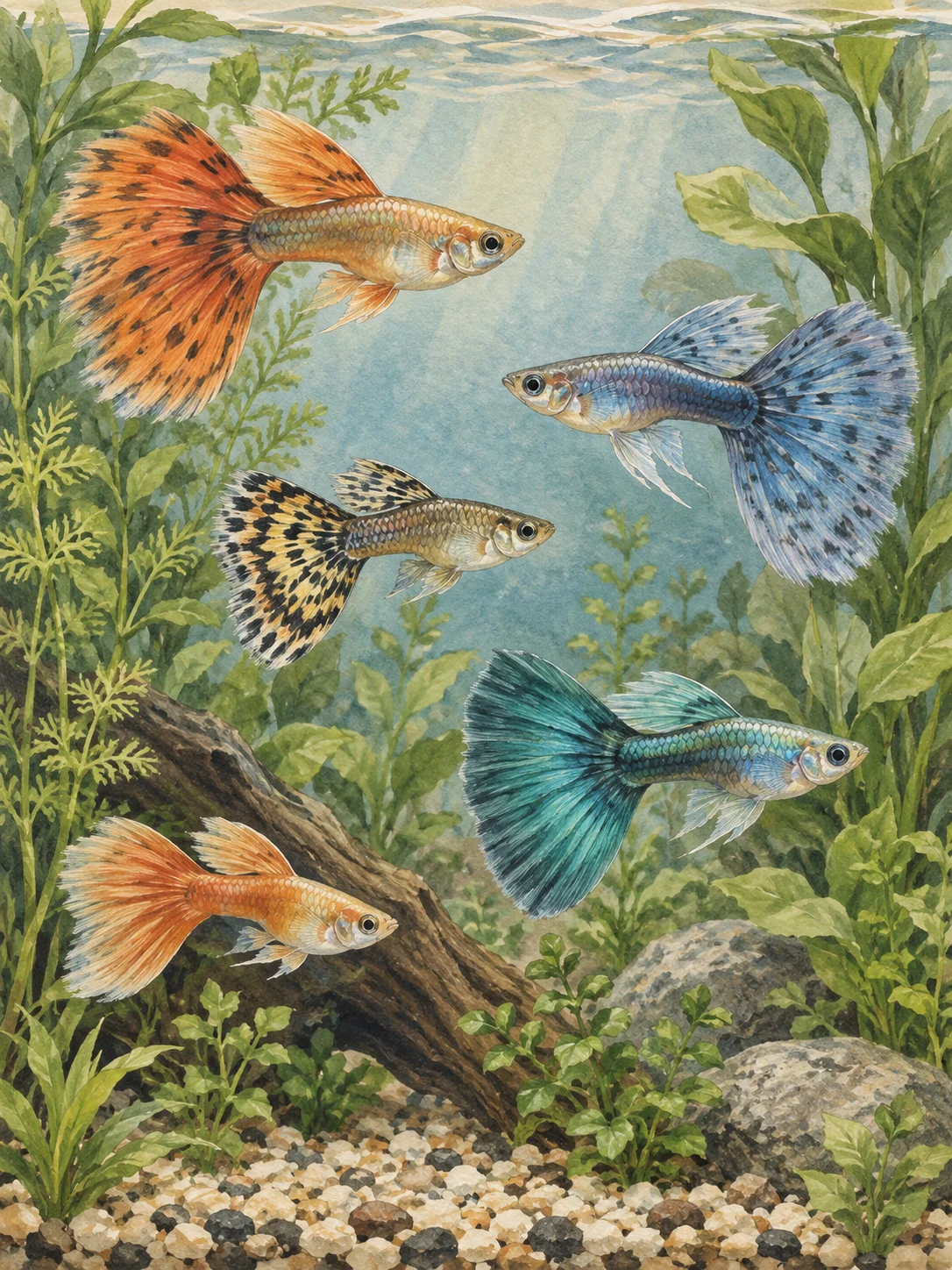
Natural variation
Every guppy is different
Color, size and fin shape vary with strain, age and each individual fish.
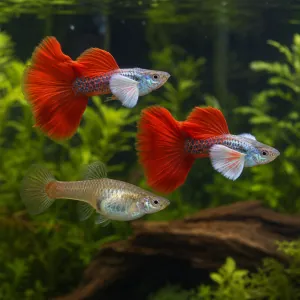
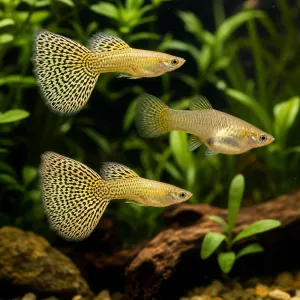
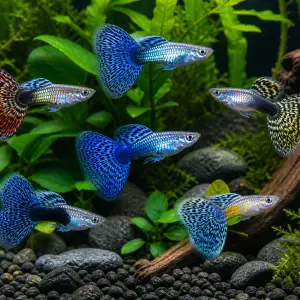
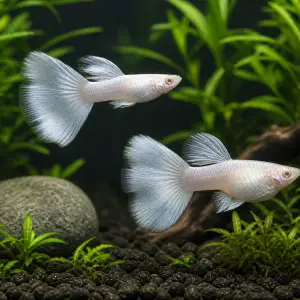
Editorial illustrations for context; they do not depict HiGuppy's exact facility or current fish stock.