The HiGuppy Journal
How to Photograph Guppies for Sale: Phone & Video Guide
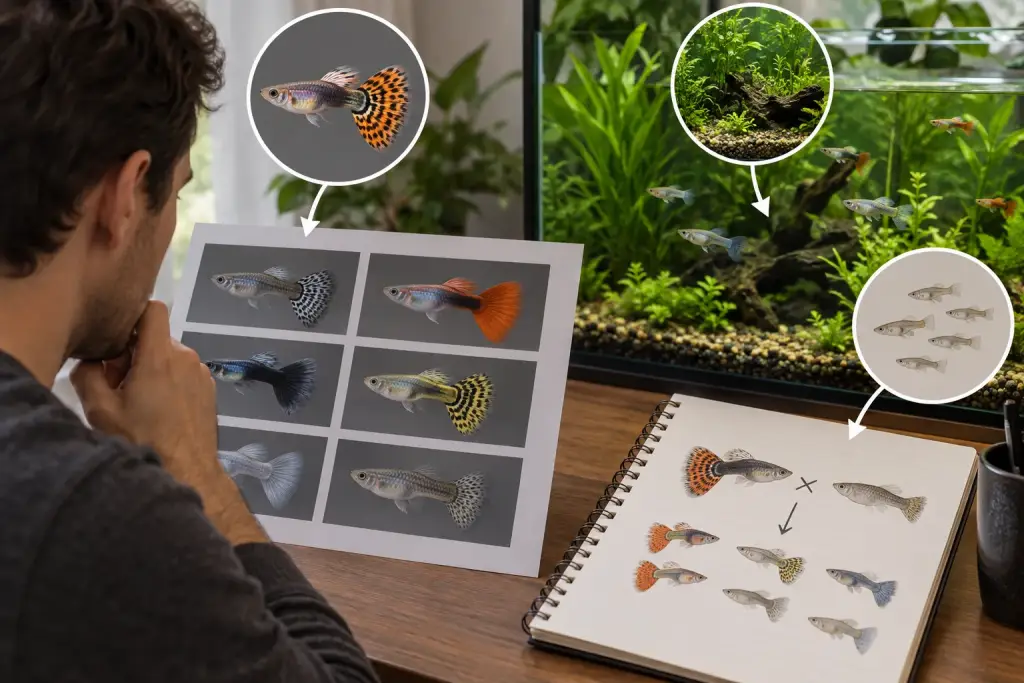
How to photograph guppies for sale starts simply: keep the fish in a stable aquarium, clean the viewing glass, reduce room reflections and photograph straight through the pane. Use normal tank lighting, tap to focus on the moving fish and take short bursts or video. Show the full body, both sides and fins when possible. Label real stock footage separately from illustrative or AI-generated images.
Learning how to photograph guppies means accepting that fancy guppies (Poecilia reticulata) move constantly, and their shimmering fins can look very different under blue LEDs or an edited product photo. A beautiful listing image is useful, but the most trustworthy sales gallery lets the buyer see what is actually offered, not just what the strain can look like. This guide is for breeders, hobbyists and fish sellers who want clear, low-stress aquarium photos and honest short videos without an expensive camera or artificial color enhancement. It complements HiGuppy’s guide to choosing guppies for sale rather than repeating strain prices or shipping fees.
How to photograph guppies honestly: why the actual fish matters more than a perfect catalog picture
Part of how to photograph guppies for listings is knowing when a seller may use a representative image to show a named color or tail type, but a specific order still depends on the available fish’s condition, size, sex, count and marks. Two Blue Grass males from the same group can differ in tail spots or body coverage. A breeding pair also contains a female that might not match the colorful male photographed for the headline.
Use real current footage when you can, especially if the buyer asks about the exact fish or lot. A representative image remains useful for a strain overview, but label it accurately and avoid presenting it as the photo of a particular fish that will ship. Images alone cannot certify disease-free fish, pedigrees or genetics, even when the fish look active.
| Gallery asset | What it can show | What it cannot establish |
|---|---|---|
| Current real-fish photo | Visible body color, fins and one actual individual at the time recorded | Future health, perfect genetics or every unseen angle |
| Short unedited stock video | Swimming, posture, breathing and how fish move as a group | An absolute guarantee that no illness will develop |
| Representative strain illustration | General appearance and terms used for the strain | Exact current inventory, fish count, color or condition |
| Old breeder or parent photograph | Background or context for a breeding project | That all offspring look the same or are the current sale animals |
How to photograph guppies: set up a low-stress session
Anyone learning how to photograph guppies should consider the fish before changing a light or camera setting. Photograph them inside their established aquarium when possible. Do not repeatedly net guppies into an uncycled bowl, chase one fish around a display tank, touch their fins or keep them under an unusually harsh light for a long session just to improve a listing. Their behavior and welfare matter more than a perfectly centered frame.
- Check the tank first: how to photograph guppies starts before the camera — keep filtration, aeration and suitable water temperature operating normally.
- Clean only what is necessary: wipe smudges from the outside glass and let suspended debris settle if you have recently maintained the tank.
- Work quietly: avoid tapping the glass or chasing fish with your phone.
- Use a familiar viewing area: let the fish swim naturally past the camera rather than forcing them into a tight enclosure.
- Finish when fish are distressed: persistent panic, abnormal swimming or rapid breathing is a reason to stop and review the environment.
The OATA guppy care guidance emphasizes a suitable environment, stable water, and checking fish behavior. No photography technique justifies creating avoidable stress or neglecting a functioning aquarium.
How to photograph guppies: clean the glass and manage reflections before changing cameras
How to photograph guppies clearly usually is not solved by buying a different phone. Room lights, windows, fingerprints, algae and the photographer’s own reflection can obscure fish even when the camera is capable of good images. A clean viewing pane and a darker room outside the aquarium often make a larger difference than a new filter or photo app.
- Clean the front glass without introducing household cleaners into the tank; use aquarium-safe cleaning practices.
- Dim or turn off room lighting behind the camera, while keeping suitable aquarium illumination.
- Move dark fabric or clothing behind the phone to reduce bright reflections if useful.
- Keep the camera as close to the pane as practical without scratching glass or acrylic.
- Move yourself so the camera looks nearly perpendicular to the glass instead of shooting through a steep angle.
Nikon’s aquarium photography guide explains the challenges of reflection and refraction and why soft lens hoods can block unwanted room light. If you use a hood, protect the aquarium surface; a hard plastic or metal edge can scratch it.
How to photograph guppies with ordinary tank lighting to show natural color
Colored aquarium LEDs can dramatically change how blue, red or iridescent areas appear. A fish that looks intensely violet under one setting may look silver-blue in everyday neutral light. Choose a stable light appropriate for the fish, and photograph at a consistent setting for fish being compared. If you change white balance or exposure to correct an obvious camera cast, preserve recognizable natural color rather than pushing saturation to sell a different-looking fish.
You do not need to keep a fish under harsh light all day. A short session during a normal tank-light period is preferable to repeated lighting changes that unsettle the group. For a catalog example, label images shot under specialty lighting so the buyer understands why a color may appear different in another aquarium.
| Lighting issue | Likely visible problem | Simple improvement |
|---|---|---|
| Bright room behind the camera | Reflections of lamps, windows or clothing | Dim the room and keep tank lighting suitable |
| Heavy blue/purple LED setting | Color cast alters body and tail appearance | Use a neutral or clearly labeled lighting setup |
| Very little light | Moving fish turn into blurry smears | Increase suitable tank illumination temporarily rather than excessively using digital sharpening |
| Direct on-camera flash | Glare or a white spot on the aquarium pane | Disable automatic flash for through-glass shots |
| Mixed lighting from room and tank | Uneven white balance across the image | Use one consistent lighting environment and correct gently if required |
A core rule of how to photograph guppies honestly: avoid adding dyes, changing water conditions, or altering fish markings in editing to match a marketing image. A truthful photo can still be attractive with careful composition, clean glass and good exposure.
How to photograph guppies on a phone: focus on the moving fish, not the plants
The practical side of how to photograph guppies: start with the main phone camera at its normal focal length. Point it nearly straight through the aquarium glass, tap on the guppy’s eye or body to set focus, and capture a short burst or video as it swims through your chosen viewing area. Digital zoom can enlarge motion blur and noise, so moving the phone within a safe distance is often more useful.
If your phone offers a faster shutter mode, try a shutter setting that freezes natural swimming without making the image unusably dark. Exact settings depend on the light available, lens and the speed of the fish; there is no universal guppy setting. Short video can show fin movement and body condition more clearly than one perfectly timed still.
Photographing through thick or angled acrylic introduces additional distortion. Keep the camera reasonably square to the front pane for clear body proportions, and check that focus stayed on the fish rather than on the glass or plants behind it.
How to photograph guppies: four essential shots for an honest sales gallery
How to photograph guppies does not require a studio to make a transparent listing. Aim to show the actual fish or group in a consistent environment with enough detail for the buyer to assess what is being offered.
| Photo or clip | What to include | What a buyer can evaluate |
|---|---|---|
| 1. Full-fish side profile | Head through tail, both dorsal and caudal fins in frame | Body shape, main coloration, fin form and visible condition |
| 2. Opposite-side view | A clear second side if practical without chasing fish | Different markings, both eyes, symmetry and missing details |
| 3. Group or order shot | All fish offered in a group or clear labeled count | Quantity, sexes or size range, and differences between individuals |
| 4. Short swimming video | Natural swimming with neutral lighting and no heavy effects | Posture, movement, breathing and fin use |
For a pair, identify which fish is the male and which is the female. For a trio or fry pack, make the count and approximate age or size clear without promising that juvenile colors are already fixed. If you can photograph only part of a group, say so rather than silently implying the visible fish represent every fish in the lot.
How to photograph guppies: real examples and what they do not prove
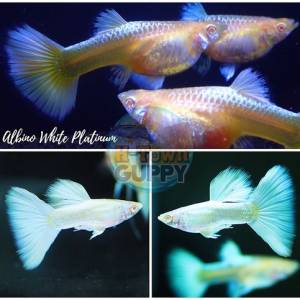
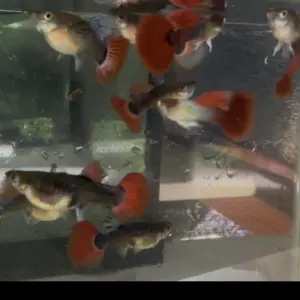
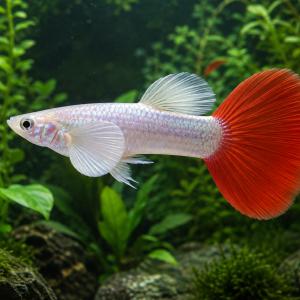
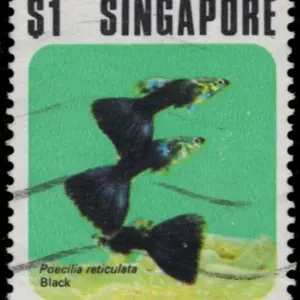
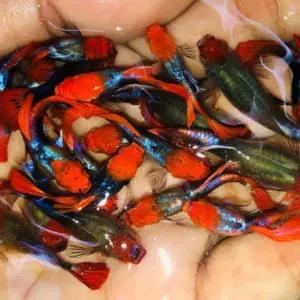
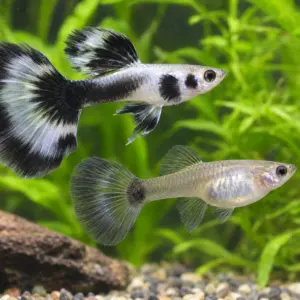
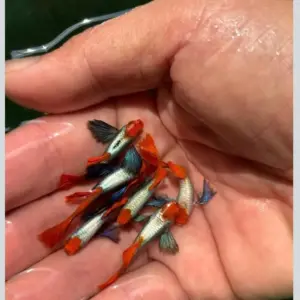
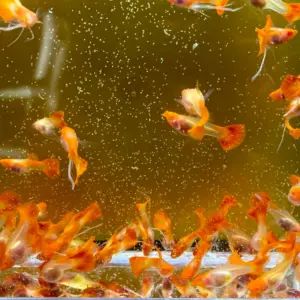
Part of learning how to photograph guppies is studying real examples. The following collage includes actual photographs of different guppy forms, rather than computer-generated interpretations. It is useful for understanding how recorded color, tail shape and body markings differ between photographed fish. However, this historical collection does not show fish currently offered for sale by HiGuppy.
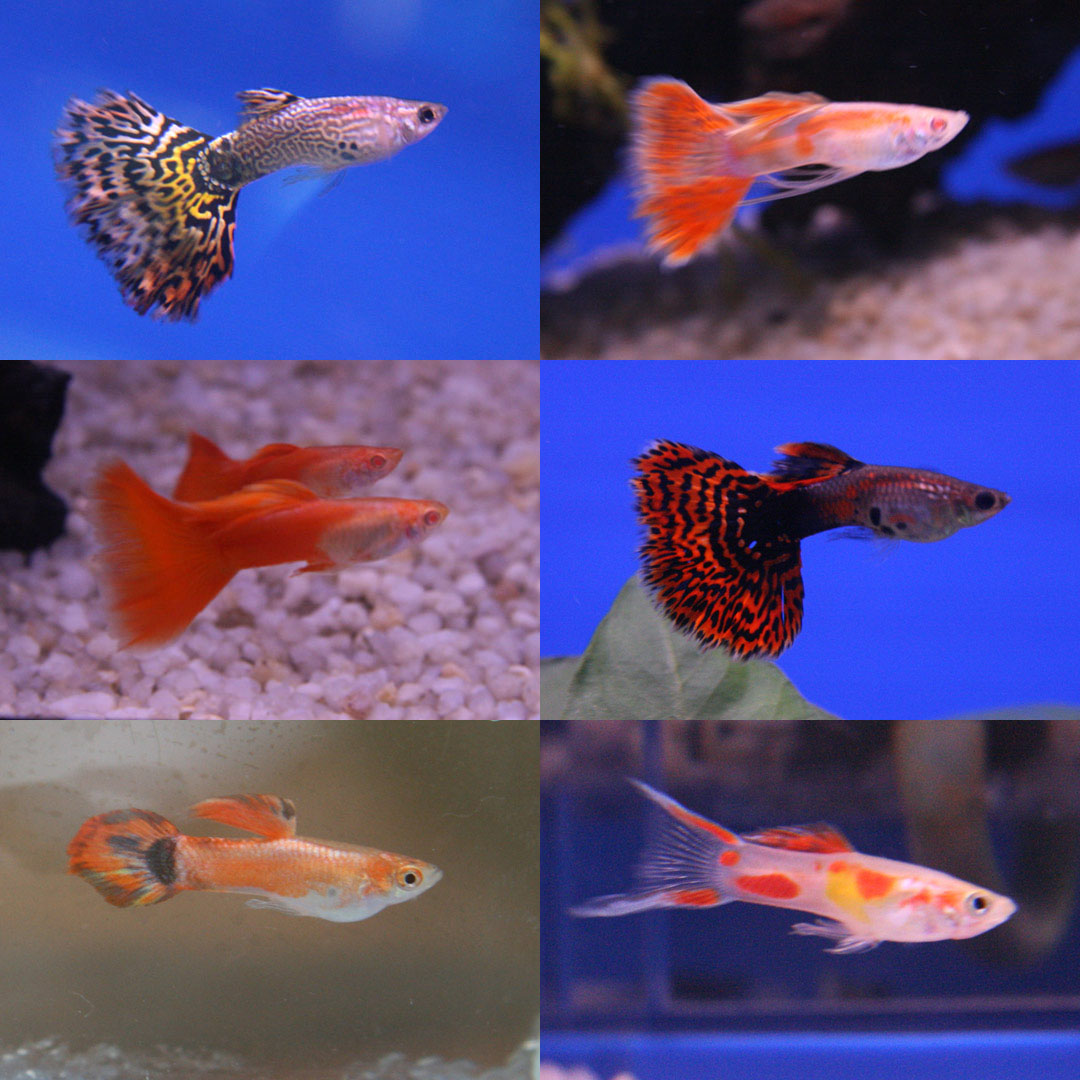
When photographing your own stock, keep the original shot files associated with the correct lot. If an image is an older breeder or reference photo, label it as such and show a recent photo of the offered animals where available.
Representative AI artwork is not the same as a current stock photo
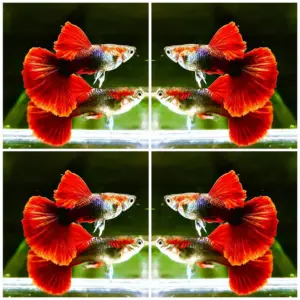
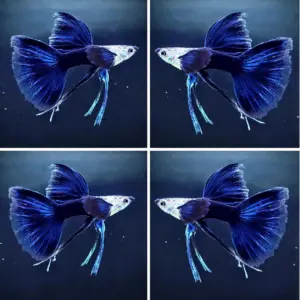
HiGuppy already uses some AI-generated illustrative product imagery. Such art can help readers recognize a color family or fin trait, but it cannot substitute for a real video of a particular sale fish. Do not make a synthetic guppy look like an actual fish that was photographed in the seller’s holding tank.
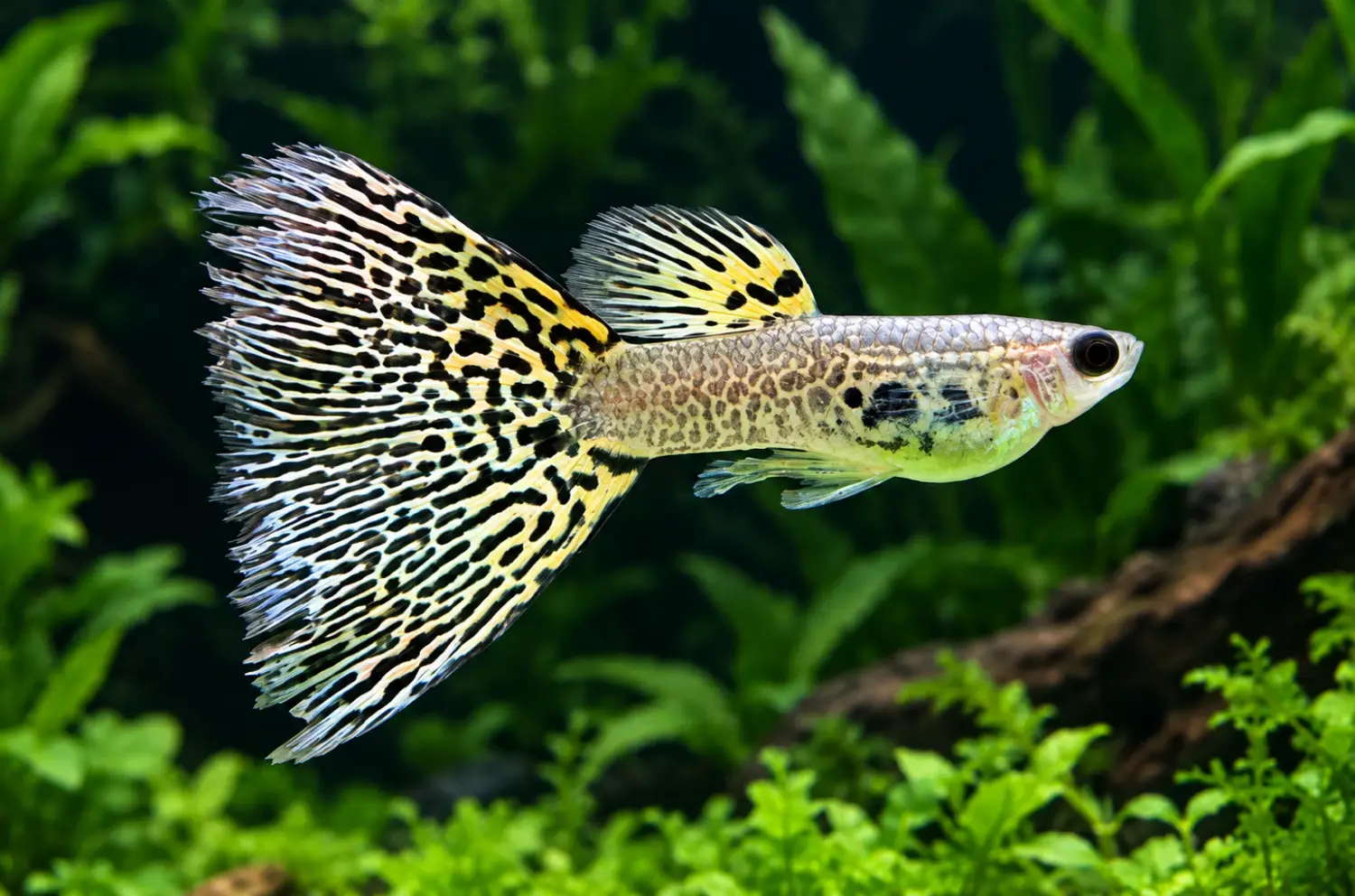
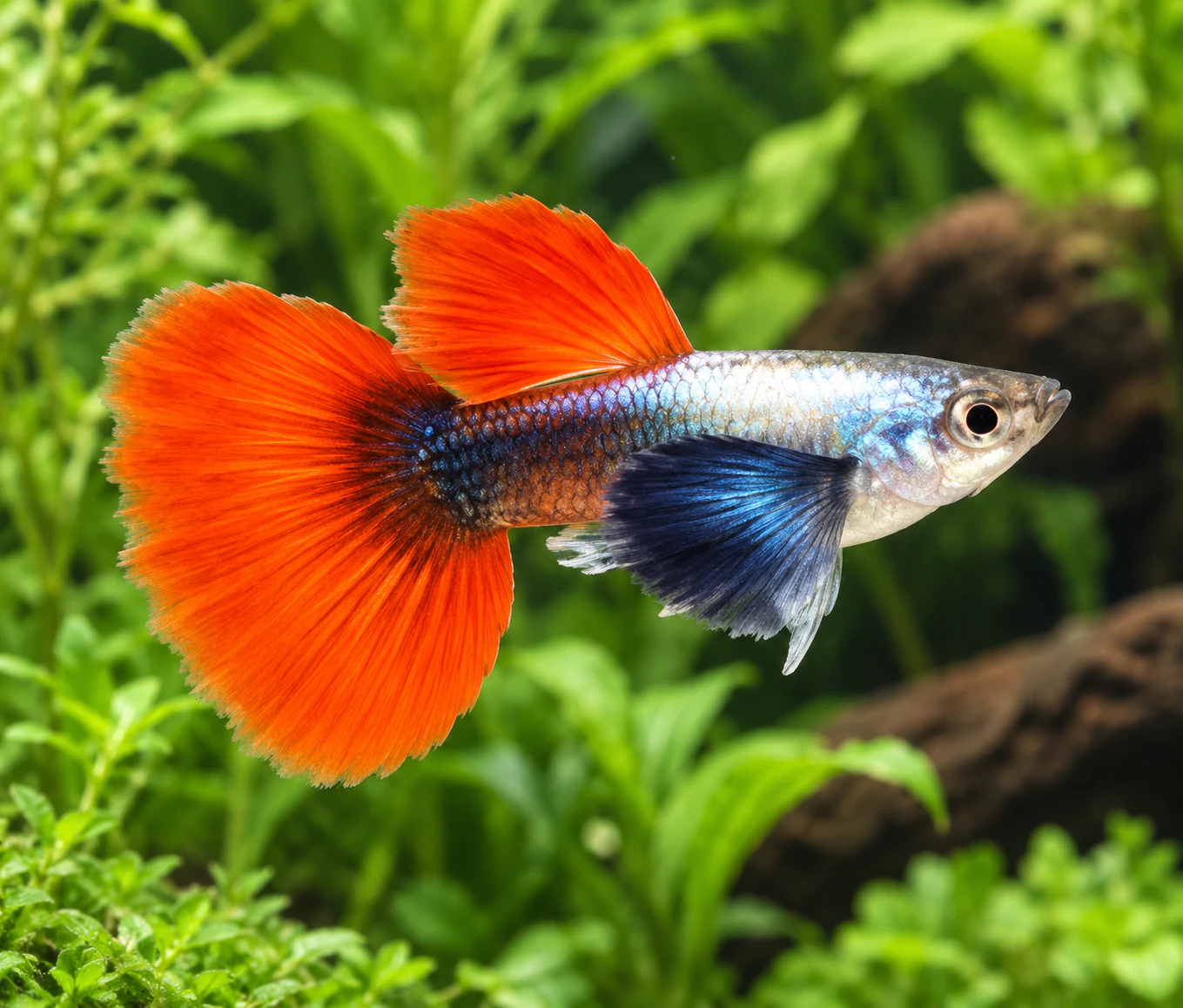
If you retouch a genuine fish photo, limit edits to reasonable exposure, white balance, straightening and crop. Do not digitally rebuild missing tail rays, replace spots, recolor the body or erase visible health concerns to suggest a more attractive actual fish. A buyer should be able to recognize the animal shown if they later receive it.
How to photograph guppies: record a simple 20-second video without chasing the fish
Video is a big part of how to photograph guppies, because it solves questions that a still photo cannot. A practical seller clip can show the group first, then an individual swimming normally near the viewing glass. There is no mandatory duration; around 15–30 seconds is a convenient example when the fish cooperates. Stop the session rather than prolonging it if animals are stressed.
- Opening view: show the aquarium or group and state the current lot identifier.
- Side movement: wait for the fish to swim into a clear section and follow it gently.
- Opposite side and fins: include another angle if the fish naturally turns.
- Count and format: identify whether the listing is one male, pair, trio or another group.
- Lighting disclosure: state if unusual colored LEDs are used, or record under the normal display lights.
- Save with context: keep the date and fish/lot identifier to avoid using an old clip for a new order.
A video is still only an observation from the time recorded; it cannot guarantee immunity from disease or that all future offspring match a breeder photograph. Encourage buyers to ask follow-up questions and follow the healthy guppy buying guide.
How to photograph guppies: editing, image labels and file naming for WordPress products
Good file names and alternative text are part of how to photograph guppies for WordPress listings — they make media easier to manage and help readers using assistive technology understand what an image shows. The most important rule is to describe the actual image, not stuff a keyword into every ALT field.
| Asset | Clear example | Why it is useful |
|---|---|---|
| Real male photo | blue-grass-male-lot-023-side-2026-11.jpg |
Identifies species/line, subject, lot, angle and date |
| Group video | purple-dragon-trio-lot-023-swimming.mp4 |
Separates a current group clip from an old catalog example |
| ALT text | “Blue Grass guppy male photographed from the left side in an aquarium” | Useful when the image cannot be seen or rendered |
| Illustration label | “AI-generated representative illustration; not exact stock” | Prevents confusion between design art and photographed fish |
Keep filenames and descriptions truthful even if they are less glamorous. A photo title is not evidence of breeder grade, a health certificate or a real-time stock claim. Retain original high-resolution files internally so you can verify when and what was photographed if a buyer has questions.
How to photograph guppies: checklist before uploading a listing
- The fish was photographed in a stable, safe aquarium without repeated chasing or unnecessary handling.
- The glass and lens were reasonably clean; obvious room reflections were controlled.
- The full fish is visible, not just a cropped tail.
- The color and fin shape have not been artificially changed to misrepresent the animal.
- The buyer can tell which photos are actual current fish, old breeder references or AI illustrations.
- The quantity and male/female count are stated separately from what the gallery happens to show.
- Any attached video has the right lot ID and is not presented as proof of a future health guarantee.
- The listing points to the current order and shipping terms, not a promise inferred from a photograph.
How to photograph guppies: mistakes that make photos less useful
- Using only one over-saturated still: the viewer cannot assess swimming, other angles or actual color.
- Keeping the room lights on: reflections hide the fish and make autofocus struggle.
- Shooting at a steep angle through thick glass: body proportions and fin edges may look distorted.
- Using extreme digital zoom: fine spots and tail rays become blocky or blurry.
- Chasing fish for a perfect shot: creates unnecessary stress and produces less natural swimming footage.
- Showing AI art as the sale animal: removes the distinction between a strain illustration and proof of current stock.
- Leaving group details vague: a photo of three fish does not define whether a buyer receives one, a pair, or a trio.
Remember, how to photograph guppies is not about creating an illusion of perfection. It is to give the buyer reliable visual information with minimal disturbance to the fish.
Frequently asked questions about how to photograph guppies
Can I learn how to photograph guppies with a phone?
Yes. A modern phone can capture useful guppy photos if the aquarium glass is clean, room reflections are reduced and focus stays on the fish. Short video or bursts help with constant movement.
Should I use flash when learning how to photograph guppies?
Usually disable direct on-camera flash when shooting through glass because it often creates glare and reflections. Use suitable tank lighting and avoid prolonging stressful lighting changes.
How to photograph guppies and show their real blue or red color?
Use consistent ordinary aquarium lighting and moderate white-balance correction. Avoid oversaturating, replacing colors or presenting a heavily tinted image as an exact stock photo.
Is it okay to use AI-generated guppy images on a product page?
They can illustrate a strain style if clearly labeled as AI-generated representative art, not actual stock. Use real current fish photos or video where possible for the exact fish being offered.
How to photograph guppies — do I need a separate photo tank?
A big part of how to photograph guppies is avoiding unnecessary handling — begin in their stable established aquarium. Begin by photographing fish in their stable established aquarium, with clean glass and a quiet viewing area.
What photos should I request before buying a guppy pair online?
Ask for current real-fish footage of the male and female, visible fins and body, approximate size, correct quantity and a brief natural swimming clip. Confirm the seller’s stock and delivery terms.
Can a guppy photo prove that it is healthy or breeds true?
No. Photos can show visible condition at the time recorded, but cannot rule out unseen disease or guarantee an offspring percentage. Ask about fish history and breeder records as appropriate.
Sources and further reading
That is the core of how to photograph guppies for sale listings. Practical aquarium camera guidance: Nikon — How-To Take Great Photos at the Aquarium. Fish care and signs to observe: OATA — Guppies & Mollies. Example real photographs and licensing: Melanochromis / Wikimedia Commons, Guppy_breeds.jpg (public domain). For buying decisions, see Guppies for Sale and Guppy Strains & Types. The examples do not certify current stock, health or genetic outcomes.
Behind the care guides
Care begins with steady systems
Our guppy guides focus on practical routines: keep water stable, observe fish closely and allow for natural variation.
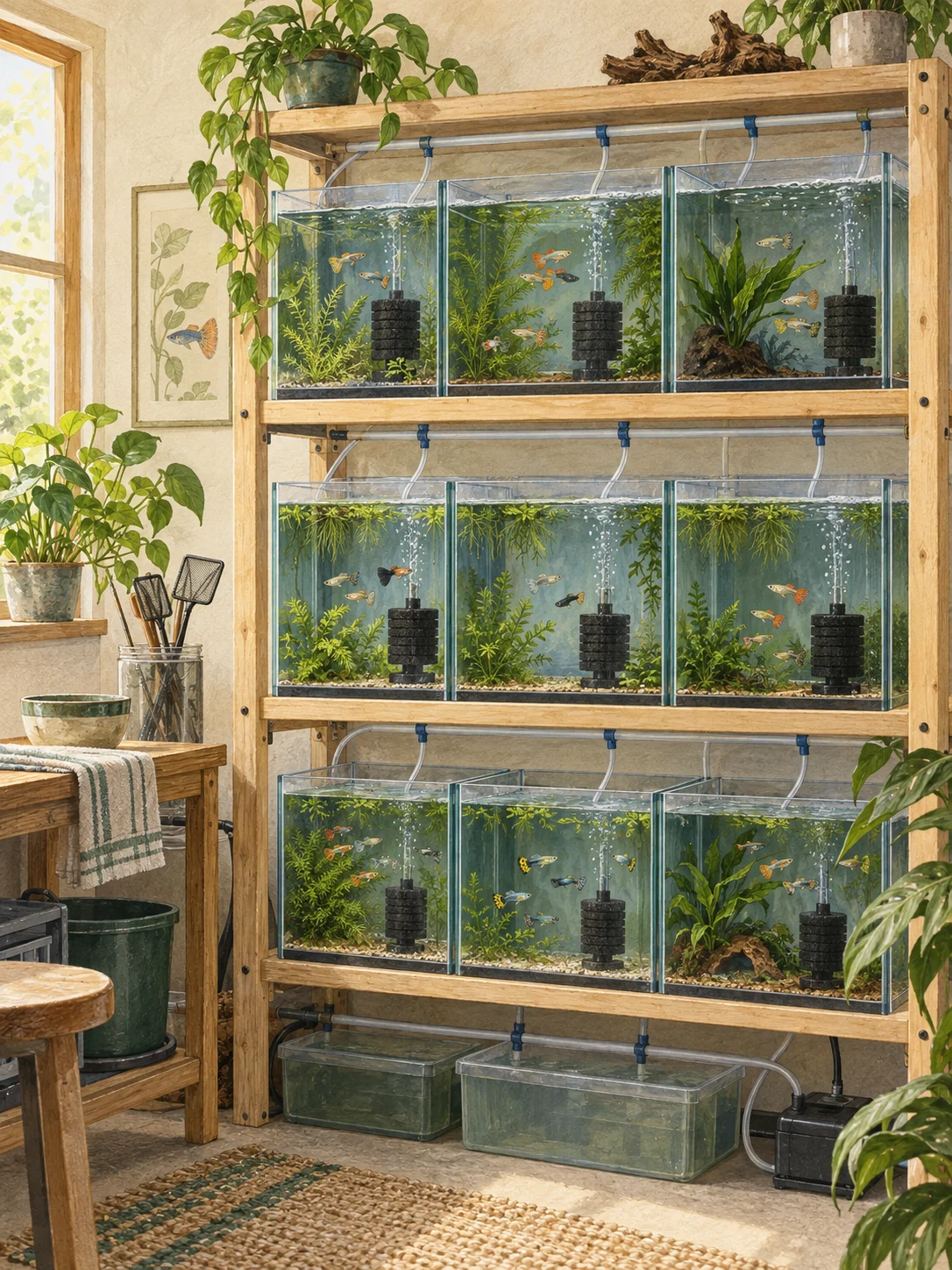
Care systems
Steady water, thoughtful care
Gentle filtration and regular observation support healthy aquarium routines.
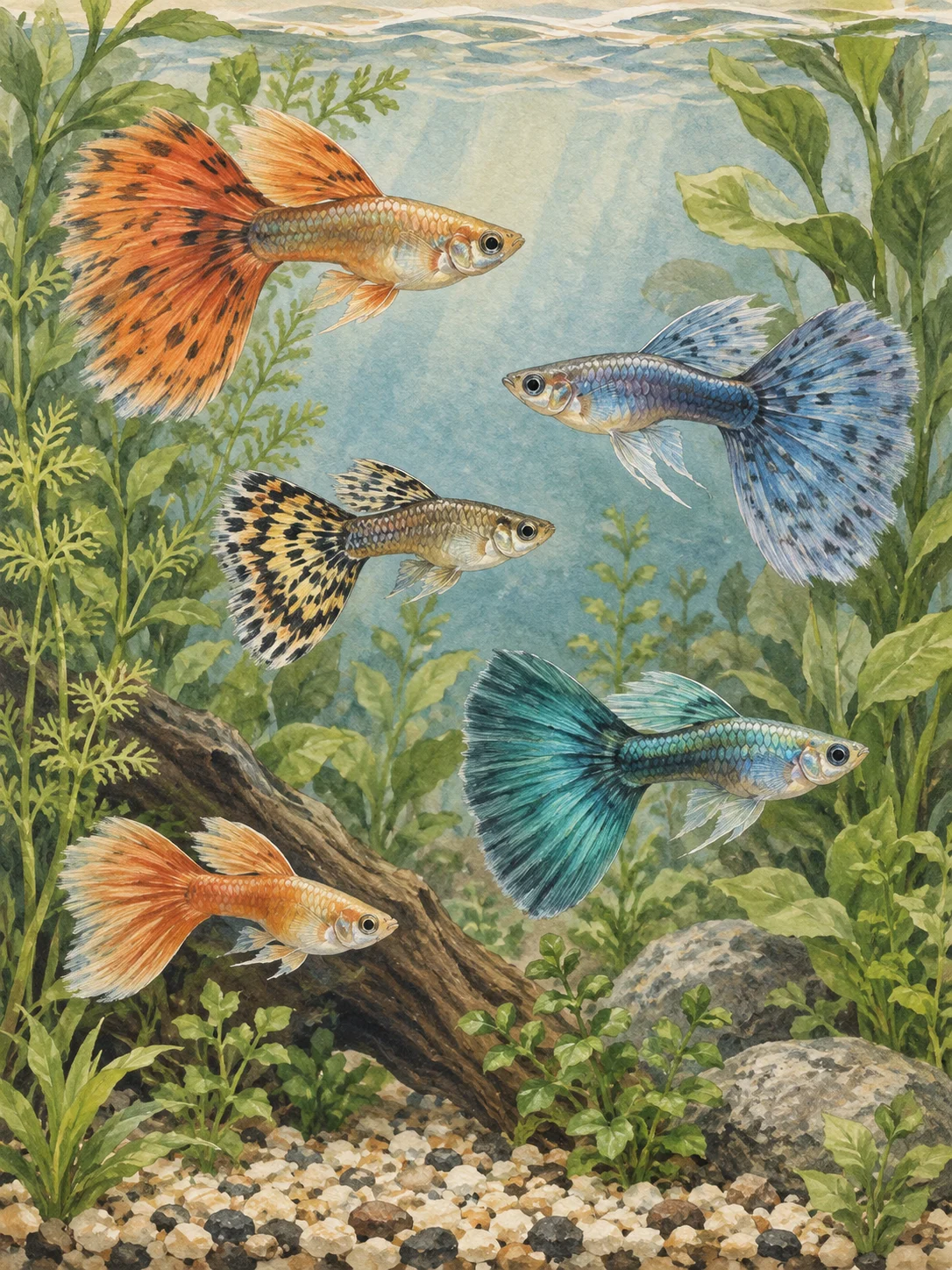
Natural variation
Every guppy is different
Color, size and fin shape vary with strain, age and each individual fish.
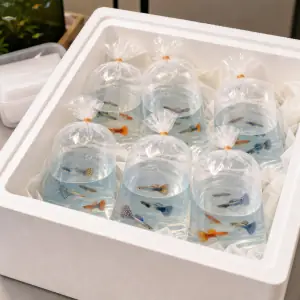
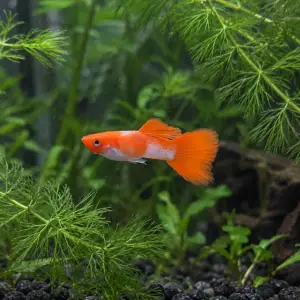
Editorial illustrations for context; they do not depict HiGuppy's exact facility or current fish stock.