The HiGuppy Journal
How to Breed Guppies: Step-by-Step Guide
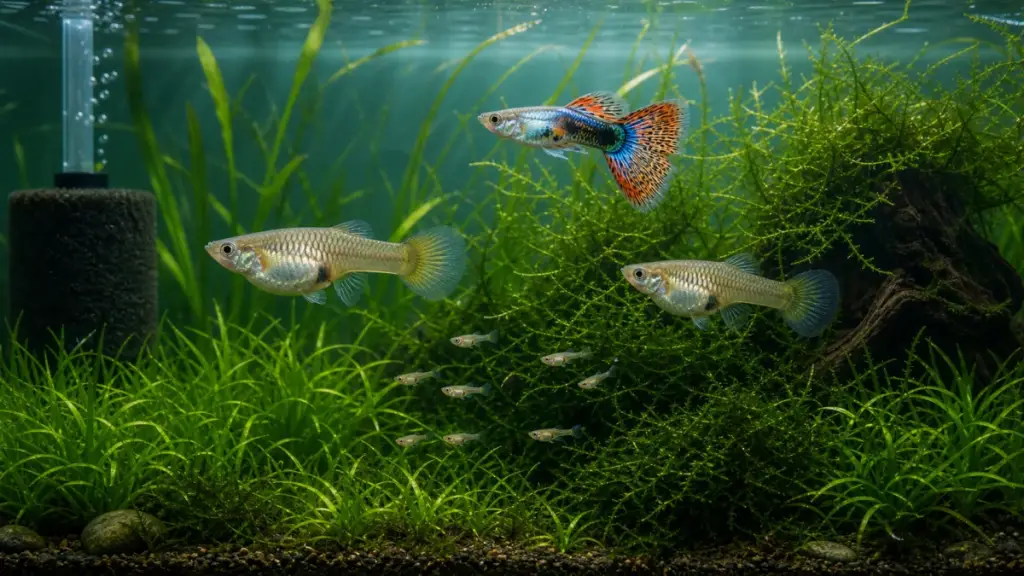
Quick answer: Guppy breeding starts with healthy adults, a cycled tank, and a ratio near 1 male to 2-3 females. Females produce fry every 25-35 days in good conditions. Provide plants or fry cover, feed protein-rich foods, and use a grow-out tank to improve survival.
Guppies are prolific livebearers, which makes them one of the most rewarding beginner breeding projects in the freshwater hobby. Learning how to breed guppies means planning for stable water, good nutrition, sensible ratios, and fry care before the first brood arrives.
Learn sex identification in Male vs Female Guppy. For fry care details, read Raising Guppy Fry Guide. For tank equipment, see Best Tank Setup for Guppies and our Breeding Pairs & Trios page.
Pair vs Trio: What Works Best
| Setup | Typical Stocking | Best For |
|---|---|---|
| Pair | 1 male + 1 female | Small breeding project, limited space |
| Trio | 1 male + 2 females | Better female welfare, steadier breeding |
| Colony | 1 male to 2-3+ females | Active home breeding with grow-out plan |
A trio is often better than a strict pair because male attention is distributed across two females. That reduces constant chasing and stress on a single female. Pairs still work when space is limited and the keeper monitors behavior closely.
Breeding Tank Basics
Use a cycled tank of at least 10-20 gallons for a small breeding group. Temperature around 74-78°F, zero ammonia and nitrite, and nitrate controlled below 20 ppm long term. Dense plants such as guppy grass, java moss, or hornwort give fry hiding places and improve survival in community-style breeding tanks.
Some breeders use bare-bottom tanks with floating plants for easier cleaning. Others breed in display tanks and move pregnant females to a birthing box only when necessary. Each method has tradeoffs between convenience and stress.
Recognizing Pregnant Females
A dark gravid spot and swollen abdomen are common signs of pregnancy. As birth approaches, the spot may darken and the belly becomes squarish. Females can store sperm and produce multiple broods from one mating, so isolating males does not instantly stop pregnancies.
Feeding for Breeding Condition
Breeding guppies benefit from varied protein sources: quality pellets, frozen baby brine shrimp, daphnia, and occasional live foods. Overfeeding still harms water quality, so feed small amounts multiple times daily. See Best Food for Guppies for a full diet breakdown.
Fry Management and Line Selection
Without intervention, fry numbers explode quickly. Decide early whether you will raise, sell, rehome, or allow natural predation in a community tank. For quality line breeding, cull weak fry and avoid overcrowded grow-outs that stunt growth.
Separate males early if you want to control line breeding, because young males can mate sooner than many beginners expect. Long-term line improvement depends on selecting for health and structure, not only bright color.
Frequently Asked Questions
How fast do guppies breed?
With good conditions, females may produce fry every 25-35 days. Litter size varies widely by female size and health.
Do I need a separate breeding tank?
Not always, but a grow-out or birthing setup improves fry survival and reduces display tank overcrowding.
Will parents eat fry?
Yes, guppies often eat their own fry. Dense plants or separation improves survival.
How many fry per birth?
Common ranges are 20-40 in many home setups, but larger females can produce more under strong conditions.
At what age can guppies breed?
Surprisingly young in some lines. Separate sexes early if you want to control timing and growth.
Can I breed fancy strains as a beginner?
Start with hardy lines while learning water stability and fry management. Fancy strains often need tighter consistency.
Should I use a breeding box?
Useful short term, but long confinement can stress females. Plant-heavy tanks are often less stressful.
How do I improve fry color?
Good genetics, clean water, varied diet, and low stress matter more than color-enhancing shortcuts alone.
Want quality breeding stock to start your line? Browse pairs and trios at HiGuppy.
For a broader breeding pathway, continue to the Guppy Breeding Guide.
Behind the care guides
Care begins with steady systems
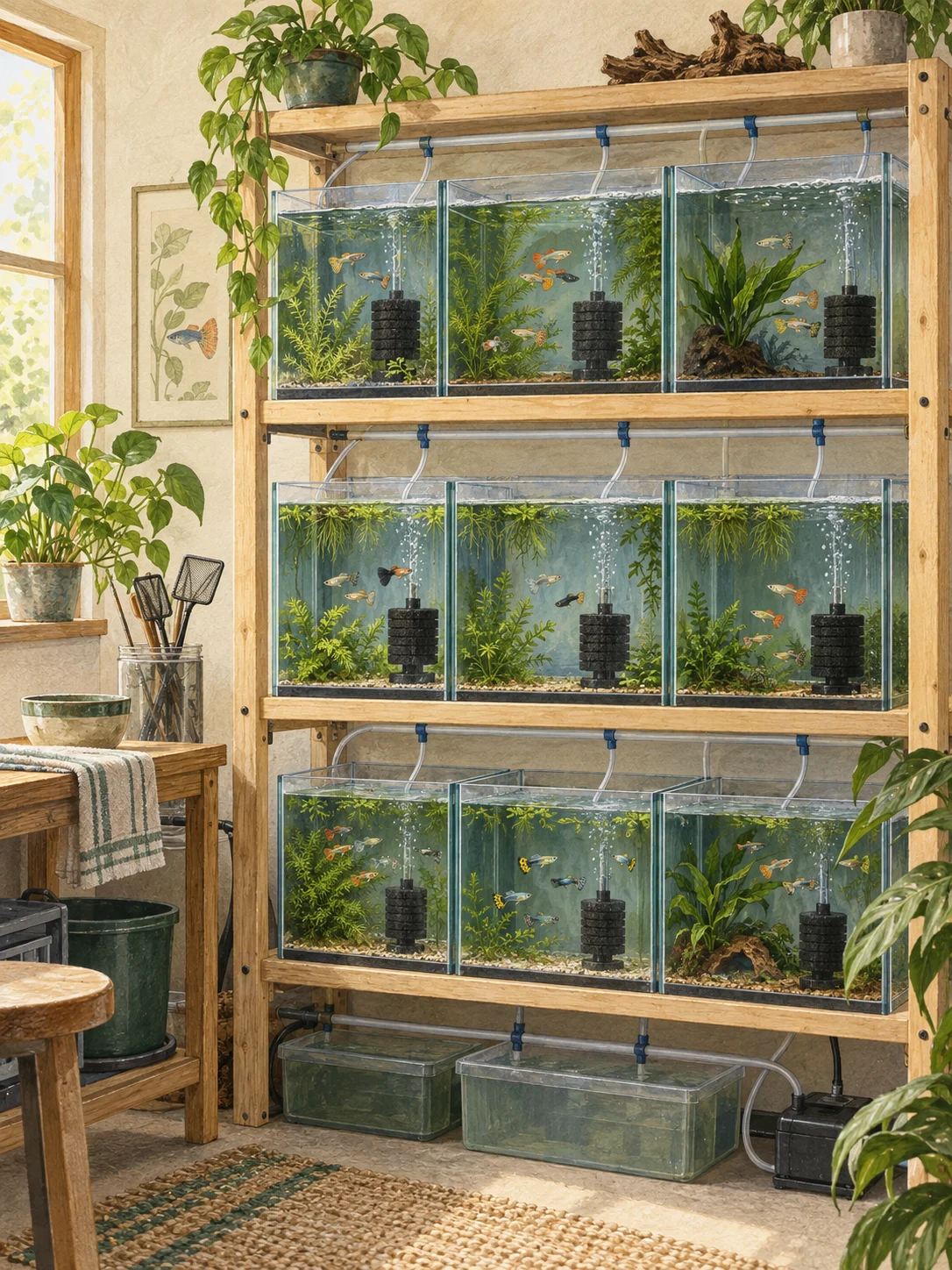
Our guppy guides focus on practical routines: keep water stable, observe fish closely and allow for natural variation.
Care systems
Steady water, thoughtful care
Gentle filtration and regular observation support healthy aquarium routines.
Natural variation
Every guppy is different
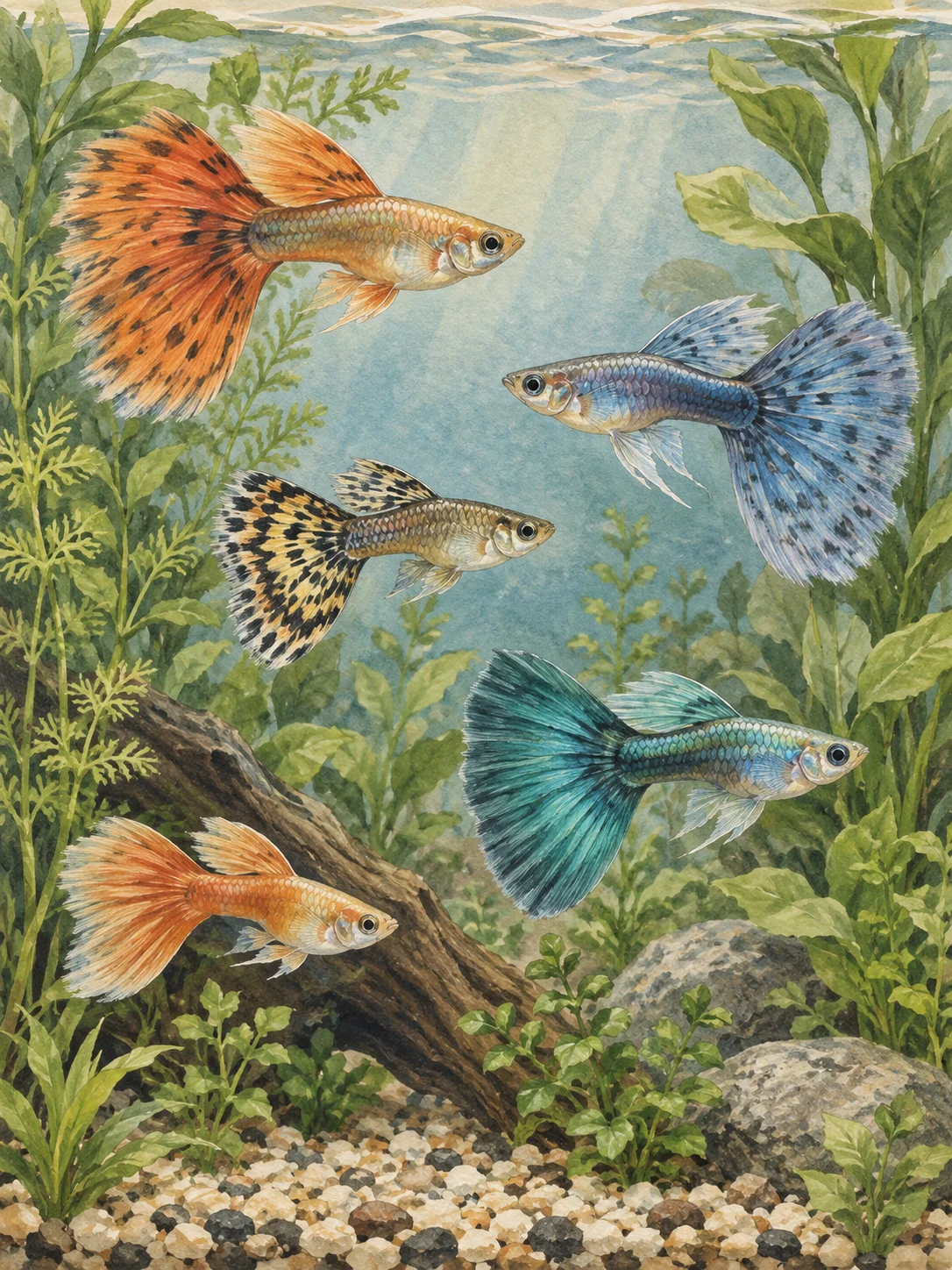
Color, size and fin shape vary with strain, age and each individual fish.
Editorial illustrations for context; they do not depict HiGuppy's exact facility or current fish stock.