From healthy adults to thriving fry
Complete Guppy Breeding Guide
Learn how to plan a breeding tank, choose a sensible male-to-female ratio, recognize pregnancy, prepare for birth, raise fry and avoid the mistakes that turn a fun project into an overcrowded aquarium.
- Cycled tank first
- 1 male to 2–3 females
- Plan for fry before breeding
Quick answer
What do you need to breed guppies?
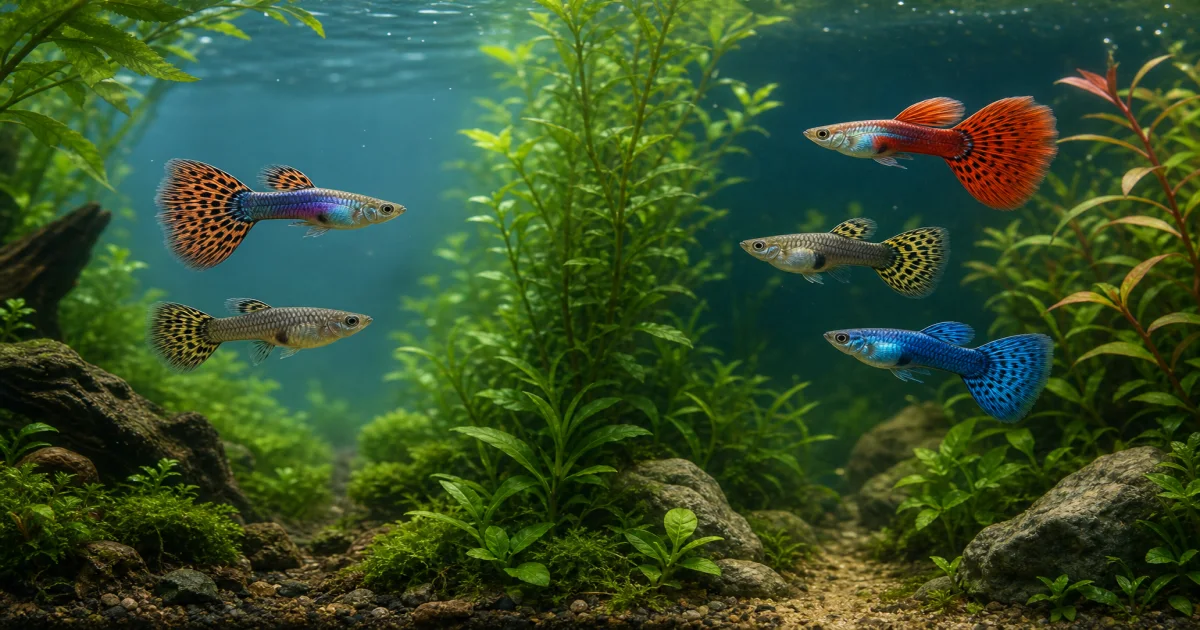
Start with healthy, correctly sexed adults in a fully cycled 10–20 gallon aquarium. A trio of one male and two females is often easier on the females than a strict pair. Keep temperature and water chemistry stable, provide gentle filtration and dense fry cover, and prepare a separate grow-out plan before the first brood arrives. In good conditions, females commonly produce fry on a roughly 25–35 day cycle, although timing and litter size vary.
- A cycled aquarium: ammonia and nitrite at zero, with nitrate controlled through testing and maintenance.
- Healthy breeding stock: active adults with good appetite, straight body shape and intact fins.
- A welfare-minded ratio: generally one male to two or three females, not several males chasing one female.
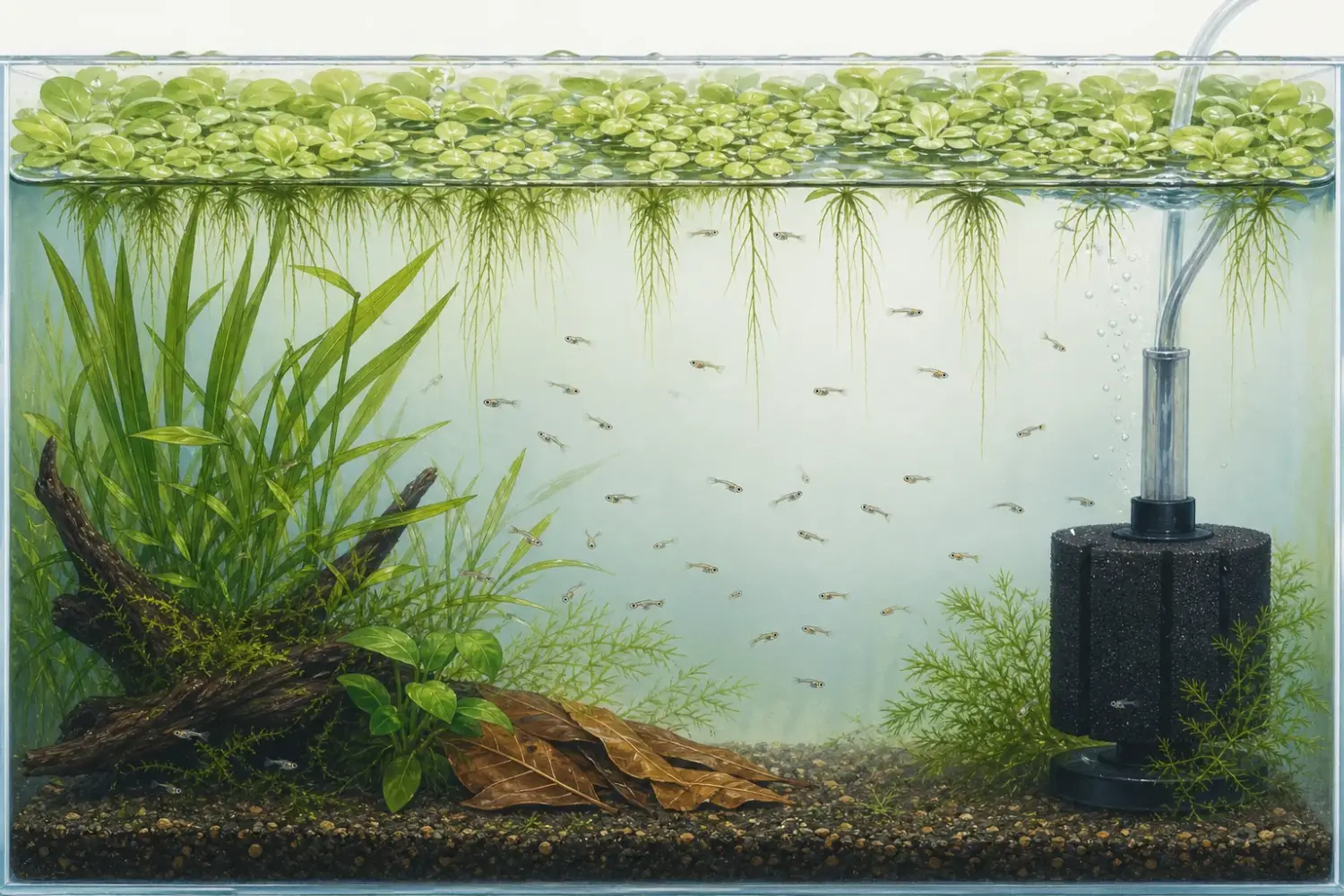
- Fry-safe filtration: a sponge filter or protected intake that will not trap newborn fish.
- A capacity plan: space, food and time for dozens of fry—not only the adult trio.
The responsible breeding sequence
A simple seven-step roadmap
Guppies can reproduce quickly, but a successful breeding project is built in the correct order. Prepare the system and the exit plan before introducing a breeding group.
Define the goal
Decide whether you want a first beginner brood, a stable home colony or a controlled strain project. The goal determines tank count and selection standards.
Cycle the aquarium
Establish biological filtration before the fish arrive. Breeding and fry growth increase feeding and waste, so an immature tank is a poor foundation.
Select healthy adults
Choose fish for vigor, structure and behavior before color. Avoid breeding adults that are weak, badly deformed or showing unexplained health problems.
Use a sensible ratio
A trio spreads male attention across two females. Watch behavior because individual temperament and tank layout still matter.
Prepare for birth
Add plant cover, establish a separate nursery or choose another method before the female is close to dropping fry.
Raise and sort fry
Feed tiny portions, protect water quality and separate sexes early enough to prevent uncontrolled breeding.
Track the next generation
Record parents, birth dates, growth and traits. Keep only healthy fish in the breeding program and have a responsible plan for the rest.
Step 1: build the system
Set up the breeding tank before buying adults
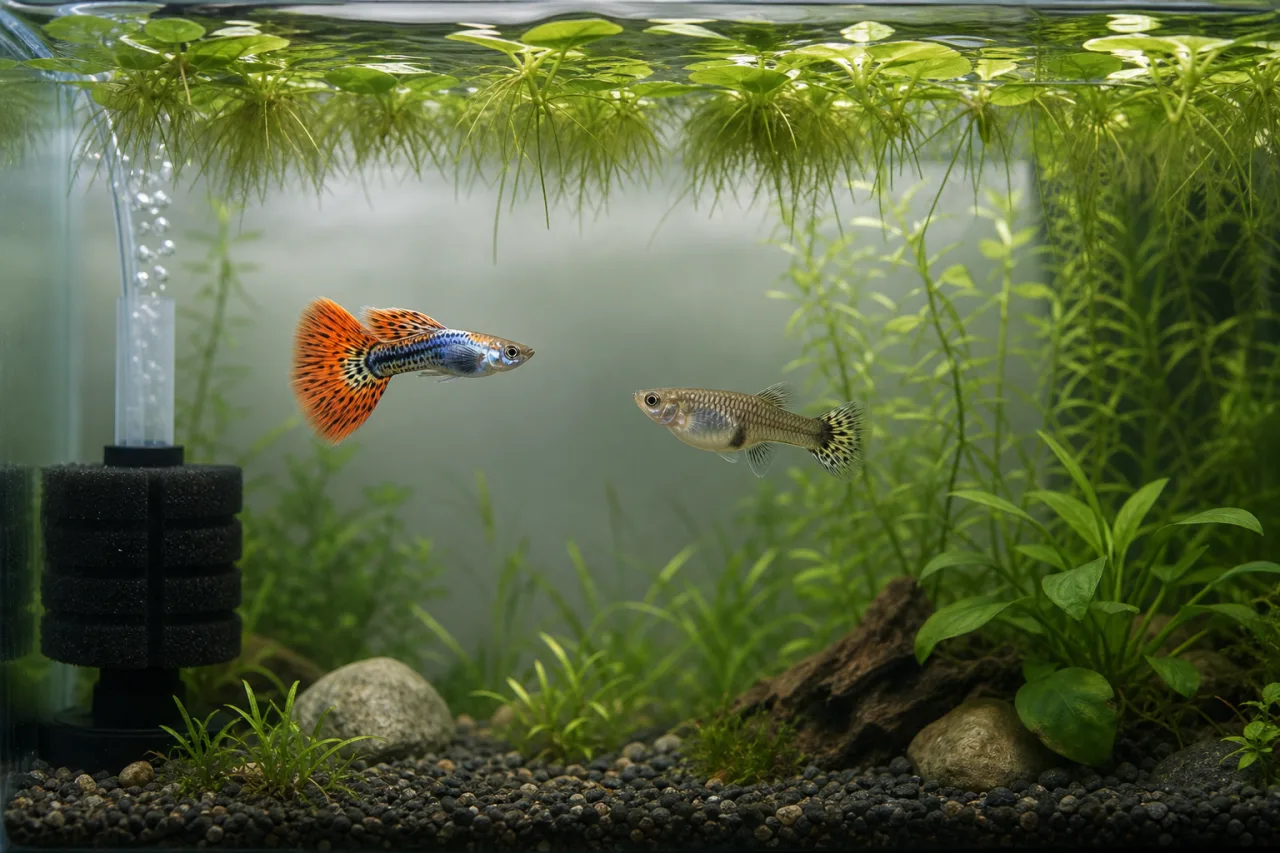
A small breeding group can be maintained in a 10–20 gallon aquarium, with the larger end giving more stable water and room for plants. The tank must be cycled, heated consistently and filtered without creating an intake hazard for newborn fry.
Use a sponge filter or a protected filter intake. Add guppy grass, java moss, hornwort or floating plants to break sight lines and create refuge. Bare-bottom tanks are easier to clean, while planted tanks offer natural cover; either approach can work when water quality is stable.
Do not cycle with breeding fish. New parents and newborn fry should not be used to test whether a tank can process waste.
Step 2: choose the group
Pair, trio or colony?
The right group depends on tank size, your fry capacity and how closely you can monitor female stress. More fish do not automatically create a better breeding program.
| Setup | Typical group | Advantages | What to watch |
|---|---|---|---|
| Pair | 1 male + 1 female | Simple parent tracking and a smaller starting group. | One female receives all male attention and may need more cover or separation. |
| Trio | 1 male + 2 females | Male attention is spread across two females; often the most practical beginner option. | Both females may produce fry, so space needs can rise quickly. |
| Small colony | 1 male to 2–3+ females | Natural group behavior and steady reproduction in a larger system. | Parentage becomes harder to track and overcrowding can develop fast. |
Avoid male-heavy groups. Several males repeatedly chasing one or two females can create chronic stress. Plants help, but they do not fix an unsuitable ratio.
Step 3: understand pregnancy
Recognize pregnancy without repeatedly isolating the female
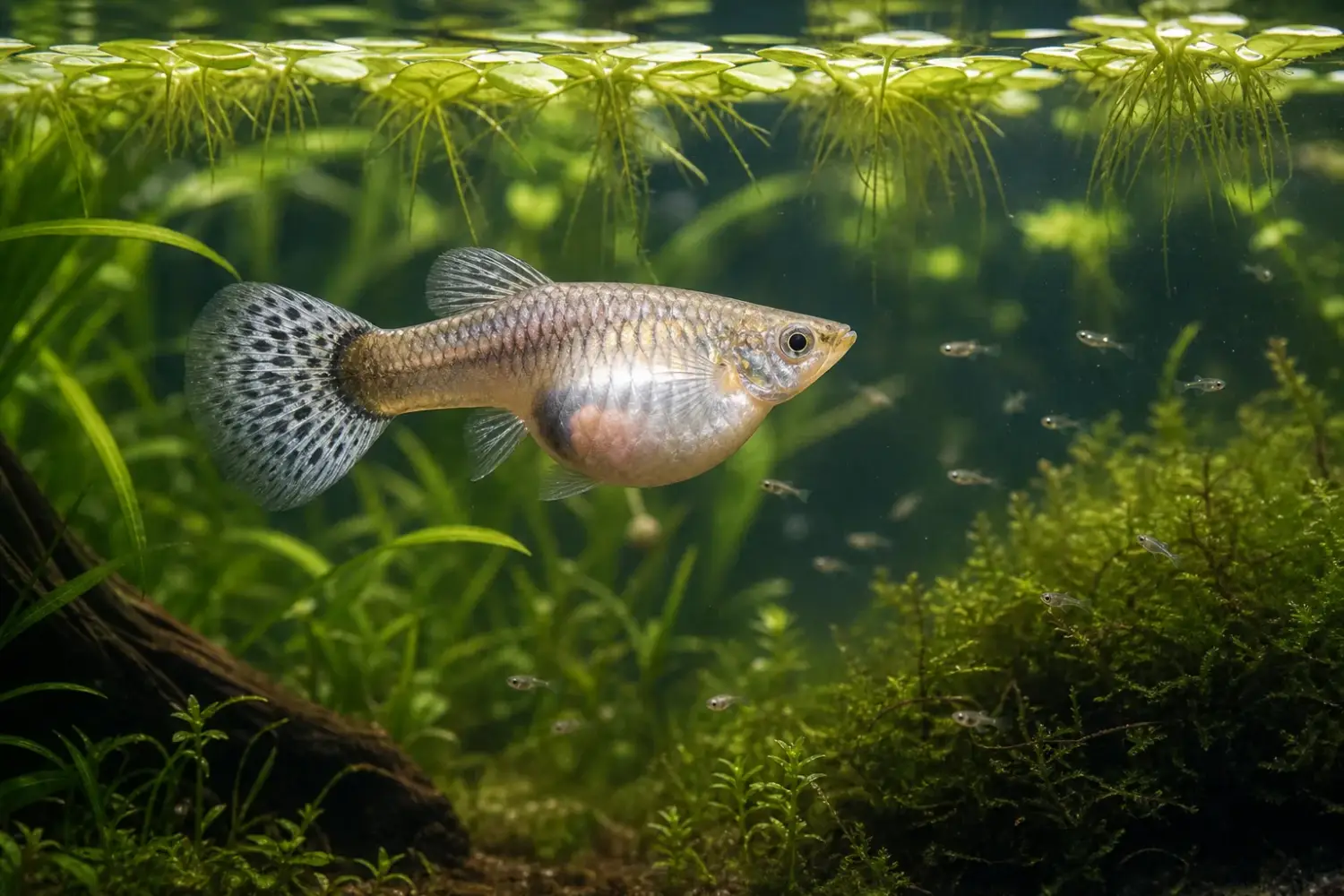
Guppies are livebearers. After mating, a female develops fry internally and may produce broods on a roughly 25–35 day cycle under good conditions. Timing varies with age, health, temperature, genetics and stress.
A female can store sperm and produce multiple broods after one mating. Removing males therefore does not guarantee that pregnancies will immediately stop. This is one reason every mixed-sex purchase should be treated as a potential breeding project.
Developing gravid spotThe area near the rear of the abdomen often becomes darker or more visible as pregnancy progresses.
Growing abdomenThe belly becomes larger over time. Near birth it may look more squared than simply rounded.
Behavior changesSome females seek quiet cover, eat differently or become less tolerant of chasing. Behavior alone cannot confirm birth timing.
Step 4: prepare for the brood
Choose a birth method that limits stress
Parents and other adult fish may eat newborn fry. Your setup determines how many survive and how much handling the female experiences.
Plant-heavy main tank
Dense moss, guppy grass and floating roots give fry places to disappear immediately after birth.
- Less movement and handling of the female
- Natural but unpredictable fry survival
- Best when you do not need every fry
Separate nursery tank
A cycled nursery or grow-out tank gives fry protected space and makes feeding and observation easier.
- Higher survival potential
- Requires an established filter and matching water
- Do not move the female too early or repeatedly
Breeding box
A box may protect fry during a narrow birth window, but long confinement can stress the female and reduce water quality.
- Use only when closely monitored
- Remove the female promptly after birth
- Never treat a tiny box as a long-term tank
Step 5: raise the fry
The first month is about food, water and space
Fast growth comes from repeated access to appropriate food without allowing waste to overwhelm the nursery. Clean water matters as much as protein.
Start with tiny foods
Offer finely crushed quality food, microworms or newly hatched baby brine shrimp in portions the fry can finish. Remove obvious excess.
Feed little and often
Several very small meals can support growth when the tank is monitored closely. Heavy feeding without maintenance quickly damages water quality.
Protect water stability
Use temperature-matched, conditioned water for small regular changes. Test more often as feeding and stocking increase.
Sort and make space
Separate sexes before uncontrolled breeding begins, reduce crowding and select future breeders for health, structure and consistent traits.
Problems to prevent
Common guppy breeding mistakes
Most failed breeding projects are not caused by a lack of mating. They come from unstable systems, stressed adults or too many fry for the available space.
Starting in an uncycled tank
Breeding increases waste. Ammonia or nitrite exposure can harm adults and fry before obvious symptoms appear.
Using too many males
Persistent chasing can exhaust females. Correct the ratio and provide cover rather than assuming the behavior is harmless.
Moving females repeatedly
Trying to predict the exact birth hour can lead to constant netting and confinement. Prepare the system early and observe calmly.
Overfeeding for faster growth
Fry benefit from frequent access to food, but uneaten food and excess waste can erase those gains through poor water quality.
No grow-out capacity
A single brood may contain dozens of fry, and more broods can follow. The original tank may become crowded much faster than expected.
Selecting only for color
Bright color should not outweigh weak structure, poor swimming, recurring health issues or low vigor.
Step 6: improve the line responsibly
Health and structure come before pattern
If your goal is a consistent strain, keep records of the parents, brood date, growth, sex and traits. Photograph promising juveniles under similar lighting so comparisons are useful rather than based on memory.
Do not breed fish showing unexplained weakness, poor body shape, chronic swimming difficulty or recurring illness. Avoid close inbreeding without a plan, and bring in unrelated compatible stock when vigor begins to decline.
Continue the learning path
Guppy breeding guides by topic
Use this page for the complete overview, then open the specialist guide when you need more detail for a decision or stage.
Start with a prepared aquarium
Choose healthy breeding stock after the tank is ready
Browse current pairs and breeder trios, then confirm the strain, sex ratio, photo type and live-fish shipping details on the individual listing.
Frequently asked questions
Guppy breeding FAQ
Breeding timing varies by line and aquarium. Use behavior, testing and gradual observations rather than relying on one universal schedule.
How long are guppies pregnant?
A practical expectation is roughly 25–35 days in good conditions, but age, genetics, temperature, health and stress can shift the timing.
How many babies can a guppy have?
Many home broods fall around 20–40 fry, but small or young females may have fewer and large mature females may produce more. Plan capacity before assuming a small litter.
Do I need a separate breeding tank?
Not always. A heavily planted tank can allow some fry to survive naturally, while a separate cycled nursery gives more control and usually improves survival.
Will adult guppies eat their fry?
Yes, adults may eat newborn fry. Dense plants, a protected nursery or prompt separation can improve survival.
Is a pair or trio better for beginners?
A trio of one male and two females is often the more practical starting point because male attention is not focused on one female. It also means potentially more fry, so capacity still matters.
Can a female guppy give birth without a male present?
Yes. Females can store sperm and may produce multiple broods after mating, even after males have been removed.
How often should guppy fry be fed?
Fry grow well with several tiny meals when filtration and water maintenance can support that schedule. Feed only what they can consume and adjust based on testing and waste.
When should male and female fry be separated?
Separate them as soon as sex can be identified reliably and before early mating begins. Development speed varies, so inspect the group regularly rather than waiting for one fixed age.
What is the most important breeding rule?
Prepare for the fry before breeding the adults. A healthy trio can create more fish than one aquarium can support in a surprisingly short time.