The HiGuppy Journal
How Many Guppies in a 5 Gallon Tank?
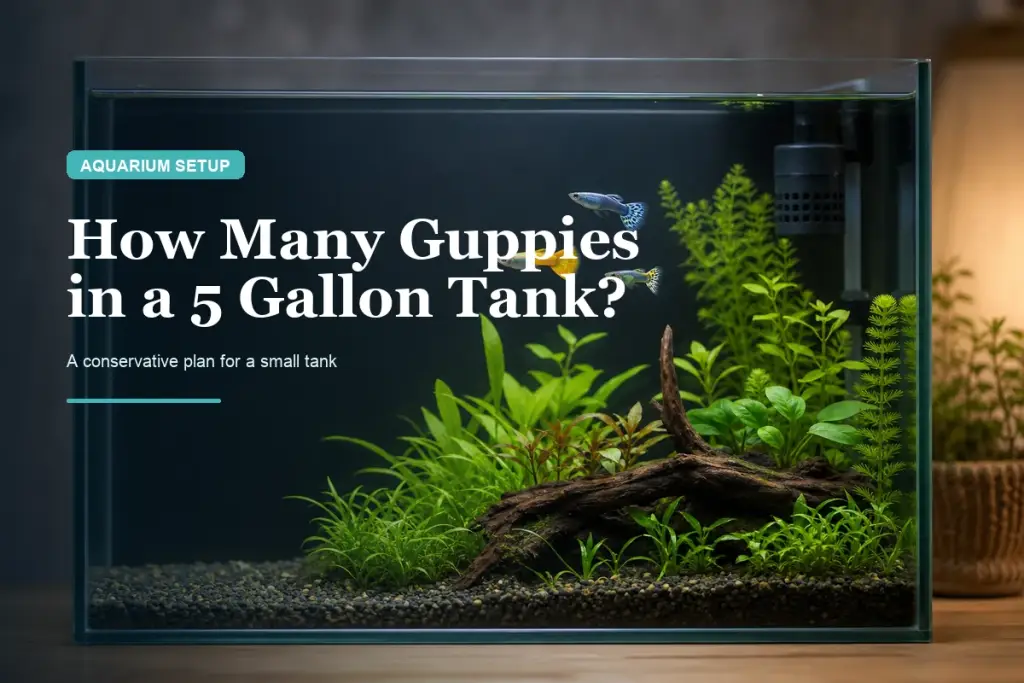
How many guppies in a 5 gallon tank? Choose a larger aquarium for a permanent guppy group rather than treating five gallons as a suitable long-term home. A five-gallon or 20-litre tank is below the OATA guppy and molly care guide recommendation of at least 45 litres for a small group of the smaller species. That guideline is a starting point for planning, not a universal stocking formula. Compare the units below, then see what to do if your guppies already live in five gallons.
Compare gallons and litres
Check which gallon measurement the tank label uses. These approximate volumes help you compare it with the 45-litre guideline:
- 5 US gallons: 18.9 litres.
- 5 imperial gallons: 22.7 litres.
- 20 litres: 5.3 US gallons, with the same small-tank limitations.
- 10 US gallons: 37.9 litres, still below 45 litres.
Why the number is not the whole answer
Tank volume is only one part of stocking. Plan for adult size; female guppies generally grow larger than males. Filter capacity, surface movement, maintenance routine, food, live plants, tank mates, and the sex of the fish all change the real load on a five-gallon system. A clear-looking aquarium can still have a water-quality problem, so use ammonia, nitrite, and nitrate tests rather than visual appearance alone. As the RSPCA explains, behaviour matters alongside water quality: good tests do not guarantee adequate swimming room or access to food.
Smaller aquariums also change faster. The Ornamental Aquatic Trade Association notes that larger aquariums make temperature and water quality more stable; in a small setup, one missed water change, extra feeding, or unexpected fry can matter more quickly.
If you already keep guppies in five gallons
- Plan a larger, cycled aquarium: assess adult swimming space and companionship rather than keeping a guppy alone to fit a small tank.
- Check sex and breeding history: previously mated females can produce fry from stored sperm even when no male is currently present.
- Do not add fish to reach a target: record water tests, feeding, fish count, and any persistent chasing while arranging suitable long-term housing.
- Respond to problems promptly: investigate abnormal tests or distressed behaviour with a knowledgeable aquatic specialist; use a larger prepared aquarium or responsible rehoming when needed.
Why a mixed-sex group needs more room
Guppies are livebearers. A mixed-sex group may produce fry even when you did not set out to breed. Do not treat a five-gallon aquarium as a self-contained breeding or fry grow-out plan. If you want to breed guppies, begin with a larger established system and a separate plan for fry, filtration, water changes, and responsible rehoming.
Set the tank up for stability
- Cycle the aquarium before adding fish.
- Use a heater only when needed to keep a suitable, stable temperature; check it with a thermometer.
- Choose gentle but effective filtration and protect small fish from a strong intake.
- Provide plants or cover without reducing all open swimming space.
- Feed measured portions and remove the cause of accumulating waste rather than repeatedly adding more fish food.
- Keep a simple record of water tests, fish count, and water changes.
When to choose a larger aquarium
Choose a larger aquarium for a permanent guppy group, with additional room for tank mates or a breeding project. A 10-US-gallon tank is about 38 litres and still falls below the OATA guideline discussed above; do not assume any tank labelled ten gallons resolves the problem. Read the 10-Gallon Guppy Guide and Guppy Tank Setup Guide before expanding. For a larger-volume comparison, see the 20-gallon guppy planning guide.
Can three male guppies live in a 5-gallon tank?
We do not recommend five gallons as a permanent home for a guppy group, including three males. An all-male group avoids breeding within that group, but it does not remove the swimming-space and water-stability limitations. If you already keep three males in five gallons, follow the steps above while preparing a larger, cycled aquarium.
Before choosing fish
Prepare the tank before purchasing, confirm the current group count and sex on the live listing, and read the Acclimation Guide before arrival day. This article is a conservative planning guide; it does not replace observation, water testing, or qualified aquatic guidance if fish are unwell.
Behind the care guides
Care begins with steady systems
Our guppy guides focus on practical routines: keep water stable, observe fish closely and allow for natural variation.
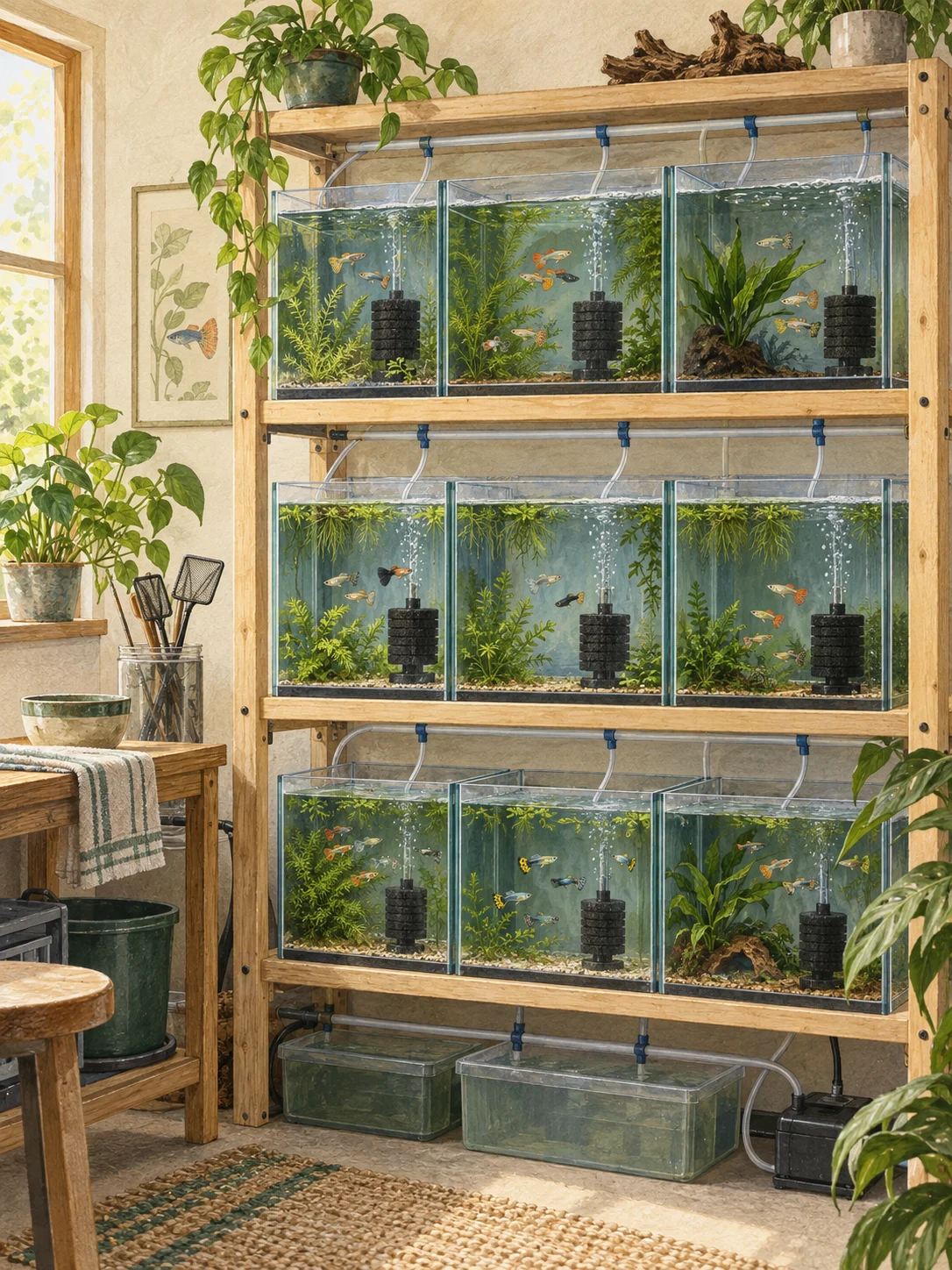
Care systems
Steady water, thoughtful care
Gentle filtration and regular observation support healthy aquarium routines.
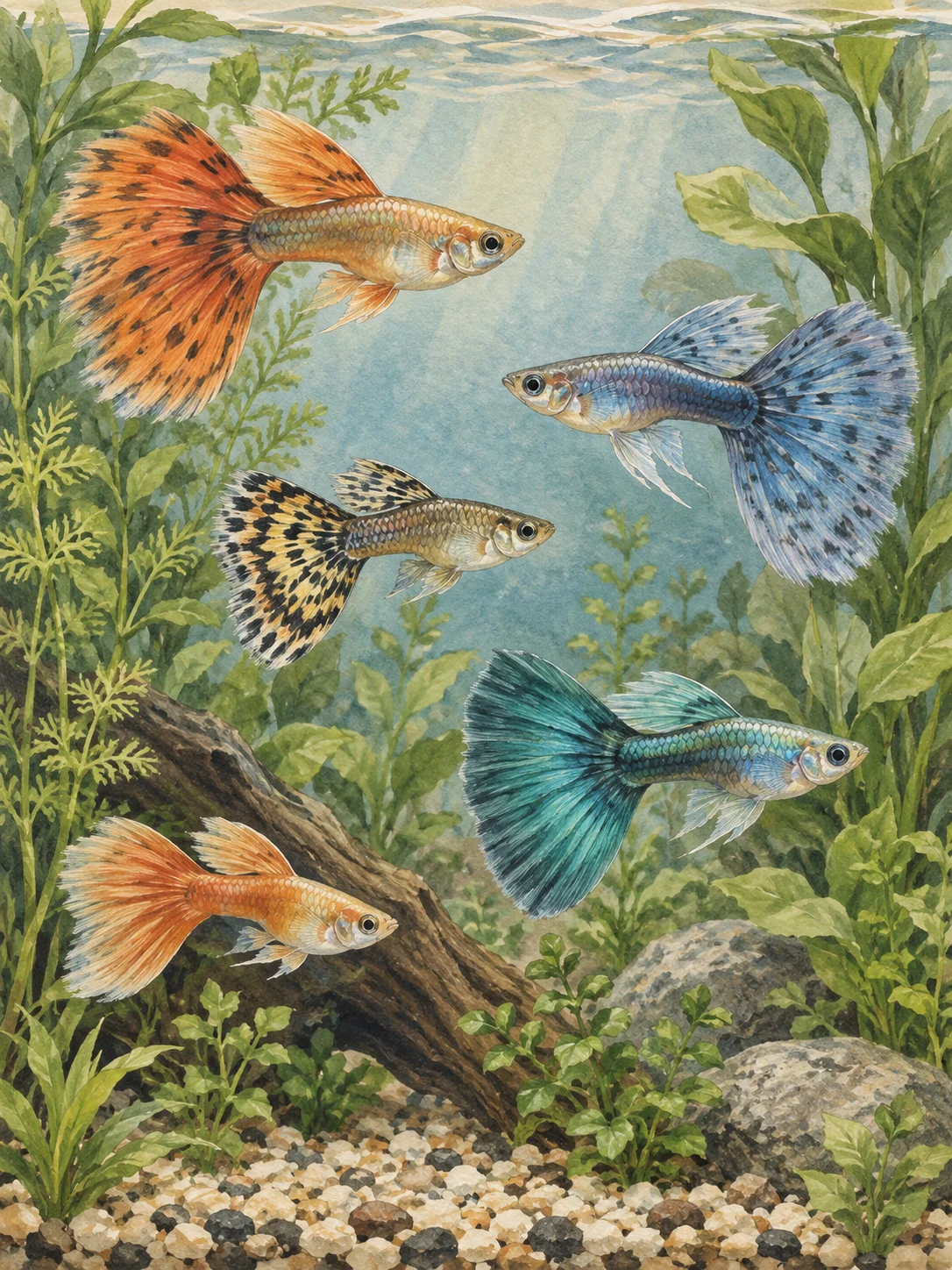
Natural variation
Every guppy is different
Color, size and fin shape vary with strain, age and each individual fish.
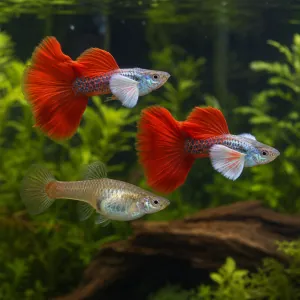
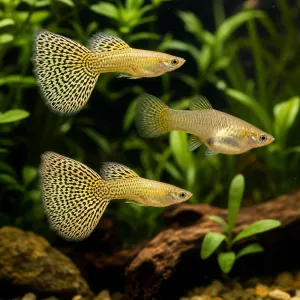
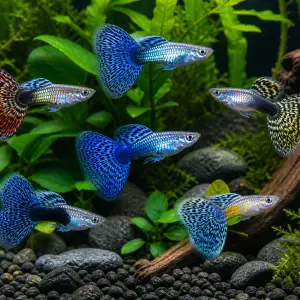
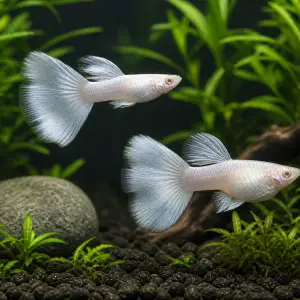
Editorial illustrations for context; they do not depict HiGuppy's exact facility or current fish stock.