The HiGuppy Journal
Guppy Water Change Schedule by Tank & Nitrate
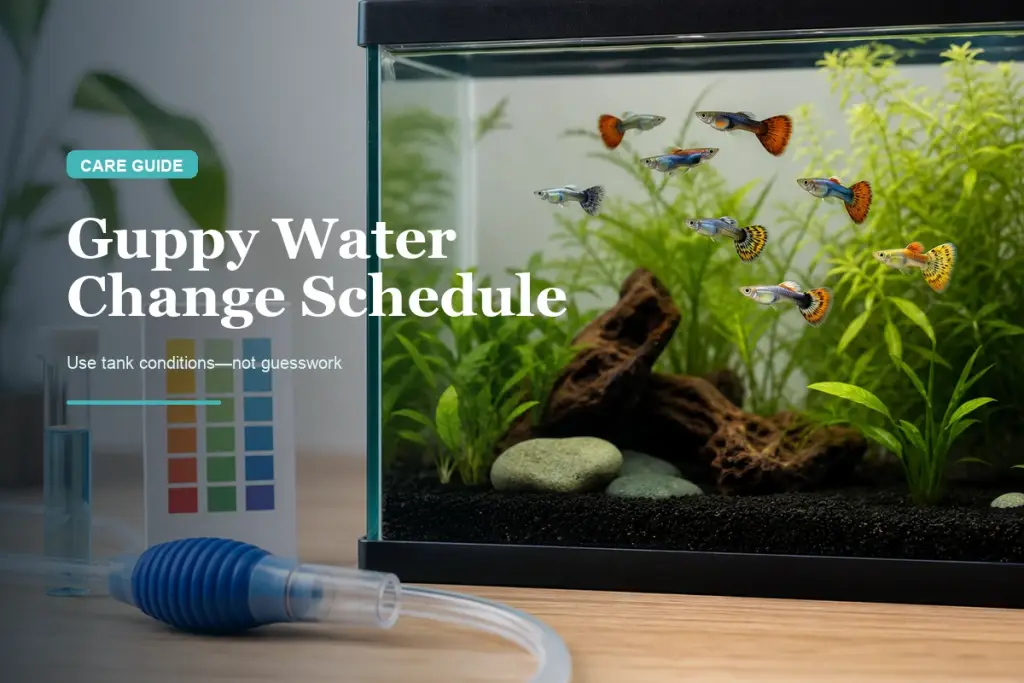
Quick answer: a guppy water change schedule should respond to tank size, stocking, feeding, filtration, and test results. Use regular partial changes as part of a routine, but do not rely on one universal percentage or calendar rule when the aquarium’s nitrate level, waste load, or fish behavior shows it needs a different approach.
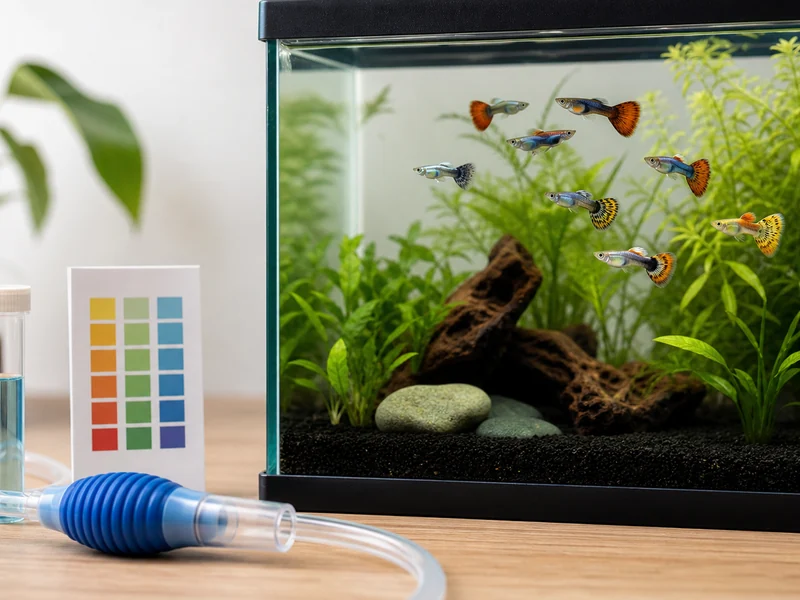
Why a fixed guppy water change schedule is not enough
Two tanks can have the same volume and need different maintenance. A lightly stocked, planted aquarium with stable filtration may behave differently from a fry grow-out tank or a mixed-sex breeder tank producing extra waste. Test the water, observe the fish, and keep a basic record of water changes so you can recognize changes before they become an emergency.
Start with a regular partial-change routine
Regular partial changes help remove dissolved waste and refresh minerals without making a sudden complete reset. The exact volume and frequency should fit your aquarium; a guppy water change schedule follows the tank, not the calendar. If nitrate trends upward, food is collecting, fry numbers have increased, or tests show water quality is changing, review the routine rather than waiting for a calendar date.
Guppy water change schedule: starting plan for three tank situations
The OATA guppy and molly care sheet strongly recommends a partial change of about 25% at least once a week, with water tests at least weekly. Treat this as a starting reference for a cycled guppy aquarium, not a guaranteed schedule for every tank or a reason to ignore a test result. Stocking, feeding, plants, filtration, tap-water nitrate and fry growth all affect how soon another change may be needed.
| Tank situation | Starting routine and when to adjust |
|---|---|
| Lightly stocked, established tank | Begin by planning the OATA weekly partial-change reference (about 25%). Log ammonia, nitrite and nitrate at least weekly; keep the routine under review if readings or waste increase, even if the water looks clear. |
| Heavily stocked or high-waste tank | Do not assume the weekly starting change is sufficient. Check water more frequently, reduce excess feeding and review filtration or stocking; use additional careful partial changes when tests and waste load warrant them. No fixed extra percentage applies to every crowded tank. |
| Fry or breeding grow-out tank | Begin with the same weekly reference only while the cycled setup and test readings remain stable. As fry numbers and feeding grow, check more often, plan suitable grow-out capacity and perform further gentle partial changes as the readings require, protecting small fry during siphoning. |
How nitrate changes the schedule: Test the aquarium and the replacement tap water, record the readings, and compare the trend rather than assuming a single nitrate number is safe in every aquarium. OATA’s guppy-specific reference is to keep nitrate no more than 20 mg/L above its normal tap-water level; this is a species-care reference, not a universal toxicity cutoff. If nitrate rises relative to the source water, reassess feeding, filtration, stocking and the frequency of your guppy water change schedule. Higher nitrate in the tap supply may limit what ordinary changes can achieve. See OATA’s water-testing guidance.
Do not wait for the weekly routine if tests are abnormal: Ammonia and nitrite should read 0 mg/L in a cycled aquarium. A detectable reading calls for prompt investigation and appropriate partial water changes rather than the next date on your guppy water change schedule, followed by retesting and checking feeding and biological filtration; seek qualified aquarium advice if readings persist or fish are distressed. Always treat replacement water for chlorine/chloramine, match its temperature as closely as practical and avoid sudden major water-chemistry swings.
- Use dechlorinated replacement water matched as closely as practical to the tank’s temperature.
- Remove waste from the substrate where it collects without stripping the entire biological filter at once.
- Clean filter media gently in removed tank water when needed; do not replace all beneficial media on a routine day.
- Retest after changes when the tank is new, heavily stocked, or behaving differently.
- Keep notes on test results, fish count, food changes, and water-change dates so your guppy water change schedule stays grounded in real readings.
Use nitrate and tank conditions as decision signals
Nitrate is one useful signal, but it should be considered with ammonia, nitrite, pH stability, filtration, and fish behavior. Ammonia or nitrite are not routine “wait until water-change day” issues. If either is present in a cycled aquarium, reduce the immediate risk with appropriate water changes and investigate the source of the problem.
Fry and breeding tanks need capacity planning
Fry can increase the tank’s load faster than an adult-only guppy water change schedule assumes. Before feeding more or keeping every fry in one tank, plan filtration, water testing, water-change capacity, and a responsible next home. The Raising Guppy Fry Guide and Guppy Tank Setup Guide can help you plan the system before numbers increase.
Common guppy water change schedule mistakes
- Changing too much without matching temperature or treating replacement water.
- Cleaning every filter component at the same time.
- Ignoring test results because the water looks clear.
- Overfeeding after a water change instead of addressing the waste source.
- Adding new fish before the system has room and stable water capacity.
Related guides
For a broader routine, read the Complete Guppy Care Guide. If new fish have arrived, follow the Acclimation Guide rather than using a large water change as the only preparation step.
For the related guppy water change schedule, continue to the Water Change Guide.
Behind the care guides
Care begins with steady systems
Our guppy guides focus on practical routines: keep water stable, observe fish closely and allow for natural variation.
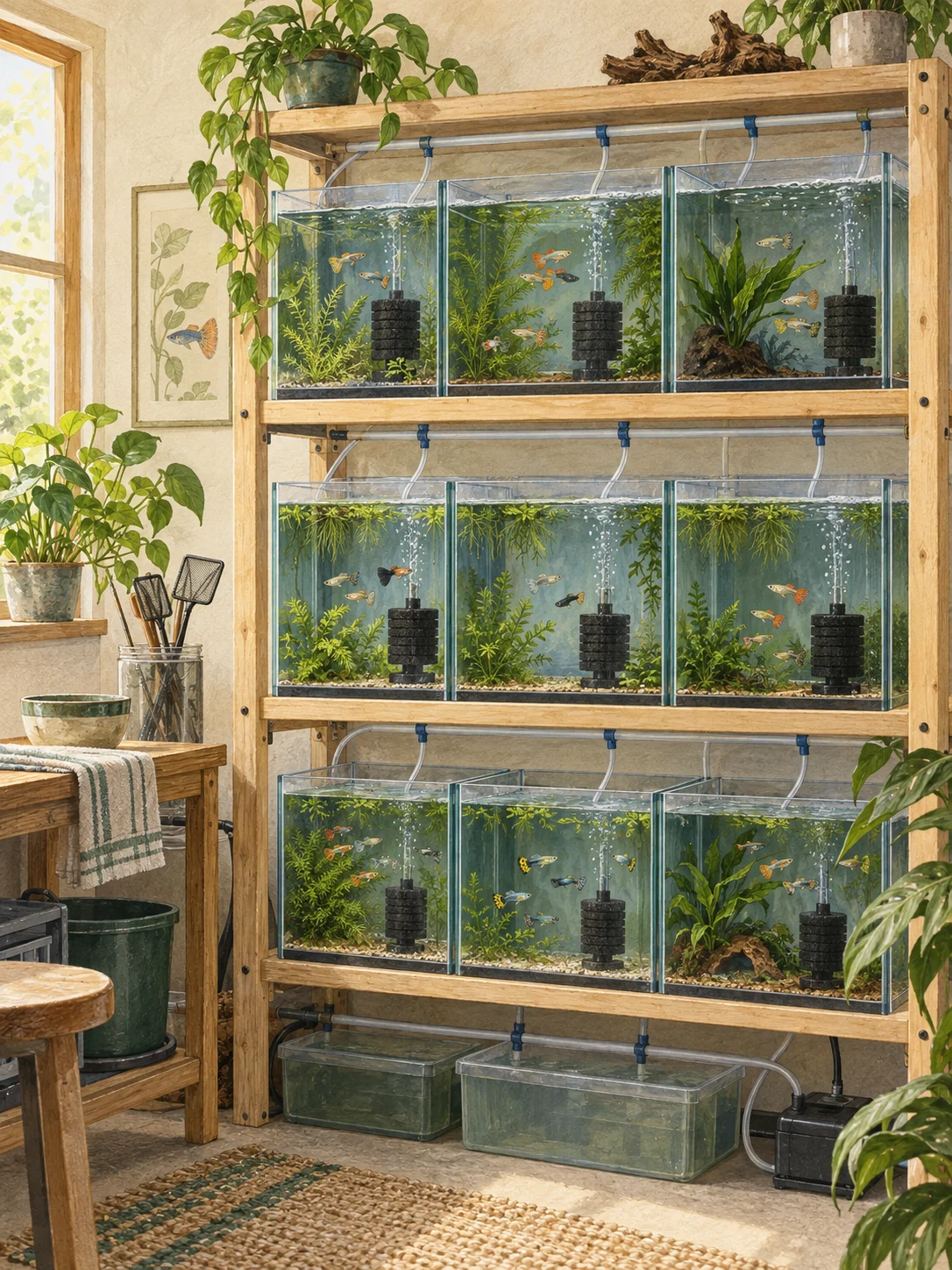
Care systems
Steady water, thoughtful care
Gentle filtration and regular observation support healthy aquarium routines.
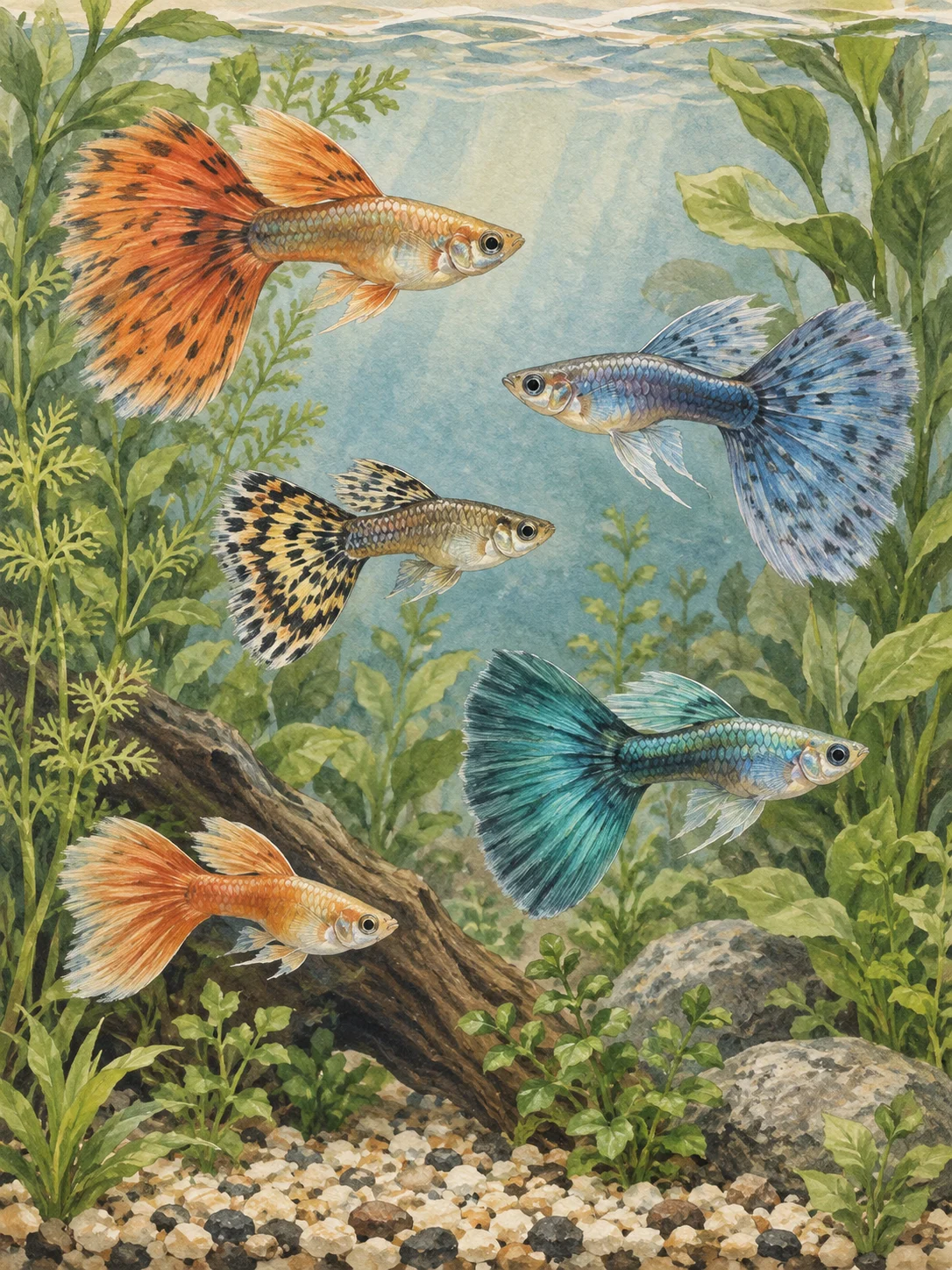
Natural variation
Every guppy is different
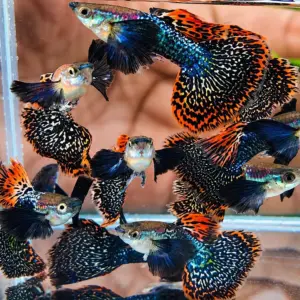
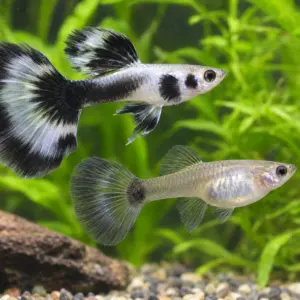
Color, size and fin shape vary with strain, age and each individual fish.
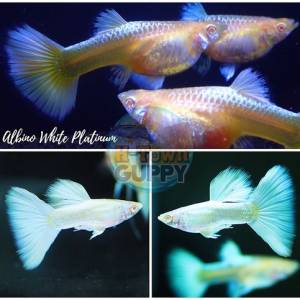
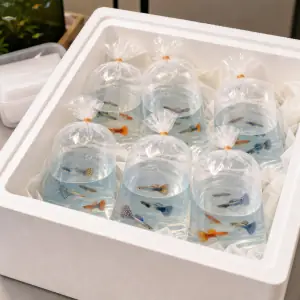
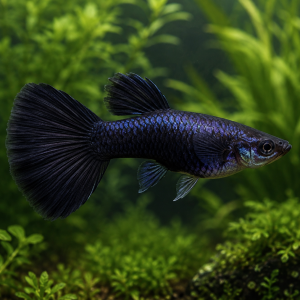
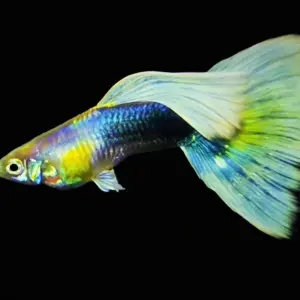
Editorial illustrations for context; they do not depict HiGuppy's exact facility or current fish stock.