Guppy Care Article
Do Guppies Need an Air Pump? Oxygen, Surface Movement & When It Helps
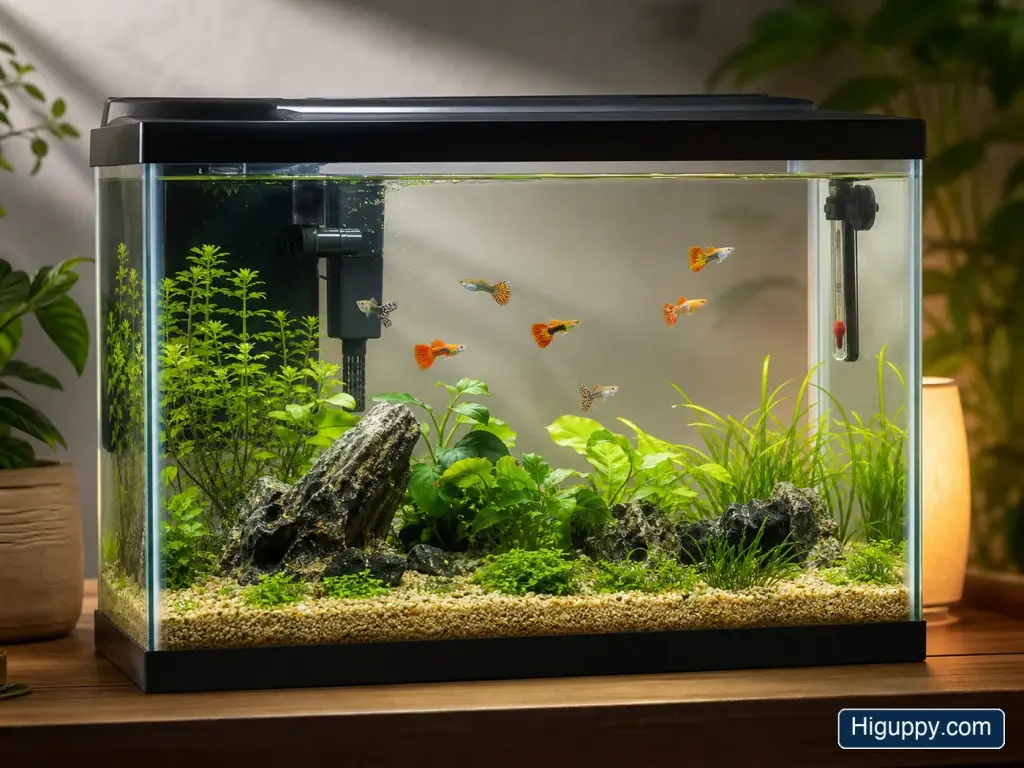
Quick answer: Guppies do not always need a separate air pump if the aquarium already has reliable filtration, good circulation, and visible surface movement. An air pump becomes especially useful in warm water, heavily stocked tanks, breeding or hospital tanks, during some treatments, or whenever oxygen appears limited.
An air pump is not a substitute for a cycled aquarium or good water quality. If guppies are gasping at the surface, treat that as a warning sign: increase aeration while also checking temperature, ammonia, nitrite, filter operation, and other possible causes.
How oxygen gets into a guppy tank
Most gas exchange happens where aquarium water meets the air. Surface movement continually exposes new water to the atmosphere, helping oxygen enter and carbon dioxide leave. The bubbles from an air stone are useful mainly because they move water upward and disturb the surface.
This is why a filter outlet that creates a steady ripple can sometimes provide enough aeration without a separate air pump. The goal is circulation throughout the aquarium without forcing long-finned guppies or fry to fight a strong current all day.
When guppies usually do not need a separate air pump
- The filter produces a consistent surface ripple.
- The tank is appropriately stocked rather than crowded.
- Water temperature is stable and within a suitable guppy range.
- Fish are active and breathing normally.
- There are no stagnant zones and circulation reaches the full tank.
If those conditions are met, adding more bubbles may provide little practical benefit. For a complete setup overview, see our Guppy Tank Setup Guide.
When an air pump is especially helpful
Warm water
Warmer water holds less dissolved oxygen than cooler water. During hot weather, a heater malfunction, or an unusually warm room, extra surface agitation can give the fish a larger safety margin.
Breeding and fry tanks
Air-driven sponge filters are popular in guppy breeding tanks because they combine gentle filtration with aeration and have a fry-safe intake. See our Guppy Breeding Tank Setup for a practical layout.
Hospital or quarantine tanks
Temporary treatment tanks often have fewer plants, less mature filtration, and medications or elevated temperatures that can change oxygen demand. Extra aeration is a simple way to improve circulation while a sick fish is being observed.
Heavily stocked tanks
More fish means higher oxygen demand and faster waste production. Extra bubbles cannot make overstocking safe, but they can improve gas exchange while you correct stocking, filtration, or maintenance problems.
Signs your guppy tank may need more aeration
- Several fish repeatedly gather at the surface and breathe rapidly.
- Guppies appear more distressed during warm periods.
- The filter outlet has little or no surface movement.
- Fish become lethargic while the tank is crowded or under treatment.
- A power interruption or clogged filter has reduced circulation.
Surface gasping is not proof of low oxygen by itself. Ammonia, nitrite, chlorine exposure, gill irritation, parasites, or disease can create similar behavior. If this is happening now, use our Guppy Gasping at the Surface guide and check the tank rather than assuming bubbles alone will solve the problem.
Air pump vs filter: they do different jobs
An air pump moves air. A filter removes particles, circulates water, and provides surfaces for beneficial bacteria. Some filters create enough aeration on their own; sponge filters depend on an air pump to move water through the sponge. If you are choosing filtration, read Best Filter for Guppies.
How much airflow is enough?
You want a steady stream of bubbles and a gentle surface ripple, not violent turbulence. If guppies are constantly pushed sideways, struggle to rest, or avoid one side of the tank, reduce the flow with an air-control valve, use a smaller air stone, or reposition the outlet.
Long-finned strains and young fry usually appreciate gentler flow than short-finned adults. Always judge the setup by fish behavior as well as by equipment size.
Do live plants replace an air pump?
No. Healthy plants can contribute oxygen while lights are on, but they also respire and use oxygen, including at night. Plants improve the aquarium in many ways, yet they do not guarantee adequate gas exchange in every tank. For plant choices, see Best Planted Tank Setup for Guppies.
Simple decision checklist
- Look for visible surface movement.
- Confirm the filter is running at normal flow.
- Check stocking level and temperature.
- Watch breathing and swimming behavior.
- Test ammonia and nitrite if fish show distress.
- Add extra aeration when oxygen demand is likely elevated or as an immediate safety measure during troubleshooting.
FAQ
Can guppies live without bubbles?
Yes. Guppies can live without visible bubbles if filtration, circulation, surface movement, stocking, and water quality provide adequate oxygen.
Should an air pump run all night?
If the tank relies on an air-driven sponge filter, keep it running continuously. If the air pump is supplemental, continuous operation is generally fine and avoids a nighttime drop in surface agitation.
Can too much aeration hurt guppies?
The bubbles themselves are rarely the problem. Excessive current can tire fish, especially fry or long-finned guppies, so adjust the flow if swimming looks difficult.
Does an air pump replace water changes?
No. Aeration improves gas exchange but does not remove nitrate, dissolved waste, or debris. Maintain regular testing and partial water changes using the Guppy Water Change Guide.
Once the aquarium is stable and fully prepared, you can browse available guppies. Prepare the tank before delivery rather than adding equipment after the fish arrive.
Real HiGuppy photographs
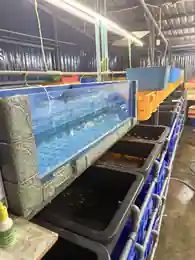
Inside the facility behind our guppy guides
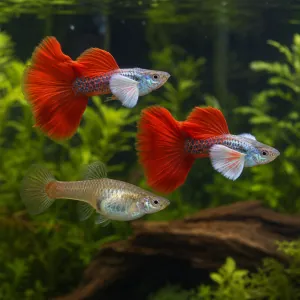
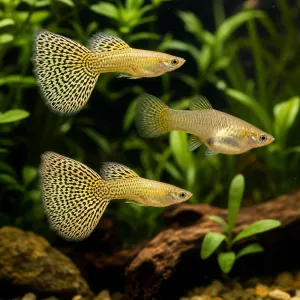
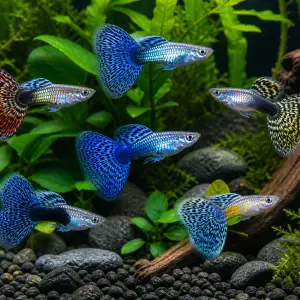
These photographs show real HiGuppy holding, breeding and observation work. They document our facility and fish stock; they are not presented as the exact individual fish or strain discussed on every page.