Guppy Care Article
Bare Bottom Guppy Tank: Best Uses for Fry, Breeding & Quarantine
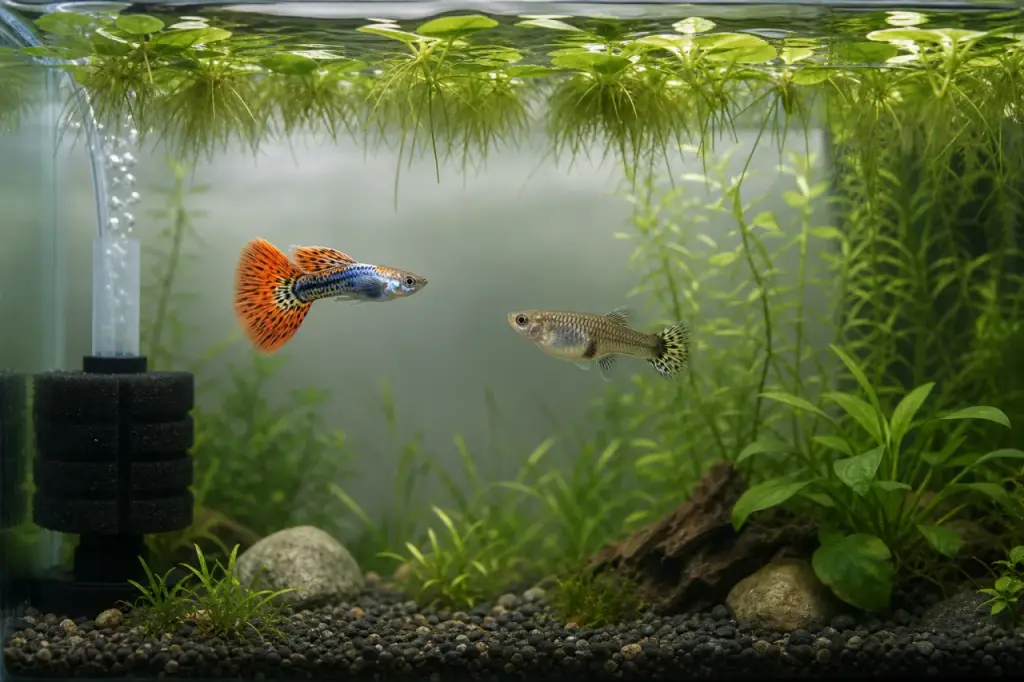
Quick answer: A bare bottom guppy tank is most useful when easy observation and fast waste removal matter more than display aesthetics—especially for fry grow-out, breeding projects, quarantine and hospital-style observation. It still needs mature biological filtration, stable water, gentle cover and routine maintenance.
A bare bottom setup has no gravel or sand. That makes leftover food, feces and debris easy to see, which can be helpful when you are trying to control feeding, monitor new arrivals or raise young fish. It is not automatically “cleaner,” however. Waste still affects water quality until it is physically removed and processed by filtration.
If you are choosing a substrate for a normal display aquarium, start with the broader best substrate for guppy tanks guide. This page focuses specifically on when a bare bottom tank is the better operational choice.
Bare Bottom Guppy Tank: Pros and Cons
| Pros | Cons |
|---|---|
| Waste and uneaten food are easy to see | Looks less natural than a planted display tank |
| Fast to siphon and wipe down | Fish can feel exposed without cover |
| Useful for close observation | Does not replace filtration or cycling |
| Easy to keep fry food from disappearing into gravel | Less rooting surface for plants that need substrate |
| Simple to disinfect between controlled uses | Debris may remain visible between cleanings |
Best Use #1: Guppy Fry Grow-Out Tanks
Bare bottom tanks are popular for fry because fine food and waste stay visible. That makes it easier to judge whether you are overfeeding and to siphon debris without disturbing a deep substrate bed. The tradeoff is that fry still need a stable biofilter, gentle flow and places to rest or hide.
Use a mature sponge filter or another fry-safe filter, and add floating plants, moss held above the base, or other simple cover. For the full process, see raising guppy fry and the guppy breeding tank setup.
Best Use #2: Breeding and Selection Projects
When you are tracking parent groups, fry batches or specific breeding lines, a simple tank can make observation easier. You can quickly see which fish are eating, whether waste is accumulating and whether the group needs more frequent maintenance.
Bare bottom does not mean bare everywhere. Guppies benefit from visual breaks and cover, especially females and fry. Keep enough open floor for cleaning while using floating or removable cover where needed.
Best Use #3: Quarantine and New-Arrival Observation
A simple bottom makes it easier to monitor feces, uneaten food and general condition when new guppies arrive. Dedicated quarantine equipment also reduces the chance of transferring water and debris between systems. For the actual quarantine procedure, follow how to quarantine new guppies after shipping.
If a fish is already sick and needs active isolation or treatment, use the separate sick guppy hospital tank guide. That page is intentionally different from routine new-fish quarantine.
How to Set Up a Bare Bottom Guppy Tank
- Use a suitable aquarium or food-safe container. Size it for the number and size of fish rather than using the smallest container available.
- Add mature biological filtration. A bare floor does not cycle the tank for you. Sponge filters are useful where gentle flow and easy maintenance are priorities.
- Stabilize temperature. Use a reliable heater when room temperature is not consistently appropriate.
- Add removable cover. Floating plants, easy-to-clean hides or smooth decor reduce the exposed feel without making siphoning difficult.
- Test water before livestock goes in. Check the same core parameters you would monitor in a display aquarium.
- Keep dedicated tools for quarantine use. Nets, siphons and buckets are easy cross-contamination routes between tanks.
For filtration basics, see do guppies need a filter? and the guppy water parameters guide.
How Often Should You Clean a Bare Bottom Tank?
There is no single schedule that fits every bare bottom tank. Fry grow-out tanks can need frequent spot-siphoning because they are fed often. A lightly stocked quarantine tank may need less debris removal but more frequent testing if the biofilter is immature. Let visible waste, water tests, feeding and stocking determine the routine.
The broader guppy tank maintenance schedule explains how to combine daily observation, weekly water care and filter review.
Does a Bare Bottom Tank Need Beneficial Bacteria?
Yes. Removing substrate does not remove the need for biological filtration. Nitrifying microbes primarily need suitable wet surfaces with oxygenated water flowing past them. In a controlled bare bottom system, the filter should carry most of that biological workload, which is why mature filter media is important.
How to Reduce Stress in a Bare Tank
- Add floating plants or removable plant cover.
- Use a background on one or more sides if reflections make fish skittish.
- Provide smooth hides with openings large enough that guppies cannot become trapped.
- Keep lighting appropriate rather than excessively bright.
- Avoid overcrowding just because cleaning is easier.
If you want a more natural display, the best live plants for guppies guide and safe decorations for guppy tanks are better next steps.
When a Bare Bottom Tank Is Not the Best Choice
For a permanent living-room display, many keepers prefer sand, gravel or planted substrate because it supports a more natural layout and hides small amounts of debris. A bare bottom tank is a tool, not a requirement. Choose it when observation, cleaning speed or breeding control solves a real problem.
FAQ: Bare Bottom Guppy Tanks
Can guppies live without gravel?
Yes. Guppies do not require gravel itself. They do require stable water, adequate filtration, appropriate temperature, enough space and an environment that does not leave them chronically stressed.
Is bare bottom better for guppy fry?
It can be very practical because food and waste are easy to see and remove. Fry still need gentle filtration, stable water and cover.
Is bare bottom best for quarantine?
It is useful because observation and cleaning are simple, but the most important quarantine features are separation, mature filtration, dedicated equipment and consistent monitoring.
Can I keep live plants in a bare bottom tank?
Yes. Use floating plants, attached epiphytes such as Anubias or Java fern, moss, or plants kept in removable pots if they suit the system.
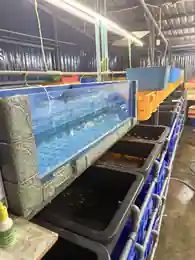
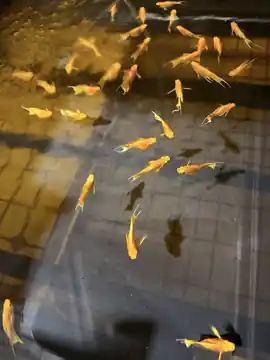
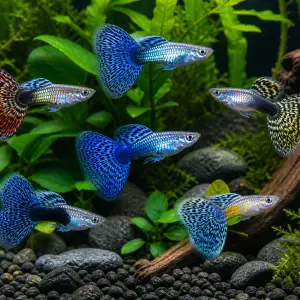
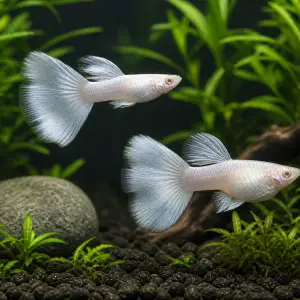
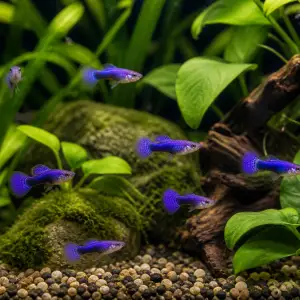
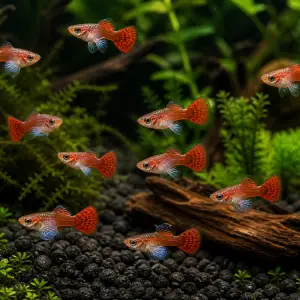
Real HiGuppy photographs
Inside the facility behind our guppy guides
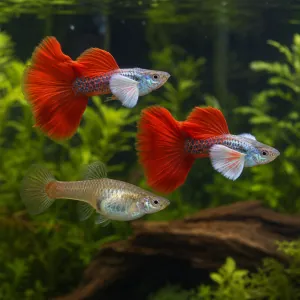
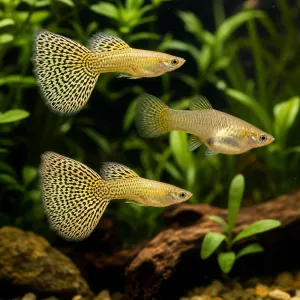
These photographs show real HiGuppy holding, breeding and observation work. They document our facility and fish stock; they are not presented as the exact individual fish or strain discussed on every page.