Guppy Care Article
Best Substrate for Guppy Tanks: Gravel, Sand or Bare Bottom?
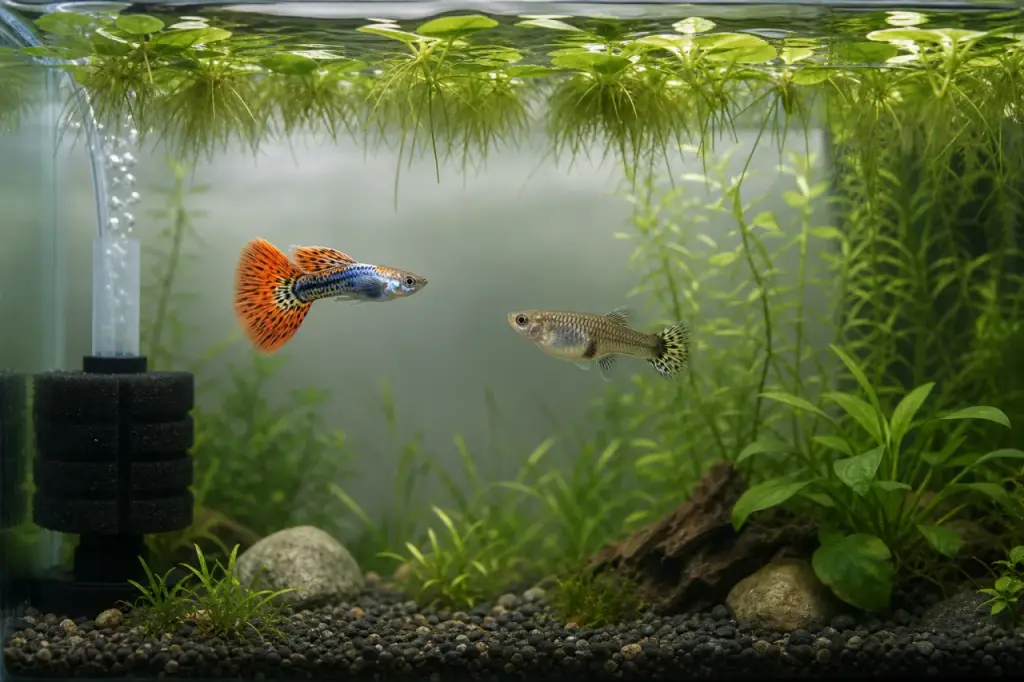
The best substrate for a guppy tank depends less on the fish themselves and more on how you plan to run the aquarium. Guppies can thrive over smooth gravel, aquarium sand, planted substrate, or even a bare bottom when water quality, filtration, maintenance and stocking are appropriate.
Quick answer: smooth gravel is the easiest all-round choice for many beginner guppy tanks; sand works well when you prefer its look and are comfortable with surface cleaning; plant-focused substrates can help rooted plants; and bare-bottom tanks are especially practical for quarantine, treatment, breeding or grow-out where observation and fast waste removal matter more than appearance.
Do guppies need substrate?
No. Guppies are mid- and upper-water livebearers and do not require gravel or sand for normal feeding or resting. Substrate is mainly a tank-management choice: it affects appearance, plant options, how visible waste is, and how you clean the aquarium.
If you are setting up your first aquarium, choose the option that you can maintain consistently rather than the one that looks most complicated. A cycled filter, stable water and sensible stocking matter more to guppy health than whether the bottom is gravel or sand. See our beginner guppy tank setup guide for the full system.
Gravel vs sand vs bare bottom
| Option | Best for | Main advantage | Main trade-off |
|---|---|---|---|
| Smooth aquarium gravel | Beginner display tanks | Easy, familiar, flexible | Waste can settle between pieces |
| Aquarium sand | Natural-looking displays | Waste is often visible on top | Needs careful cleaning and flow management |
| Plant substrate | Rooted planted tanks | Supports plant goals | Costs more and may require specific maintenance |
| Bare bottom | Quarantine, hospital, breeding, grow-out | Fast inspection and waste removal | Less decorative; little support for rooted plants |
Smooth gravel: the easiest all-round option
For a simple community or display tank, smooth aquarium gravel is hard to go wrong with. It anchors decor, works with many hardy plants, and is easy to vacuum during routine water changes. Choose aquarium-safe material without sharp edges or coatings that flake.
The main downside is that uneaten food and debris can settle between larger pieces. That is not a reason to avoid gravel—it simply means substrate vacuuming should be part of maintenance. Our guppy water-change guide explains how cleaning frequency should respond to nitrate, stocking and actual tank conditions.
Sand: attractive and easy to inspect
Aquarium-safe sand can create a clean, natural look. Because much of the debris remains visible on the surface, light siphoning can be straightforward once you learn to keep the siphon above the sand rather than sucking up large amounts of substrate.
- Choose sand sold for aquarium use or another material known to be inert and fish-safe.
- Rinse according to the manufacturer’s directions before use.
- Keep the layer appropriate for your planting plan rather than automatically making it very deep.
- Maintain water circulation so debris does not accumulate in dead zones.
Sand itself does not make a guppy tank healthier. It is simply a valid substrate choice when paired with good filtration and maintenance. If you are still choosing filtration, see why most guppy tanks should use a filter.
Bare-bottom tanks: when practicality wins
Bare-bottom tanks are especially useful when you need to see waste, feces, uneaten food or a sick fish clearly. That makes them popular for quarantine, hospital tanks, breeder tanks and some fry grow-out systems. Cleaning can be fast because debris is visible and there is no substrate to vacuum through.
The trade-off is visual simplicity and fewer options for rooted plants. You can still use floating plants, plants attached to wood or rock, removable pots, or inert hides. For new arrivals, see how to quarantine new guppies after shipping. If a fish is already sick, use the separate sick-guppy hospital tank guide.
What about planted aquarium substrates?
If rooted plants are central to the aquarium, substrate should be chosen partly for the plants rather than for the guppies. Some easy guppy-friendly plants do not need nutrient-rich substrate at all. Anubias and Java fern are usually attached to hardscape, while Java moss, guppy grass and floating plants can be used without planting them into the bottom.
Before buying specialized substrate, decide which plants you actually want. Our best live plants for guppies guide separates easy epiphytes, mosses, stems and floating cover.
Does substrate change pH or hardness?
It can. Many common aquarium gravels and sands are designed to be relatively inert, but some specialty materials can alter water chemistry. Do not assume every decorative rock, crushed coral, soil or planted substrate is chemically neutral. Check the product’s intended use and monitor your actual water with a test kit.
For guppies, consistency is more useful than chasing a substrate-based “perfect number.” Review the guppy water parameters guide before choosing a material specifically because you hope it will change pH or mineral content.
Substrate safety checklist
- Use aquarium-safe material from a known source.
- Avoid sharp pieces that can injure fish during chasing or netting.
- Avoid painted or coated gravel that is peeling or unknown in composition.
- Rinse or prepare the substrate according to product instructions.
- Match the depth and material to your plant plan.
- Make sure your siphon and maintenance routine fit the substrate.
- Test water after setup rather than assuming the substrate is inert.
Which substrate is best for guppy fry?
For a dedicated fry grow-out tank, bare bottom can make feeding and cleanup easier because leftover food and waste are easy to spot. In a planted breeding display, however, gravel or sand with dense plant cover can work well. The best choice depends on whether your priority is appearance, plant growth, or fast maintenance.
FAQ
Can guppies live in a tank with no gravel?
Yes. Guppies do not require gravel, and bare-bottom tanks are commonly used for quarantine, treatment, breeding and grow-out.
Is sand safe for guppies?
Yes, aquarium-safe sand can work very well. Choose an appropriate product and maintain it with sensible flow and surface cleaning.
What color substrate is best for guppies?
Color is mainly an aesthetic choice. Darker substrates may make some fish colors appear more visually prominent, but fish health depends far more on stable water, good nutrition and low stress.
Bottom line: For most beginner display tanks, smooth gravel is the simplest default. Choose sand for its appearance and cleaning style, plant substrate when rooted plants justify it, and bare bottom when observation and easy cleanup are the priority.
Real HiGuppy photographs
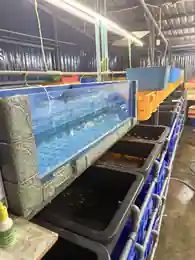
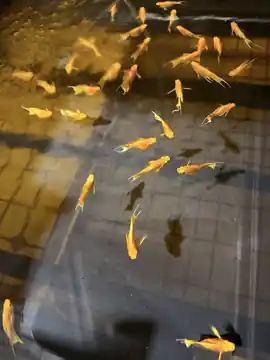
Inside the facility behind our guppy guides
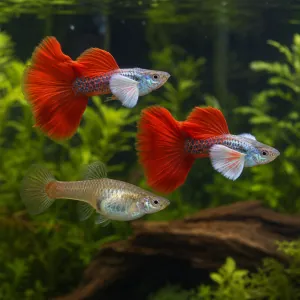
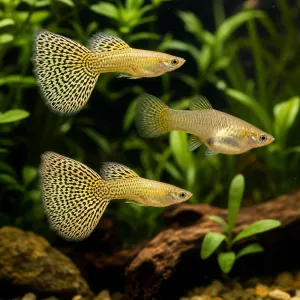
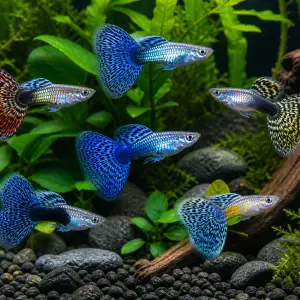
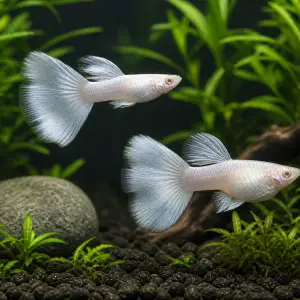
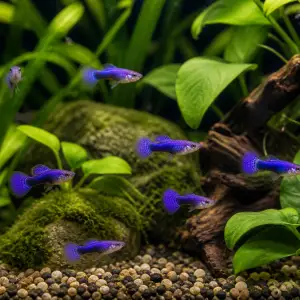
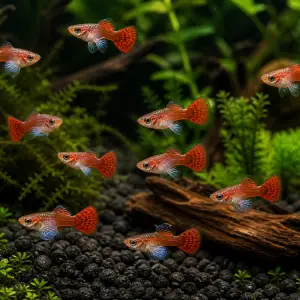
These photographs show real HiGuppy holding, breeding and observation work. They document our facility and fish stock; they are not presented as the exact individual fish or strain discussed on every page.