The HiGuppy Journal
Do Guppies Sleep? Normal Rest vs Warning Signs
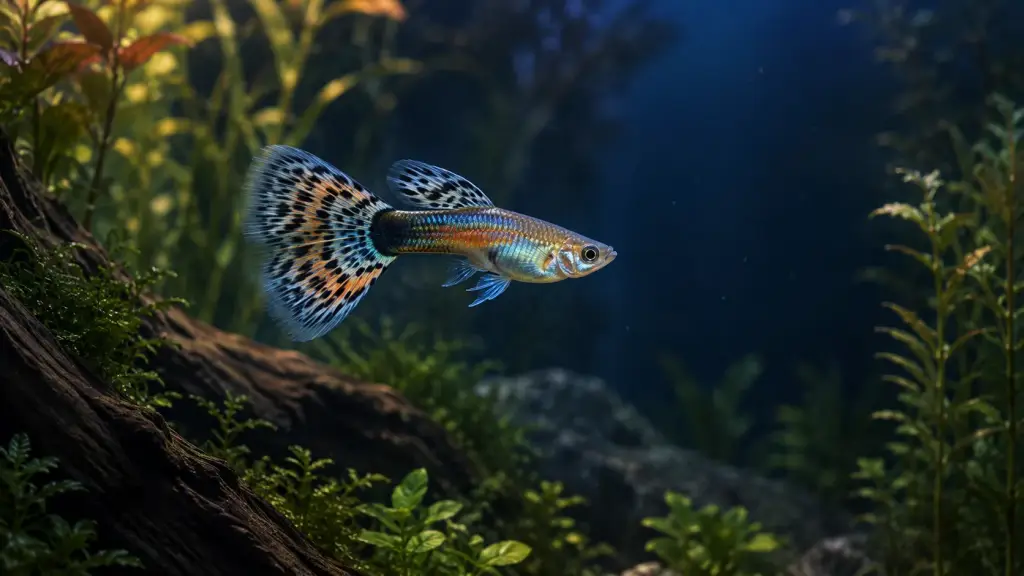
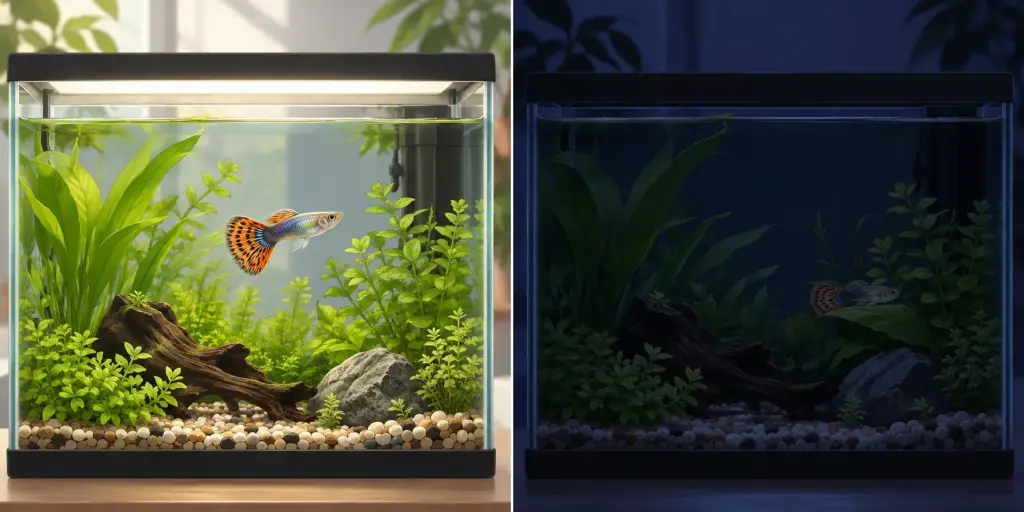
Do guppies sleep? Yes—guppies enter regular low-activity rest periods, usually during darkness, while keeping their eyes open because guppies do not have eyelids. A resting guppy may hover or shelter near plants and should return to normal swimming and feeding during the day. Persistent daytime lethargy, gasping, loss of balance, clamped fins or refusal to eat should not be dismissed as sleep.
What does guppy sleep look like?
Fish sleep is usually described behaviorally rather than by closed eyes or a bed-like posture. In diurnal fish studied in sleep research, rest is associated with periods of quiescence, reduced arousal and a light–dark rhythm. Guppies are also active during the day, so owners commonly notice a strong drop in movement once the aquarium is dark.
- Hovering almost motionless in one area
- Slow, minimal fin movement
- Resting near plant leaves, decor or a quiet corner
- Staying lower in the tank than during daytime activity
- Responding less strongly to movement outside the tank
- Returning to normal swimming after the lights come on
Individual guppies do not all choose the same resting spot. One fish may stay near the bottom, another may hover beside a plant, and another may remain in midwater where flow is gentle.
Is my guppy sleeping or dying? Rest vs warning signs
| More consistent with normal rest | More concerning |
|---|---|
| Reduced movement and responsiveness during the dark rest period | Severe lethargy continues during normal daytime activity |
| Fish remains upright and balanced | Rolling, sinking uncontrollably or floating abnormally |
| Normal activity returns the next day | Refuses food or isolates persistently |
| Breathing appears calm | Gasping, very rapid breathing or surface distress |
| Fins appear normally held | Clamped fins, visible lesions or major color loss |
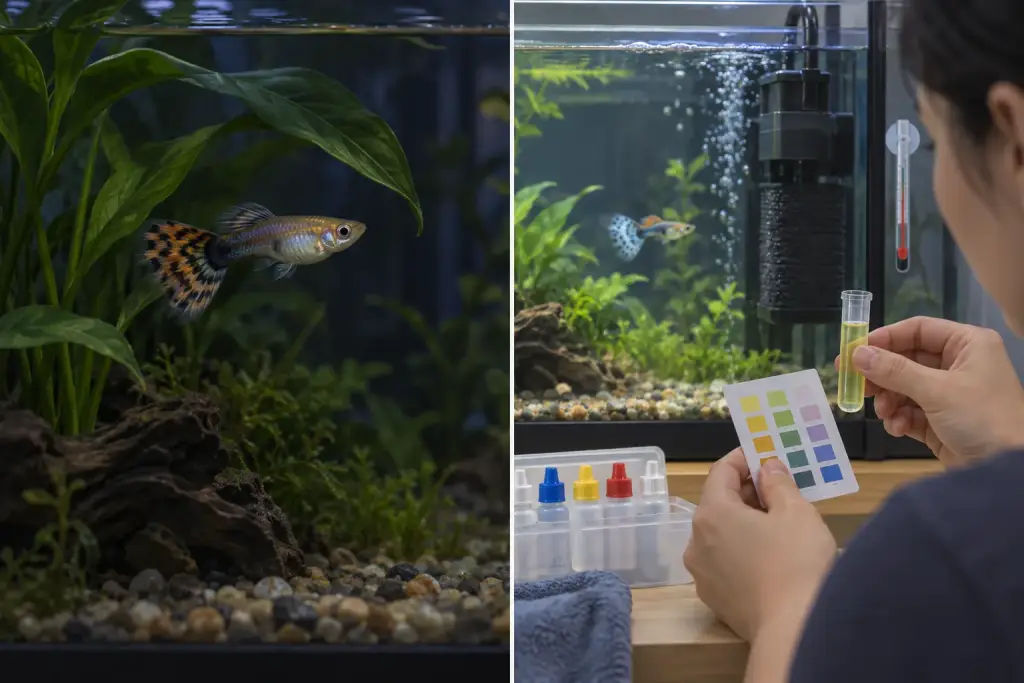
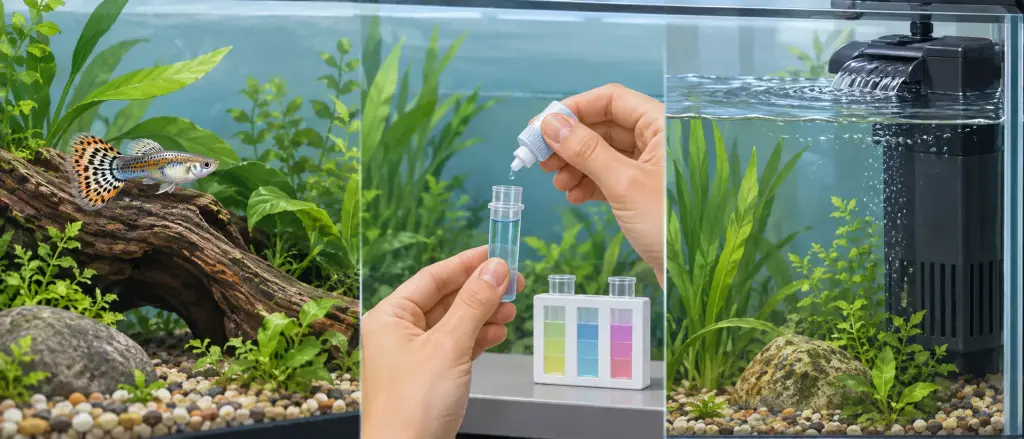
If a guppy is inactive during the day, do not assume it is catching up on sleep. Start with water quality, temperature, oxygenation, aggression and visible health signs. The Merck Veterinary Manual lists common signs of illness in fish, including lethargy, not eating, unusual breathing and abnormal swimming. Our guppy water parameters guide and temperature guide cover the environmental basics. For abnormal breathing, use the surface-gasping checklist; for ongoing decline or losses, start with what to check when guppies are dying. A single sign cannot tell you the cause.
Why darkness matters
A consistent light–dark cycle gives fish a cue for daily activity and rest. A 2024 study of guppies (Poecilia reticulata) found nocturnal restlessness in guppies infected with an ectoparasite. It examined activity rhythms rather than sleep physiology in home aquariums, so compare each fish with its usual routine. The RSPCA tropical-fish care guidance recommends at least eight hours of darkness each day; avoid leaving bright aquarium lighting on overnight.
For a practical schedule, see the separate guppy tank lighting schedule. That page covers timer use, planted tanks, algae and how to adjust light duration.
Do guppies sleep on the bottom?
They can. A guppy that is upright and quiet near the bottom after lights-out, then behaves normally during the day, may simply be resting. The time of day and the fish’s overall condition matter more than the location alone.
Bottom sitting becomes more concerning when it happens during normal daytime activity or comes with rapid breathing, appetite loss, balance problems, clamped fins, injury or unusual isolation. For a broader location-based differential, read why a guppy stays at the top or bottom.
Do guppies sleep near plants?
Yes, many guppies choose sheltered or lower-flow areas around plants and decor. Dense live plants can create visual cover and calmer resting zones, particularly in active community tanks. Plants should not be packed so tightly that fish have no open swimming room or that debris accumulates unseen.
If you want to add cover without making the tank difficult to maintain, compare options in our best live plants for guppies guide.
Do guppies lose color when sleeping?
Some fish can look less vivid under dark conditions or while resting, and aquarium lighting itself changes how color appears to the viewer. A small overnight difference is very different from persistent daytime paling.
If color loss continues when the fish is awake, consider stress, water quality, nutrition, social pressure and disease rather than blaming sleep. See why a guppy may be losing color.
Should you wake a resting guppy?
There is no reason to deliberately wake healthy fish at night for routine viewing or feeding. Keep feeding and maintenance within the normal daytime period when possible. Sudden bright light in a dark room can startle fish, so turning on room light first or allowing gradual ambient light before the aquarium light is a gentler routine.
Why a guppy may look “asleep” during the day
Daytime inactivity has a wider differential and deserves a quick check. Common possibilities include:
- Water-quality stress: test ammonia, nitrite and nitrate and review recent maintenance.
- Temperature problems: confirm the heater and thermometer agree with the expected range.
- Low oxygen or gill irritation: look for fast breathing or surface gasping.
- Bullying: watch whether another fish repeatedly chases or excludes it.
- Illness or injury: check fins, body shape, skin, appetite and feces.
- Recent shipping or transfer: newly arrived fish can remain subdued while adapting, but should still be monitored closely.
For persistent hiding, use the guppy hiding troubleshooting guide. If the fish is breathing hard at the surface, use the more urgent gasping-at-the-surface checklist.
A healthy night routine for guppies
- Use a consistent aquarium-light timer.
- Give the tank a substantial dark period every night.
- Provide open swimming space plus some sheltered, lower-flow areas.
- Keep water parameters and temperature stable.
- Feed during the active daytime period rather than late at night.
- Judge “sleep” by timing and recovery: a healthy fish should resume normal behavior after the rest period.
FAQ
Do guppies close their eyes when they sleep?
No. Guppies do not have eyelids, so their eyes remain open while they rest.
How many hours do guppies sleep?
There is no single reliable hour requirement that applies to every home guppy. Instead of trying to count exact sleep hours, provide a consistent dark period each night and watch for normal daytime activity.
Is it normal for a guppy to stay still at night?
Yes, if the fish remains balanced and returns to normal behavior after the lights come on. Stillness paired with gasping, loss of balance, clamped fins or daytime lethargy should be investigated.
Can guppies sleep with blue light on?
A short dim viewing period is different from keeping the tank illuminated all night. It is better to provide a genuine dark period rather than leaving a visibly bright blue light on continuously.
If you are preparing a tank before bringing home guppies, use our Complete Guppy Care Guide to review water, temperature and daily routines, then browse current live guppy listings when the aquarium is ready.
Bottom line: Guppies rest at night with reduced activity and responsiveness, even though their eyes stay open. Normal sleep should be tied to the dark period and followed by ordinary swimming, feeding and social behavior the next day.
Behind the care guides
Care begins with steady systems
Our guppy guides focus on practical routines: keep water stable, observe fish closely and allow for natural variation.
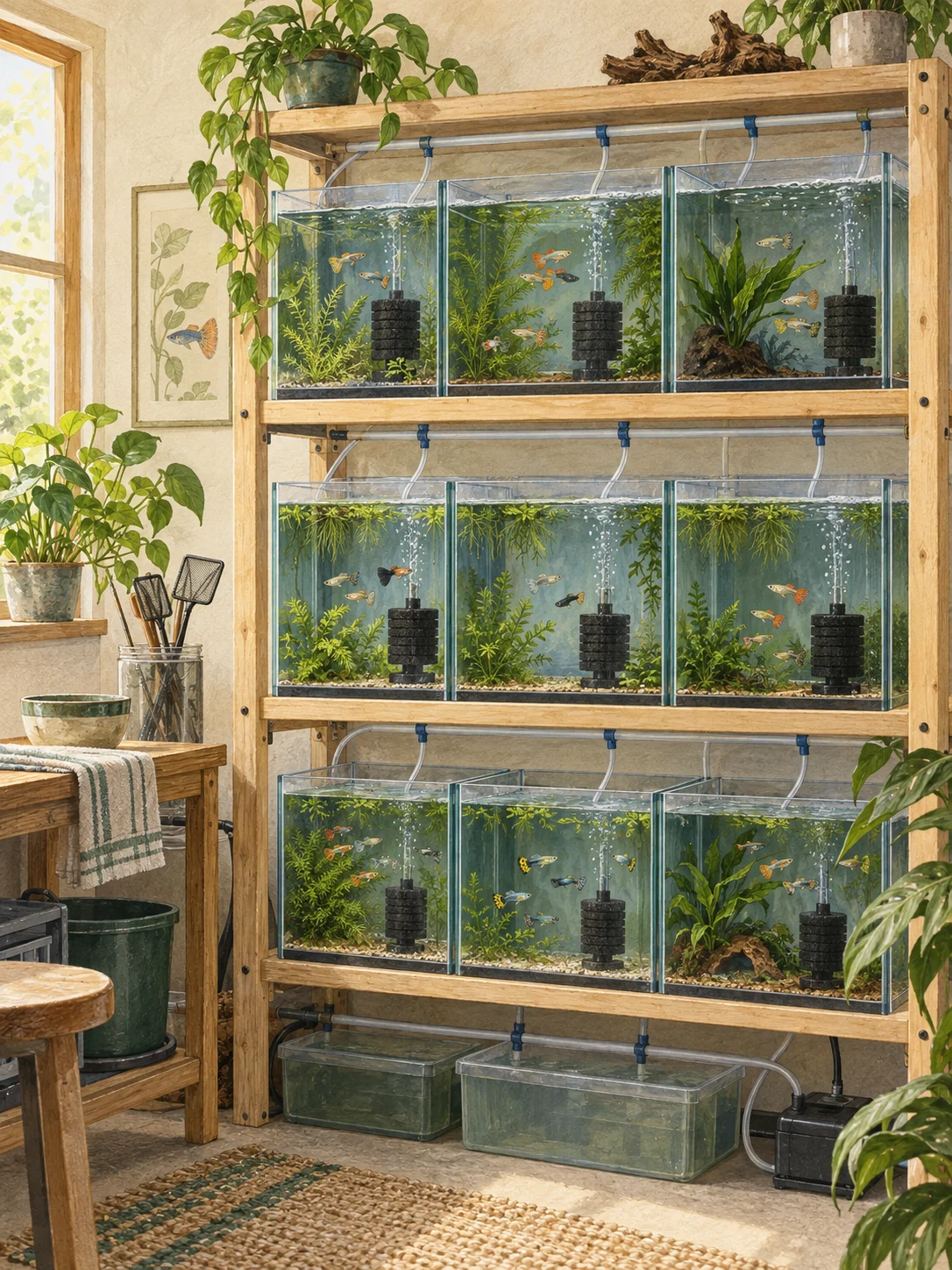
Care systems
Steady water, thoughtful care
Gentle filtration and regular observation support healthy aquarium routines.
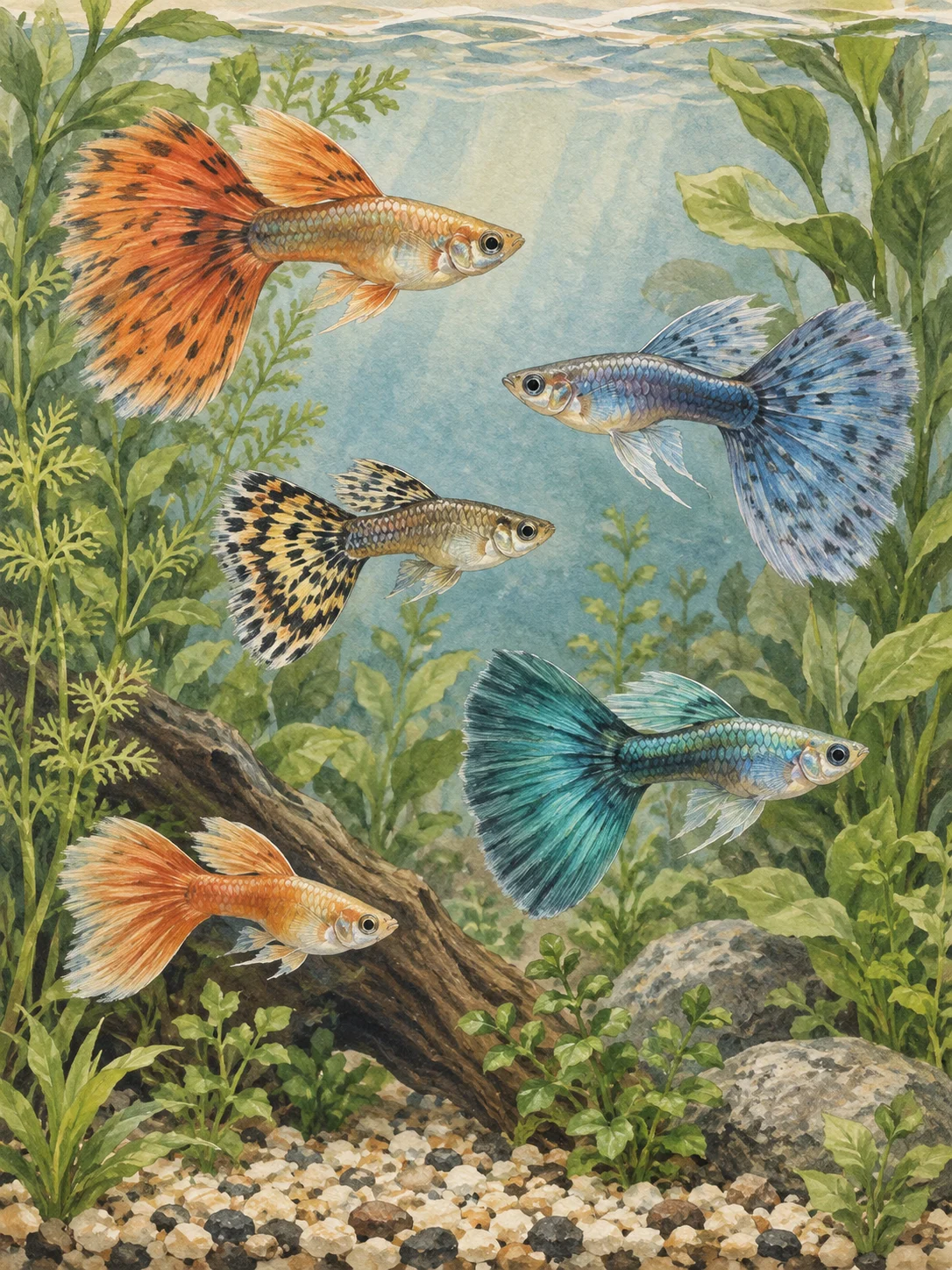
Natural variation
Every guppy is different
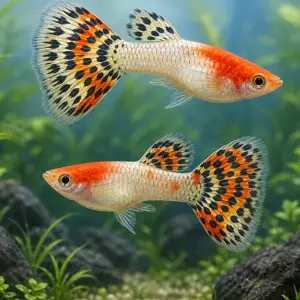
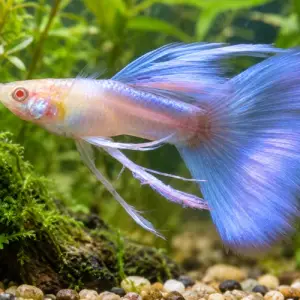
Color, size and fin shape vary with strain, age and each individual fish.
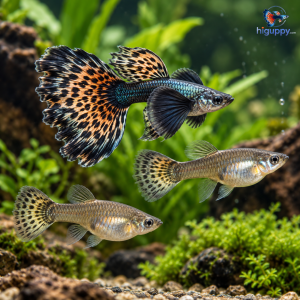
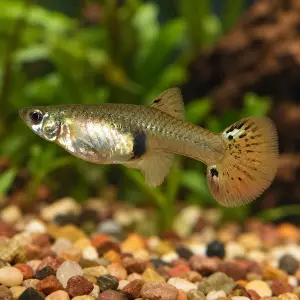
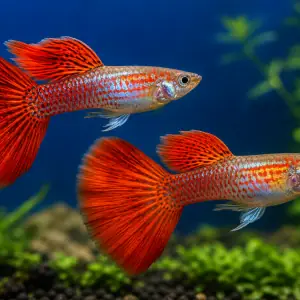
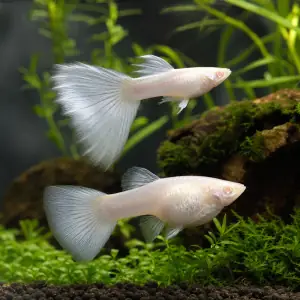
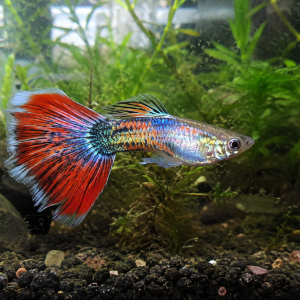
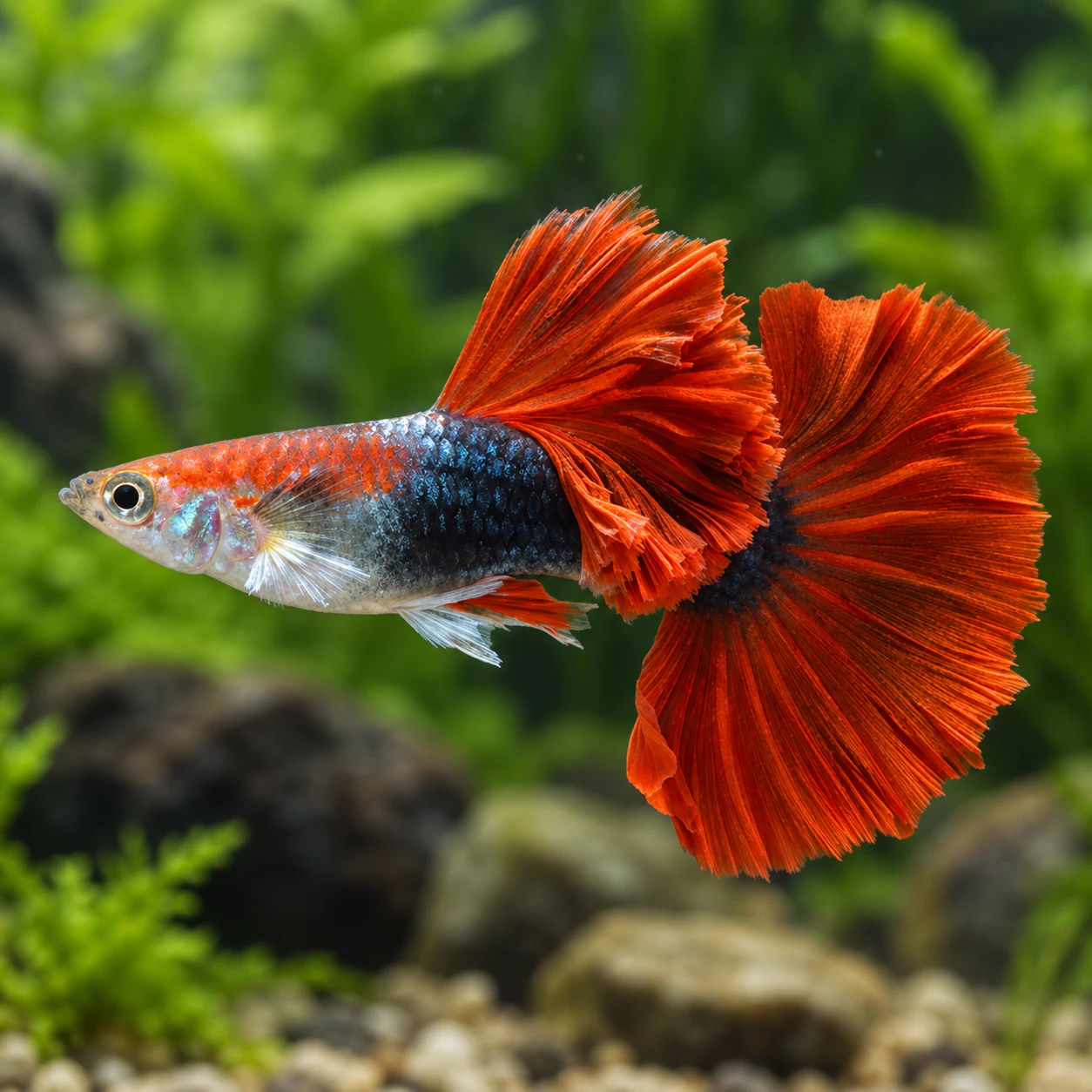
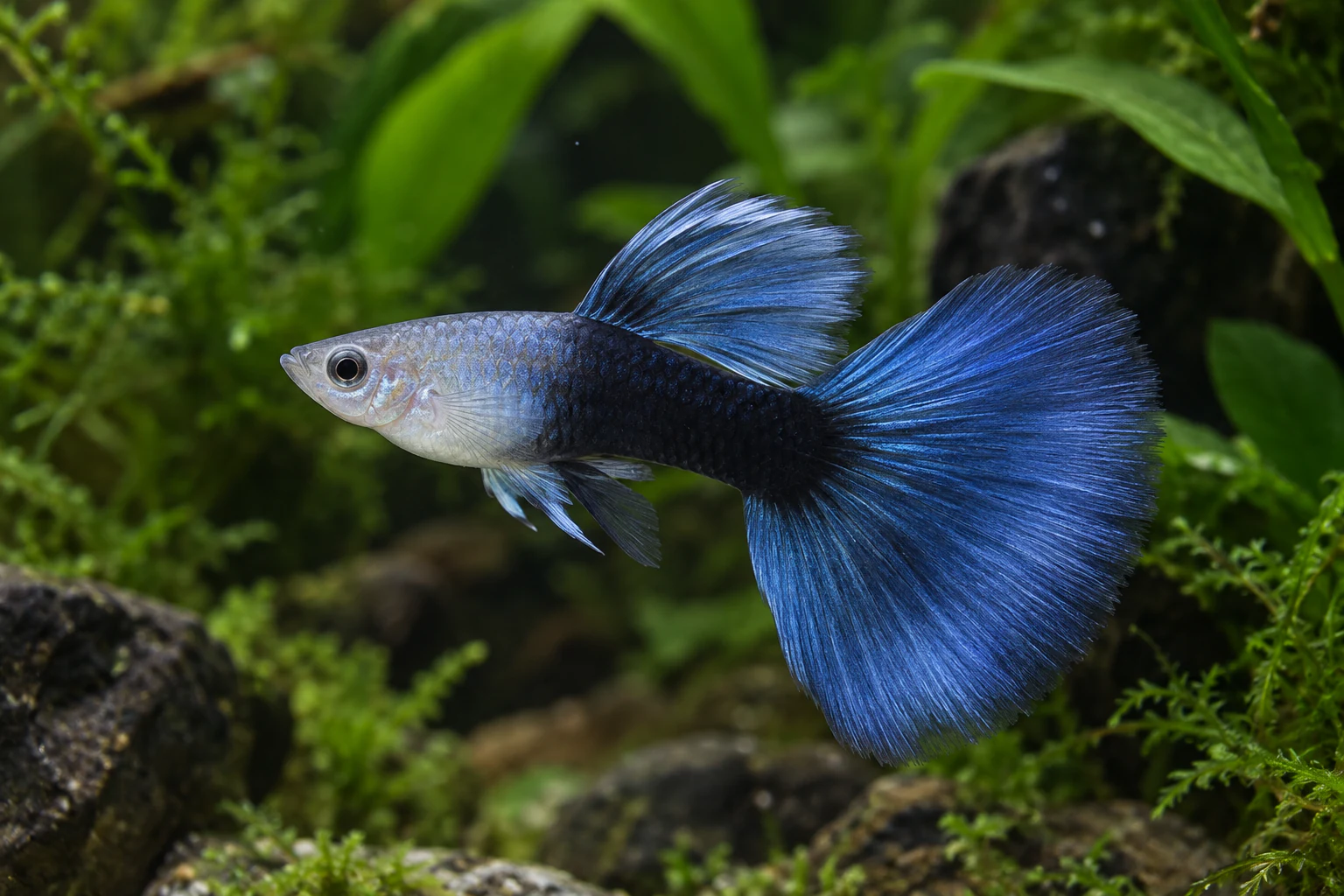
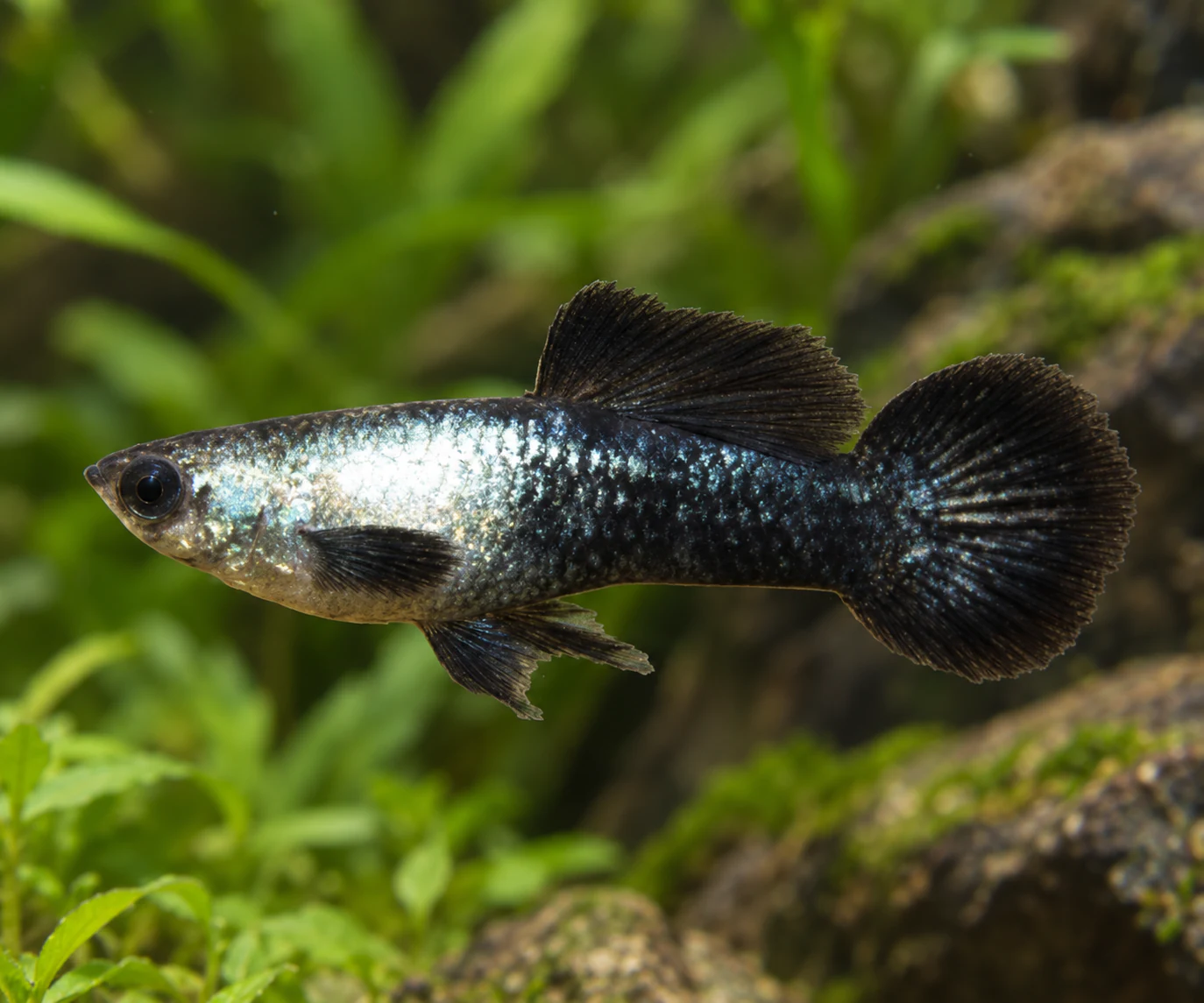
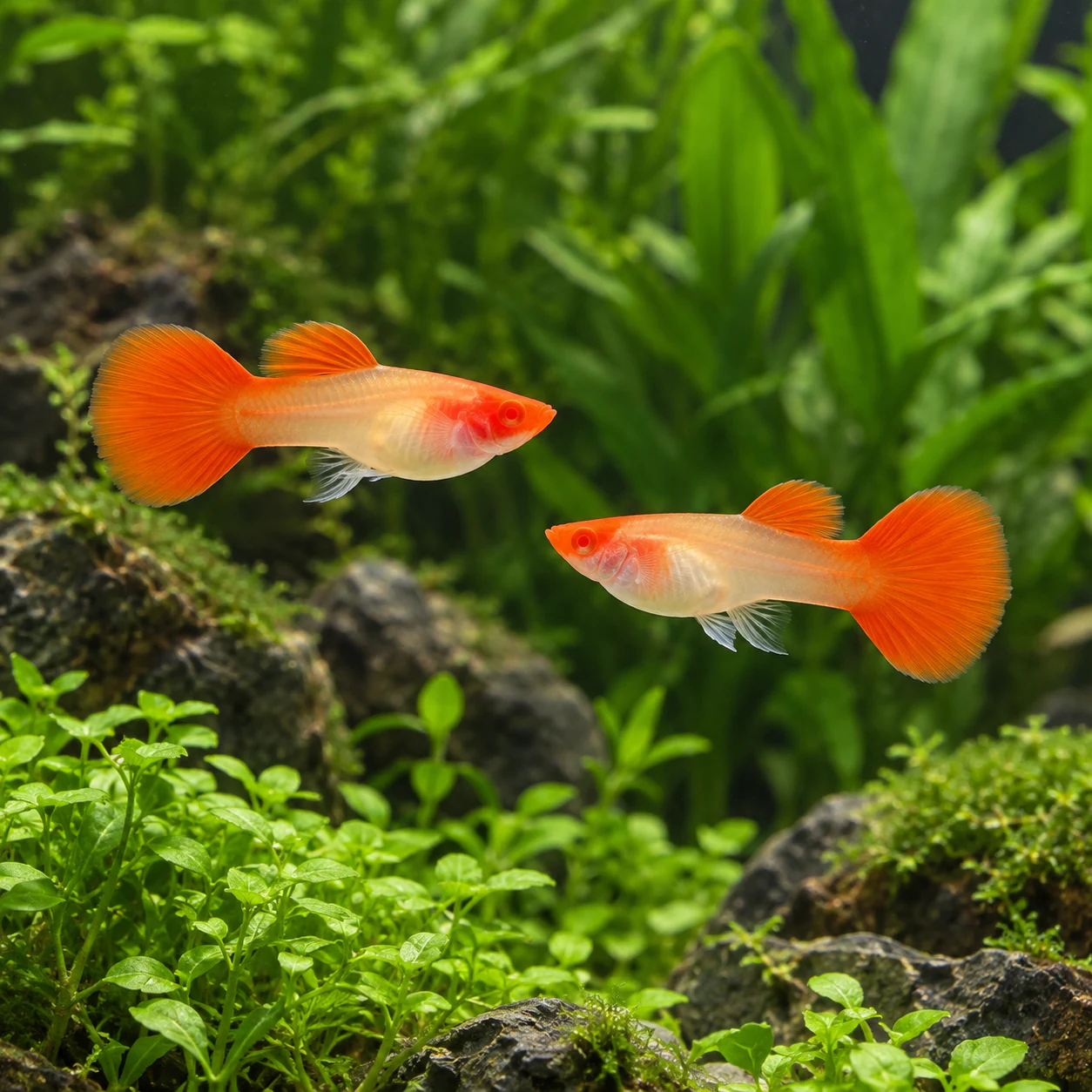
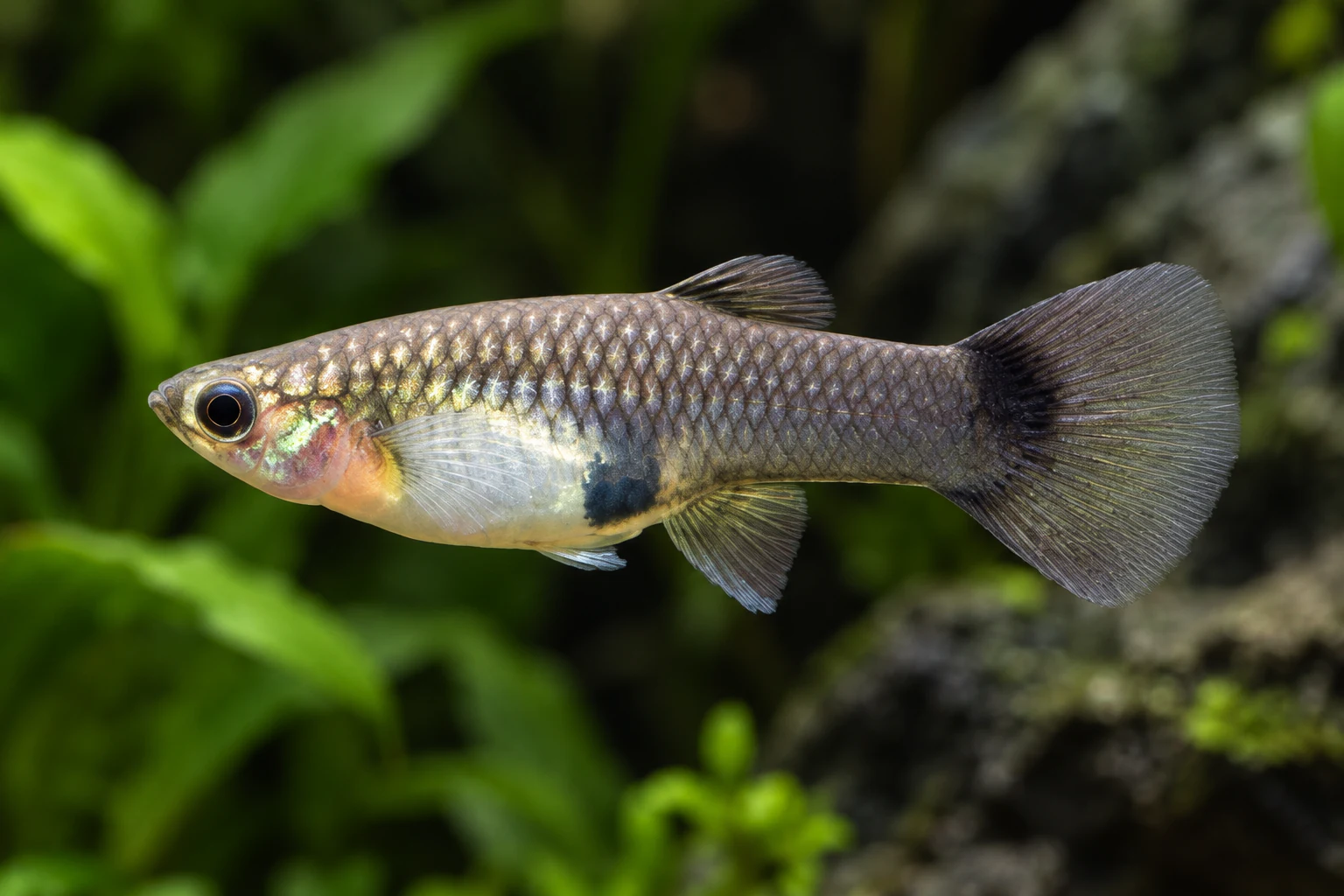
Editorial illustrations for context; they do not depict HiGuppy's exact facility or current fish stock.