Guppy Care Article
Why Is My Guppy Hiding? Causes, Stress Checks & What to Do
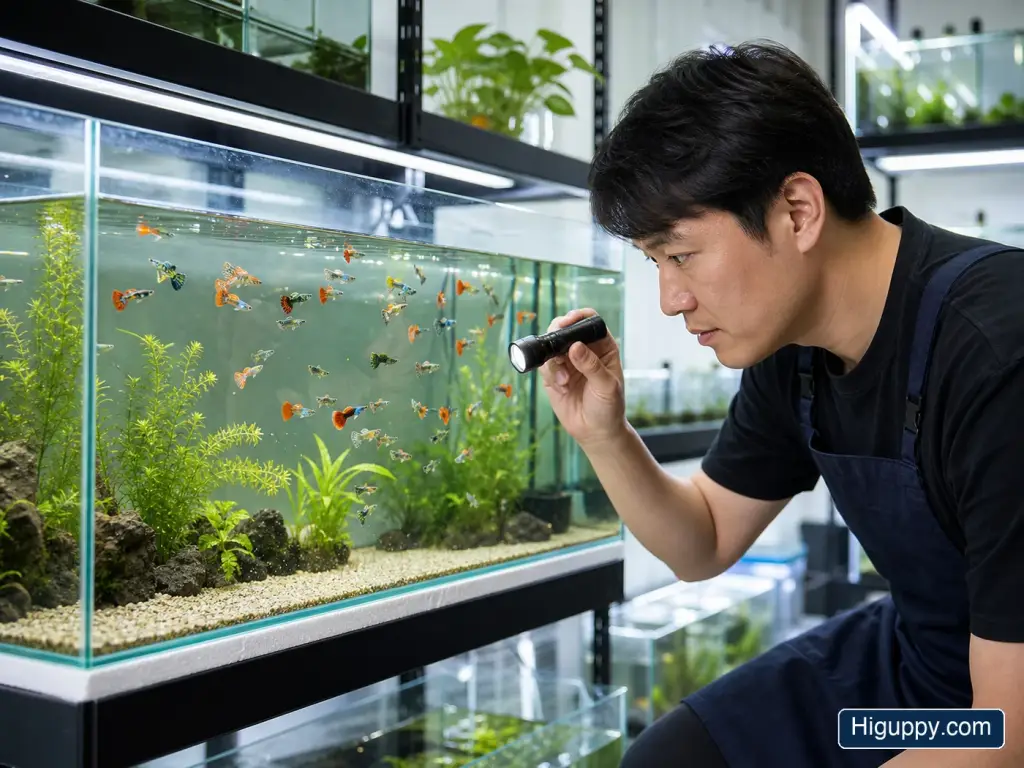
Guppies are usually active, visible fish, so a guppy that suddenly spends most of the day behind plants, under decor, near a filter, or away from the group deserves a closer look. Hiding is not a diagnosis by itself: it can be a short-lived response to a new environment, or an early sign of bullying, water-quality stress, respiratory trouble, pregnancy, injury, or illness.
The safest approach is to check the environment first, then compare the hiding fish with its normal behavior and look for additional symptoms before considering treatment.
Quick answer: why is my guppy hiding?
A guppy may hide because it was recently shipped or moved, is being chased, needs more cover, is reacting to unstable water or temperature, is breathing poorly, is close to giving birth, or is becoming ill. If the behavior started suddenly, first test the water, confirm temperature and aeration, and watch for chasing, clamped fins, rapid breathing, loss of appetite, spots, swelling, or abnormal swimming.
What to check first when a guppy starts hiding
- Check breathing and water quality. Test ammonia and nitrite, review temperature, and confirm the filter and surface movement are working.
- Watch the tank from a distance. Persistent chasing or fin nipping may stop when a person approaches, so observe quietly for several minutes.
- Think about recent changes. Shipping, a water change, a filter cleaning, new tank mates, rearranged decor, or a sudden lighting change can all alter behavior.
- Look for companion symptoms. Hiding plus gasping, clamped fins, appetite loss, swelling, weight loss, white spots, lesions, or loss of balance is more concerning than hiding alone.
- Compare day and night behavior. Resting in cover after lights-out can be normal; remaining withdrawn throughout the daytime is more useful as a warning sign.
1. New-arrival and acclimation stress
A newly delivered or newly transferred guppy may seek cover while it adjusts to different water chemistry, lighting, flow, tank mates, and visual surroundings. Short-term hiding is less concerning when the fish breathes normally, holds its fins open, begins eating, and becomes more active as it settles.
Keep the environment calm, avoid repeatedly netting or chasing the fish, and follow the seller-specific arrival instructions. HiGuppy’s Guppy Acclimation Guide explains the arrival process, while the Complete Guppy Care Guide covers the broader setup and maintenance basics.
2. Bullying, chasing, or social pressure
A fish that is repeatedly chased may retreat behind plants, equipment, or decor because those areas provide a break from harassment. Male competition, persistent male attention toward females, fin-nipping tank mates, crowding, and too little visual cover can all contribute.
Look for one fish being singled out, damaged fins, missed feeding opportunities, or a pattern where the guppy leaves cover only when the aggressor moves away. See Guppy Bullying Signs for a focused aggression checklist.
3. Ammonia, nitrite, temperature, or oxygen problems
Environmental problems can change behavior before obvious external disease signs appear. A guppy may become withdrawn when ammonia or nitrite is present, temperature changes quickly, oxygen is inadequate, or tap water was not properly conditioned. Overfeeding, a recently disrupted biofilter, or a heavily stocked tank can make these problems more likely.
Do not assume hiding is simply a personality change when several fish become quiet at once. Start with the Guppy Water Parameters Guide. If ammonia is detected or fish show respiratory distress, also review Ammonia Poisoning in Guppies and Guppy Gasping at the Surface.
4. The tank may feel too exposed
A bright, bare aquarium gives a nervous or newly introduced fish few places to retreat. Plants and other safe visual barriers can reduce line-of-sight pressure without removing open swimming space. Floating cover can be especially useful in tanks where fish seem startled by overhead activity or intense lighting.
For plant choices that provide cover without turning the aquarium into a dense maze, see Best Live Plants for Guppies.
5. Pregnancy and pre-birth behavior
A pregnant female may spend more time in quieter areas, especially as her abdomen becomes larger and she seeks relief from persistent male attention. Hiding alone does not prove that birth is imminent. Use body shape, gravid changes, appetite, and the overall pregnancy timeline together rather than relying on one behavior.
The Guppy Pregnancy Stages and Gestation Guide explains the broader pattern.
6. Illness, injury, or reduced condition
Hiding becomes more concerning when it appears together with other changes. Check whether the guppy is eating, maintaining weight, breathing normally, swimming level, and holding its fins open. Examine the body for spots, ulcers, fuzzy areas, torn fins, swelling, a pinched abdomen, or unusual feces.
A symptom-first approach is safer than treating a hiding fish with a broad medication. Useful next checks include Why Is My Guppy Not Eating?, Guppy Clamped Fins, and the Guppy Diseases Guide.
Normal hiding vs a warning sign
| More likely temporary/normal | More concerning |
|---|---|
| Recently added fish | Sudden hiding in an established fish |
| Still eating normally | Refusing food |
| Normal breathing and open fins | Rapid breathing, gasping, or clamped fins |
| Comes out when the room is quiet | Stays withdrawn all day |
| No visible injury | Fin damage, lesions, swelling, or weight loss |
| Only one shy fish after a move | Several fish hiding at the same time |
What not to do
- Do not repeatedly chase the fish with a net just to inspect it.
- Do not add medication solely because a fish is hiding.
- Do not make several large environmental changes at once unless there is an urgent water-quality problem.
- Do not ignore a filter failure, detectable ammonia/nitrite, or respiratory distress while focusing only on behavior.
FAQ
Is it normal for new guppies to hide?
Yes. Some newly moved guppies use cover while they adjust. Normal breathing, gradually improving activity, and a return of appetite are reassuring signs. Persistent hiding or additional symptoms deserve further checks.
Why is only one guppy hiding?
One fish may be shy, newly introduced, pregnant, bullied, injured, or becoming ill. Watch its feeding access, breathing, fins, body condition, and interactions with tank mates.
Why are all my guppies hiding?
When several fish change behavior together, investigate shared environmental causes first: ammonia or nitrite, temperature, oxygenation, untreated water, filter problems, or a recent major change.
Should I medicate a guppy that hides?
Not based on hiding alone. Check water, temperature, breathing, social pressure, appetite, and visible symptoms first so any treatment addresses a plausible cause.
If your tank is stable and you are preparing for new fish, browse available guppies only after the aquarium is fully ready for arrival.
Real HiGuppy photographs
Inside the facility behind our guppy guides
These photographs show real HiGuppy holding, breeding and observation work. They document our facility and fish stock; they are not presented as the exact individual fish or strain discussed on every page.