Guppy Care Article
Red Gills on Guppies: Causes, Warning Signs & What to Check First
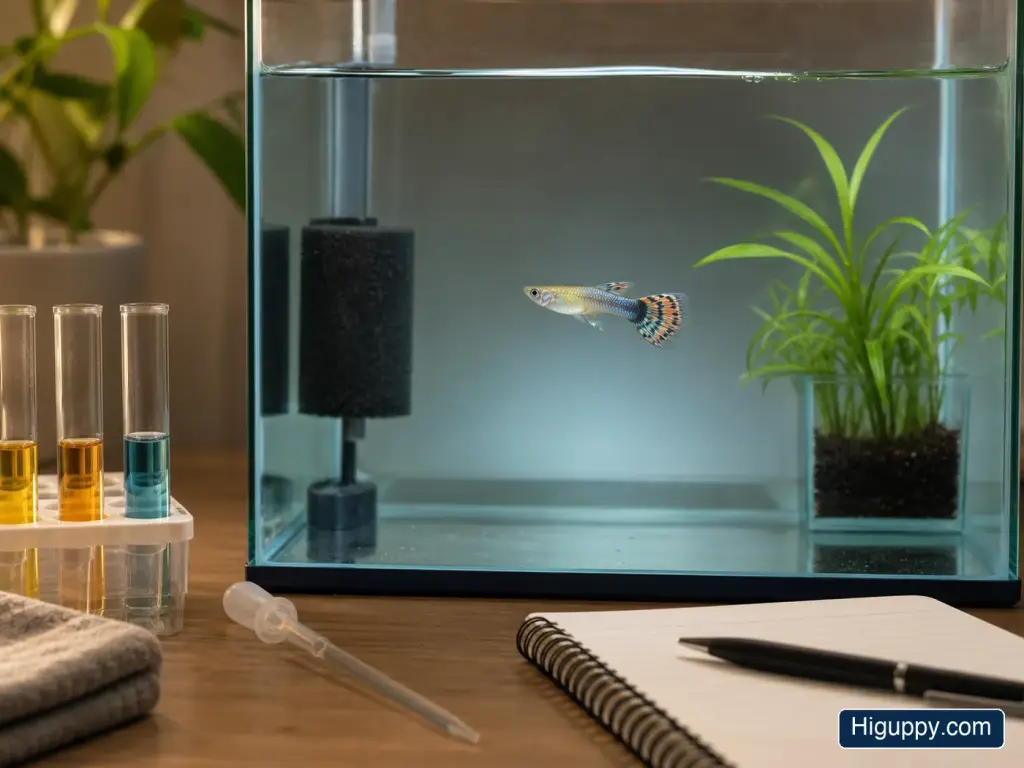
Red-looking gills on a guppy can mean irritation or respiratory stress, but the color alone does not identify the cause. Gill tissue is naturally well supplied with blood, so some pink or red coloration may be visible—especially in pale or translucent fish. What matters most is whether the appearance is new, unusually intense, one-sided, swollen, accompanied by fast breathing, or seen together with other changes in behavior.
Because gills are directly exposed to the aquarium water, the first priority is to rule out environmental problems before assuming infection or parasites.
Quick answer
If a guppy’s gills suddenly look red or irritated, test ammonia and nitrite, confirm the water was conditioned, check temperature and aeration, and watch the fish’s breathing. Ammonia, nitrite, chlorine/chloramine exposure, low oxygen, heat, physical irritation, parasites, and some gill diseases can all produce overlapping signs. Treat the cause, not the color alone.
Red gills: normal color or a warning sign?
| More likely normal variation | More concerning |
|---|---|
| Color has always looked similar | Gill color changed suddenly |
| Normal breathing rate | Rapid breathing, flared covers, or surface gasping |
| Fish is active and eating | Lethargy, hiding, or appetite loss |
| No swelling or excess mucus | Swollen gills, excess mucus, or rubbing/flashing |
| Only visible because the fish is pale/translucent | Several fish develop red/irritated gills together |
1. Ammonia or nitrite exposure
Ammonia is one of the most important possibilities to rule out quickly. Fish continuously produce ammonia, and a mature biological filter normally converts it through the nitrogen cycle. When the biofilter is immature, overloaded, disrupted, or affected by a sudden increase in waste, ammonia can accumulate and damage gill tissue. Nitrite is also harmful and should be checked at the same time.
Veterinary aquarium guidance notes that unionized ammonia can cause histologic gill damage and that overfeeding or biological-filter failure are common causes of elevated ammonia. If your test shows ammonia or nitrite, focus on water-quality correction rather than adding a random medication. See Ammonia Poisoning in Guppies and the Guppy Water Parameters Guide.
2. Chlorine, chloramine, or other chemical irritation
Tap water that has not been treated appropriately can irritate delicate gill tissue. Problems can also appear after a water change if conditioner was forgotten, the dose was incorrect, or the source water differs from the aquarium more than expected. If symptoms began immediately after adding water, review exactly what was changed.
Use a conditioner that matches your local water treatment and follow the product directions. Avoid stacking multiple chemicals while trying to guess the cause.
3. Low oxygen, heat, or inadequate surface movement
Warm water holds less dissolved oxygen, and oxygen demand can rise in crowded or heavily fed aquariums. A fish with irritated gills may also struggle more than healthy tank mates. Check whether the filter is moving the surface, whether an air-driven sponge filter or air stone is functioning, and whether temperature has climbed unexpectedly.
If fish are breathing hard or gathering at the surface, use the urgent checklist in Why Is My Guppy Gasping at the Surface? and review Do Guppies Need an Air Pump?.
4. Gill parasites or infectious disease
Parasites and infectious gill conditions can also cause irritation, mucus production, rapid breathing, flashing, reduced appetite, or abnormal gill movement. These signs overlap heavily with water-quality problems, so appearance alone cannot confirm a diagnosis.
Gill flukes are one example. They are more plausible when respiratory signs persist despite verified water quality and are accompanied by flashing, excess mucus, or uneven gill movement. Read Guppy Gill Flukes for the parasite-specific differential. For the broader symptom map, use the Guppy Diseases Guide.
5. Physical injury or localized irritation
If only one side looks abnormal, inspect the fish for trauma, rough decor, netting injury, or a localized lesion. Persistent one-sided swelling, a gill cover held open, or tissue that looks damaged is different from a tank-wide water-quality event and may justify isolation for closer observation.
What to do first
- Observe breathing before disturbing the fish. Note rapid gill movement, surface piping, one-sided movement, flashing, or lethargy.
- Test ammonia and nitrite. Do not rely on clear-looking water as proof that it is safe.
- Check temperature and oxygenation. Confirm the heater, filter, and surface movement are functioning normally.
- Review the last 24–48 hours. Water changes, heavy feeding, filter cleaning, medication, new fish, or equipment failures may explain the timing.
- Correct verified environmental problems. Use conditioned, temperature-appropriate water and maintain biofiltration.
- Escalate only when the pattern supports it. Persistent respiratory distress, multiple sick fish, lesions, severe swelling, or mortality warrants more specific diagnosis rather than blind treatment.
How red gills differ from other guppy symptoms
- Red gills + ammonia detected: prioritize water-quality correction and biofilter review.
- Red gills + surface gasping in several fish: investigate oxygen, ammonia/nitrite, temperature, and chemical exposure urgently.
- Red gills + flashing/excess mucus with stable water: parasites or other gill irritation move higher on the list.
- Red gills + hiding or appetite loss: treat these as additional evidence of stress, not as separate diagnoses.
- Red gills visible only in a pale fish that behaves normally: compare with older photos or tank mates before assuming disease.
Prevention
- Keep the aquarium fully cycled and avoid sudden increases in stocking.
- Feed measured portions and remove obvious excess food.
- Do not replace all filter media at once or rinse biological media in untreated tap water.
- Use water conditioner consistently for new tap water.
- Keep temperature stable and maintain adequate surface movement.
- Quarantine new arrivals to reduce the chance of introducing parasites or infection.
FAQ
Are red gills on a guppy always caused by ammonia?
No. Ammonia is important to rule out, but nitrite, chlorine/chloramine irritation, low oxygen, heat, parasites, infection, and normal visible gill coloration can look similar.
Can overfeeding cause red gills?
Indirectly, yes. Excess food increases organic waste and can contribute to ammonia problems if the biofilter cannot keep up. The correct response is to test the water rather than assume overfeeding is the only cause.
Should I medicate immediately?
Not from red coloration alone. Verify water quality and oxygenation first, then use the full symptom pattern to decide whether a parasite or infectious disease is plausible.
Good gill health starts with stable water, mature filtration, and careful observation. The Complete Guppy Care Guide brings those basics together.
Real HiGuppy photographs
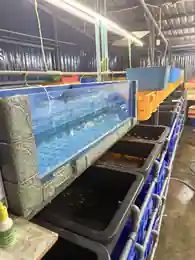
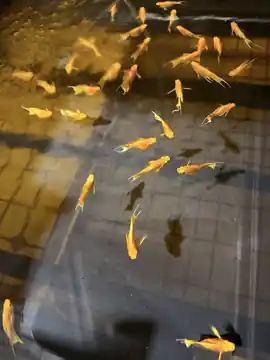
Inside the facility behind our guppy guides
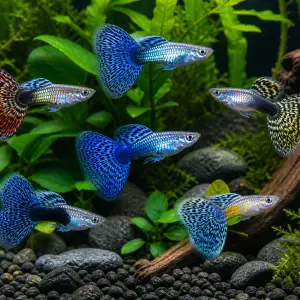
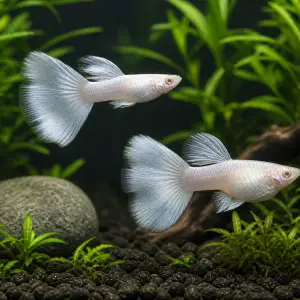
These photographs show real HiGuppy holding, breeding and observation work. They document our facility and fish stock; they are not presented as the exact individual fish or strain discussed on every page.