Guppy Care Article
Cloudy Guppy Tank Water: Causes, What It Means & Safe Fixes
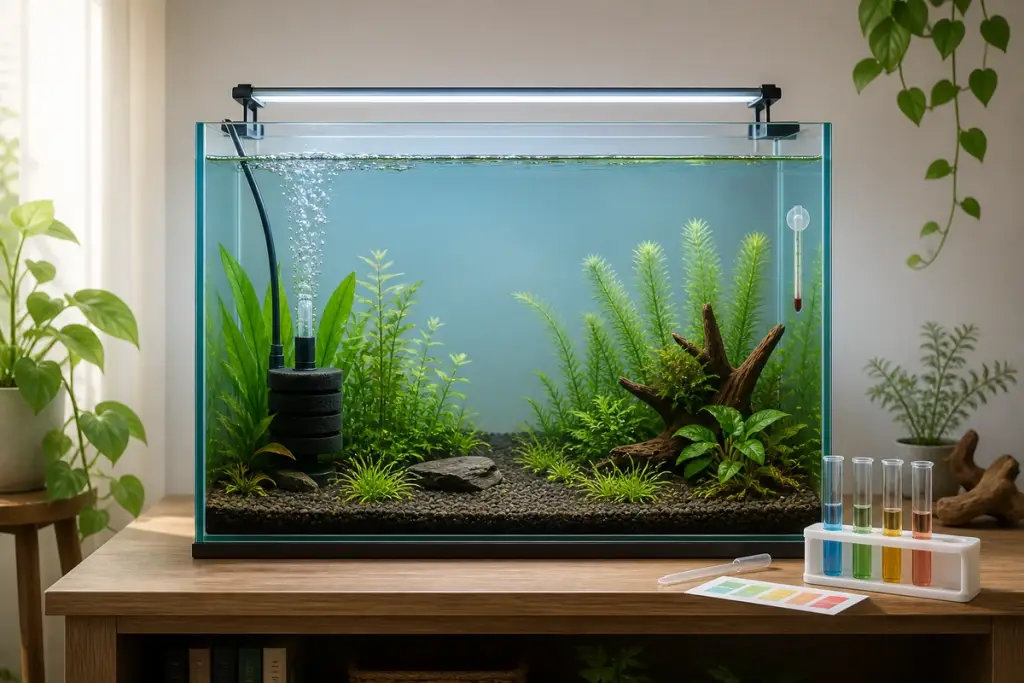
Cloudy guppy tank water is common, but “cloudy” is only a symptom. A new-tank bacterial bloom, suspended debris, excess food and waste, algae, or an unstable filter can all make water look hazy. The safest fix is to identify the pattern, test the water, and correct the cause instead of adding random clarifiers or deep-cleaning the whole aquarium.
This guide gives you a simple troubleshooting order that protects both your guppies and the biological filter.
Quick answer: why is my guppy tank cloudy?
Start by checking ammonia, nitrite, nitrate, temperature, and filter operation. Milky white or gray water in a new aquarium often points to a bacterial bloom or suspended debris; green water usually suggests free-floating algae; yellow-brown water may come from tannins or dissolved organics. Color is only a clue, so use water tests and recent tank history to decide what to do next.
First: check whether the fish are in danger
Cloudiness itself is not always an emergency. The urgent issue is whether the same event that caused the cloudiness also caused unsafe water quality. Test the aquarium before assuming the tank only has a cosmetic problem.
- Ammonia or nitrite detected: treat this as a water-quality problem, reduce feeding, use properly conditioned replacement water as needed, and protect the biological filter.
- Guppies gasping, clamping fins, hiding, or acting weak: check oxygen, temperature, ammonia/nitrite, and filter function immediately.
- Fish acting normal and tests are stable: the tank may simply have a temporary bloom or suspended particles that can be corrected gradually.
Use the Guppy Water Parameters Guide if you are unsure what to test. If ammonia is present, follow the more specific Ammonia Poisoning in Guppies checklist rather than treating the water only for appearance.
What the color of cloudy water can suggest
| Appearance | Common possibilities | Best first check |
|---|---|---|
| Milky white or gray haze | Bacterial bloom, fine substrate dust, excess organic waste | Tank age, ammonia/nitrite, recent cleaning or substrate disturbance |
| Green water | Free-floating algae encouraged by strong/long lighting and nutrients | Lighting schedule, direct sun, feeding, nitrate trend |
| Yellow or tea-brown tint | Tannins from wood/leaves or dissolved organics | Recent decor additions, maintenance history, odor and water tests |
| Cloudiness after cleaning | Disturbed debris, substrate dust, filter media disruption | What was cleaned or replaced and whether filter flow changed |
Do not diagnose from color alone. Two tanks can look similar while having very different water chemistry.
1. New-tank bacterial bloom
A new aquarium can turn milky while microbial populations are changing. The visible haze may clear on its own, but a young tank can also have unstable ammonia or nitrite. That is why “wait and see” is only appropriate when testing confirms the fish are safe.
If the aquarium is still being established, use the Guppy Tank Cycling Checklist. Avoid adding more fish simply because the water becomes visually clear; clear water does not prove that the nitrogen cycle is ready.
2. Overfeeding and excess organic waste
Food that is not eaten, fish waste, and decaying plant material can increase the organic load and make the tank look hazy. Guppies are enthusiastic feeders, so begging behavior is not a reliable signal that they need more food.
- Reduce portions if food is reaching the bottom uneaten.
- Remove obvious leftovers and decaying material.
- Check whether waste is collecting in low-flow areas.
- Resume a measured feeding routine rather than compensating with a large fast-and-feast cycle.
See Overfeeding Guppies for the feeding-and-water-quality connection.
3. Filter problems or disrupted biofiltration
A filter that has stopped, clogged severely, lost mature media, or was cleaned too aggressively can contribute to unstable water quality. Mechanical filtration helps capture suspended particles, while biological media provides surfaces for microbes involved in processing nitrogen waste.
- Confirm the filter is running and water is moving normally.
- Check for a blocked intake or severely reduced flow.
- Do not replace all established media at once without a specific reason.
- When cleaning reusable media, avoid unnecessary exposure to untreated chlorinated tap water.
If you are choosing filtration, compare options in Best Filter for Guppies and Do Guppies Need a Filter?.
4. Substrate dust and disturbed debris
New sand or gravel can release fine particles, especially if it was not rinsed adequately before use. Established tanks can also cloud after aggressive gravel vacuuming, moving decor, uprooting plants, or stirring accumulated detritus.
Give the filter time to capture fine particles and remove visible debris without repeatedly tearing the tank apart. If you are redesigning the bottom of the aquarium, compare substrate options for guppy tanks.
5. Green water and excess light
Green water is usually associated with suspended algae rather than a bacterial bloom. Long photoperiods, direct sunlight, and excess nutrients can all favor algae. Shorten excessive lighting, avoid direct sun where practical, control feeding, and correct nutrient problems rather than repeatedly blacking out the tank without understanding the cause.
For a stable day/night routine, use the Guppy Tank Lighting Schedule.
Safe cloudy-water troubleshooting checklist
- Observe the guppies before touching the tank: breathing, swimming, appetite, fins, and hiding behavior.
- Test ammonia and nitrite first; check nitrate, temperature, and other routine parameters next.
- Confirm the filter and aeration are operating normally.
- Review what changed in the last 24–72 hours: new tank, new fish, overfeeding, filter cleaning, substrate work, medication, or decor changes.
- Remove obvious uneaten food and decaying debris.
- Make a properly conditioned partial water change when water tests or waste load justify it.
- Avoid replacing all filter media or deep-cleaning every surface at once.
- Do not add more guppies until the water is stable.
For an ongoing routine, follow the Guppy Tank Maintenance Schedule and Guppy Water Change Schedule.
What not to do
- Do not chase perfect clarity with random chemicals. Clear-looking water can still contain ammonia or nitrite.
- Do not sterilize the filter and substrate together. Over-cleaning can remove useful biological activity and destabilize the tank.
- Do not keep feeding normally if food is accumulating. Fix the waste source first.
- Do not add fish to “test” whether the tank is ready. Use water tests and a completed cycling process.
When cloudy water is a warning sign
Act quickly when cloudiness appears together with rapid breathing, surface gasping, red or irritated gills, clamped fins, severe lethargy, or multiple fish suddenly behaving abnormally. Those combinations suggest that the problem may be affecting water quality or oxygen rather than being purely cosmetic.
Use Guppy Gasping at the Surface or Guppy Clamped Fins if those symptoms are present.
FAQ
Is cloudy water dangerous for guppies?
Not automatically. A harmless-looking haze and a toxic ammonia spike can look similar from across the room. Test the water and watch the fish before deciding how serious it is.
Will cloudy aquarium water clear by itself?
Some new-tank blooms and fine suspended particles may clear as the system stabilizes and the filter catches debris. Cloudiness caused by overfeeding, unstable filtration, or algae usually improves only after the underlying cause is corrected.
Should I do a water change when the tank is cloudy?
Do a properly conditioned partial water change when tests show unsafe water quality or when excess waste needs removal. Avoid making repeated large changes solely to make the water look clear if parameters are already stable.
Can I add new guppies while the water is cloudy?
Wait until you understand the cause and confirm stable water quality. A new arrival already faces transport and acclimation stress, so adding fish to an unstable aquarium increases avoidable risk.
If you are preparing for new fish, complete the pre-purchase guppy tank checklist before browsing the HiGuppy Shop.
Real HiGuppy photographs
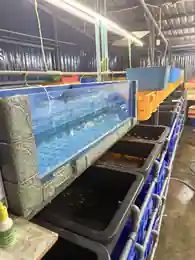
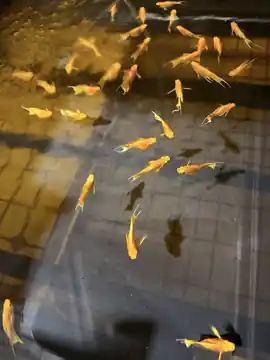
Inside the facility behind our guppy guides
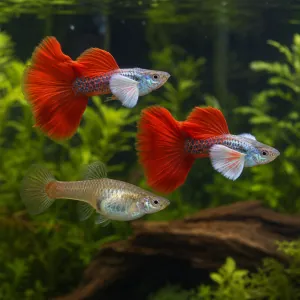
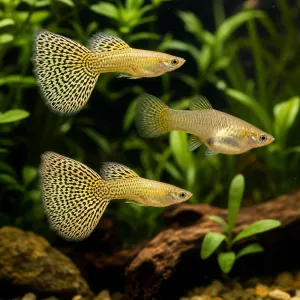
These photographs show real HiGuppy holding, breeding and observation work. They document our facility and fish stock; they are not presented as the exact individual fish or strain discussed on every page.