Guppy Care Article
Guppy Tank Cycling Checklist Before Adding Fish
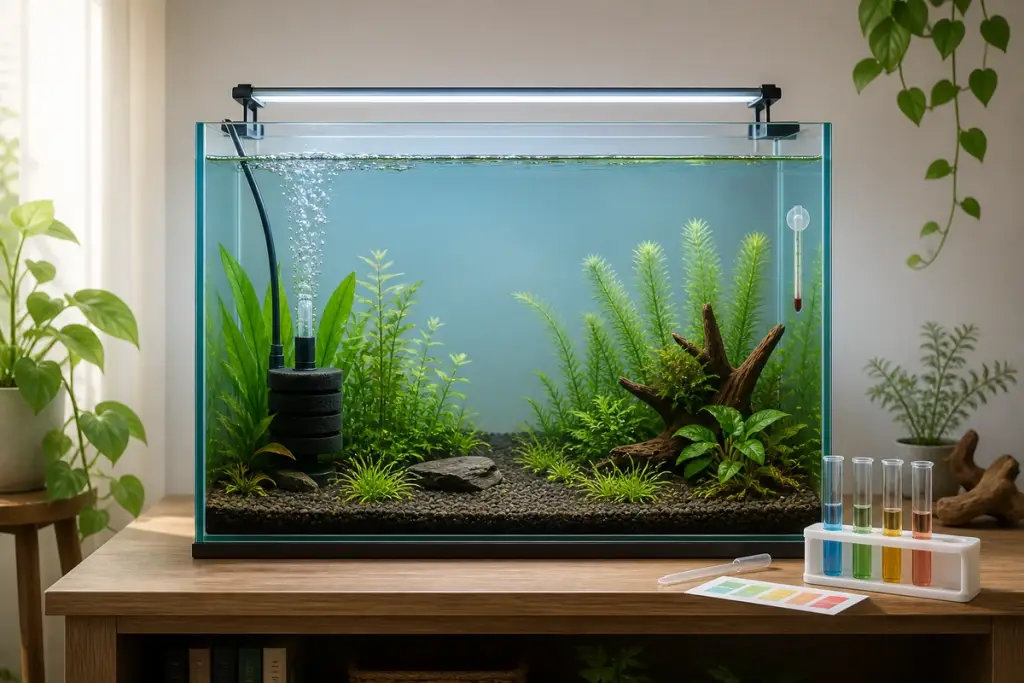
Quick answer: Before adding guppies, cycle the aquarium so its biological filter can process waste. Use a test kit to track ammonia and nitrite, keep the filter running, and wait for stable readings rather than relying on a fixed number of days. Add fish gradually only when the setup and maintenance routine are ready.
A new aquarium can look clear and still be biologically unprepared for fish. Cycling is the setup period in which microbial communities establish on filter media and other wet surfaces, helping transform nitrogenous waste. This guppy tank cycling checklist gives you a practical way to prepare a first aquarium without treating a calendar estimate as a promise.
What “cycling” means in a guppy aquarium
Fish release waste, and uneaten food can break down into ammonia. In an established biofilter, different groups of microbes help convert ammonia into nitrite and then nitrate. The filter needs time, oxygenated water, and a suitable surface for those communities to develop. Water clarity alone cannot tell you whether this process is ready.
Every aquarium behaves a little differently. Filter size, water chemistry, temperature, surface area, cleaning habits, and the amount of waste introduced all influence the pace of establishment. Use the test results and the tank’s history as your decision tools.
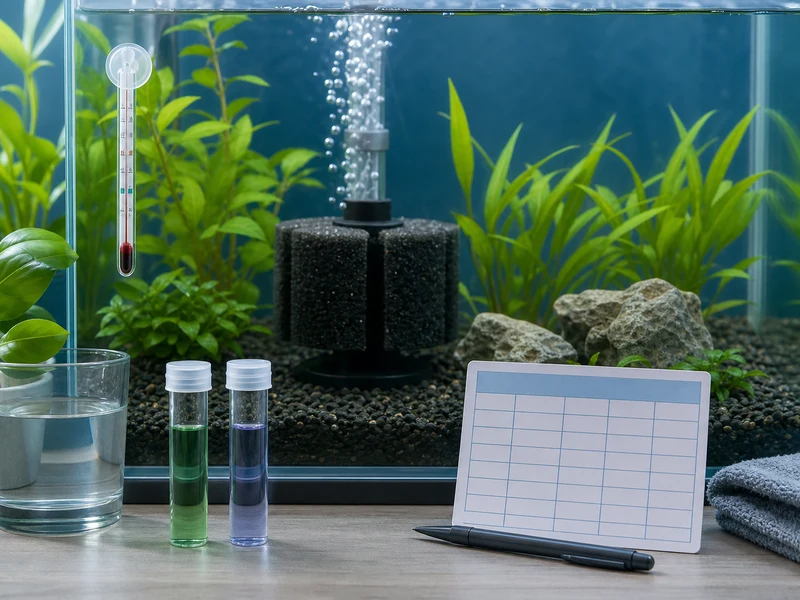
Guppy tank cycling checklist
- Choose the complete setup. Install the aquarium, dechlorinated water, heater where appropriate, filter, substrate, and any plants or hardscape before you begin testing. Review the best tank setup for guppies guide if you are still selecting equipment.
- Run the filter continuously. Biological media only helps when it stays wet and receives moving, oxygenated water. Avoid switching the filter off for long periods and do not replace all established media at once.
- Provide a measured ammonia source. A fishless cycle uses a controlled source so you can test the process without exposing fish to an unprepared aquarium. Follow the instructions for the product or method you choose and keep a written log.
- Test ammonia and nitrite. Record the date, test method, colour result or reading, and any dose or maintenance change. These two readings show whether the biofilter is processing the waste source.
- Watch the trend. Early readings can change quickly, then settle. A single low reading is not enough evidence; look for repeatable results under the same routine and confirm that the tank is not accumulating ammonia or nitrite.
- Check nitrate and the rest of the system. Nitrate, pH, temperature, alkalinity, and dissolved oxygen add context. The water-change guide explains how maintenance fits into a stable routine.
- Plan the first stocking step. When testing supports a stable, processed system, add a modest first group rather than the full intended load. Keep the filter running, feed lightly, and continue testing after the fish arrive.
How to read the test log
Use the same test kit and follow its instructions consistently. Keep samples, lighting, and timing as similar as practical so that one result can be compared with the next. If ammonia or nitrite remains detectable, pause stocking and investigate the source, filter flow, cleaning routine, and test procedure before making a large change.
A cycling log is more useful when it records context: water changes, filter cleaning, added media, temperature changes, and any change in the ammonia source. That history helps you distinguish a true trend from a one-off test error.
When is the aquarium ready for guppies?
Readiness is a combination of evidence and capacity. The filter should be running reliably, the tank should have a maintenance plan, and repeated tests should support that the intended waste load can be processed. There is no universal day count that fits every aquarium, so do not use an age-based shortcut in place of testing.
Before buying fish, check the aquarium’s real volume, temperature control, hiding places, water-change supplies, and a way to observe the fish after arrival. The complete guppy care guide covers the daily and weekly routine that follows cycling.
Common cycling mistakes to avoid
Adding fish to “start” the cycle
Using live fish as the ammonia source exposes them to water that may not yet process their waste. A controlled fishless approach gives you a clearer log and lets you make corrections before livestock is present.
Replacing or rinsing all filter media
Over-cleaning can remove part of the developing biofilter. If media needs rinsing, use removed aquarium water and keep the process gentle. Follow the filter manufacturer’s maintenance guidance while preserving useful biological surfaces.
Chasing a number without checking the context
Test kits have limits and colour comparisons can be difficult. Confirm the expiry date, read the full instructions, and repeat an unexpected result. Compare the result with recent maintenance and the condition of the aquarium instead of reacting to one strip or one bottle.
Stocking the entire plan at once
A large sudden increase in waste can exceed what a young biofilter can process. Add fish in stages, keep feeding modest, and test again as the system adapts. Revisit stocking if readings rise or maintenance becomes difficult to keep up with.
After the cycle: a simple first-week routine
- Observe swimming, breathing, appetite, and social behaviour for a few minutes each day.
- Test ammonia and nitrite after the first stocking step and whenever the fish or water look different.
- Feed portions that are finished promptly, removing obvious leftovers rather than adding more.
- Keep the filter running and check that its flow is not obstructed.
- Record maintenance and readings so the next decision is based on the aquarium’s own history.
If you need equipment or livestock, visit the current HiGuppy shop after confirming that the choice fits your tank, water routine, and stocking plan. A prepared aquarium and a careful first week give new guppies a better start than a rushed purchase.
Frequently asked questions
How long does a guppy tank take to cycle?
The duration varies with the setup, filter media, water chemistry, temperature, and method. Use repeatable ammonia and nitrite results to judge progress instead of promising a fixed schedule.
Can I cycle a tank with guppies already inside?
It is safer to prepare the aquarium before adding fish. If fish are already present, test frequently, keep the filter running, reduce the waste load, and seek experienced aquatic guidance when readings are concerning.
Do live plants replace cycling?
Plants can use some nitrogen compounds and add biological surface area, but they do not automatically prove that an aquarium can process the planned waste load. Keep testing and treat plants as one part of the system.
What should I do if ammonia or nitrite rises?
Pause adding fish, verify the test procedure, check filter flow, and review recent feeding or cleaning. Follow a measured water-change plan appropriate to the situation and get qualified help if fish show serious distress.
What is the next step after cycling?
Start with a modest stocking step, observe closely, and keep the same test-and-log routine. Let the aquarium’s readings and maintenance capacity guide the next addition.
Real HiGuppy photographs
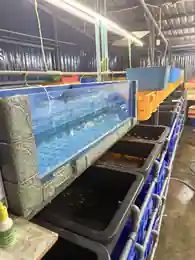
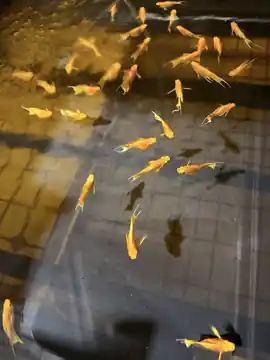
Inside the facility behind our guppy guides
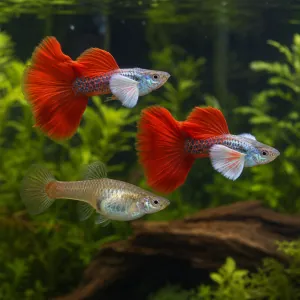
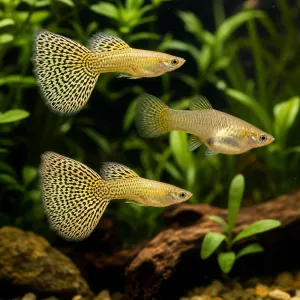
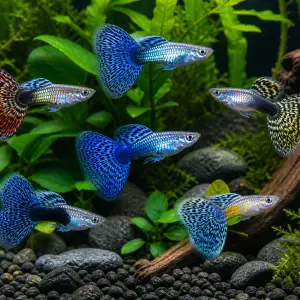
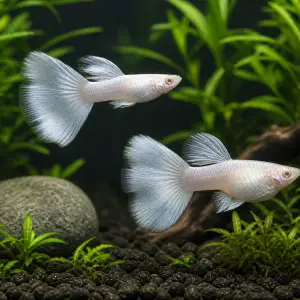
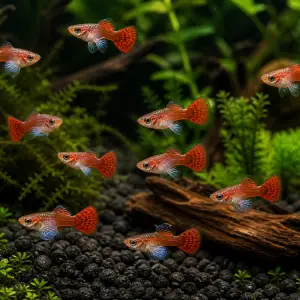
These photographs show real HiGuppy holding, breeding and observation work. They document our facility and fish stock; they are not presented as the exact individual fish or strain discussed on every page.