Guppy Care Article
Guppy Ich (White Spot Disease): Symptoms, Treatment Logic & Prevention
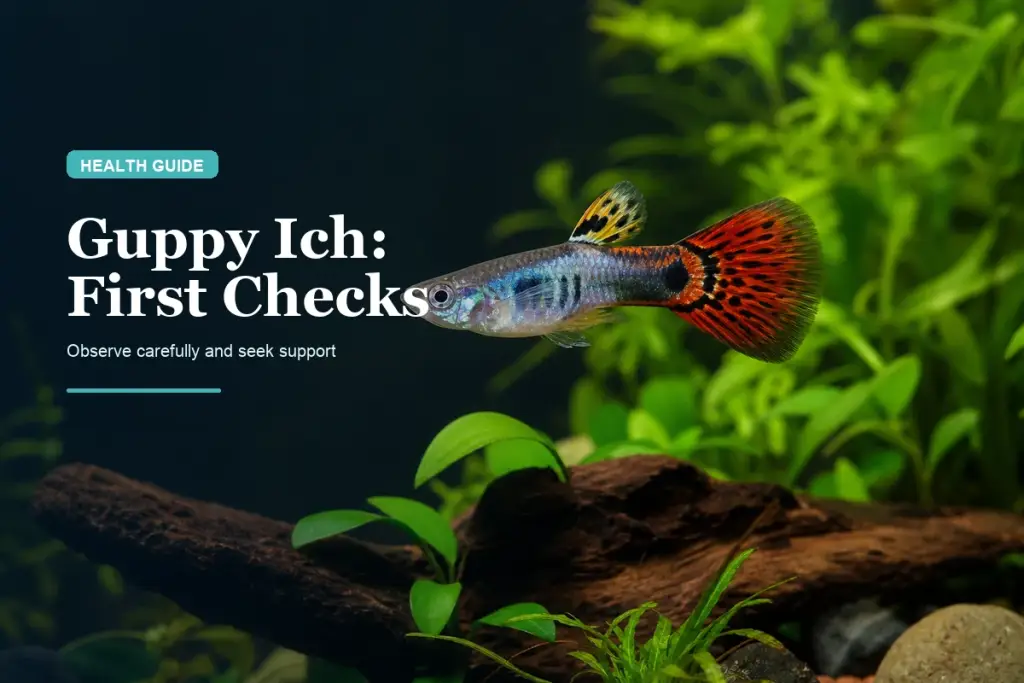
Guppy ich, or white spot disease, is a contagious parasitic infection caused by Ichthyophthirius multifiliis. The classic clue is many small, salt-grain white spots, but affected guppies may also flash, clamp their fins, lose appetite, or breathe rapidly. Because the parasite spends part of its life cycle protected on the fish and in cysts, successful control usually requires treating the aquarium for the full labeled course rather than stopping when the visible dots disappear.
Quick answer: what should you do first?
If several guppies develop salt-like white spots or begin flashing, test ammonia and nitrite, increase aeration, keep the temperature stable, and avoid sharing wet equipment with other tanks. Treat the affected aquarium with one product specifically labeled for freshwater ich, using the exact tank volume and label directions. Do not rely on heat alone, do not mix medications casually, and do not stop early just because the spots fade.
What does ich look like on a guppy?
Ich is easiest to recognize when many evenly sized white dots appear on the body and fins. The dots often look as if the fish has been sprinkled with salt. However, visible spots are not the only sign.
- Small white dots on the fins, body, or around the gill cover
- Rubbing or “flashing” against decor, plants, or substrate
- Clamped fins and reduced activity
- Loss of appetite
- Excess mucus or a dull appearance
- Rapid breathing or hanging near stronger water movement when the gills are affected
White spots can be difficult to see on pale guppies, and a gill-heavy infection may cause respiratory distress before obvious dots appear. When the signs do not fit the usual pattern, compare them with the Guppy Diseases Guide rather than assuming every white mark is ich.
Ich vs other white or dusty lesions
| What you see | More consistent with | What to notice |
|---|---|---|
| Many similar salt-grain dots on several fish | Ich | Often paired with flashing, clamped fins, or rapid breathing |
| One fuzzy or cotton-like patch | Fungal growth or damaged tissue | Usually irregular rather than many uniform dots |
| Gray-white patch around the mouth or back | Possible bacterial lesion such as columnaris | Can progress quickly and should not be treated as ich by appearance alone |
| Very fine gold, yellow, or rust-like dust | Possible velvet-type disease | Often easier to see with angled light |
| Single pale scar or scraped area | Injury or irritation | Look for sharp decor, chasing, or recent handling |
Why ich treatment has to match the parasite life cycle
Ichthyophthirius multifiliis does not remain continuously exposed to treatment. The feeding stage is attached to the fish, then the parasite leaves the host and forms a reproductive cyst in the environment. The next free-swimming stage is the most vulnerable to many treatments. That is why a single dose may fail even when the fish temporarily looks cleaner.
The practical lesson is simple: treat the system for the full period required by the product label. Stopping when the final visible dot disappears can leave protected stages in the aquarium that later release new infective parasites.
Step-by-step first response for suspected guppy ich
- Check water quality. Test ammonia and nitrite first, then review nitrate, pH, and temperature. Poor water quality adds stress and can make recovery harder. Use Higuppy’s Guppy Water Parameters Guide as a reference.
- Increase oxygenation. Add surface movement or aeration. Gill damage, warmer water, and some treatments can all increase oxygen stress.
- Confirm the actual water volume. Medication should be based on the amount of water in the aquarium, not the nominal tank size.
- Choose one appropriate product. Use a treatment labeled for freshwater ornamental fish and ich, and verify whether it is safe for fry, plants, shrimp, or snails if they share the system.
- Follow the label exactly. Do not increase the dose because the infection looks severe, and do not combine products unless the manufacturer specifically permits it.
- Keep the environment clean and stable. Remove dead fish promptly and siphon obvious debris gently. Follow the product’s instructions about water changes and filter media. The Guppy Water Change Guide can help you avoid abrupt parameter swings.
- Treat long enough. Continue for the full labeled course even if the visible spots disappear earlier.
Should you raise the temperature for guppy ich?
Warmer water can shorten the parasite’s life cycle, but increasing temperature is not a stand-alone cure. Higher temperature also reduces dissolved oxygen and can stress already compromised fish. If a product label includes a temperature range, stay within that range and within a temperature that is safe for guppies and the other animals in the aquarium.
Avoid sudden temperature jumps. Stability and aeration matter more than trying to “cook” the parasite out of the tank.
Medication and equipment safety
- Measure the aquarium’s actual water volume before dosing.
- Read the full label before the first dose, including warnings for invertebrates and plants.
- Do not mix medications unless the labels explicitly say the combination is safe.
- Only remove activated carbon, UV, or other filtration media if the product instructions call for it.
- Maintain strong aeration during treatment, especially if breathing is already rapid.
- If fish show severe distress immediately after dosing, follow the product’s emergency instructions and seek aquatic veterinary or fish-health guidance.
University of Florida IFAS guidance on ich emphasizes that treatment must account for the parasite’s life cycle and that some traditional chemicals can be hazardous if water chemistry or dosing is wrong. Merck Veterinary Manual guidance likewise recommends targeted therapy rather than indiscriminate medication.
Can you move an ich-infected guppy to another tank?
Isolation may help observation, but moving only the visibly affected fish does not necessarily remove the problem from the original aquarium because free-living parasite stages can remain in the system. If several fish share the tank, assume the aquarium has been exposed and manage it accordingly.
If you do use a separate quarantine or hospital setup, keep nets, siphons, towels, and other wet tools separate. For future arrivals, review Higuppy’s quarantine and observation process and Guppy Acclimation Guide.
How to prevent ich in guppy tanks
- Quarantine new fish before adding them to an established aquarium.
- Keep quarantine tools separate from display-tank equipment.
- Avoid abrupt temperature changes during shipping, acclimation, and water changes.
- Do not pour transport or store water directly into the display aquarium.
- Inspect plants, decor, and equipment that came from systems containing fish.
- Maintain stable water quality and avoid overcrowding.
- Observe new arrivals closely during the first few weeks.
When to get professional fish-health help
Seek qualified aquatic veterinary or diagnostic help when fish are gasping severely, dying rapidly, failing to respond to a correctly completed treatment course, or showing signs that do not match typical ich. Microscopic examination of skin or gill samples can distinguish parasites that look similar to the naked eye.
Frequently asked questions
Can a guppy have ich without visible white spots?
Yes. An early infection or an infection concentrated in the gills can cause flashing, excess mucus, or rapid breathing before obvious white dots are easy to see.
Are the white spots ich eggs?
No. The visible spots correspond to the feeding parasite stage on the fish. Reproduction occurs later after the parasite leaves the host.
Can ich go away without treatment?
Visible spots can disappear temporarily as parasites leave the fish, but that does not mean the aquarium is clear. New free-swimming stages can emerge later and reinfect fish.
How long should guppy ich treatment continue?
Use the full duration specified by the product label. The correct schedule varies with the treatment and environmental conditions, so there is no safe universal number of days for every product.
Is ich caused by dirty water?
Ich is caused by a parasite, not by dirt itself. However, unstable or poor water quality can stress guppies and make disease outbreaks harder to manage.
References: University of Florida IFAS Extension, Ichthyophthirius multifiliis (White Spot) Infections in Fish; Merck Veterinary Manual, Disorders and Diseases of Fish.
Educational note: This article is for aquarium-care education and is not a veterinary diagnosis or prescription. Severe respiratory distress, rapid losses, or uncertain diagnosis warrant help from an aquatic veterinarian or fish-health professional.
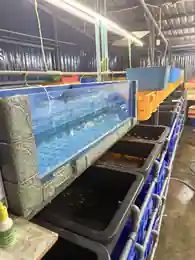
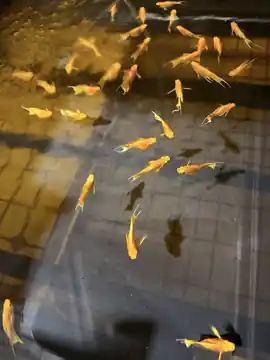
Real HiGuppy photographs
Inside the facility behind our guppy guides
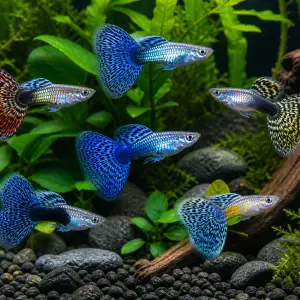
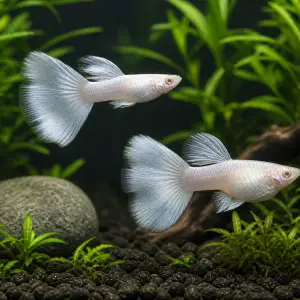
These photographs show real HiGuppy holding, breeding and observation work. They document our facility and fish stock; they are not presented as the exact individual fish or strain discussed on every page.