The HiGuppy Journal
Blue Topaz Guppy Guide: Identification, Care & Breeding
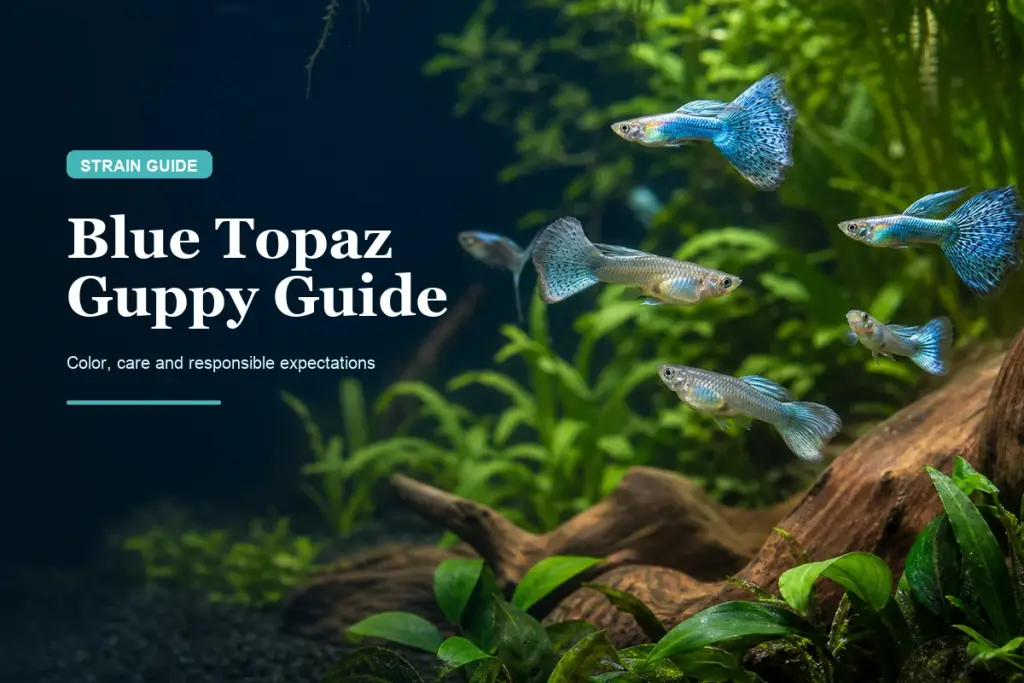
Quick answer: “Blue Topaz guppy” is a trade name for fancy guppies selected for a bright blue, blue-green or pale metallic look. It is not a universal scientific variety standard, and appearance can differ by breeder, individual fish, age and lighting. Confirm current photos and listing details before ordering.
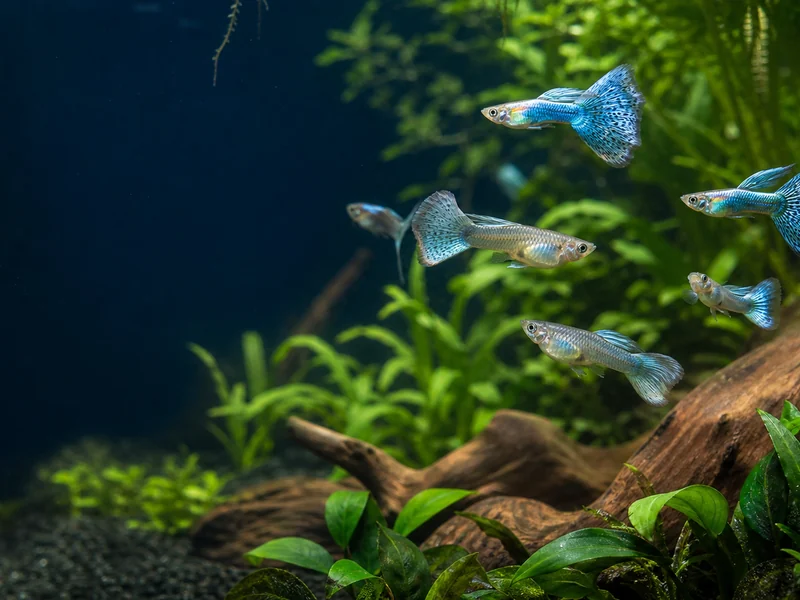
What people usually mean by Blue Topaz guppy
Fancy guppy names commonly describe a visible color impression, a tail or body pattern, or a breeding line. “Blue Topaz” is usually used for an eye-catching cool blue look, often with pale, silvery, or metallic areas. It is not a universal scientific variety standard. Lighting, age, diet, water conditions, and genetics all influence how a guppy appears in an aquarium or photo.
When selecting any fancy guppy, assess the individual listing rather than relying only on the strain name. Look for current photos or video, the stated sex and group count, and a clear indication of whether the pictured fish are representative or the exact fish being sent. If those details are missing, ask for clarification before ordering.
How to appreciate the color without overpromising
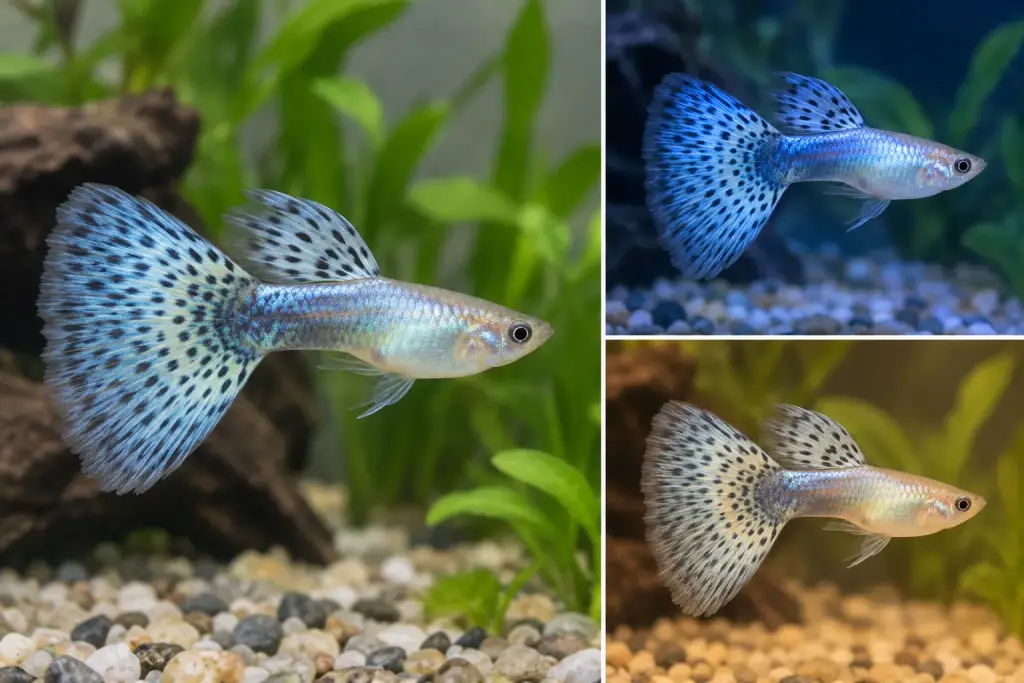
- Use neutral viewing light: aquarium lighting can make blue pigments and metallic scales look more intense or more muted.
- Expect individual variation: fish from the same line can differ in pattern coverage, tail shape, and saturation.
- Give new fish time to settle: a newly shipped or moved fish may not show its most relaxed coloration immediately.
- Avoid “color guarantee” assumptions: healthy water, appropriate food, and low stress support normal condition but do not turn one line into another.
Blue topaz guppy care foundations are the same as for other fancy guppies
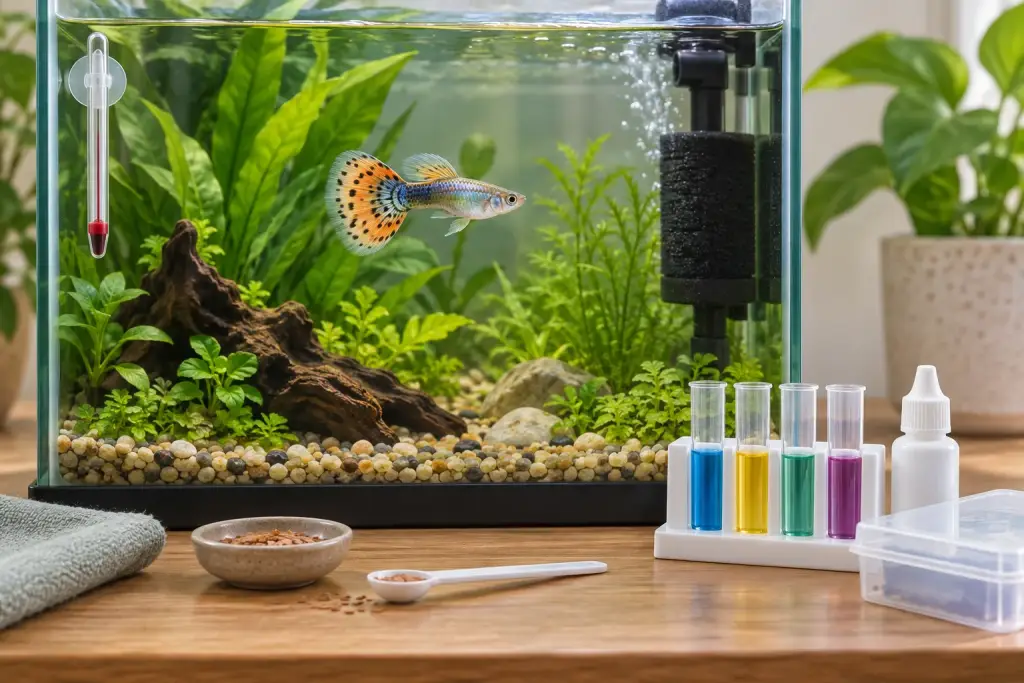
“Blue topaz guppy” is a fancy presentation name, not a different species. The care priorities are a fully cycled aquarium, stable temperature, routine water testing, filtration appropriate to the tank’s bioload, and compatible tank mates. FishBase lists the guppy as Poecilia reticulata, a species found in varied freshwater habitats; a home aquarium still needs stability rather than sudden parameter changes.
Start a new group in a tank with verified water quality and enough room to manage waste and growth. Larger, well-maintained systems are generally easier to keep stable than a cramped setup. If fish show persistent stress, loss of balance, gasping, visible lesions, or a sudden group decline, test the water first and seek qualified aquatic guidance rather than treating color change as a diagnosis.
Choosing a blue topaz guppy group and planning for fry
Sex ratio affects behavior and future stocking. A mixed breeding group can produce fry, which changes feeding, filtration, water-change, and rehoming needs quickly. If your goal is a display tank rather than breeding, choose a group intentionally and confirm the sex/count on the listing. Do not add fish simply because a color line looks compatible in a photograph.
Before keeping fry, prepare a grow-out plan: appropriate food size, a filtration approach that protects small fish, water-test capacity, and space. Our Complete Guppy Care Guide covers day-to-day foundations, while the Raising Guppy Fry Guide helps with capacity planning.
Blue topaz guppy identification checklist: verify the fish, not just the label
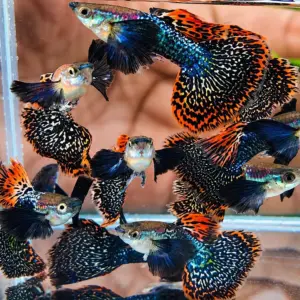
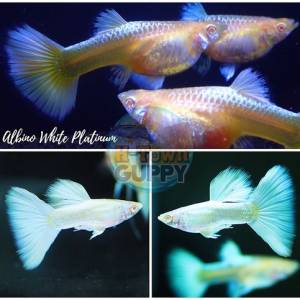
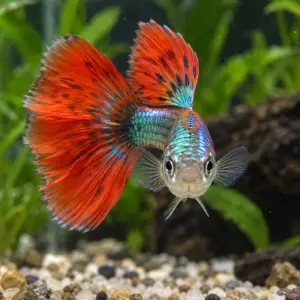
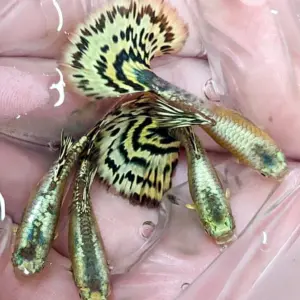
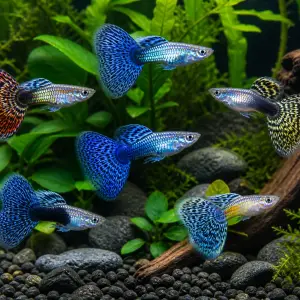
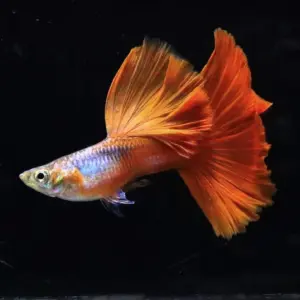
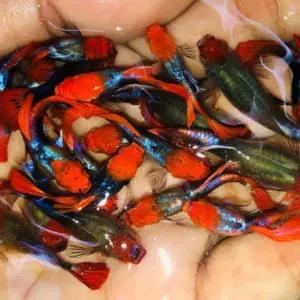
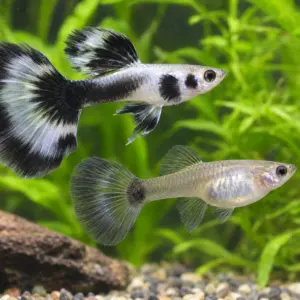
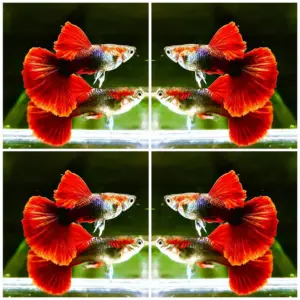
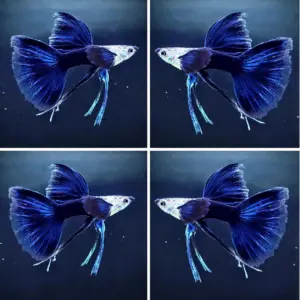
“Blue Topaz” is a breeder or seller label, not proof of a universal genetic standard or a documented pedigree. Ask for dated side- and tail-view photos or a short video of the actual fish under similar, neutral lighting, and confirm whether the images show the exact fish offered or only representative stock. The three illustrations above are generic, not verified Blue Topaz specimens.
- Record what is visible: body and tail blue/blue-green or silvery areas, pattern coverage, fin shape, sex, health and the photo date. These are individual observations, not required traits or a promise of future colour.
- Check provenance: ask for the breeder/source, any parent or line IDs, known crosses and actual parent photos. If unavailable, label the line “unverified” rather than “pure.”
- Allow for variation: compare lighting and maturity before judging differences. Colour alone cannot verify genotype or predict offspring; guppy colour-genetics research documents complex inheritance.
Breeding carefully and keeping an offspring log
Only attempt a breeding project if you can care for the parents and future fry in a stable, cycled setup with sufficient grow-out space and a rehoming plan. Follow the OATA guppy care guidance; do not crowd fish or force breeding on a fixed schedule. Choose healthy fish with breeder-documented parentage where possible. If parentage is uncertain, record “unknown” rather than assigning a sire from the current tank.
| Log field | What to record from actual observations |
|---|---|
| Parent/source IDs | Breeder or seller, claimed line, individual/group IDs, any known parentage and dated real-fish photos. |
| Breeding group | Tank/group ID, dates fish were housed together, observed health and water-quality notes; mark unknown crosses. |
| Fry cohort | Cohort ID, observed birth date if known, grow-out location, condition and capacity/rehoming notes. |
| Traits over time | Dated side/tail photos and observed colour, pattern and fin changes as offspring mature, including nonmatching fish. |
Compare observations across recorded cohorts or generations before describing a line as consistent; do not guarantee a fixed percentage of blue topaz guppy offspring. The IFGA breeding guide recommends parent and offspring records, while its breeding-stock advice encourages asking about a line’s provenance. Neither source authenticates this trade label or the three illustrations on this page.
Before ordering a blue topaz guppy or color strain online
- Check that the destination is eligible under the current Shipping Policy.
- Have a cycled tank, thermometer, and water test kit ready before an order is placed.
- Read the current Acclimation Guide before delivery day.
- Confirm the specific listing’s sex, quantity, availability, and current images—never infer them from a general strain guide.
Frequently Asked Questions
What does “Blue Topaz guppy” mean?
It is a trade name commonly used for a bright blue, blue-green or metallic-looking fancy guppy. The label alone does not guarantee one exact shade, pattern or tail shape.
Is Blue Topaz a separate guppy species?
No. Guppies are Poecilia reticulata; Blue Topaz is a trade-style appearance name, not a separate species.
Will every Blue Topaz guppy look the same?
No. Color and pattern can vary among fish and change in appearance with maturity, lighting and individual line.
How should I care for a Blue Topaz guppy?
Use the same stable, cycled-aquarium basics as for other fancy guppies: test the water, provide appropriate filtration, and plan stocking and fry capacity.
References and related reading
For species-level context, see the FishBase profile for Poecilia reticulata. For general aquarium-care checks, see our Guppy Temperature Guide and the current Water Change Schedule.
For a broader comparison, browse the Guppy Strains and Types overview.
Behind the care guides
Care begins with steady systems
Our guppy guides focus on practical routines: keep water stable, observe fish closely and allow for natural variation.
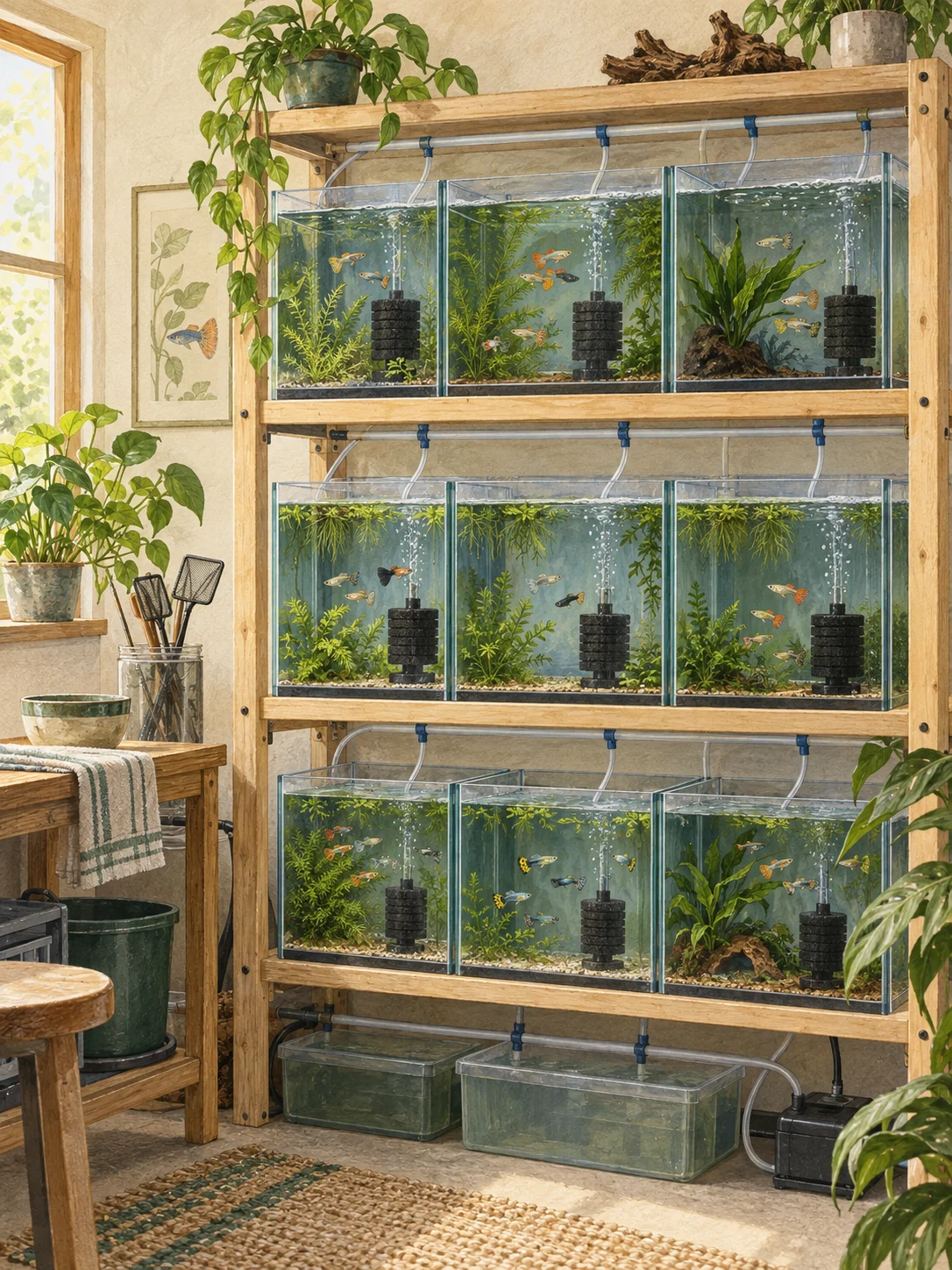
Care systems
Steady water, thoughtful care
Gentle filtration and regular observation support healthy aquarium routines.
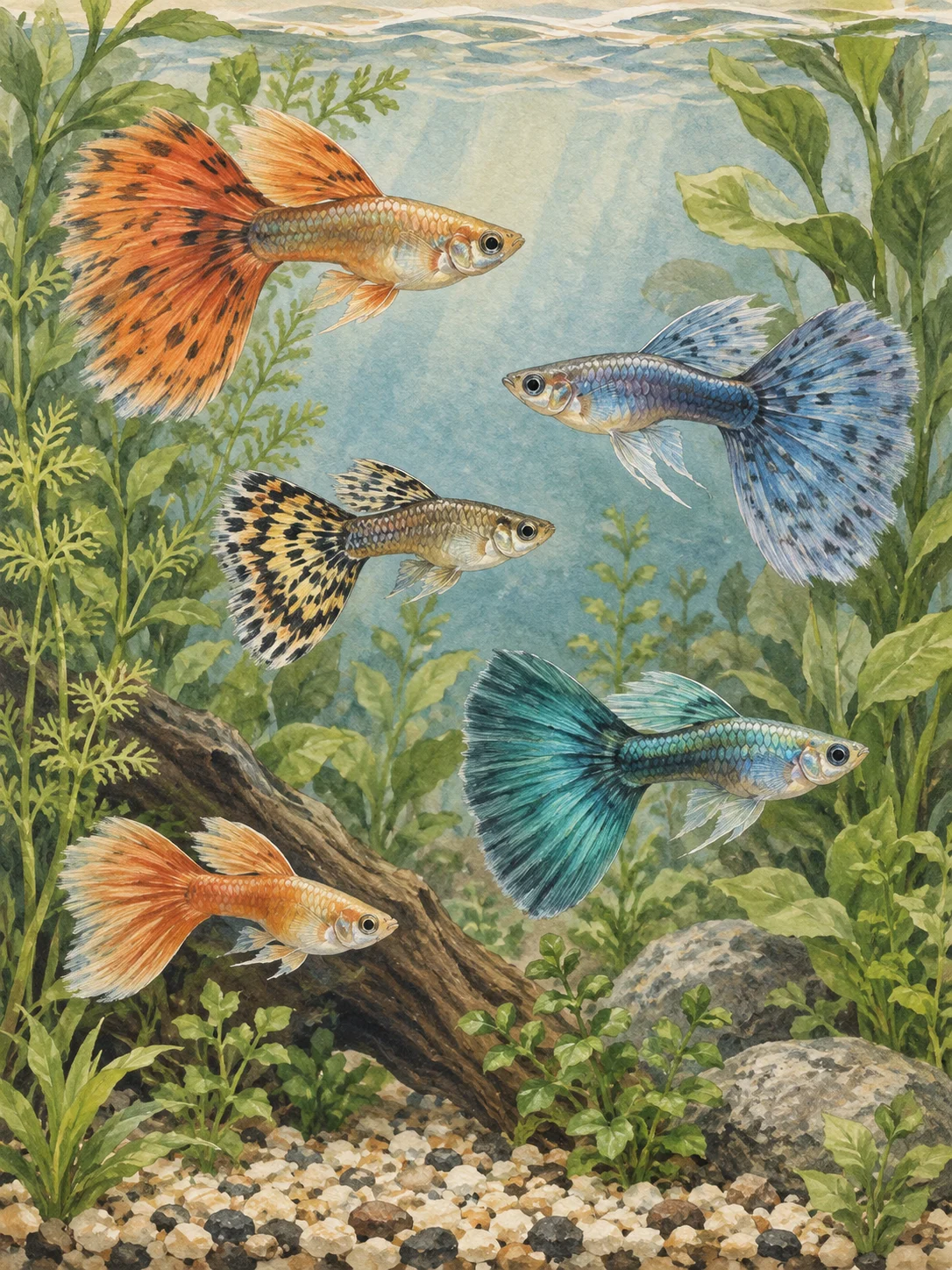
Natural variation
Every guppy is different
Color, size and fin shape vary with strain, age and each individual fish.
Editorial illustrations for context; they do not depict HiGuppy's exact facility or current fish stock.