Guppy Care Article
Internal Parasites in Guppies: Symptoms, Wasting & Diagnosis
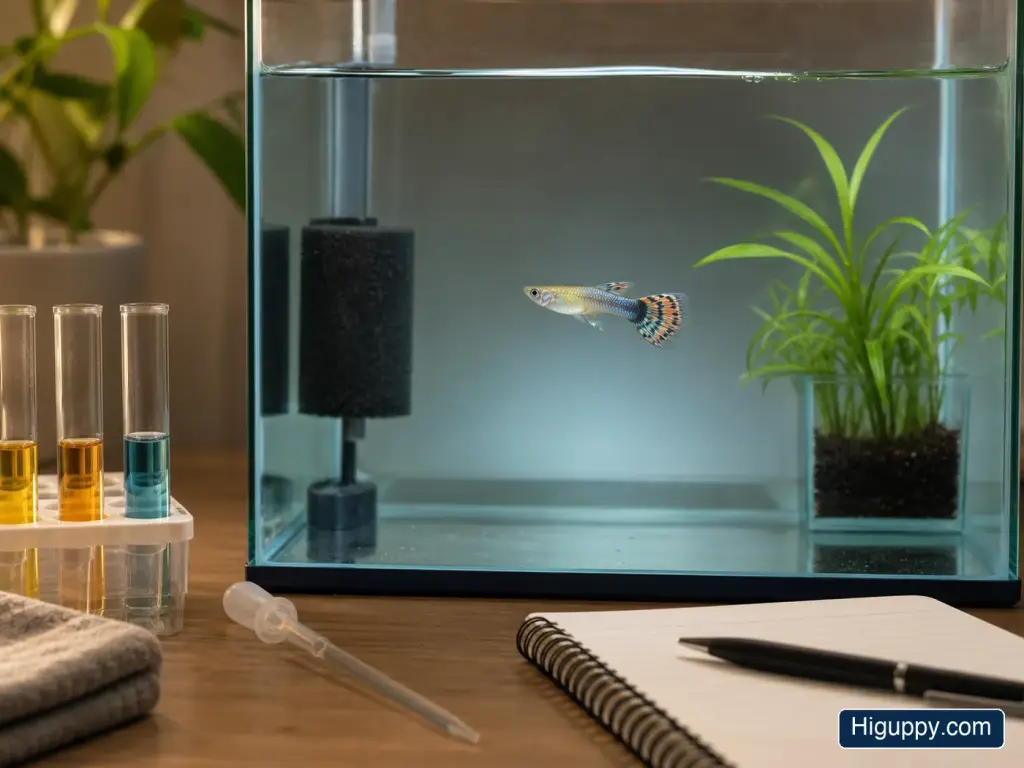
Internal parasites in guppies can cause progressive weight loss, poor growth, abnormal feces or a hollow-looking abdomen, but none of those signs proves a parasite is present. Competition for food, chronic bacterial disease, stress, poor nutrition and organ disease can look similar. The best treatment decision starts with narrowing the cause instead of choosing a dewormer from one symptom.
Quick answer: when should you suspect internal parasites?
Suspicion rises when a guppy keeps losing body condition despite eating, develops a hollow belly, fails to grow, passes persistently abnormal feces, or has a visible red worm-like structure protruding from the vent. Isolate the fish when practical, confirm that it is actually eating, test the water, inspect tank mates, and use veterinary or microscopic diagnosis when available before selecting medication.
Common signs of internal parasites in guppies
- Progressive weight loss or a pinched, hollow abdomen
- Poor growth compared with fish of similar age
- Eating normally or eagerly but continuing to waste
- Reduced appetite as disease progresses
- Persistent pale, stringy or mucous feces
- A red worm-like structure protruding from the anus in some nematode infections
- Clamped fins, hiding or reduced activity
- Intermittent abdominal swelling in some conditions
The key word is persistent. One unusual fecal string or one missed meal is weak evidence by itself. Look for a pattern across appetite, body condition, feces and behavior.
White stringy poop does not automatically mean worms
White or translucent feces are commonly treated online as proof of parasites, but the sign is nonspecific. A fish that has not eaten may pass intestinal mucus, and stress or digestive irritation can also change feces.
If abnormal feces are your main concern, start with the dedicated Guppy White Stringy Poop guide. Internal parasites become more plausible when fecal changes are persistent and occur together with wasting, poor growth, a protruding worm or a relevant exposure history.
Important look-alikes
| Observation | Other explanation to check | Useful next step |
|---|---|---|
| Thin fish in a crowded aquarium | Food competition, bullying or inadequate diet | Watch the fish eat separately |
| White stringy feces once | Empty intestinal mucus, fasting or stress | Observe several feedings and bowel movements |
| Appetite loss immediately after shipping | Transfer or acclimation stress | Check temperature, water and breathing |
| Wasting plus ulcers, severe lethargy or spinal change | Chronic bacterial or systemic disease | Seek broader diagnostic assessment |
| Swelling plus raised scales | Systemic fluid imbalance / dropsy syndrome | See Guppy Dropsy |
| Fast breathing, flashing or pale gills | Water-quality or gill disease | See Guppy Gill Flukes and test water first |
Which internal parasites can affect aquarium fish?
“Internal parasites” is an umbrella term, not one organism. Different groups can involve the gastrointestinal tract or internal tissues, and they do not all respond to the same medication.
Nematodes (roundworms)
Roundworms include several aquarium-fish parasites. UF/IFAS specifically notes that Camallanus species infect the gastrointestinal tract of livebearers including guppies and that a red worm-like animal protruding from the anus is a classic visible clue. Positive identification may still require professional examination.
Cestodes (tapeworms)
Tapeworm infections can contribute to poor condition or growth, but they are not reliably diagnosed from external appearance alone. Life cycles and treatment choices differ by parasite.
Internal protozoal infections
Some single-celled parasites can affect the intestinal tract or internal organs. Their treatment logic differs from that of worms, which is another reason “one dewormer for everything” is a poor strategy.
How to investigate before treating
- Confirm food intake. Watch the fish eat without competition. A guppy can look “hungry” while still failing to consume enough food.
- Compare body condition. Take side-view photos every few days under similar lighting.
- Observe feces over time. Note color, consistency, frequency and whether a visible worm is present.
- Test water quality. Check ammonia, nitrite, nitrate, pH and temperature; chronic environmental stress can cause wasting and appetite changes.
- Review exposure. Consider recent fish introductions, live foods, shared nets and whether quarantine was used.
- Inspect the whole group. One fish affected suggests a different risk pattern from multiple fish losing condition.
- Use diagnostic help when available. Fecal examination, wet mounts or other microscopy can distinguish causes that look identical from outside.
The Guppy Water Parameters Guide is a good baseline if husbandry has not been checked recently.
Why one dewormer does not treat every internal parasite
Nematodes, cestodes and protozoal infections are biologically different. A medication that targets one group may do little against another. The route of treatment also matters: when a fish is eating, medicated food may deliver an active ingredient differently than dosing the water, while a fish that refuses food creates a different treatment problem.
For that reason, this guide does not recommend a universal drug or dose. Product labels, local regulations, the suspected organism, actual water volume and the presence of sensitive tank mates all matter.
Medication safety checklist
- Use aquarium medications only for a plausible or confirmed target.
- Calculate actual water volume rather than relying only on the tank’s labeled size.
- Follow the full label schedule rather than stopping as soon as the fish looks better.
- Do not combine dewormers, antibiotics or other treatments without explicit compatibility guidance.
- Monitor ammonia and nitrite during treatment.
- Increase aeration when a treatment or sick fish may raise oxygen demand.
- Remove feces and organic debris regularly where appropriate.
- Keep nets, siphons and treatment containers separate from the display tank.
Should the whole aquarium be treated?
Not automatically. The decision depends on the suspected parasite, whether tank mates were exposed, whether an intermediate host is involved, and the safety of the chosen medication. Treating every fish “just in case” can expose healthy animals and the biofilter to unnecessary chemicals while still missing the real cause.
A sick guppy hospital tank is useful when one fish needs close observation or targeted therapy. If several fish share the same signs, investigate the system as a group rather than focusing only on one individual.
How to prevent internal-parasite problems
- Quarantine new guppies before introducing them to an established aquarium.
- Observe body condition and appetite during quarantine, not just external color.
- Buy fish from sources that monitor health and avoid shipping visibly compromised animals.
- Use dedicated nets and siphons between quarantine and display systems.
- Maintain stable water quality and adequate nutrition so fish are less stressed.
- Avoid unnecessary crowding.
- Use caution with live foods or other potential parasite vectors from uncertain sources.
For preventive quarantine of newly purchased fish, see How to Quarantine New Guppies After Shipping. You can also review HiGuppy’s Quarantine & Observation Process for how we approach new-fish observation.
When to seek professional fish-health help
- Rapid or severe weight loss
- Multiple fish affected
- Visible red worms or repeated recurrence after treatment
- Wasting plus ulcers, hemorrhage, spinal deformity or severe respiratory signs
- A fish that cannot eat
- Uncertainty about medication choice or compatibility
Aquatic veterinary or diagnostic-lab support can be especially valuable because microscopy may distinguish parasites from bacterial, nutritional or environmental causes that appear similar at home.
For a full symptom comparison, return to the Guppy Diseases Guide. For general husbandry that reduces disease pressure, see the Complete Guppy Care Guide.
Frequently asked questions
Does white stringy poop always mean internal parasites?
No. It can also be intestinal mucus after fasting, stress or digestive irritation. Persistent abnormal feces combined with weight loss or other signs are more meaningful than one isolated observation.
Can a guppy still eat with internal parasites?
Yes. Some fish continue eating while losing body condition, while others develop poor appetite as disease progresses.
What does Camallanus look like in guppies?
A visible red worm-like structure protruding from the vent is a classic clue described for Camallanus infections in livebearers, including guppies. Confirmation is still preferable before choosing treatment.
Can internal parasites spread to other guppies?
Some can, but transmission routes vary. Certain parasites have direct life cycles while others use intermediate hosts, so quarantine and diagnosis are more useful than assuming every internal parasite spreads the same way.
Sources and further reading
- UF/IFAS: Nematode (Roundworm) Infections in Fish
- Merck Veterinary Manual: Management of Aquarium Fish
Educational note: Visible symptoms cannot identify every internal parasite. Diagnostic confirmation is the safest basis for targeted treatment.
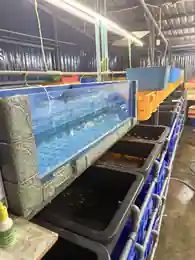
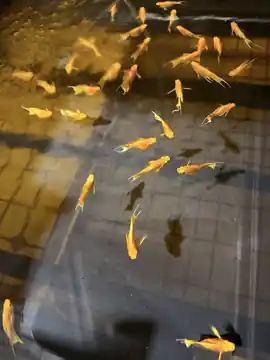
Real HiGuppy photographs
Inside the facility behind our guppy guides
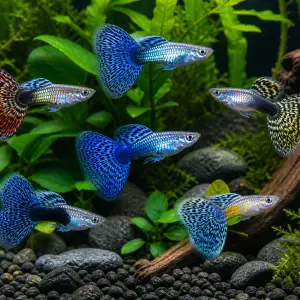
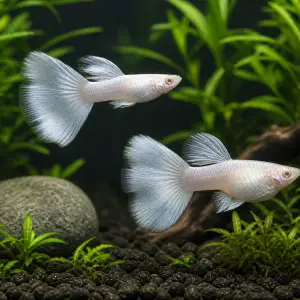
These photographs show real HiGuppy holding, breeding and observation work. They document our facility and fish stock; they are not presented as the exact individual fish or strain discussed on every page.