Guppy Care Article
Guppy Swim Bladder Disorder: Floating, Sinking & Recovery Steps
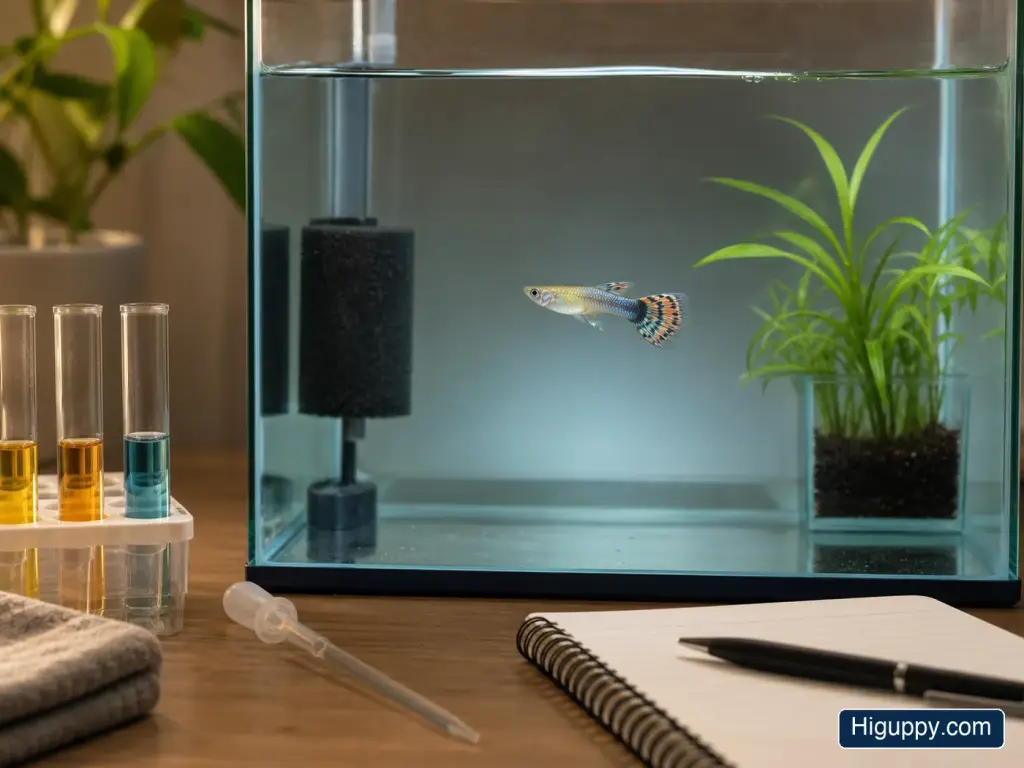
Guppy swim bladder disorder is a useful description for abnormal buoyancy, but it is not a single disease. A guppy that floats, sinks, tilts, rolls or cannot stay level may be dealing with a water-quality problem, digestive distension, injury, developmental deformity, internal disease or severe weakness. The safest approach is to stabilize the environment first, then use the fish’s other signs to narrow the cause.
Quick answer: what should you do first?
If a guppy suddenly loses buoyancy control, immediately check ammonia, nitrite, temperature and oxygenation. Reduce strong current, make food and the surface easy to reach, and observe whether the fish is bloated, thin, injured, breathing rapidly or showing raised scales. Do not assume every floating fish is constipated and do not medicate blindly.
What does swim bladder disorder look like in a guppy?
The swim bladder helps a fish regulate buoyancy, but abnormal posture can also result from problems outside the bladder itself. Common signs include:
- Floating at the surface and struggling to descend
- Sinking repeatedly or resting on the bottom
- Swimming nose-up, tail-up or tilted to one side
- Rolling, spiraling or losing a level body position
- Needing to swim constantly to hold position
- Difficulty reaching food
- Abdominal swelling, wasting or an abnormal spine
Merck Veterinary Manual lists floating, drifting and unusual swimming positions among common signs of illness in fish, which is why buoyancy loss should be treated as a symptom that needs context rather than a diagnosis by itself.
Common causes of abnormal buoyancy
| What you observe | What to consider | Best first check |
|---|---|---|
| Several fish affected after maintenance or a new-tank event | Ammonia, nitrite, temperature, chlorine/chloramine, oxygen or other environmental stress | Test water and increase aeration |
| One fish is mildly swollen after heavy feeding | Digestive distension or temporary GI upset | Reduce feeding and observe body shape |
| Problem begins after chasing, netting or transport | Injury, exhaustion or transfer stress | Provide calm, shallow, stable water |
| Young fish has always swum abnormally | Developmental or spinal deformity | Compare body shape and progression over time |
| Swelling plus pineconing, redness or appetite loss | Systemic/internal disease | See the guppy dropsy guide |
| Thin fish, abnormal feces or chronic wasting | Internal disease or parasites | See internal parasites in guppies |
Step 1: rule out a tank-wide emergency
Before focusing on the individual fish, look at the aquarium. Environmental problems can create erratic swimming and weakness that resemble a swim bladder problem.
- Ammonia: should be undetectable in a stable aquarium.
- Nitrite: should also be undetectable.
- Temperature: confirm the heater and thermometer agree and that there has not been a sudden swing.
- Oxygenation: add surface movement or an air stone if breathing is fast or fish are congregating near the surface.
- Recent changes: review large water changes, filter cleaning, medications, sprays, cleaners or other possible contaminants.
Use the Guppy Water Parameters Guide and Guppy Water Change Guide if the problem appeared after maintenance or in a newly established tank.
Step 2: look at body shape and associated symptoms
The most useful clues often come from what accompanies the buoyancy problem.
- Bloating without raised scales: consider feeding history, pregnancy in females and digestive distension.
- Raised “pinecone” scales: this is much more concerning for systemic fluid imbalance than simple constipation.
- Rapid breathing or surface gasping: prioritize oxygen, water quality and gill disease. See guppy gasping at the surface.
- White spots, gold dust or flashing: compare guppy ich and guppy velvet.
- Weight loss or persistent abnormal feces: investigate chronic internal disease rather than treating buoyancy alone.
- Visible bend, injury or mass: structural problems may require professional assessment and may not respond to dietary changes.
A safe first 24-hour support plan
- Stabilize water quality. Correct ammonia or nitrite problems with appropriate conditioned water changes and preserve biological filtration.
- Increase oxygenation. Add gentle surface agitation, especially if the fish is breathing quickly.
- Reduce current. A weak guppy should not have to fight a powerful filter outflow.
- Make the tank easier to navigate. If necessary, use a shallow hospital tank so the fish can reach the surface and food safely.
- Feed conservatively. If recent overfeeding and mild bloating are plausible, briefly reduce feeding rather than repeatedly offering more food.
- Record changes. Note appetite, feces, swelling, breathing and swimming posture over the next day.
Is constipation really the cause?
Constipation is often blamed online whenever a fish floats or sinks, but buoyancy problems have many possible causes. Mild digestive distension can affect posture, yet persistent rolling, severe swelling, rapid breathing, ulcers, wasting or multiple affected fish should move the investigation beyond simple feeding advice.
A short feeding reduction can be reasonable after clear overfeeding, but prolonged fasting in a weak or already thin guppy can make recovery harder. Once the fish is alert and able to eat, offer small portions of an appropriate guppy diet and reassess.
Should you feed peas or add aquarium salt?
Neither peas nor salt should be treated as a universal “swim bladder cure.” Guppies are not helped by forcing food into a fish that cannot eat, and salt changes water chemistry for every organism in the tank. If salt is considered for a specific diagnosed problem, account for actual water volume, tank mates, plants and the treatment goal.
When a hospital tank helps
A simple hospital tank can be useful when the fish cannot compete for food, needs a lower water level, requires close observation or may need targeted treatment. Keep temperature stable, use strong aeration with gentle filtration, and avoid an uncycled container that creates an ammonia problem of its own.
Follow the full sick guppy hospital tank guide for setup and cross-contamination precautions.
When recovery is less likely to be quick
- The problem has lasted several days without improvement.
- The fish cannot eat or reach the surface safely.
- There is progressive swelling, pineconing or severe weight loss.
- The spine is markedly curved or there is a visible mass.
- Other fish are developing neurological-looking or buoyancy symptoms.
- There are ulcers, hemorrhage, severe respiratory distress or repeated losses.
These situations warrant a broader disease investigation and, when available, aquatic veterinary or fish-health diagnostic support.
How to prevent recurring buoyancy problems
- Keep ammonia and nitrite at zero in a cycled aquarium.
- Avoid sudden temperature and pH changes.
- Feed measured portions rather than large meals.
- Maintain gentle but adequate filtration and oxygenation.
- Quarantine new fish before adding them to an established population.
- Separate aggressive fish if chasing or fin damage is contributing to stress.
- Track recurring symptoms instead of repeatedly changing medications.
For a wider symptom comparison, use the Guppy Diseases Guide. For day-to-day husbandry, return to the Complete Guppy Care Guide.
Frequently asked questions
Can guppy swim bladder disorder spread to other fish?
Abnormal buoyancy itself is not contagious. However, a shared environmental problem or an infectious underlying disease can affect multiple fish, so several affected guppies should trigger an immediate tank-wide investigation.
How long does a guppy take to recover?
There is no single recovery time because the cause matters. A mild temporary problem may improve within a short observation period, while injury, deformity or systemic disease can take much longer or may not fully resolve.
Should I lower the water level?
Shallower water can help a weak fish reach the surface and food, provided heat, filtration and oxygen remain stable. It is most useful as supportive care, not as a treatment for the underlying cause.
Can pregnancy make a female guppy swim strangely?
A heavily gravid female can become less agile, but severe rolling, persistent sinking or inability to maintain position should not automatically be attributed to pregnancy. Check water quality and look for other signs of illness.
Sources and further reading
- Merck Veterinary Manual: Management of Aquarium Fish
- Merck Veterinary Manual: Common Signs of Illness in Fish
Educational note: This guide is for aquarium husbandry education and does not replace diagnosis by an aquatic veterinarian or fish-health professional.
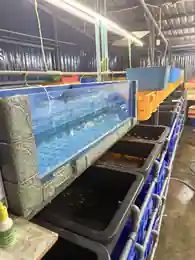
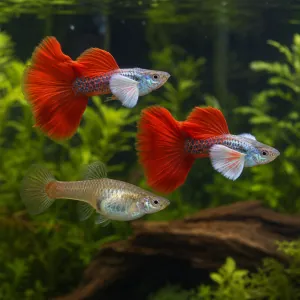
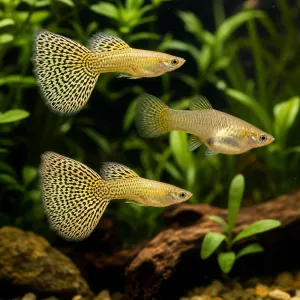
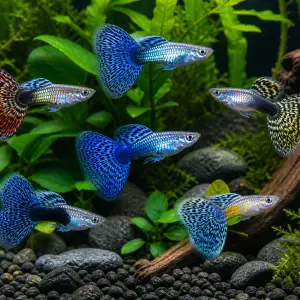
Real HiGuppy photographs
Inside the facility behind our guppy guides
These photographs show real HiGuppy holding, breeding and observation work. They document our facility and fish stock; they are not presented as the exact individual fish or strain discussed on every page.