The HiGuppy Journal
Best First Guppy Pack for Beginners
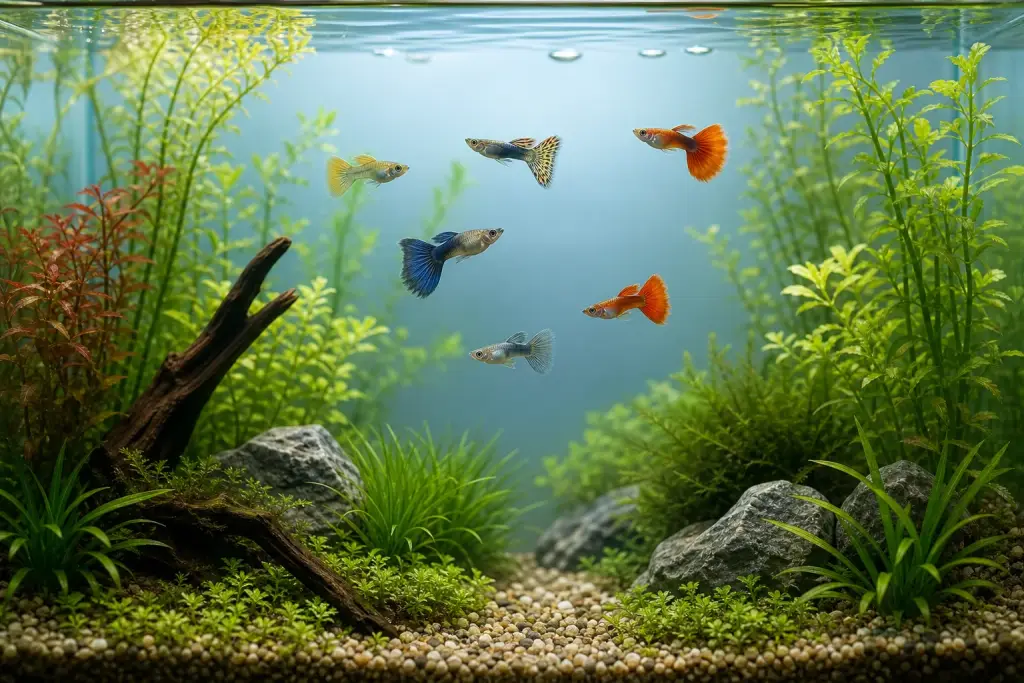
Quick answer: The best first guppy pack for beginners is a manageable group that fits a cycled aquarium and your long-term care capacity. For a display without breeding, consider a correctly sexed male-only group. Choose females, mixed sexes, or fry only after planning for their additional uncertainties and care needs.
“Beginner pack” should describe a manageable starting plan, not simply the largest discount bundle. Decide how you will house, feed, observe, and maintain the fish before comparing colors or price per fish. If the tank is still cycling, the right next purchase may be preparation supplies rather than livestock.
Best first guppy pack by goal
| Your goal | Option to consider | What to check first |
|---|---|---|
| Colorful display without breeding | A male-only group | Confirm every fish is sexed; allow room to monitor interactions |
| A female-only display | A group of females | Previous exposure to males and the possibility of fry |
| A first breeding project | A pair or trio | Adult housing, separation options, grow-out space, and rehoming |
| Watching young fish develop | A fry or juvenile pack | Feeding workload, whether sexes are known, and future adult capacity |
There is no pack size that suits every beginner. Your aquarium dimensions, existing residents, filtration, maintenance routine, and fish life stage all affect the decision. A pack that fits on delivery day may outgrow your available care capacity.
Why a same-sex group is often easier
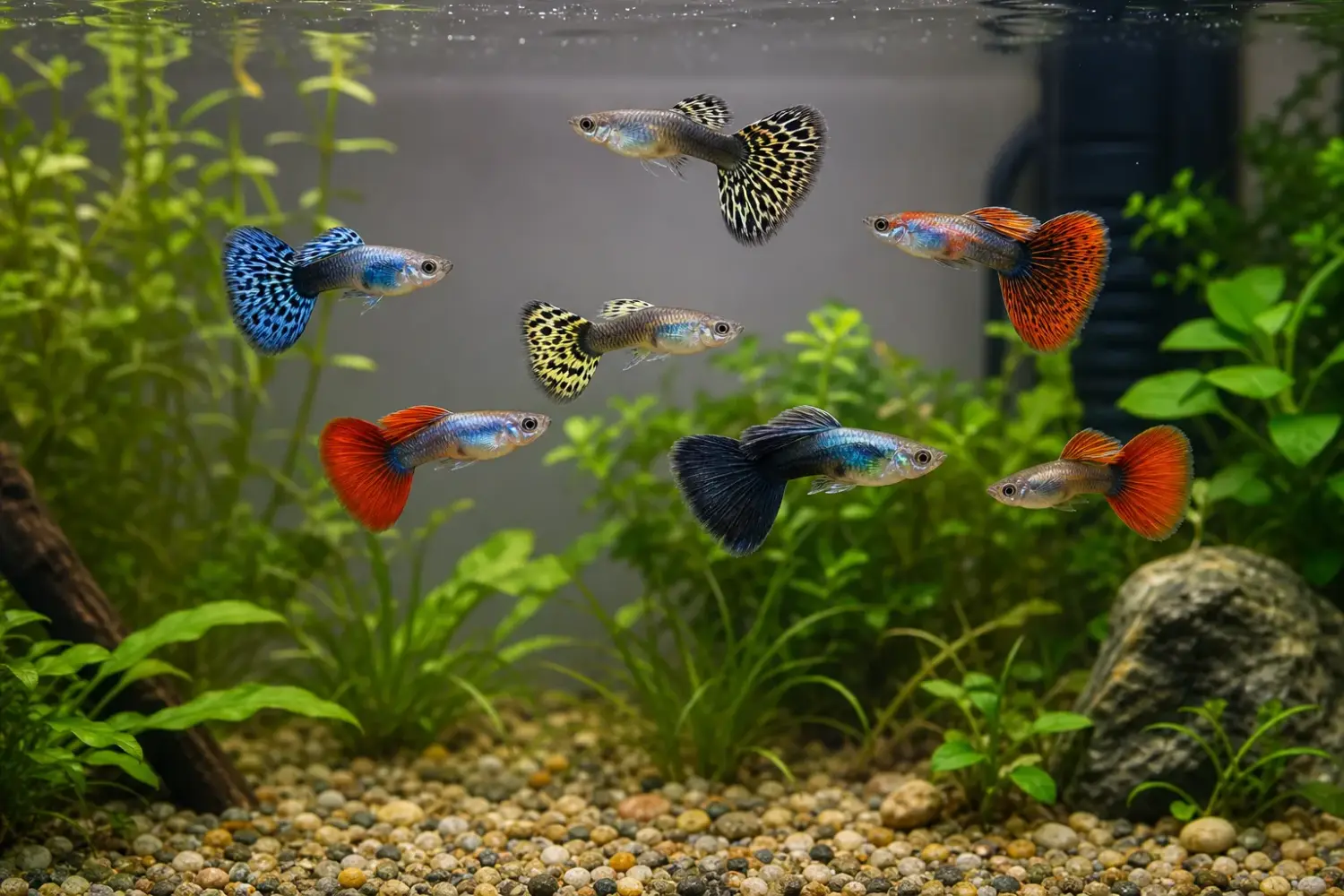
A correctly sexed male-only group removes the possibility of those fish producing fry. A male-only purchase will not prevent breeding if females are already living in the aquarium. It still needs observation: check that every fish can feed and rest without persistent chasing. Do not assume that the words “male pack” guarantee a peaceful aquarium.
Female-only groups require a different conversation with the seller. Females can store sperm from earlier matings and later produce young without a male in their new tank, as documented in guppy research from Sinop University. A female-only label therefore does not establish a fry-free history. Ask whether the females have previously been housed with males.
If breeding is your goal, confirm the exact sexes included rather than relying on the package name. Our Guppy Pair vs Trio comparison covers group composition, courtship pressure, and parentage considerations in more detail. Either format needs a plan for the offspring.
Fry, juveniles, or adults for a first purchase
Adults or clearly sexed older juveniles can make the buying decision easier when you want a display group. Ask what stage is actually offered, what the fish currently eat, and whether the photograph shows those fish or a representative adult. A size or age estimate is useful only when it comes from the specific listing or seller.
Fry packs can be rewarding if you want to raise fish, but small fish do not automatically mean a small commitment. Young stock needs appropriately sized food and may require more frequent small meals than adults. University of Florida fish-nutrition guidance explains these life-stage differences and warns that overfeeding can damage water quality.
Budget time for feeding, checking that the smallest fish eat, and removing leftovers. Plan where the group will live as it grows. If sexes are unconfirmed, do not treat the pack as a guaranteed future male-only display. You may need additional housing and help identifying sexes as the fish develop.
Check the aquarium before choosing the strain
A bright tail or familiar strain name cannot make an unprepared aquarium suitable. Start with the beginner guppy care guide and tank setup guide, then choose fish that fit the resulting setup.
Check that the biological filter is established and water tests show no detectable ammonia or nitrite before stocking. Testing a newly filled, empty aquarium once does not demonstrate that it can process fish waste. Merck Veterinary Manual’s aquarium guidance describes cycling and the need to monitor ammonia, nitrite, and nitrate.
Consider usable swimming space, cover, access to food, and any existing tankmates alongside water quality. Leave capacity for growth rather than filling the aquarium to an assumed maximum immediately. Do not use a universal guppy-per-gallon formula or a filter’s advertised tank rating as a complete stocking decision.
Verify what the listing actually includes
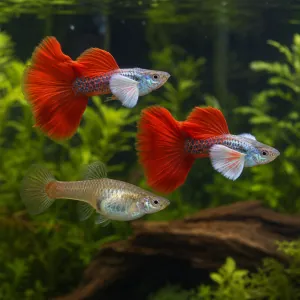
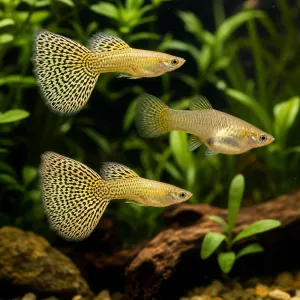
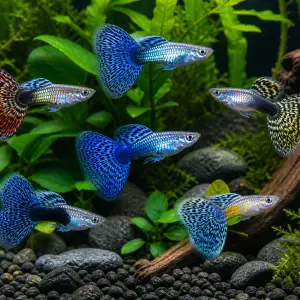
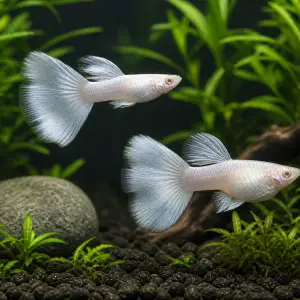
Read the selected option all the way through. A strain photograph may show mature coloration even when the listing is for fry. An editorial illustration is not evidence of the fish being sold.
Confirm these details before checkout:
- The total number of fish and whether any stated extras are included
- The exact sex composition, or an explicit statement that the fish are unsexed
- The life stage and any seller-provided size estimate
- Whether photos show the actual fish, their parents, or representative examples
- What food the group currently accepts
- The available delivery route and arrangements for your destination
Useful seller questions are specific: “Are all fish in this option confirmed males?” “Have these females been housed with males?” “What are these juveniles eating?” “Does this image show the fish I will receive?” Ask for clarification when the title, selected variant, and description disagree. Do not fill a missing detail with an assumption.
Prepare quarantine and arrival day
Have the receiving aquarium ready before ordering. Quarantine means keeping newcomers separate from established fish, with equipment that does not spread water between systems. A breeder box sharing the display tank’s water is not a separate quarantine system. Our guide to quarantining new guppies explains the preparation and observation routine.
Start with one compatible group rather than combining several sources immediately. University of Florida biosecurity guidance supports keeping incoming groups separate and avoiding new additions during quarantine. This also makes it easier to keep useful records of appetite, behavior, and any changes.
Arrange for someone to receive the fish promptly. Read the arrival-day checklist and Acclimation Guide beforehand. Review the current Shipping Policy and Live Arrival and DOA Policy for the applicable route, instructions, and documentation requirements.
Beginner readiness checklist
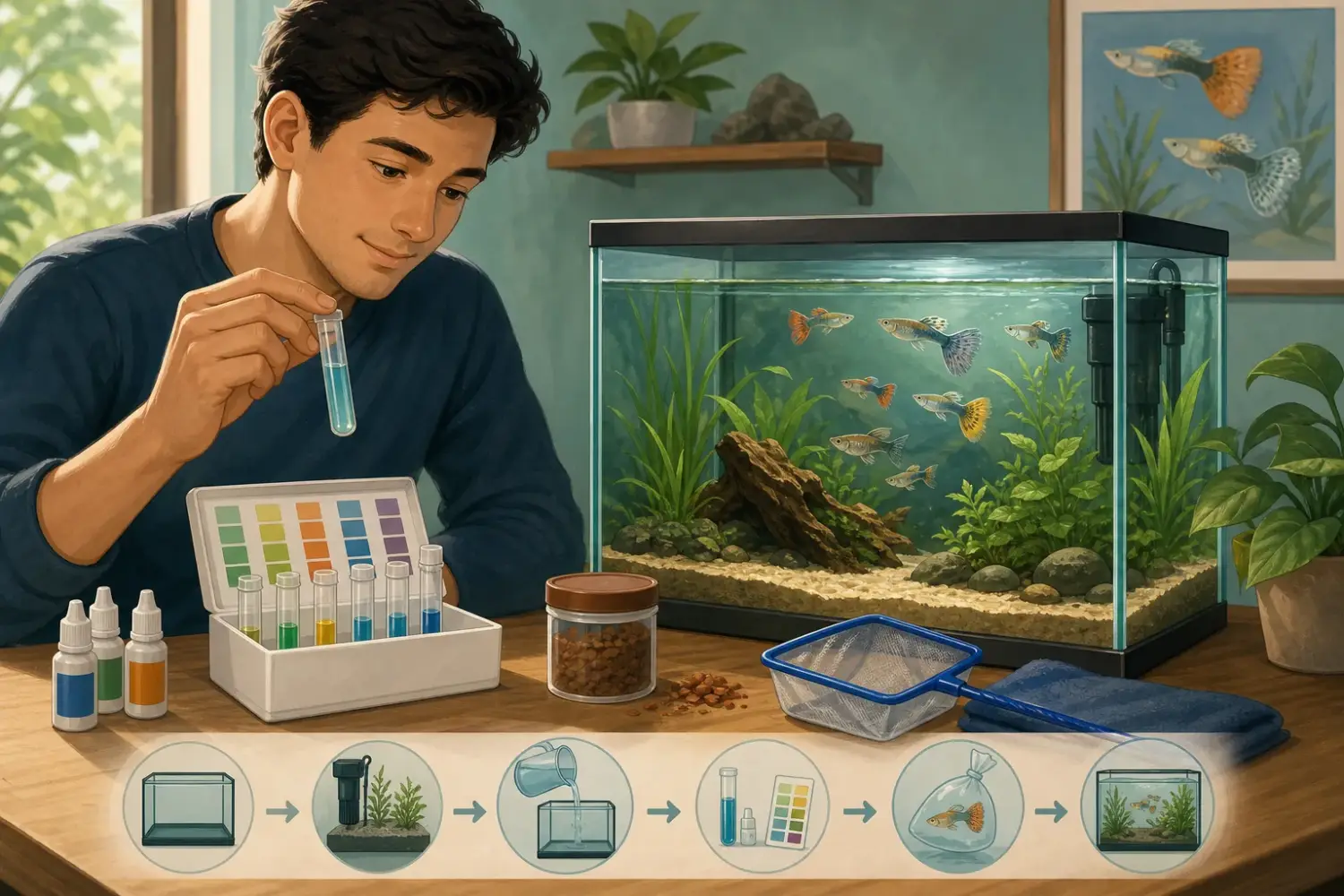
Before choosing your first pack, answer each question:
- Is the aquarium cycled, tested, and ready for the planned group?
- Have I accounted for existing fish and the newcomers’ adult needs?
- Do I know the number, life stage, and sexes I am ordering?
- Can I manage the feeding routine this life stage needs?
- Is separate quarantine ready, with dedicated equipment?
- Can I receive the delivery and follow the arrival instructions?
- If fry appear, do I have suitable housing and a realistic rehoming plan?
- Can I keep up with water testing, cleaning, feeding, and observation during busy weeks?
If an answer is no, resolve it before ordering. A future upgrade or an unconfirmed buyer for surplus fry is not available capacity today.
First guppy pack FAQ
How many guppies should a beginner buy?
Choose a group that fits the actual aquarium and your care plan. Establish the tank’s suitability first; avoid choosing a bundle solely because it offers more fish for the money.
Are fry easier because they are smaller?
Not necessarily. Their feeding and grow-out needs can require more attention, and unsexed fry leave future group composition uncertain.
Should I buy several strains at once?
One compatible group is a simpler first purchase to observe and manage. Learn its routine before expanding your collection.
Once the checklist is complete, browse the HiGuppy shop and compare the details of each available listing with your plan. Choose the group you can support through growth and ongoing care, not just the one that looks most striking today.
Behind the care guides
Care begins with steady systems
Our guppy guides focus on practical routines: keep water stable, observe fish closely and allow for natural variation.
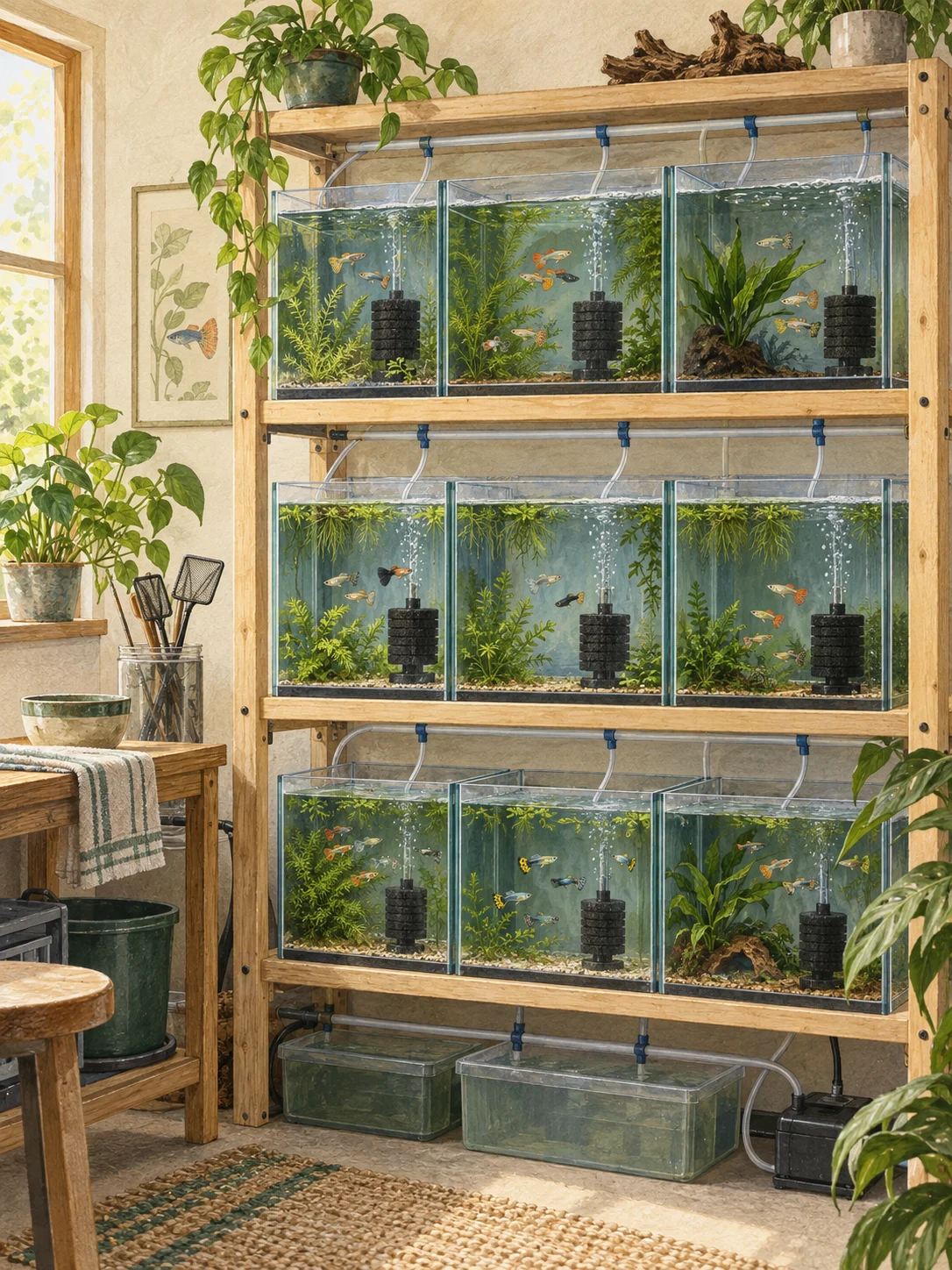
Care systems
Steady water, thoughtful care
Gentle filtration and regular observation support healthy aquarium routines.
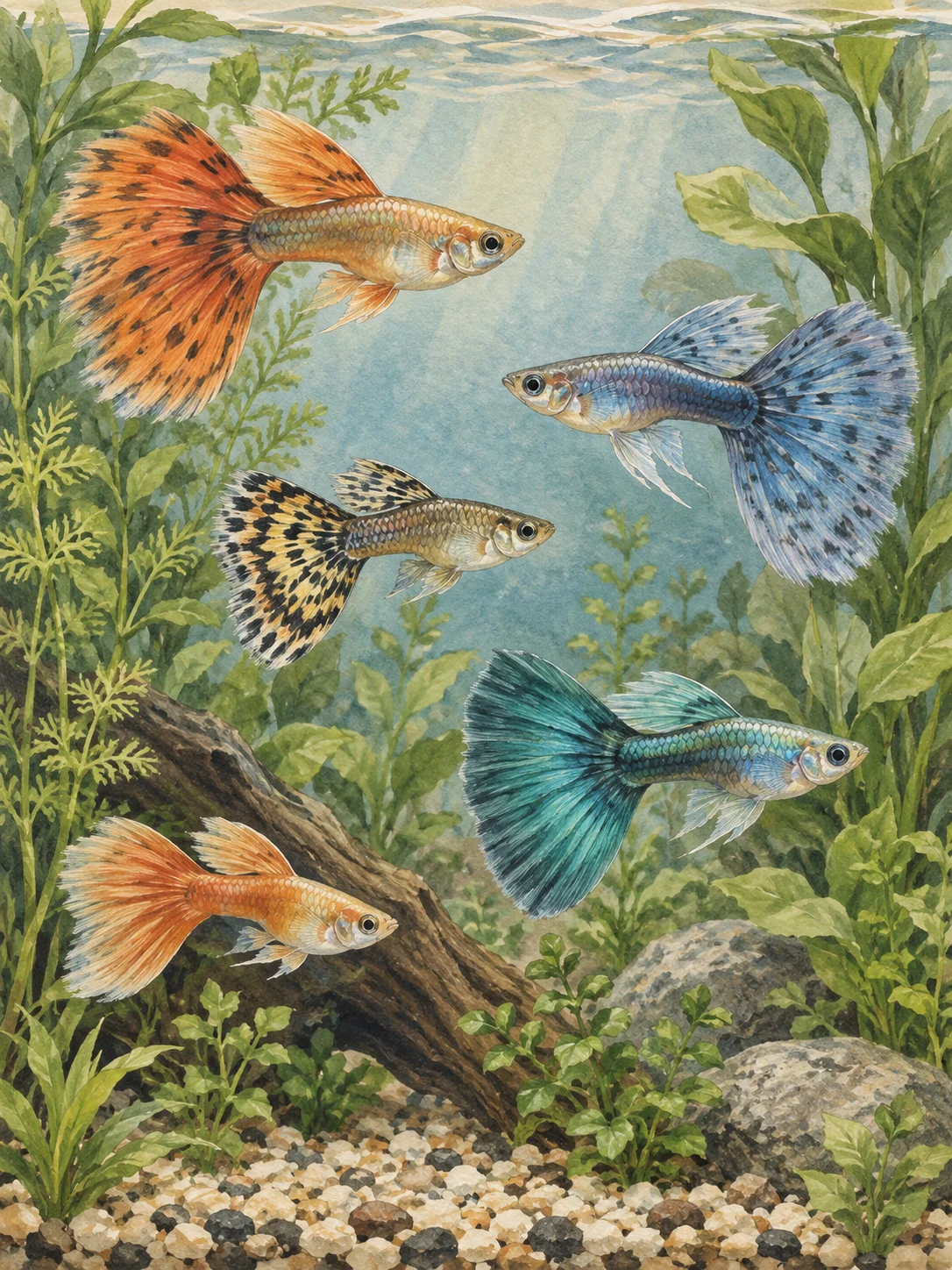
Natural variation
Every guppy is different
Color, size and fin shape vary with strain, age and each individual fish.
Editorial illustrations for context; they do not depict HiGuppy's exact facility or current fish stock.