The HiGuppy Journal
Can Guppies Live with Neon Tetras?
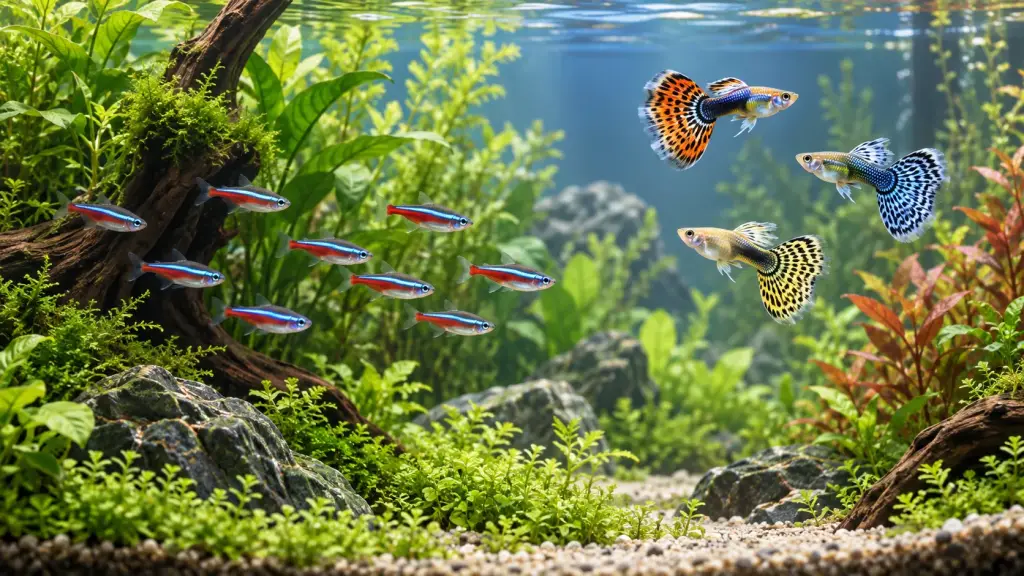
Can guppies live with neon tetras? Sometimes, in a carefully planned community aquarium. Guppies generally need more mineral-rich water than common neon tetras, so matching temperature alone is not enough. Check water chemistry, room for a proper tetra group, feeding access and individual behavior. Introduce gradually and keep a separation option ready if persistent chasing, stress or poor feeding appears.
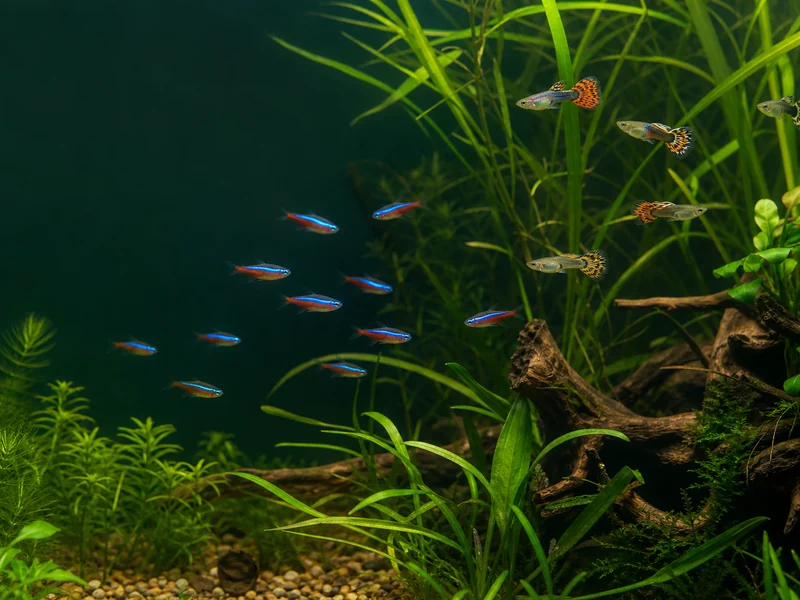
Start with overlapping needs, not color
This guide concerns the common neon tetra, Paracheirodon innesi. Cardinal and green neon tetras are different species, and black neon tetras belong to a different genus. Check the scientific name before applying care advice to a fish sold simply as a “neon.”
Water chemistry is the main compatibility question. OATA’s guppy and molly guidance lists pH 7.0–8.0, general hardness of 8–18°dH and temperature of 20–28°C. Fluval’s common neon tetra profile lists pH 6.0–7.0, hardness of 2–12°dH and 22–27°C. These are published care ranges, not a shared-tank recipe: their pH ranges meet only at one boundary. Recommendations vary by source and stock; pH 7.0 is not a guaranteed solution for every pairing.
Test your aquarium and replacement water for pH and general hardness (GH), and check temperature with a thermometer. A pH reading does not tell you GH, so check both. Ask the supplier about the exact fish’s longer-term water conditions. A short stay in a shop tank does not demonstrate lifelong suitability. Avoid repeatedly changing pH to chase a compromise; if the water you can reliably maintain favors only one species, keep them separately.
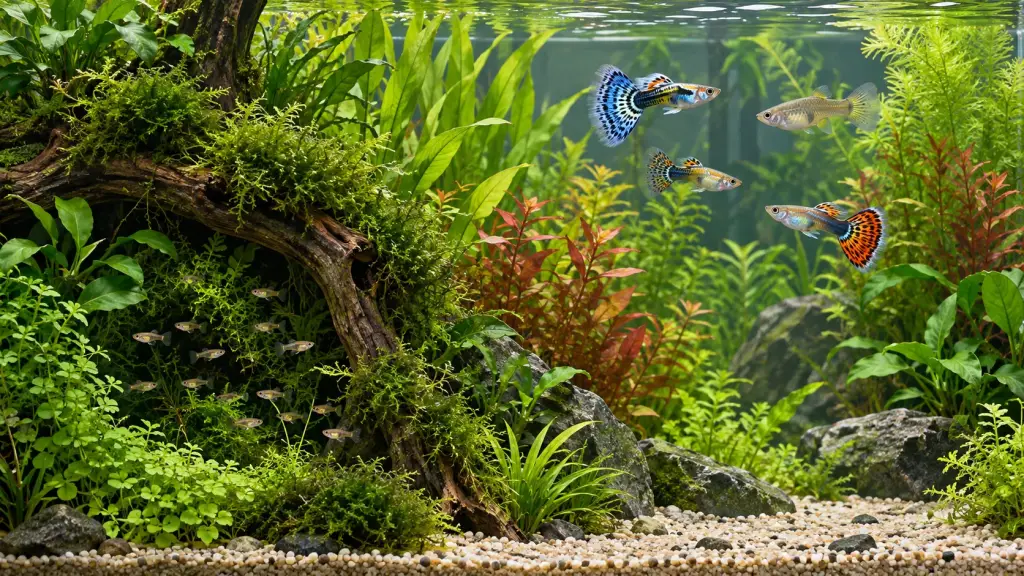
Plan the aquarium before the purchase
- Use a mature, cycled aquarium with room for each species and its social behavior.
- Check temperature and water parameters over time, not just on one day.
- Keep filtration, feeding and water changes matched to the whole bioload.
- Introduce fish gradually and observe feeding, stress, fin damage and hiding.
- Maintain a separation plan if the community does not settle safely.
Plan for a group of common neons rather than one or two additions. Fluval recommends a minimum group of 8–10; guppies do not replace companions of the same species. Reserve swimming room for that group before deciding how many guppies the aquarium can support. If adequate group space is unavailable, choose a different stocking plan instead of keeping too few tetras.
Watch the fish, not only the plan
Even a suitable setup can develop problems when social pressure, illness, feeding competition or water quality changes. If fish are persistently hiding, gasping, losing condition or being chased, test water and reduce the risk instead of adding livestock. Fin damage needs investigation; do not assume it proves the tetras are responsible without observing the interaction.
Watch an entire feeding session. Offer appropriately small food where both groups can reach it, using separate feeding spots when necessary. Confirm that quieter fish actually swallow food rather than simply approach it. Adding extra food to compensate for competition can leave waste behind; adjust distribution and remove leftovers instead.
Review the Guppy Tank Setup Guide before adding any tank mates.
Plan for a whole community, not two species
Compatibility is influenced by every fish in the aquarium. Account for adult size, existing tank mates, the full tetra group and any guppy fry. There is no dependable “guppies per neon” ratio or fish-per-gallon formula that can settle those questions. A tank size recommended for one species alone does not automatically cover both groups.
Use plants and suitable decor to provide retreats while leaving open swimming lanes. More filtration cannot create physical space. Mixed-sex guppies can also increase the population through breeding, so plan where additional fish would go before the aquarium becomes crowded.
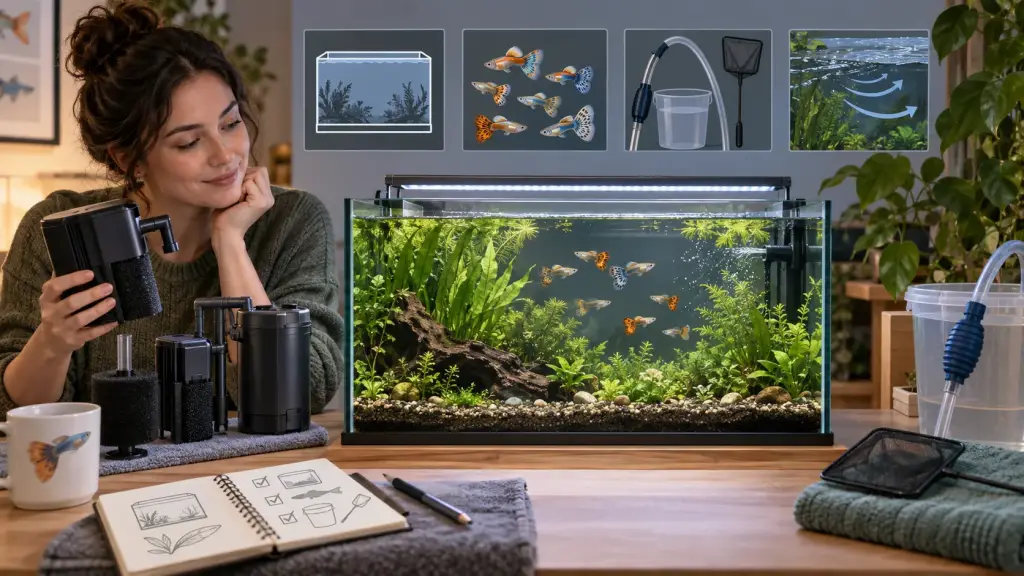
Build in observation time
Quarantine and observe new arrivals separately before mixing them with established fish. Prepare suitable water, temperature and filtration for that separate setup too; an uncycled spare container is not a sound long-term backup. Our guppy quarantine guide covers preparation in more detail.
Introduce fish only to a stable, cycled aquarium and watch them through ordinary feeding and maintenance routines. Record appetite, breathing, hiding and fin condition so changes are easier to notice. Do not add more fish while you are still assessing the first combination.
Plan the aquarium first: Review the Guppy Tank Setup Guide and Guppy Care Guide. Keep compatibility conditional and contact HiGuppy for an order-specific question.
Compatibility is conditional, not a blanket yes
The Aqueon livebearer guide and Aqueon tetra guide provide useful group-level context, including differences between wild and commercially raised fish. Broad “tetra” recommendations cannot replace a common-neon check. Use this checklist to decide whether your actual fish and aquarium are a reasonable match.
| Compatibility check | What to confirm before combining them |
|---|---|
| Water compatibility | The measured temperature, pH and hardness suit both groups for long-term care. |
| Group needs | Common neons have an appropriate same-species group and guppies are not overcrowded. |
| Tank capacity | The aquarium has enough swimming room, filtration and maintenance capacity for the combined stocking load. |
| Fin and feeding behavior | No fish is persistently chasing, fin-nipping or preventing another group from feeding. |
| Backup plan | You can separate fish if behavior or health changes after introduction. |
The RSPCA tropical-fish care guidance supports planning for adult size, total fish numbers and breeding, alongside water-quality checks. Passing a checklist once does not remove the need to reassess those conditions as the community changes.
For a broader comparison of community options, use the Best Tank Mates for Guppies guide. If you are building the aquarium from scratch, start with the beginner guppy tank setup guide so filtration, capacity and observation are planned before adding more fish.
What to watch during the first days together
Check at more than one time of day, including feeding. Look for normal group movement, intact fins and access to food. Persistent hiding, repeated chasing, torn fins or exclusion from meals are reasons to act. Separate fish when harassment or injury continues; waiting for the situation to resolve can prolong avoidable stress.
Adding fish increases waste and feeding demands. Check ammonia and nitrite, particularly after stocking changes; OATA’s care guidance specifies zero for both. Reassess filtration and maintenance if readings or behavior deteriorate. Clear-looking water alone does not prove the aquarium is coping, and calm behavior cannot make unsuitable water chemistry acceptable.
Bottom line: guppies and neon tetras may coexist in a suitable community aquarium, but compatibility should be treated as an ongoing observation rather than a permanent guarantee.
Frequently Asked Questions
Can guppies and neon tetras live together?
Sometimes, when water chemistry, temperature, space and behavior suit both groups. Guppies’ preference for harder water is an important check before combining them with common neons. Their presence in the same tank is not a guarantee of compatibility.
Do guppies and neon tetras have identical care needs?
No. Compare species-specific temperature, pH and hardness guidance, then confirm the actual fish’s history. Neon tetras also need their own social group. A compromise should not put either group under chronic stress.
What should I watch after introducing them?
Watch feeding access, hiding, chasing, breathing and whether each group behaves normally. Test water if behavior changes and separate fish if stress or injury persists.
Should I add more fish if the tank seems calm?
Wait until the current community has settled and the aquarium remains stable through ordinary routines before considering any increase in stocking.
Behind the care guides
Care begins with steady systems
Our guppy guides focus on practical routines: keep water stable, observe fish closely and allow for natural variation.
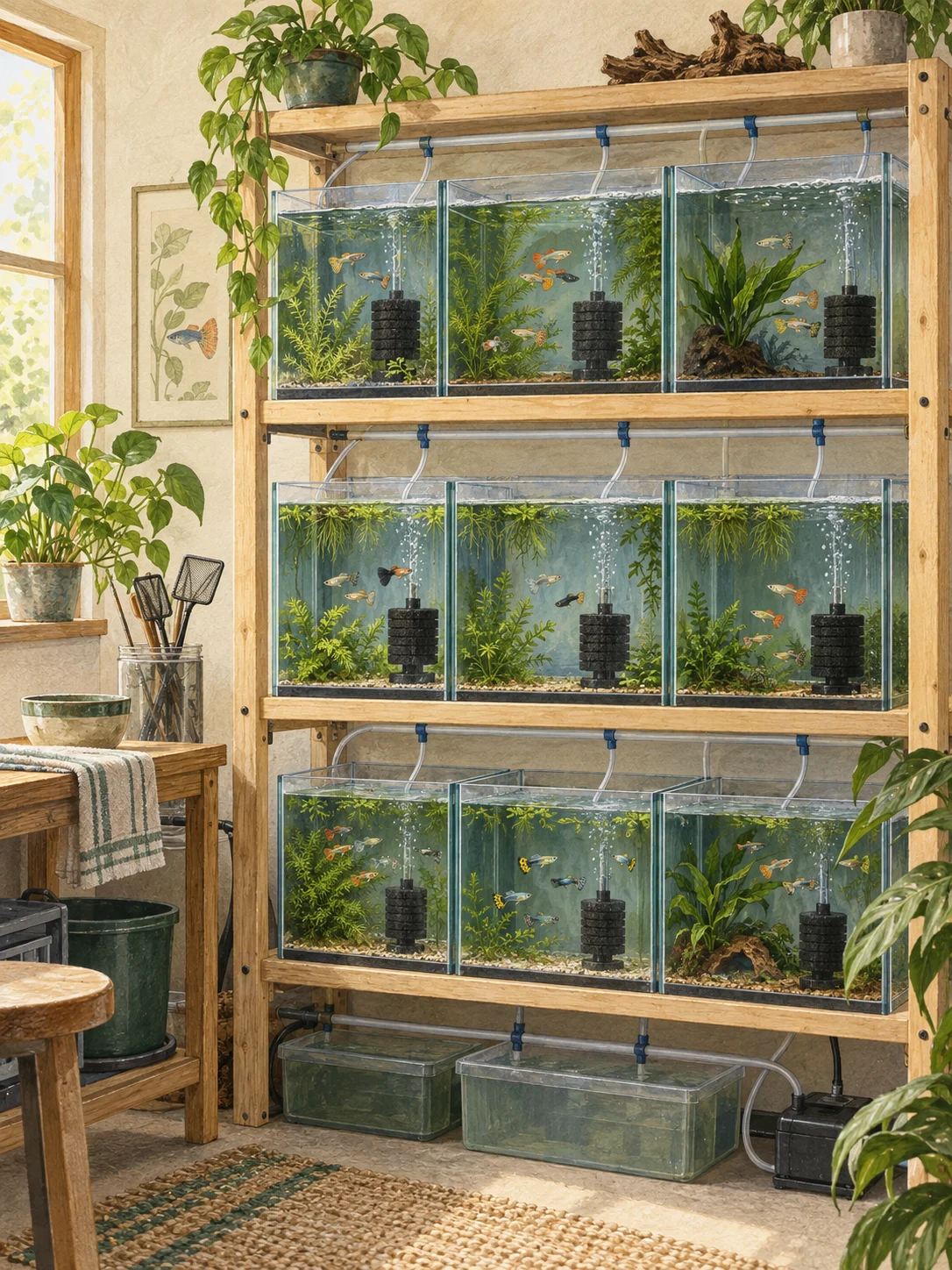
Care systems
Steady water, thoughtful care
Gentle filtration and regular observation support healthy aquarium routines.
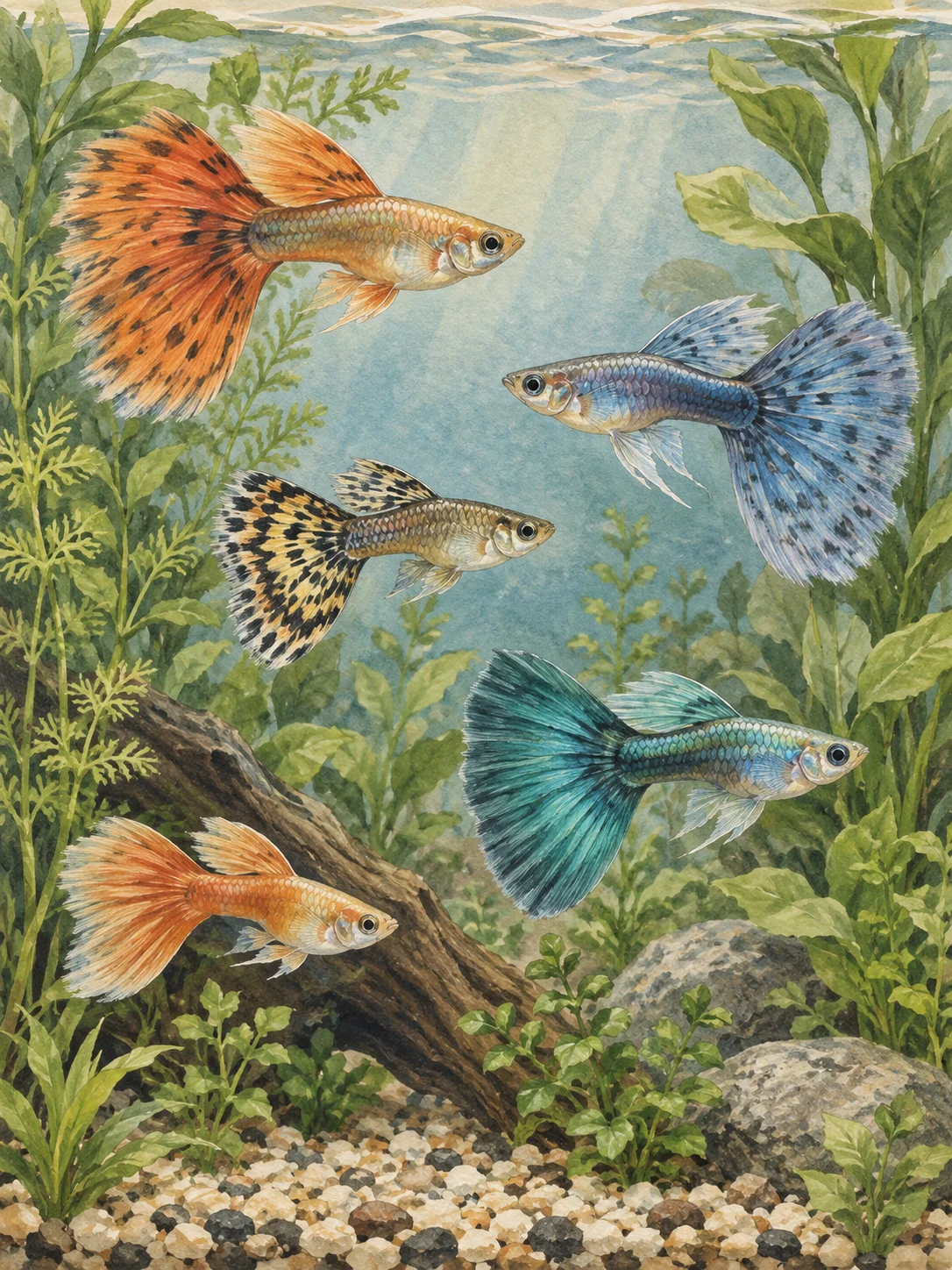
Natural variation
Every guppy is different
Color, size and fin shape vary with strain, age and each individual fish.
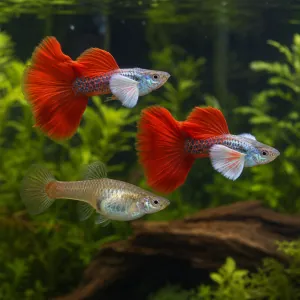
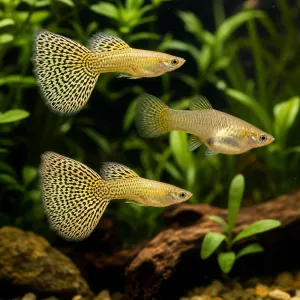
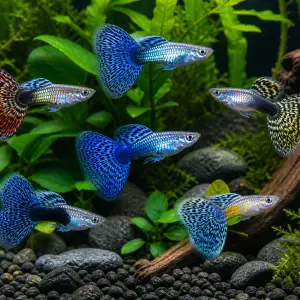
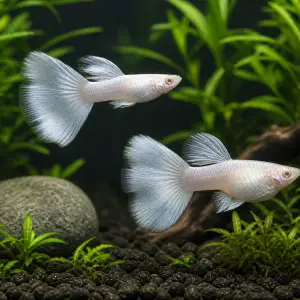
Editorial illustrations for context; they do not depict HiGuppy's exact facility or current fish stock.