The HiGuppy Journal
Guppy vs Platy: Differences, Care and Which to Choose
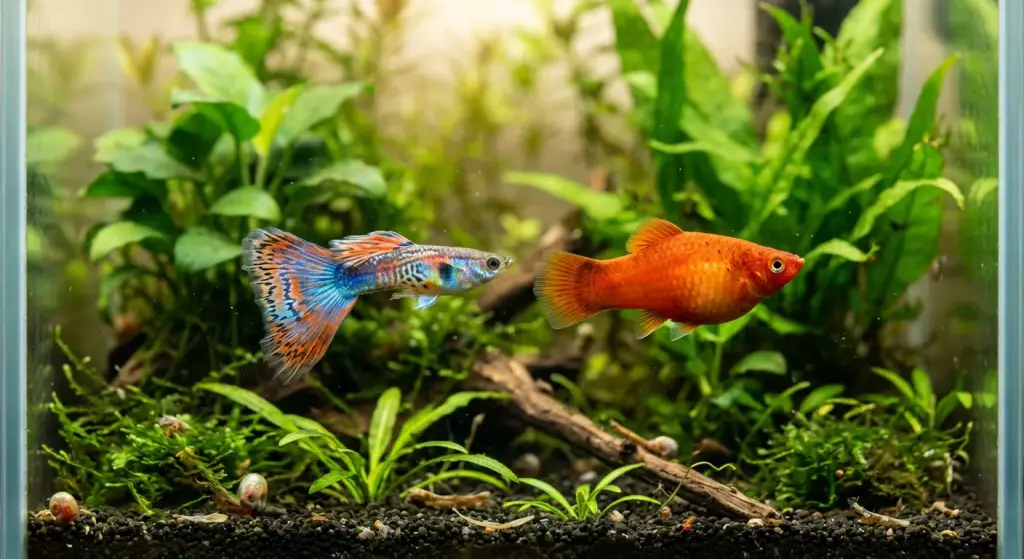
What is the difference between a guppy vs platy? Guppies are small, slim livebearers; males are often colorful and may have flowing tails. Platies have deeper bodies and shorter, rounded fins. Both are generally peaceful livebearers and can suit beginner aquariums when their group and water needs are met. The better choice depends on adult size, group needs and the stable water conditions you can provide. This guide is part of our complete guppy care guide and compares the two fish side by side so you can choose with confidence.
Walk into any fish shop and you will see guppies and platies swimming in neighboring tanks, both bright, active and cheap enough to impulse buy. New hobbyists often ask whether they are basically the same fish. They are close relatives in the livebearer family, and they can share a tank, but they are different species with different shapes, sizes, water preferences and personalities. Below you will find a clear guppy vs platy comparison of looks, size, lifespan, water parameters, feeding, breeding and tank mates, plus a decision guide, a mixed tank plan and common mistakes to avoid.
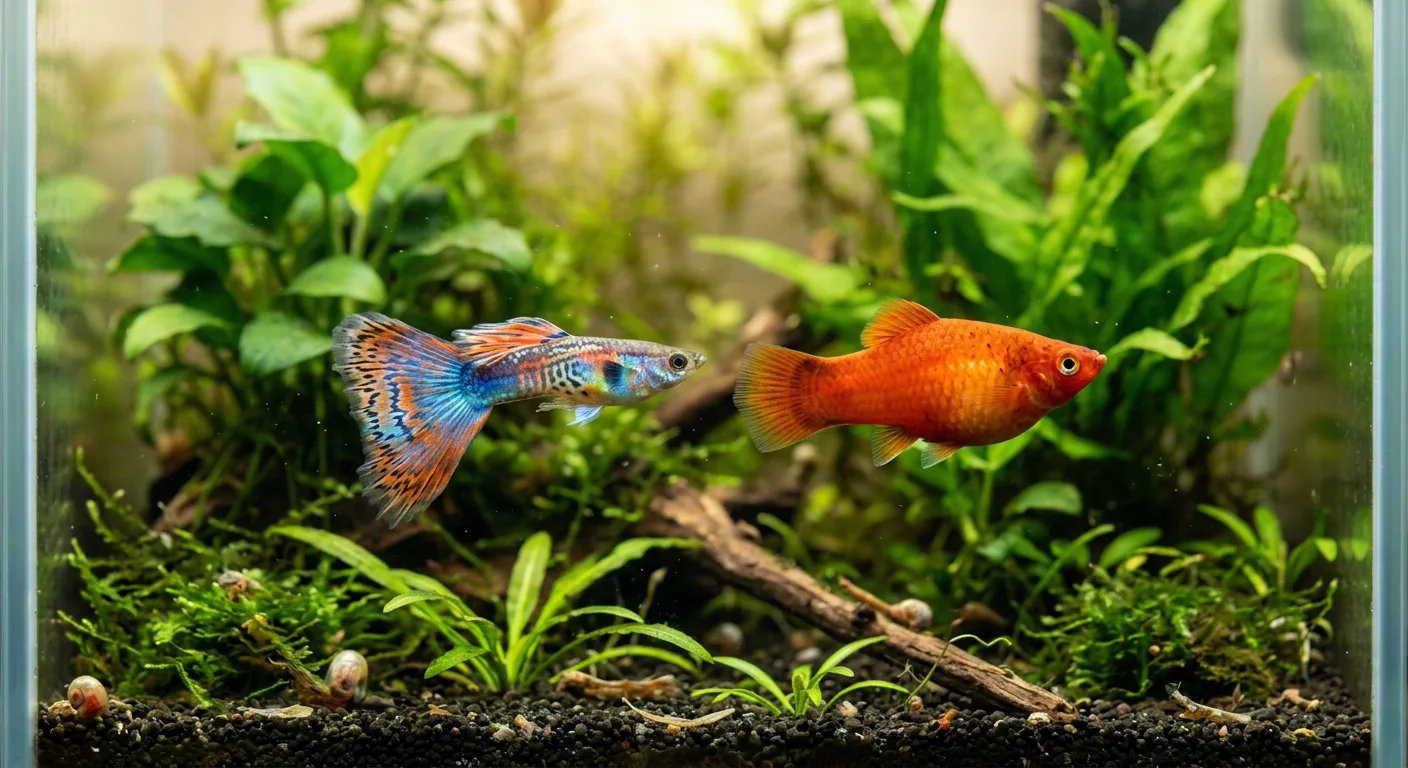
Guppy vs platy at a glance
The short answer
If you want a slim fish with colorful male patterns and varied tail shapes, consider guppies. If you prefer a deeper-bodied livebearer with shorter fins, consider platies. Both are livebearers, meaning females give birth to free-swimming fry. Even if you see chasing or contact in a mixed tank, that alone does not establish that hybrid fry were produced; our guide on whether guppies can breed with platies covers the question.
Quick comparison table
| Feature | Guppy | Platy |
|---|---|---|
| Body shape | Slim, streamlined | Stocky, deeper body |
| Typical adult size | About 5 cm (2 in); females are larger than males | About 6 to 8 cm (2.4 to 3.1 in); males generally smaller |
| Tail | Large and fancy in many strains | Short, fan shaped |
| Color | Males highly patterned, females plain | Both sexes fairly similar, solid or spotted colors |
| Temperament | Generally peaceful; males may pursue females | Generally peaceful and social; males may pursue females |
| Water preference | 20 to 28 °C; pH 7.0 to 8.0; medium-hard | 17 to 27 °C; pH 7.0 to 8.0; soft-medium |
| Lifespan | Several years with good care | Several years with good care |
| Difficulty | Easy | Easy |
Ranges vary with strain, genetics and care, so treat these numbers as typical guides rather than guarantees.
Guppy vs platy appearance: how to tell them apart
Body shape and size
The quickest tell in a guppy vs platy comparison is the body. A guppy is slender with a narrow tail stalk, while a platy is deeper through the middle, almost tear shaped, with a thicker tail base. Females of both species are larger than males. OATA lists traditional guppies at about 5 cm (2 in) and platies at about 6 to 8 cm (2.4 to 3.1 in); sex, strain and how length is measured affect individual size. If you want the full growth picture for guppies, see how big do guppies get.
Fins and tails
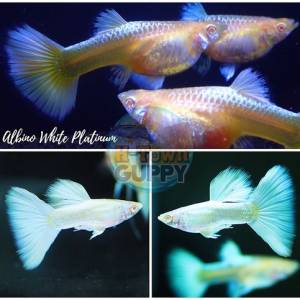
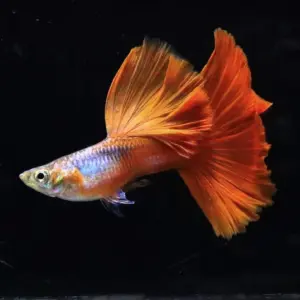
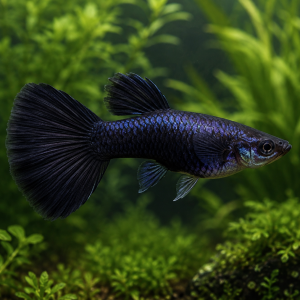
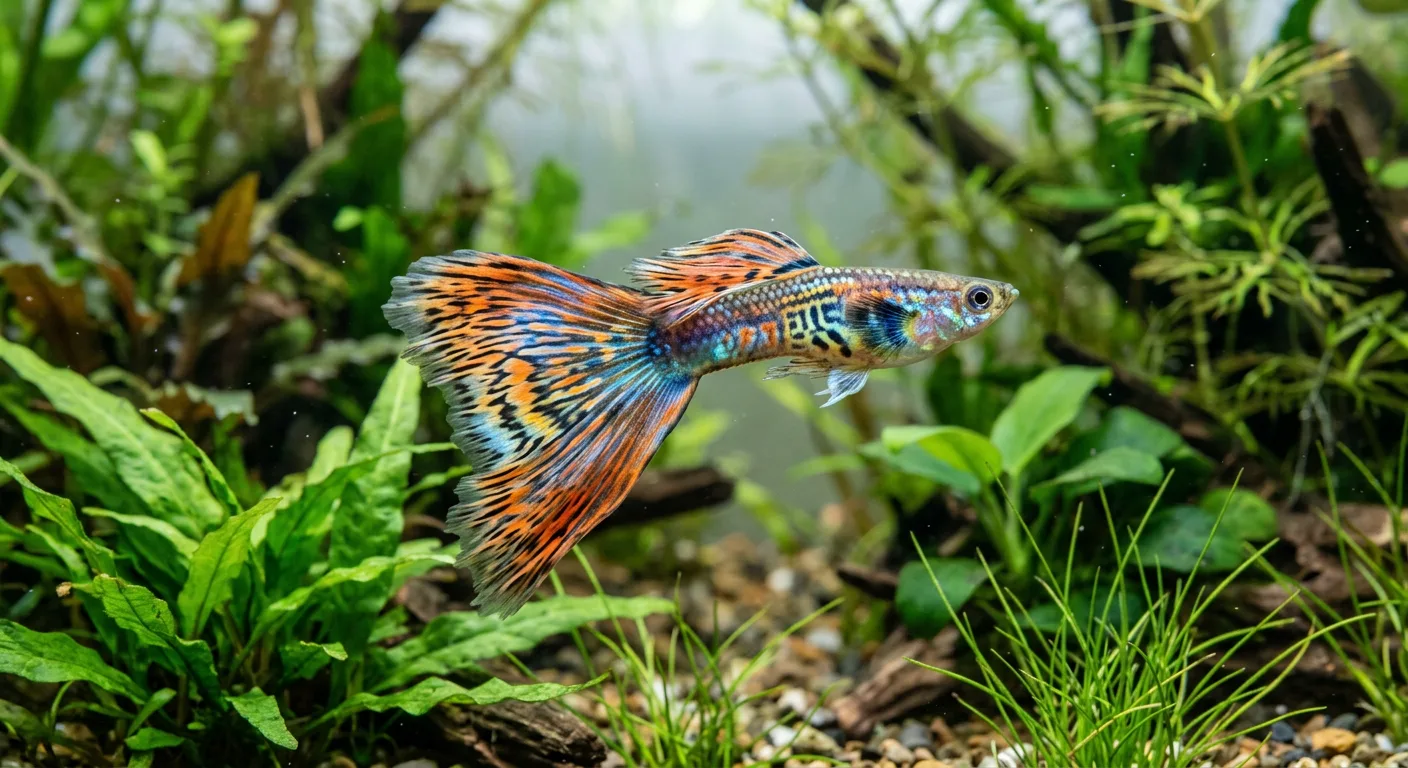
Guppy males are the stars of any guppy vs platy fin comparison. Selective breeding has produced delta, veil, fan, swordtail and many other tail shapes, covered in our guppy tail types guide. Platy fins are modest and rounded. The dorsal fin on a platy is a little more prominent, and some varieties, such as the hifin and wagtail lines, have taller fins or dark fin edges.
Color and patterns
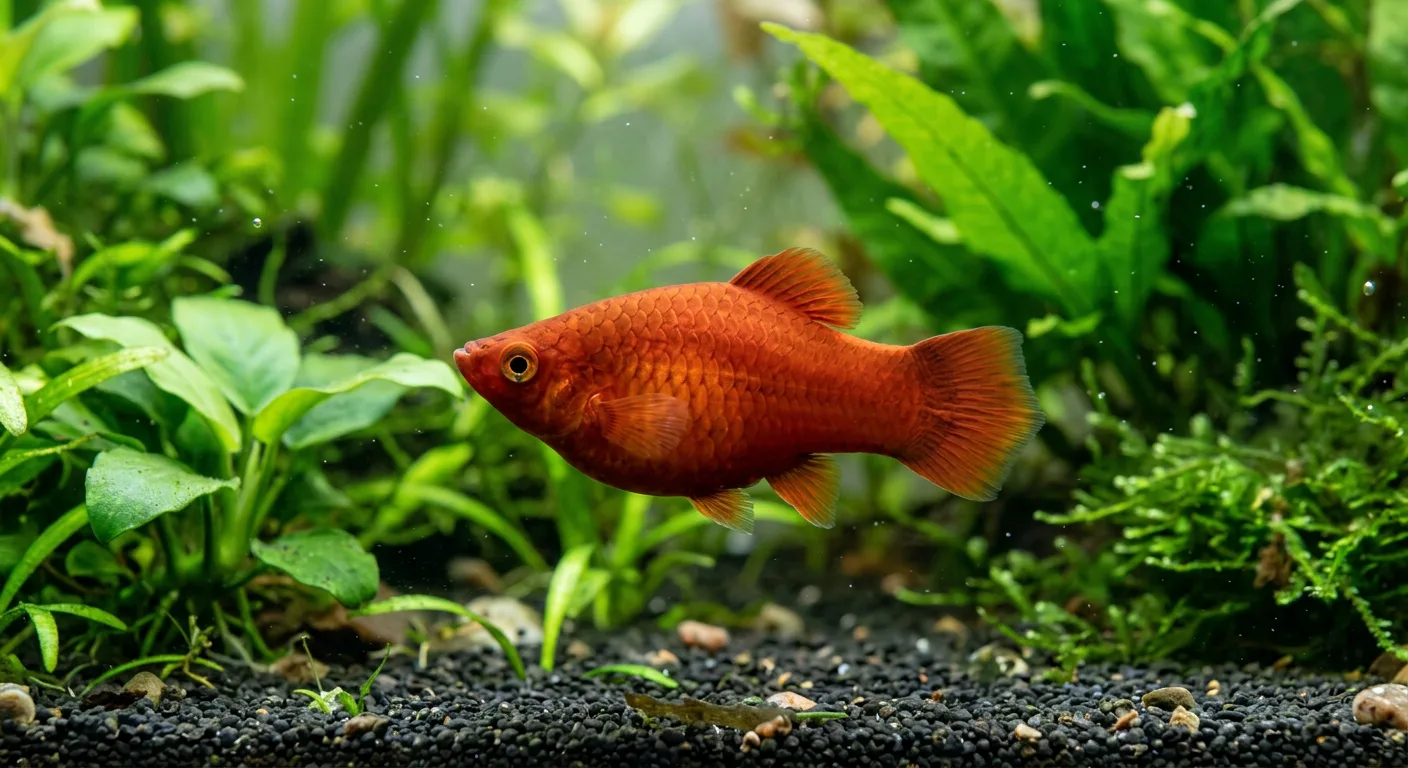
Color is where the guppy vs platy contrast is sharpest. Male guppies can carry mosaic, snakeskin, grass, lace and countless other patterns; our pages on guppy pattern types and guppy color types show the range. Platies come in solid red, orange, yellow, blue, tuxedo, mickey mouse and calico looks. Platies tend to look chunkier and brighter in flat colors, while guppies are more intricate and delicate.
Telling males from females
In both species the male has a modified anal fin called a gonopodium, a thin rod shaped fin used for mating. Females have a fan shaped anal fin. Female guppies often carry a dark gravid spot near the vent when pregnant, and platy females get visibly rounder as well. Our guide on how to tell male or female guppies applies in a very similar way to platies.
Guppy vs platy temperament and behavior
How guppies behave
Guppies are constantly moving. They school loosely, explore every corner and beg for food as soon as the lights go on. Males spend a lot of time displaying and chasing females, which can stress the females if there are too few of them. A ratio of about two or three females per male usually spreads out the attention, as explained in male to female guppy ratio.
How platies behave
On the platy side of the guppy vs platy temperament comparison, platies are active and social too. As with guppies, males may pursue females, so follow a suitable sex ratio and provide cover. OATA describes platies as generally peaceful, but behavior varies among individual fish and aquariums.
Guppy vs platy: do they fight?
Both species are generally peaceful, but monitor any community tank for nipping or persistent chasing. Avoid known fin-nippers around long-finned guppy males, and do not keep either fish with large predatory or aggressive species.
Guppy vs platy water parameters and tank setup
Temperature, pH and hardness
The guppy vs platy temperature ranges in OATA’s care sheets overlap generously: 20 to 28 °C (68 to 82 °F) for guppies and 17 to 27 °C (63 to 81 °F) for platies. Both sheets suggest pH 7.0 to 8.0; their listed general-hardness ranges overlap at 8 to 12 °dH. Keep water stable and acclimate new fish gradually. See our guppy water parameters guide and the pages on ideal pH for guppies and GH vs KH water hardness.
| Parameter | Guppy | Platy | Shared target |
|---|---|---|---|
| Temperature | 20 to 28 °C (68 to 82 °F) | 17 to 27 °C (63 to 81 °F) | 20 to 27 °C (68 to 81 °F) |
| pH | 7.0 to 8.0 | 7.0 to 8.0 | 7.0 to 8.0, stable |
| General hardness | Medium-hard (8 to 18 °dH) | Soft-medium (4 to 12 °dH) | Overlapping range: 8 to 12 °dH |
| Ammonia and nitrite | 0 mg/L | 0 mg/L | 0 mg/L |
| Nitrate | No more than 20 mg/L above normal tap water | No more than 20 mg/L above normal tap water | Compare with tap water and keep within species guidance |
Tank size
The guppy vs platy tank-size guidance is identical: OATA recommends at least 45 litres (about 12 US gallons) for a small group of guppies and for a small group of platies. Increase the volume for larger groups, a mixed tank or expected fry; a larger aquarium also helps keep temperature and water quality more stable. See how many guppies in a 10 gallon tank and how many guppies per gallon for stocking context.
Filtration, plants and decor
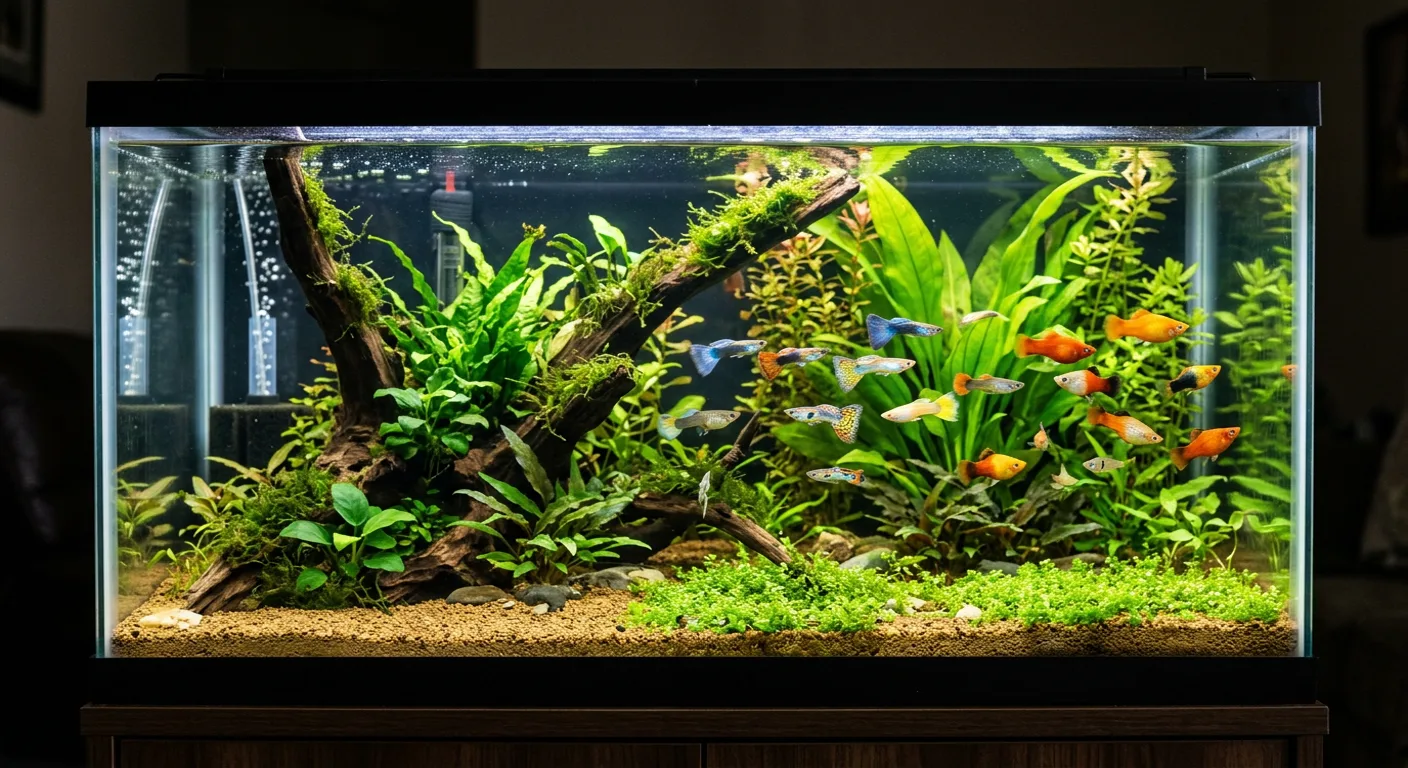
A gentle filter is best in either a guppy vs platy setup. A sponge filter is a safe choice, especially if fry are expected, and our guide on a sponge filter for a guppy tank explains why. Live plants give cover and grazing surfaces; see best live plants for guppies. Smooth decor protects fins, especially on fancy guppy males.
Heater and cycling
Whichever side of the guppy vs platy choice you land on, neither fish is a good candidate for an uncycled tank. Cycle the filter first, as described in our guppy tank cycling checklist. In cool rooms a heater keeps temperatures steady; read do guppies need a heater for details.
Guppy vs platy feeding and diet
What guppies eat
Guppies are omnivores with small mouths. They do well on quality micro pellets or fine flakes, supplemented with small live or frozen foods. Our articles on flakes vs pellets, daphnia and brine shrimp cover good options.
What platies eat
In the guppy vs platy diet comparison, platies are also omnivores, but they are noticeably more plant friendly. They will graze on algae and appreciate blanched vegetables such as zucchini or spinach more regularly. They can eat the same foods as guppies, just in slightly larger portions.
How much and how often
The guppy vs platy feeding routine is the same: for both fish, feed only what they finish in about two minutes, once or twice a day. Overfeeding fouls the water and causes bloating. See how often to feed guppies for a simple routine. Remember that adult livebearers can go several days without food if needed, which is useful for short trips.
Breeding: guppy vs platy fry
Pregnancy and fry numbers
Guppy vs platy breeding looks similar on paper: both species are livebearers. OATA gives a pregnancy period of about 24 to 30 days and a possible brood of 20 to 80 fry for guppies and platies; actual timing and brood size vary by fish and conditions. Our guide on how long guppies are pregnant gives more detail for guppies.
Fry size and care
Fry need appropriately sized food and protection because adults may eat them. Dense plants can provide cover; a separate rearing setup is another option. See raising guppy fry and do guppies eat their babies.
Can guppies and platies interbreed?
The common aquarium guppy and platy are different genera: Poecilia and Xiphophorus. Do not treat chasing or mating attempts as evidence that hybrid fry were produced; manage breeding plans for each species separately.
Strain breeding
For strain breeding, the guppy vs platy choice tilts toward guppies: they offer far more variety and a well documented selective breeding path; see selective breeding for beginners. Platies also show color and fin-shape variation; breeding outcomes depend on the strain and setup.
Guppy vs platy lifespan and health
How long they live
On lifespan, the guppy vs platy verdict is a tie: OATA says both guppies and platies can live several years in a mature aquarium with good water quality. Genetics and care affect an individual fish’s lifespan, so a consistent rule that one species lives longer is not supported by these care sheets. Our article on how long guppies live explains guppy lifespan in more detail.
Common health problems
The guppy vs platy health picture is similar: both species can develop health problems, and poor water quality can stress fish. Long-finned guppy males can be injured by sharp décor or fin-nipping tank mates, so use smooth décor and monitor their fins; see guppy fin rot treatment and guppy ich treatment.
Quarantine matters for both
As a general baseline, quarantine each new fish separately for at least 30 days with dedicated equipment. Longer may be needed depending on the species, source and health concerns. Quarantine reduces exposure risk but cannot guarantee disease-free fish. Our quarantine guide walks through the steps.
Can guppies and platies live together?
Why they work as tank mates
The guppy vs platy pairing works because OATA describes both as generally peaceful and their suggested temperature and pH ranges overlap. That does not guarantee every pairing: allow enough space, provide cover and monitor pursuit or fin damage. See can guppies live with platies for the full compatibility notes.
Step by step mixed tank plan
- Choose a tank sized for both adult groups. OATA recommends at least 45 litres for a small group of either species; a mixed group may need more.
- Cycle the tank fully. Ammonia and nitrite must read zero before fish arrive.
- Keep conditions stable within the shared care range. OATA’s suggested temperature ranges overlap at 20 to 27 °C (68 to 81 °F), with pH 7.0 to 8.0 for both.
- Add plants and hiding spots. Dense cover lets females escape male attention and protects fry.
- Buy more females than males. Aim for about two to three females per male in each species.
- Quarantine, then acclimate slowly. Use the method in how to acclimate guppies.
- Feed small portions twice a day. Watch that smaller guppies get their share.
- Change about 25 percent of the water weekly. See how often to change water in a guppy tank.
- Plan for fry. Both species breed fast, so decide ahead how you will rehome extras.
Other tank mates
Whichever side of the guppy vs platy decision you pick, both fish also pair well with small peaceful species. Browse best tank mates for guppies, rasboras, corydoras and shrimp. Bear in mind that adult platies can occasionally eat very small shrimp.
Guppy vs platy: which one should you choose?
Choose guppies if
- You love color variety, flowing tails and the show look.
- You can provide a properly sized, cycled aquarium for a suitable group.
- You want to try selective breeding or keep a specific strain.
- You prefer warmer water and a very active school.
Choose platies if
- You prefer a deeper-bodied fish with shorter fins.
- You have a 15 gallon or larger tank.
- Your water is on the harder side and you want hands off fish.
- You like a fish that also grazes algae.
Choose both if
You have 20 gallons or more and want both sides of the guppy vs platy pairing in one lively, mixed livebearer community. Start with a small group of each, add live plants and let the tank settle before adding more fish.
| Your situation | Best choice | Why |
|---|---|---|
| Tank under 45 litres | Neither as a group | Below OATA’s suggested minimum for a small group |
| Tank around 15 to 20 gallons | One small group, based on stocking | Size up for a mixed group or fry |
| Want fancy tails and patterns | Guppies | Huge strain variety |
| Prefer deeper bodies and short fins | Platies | Typical platy body shape |
| Interested in breeding for show | Guppies | Defined strains and standards |
Ready to start? Browse our male guppies or premium guppy pairs, shipped live from Vietnam, and read our tips for buying guppies first.
Common guppy vs platy mistakes
- Buying all males: Constant chasing stresses the fish, though male only tanks can work with enough room, see male only guppy tank guide.
- Overstocking because they are small: They breed quickly, and waste builds fast.
- Skipping the cycle: An immature biofilter may not process fish waste, allowing ammonia and nitrite to rise.
- Making sudden water-chemistry changes: Follow each species’ care range and keep conditions stable.
- Ignoring tail damage: Frayed fins can progress into infection.
- Overfeeding: Excess food clouds water and causes bloating.
- Mixing with fin nippers: Long guppy tails are an easy target.
- No plan for fry: A pregnant female can fill a tank in a few months.
Guppy vs platy tips for beginners and experienced keepers
For beginners
- Start with one species, get the routine right, then add the other.
- Test water weekly with a liquid kit and write down the results.
- Buy a few more females than males and add plants before fish.
For experienced keepers
- Keep strains in separate tanks to protect line quality, as explained in how to keep a guppy strain pure.
- Use a bare grow out tank for fry, see guppy fry grow out tank.
- Rotate in live or frozen foods and vegetables to keep color and condition high.
For species care background, see OATA’s guppy care sheet and platy care sheet, and our guppy care guide covers the day to day routine.
Quick checklist
- Decide whether you want fancy tails (guppies), sturdy bodies (platies) or both.
- Choose a tank: OATA recommends at least 45 litres (about 12 US gallons) for a small group of guppies or platies; plan more for a mixed group or fry.
- Cycle the filter until ammonia and nitrite read zero.
- Set the temperature around 76 to 78 °F and keep pH about 7.0 to 7.8.
- Add plants and smooth decor for cover and safe fins.
- Buy two or three females per male and quarantine new fish.
- Feed small portions once or twice a day.
- Change about 25 percent of the water weekly, adjusting for the tank and test results.
- Plan how you will handle fry before they arrive.
FAQ
Guppy vs platy: which is easier for beginners?
Both can suit a first aquarium when the tank is mature, appropriately sized and kept within the species’ care ranges. Choose by adult size, group needs and the water conditions you can maintain; neither should be assumed to tolerate unstable water.
Can guppies and platies live together?
They may be compatible when their shared temperature and pH ranges are maintained, the aquarium is large enough for both groups, and cover is available. OATA describes both as generally peaceful and recommends two females per male to reduce stress. Monitor behavior and plan for fry.
Guppy vs platy breeding: do they crossbreed?
The common aquarium guppy and platy are separate genera, Poecilia and Xiphophorus. Do not treat chasing or contact as evidence of hybrid offspring; plan breeding separately for each species.
Guppy vs platy size: which is bigger?
OATA lists traditional guppies at about 5 cm (2 in) and platies at about 6 to 8 cm (2.4 to 3.1 in). Fish vary by sex, strain and how length is measured, so use those figures as general guides.
Guppy vs platy lifespan: which lives longer?
OATA says both can live several years in a mature aquarium with good water quality. An individual fish’s lifespan varies with genetics and care, so these care sheets do not support a rule that one species always lives longer.
In a guppy vs platy tank, do platies nip guppy tails?
OATA describes platies as generally peaceful, but monitor any mixed tank for nipping or persistent pursuit. Provide enough space and cover, and keep a suitable female-to-male ratio.
Guppy vs platy setup: is a heater needed?
Use a heater if needed to keep the aquarium stable within the shared species range. OATA’s suggested ranges overlap at 20 to 27 °C (68 to 81 °F); avoid sudden temperature changes.
Sources
- OATA: How to look after guppies and mollies — suggested guppy water parameters, size, sex differences, peaceful/livebearing status, group ratio, small-group aquarium size, lifespan and fry/gestation guidance.
- OATA: How to look after platies and swordtails — suggested platy water parameters, 6–8 cm size, peaceful/livebearing status, group ratio, small-group aquarium size and lifespan/fry guidance.
- FishBase: Poecilia reticulata — accepted guppy species name and recorded size data.
- FishBase: Xiphophorus maculatus — accepted platy species name and recorded size data.
Behind the care guides
Care begins with steady systems
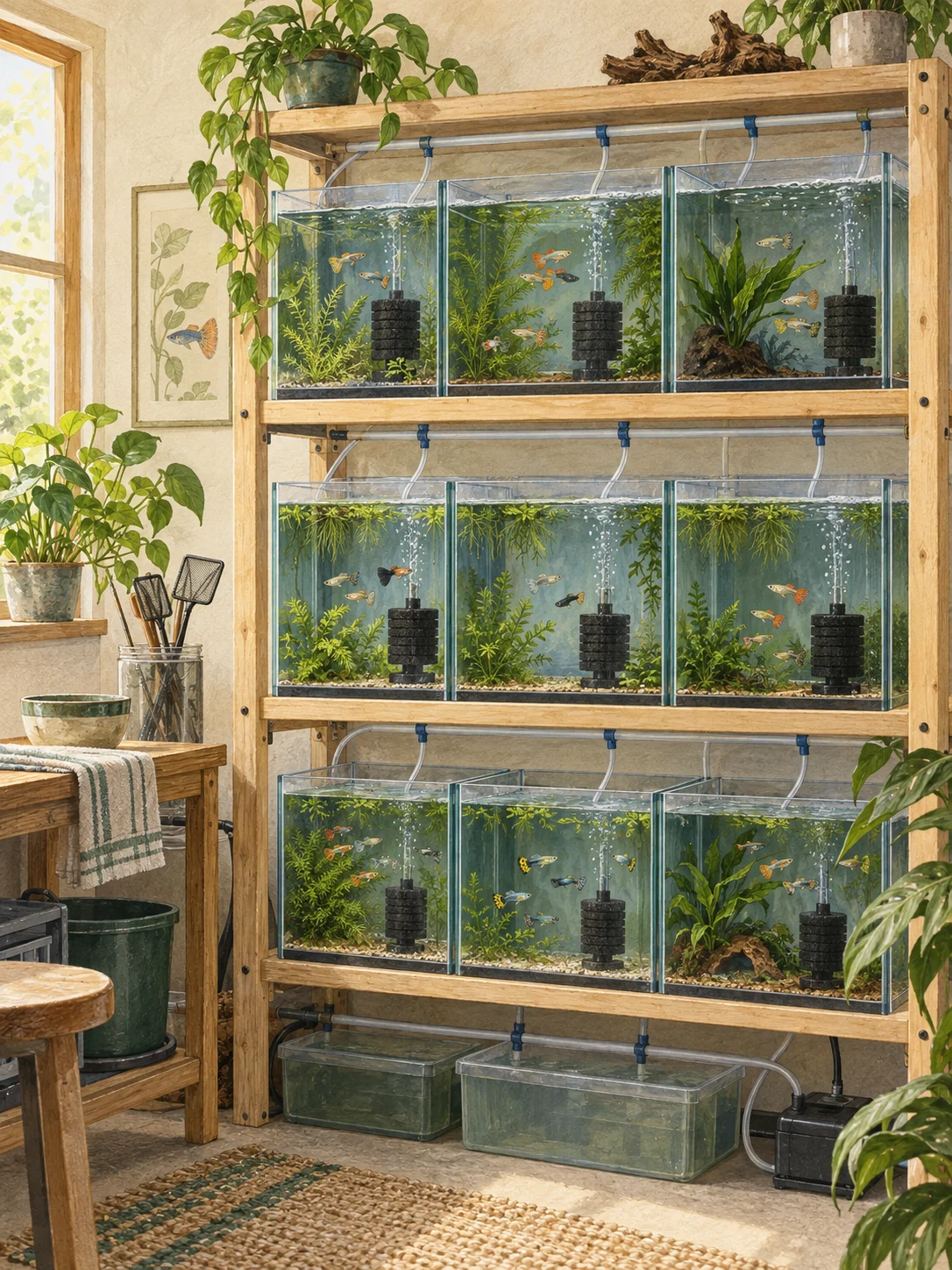
Our guppy guides focus on practical routines: keep water stable, observe fish closely and allow for natural variation.
Care systems
Steady water, thoughtful care
Gentle filtration and regular observation support healthy aquarium routines.
Natural variation
Every guppy is different
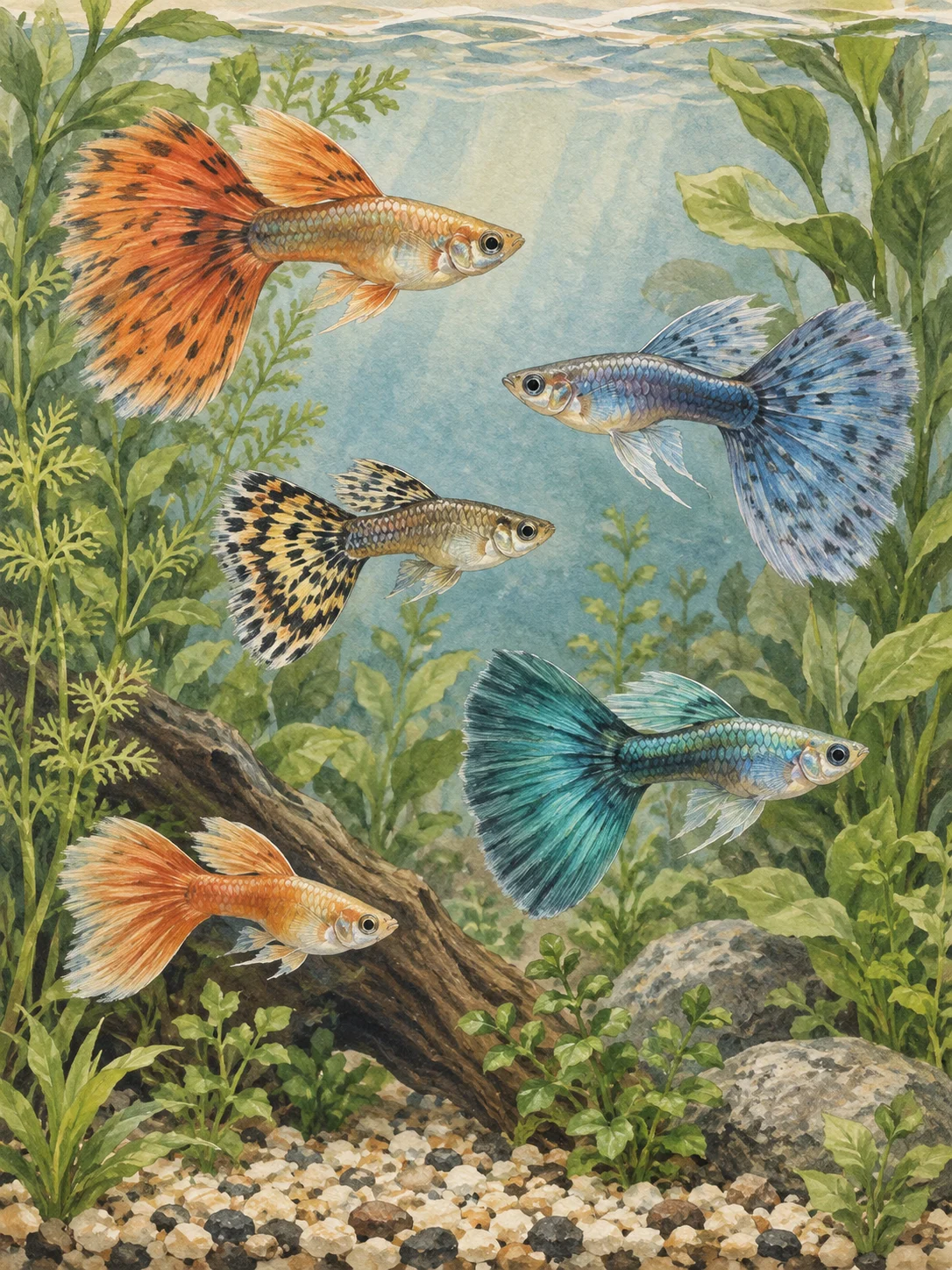
Color, size and fin shape vary with strain, age and each individual fish.
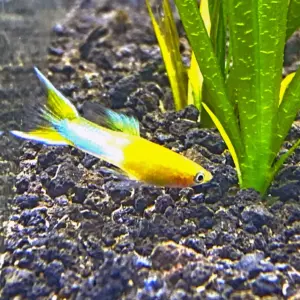
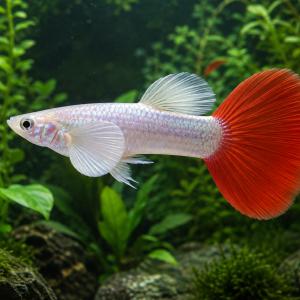
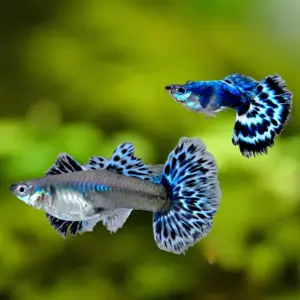
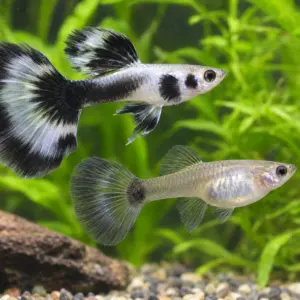
Editorial illustrations for context; they do not depict HiGuppy's exact facility or current fish stock.