The HiGuppy Journal
10 Tips for Buying Guppies — The Complete Beginner’s Guide
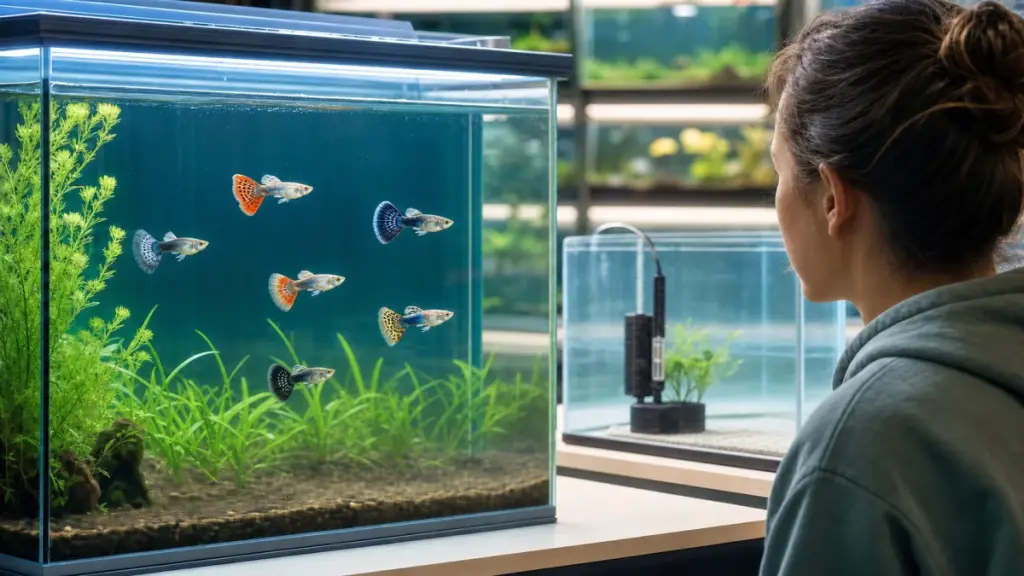
Guppies are small, colourful and widely available, but buying them still calls for preparation. Poor water conditions, transport stress, disease and unsuitable housing can all contribute to losses. Learning what to check before purchase helps you identify risks and prepare an appropriate home.
These 10 tips for buying guppies cover health checks, aquarium preparation, stocking and quarantine planning before you choose new fish. For a focused health checklist, also read How to Choose Healthy Guppy Fish and our pillar guide How to Care for Guppies.
Quick Answer — What to Know Before You Buy
When buying guppies (Poecilia reticulata), assess their condition and behaviour, prepare a suitable cycled aquarium, and plan separate quarantine before mixing new arrivals with established fish. Healthy appearance alone does not rule out disease. Use water tests and evidence of biological-filter readiness, not just elapsed time, and obtain written acclimation instructions appropriate to the fish and their journey.
Prepare quarantine as part of the purchase plan. A short observation period cannot guarantee disease-free fish. The UF/IFAS quarantine guidance explains that duration depends on the fish, disease risks, screening and any treatment. Agree an appropriate plan and release criteria with a qualified aquatic-health professional; tank size and filtration must suit the actual group.
Before You Buy — Quick Readiness Checklist
- Have you completed a fishless cycle and documented that the biological filter processes the intended waste load?
- Is the water temperature stable and suitable for these guppies?
- Do you have a separate, prepared quarantine setup and a health plan?
- Have you assessed adult size, swimming space, behaviour, tank mates and possible fry?
- Do you know the difference between male and female guppies?
- Do you have appropriate food ready at home?
- Have you discussed the needs of the actual stock with its seller?
If an essential part of the aquarium, quarantine or care plan is not ready, finish preparing before buying fish.
Tip 1: Learn to Spot a Healthy Guppy Before You Point and Buy
Do not choose fish by colour alone. Observe swimming, breathing, fins, body condition and feeding where possible. These checks can reveal warning signs, but apparently healthy fish can still carry disease.
Encouraging signs: clear eyes, intact scales and fins, steady breathing, normal swimming, and an appropriate response to food. Colour and activity vary with strain and circumstances; assess the whole fish and the condition of its tank mates.
Red Flags to Walk Away From
| Warning sign | What to do |
|---|---|
| White or salt-like spots on fins or body | Pause the purchase and ask for a health assessment; appearance alone does not establish the cause. |
| Frayed or damaged fins | Ask whether there has been injury, aggression or disease. |
| Loss of balance, tilting or spinning | Treat abnormal swimming as a warning sign requiring investigation. |
| Swollen abdomen with protruding scales | Seek qualified assessment rather than assuming a particular infection or outcome. |
| Lethargy or unusual loss of colour | Check the fish, environment and recent history together. |
| Clamped fins | Investigate possible stress, water-quality problems or illness. |
| Flashing or rubbing against surfaces | Ask for assessment of irritation and water quality; do not choose treatment from this sign alone. |
One practical method: observe the tank for 3–5 minutes without pointing or interacting. Watch which fish are actively swimming, competing for food, and exploring. Healthy guppies are curious and energetic. If most fish in a tank look lethargic or are hovering near the surface gasping, that entire tank is at risk — skip it entirely, even if one or two fish look fine. Diseases in community store tanks spread rapidly, and a single infected fish means all tankmates have been exposed.
Tip 2: Never Skip the Quarantine Tank — Even for “Healthy” Fish
This is the tip that experienced fishkeepers will tell you is the most important, and the one beginners most consistently skip. It feels unnecessary when the fish look fine, the store seems reputable, and you’re excited to see them in your display tank.
Some infections are not obvious at purchase, and signs may appear later. Their timing varies with the pathogen, fish and conditions. A fish looking normal for a few days is not evidence that quarantine is complete.
How to Set Up a Basic Quarantine Tank
- Tank size: allow adequate space for the number and adult size of fish; there is no universal small-batch volume.
- Filter: use a mature biological filter suited to the expected waste load, with appropriate flow and aeration.
- Temperature: maintain stable, suitable conditions and check them with a thermometer.
- Layout and equipment: provide easy-to-clean shelter and use dedicated nets and maintenance equipment to prevent cross-contamination.
- Duration and release: follow a risk-based health plan, including further assessment if symptoms arise; do not release fish simply because a short calendar interval has passed.
During quarantine, record feeding, behaviour and water-test results daily. Base maintenance on measured conditions and the setup rather than a fixed water-change interval. If fish show signs of illness, keep them separate and seek advice from a specialist fish veterinarian before choosing treatment. Do not add new arrivals to a group already being quarantined.
Tip 3: Make Sure Your Main Tank Is Actually Cycled
An immature biological filter can expose fish to harmful ammonia or nitrite. The nitrogen cycle is the biological process through which beneficial microbes establish on filter media and other surfaces, converting ammonia from fish waste and decomposing food into nitrite and then nitrate.
Without adequate biological filtration, ammonia or nitrite can accumulate to harmful levels. Fish can appear fine on day one and deteriorate rapidly over the following days as toxins accumulate — often with no visible external symptoms until it’s too late.
Water Checks Before Adding Guppies
| Parameter | OATA guppy-care guidance |
|---|---|
| Temperature | 20–28°C (68–82°F); maintain stable conditions |
| pH | 7.0–8.0 |
| Ammonia | Zero mg/L |
| Nitrite | Zero mg/L |
| Nitrate | No more than 20 mg/L above the normal tap-water level; also investigate rising trends |
| General hardness (GH) | 8–18 dGH |
Follow a fishless cycling procedure before adding fish. A zero ammonia/nitrite reading in newly filled water does not demonstrate an established biofilter: document its ability to process the ammonia input used in the cycling procedure. The RSPCA recommends fishless cycling, and UF/IFAS explains that maturation depends on the system and its conditions. Follow product instructions if using a cycling product; bottled bacteria and a fixed number of weeks are not proof of readiness. See our Guppy Water Parameters Guide and the OATA care sheet for the water guidance above.
Tip 4: Get the Male-to-Female Ratio Right
Guppies are livebearers. Plan the sex composition before purchase because mating behaviour can place pressure on females, and reproduction changes housing needs. Monitor the actual fish for persistent chasing, injury or difficulty feeding.
Recommended Ratios
- Mixed-sex group: OATA suggests two females per male, but this is not a stocking allowance or a guarantee that harassment will stop.
- Male-only display: confirm the fish are accurately sexed; space and behaviour still need monitoring.
- Any group: choose the aquarium and fry plan first rather than adding fish just to reach a ratio.
An accurately sexed all-male group avoids reproduction within that group. An all-female group is not necessarily fry-free: previously mated females can produce later broods from stored sperm. Ask about the fish’s sex and breeding history before relying on a single-sex plan.
Tip 5: Assess Your Stocking Plan Before You Buy
Overcrowding can compromise water quality and behaviour. Do not use a fish-length-per-litre rule as a guaranteed capacity calculation. The RSPCA explains that behavioural needs matter alongside water quality. Assess full adult size, swimming space, social needs, filtration, every tank mate and reproduction. OATA recommends at least 45 litres for a small group of the smaller species in its guppy and molly guide; this is a planning guideline, not a universal head count.
Check Gallon Units and Usable Space
| Nominal tank label | US gallons in litres | Imperial gallons in litres |
|---|---|---|
| 5 gallons | About 18.9 L | About 22.7 L |
| 10 gallons | About 37.9 L | About 45.5 L |
| 15 gallons | About 56.8 L | About 68.2 L |
| 20 gallons | About 75.7 L | About 90.9 L |
These are nominal conversions, using NIST volume factors; substrate, equipment and decorations reduce water volume. Neither five-gallon version reaches the OATA guideline above, and ten US gallons remains below it. Exceeding that guideline does not establish a safe fish count. Prepare grow-out space and responsible rehoming options before breeding. Read How Many Guppies in a 10 Gallon Tank and Raising Guppy Fry Guide before stocking.
Tip 6: Buy From a Source That Can Answer Your Questions
Appearance at purchase cannot reveal every health risk. Ask the seller what the fish have been eating, their water conditions, and whether they have been quarantined, screened or treated before sale.
Questions Worth Asking Before Buying
- What are the water parameters in this tank right now?
- What food are these fish currently being fed?
- Are these fish locally bred or imported?
- Have they been quarantined or treated recently?
- How long have these fish been in this tank?
Ask about arrival history, current feeding and any recent illness or treatment. Time at the seller alone does not demonstrate health or replace your quarantine plan. If the seller cannot answer essential care questions, pause the purchase.
Reputable guppy breeders and specialty aquarium stores typically have more detailed knowledge of their stock than general pet retail chains. Online purchases from established breeders can also be excellent — look for sellers who provide live arrival guarantees, clearly describe their strains, and have verifiable customer reviews.
Tip 7: Acclimate New Fish Properly — Don’t Just Dump the Bag
Transport and changes in water conditions can stress fish. Prepare the receiving setup before arrival and obtain written acclimation instructions appropriate to the species, packaging, journey and source/destination water. If instructions are unclear, ask the seller or a qualified aquatic professional before improvising.
Use an Acclimation Plan for the Actual Journey
- Prepare before arrival: check the receiving tank, filter, water tests and thermometer, and read the seller’s instructions.
- Check the package and fish: follow the handling instructions for that packaging; report distress or damaged packaging promptly and seek appropriate guidance.
- Manage the transition as instructed: consider both temperature and water chemistry. Do not extend time in shipping water merely to meet a generic timer.
- Transfer and observe: minimize transfer of shipping water, then monitor breathing, behaviour and the receiving water. Keep new fish separate from established stock under the quarantine plan.
Longer acclimation is not automatically safer after shipping. UF/IFAS transport guidance explains that ammonia can accumulate and that rising pH or temperature can increase its toxic fraction. This is why an overnight shipment should not automatically receive a prolonged open-bag or drip routine. Follow the written instructions for the actual shipment, and consult our How to Acclimate Shipped Guppies guide and Acclimation Guide as supporting information.
Tip 8: Know the Difference Between Male and Female Guppies
Being able to reliably tell males from females is fundamental to managing your guppy tank — for ratio control, for breeding decisions, and for understanding what you’re actually buying. Many stores will label tanks, but mistakes happen, and knowing how to verify yourself prevents stocking errors.
| Feature | Male Guppy | Female Guppy |
|---|---|---|
| Body size | Smaller (3–4 cm / 1.2–1.6 in) | Larger (4–6 cm / 1.6–2.4 in) |
| Coloration | Vivid, highly patterned fins and body | Typically silver-grey, subdued color |
| Caudal (tail) fin | Large, flowing, ornate | Shorter, rounded, fan-shaped |
| Gonopodium | Present — rod-shaped anal fin for mating | Absent — standard fan-shaped anal fin |
| Gravid spot | Not present | May show a dark patch near the rear abdomen; visibility varies with pigmentation |
| Body shape | Slender, streamlined | Deeper-bodied, especially when gravid |
One thing that catches beginners off guard: young females can be difficult to sex before they’re a few weeks old. If you’re buying very young fish (juveniles), some may be harder to identify accurately. Reputable sellers will usually label their tanks clearly and sex fish correctly for you on request. The gonopodium — the modified anal fin in males that looks like a pointed rod rather than a fan — is the most reliable identifier once fish are old enough to show it clearly. For photos and ratios, see Male vs Female Guppy.
Tip 9: Choose the Right Strain for Your Experience Level
Choose the actual stock and its care history rather than assuming a strain name proves hardiness. Ask about current water conditions, feeding, breeding history and any recurring problems in that line. Appearance and price alone do not establish genetic health or suitability for a beginner.
Questions About Commonly Sold Fish
| Fish or label | What to check before buying |
|---|---|
| Local/domestic guppies | Ask for actual water and health history; local origin alone does not prove a match for your tank. |
| Endler’s livebearers | Confirm the species or hybrid identity and its adult needs. |
| Moscow Blue | Ask about the particular line and inspect the actual fish. |
| Dumbo Ear (Elephant Ear) | Observe swimming and feeding, and discuss the stock’s care needs. |
| Multi-coloured feeder guppies | The feeder label is no guarantee of health. Never buy fish to expose them to an uncycled aquarium; prepare it fishlessly. |
Questions About Specialty and Show Stock
| Fish or label | Questions for the breeder |
|---|---|
| Full Red Berlin | What is the documented history of this line, and have recurring health problems been observed? |
| Albino strains | What lighting, feeding and shelter are these fish accustomed to? |
| Competition-grade Tuxedo | What routine and water conditions have been used for this stock? |
| Ribbon/Swallow tail forms | Can every fish swim and feed normally, and are any individual accommodations needed? |
For a first tank, choose fish whose documented needs you can meet consistently. Get comfortable with water testing, feeding and maintenance before taking on stock with care requirements you cannot yet provide.
Tip 10: Have a Feeding Plan Ready Before the Fish Arrive Home
Guppies are omnivores with relatively fast metabolisms. A solid feeding routine from day one contributes directly to their color development, immune function, and overall lifespan. Overfeeding — which is far more common than underfeeding among beginners — is one of the leading causes of poor water quality in new tanks.
Recommended Feeding Schedule
- Use small portions suited to the fish’s age, size and the food instructions.
- Watch that every fish can feed, and remove uneaten food before it accumulates.
- Adjust the routine using feeding behaviour, body condition and water results; do not impose a universal fasting day, especially on growing fish.
Best Food Types for Guppies
| Food Type | Benefits |
|---|---|
| High-quality micro pellets | Choose an appropriately sized, nutritionally complete product |
| Baby brine shrimp (live or frozen) | Excellent protein source, great for growth and breeding condition |
| Daphnia (live or frozen) | Use appropriately sized portions from a reliable source |
| Spirulina flakes | Supports coloration, particularly in males; plant-based variety |
| Micro worms | Good protein source especially for juveniles and fry |
Choose a nutritionally complete food appropriate for guppies; flakes or pellets can form part of a suitable diet. Ask about appropriate supplementary foods for the fish’s life stage, and avoid uneaten food accumulating. See Best Food for Guppies for a full feeding plan.
Understanding the Guppy’s Natural Environment
Knowing where guppies come from in nature gives useful context for how to keep them well. Wild guppies (Poecilia reticulata) originate from the warm, shallow, often slow-moving freshwater streams and rivers of Trinidad and northeastern South America. These environments tend to be warm (24–28°C), slightly alkaline to neutral, moderately hard, and rich in plant matter and small invertebrates.
This background explains why guppies thrive in planted tanks with live vegetation (which also gives fry cover and provides natural food sources), prefer stable warmer temperatures, are opportunistic omnivores that benefit from variety in their diet, and do poorly in heavily acidic or very soft water which is outside their natural range. Understanding this helps when troubleshooting — if your guppies seem consistently lethargic or are losing color without visible disease symptoms, checking temperature, pH, and GH is usually the right first step.
When to Buy More Fish — and When to Wait
Before adding more guppies to an established tank, ask yourself these questions:
- Are water tests and fish behaviour stable, with no unresolved health or equipment problem?
- Are all existing fish feeding normally?
- Is there adequate adult swimming space and biological-filter capacity for the proposed additions?
- Do you have a prepared quarantine and acclimation plan?
Adding fish too quickly to a new tank — or into a tank that’s still recovering from a disease outbreak or water quality issue — resets your progress and creates unnecessary risk. Patience at this stage is genuinely one of the most useful things a beginner can practice. The fish you already have will thank you for it.
Frequently Asked Questions About Buying Guppies
How many guppies should I buy for a 10-gallon tank?
Do not choose a universal count from the label. Ten US gallons is about 38 litres; ten imperial gallons is about 45.5 litres, before displacement. The US volume falls below OATA’s small-group guideline described above. A larger prepared aquarium is the better basis for a new guppy group; assess adult needs, behaviour, filtration, tank mates and reproduction before purchase.
Why do my new guppies keep dying within the first week?
Possible causes include unsuitable water, an immature or overloaded filter, transport stress and disease. Check ammonia, nitrite, temperature, pH and equipment promptly, and record the results. Abnormal readings need action, but they do not prove the only cause. For repeated deaths or seriously unwell fish, contact a specialist fish veterinarian.
Is it better to buy guppies from a pet store or a breeder?
Both can be excellent sources. Dedicated breeders typically offer more transparent information about water parameters, feeding, and strain lineage, and their fish are often in better condition due to more controlled environments. Pet store stock varies widely depending on the store’s practices. The key indicator is the health of the fish in the tank and whether the seller can answer basic husbandry questions confidently.
Can guppies live with other fish?
Some compatible community fish can share a guppy aquarium, but assess the exact species’ adult size, behaviour, temperature and water-chemistry needs, as well as the space remaining for every inhabitant. A generic tank-mate list cannot establish compatibility. Avoid fish likely to injure, harass or eat guppies, and plan a separate suitable home if a pairing fails.
How often do guppies breed, and what do I do with the fry?
Guppies can produce repeated broods, including from females that previously mated even if no male is now present. Timing and brood size vary. Arrange suitable grow-out housing and confirmed responsible rehoming options before breeding; do not rely on predation or overcrowding to control the population. Never release aquarium fish into the wild.
Do guppies need a heater and filter?
Use an effective, mature filter and maintain suitable, stable temperature with appropriate equipment and a thermometer. Check the guppy-care guidance above and the conditions in your home. A filter rating or heater alone does not establish biological readiness or an appropriate stocking level.
How long do guppies live?
Well-kept guppies typically live 1.5–3 years. High-quality genetics, stable water parameters, a varied diet, low stress, and consistent maintenance are the key factors that push lifespan toward the upper end of that range. Some hardy strains in optimal conditions have been reported to exceed 3 years, though this is less common.
What’s the easiest mistake to fix if my guppies aren’t thriving?
Check measured water quality and equipment first, including ammonia, nitrite, temperature and pH. Correct identified problems with appropriate advice; no single water-change percentage treats every health concern. If fish are distressed or symptoms persist, follow the RSPCA advice to contact a specialist fish veterinarian.
Ready to Pick Your First Guppies?
Buying guppies doesn’t have to be stressful or risky. With the right preparation — a cycled tank, a quarantine setup, a clear idea of what healthy fish look like, and a feeding plan — you’re already ahead of most beginners. Take your time, observe before you buy, and don’t skip the quarantine step. Your future fish will be healthier for it.
Looking for healthy, hand-selected guppies with clear strain information and care guidance? Browse our guppy collection at Higuppy — we offer domestic and imported strains, ship nationwide, and provide support for new fishkeepers.
For a side-by-side look at buying channels, read Live Guppies Online vs Local Fish Store before you choose a seller.
Behind the care guides
Care begins with steady systems
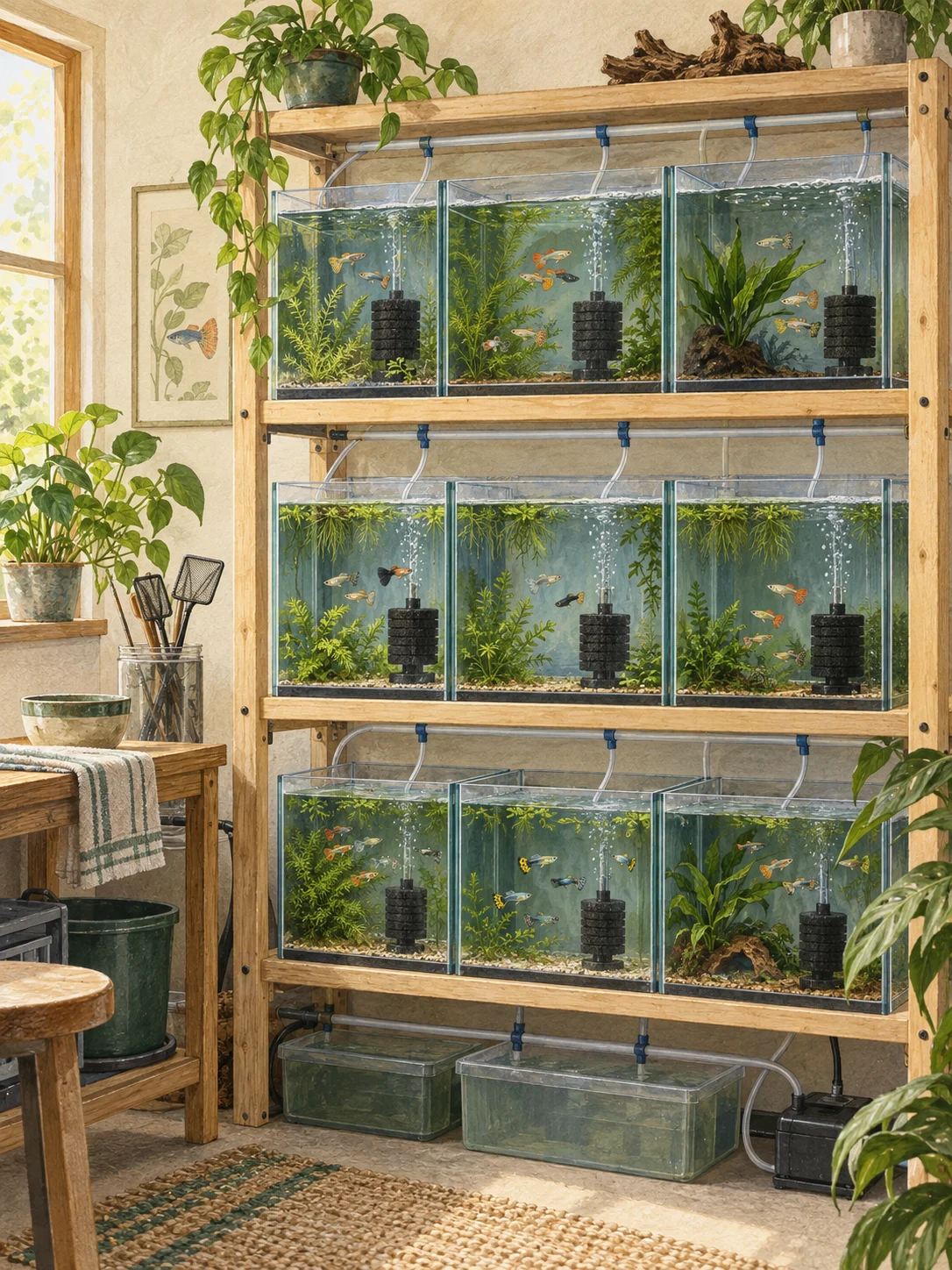
Our guppy guides focus on practical routines: keep water stable, observe fish closely and allow for natural variation.
Care systems
Steady water, thoughtful care
Gentle filtration and regular observation support healthy aquarium routines.
Natural variation
Every guppy is different
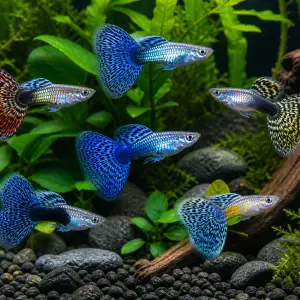
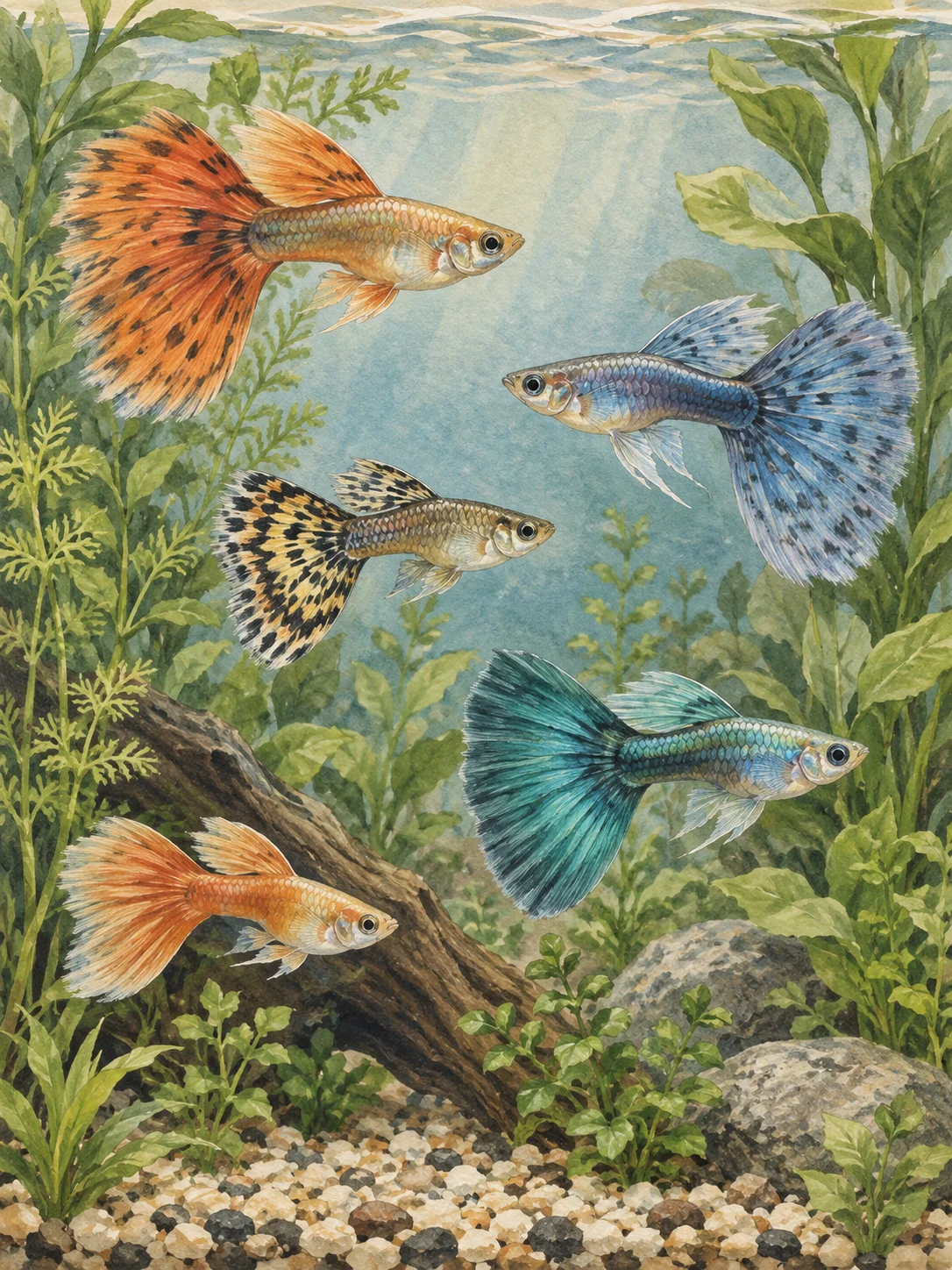
Color, size and fin shape vary with strain, age and each individual fish.
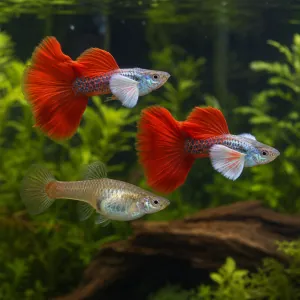
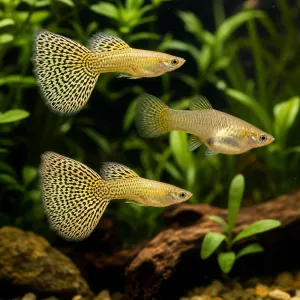
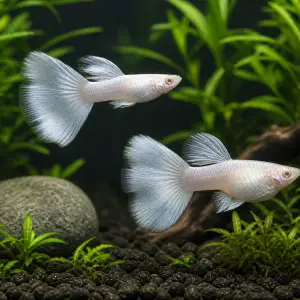
Editorial illustrations for context; they do not depict HiGuppy's exact facility or current fish stock.