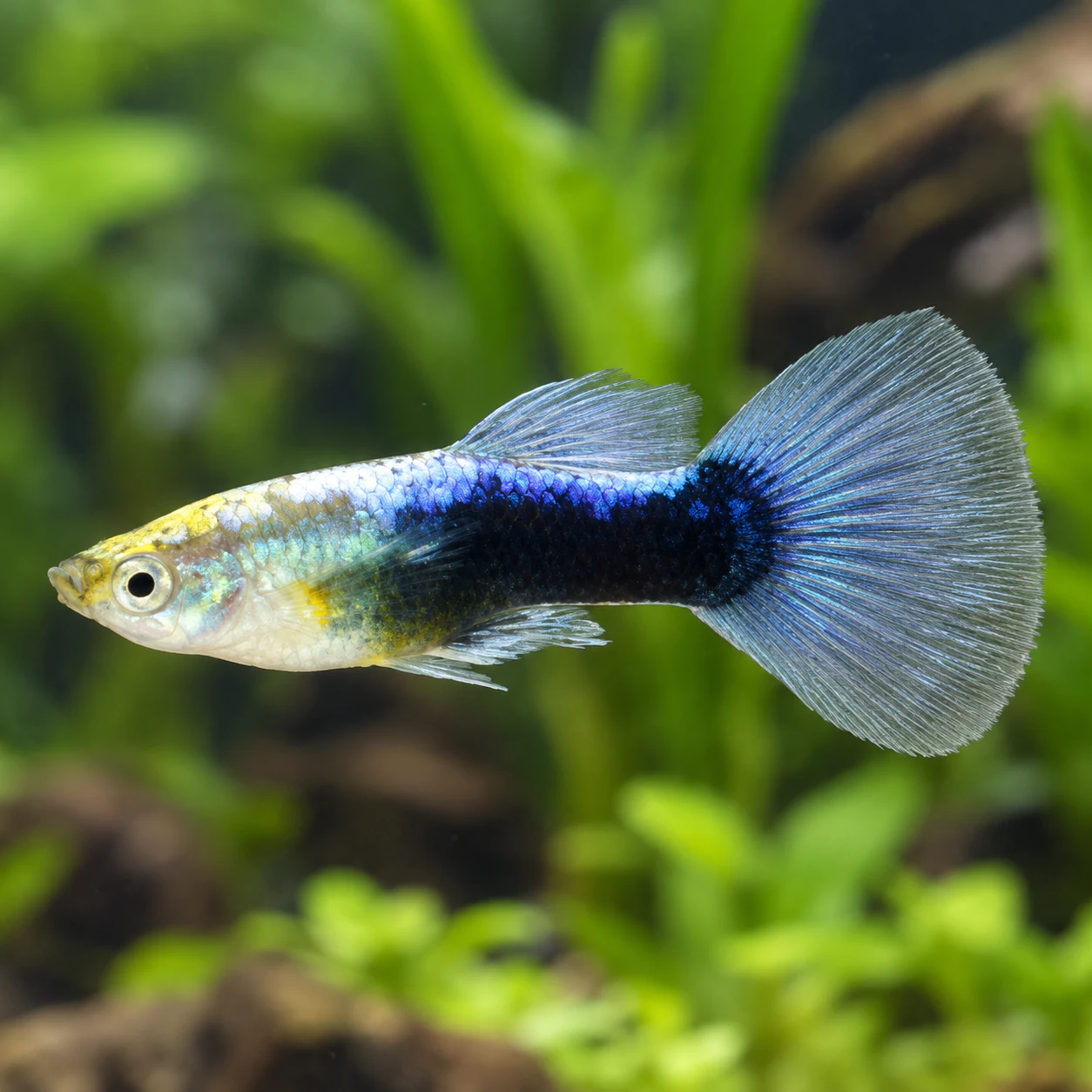
The HiGuppy Journal
Guppy Color Types: Common Colors and How to Choose
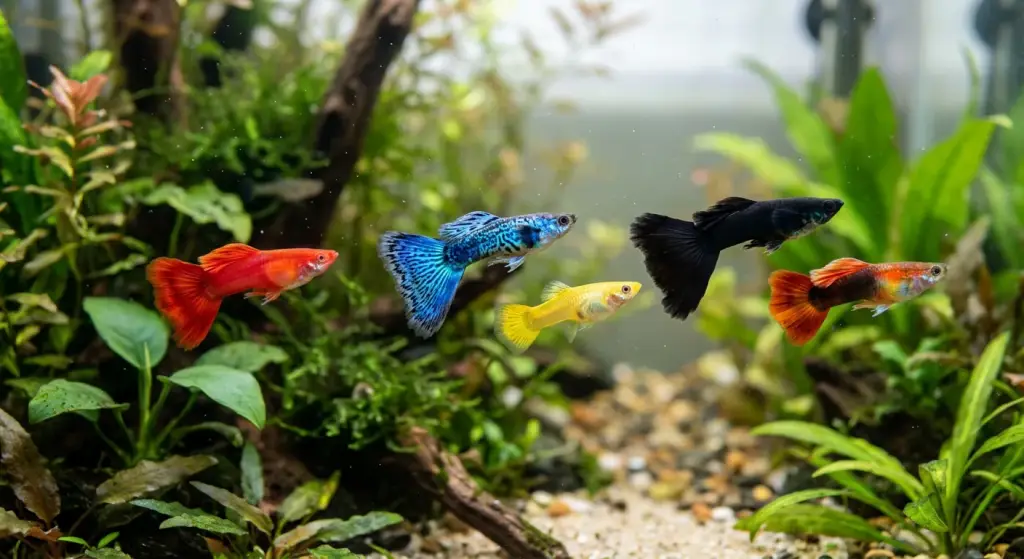
What are the main guppy color types? The main guppy color types are solid colors such as red, blue, yellow, gold, black and white, plus mixed and metallic colors like green, purple and full gold. Color is only one part of a strain, because pattern and tail shape matter too. Our complete guppy care guide covers keeping them bright.
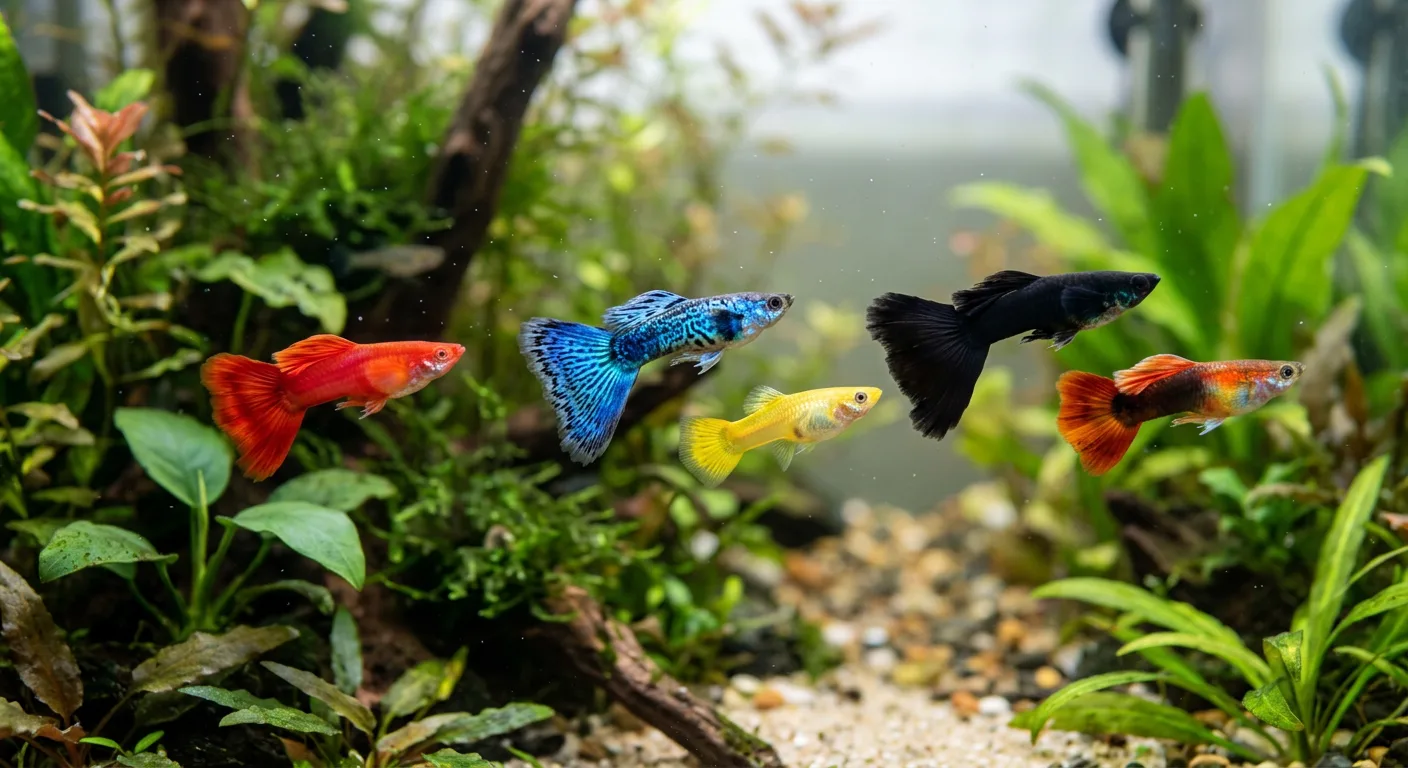
Few freshwater fish come in as many shades as the guppy. If you are choosing your first group, understanding guppy color types helps you pick fish that look good together and are easy to keep. This guide explains the common colors, how they differ from patterns and tails, and what affects the color you see in your tank. Breeders name strains differently, so treat the names below as general descriptions.
What are the common guppy color types?
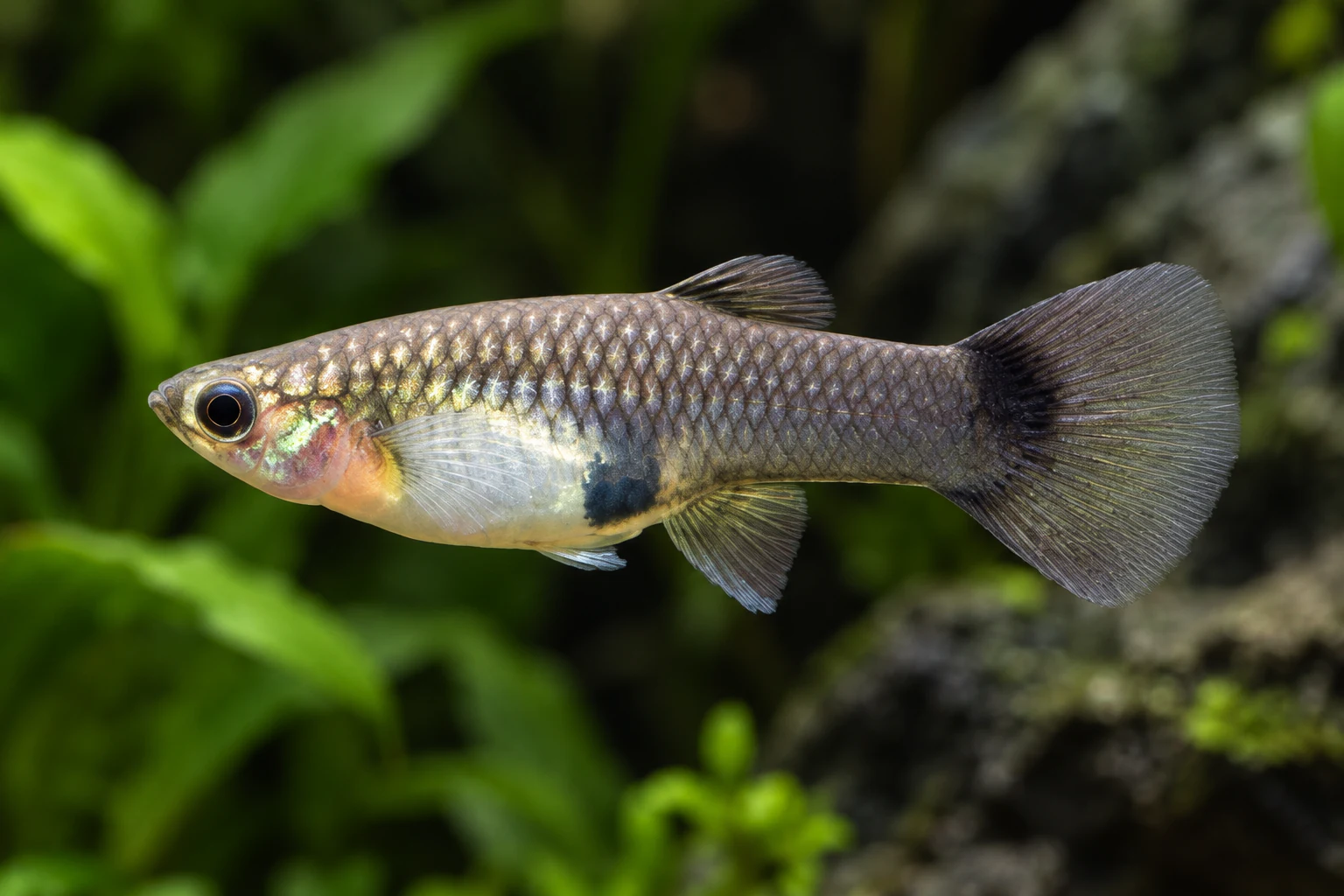
Most guppies fall into a handful of base colors. Males usually show the strongest color, while females are often paler with color mainly in the tail. The table below summarizes the colors keepers talk about most.
| Color type | What it looks like | Good to know |
|---|---|---|
| Red | Red body, tail or both | Popular and easy to find |
| Blue | Blue body or blue metallic sheen | Often paired with other colors |
| Yellow and gold | Warm yellow to gold body | Gold strains can look metallic |
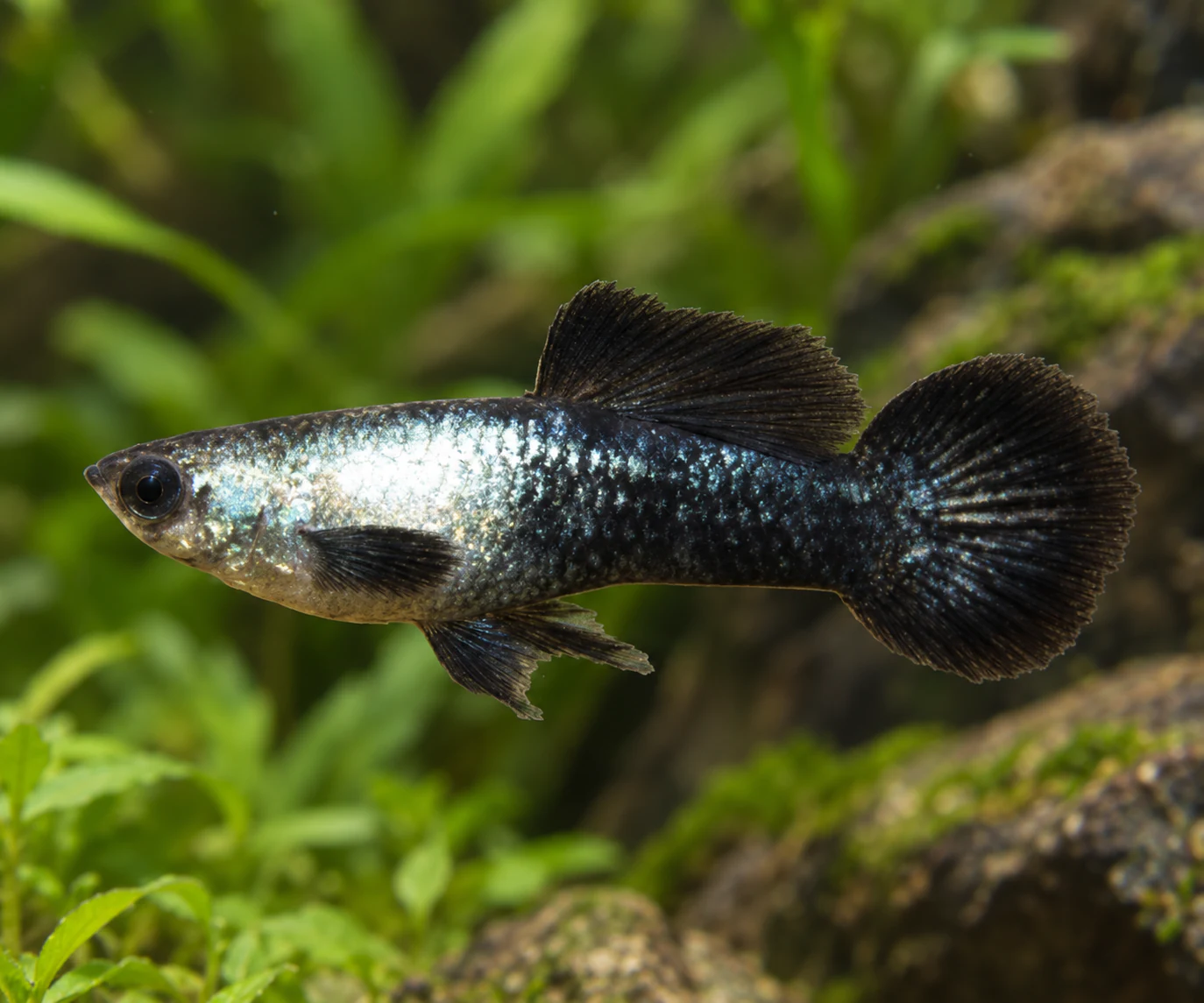
| Black | Dark body, sometimes half black | Looks striking against plants |
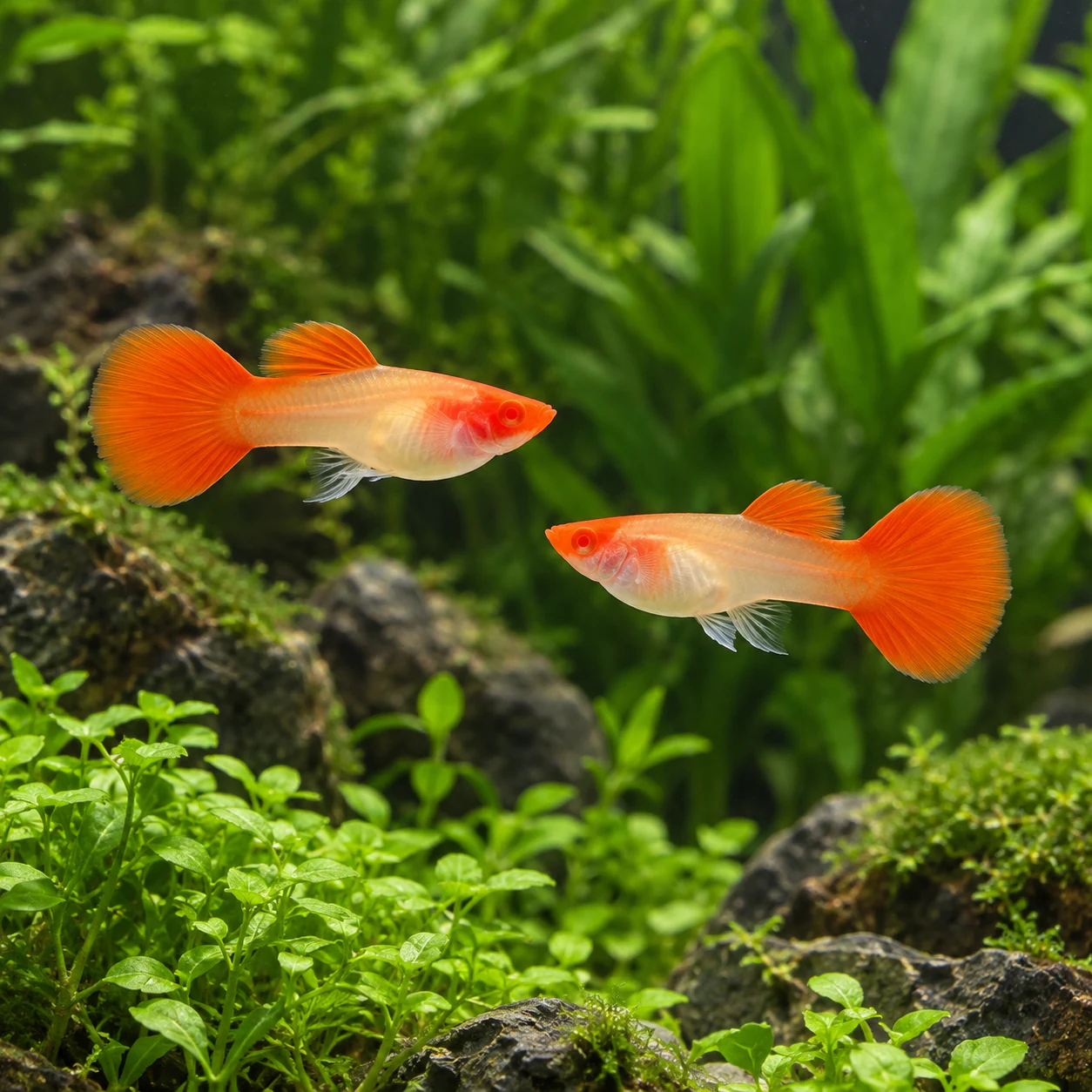
| White and albino | Pale body, albinos may have red eyes | Needs gentle lighting |
| Green and purple | Metallic or mixed sheen | Changes with the light angle |
Solid colors: red, blue and yellow
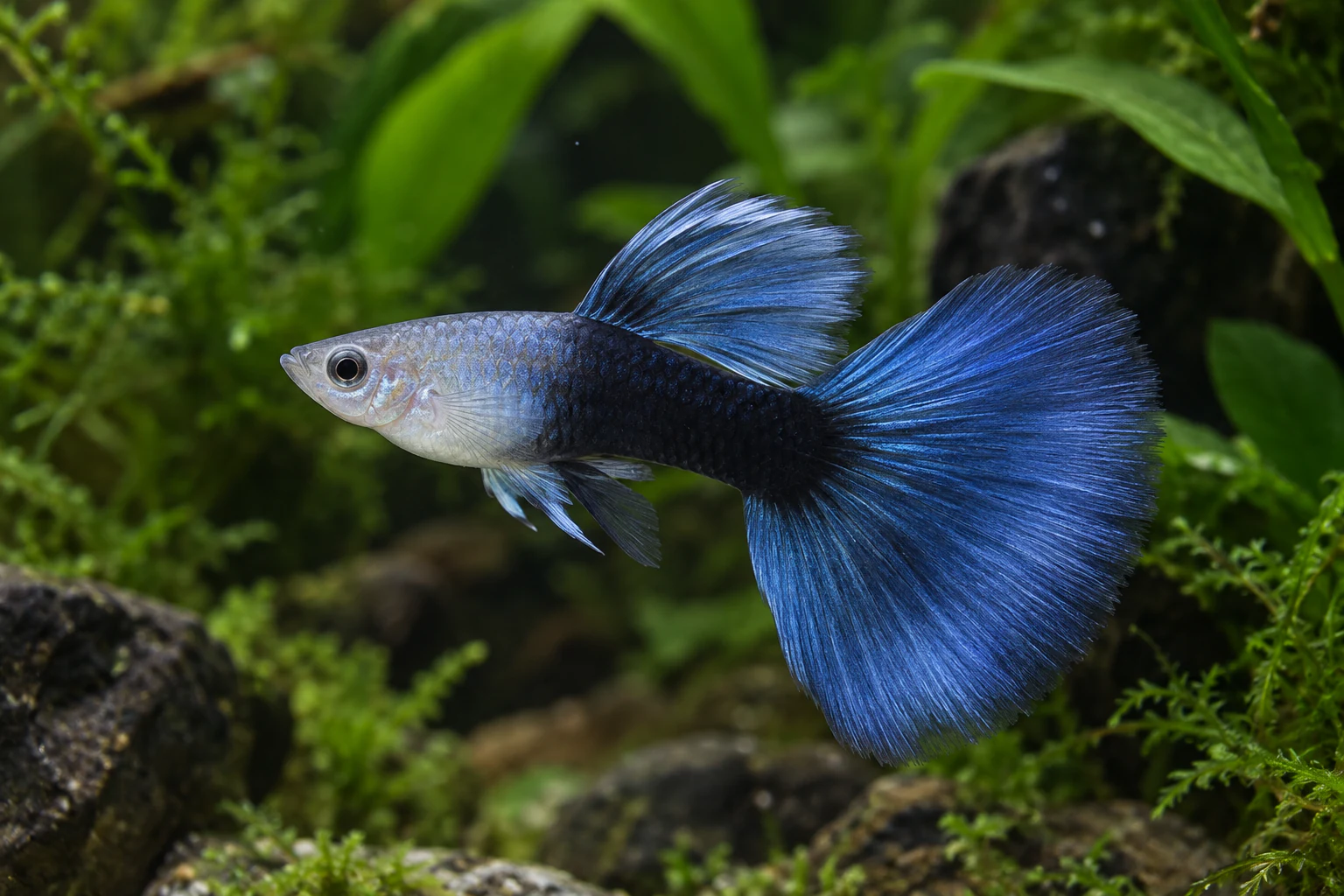
Solid colors are the easiest to recognize. A solid red guppy has red across the body or tail, while a blue guppy shows blue tones that can shift under different lights. Yellow guppies range from pale lemon to rich gold. Solid fish are a good starting point because they are simple to match and the color is easy to judge when you buy.
Red guppies
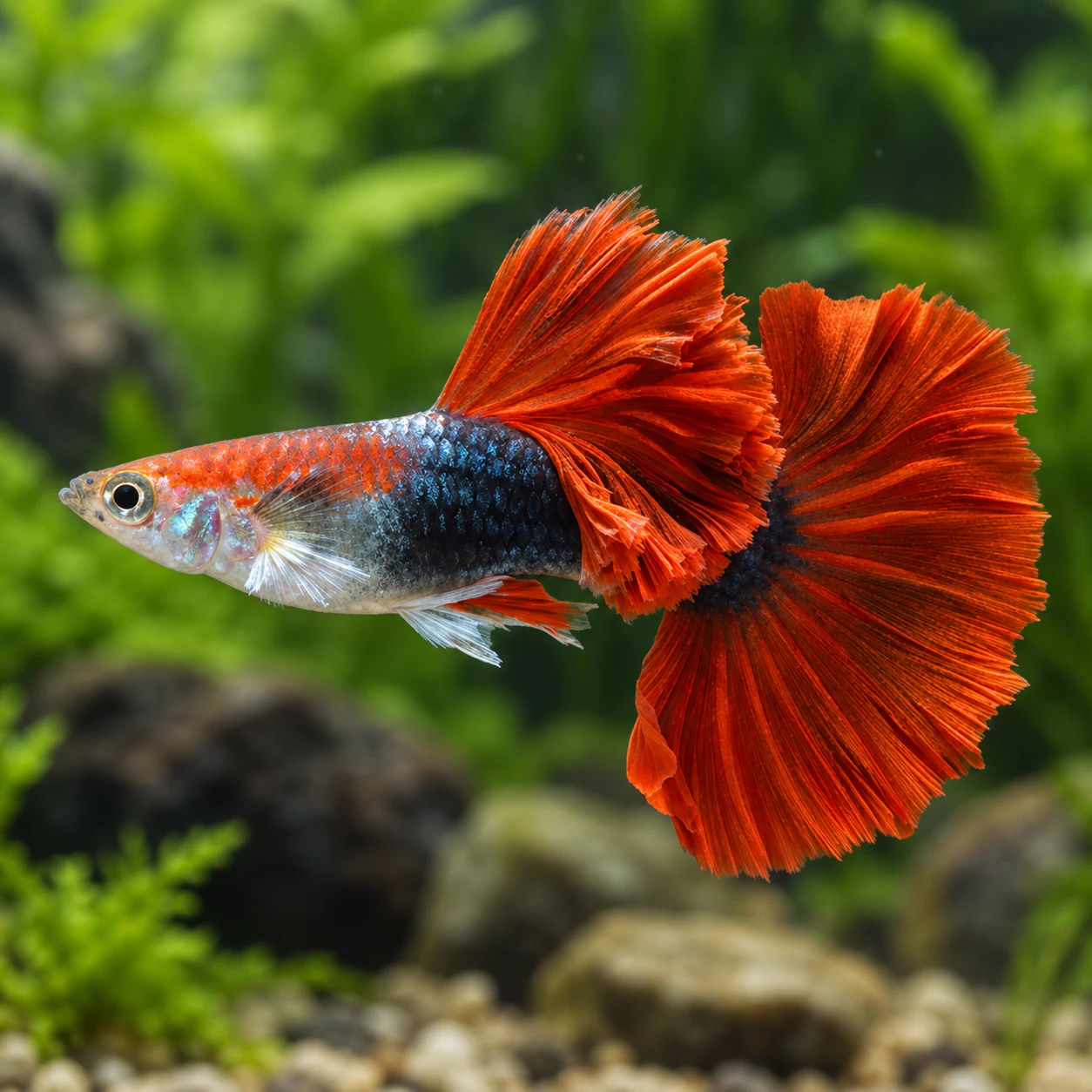
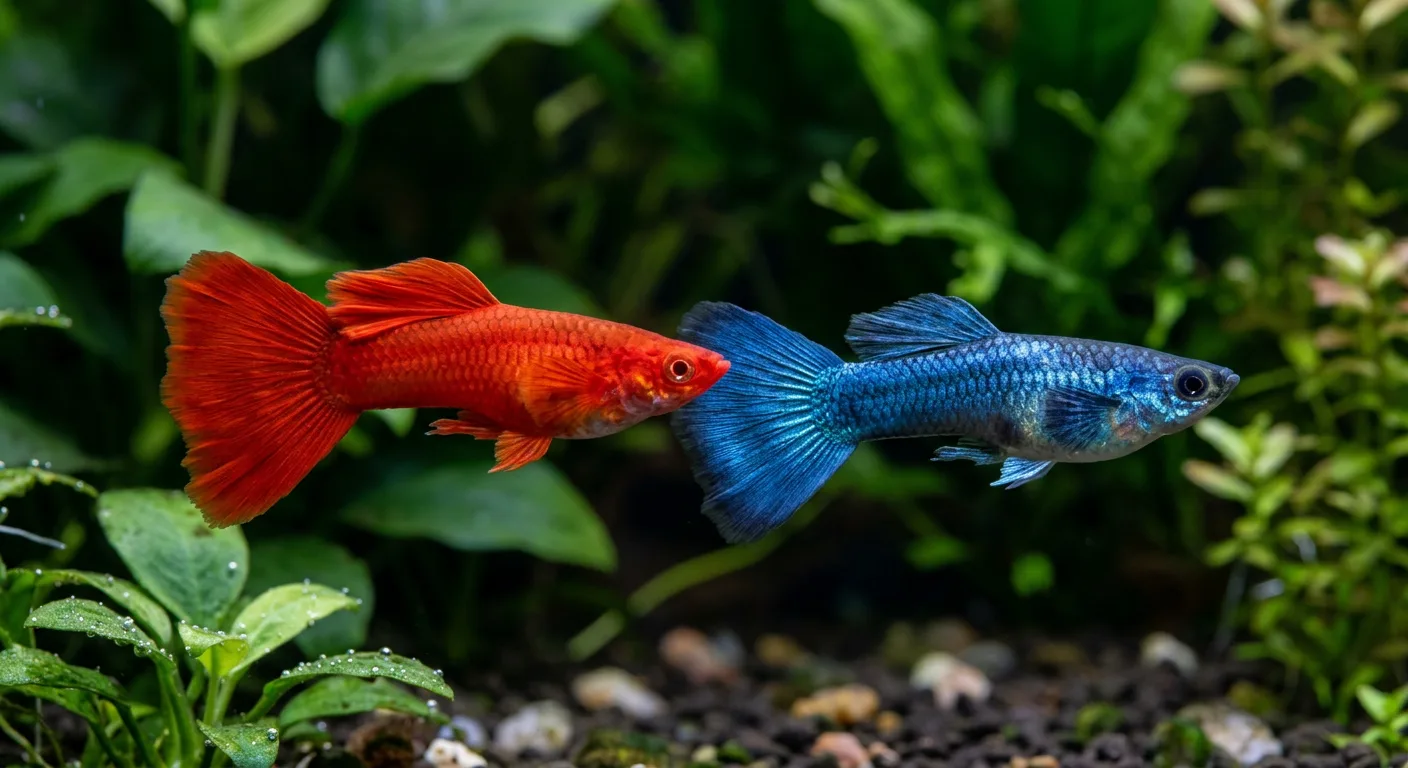
Red is one of the most popular guppy color types. The red can sit on the tail, the body or the whole fish, and the depth of color varies between lines. Fish with strong red often look best against green plants and dark substrate.
Blue guppies
Blue can be a true body color or a metallic shine that appears at certain angles. Because it depends on light, a blue guppy may look different in a shop photo than in your tank. Good lighting helps you see the real shade.
Gold, white and albino guppies
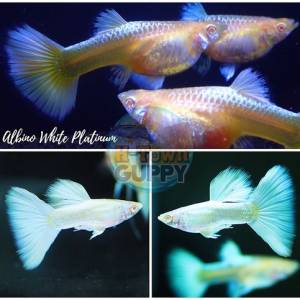
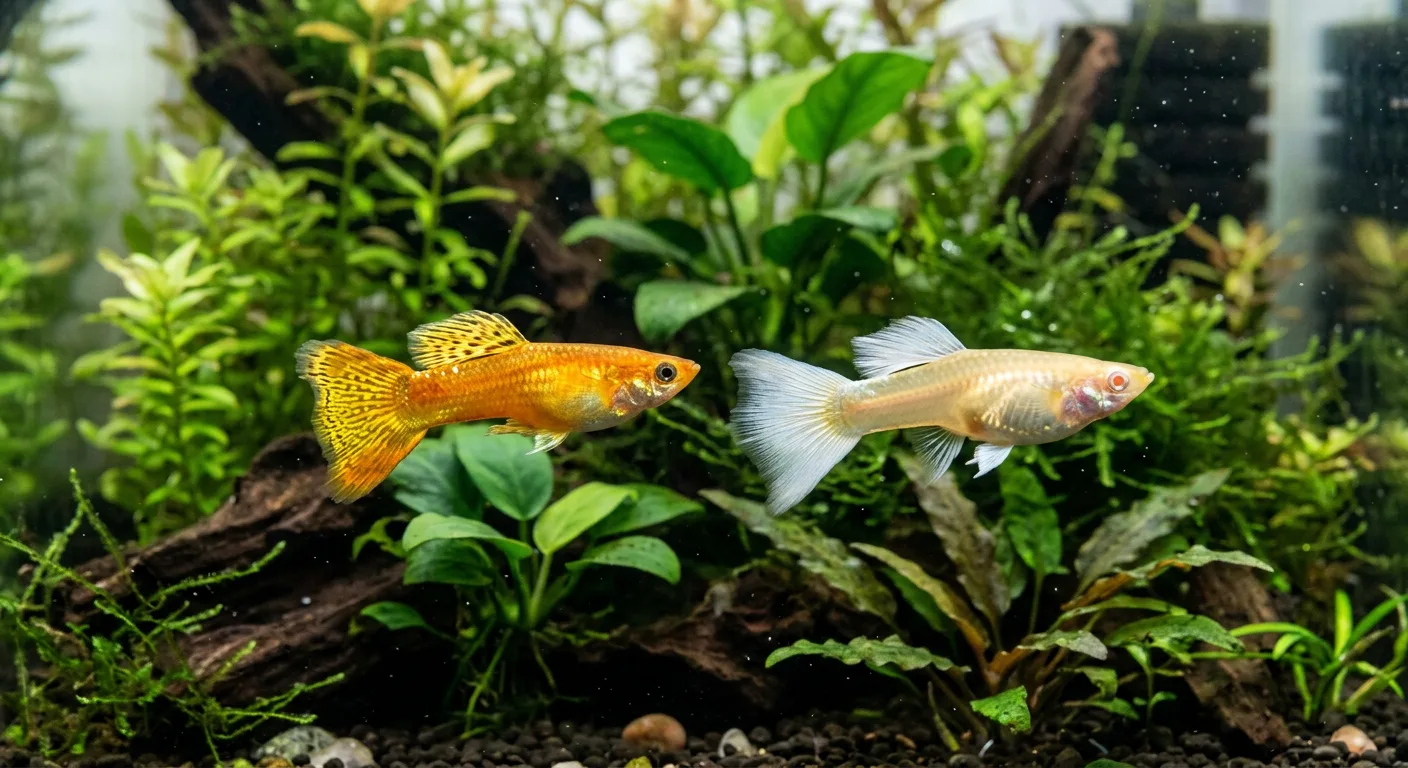
Gold guppies have a warm, often metallic body and are a favorite for bright tanks. You can read more about one popular line in our full gold guppy article. White guppies are pale and delicate looking, and albino guppies lack dark pigment, which can leave pink or red eyes. Albino fish can be sensitive to very bright light, so a planted tank with some shade suits them. For a deeper look, see the albino guppy strain guide.
Color is not the same as pattern or tail shape
New keepers often mix up three separate things: color, pattern and tail type. Color is the base shade. Pattern is how that color is arranged, for example stripes, mosaic or snakeskin markings. Tail type is the fin shape, such as delta, fan or veil. A single fish can combine all three, which is why two red guppies can look very different.
If you want to explore further, our guppy pattern types and guppy tail types guides explain the other two pieces. Together with the guppy color types here, they cover most of what strain names describe.
Why guppy color looks different from tank to tank
The color you buy is not always the color you see a month later. Several things change how bright a guppy looks, and most of them are within your control.
- Genetics: color is inherited, so strong parents tend to give stronger color.
- Age: males usually develop full color as they mature, while young fish look duller.
- Diet: varied, good quality food supports color. See our best food for guppy color growth guide.
- Water quality: stress and poor water can make fish look pale.
- Lighting and background: light angle and tank background change how color appears.
If a fish suddenly fades, check our post on why a guppy loses color before assuming it is a genetic issue.
How to choose guppy colors for your tank
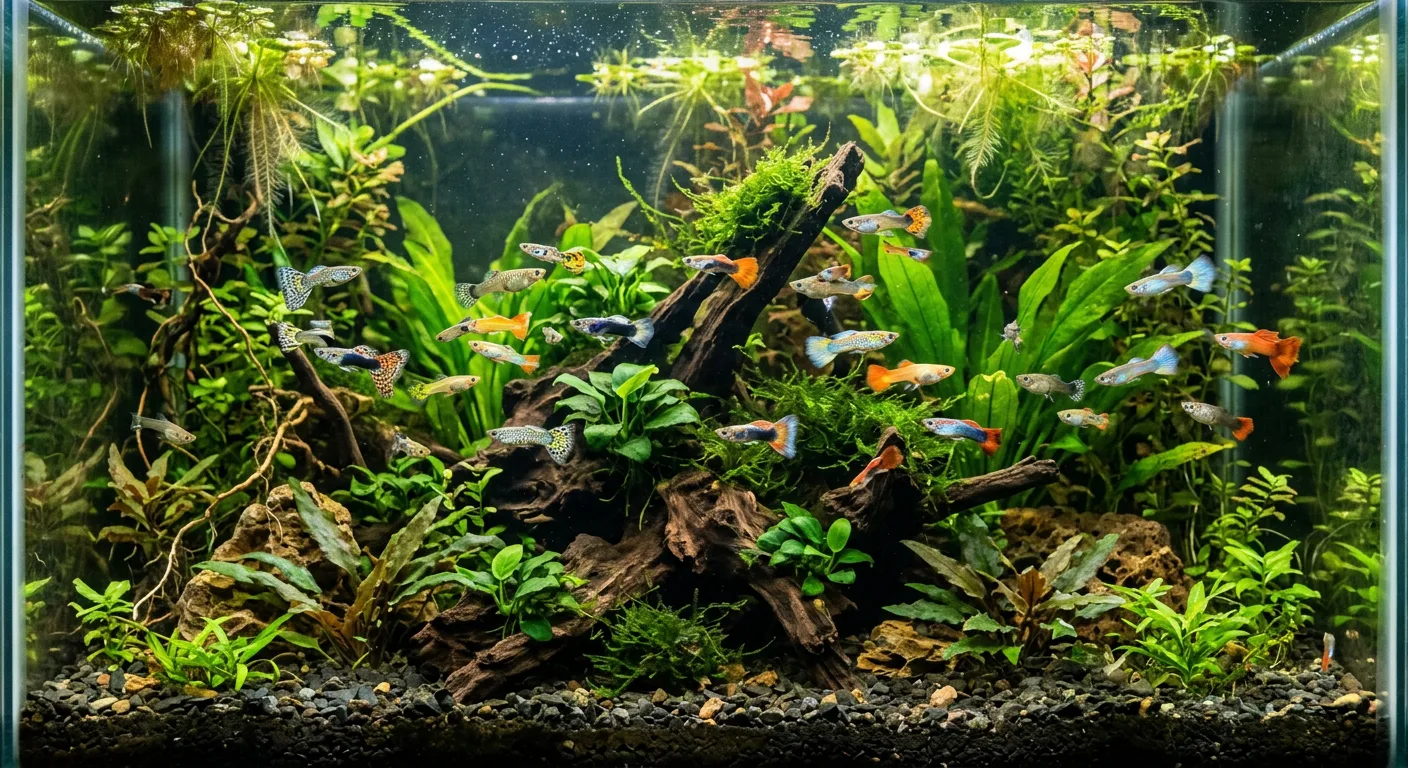
Start by deciding whether you want a uniform look or a mix. A tank of one color family, such as several red fish, looks tidy and bold. A mixed group looks lively and is usually more forgiving, since you are not tied to one line.
Think about the males and females together. Females are less colorful, so the males carry most of the visual impact. A common approach is to keep more females than males, which also reduces chasing. Our male to female guppy ratio article explains why.
When you buy, look at the fish in good light. Check that the color is even, the fins are open and the fish swims actively. Bright color on a fish that hides or clamps its fins is not a good sign. Our guide on how to choose healthy guppy fish online lists what to look for.
Breeding and color: what to expect
Guppy color is inherited, but results are not always predictable. Offspring can show traits from either parent, and mixing very different lines can produce fry with mixed or muted color. Breeders who want a consistent look usually keep strains separate and select the best fish each generation. If you plan to breed, start with healthy fish from a single line and read the how to breed guppies guide. Avoid breeding closely related fish repeatedly, since that can cause problems over time.
Keep in mind that color is only one trait. A slightly less colorful but healthy, active fish is a better breeder than a bright fish that is weak. Choose health first and color second.
Care tips to keep colors bright
Good care is the simplest way to show off guppy color types. Keep the water clean with regular partial changes, feed a varied diet in small portions, and avoid sudden temperature changes. Add plants for cover so fish feel secure, since relaxed guppies show better color. A steady routine beats any single trick.
If you are ready to add fish, browse our male guppies to see the range of colors. You can also read general background on the species on Wikipedia. For daily routines, return to the guppy care guide, because healthy fish always show their best color.
FAQ
What are the most common guppy color types?
Red, blue, yellow, gold, black and white are the most common. Metallic green and purple shades also appear in many strains.
What is the rarest guppy color?
Rarity depends on the breeder and the line, so there is no single answer. Unusual combinations and very even solid colors are often harder to find.
Do female guppies come in different colors?
Yes, but females are usually paler than males, with color mostly in the tail. Some lines produce females with more color than others.
Can guppies change color?
Yes. Age, diet, stress and lighting can all change how bright a guppy looks. Good care often brings color back. See our why is my guppy losing color post.
Are some guppy colors easier to keep?
Most guppy colors need the same basic care. Albino fish may prefer softer lighting, but otherwise color does not change how hardy a guppy is.
Behind the care guides
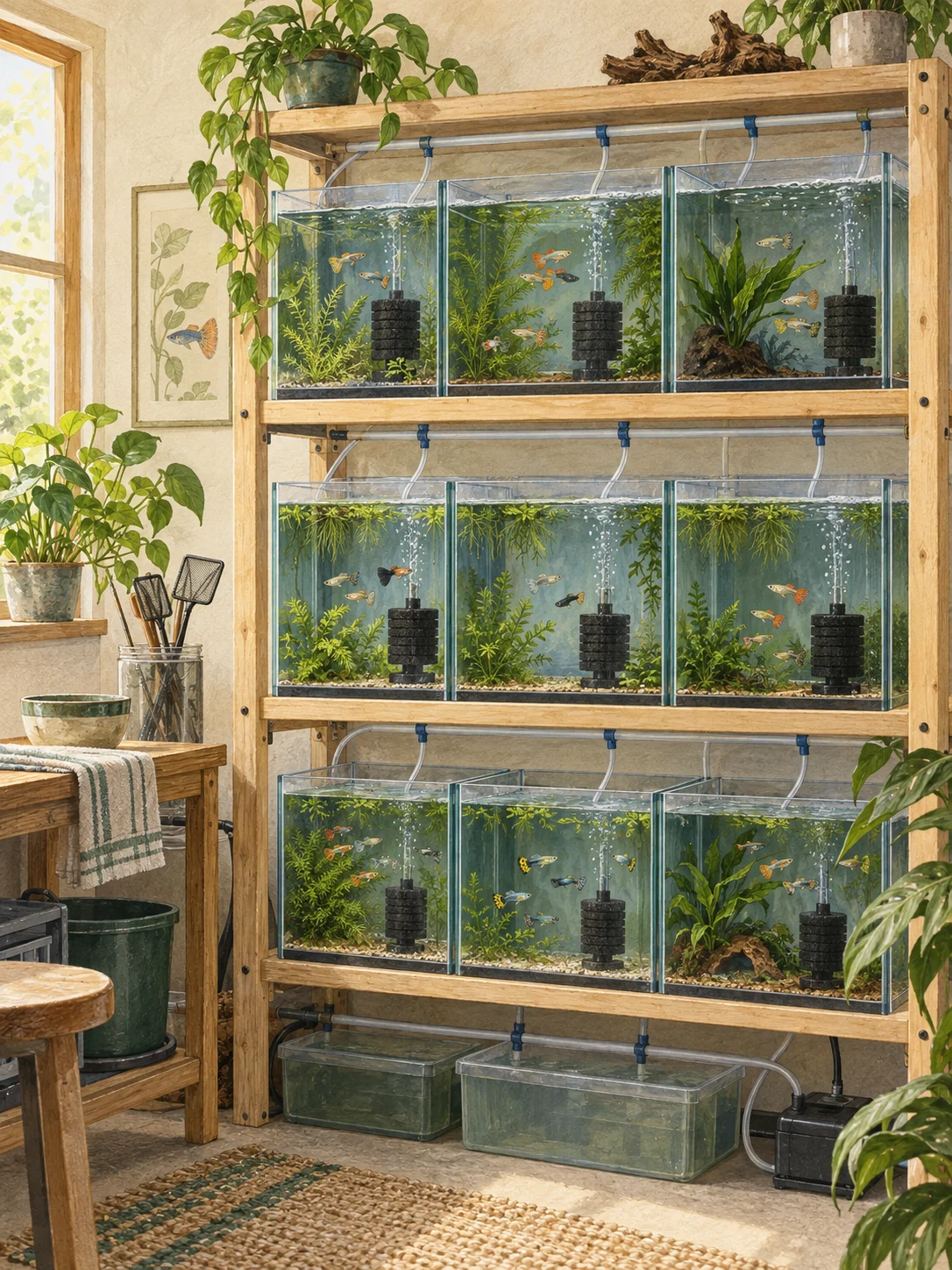
Care begins with steady systems
Our guppy guides focus on practical routines: keep water stable, observe fish closely and allow for natural variation.
Care systems
Steady water, thoughtful care
Gentle filtration and regular observation support healthy aquarium routines.
Natural variation
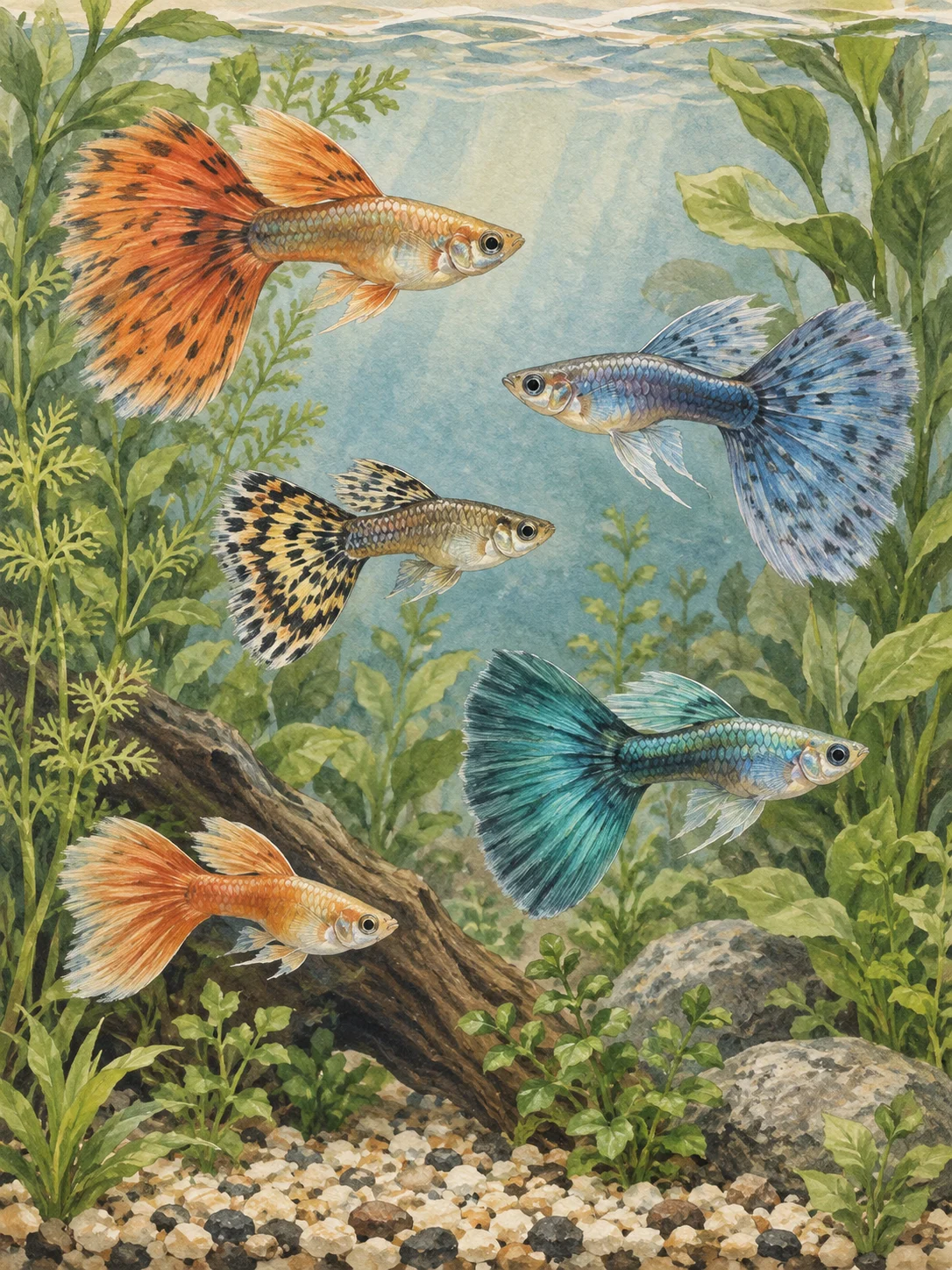
Every guppy is different
Color, size and fin shape vary with strain, age and each individual fish.
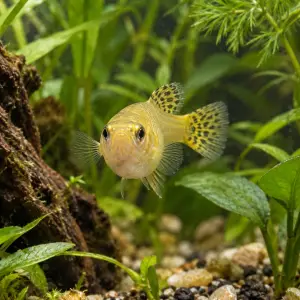
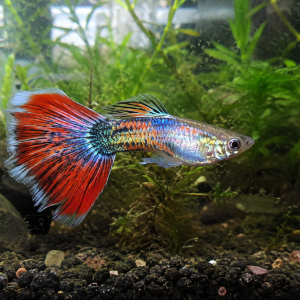
Editorial illustrations for context; they do not depict HiGuppy's exact facility or current fish stock.