The HiGuppy Journal
How to Keep a Guppy Strain Consistent: Beginner Tips
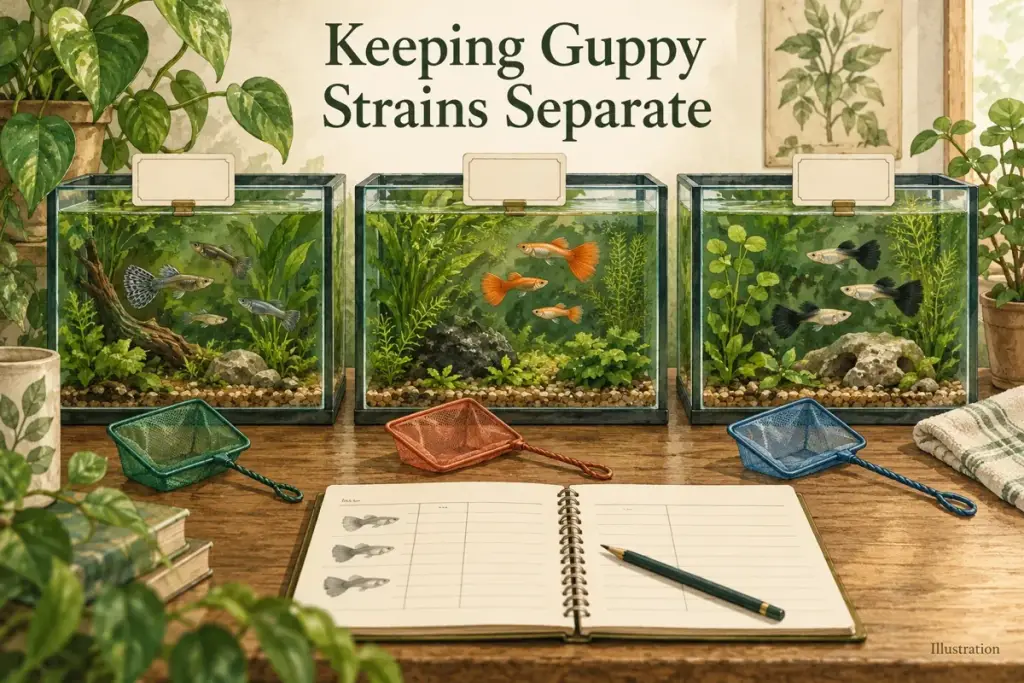
To keep a guppy strain consistent, breed fish from the same documented line in separate, labeled groups, track parentage and offspring, and prevent accidental matings. Recheck juveniles before separating sexes because young fish can be hard to identify, and females may store sperm from earlier matings. Appearance and records can support consistency but do not certify genetic purity.
In aquarium keeping, “pure strain” is usually a breeder’s description of a line that has been maintained toward a recognizable appearance. It is not proof by itself that every fish has a verified pedigree or a fixed genetic makeup. The practical goal is to reduce unintended crosses and keep accurate records of what you know.
What strain consistency means
A consistent line produces fish that tend to share the traits a breeder is selecting, such as a named color pattern or fin shape. No visual label guarantees that every offspring will be identical. Color traits can be inherited in different ways, and genetic studies of guppies show that some traits are more complex than a simple father-to-son rule.
Appearance is useful for comparing offspring with a breeding goal, but it cannot establish every genetic contribution or identify a father. A line can look consistent while still producing variation. Describe observed results and the documented history separately.
Use the guppy strain list and individual strain profiles, such as this Full Gold guppy guide, to describe visible traits. If you are still learning the basics, start with the guppy breeding guide and define your goal before setting up a line.
Begin with documented parent groups
Start with fish whose source and strain description you can record. Ask what is known about the parents and whether the fish were raised with other strains. Keep purchase notes, photos, dates, and any written description. A seller’s label is useful context, but it does not establish a complete pedigree or promise that offspring will look exactly like the adults.
Set up separate, labeled tanks or breeding groups so fish from different lines cannot mix. Choose a system you can maintain: filtration, water quality, space, and access for observation all matter. The page about breeding pairs, trios, and groups can help you consider a group format, but no arrangement eliminates the need to track parentage.
If you deliberately cross two lines, record that decision and call the offspring a cross or developing line while you evaluate them. Do not continue labeling those fish as the unchanged original strain unless you have a clear, supported reason. Honest labels preserve trust and make your own breeding records more useful.
Account for stored sperm and sexing mistakes
A major complication is that female guppies can store sperm after mating. A primary study of guppies documents prolonged sperm storage and fertilization from stored sperm. This means that a female moved away from males may still produce fry after separation. The research does not let you calculate an exact date or number of later broods for a particular fish.
For that reason, a female that has been kept with males should not be treated as a known virgin simply because she is now alone. If exact parentage matters, obtain fish with clear breeding history or raise known cohorts under controlled conditions. Keep uncertain females in a separate observation group, and note the uncertainty rather than assigning all future fry to the last male they shared a tank with.
Juveniles can be difficult to sex before the gonopodium and other features are clear. Review the male and female guppy guide and revisit the fish as they grow. Separate observation groups early enough for your breeding plan, then check uncertain fish repeatedly before placing them in a breeding group. Do not wait for a dramatic color pattern if the purpose is to prevent accidental mating.
Keep records that make parentage easier to follow
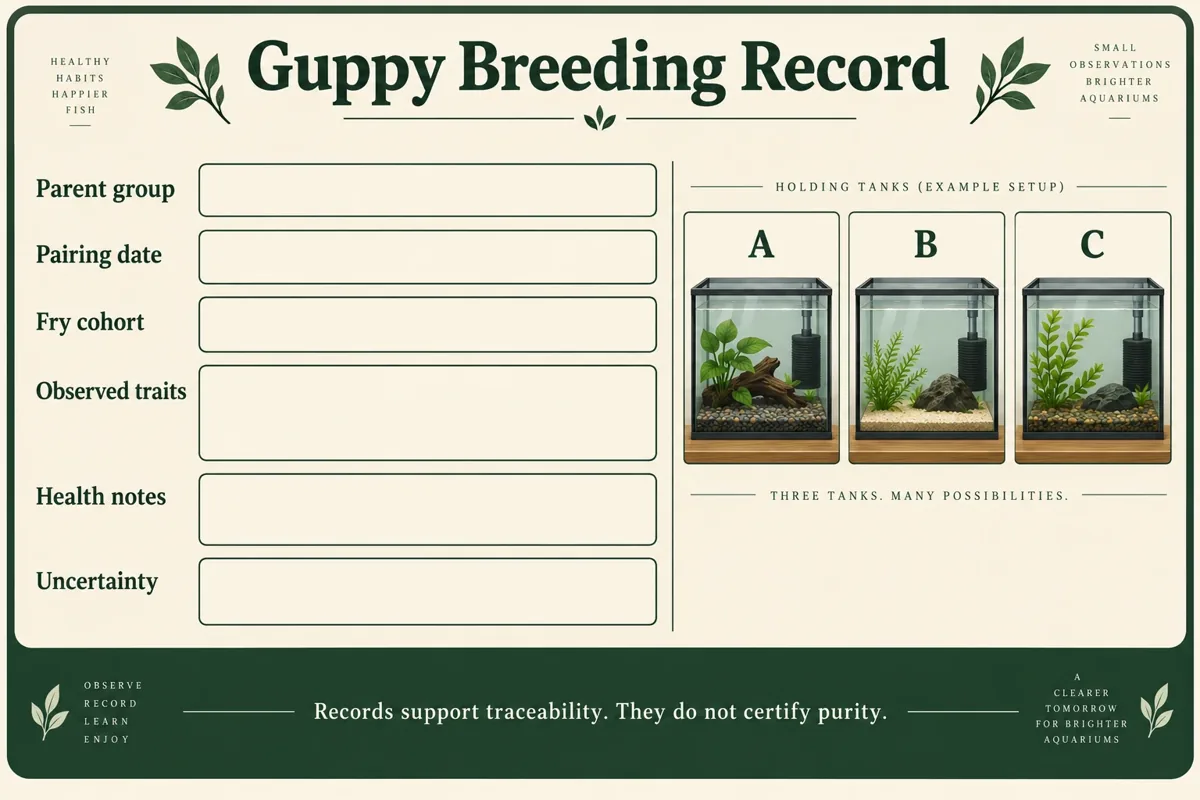
Use a simple record for each breeding group. Give tanks a unique code, list the fish in each group, and record when they were added or removed. Label each fry cohort with the date and parent group if known. Track which fish were intentionally paired, which were only observed, and when a group might have been exposed to another strain.
Add a note when the information is uncertain. If a female had prior male contact, write that down. If you cannot tell which male fertilized a brood, mark parentage as unknown instead of guessing. Guppy fry can grow at different rates, so the growth stages guide may help you compare juveniles at a similar stage.
Take photos under consistent lighting and at similar angles. Record the traits you can actually observe: body color, tail pattern, fin shape, and other features relevant to your goal. A photograph can help you compare appearance, but it cannot confirm genetic purity or prove parentage on its own.
Reduce accidental mixing
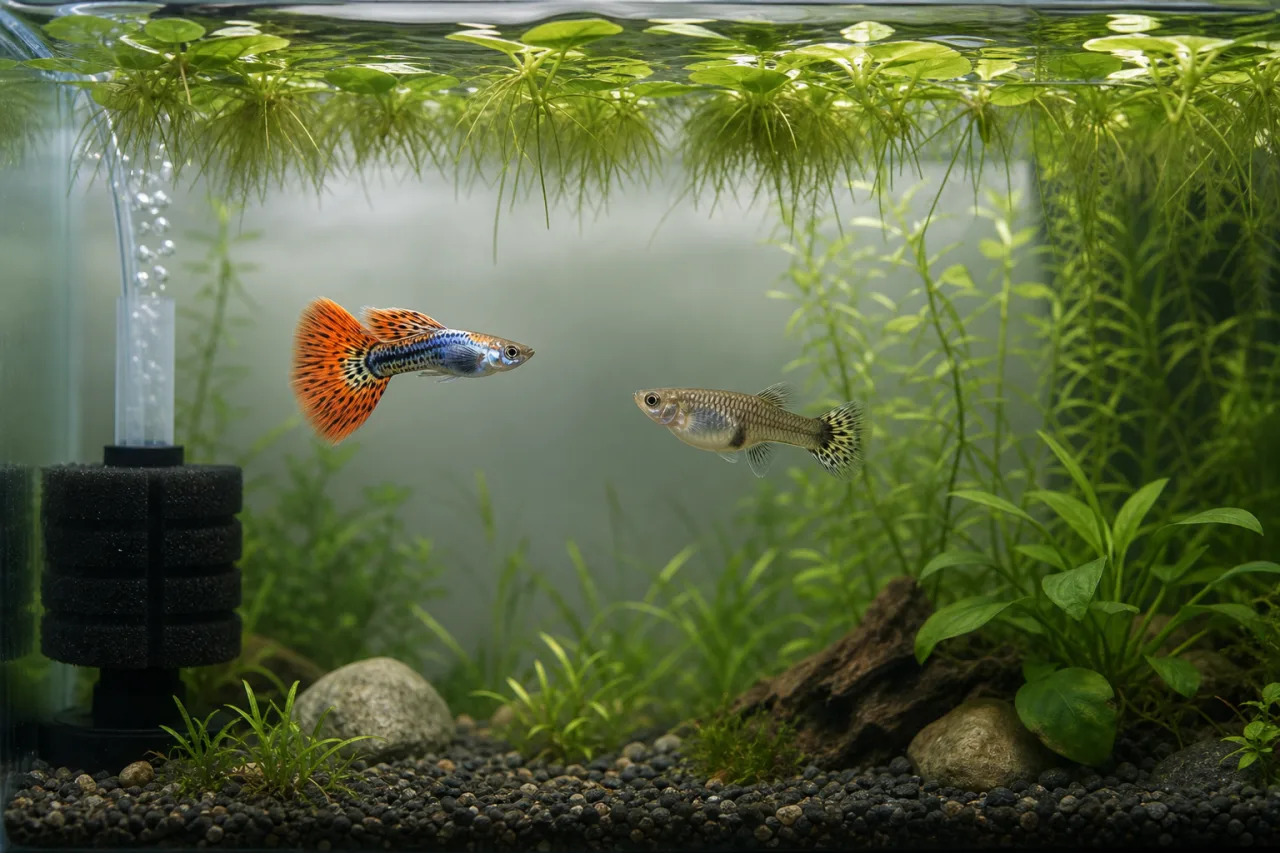
Keep strain groups physically separated and label tanks on more than one side. Use dedicated nets, cups, siphons, or other transfer tools for each line when possible, and clean equipment appropriately between tanks. Check for fish that may have been moved accidentally during maintenance. Guppies can jump, so use suitable covers and account for any gaps between connected or adjacent systems.
Do not rely on color to identify sex or line at a glance. Some juvenile males may not yet show the adult pattern, and some females may carry color. Check the anal fin and verify identity from your records before moving fish. If you are unsure, leave the fish in a labeled observation group until its identity is clearer.
Select breeders without narrowing the line blindly
If your goal is consistency, compare offspring with a clear standard and keep healthy fish that best fit it. Do not select on a single color patch while ignoring swimming, body form, fin condition, or whether the fish is thriving in the group. Keep more than one potential breeder when your setup allows, and preserve a backup group so the line does not depend on a single fish.
Repeatedly breeding from very few fish can reduce variation in a population. There is no universal breeder count that fits every home project, so avoid a rigid number and get experienced guidance if you are planning a long-term line. Keep track of which fish were paired and consider whether you need documented new stock to maintain the project responsibly.
Practical strain-keeping checklist
- Start with documented fish and keep their source notes.
- Use separate, clearly labeled breeding groups for separate lines.
- Record parentage, fry cohorts, visible traits, and uncertainty.
- Account for previous mating and stored sperm in females.
- Recheck fry sex more than once before mixing groups.
- Use dedicated tools and prevent fish from moving between tanks.
- Keep a backup plan and enough space for offspring you do not select.
- Describe fish as consistent with a strain only when records support it; do not imply certification.
FAQ
Does keeping only one strain in a tank guarantee pure offspring?
It reduces the chance of crossing with another strain in that aquarium, but it does not guarantee a certified pedigree or identical offspring. Prior mating, sexing errors, and genetic variation can still affect the result.
Can a female guppy have fry after males are removed?
Yes. Female guppies can store sperm from earlier mating, so fry may appear after the female is separated. An exact future birth date or number of broods cannot be inferred from separation alone.
Does color prove that a guppy belongs to a pure strain?
No. Color can help identify an appearance, but it is not genetic certification. Combine the visible traits with reliable source and parentage records.
How do I stop different strains from breeding together?
Use separate tanks or groups, label them clearly, prevent fish from jumping or being transferred by mistake, and verify juvenile sex before combining groups. Keep uncertain fish in an observation group until you can identify them with more confidence.
Should I outcross a guppy strain?
That is a breeding decision with trade-offs. If you intentionally cross new fish into a line, document the source and call the offspring a cross or developing line while you evaluate the results. Do not assume the original appearance or history remains unchanged.
Behind the care guides
Care begins with steady systems
Our guppy guides focus on practical routines: keep water stable, observe fish closely and allow for natural variation.

Care systems
Steady water, thoughtful care
Gentle filtration and regular observation support healthy aquarium routines.

Natural variation
Every guppy is different
Color, size and fin shape vary with strain, age and each individual fish.
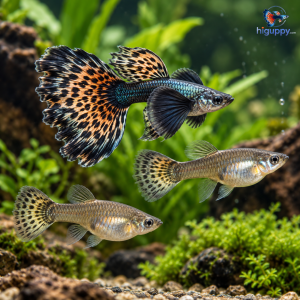
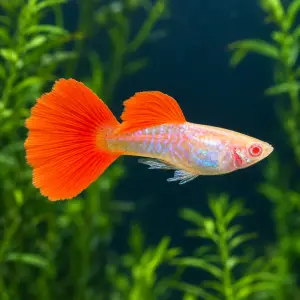
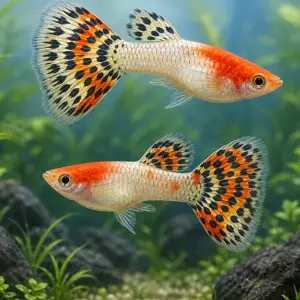
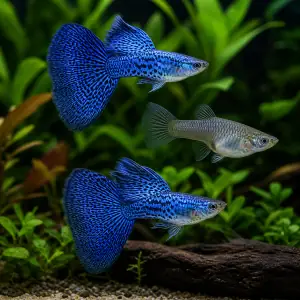
Editorial illustrations for context; they do not depict HiGuppy's exact facility or current fish stock.