The HiGuppy Journal
Selective Breeding Guppies for Beginners: Health Before Color
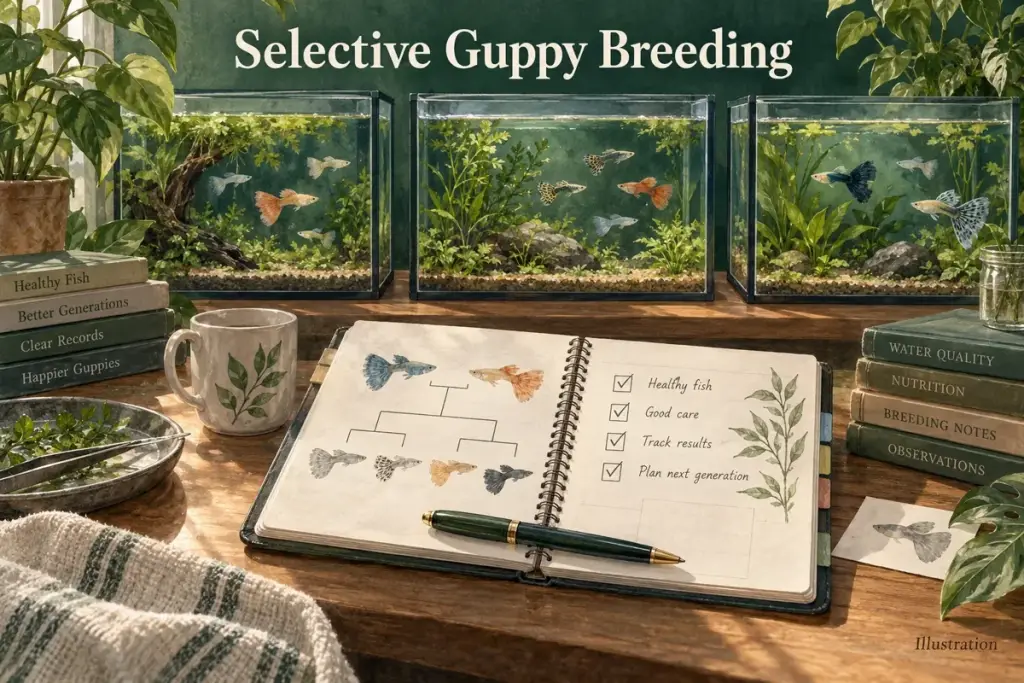
Selective breeding guppies means choosing which healthy fish produce the next generation to move toward a defined trait. Start with one observable goal, keep parent groups separate and documented, raise offspring under stable conditions, and evaluate results over time. Color and pattern inheritance can be complex, so no pairing guarantees a specific outcome or a perfectly uniform strain.
A breeding plan works best when you know what you are selecting for and can compare fish fairly. Decide whether your goal is a particular pattern, tail shape, body trait, or more consistent appearance, then keep records of parent groups and offspring. Health, structure, and reliable care should remain part of the decision, not an afterthought to color.
What selective breeding means
In selective breeding, a keeper chooses which fish will reproduce based on a goal, then observes the next generation to see what traits appeared. It differs from allowing a mixed aquarium to breed at random: the parent groups and results are tracked so decisions can improve across later generations.
A goal should be specific enough that you can recognize it. “More attractive guppies” is hard to evaluate consistently. “A broader tail with a clearly defined mosaic pattern” gives you observable features to record. Use the guppy strain list, plus guides to tail types and pattern types, to describe the traits in plain terms.
Treat the first generations as observations rather than a guaranteed recipe. Record how often the target trait appears and which other features change. Do not assume a named color follows one simple inheritance rule or that every son will resemble his father. Keep uncertain parentage visible in the records.
Start with healthy, well-documented fish
Choose starting fish that are active, feeding normally, and show the body and fin traits you hope to develop. A single striking color is not enough. Consider swimming, body shape, fin condition, and whether the fish can compete for food without being repeatedly excluded. The guide to choosing healthy guppies can help you review fish before adding them to a breeding setup.
Record what you know about the source of each fish, its strain description, age if known, and the traits you can actually see. Seller labels may describe a strain, but they do not guarantee that every descendant will look identical. If parentage is unclear or a female has been with males, be cautious about assigning fry to a specific sire; guppy females can store sperm, so prior mating history can complicate lineage records.
Make a manageable breeding setup
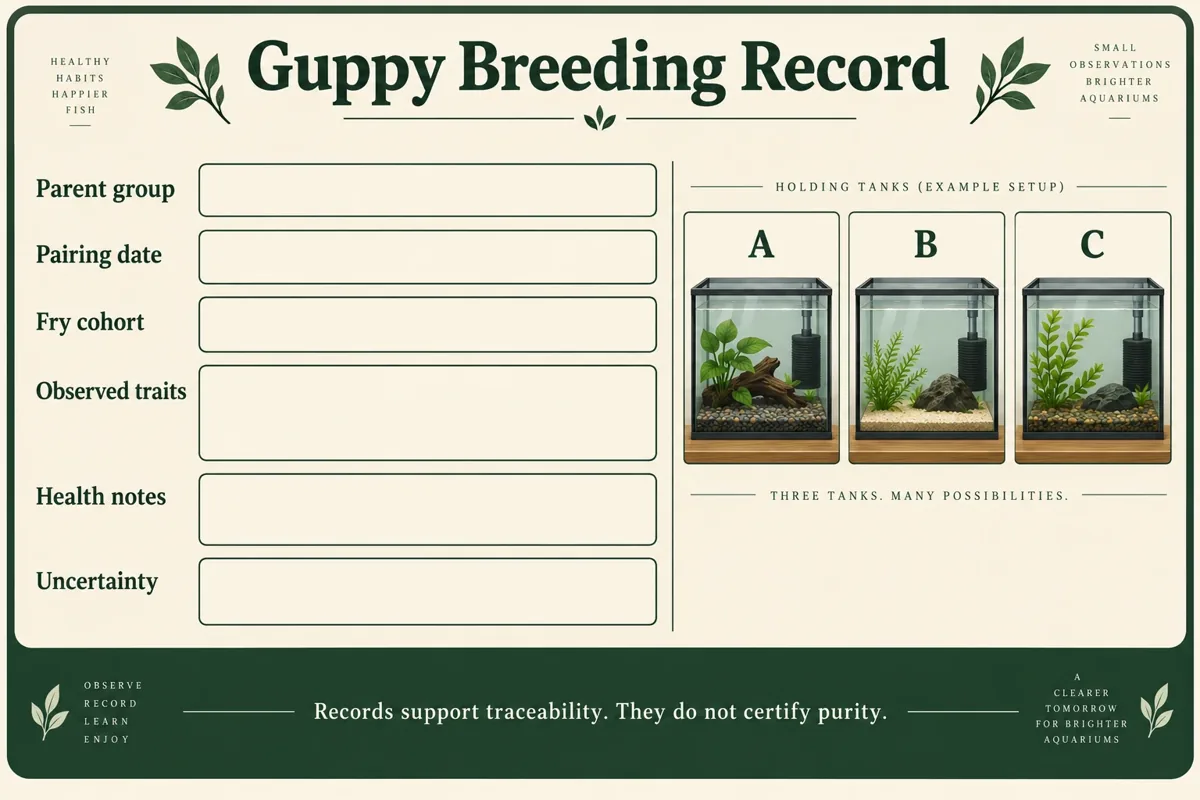
Prepare the tanks and labels before pairing fish. A breeder setup needs reliable filtration, suitable water, and room to keep parent groups and juveniles organized. The exact tank count depends on the project and available space. Do not start more lines than you can maintain well.
Use the guppy breeding tank setup and breeding guide as planning references. Separate groups clearly and keep a backup of your original stock where practical. If one line becomes unhealthy or overcrowded, a spare plan is safer than relying on one tank and a single pair for the entire project.
Before breeding, plan how you will manage fry and unwanted offspring. Confirm sex carefully and separate groups before accidental mating if parentage matters. A female that has previously mated may still produce fry later, so do not assume removing a male immediately creates a known father for every future litter.
Keep useful records
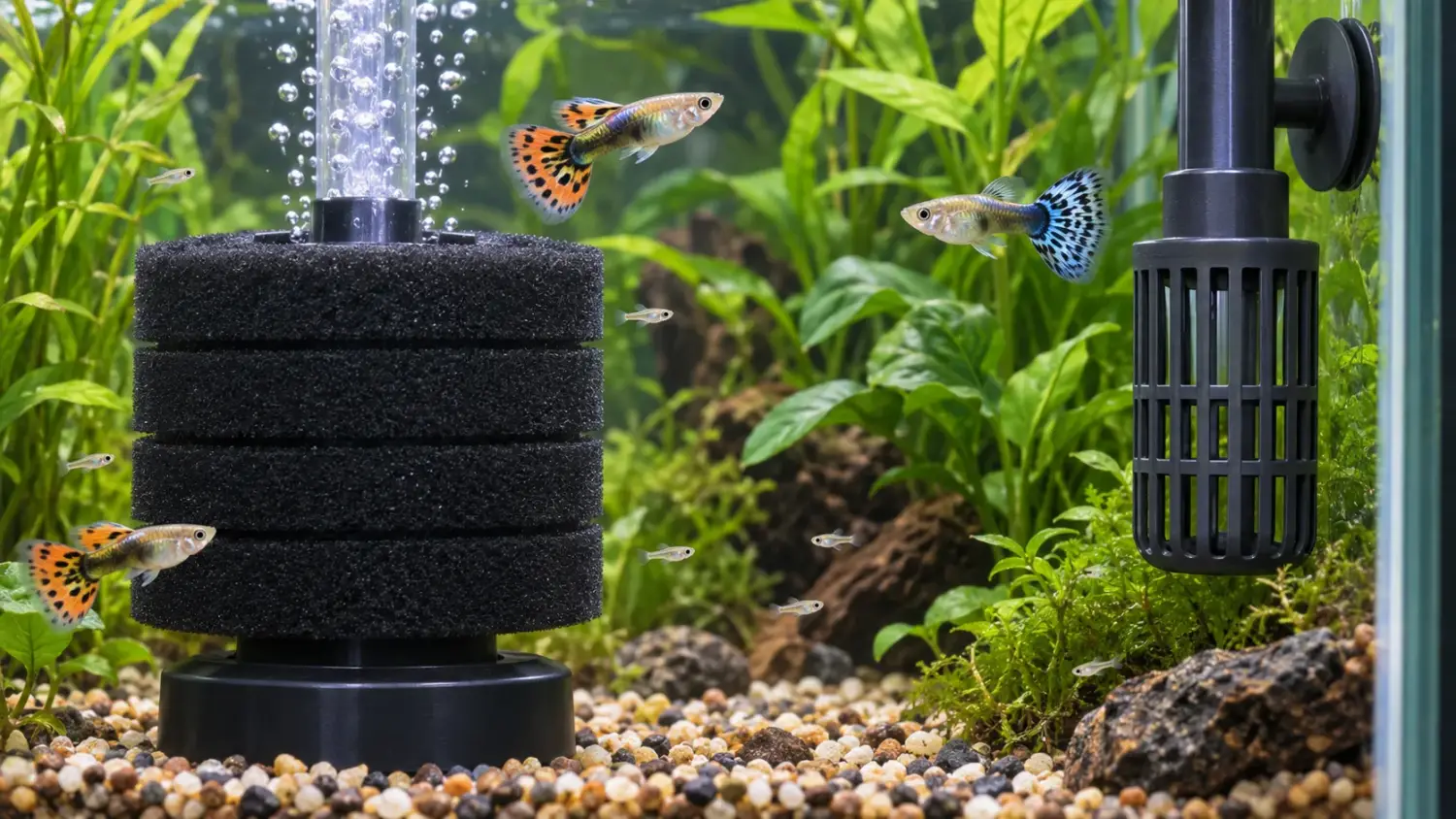
A simple log is enough to begin. Give each parent group a name or code, record which fish were together and when, then label each fry group by birth or collection date. Track the visible trait you are selecting, plus basic observations such as growth, fin shape, activity, and any health concern. Do not record an outcome as inherited from a particular parent if you cannot confirm the parentage.
Take comparison photos under similar lighting and at a similar angle. Lighting can change how a color looks, so avoid comparing a bright photo against a dim one and calling the difference genetic. Use consistent terms and make notes while the fish are still easy to identify. The guppy growth stages guide can help you compare fish at a similar stage rather than selecting a younger fish against a mature one.
Evaluate offspring before choosing breeders
Do not choose the next breeders from a single early look. Let juveniles develop enough for the intended traits to be visible, then compare fish with one another at a similar stage. Because male color and fin development can appear over time, wait for repeat observations before making a final selection. Keep more than one promising fish when possible so one loss does not end the line.
Select for a balanced set of qualities. A fish that has the desired pattern but poor swimming or a recurring structural issue may not be a suitable breeder. At the same time, do not discard healthy fish merely because their color appeared later. Keep detailed notes and avoid treating one generation as proof that a pattern will always reproduce the same way.
If the goal is to improve consistency, breed only the selected group into the planned line and keep the other fish in a separate display or rehoming plan. Do not sell or describe fish as “pure,” “guaranteed,” or genetically uniform unless you have evidence that supports those terms. A hobby breeding project can aim for consistency without claiming genetic certification.
Keep the line healthy and manageable
Repeatedly breeding from very few fish can narrow the group, so maintain enough healthy breeders for your setup and seek knowledgeable help when planning longer projects. Avoid mating fish with obvious deformities or persistent health problems, and keep a backup or fresh, documented source if the line needs support. Do not introduce another strain casually if preserving the original appearance is important; any cross changes the project and should be recorded as such.
Plan for every fish that is not kept as a breeder. Rehome responsibly, avoid overstocking, and never release aquarium fish outdoors. A breeding plan is not complete until you know how you will care for surplus juveniles and maintain water quality as the group grows.
Beginner selective-breeding checklist
- Choose one visible trait and define how you will assess it.
- Start with healthy fish and record what is known about their source.
- Prepare labeled breeding and grow-out groups before pairing.
- Account for prior mating and uncertain parentage in females.
- Photograph and compare fish under consistent conditions.
- Recheck juveniles before selecting future breeders.
- Keep a backup group and a responsible plan for surplus fry.
- Describe results honestly; never promise an exact color or strain outcome.
FAQ
How many guppies should I start with for selective breeding?
There is no one number for every project. Choose a group size that fits your aquarium space, filtration, and ability to keep parentage clear. Avoid building a long-term line around only one fish pair without a backup plan.
Can I breed guppies for one exact color?
You can select for a color trait, but offspring can vary and inheritance may involve multiple genetic factors. Track generations and avoid promising that a particular pairing will produce identical fish.
How long does it take to establish a guppy strain?
There is no universal timeline. It depends on the trait, starting fish, breeding decisions, and how consistently offspring express the goal. A few attractive juveniles do not prove a stable line.
Should I choose breeders by color alone?
No. Consider health, movement, body and fin structure, and the target trait together. Color alone does not show overall suitability or guarantee what offspring will look like.
Is selective breeding the same as keeping a strain pure?
They overlap, but they are different goals. Selective breeding chooses traits over generations; keeping a strain consistent also requires controlling accidental crosses and documenting parent groups. A hobby project should not claim genetic purity without evidence.
Behind the care guides
Care begins with steady systems
Our guppy guides focus on practical routines: keep water stable, observe fish closely and allow for natural variation.

Care systems
Steady water, thoughtful care
Gentle filtration and regular observation support healthy aquarium routines.

Natural variation
Every guppy is different
Color, size and fin shape vary with strain, age and each individual fish.
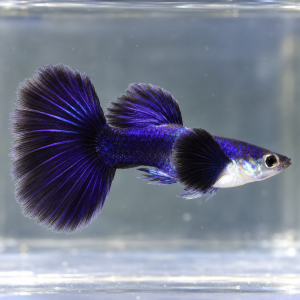
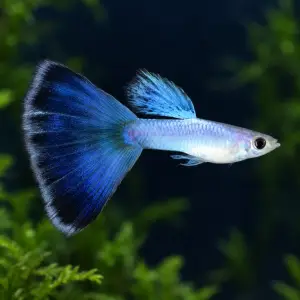
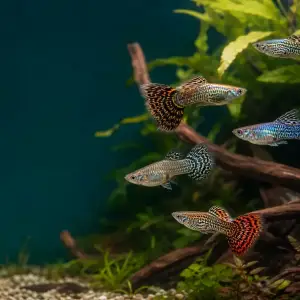
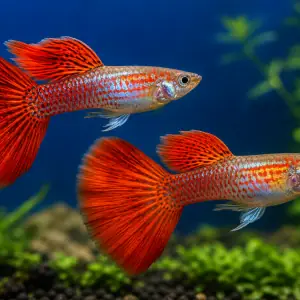
Editorial illustrations for context; they do not depict HiGuppy's exact facility or current fish stock.