The HiGuppy Journal
Flakes vs Pellets for Guppies: Which Food Is Better?
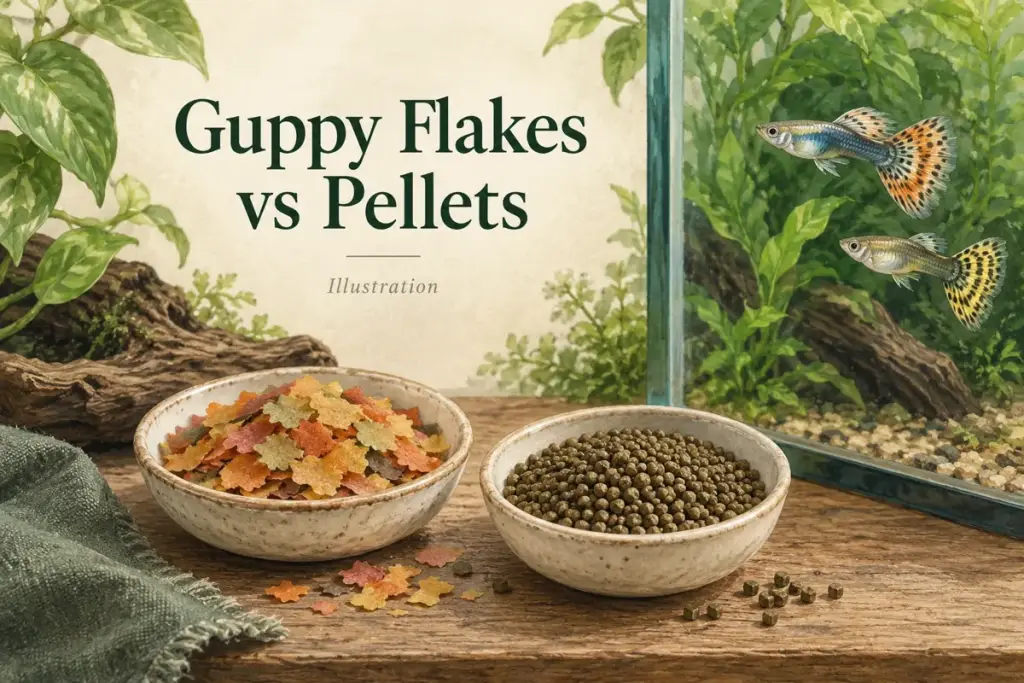
Both flakes and pellets can work as a guppy staple when the food is labeled complete for small tropical fish, fits each fish’s mouth, and is eaten rather than left to break down. Choose by particle size, where the food stays in the water, freshness, and your fish’s response. The format name alone does not tell you which food is better.
For many guppy tanks, either a suitable flake or a small slow-sinking pellet is practical. The right choice is the one your fish can eat comfortably while you can portion it consistently. Compare the ingredient and nutrition label, observe a feeding, and adjust the texture or particle size if fish repeatedly spit food or miss it. See our guppy feeding guide for a broader routine.
What changes between flakes and pellets?
Flakes are thin and easy to crumble, so you can make smaller pieces for juveniles or a mixed-size group. They spread across the surface and can be bitten apart. The tradeoff is that thin flakes may soften and disperse quickly. Aqueon’s comparison of flakes and pellets notes that food form, mouth size, and feeding level all matter.
Pellets are compact particles, but the word covers several sizes and behaviors: floating, slowly sinking, or sinking. Choose one small enough for your guppies to take without repeatedly spitting it out.
Neither type is automatically cleaner. A pellet can be missed and settle behind décor; flakes can fragment into bits that are hard to see. Uneaten food from either format adds waste. Feed a modest amount, watch the fish reach it, and remove leftovers you can see rather than adding more because one fish is slower.
How to choose the right format for your guppies
1. Match food size to the smallest fish
Look at the smallest fish that will eat the food. Adult guppies, juveniles, and newborn fry do not have the same mouth size. A flake can be pinched into fine crumbs; a pellet may need to be a true micro-size or softened according to its label. If a fish takes food and spits it out repeatedly, try a smaller piece or a different texture before assuming it is refusing a meal. Aqueon also warns that particles that do not fit the fish can go uneaten and contribute to poor water quality. For newborn feeding details, use our guppy fry feeding schedule rather than treating adult portions as a fry plan.
2. Match the food’s movement to how your guppies feed
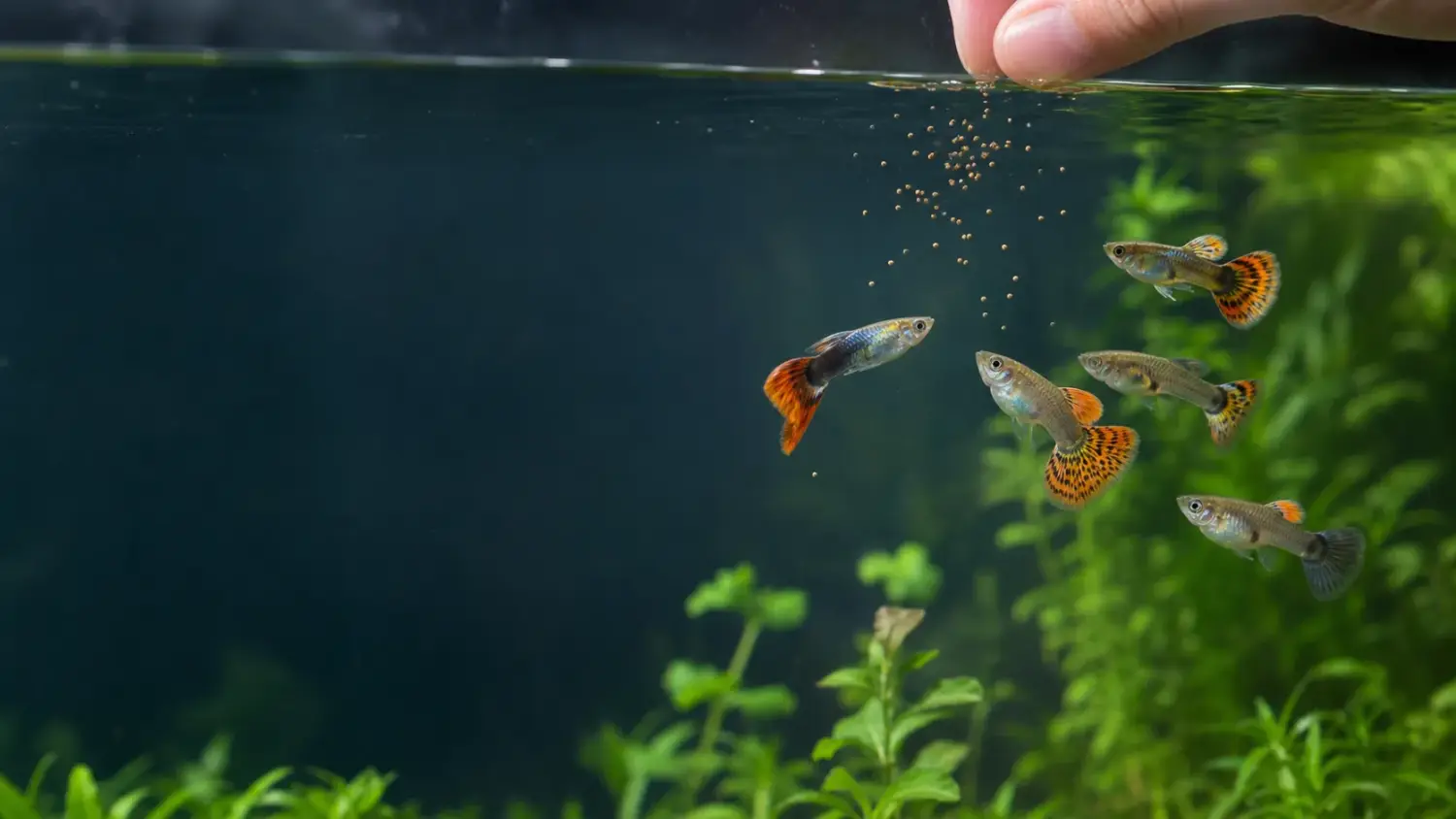
Guppies usually feed near the surface and in the upper water. A floating flake or a slowly sinking pellet can give them time to take food there. A fast-sinking pellet may reach the bottom before some fish notice it, while a floating pellet may be useful in a tank where the keeper wants to watch each fish eat. Aqueon’s food-selection guidance recommends considering feeding level alongside particle size. In a community aquarium, bottom-dwelling tank mates may need their own sinking food; do not assume guppies will share the right meal with every species.
3. Compare the label, not just the shape
Choose food intended as a complete daily diet for tropical community fish or livebearers, then check the label for ingredients, analysis, directions, and storage advice. Aqueon’s nutrition overview describes why ingredient quality and the fish’s dietary needs matter. “High protein,” “color,” or “breeding” on the front does not by itself show that one product is a better staple for your aquarium. Rotate an appropriate food if you want variety, but avoid changing several foods at once when you are trying to understand appetite or waste.
4. Keep the food fresh and portions observable
Keep dry food closed and dry, and avoid buying a container so large that it sits open for a long time. Follow the product’s storage directions. At feeding, offer only a small amount you can observe. If food remains after the fish stop eating, remove it and reduce the next portion. The overfeeding guide explains why leftover food matters more than whether the meal started as a flake or pellet.
Can you use both?
Yes. Many keepers use a suitable flake on some days and a small pellet on others, or keep one as the staple and use a second complete food for variety. Make one change at a time, and keep portions comparable so you can see whether every guppy eats. A varied routine does not require a large menu; consistency, suitable size, and clean water matter more than collecting many packages. Our best-food guide discusses staple foods and optional variety.
A simple feeding test before you commit
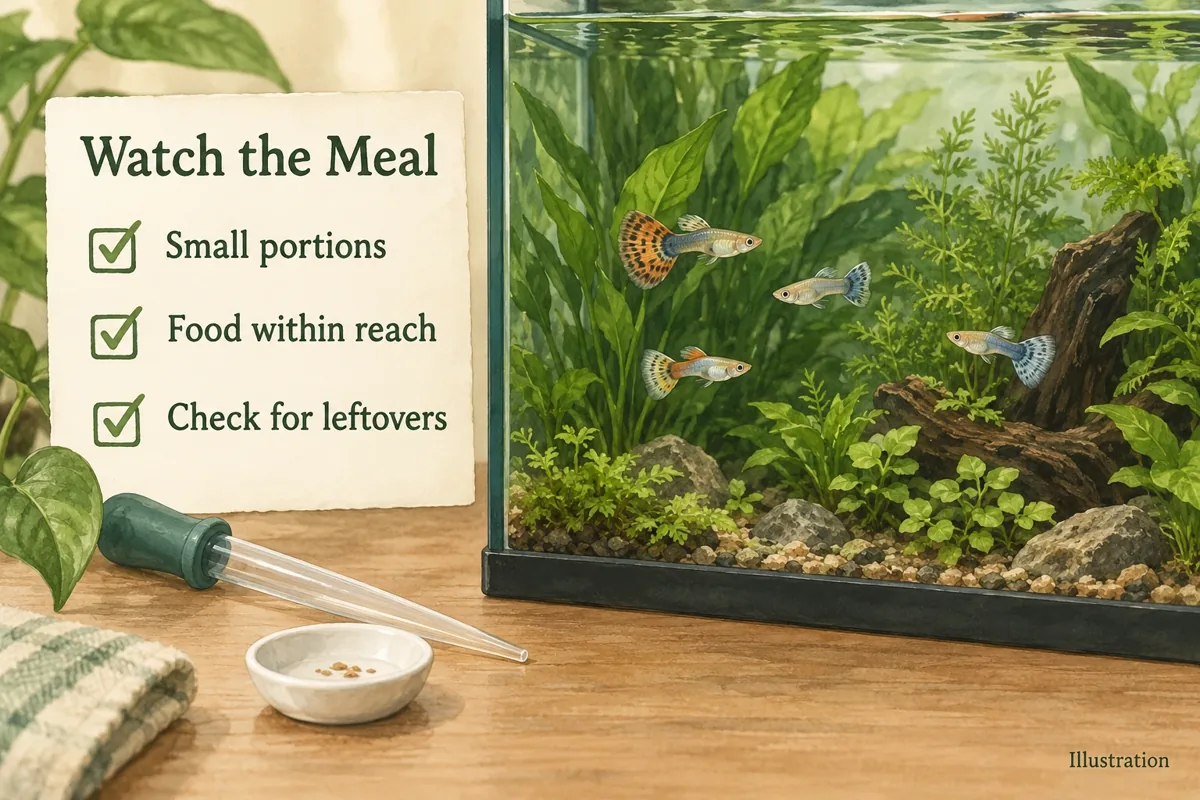
Start with a small portion of the candidate food. Watch whether the smallest guppy can pick it up, whether the food stays in the intended feeding zone long enough, and whether the group leaves visible particles. Repeat the observation on a normal feeding rather than judging by a single excited scramble. If the new food is unfamiliar, transition gradually by mixing a small amount with the current food, then increase only if the fish accept it and the tank remains clean.
- Check that the product is a complete food for tropical fish or livebearers.
- Choose flakes or pellets small enough for the smallest fish that will eat them.
- Use floating or slowly sinking food that guppies can find in the upper water.
- Watch fish eat and remove visible leftovers; do not use cloudiness as your only test.
- Store the package as directed and replace food that has become damp or stale.
Frequently Asked Questions
Are flakes or pellets better for guppies?
Neither format is universally better. Choose a complete food the fish can swallow, reach in the water column, and finish without leaving a trail of leftovers.
Can guppies eat flakes every day?
A suitable complete tropical flake can be part of a regular guppy diet when fed in an appropriate amount. Follow the product directions and observe body condition, appetite, and tank cleanliness.
Are pellets too big for guppies?
Some are. Pellet size varies by product, so check that each guppy can take it. Repeatedly spitting out food is a reason to try a smaller particle or another texture.
Do pellets sink faster than flakes?
Not always. Some pellets float, some slowly sink, and some sink quickly. Check the product description and test a small portion in your aquarium.
What should I feed guppy fry?
Fry need particles that fit their mouths and a routine appropriate to their age and setup. Use a dedicated fry-feeding guide; adult-sized flakes or pellets may be too large.
Behind the care guides
Care begins with steady systems
Our guppy guides focus on practical routines: keep water stable, observe fish closely and allow for natural variation.
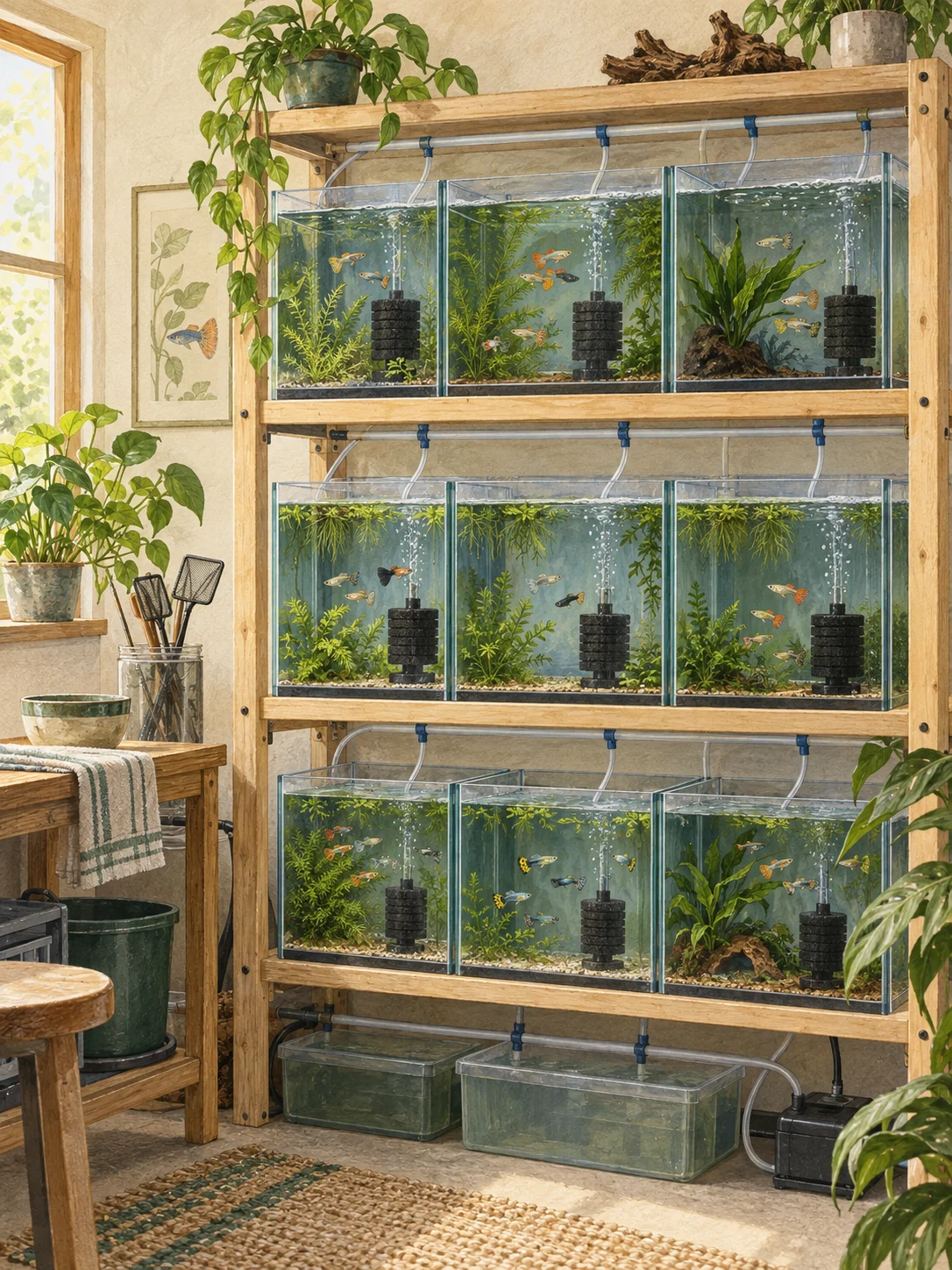
Care systems
Steady water, thoughtful care
Gentle filtration and regular observation support healthy aquarium routines.
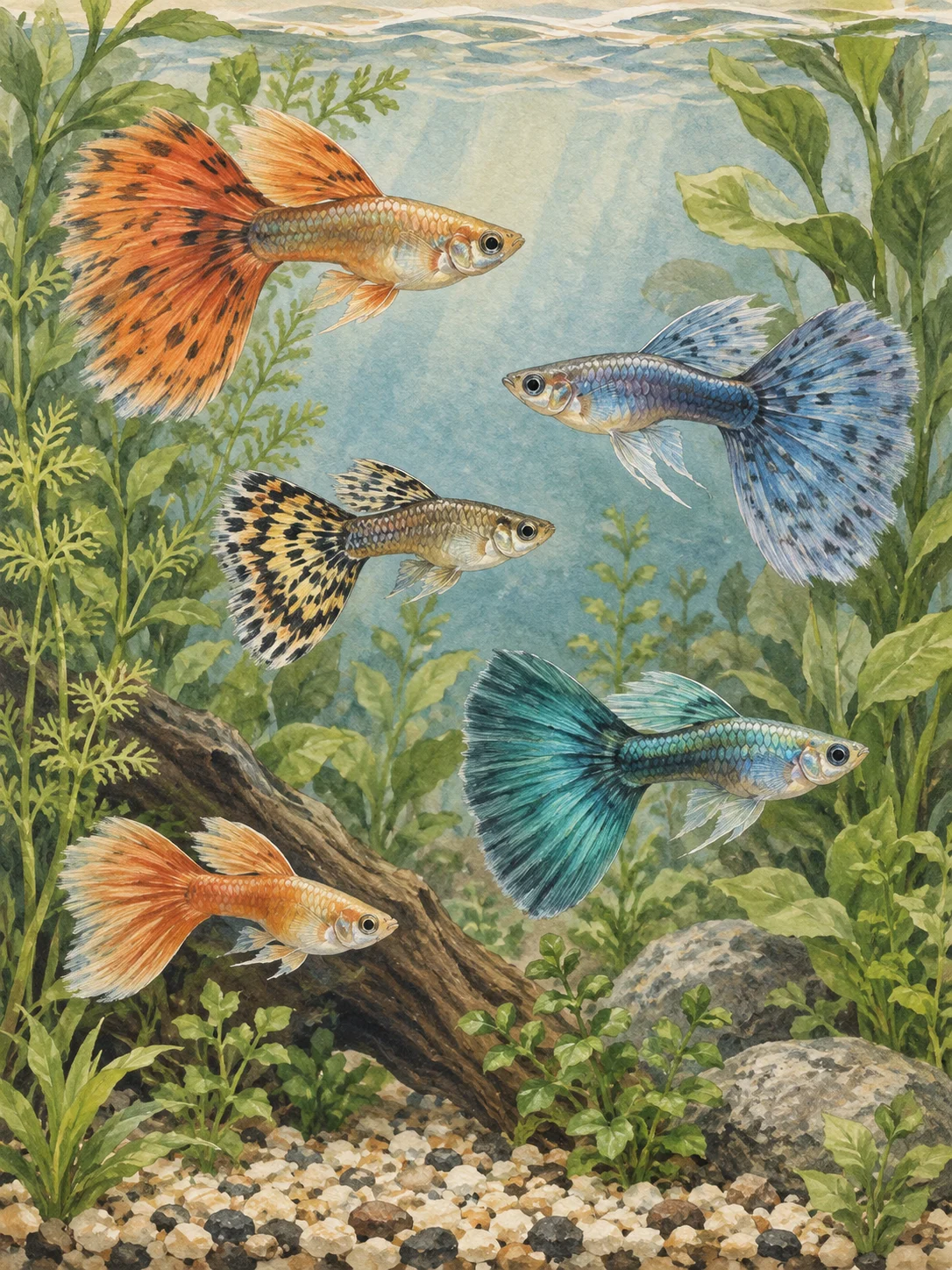
Natural variation
Every guppy is different
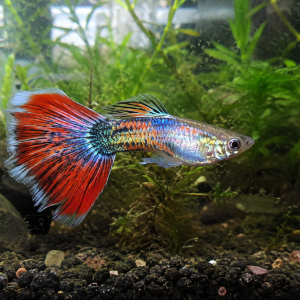
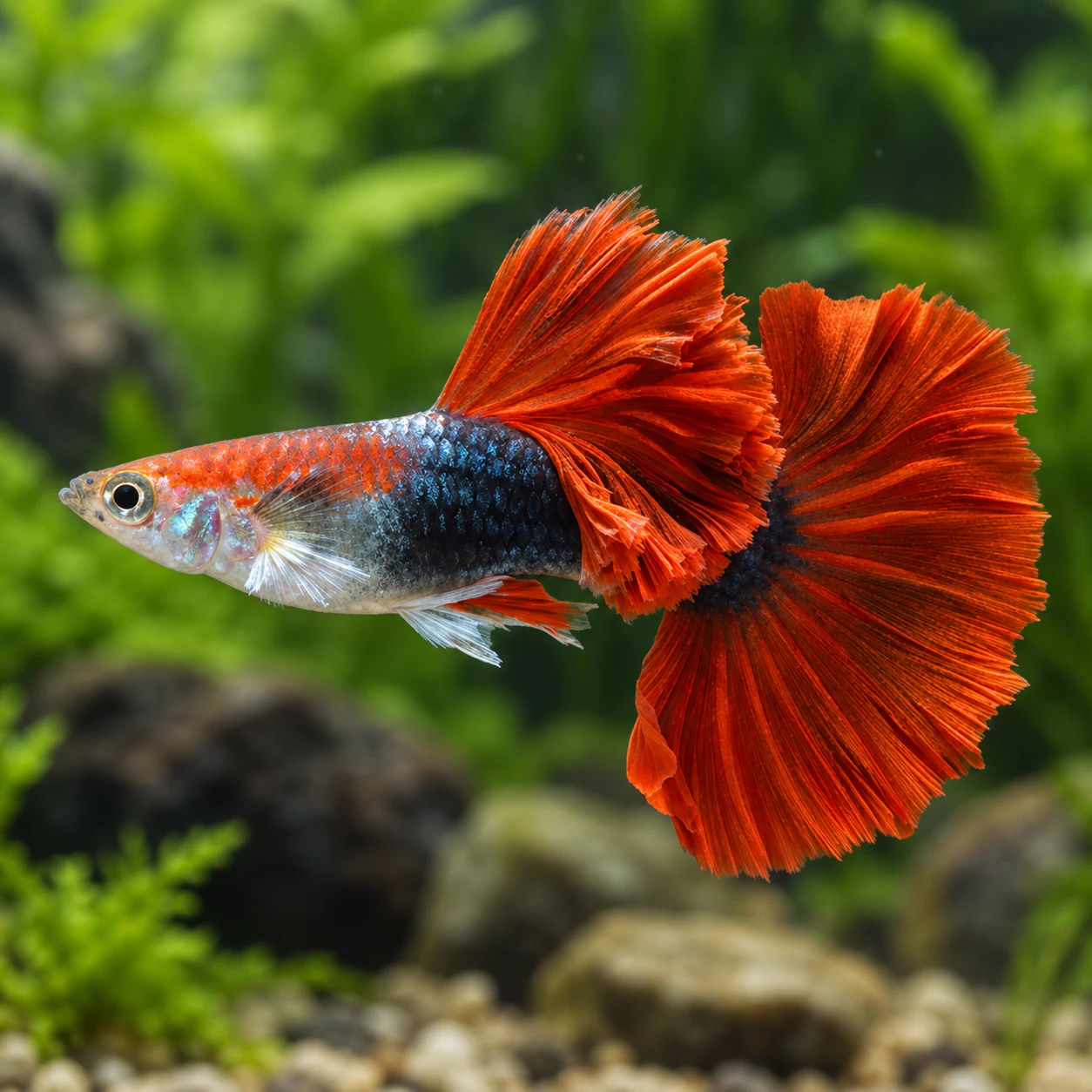
Color, size and fin shape vary with strain, age and each individual fish.
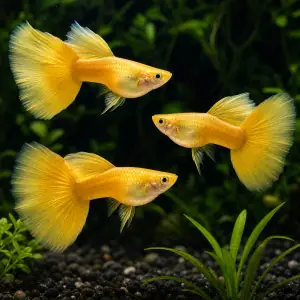
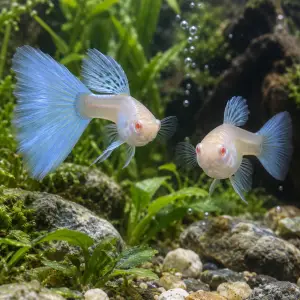
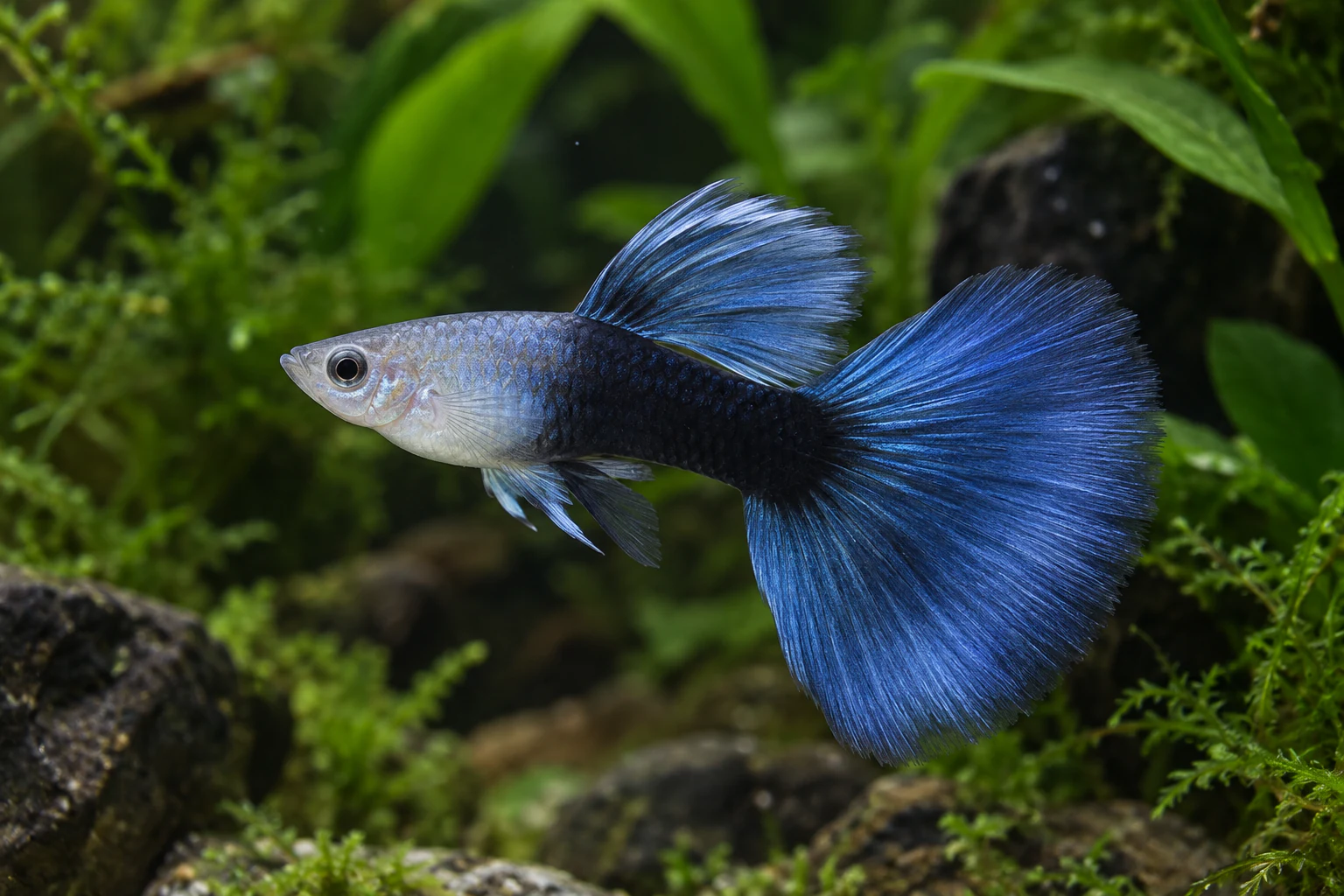
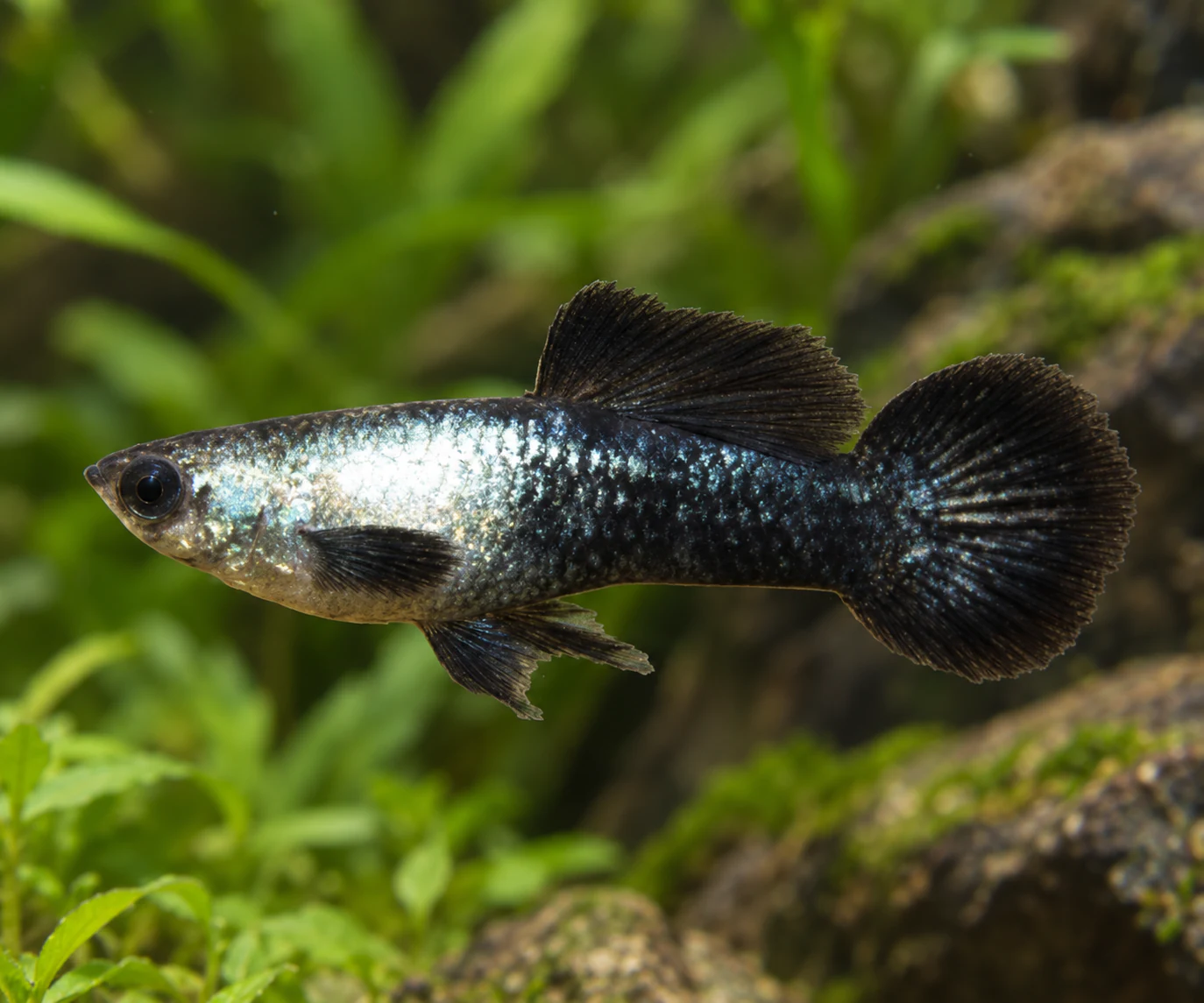
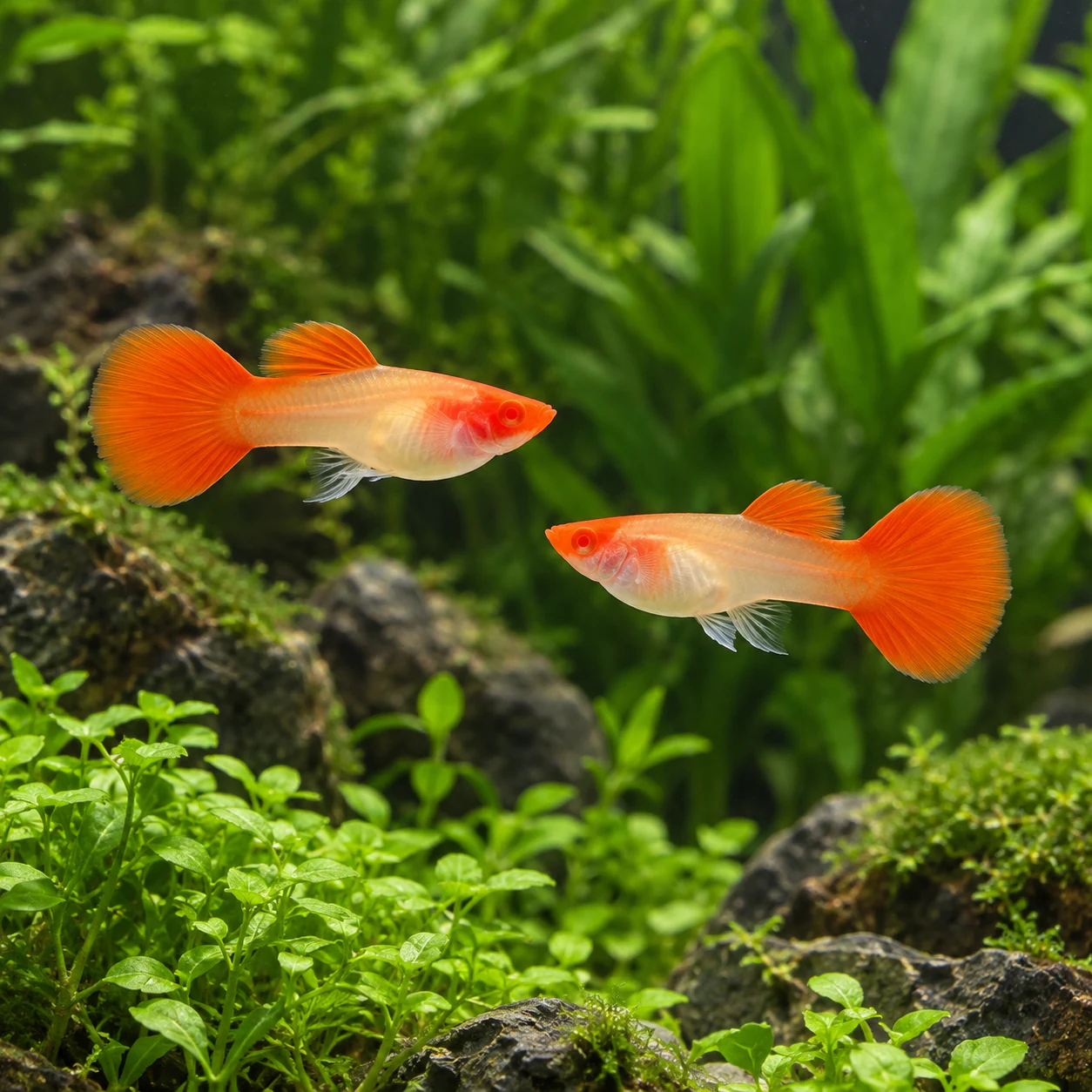
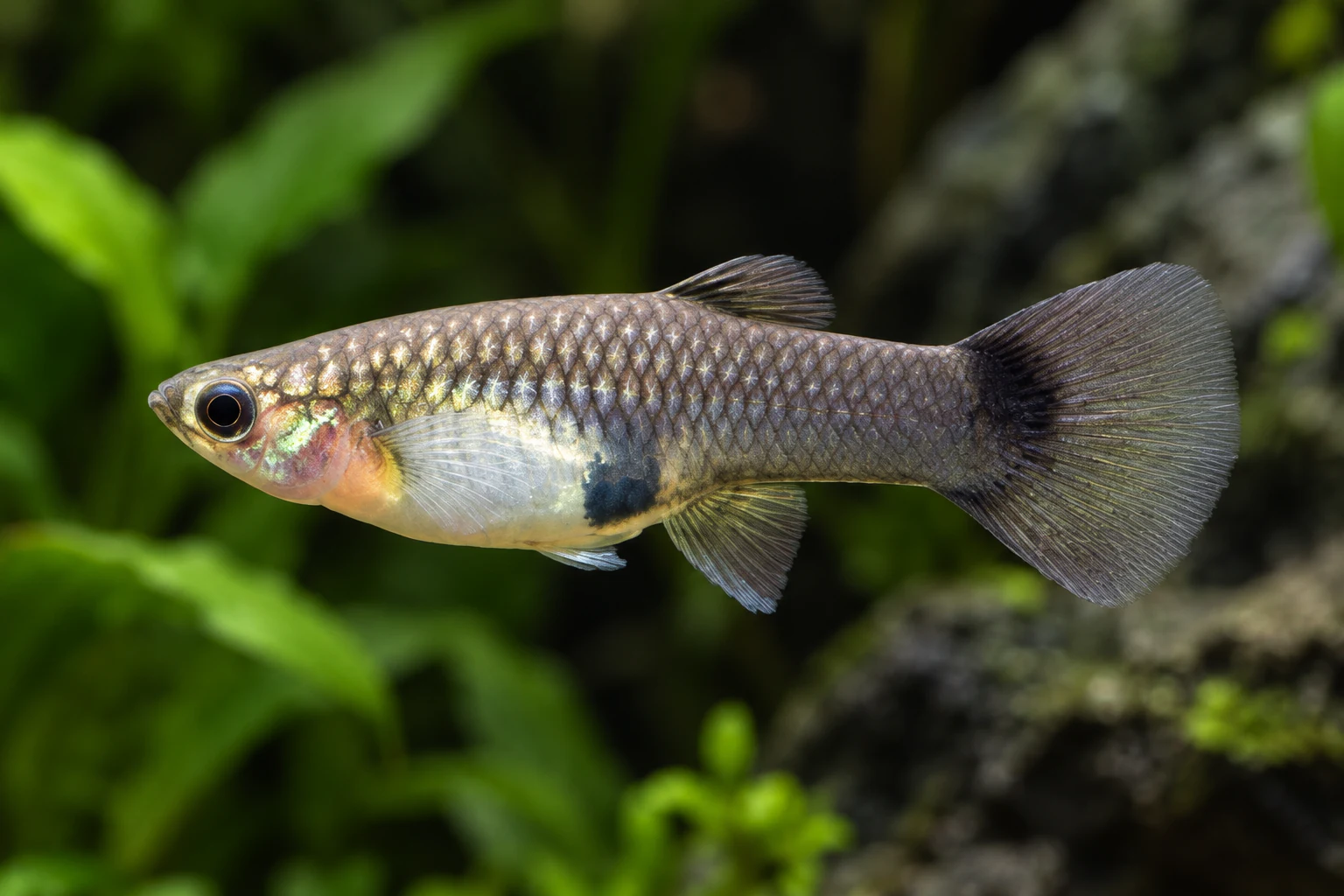
Editorial illustrations for context; they do not depict HiGuppy's exact facility or current fish stock.