The HiGuppy Journal
How to Test Aquarium Water for Guppies: Kit Guide and Safe Ranges
How to test aquarium water for guppies? Use a freshwater test kit to measure ammonia, nitrite, nitrate and pH, follow its full instructions, and compare results with guppy care guidance: ammonia and nitrite should be 0 in an established tank, nitrate should stay within the species-specific target, and OATA suggests pH 7.0 to 8.0. This guide is part of our complete guppy care guide and walks you through every step.
A guppy can show clamped fins or gasp for different reasons; those signs alone cannot reveal whether water chemistry is involved or how long a problem has been present. A test kit measures some water chemistry values that are not visible, but it does not diagnose disease or guarantee advance warning. This guide explains which kit parameters to check, how to follow product directions, how to interpret results, and when to investigate a reading.
Why learning how to test aquarium water for guppies matters
Water quality can contribute to health problems
The first reason to learn how to test aquarium water for guppies: poor water quality can contribute to stress and illness, but it is not the only cause of fish health problems. Fish waste, uneaten food and decaying plants add ammonia. In a mature filter, beneficial bacteria convert ammonia to nitrite and then nitrate; ammonia and nitrite are toxic to fish. A tank can look clear while its chemistry is unsuitable, so test the water as well as observing the fish.
Clear water does not guarantee suitable water
How to test aquarium water for guppies matters because clear-looking water can still contain pollution that cannot be seen, including ammonia. Testing provides readings for the parameters a kit measures; a log can help compare results over time, though kit resolution and sampling conditions limit how small a change you can detect.
What learning how to test aquarium water for guppies will and will not tell you
Part of how to test aquarium water for guppies is knowing the limits: tests show the chemistry of the water at one moment. They do not diagnose a specific disease, and they do not replace watching your fish. Use both: observe behavior daily, and test on a schedule. If you want the full picture of targets, our guppy water parameters guide covers each number in more depth.
How to test aquarium water for guppies: which tests do you need?
The core four: ammonia, nitrite, nitrate and pH
These tests help show whether the biofilter is processing waste and whether water chemistry is changing. Ammonia and nitrite should be zero in an established aquarium; nitrate should be interpreted against the tap-water baseline and the species-specific target. pH measures acidity or alkalinity, and high pH can make ammonia more toxic.
How to test aquarium water for guppies: useful extras — GH, KH and temperature
General hardness (GH) measures dissolved calcium and magnesium, and carbonate hardness (KH) measures the water’s buffering capacity against pH swings. OATA suggests guppy water at pH 7.0 to 8.0, medium-hard general hardness (8 to 18 °dH), and 20 to 28 °C (68 to 82 °F). Carbonate hardness helps buffer pH; test it when investigating unstable readings. A thermometer helps you monitor temperature.
Quick comparison of test types
| Test type | Accuracy | Speed | Best for |
|---|---|---|---|
| Liquid drop kit | Follow the kit directions; tests the parameters listed on its label | As stated in the kit | New tanks, cycling, troubleshooting |
| Test strips | Quick screening for the parameters listed on the package; resolution varies by product | As stated on the package | Quick screening for covered parameters |
| Digital pH pen | Use only within its stated range and calibrate as directed by its manufacturer | Seconds | Frequent pH checks |
| Fish store testing | Depends on the store’s method | Needs a trip with a water sample | Second opinion when results look odd |
How to test aquarium water for guppies: choosing a test kit
Liquid kit versus strips
Choosing a kit is the first real step in how to test aquarium water for guppies: choose a freshwater kit that measures the parameters you need. Test kits are sold as liquids, tablets and strips; the tested parameters and resolution vary by product. Check the label, follow the manufacturer instructions and use an unexpired kit. If a result is unexpected, repeat it with a fresh sample and a suitable test.
What to look for when buying
- Freshwater labeling, not saltwater or marine.
- Check that the package lists the parameters you need, such as ammonia, nitrite, nitrate and pH.
- A printed expiry date, with a date well in the future.
- A color chart with clear steps for ppm readings.
- Confirm that it includes the sample tubes and caps required by its instructions.
How to test aquarium water for guppies: storing and caring for your kit
An overlooked part of how to test aquarium water for guppies is kit care: store reagents and test tubes as directed by the manufacturer, keep bottles closed, and check the expiration date. Use a clean tube and the sample volume specified in the kit instructions. Replace an expired kit; if results seem implausible, repeat with fresh reagents or another suitable test.
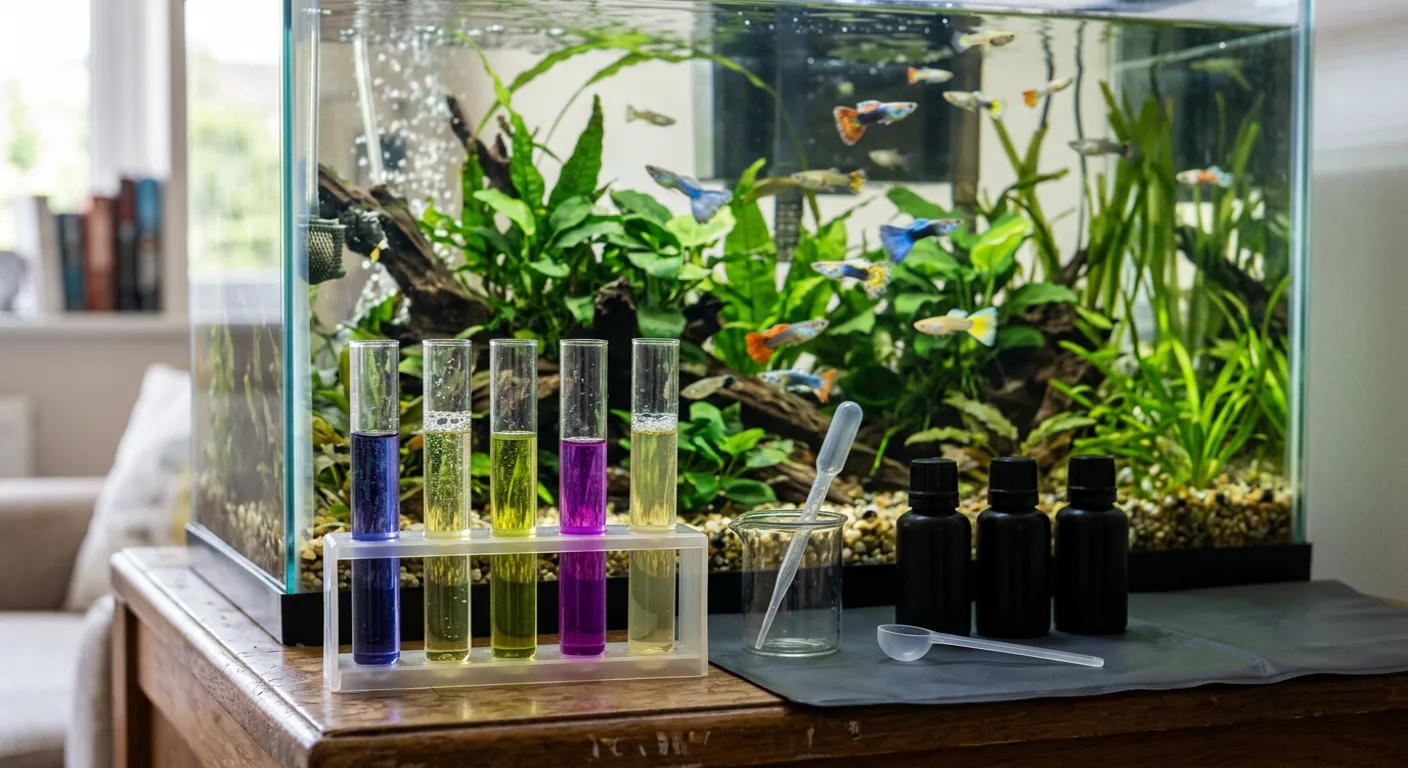
How to test aquarium water for guppies: step by step
Collecting a good sample
- Use a clean sample tube and avoid contaminating the sample with soap or cleaning products.
- Rinse the test tube with tank water.
- Fill the tube to the marked line with water taken from mid-depth, away from the filter outflow and any bubbles.
- Test right away, because the water changes as it sits.
- Work in daylight or against a white card so colors read correctly.
Testing ammonia
Follow the exact directions for your kit; for example, the API Freshwater Master Test Kit uses 8 drops from each ammonia reagent. Wait the full development time and compare with the chart. Ammonia should be 0 in an established tank. If a test detects ammonia, repeat it and check the biofilter, stocking, feeding and any recent changes.
Testing nitrite
Follow the kit directions. Nitrite should be 0 in an established tank, although ammonia and nitrite may rise during a new aquarium cycle. If either is detected, check the cycle and filter and take prompt steps to reduce fish exposure. Our guppy tank cycling checklist explains the timeline.
Testing nitrate
Some nitrate kits require a reagent bottle to be shaken before use and the sample tube to be mixed for a set time; follow the exact product directions. OATA advises keeping guppy nitrate no more than 20 mg/L above normal tap-water levels. Test tap water too, and use the species-specific guidance for your tank.
Testing pH
Add the drops, mix gently and compare right away or after the time in the instructions. OATA suggests pH 7.0 to 8.0 for guppies. Keep pH stable and compare tank water with the source water; avoid abrupt adjustments unless there is a specific reason and a reliable plan.
How to test aquarium water for guppies: record every result
Write results with the date and relevant changes, such as feeding, water changes or new fish. A log can help reveal trends when samples are collected consistently, but no single result explains the full condition of a tank.
How to read your results
Target ranges at a glance
| Parameter | Target for guppies | Concern level |
|---|---|---|
| Ammonia | 0 mg/L in an established tank | Retest and investigate any detection |
| Nitrite | 0 mg/L in an established tank | Retest and investigate any detection |
| Nitrate | No more than 20 mg/L above normal tap water (OATA guppy guidance) | Compare source water and follow species guidance |
| pH | 7.0 to 8.0, stable | Sudden changes or a sustained out-of-range result |
| General hardness | Medium-hard (8 to 18 °dH) | Compare with the guppy care range |
| Temperature | 20 to 28 °C (68 to 82 °F) | Keep stable within the species range |
Ammonia and nitrite above zero
Knowing how to test aquarium water for guppies matters most here: ammonia and nitrite are toxic, and high pH increases ammonia toxicity. If a test detects either in an established tank, confirm the result, inspect the filter and stocking, and promptly reduce exposure. A partial water change with conditioned, temperature-matched water is often appropriate; test again according to the kit directions. See our guide to ammonia poisoning in guppies for symptoms and a full response plan.
High nitrate
Nitrate can be taken up by plants or algae, removed by denitrification, or reduced with partial water changes. Compare the tank reading with tap water and the guppy-specific target; a higher reading can reflect source water, stocking, feeding or maintenance. Our article on how often to change water in a guppy tank gives schedules by tank size.
pH that is low, high or swinging
A falling pH can be associated with low carbonate hardness, but test KH and compare source water before assuming the cause. Sudden pH changes can harm fish; avoid corrective chemicals until you understand the water chemistry.
Why your readings may be wrong
- Expired reagents.
- Not following the reagent mixing directions for that specific nitrate kit.
- Reading under a yellow light bulb.
- Wrong number of drops or wrong tube size.
- Some ammonia-treatment products can leave total-ammonia tests positive; check the specific conditioner and test-kit instructions.
How often to test your guppy tank once you know how to test aquarium water for guppies
A simple testing schedule
| Situation | How often to test | Tests to run |
|---|---|---|
| New tank still cycling | As directed by your cycling plan; test promptly if readings change | Ammonia, nitrite, nitrate |
| After adding new fish | At least weekly while the biofilter adjusts; retest sooner if fish show distress | Ammonia, nitrite |
| Established, stable tank | Once a week | Ammonia, nitrite, nitrate, pH |
| Breeding or fry tank | Weekly, and more often if waste builds quickly or readings change | Ammonia, nitrite, nitrate |
| Fish look sick or die suddenly | Promptly, then repeat after action or as the kit directs | All tests |
| After medication or a filter change | Promptly after the change; then monitor until readings are stable | Ammonia, nitrite |
Best time of day to test
When planning how to test aquarium water for guppies, pick a consistent time, ideally before a water change and before feeding, so your numbers are comparable week to week. A result before or after a water change is a snapshot from that point in the routine. Test at a consistent point when comparing readings over time; one reading does not establish the longer-term pattern or the cause of a change.
How to test aquarium water for guppies means testing tap water too
Test tap-water parameters that your kit measures, such as pH, hardness or ammonia if included. A basic aquarium kit does not necessarily identify chlorine or chloramine; check your water supplier and conditioner label, and treat replacement tap water as directed. For more on tap water, read can guppies live in tap water.
What to do when a test result is bad
Responding when a partial water change is appropriate
- Remove dead fish, uneaten food and decaying material. If medication is in use, follow its label and ask the manufacturer before changing the treatment.
- Prepare replacement water close to the aquarium temperature.
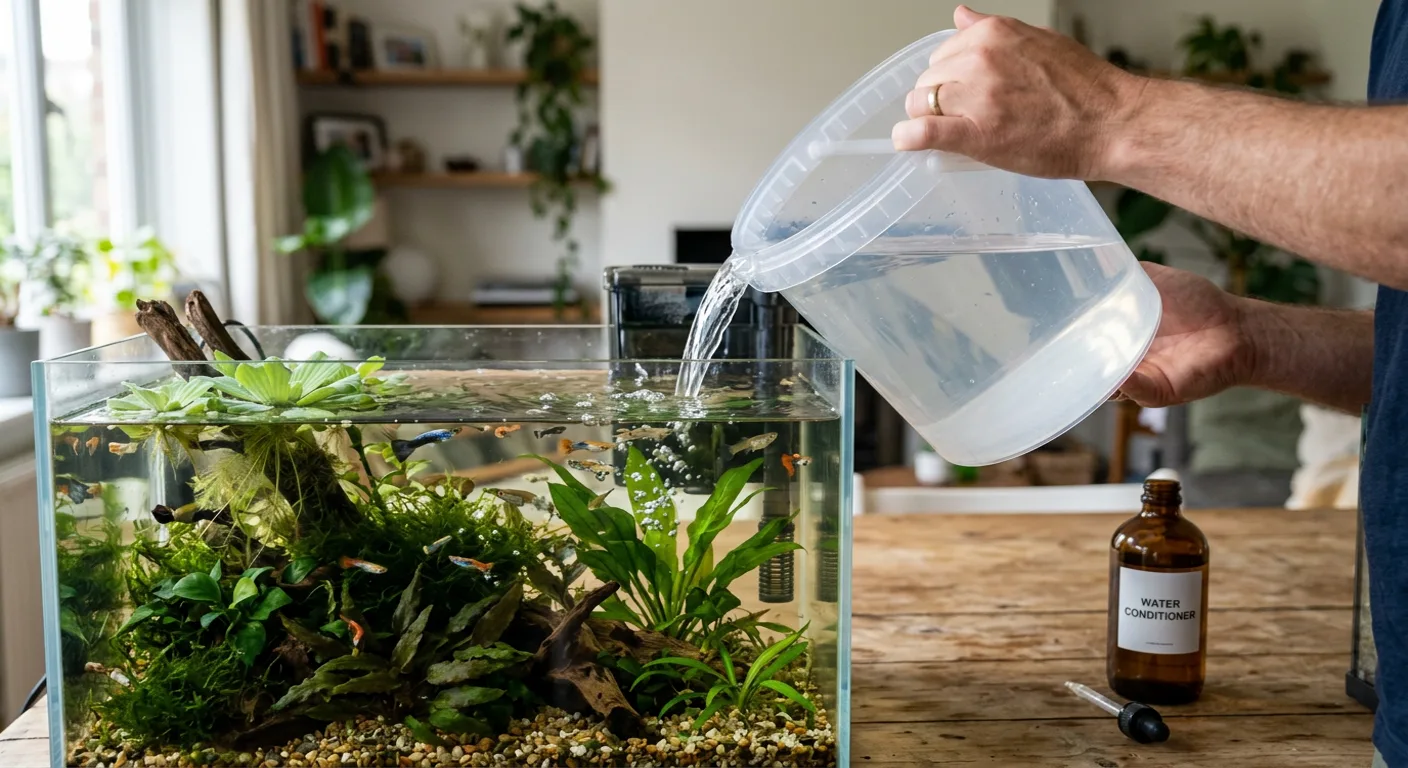
- Treat tap water with a conditioner that handles chlorine or chloramine, using the dose specified for the replacement water.
- Make a partial water change sized for the situation; avoid abrupt changes to temperature or water chemistry.
- Pour in the treated water slowly, avoiding blasts that stir up the whole tank.
- Retest on the schedule in the kit instructions. If a reading persists or fish appear distressed, consult an experienced aquatic veterinarian or fish-care professional.
Fixing the root cause
A partial water change can reduce some unwanted substances, but it does not identify why readings changed. Review possible factors such as feeding, stocking, filter flow and media care, source water, and recent additions. Untreated tap water can harm beneficial filter bacteria; OATA recommends rinsing media in water removed from the aquarium. Remove uneaten food and adjust feeding or stocking to the tank rather than relying on a fixed feeding-time rule.
Quick fixes by problem
| Problem | Likely cause | First action |
|---|---|---|
| Ammonia above 0 | Cycle, filter, stocking, feeding or source water | Confirm result; reduce exposure with appropriate partial water changes |
| Nitrite above 0 | New tank or biofilter problem | Check cycle and filter; reduce exposure |
| High nitrate | Source water, stocking, feeding or maintenance | Compare tap water; adjust husbandry and water changes |
| Falling pH | Possible low KH or source-water change | Test KH and source water before adjusting |
| High pH swings | Source/tank chemistry mismatch or other change | Investigate and make gradual changes only if needed |
Common mistakes beginners make learning how to test aquarium water for guppies
Testing but not acting
A classic mistake in how to test aquarium water for guppies: some keepers test, see a high number, and wait to see whether it improves. An elevated ammonia or nitrite result may persist if its cause remains, such as an immature or disrupted biofilter or excess waste. Confirm the test and investigate promptly; in an established tank, a partial water change may be needed to reduce exposure.
Chasing pH with chemicals
Avoid abrupt pH adjustments. A stable value within the species-specific care range is usually preferable to chasing a small difference; check KH and source water before changing chemistry.
Using old kits or the wrong kit
Use a freshwater test kit within its expiration date and follow the instructions for each parameter. If a result seems implausible, repeat it with fresh reagents or a second suitable kit.
Ignoring the filter
Replacing all filter media at once can remove much of the established biofilter growth. Beneficial bacteria also live on other aquarium surfaces. Follow the filter maker’s maintenance instructions and avoid washing media in untreated tap water; OATA recommends gently rinsing it in water removed from the aquarium. Our guppy tank maintenance schedule shows how to stagger these jobs.
Tips for beginners learning how to test aquarium water for guppies — and experienced keepers
For beginners
- Learn how to cycle the aquarium before adding fish, and use a test kit to monitor ammonia and nitrite as the biofilter matures.
- Keep a simple log so you spot trends.
- Test after any big change, such as adding fish, changing media or medicating.
- Interpret color differences within the kit’s stated resolution; repeat an unexpected result and compare it with source water and prior readings.
For experienced keepers
- Check KH and GH when you set up a new rack or switch water sources.
- Calibrate your pH pen with fresh buffer solution on a regular basis.
- If readings seem implausible, repeat with a fresh sample and unexpired reagents or compare with another suitable test.
- Live plants can take up some nitrate, but they do not replace testing or appropriate water changes.
When you are ordering new fish
Healthy water gives new arrivals the best chance of settling in. Before your fish arrive, test the tank so you know it is ready. If you are shopping for stock, browse our male guppies or a premium guppy pair, and read what to expect in what to do when guppies arrive.
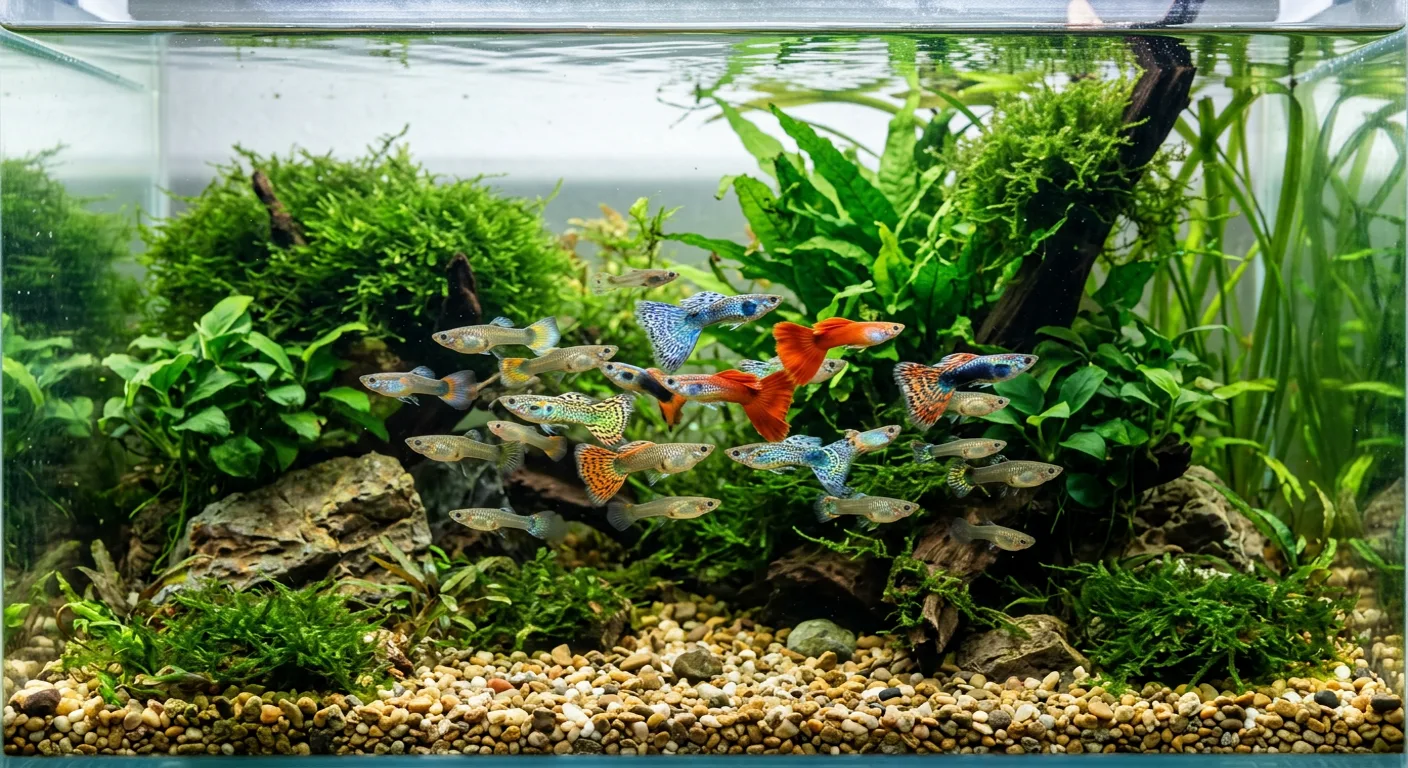
How to test aquarium water for guppies: water testing checklist
Printable routine in seven lines
- Check the expiry date on your reagents.
- Rinse tubes with tank water and fill to the line.
- Test ammonia, nitrite, nitrate and pH, waiting the full time for each.
- Compare colors against the card in daylight.
- Write the numbers and the date in your log.
- Confirm unexpected ammonia or nitrite results and follow an appropriate response; compare nitrate with source water and species-specific guidance before deciding on a water change.
- Repeat unexpected results as the kit directs, then retest after any action on a schedule appropriate to the situation.
Final thoughts on how to test aquarium water for guppies
How to test aquarium water for guppies comes down to habit: routine testing can help identify water-quality changes when paired with daily observation; it does not replace observation or diagnose disease. Keep a log of the parameters your kit measures and use species-specific care guidance. For guppy care background, see OATA’s guppy care sheet, and return to our guppy care hub whenever you need the next step.
FAQ: how to test aquarium water for guppies
How to test aquarium water for guppies without a liquid kit?
Test strips or a digital pH pen give quick screening, but a freshwater liquid drop kit is the reference for ammonia, nitrite, nitrate and pH. If strips show an unexpected result, confirm it with a liquid kit.
How to test aquarium water for guppies in a brand-new tank?
Test ammonia, nitrite and nitrate daily while the tank cycles, following your cycling plan. An uncycled tank will show ammonia and nitrite above zero until the biofilter matures.
How to test aquarium water for guppies at home?
Use a freshwater test kit that measures ammonia, nitrite, nitrate and pH. Collect a clean sample, follow the kit instructions exactly, wait the full development time and compare the result with its chart.
How often should I test my guppy tank?
Follow the cycling plan and test at least weekly. OATA recommends weekly checks, with extra tests during setup, after adding fish or whenever the fish or readings cause concern.
What should ammonia and nitrite read in a guppy tank?
Both should be 0 in an established tank. Confirm an unexpected result, check the cycle and filter, and take appropriate steps promptly to reduce fish exposure.
How to test aquarium water for guppies: are test strips accurate enough?
It depends on the strip and the parameter it measures. Check the package for ammonia, nitrite, nitrate and pH coverage; follow its instructions and confirm unexpected results with a suitable test.
How to test aquarium water for guppies: what nitrate level is safe?
OATA advises that guppy nitrate should not exceed 20 mg/L above normal tap-water levels. Test source water too and follow the species-specific target for your aquarium.
What pH is best for guppies?
OATA suggests pH 7.0 to 8.0 for guppies. Keep it stable and avoid abrupt pH changes; test KH and source water before using corrective products.
Why does my test show ammonia after using a water conditioner?
Some ammonia-detoxifying products can leave a total-ammonia test positive. For example, API notes that its test may still read ammonia after AMMO LOCK treatment. Check the instructions for your specific conditioner and test kit before interpreting the result.
How to test aquarium water for guppies: do I need to test my tap water?
Yes. Test parameters covered by your kit, such as pH or hardness, and use the supplier’s information and conditioner label for chlorine or chloramine. Treat replacement tap water as directed before adding it to the aquarium.
Sources
- OATA: How to test water quality in a freshwater aquarium — nitrogen-cycle steps, ammonia/nitrite targets, species-specific nitrate guidance, weekly testing and partial water changes.
- OATA: How to look after guppies and mollies — guppy temperature, pH, hardness, nitrate and weekly water-change guidance.
- UF/IFAS Shellfish Aquaculture Extension: Freshwater Water Quality Testing — API Freshwater Master Test Kit example directions, nitrate reagent mixing, test interpretation and ammonia-conditioner note.
- API Fishcare: Freshwater Master Test Kit — manufacturer overview and instruction to follow the kit booklet for each parameter.
Behind the care guides
Care begins with steady systems
Our guppy guides focus on practical routines: keep water stable, observe fish closely and allow for natural variation.
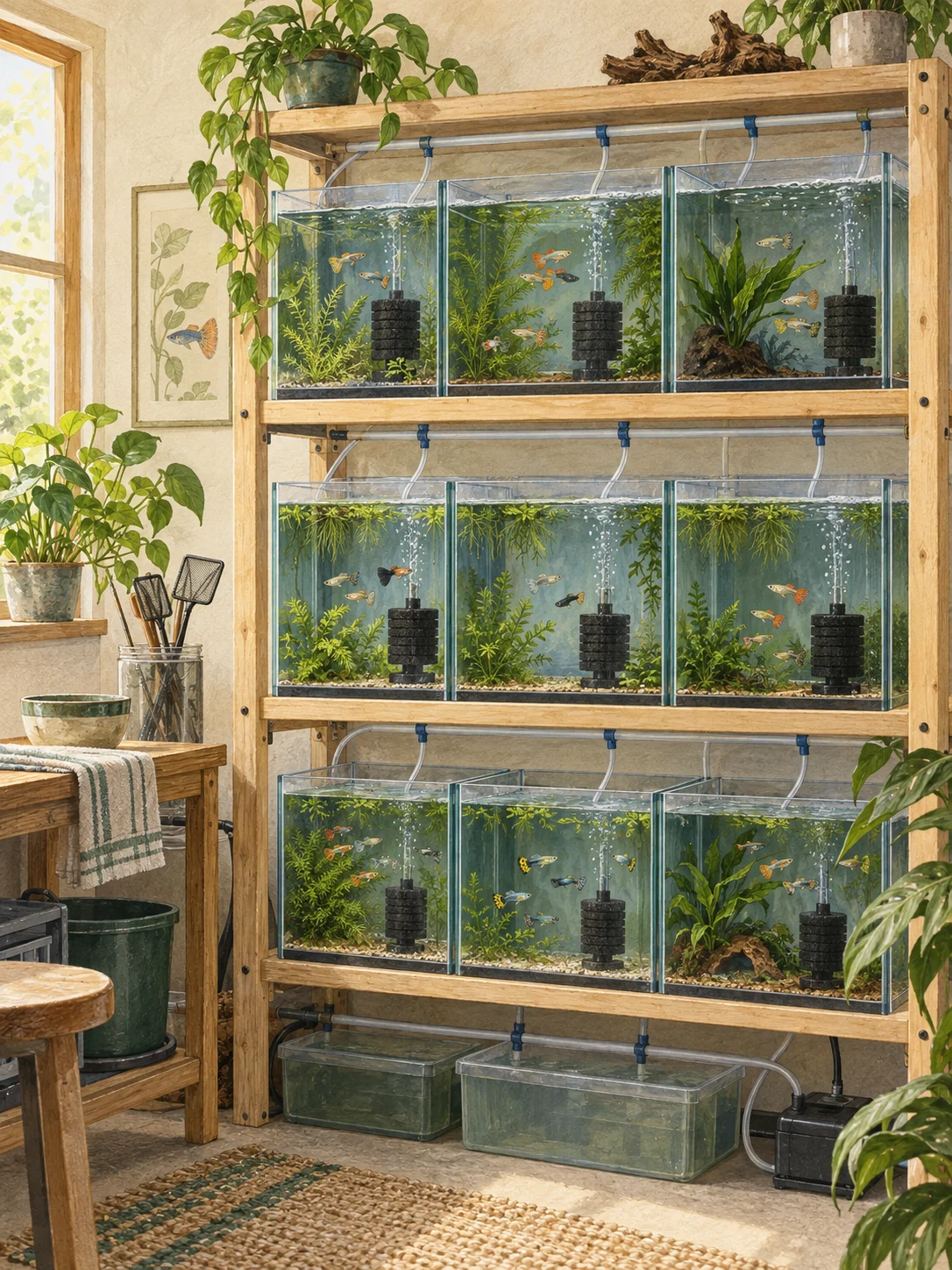
Care systems
Steady water, thoughtful care
Gentle filtration and regular observation support healthy aquarium routines.
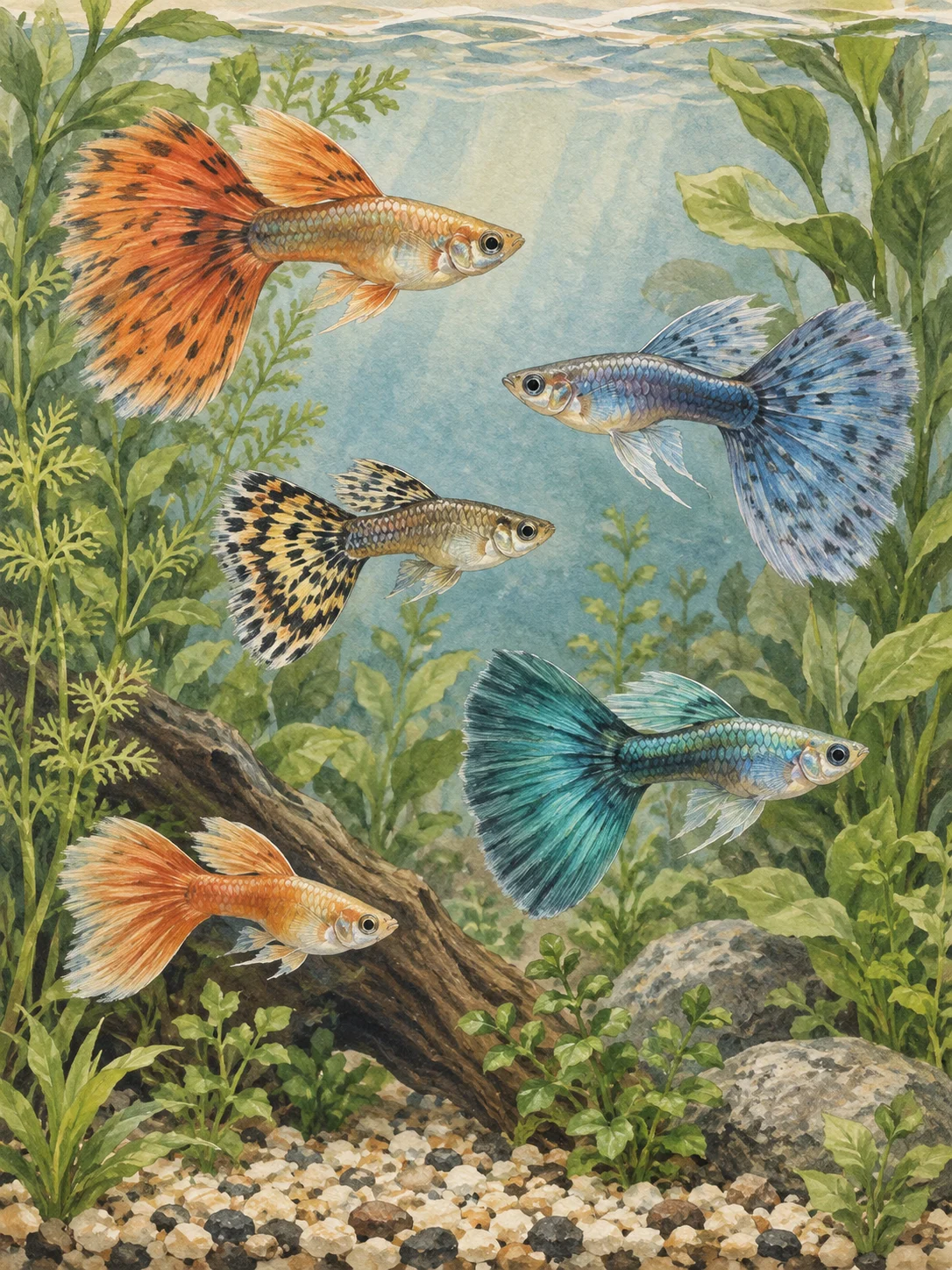
Natural variation
Every guppy is different
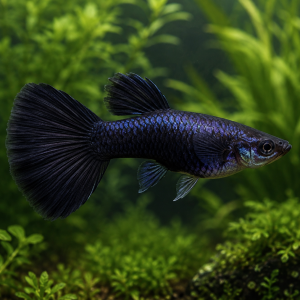
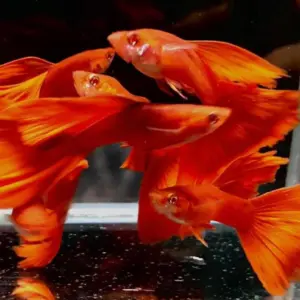
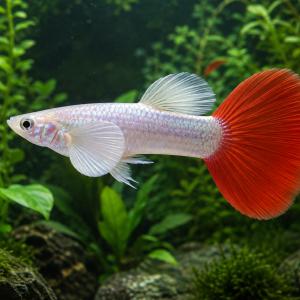
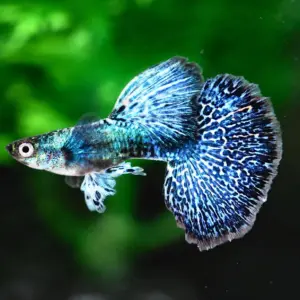
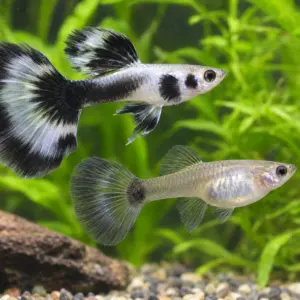
Color, size and fin shape vary with strain, age and each individual fish.
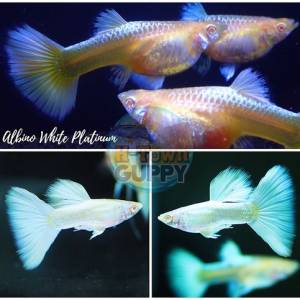
Editorial illustrations for context; they do not depict HiGuppy's exact facility or current fish stock.