The HiGuppy Journal
Can Guppies Live in Tap Water? How to Make It Safe
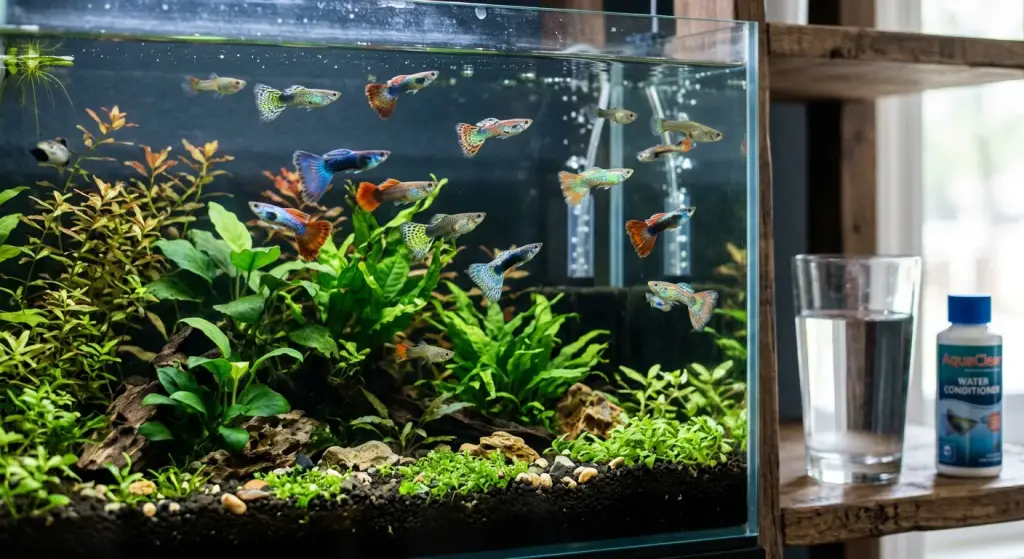
Can guppies live in tap water? Yes, guppies can live in tap water as long as you treat it first. Add a water conditioner that removes chlorine and chloramine, match the temperature to the tank, and test the result. Untreated tap water can harm or kill fish. Our guppy care guide covers the wider routine.
If you are wondering can guppies live in tap water at your own address, the honest answer depends on what your local supplier adds and what comes out of your pipes. This guide shows how to check, treat and use it safely.
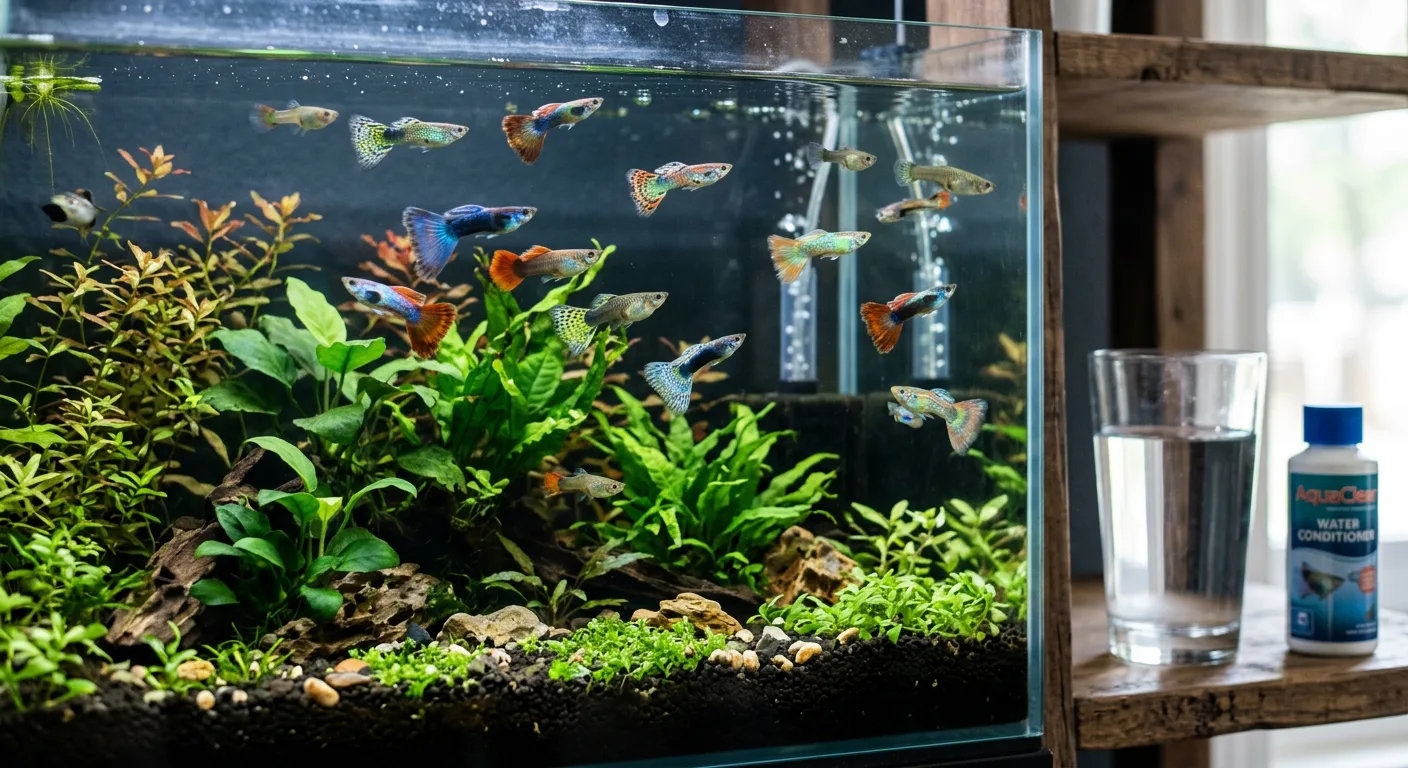
Can guppies live in tap water straight from the faucet?
Not safely. Many water suppliers add chlorine or chloramine to make water safe for people, and both can irritate gills and harm fish. Guppies (Poecilia reticulata) are hardy, as the guppy overview on Wikipedia notes, but that hardiness does not cover disinfectants. Treated tap water is fine; raw tap water is a risk.
| Water type | Safe for guppies? | What to do |
|---|---|---|
| Raw tap water | No | Always treat before use |
| Tap water plus conditioner | Yes, usually | Dose to the label, then test |
| Well water | Depends | Test hardness, pH and nitrate first |
| Distilled or RO water | Not on its own | Needs minerals added back |
These are general guides. Your supplier’s water report tells you what is actually in the pipe.
How to make tap water safe for guppies
The routine for can guppies live in tap water is simple and takes only a few minutes.
- Draw water into a clean bucket used only for the aquarium.
- Add a conditioner that neutralizes chlorine and chloramine, dosed for the volume you are treating.
- Match the temperature to the tank by feel and with a thermometer.
- Pour slowly so you do not blast the substrate or fish.
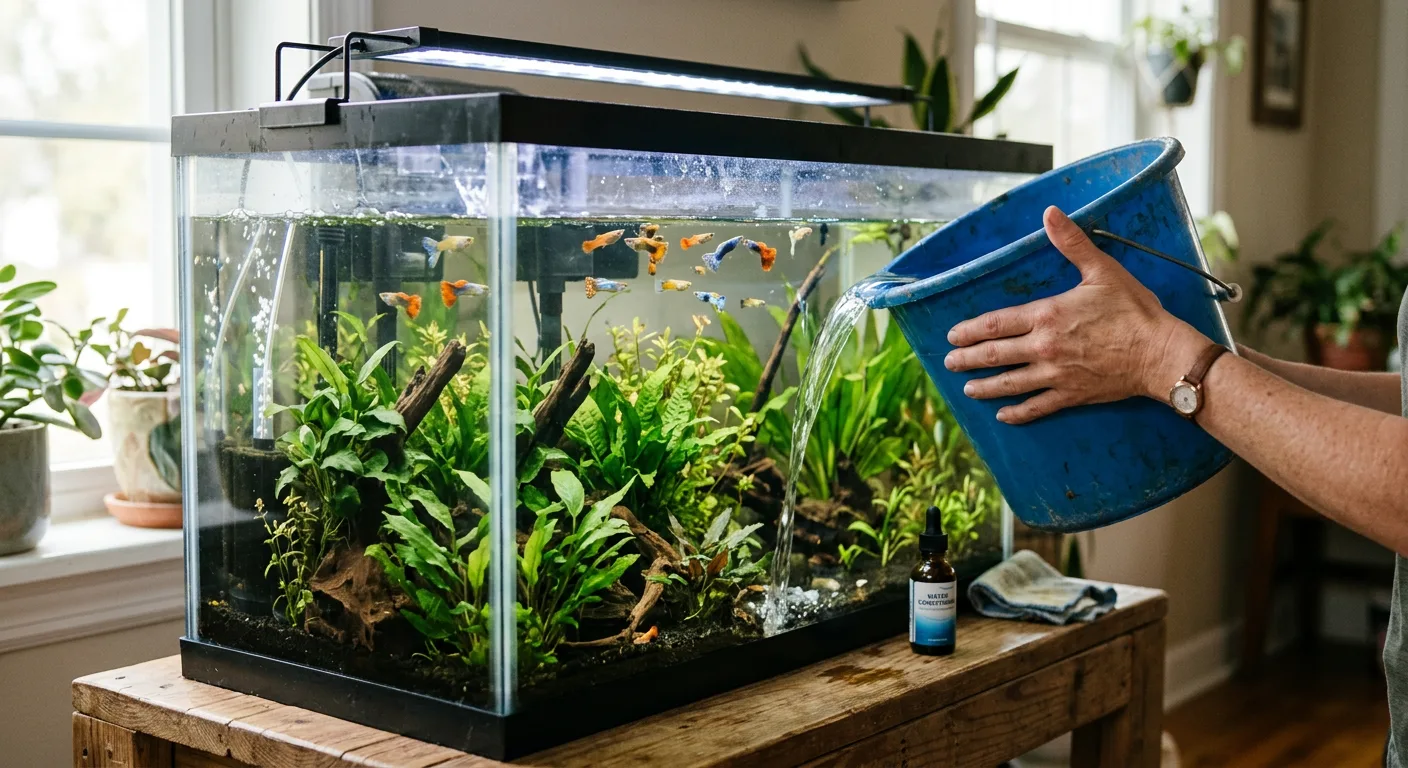
Chloramine is harder to remove than chlorine, so letting water sit out is not a reliable fix. A conditioner that states it handles chloramine is the safer choice. Our guide to changing guppy tank water explains how much and how often.
What to test when guppies live in tap water
Conditioner does not tell you everything about your water. A liquid test kit shows whether the numbers suit guppies. See our guppy water parameters guide for target ranges.
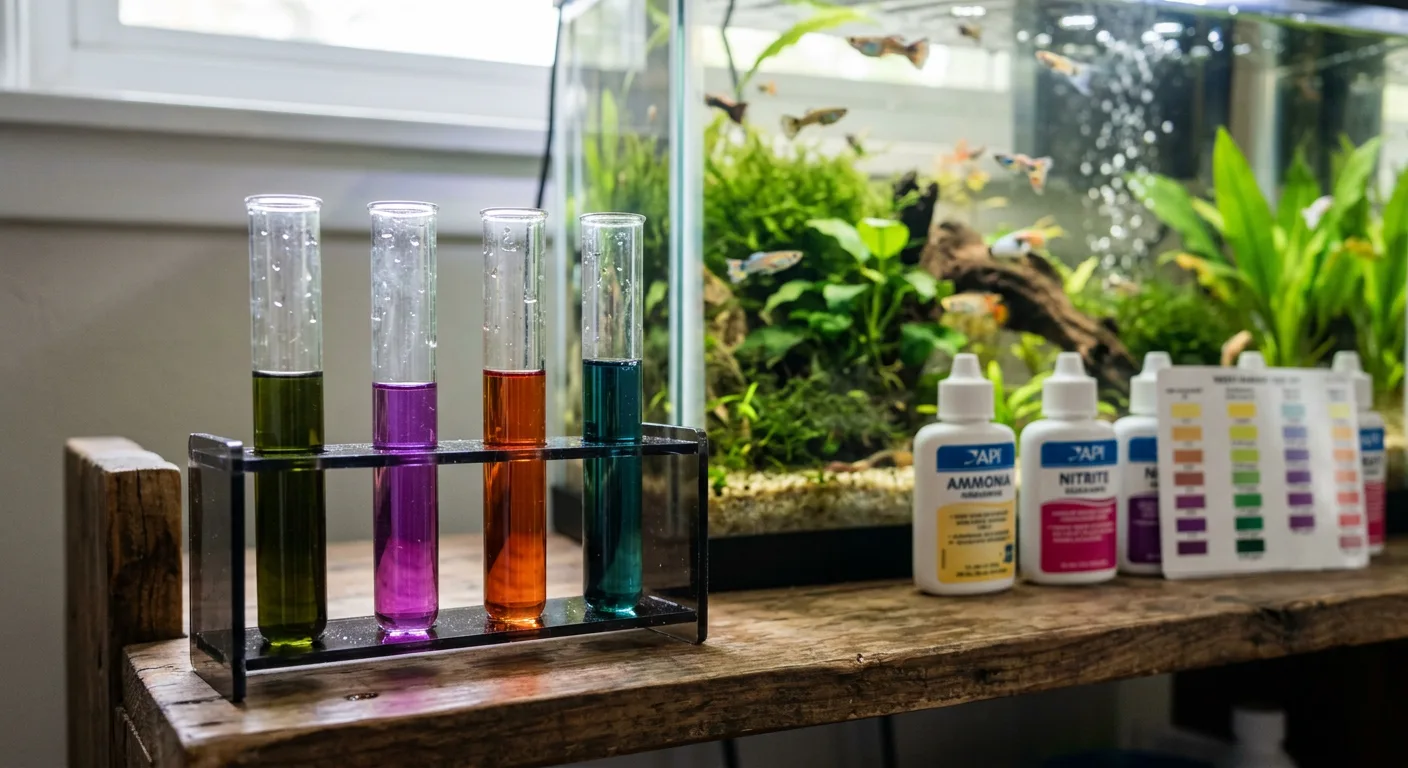
| Test | Why it matters |
|---|---|
| pH | Guppies like stable, neutral to slightly hard water |
| Hardness (GH/KH) | Soft water can make pH swing |
| Ammonia and nitrite | Should read zero in a cycled tank |
| Nitrate | Rises over time; fresh water dilutes it |
Test the tap water and the tank water side by side. A big gap is a reason to change water in smaller steps. Fresh tap water that contains traces of ammonia from chloramine breakdown is another reason to check, and our ammonia poisoning in guppies article shows the signs.
Common tap water problems for guppies
Even when the answer to can guppies live in tap water is yes, a few local issues come up.
- Chloramine: needs a conditioner that explicitly covers it.
- Very soft water: pH can drop between changes; stability matters more than the exact number.
- Very hard water: guppies often cope well, but sudden changes still stress them.
- Metals from old pipes: some conditioners bind them; run the tap briefly first.
- Temperature shock: cold water straight into the tank can stress fish.
Signs of trouble include gasping, clamped fins and hiding. Read why guppies gasp at the surface if you notice that.
Water changes, tap water and new fish
Whenever can guppies live in tap water comes up for a new keeper, the other half of the answer is the cycle. A new tank needs beneficial bacteria before fish arrive; see the guppy tank cycling checklist. Conditioned tap water is what you use for the fill and every change afterward.
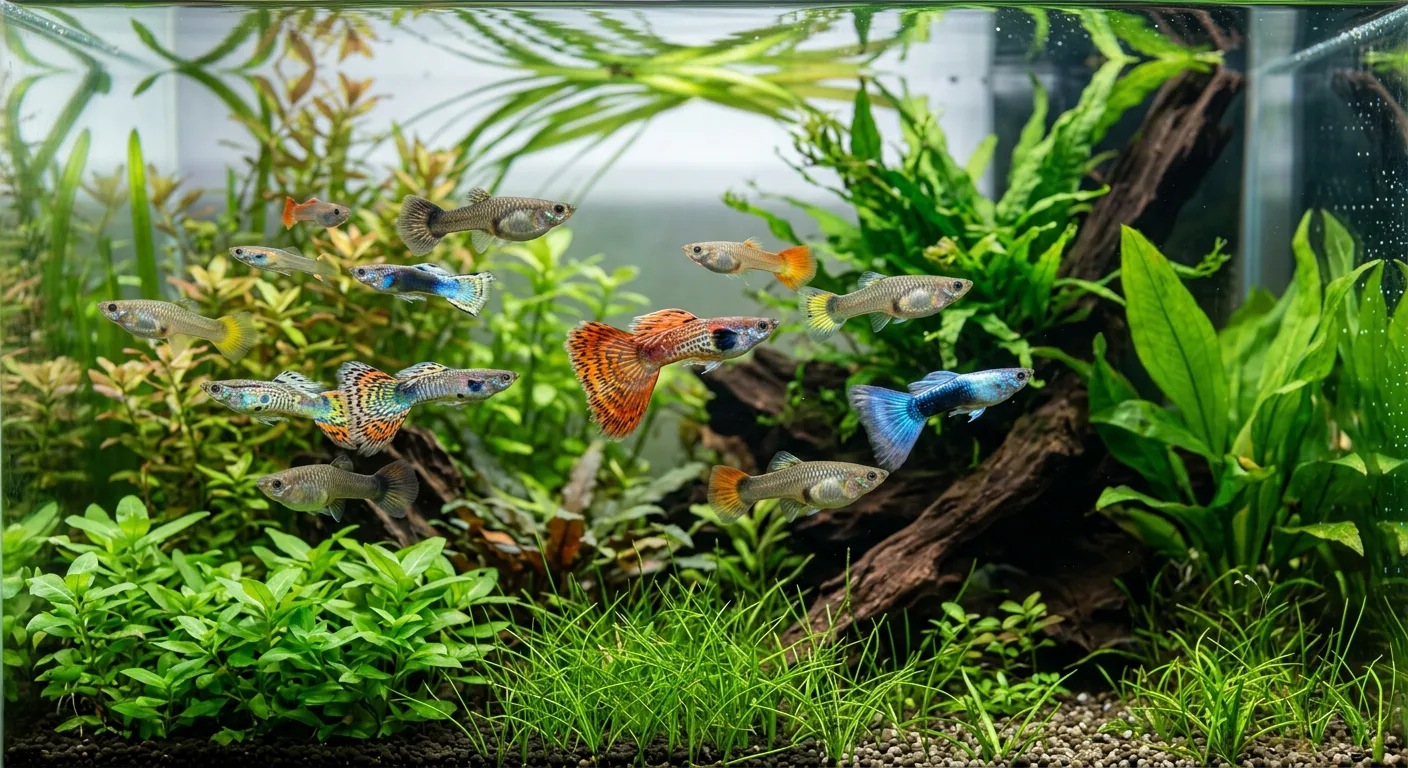
Healthy fish start with a good routine. Browse our male guppies once your tank is ready, and keep the complete guppy care guide handy for the daily basics.
Chlorine vs chloramine: why it matters for guppies
Chlorine is a gas that slowly leaves standing water, which is why old advice said to let a bucket sit. Chloramine is chlorine bonded with ammonia, and it is far more stable. Many suppliers now use it because it lasts longer in the pipes. If your supplier uses chloramine, standing water will not fix it, and a conditioner that handles chloramine becomes essential. Some conditioners leave a little ammonia behind after breaking the bond, so a tank with a working filter and healthy bacteria copes more easily than a brand-new one. Check your supplier’s website or call them if you are unsure which disinfectant they use.
A simple routine you can repeat every week
Consistency does more for guppies than any single product. Most keepers do a partial change weekly, replacing a modest portion of the water instead of emptying the tank. Treat the new water in a bucket, match the temperature, and pour it in gently. Rinse filter media in old tank water, not straight from the tap, because untreated water can harm the bacteria that keep the tank safe. Wipe algae, remove uneaten food and keep a small log of your test results so you spot changes early.
- Test a fresh bucket of tap water once a month, or when your supplier announces changes.
- Keep the conditioner bottle next to the tank so you never skip it.
- Never dose in the tank by guesswork; measure to the label.
- If you have a very small tank, treat less water more often and measure carefully.
When tap water is not enough
Some homes have tap water that is extremely soft, extremely hard or high in nitrate. In that case, treat the water as above and add a step: adjust gradually, never chase a pH number with fast chemical changes, and consider blending with another water source if you know exactly what you are doing. Guppies handle a fairly wide range, but they dislike swings. If your numbers look unusual, test again, compare with the supplier’s report, and change water in smaller steps while you work out a stable routine.
Finally, remember that new fish are the most sensitive to water differences. When your guppies arrive, float the bag, mix in small amounts of your conditioned tank water over time, and avoid pouring shipping water into the tank. Our what to do when guppies arrive page walks through it step by step. A calm, gradual introduction to your treated tap water gives them the best chance to settle, eat and show their colors within the first few days.
FAQ
Can guppies live in tap water without conditioner?
It is risky. Chlorine and chloramine can harm gills, and some fish die quickly. Always use a conditioner that removes both.
Can I just let tap water sit out overnight?
Standing may let chlorine escape, but chloramine usually stays. A conditioner is the more reliable choice.
Do I need to dechlorinate for a small water change?
Yes. Even a small amount of untreated water can stress fish, so treat every bit that goes into the tank.
Is bottled water better than tap water for guppies?
Not necessarily. Bottled and distilled water often lack the minerals guppies need, so treated tap water is usually the better option.
How do I know if my tap water is bad for guppies?
Check your supplier’s water report and test pH, hardness, ammonia and nitrate. If fish gasp or hide after a change, test right away.
Behind the care guides
Care begins with steady systems
Our guppy guides focus on practical routines: keep water stable, observe fish closely and allow for natural variation.

Care systems
Steady water, thoughtful care
Gentle filtration and regular observation support healthy aquarium routines.

Natural variation
Every guppy is different
Color, size and fin shape vary with strain, age and each individual fish.
Editorial illustrations for context; they do not depict HiGuppy's exact facility or current fish stock.