The HiGuppy Journal
How Many Babies Do Guppies Have at Once? Brood Size Explained
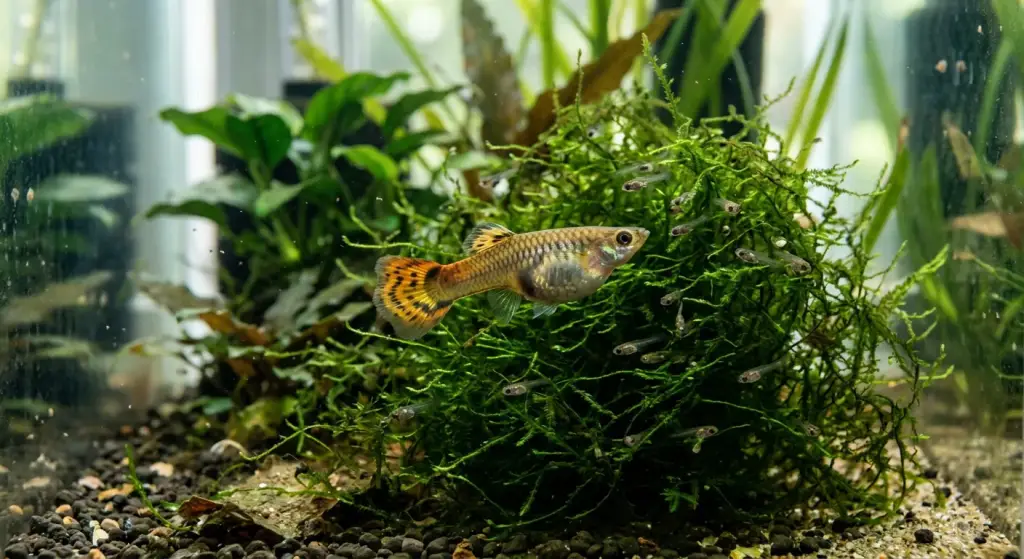
How many babies do guppies have at once? A typical guppy brood is about 20 to 50 fry, though a small or young female may drop only a handful and a large, healthy one can occasionally produce well over 100. Size, age, diet and stress all change the number. Our guppy care guide covers the basics behind healthy breeding.
If you are asking how many babies do guppies have at once because you expect a surprise brood, this guide gives realistic ranges, explains what changes the count and shows how to protect the fry.
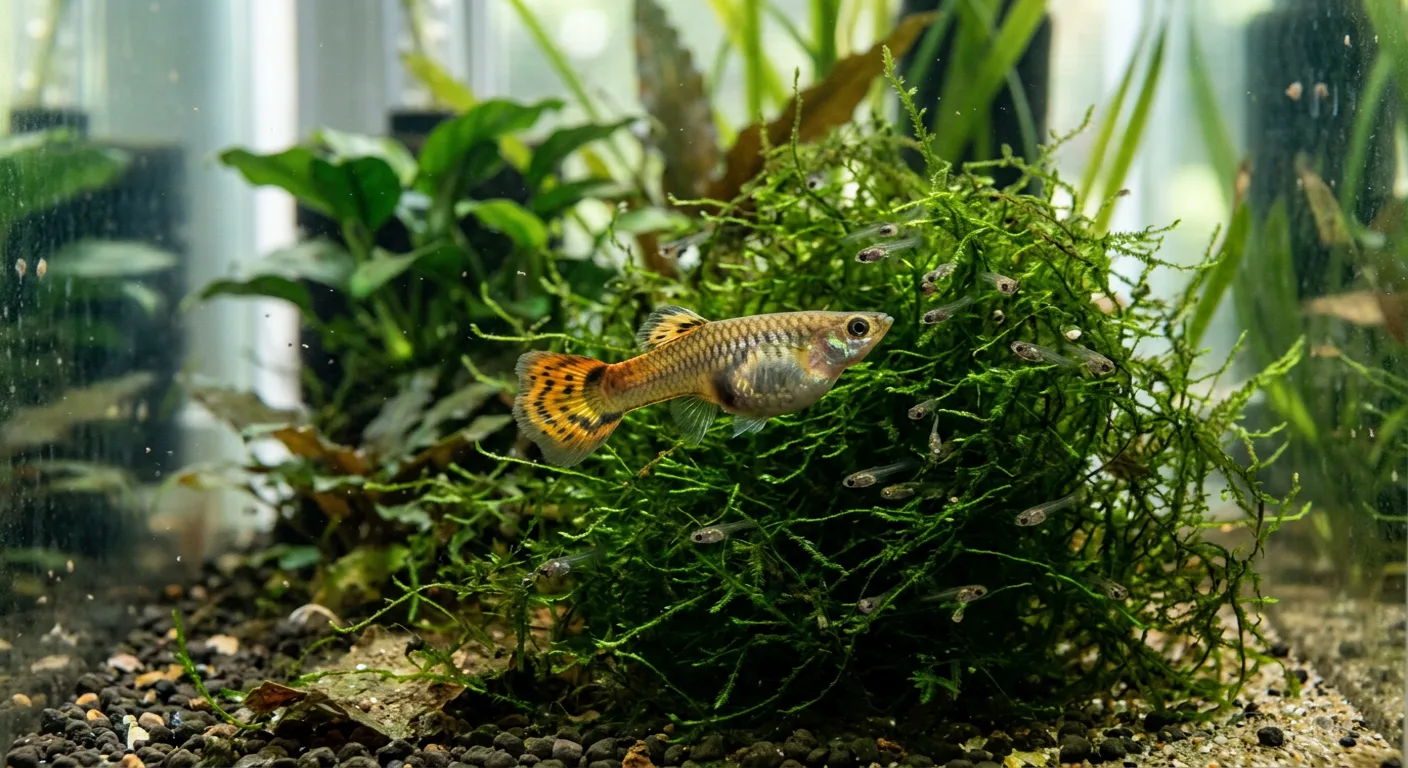
How many babies do guppies have at once?
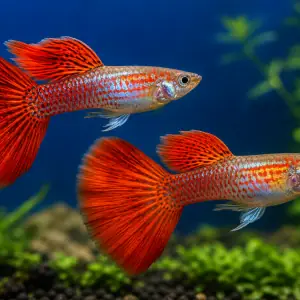
Guppies (Poecilia reticulata) are livebearers, so females give birth to free-swimming fry instead of laying eggs. You can read the general background in the guppy overview on Wikipedia. Brood size varies a lot, so treat any single number as a rough guide.
| Female | Typical brood | Why |
|---|---|---|
| Young, first pregnancy | Roughly 5–20 fry | Smaller body, less room |
| Healthy adult | Roughly 20–50 fry | Most common range |
| Large, well-fed adult | Sometimes 50–100+ | More body space and energy |
| Older female | Often fewer | Broods tend to shrink with age |
These are hedged ranges, not guarantees. Individual fish and strains differ.
What changes how many babies guppies have at once
The answer to how many babies do guppies have at once is never fixed, because several things shift it.
Several factors push the number up or down. Knowing them helps you plan a breeding tank instead of guessing.
- Female size: bigger bodies usually carry more fry.
- Age: first broods are often smaller than later ones.
- Diet: a varied, protein-rich diet supports bigger, healthier broods.
- Stress: chasing males, poor water or sudden changes can shrink a brood or cause early birth.
- Temperature: steady warm water supports normal gestation. See our guppy temperature guide.
How often do guppies give birth?
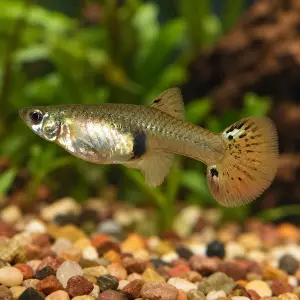
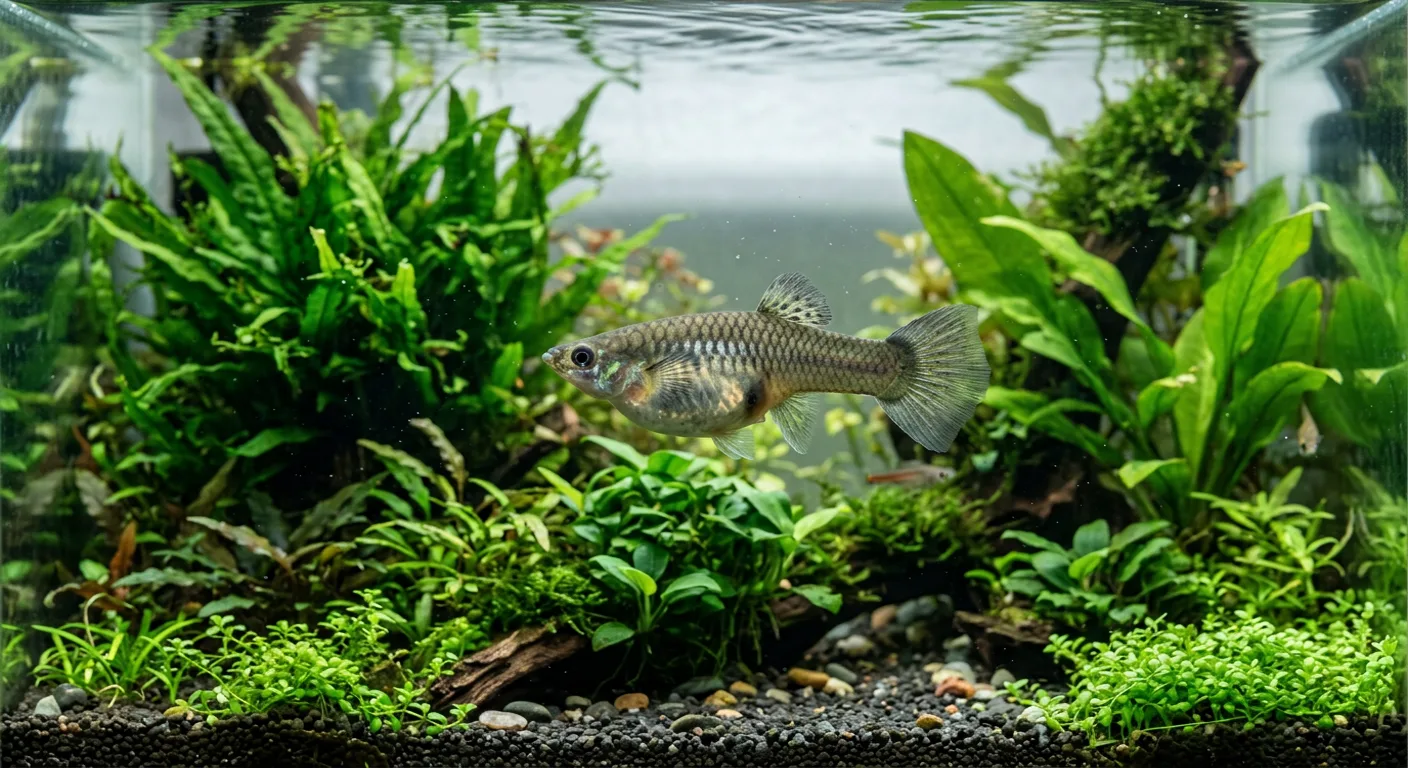
Gestation commonly runs around four to five weeks, depending on temperature and the fish. A female can store sperm, so she may produce several broods from one mating. That is why a lone female bought from a mixed tank can still surprise you. Read guppy pregnancy stages and gestation for the timeline, or is my guppy pregnant or fat if you are unsure she is expecting.
| Stage | What you may see |
|---|---|
| Early | Small dark gravid spot near the vent |
| Middle | Rounder belly, bigger spot |
| Late | Boxy belly, hiding, fry eyes may show |
| Birth | Fry released over minutes to hours |
How to prepare for a big brood
Adult guppies often eat newborn fry, so cover matters more than anything. Dense plants such as java moss or floating plants let fry hide. Our guppy breeding tank setup guide shows a simple layout.
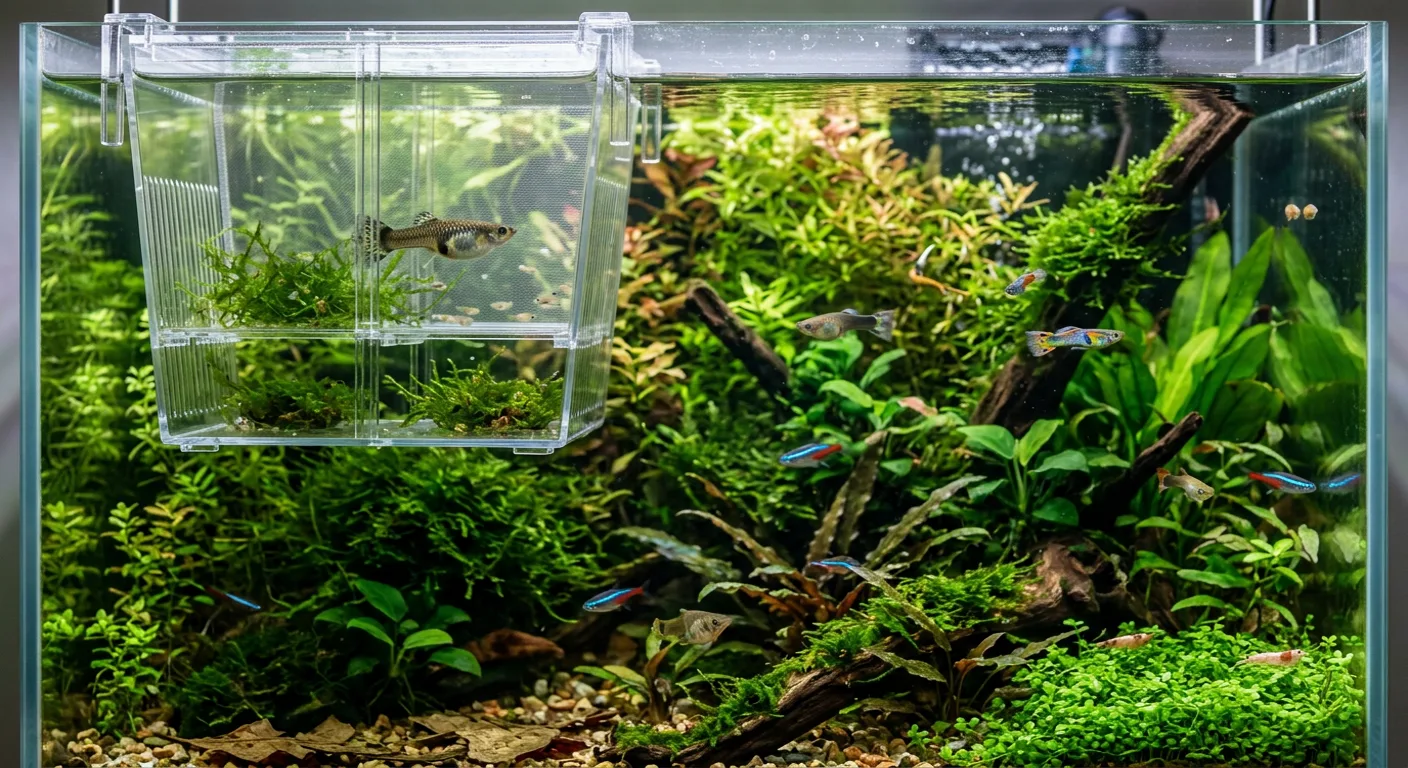
- Add dense plants or moss before the birth.
- Keep water warm, clean and stable.
- Consider a separate tank rather than a cramped breeder box, which can stress the mother.
- Remove the mother after birth if you want to protect the fry.
Caring for newborn fry after the brood arrives
However many babies guppies have at once, the first days decide how many survive. Fry swim and feed within hours. Feed tiny amounts several times a day, such as crushed flakes or baby brine shrimp, and do small, frequent water changes. Our guppy fry feeding schedule has a simple routine.
Why brood size is not the same as survival
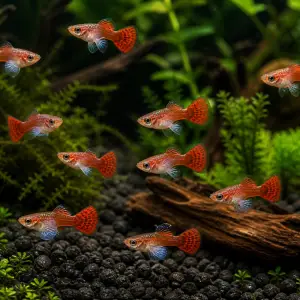
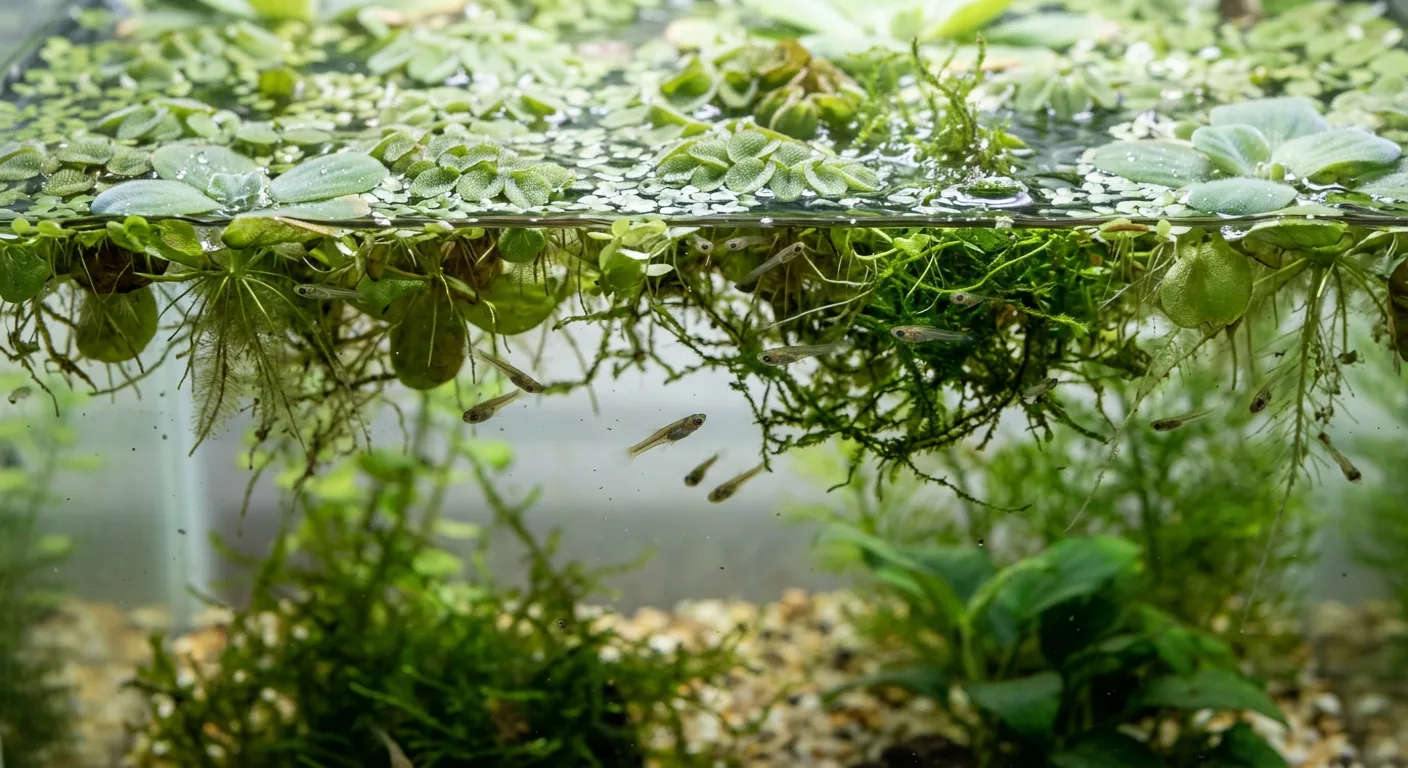
Many keepers ask how many babies do guppies have at once and then discover that only part of a brood reaches adulthood. Fry are tiny, and in a community tank most are eaten within hours. In a planted tank with few predators, far more survive. The number born tells you about the mother, while the number that grow up tells you about your setup.
| Setup | Fry survival | Notes |
|---|---|---|
| Community tank, bare plants | Low | Adults and other fish hunt fry |
| Heavily planted tank | Moderate | Moss and floating plants give cover |
| Separate fry tank | Highest | Easiest to feed and keep clean |
These are general tendencies rather than measured figures, and results depend on your tank.
Signs the birth is close
Watch for a very round, boxy belly, a dark and enlarged gravid spot, hiding, rapid breathing and a refusal to eat. Some females also hover near the surface or in a corner. Birth can take minutes or stretch over several hours, and fry often arrive one at a time. Stay calm and avoid netting her, because stress can slow labour. If she seems bloated with no fry for many days, compare her with the signs of a bloated guppy.
Common mistakes with big broods
- Moving the mother too late. Transfers during labour can stress her and shrink the brood.
- Overfeeding fry. Leftover food fouls the water quickly in a small tank.
- Skipping water changes. Small, frequent changes keep fry healthy.
- No plan for the extras. Decide in advance how many guppies your tank can hold, as in our guppies per gallon chart.
Can you increase brood size safely?
You cannot force a bigger brood, but you can give a female the best conditions for a healthy one. Start with a varied diet: quality flakes or micro pellets, plus frozen or live foods such as brine shrimp or daphnia a few times a week. Our best food for guppy color and growth guide lists good options. Keep the water clean, the temperature steady and the tank free of constant male harassment.
A good ratio is more females than males, commonly two or three females per male, so no single female is chased all day. Chasing causes stress, and stressed females may give birth early or drop smaller broods. Avoid breeding a very young female before she is fully grown, since a tiny body is hard on her and often gives a small brood.
Finally, do not breed continuously without rest. Giving females time to recover between broods keeps them stronger and easier to keep alive. If your goal is a specific colour or tail type, choose parents of the same strain and keep notes on each brood, so you learn which pairings give the best fry.
How many babies do guppies have at once compared with other fish?
Guppies sit in the middle of the livebearer range: smaller broods than many egg-laying fish produce, but fry that are born ready to swim. That head start is why a planted tank can raise most of a brood with a little care.
Planning for the numbers
A single brood can fill a tank quickly, so decide early what to do with extra fry. Many hobbyists rehome, trade or keep only the best of each brood. If you want healthy breeding stock, a pair or trio of the same strain is a clean start, and you can browse breeder trios from HiGuppy. For a full overview, return to the complete guppy care resource.
FAQ
How many babies do guppies have at once for the first time?
A first brood is usually smaller, often roughly 5 to 20 fry, though it varies by female.
Can a guppy have 100 babies at once?
It is possible for a large, healthy female, but most broods are far smaller.
How long are guppies pregnant?
Commonly around four to five weeks, depending on temperature and the individual fish.
Do guppies eat their babies?
Yes, adults often eat newborn fry, so provide dense plants or a separate tank for cover.
Can one female have several broods without a male?
Yes. Females can store sperm and may give birth several times after a single mating.
Behind the care guides
Care begins with steady systems
Our guppy guides focus on practical routines: keep water stable, observe fish closely and allow for natural variation.

Care systems
Steady water, thoughtful care
Gentle filtration and regular observation support healthy aquarium routines.

Natural variation
Every guppy is different
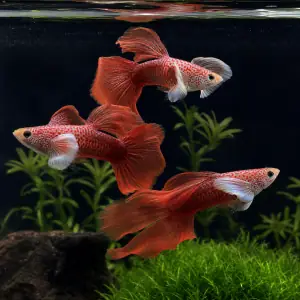
Color, size and fin shape vary with strain, age and each individual fish.
Editorial illustrations for context; they do not depict HiGuppy's exact facility or current fish stock.