The HiGuppy Journal
Why Are My Guppies Chasing Each Other? Causes and Fixes
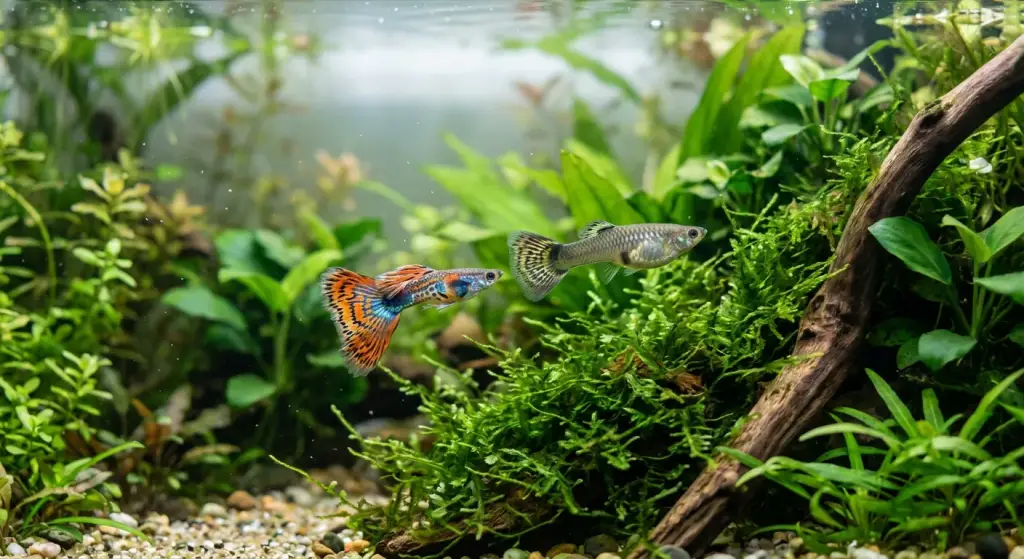
Why are my guppies chasing each other? Most of the time it is courtship: male guppies chase females constantly to mate. Chasing between males is usually rivalry or a crowded tank. It becomes a problem only when fish are injured, hiding or refusing to eat. Our guppy care guide covers the basics behind a calm tank.
If you keep asking why are my guppies chasing each other, the answer is almost always in your male-to-female ratio, your tank size and how much cover the fish have. This guide helps you tell normal behavior from harassment and fix it.
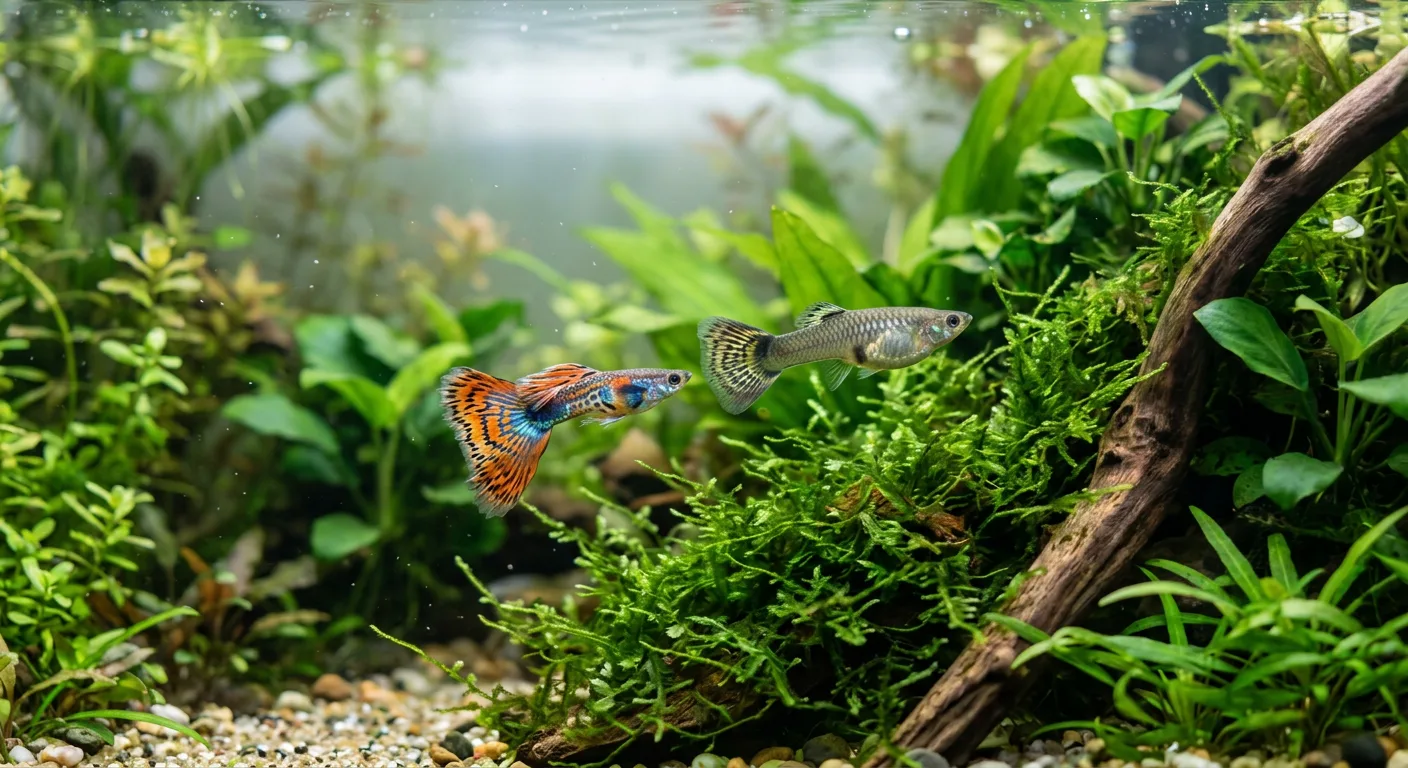
Why are my guppies chasing each other? The common causes
Guppies (Poecilia reticulata) are livebearers, and males spend much of the day trying to mate. The guppy overview on Wikipedia describes their active mating behavior. That drive explains most chasing you will see.
| Behavior | Most likely cause | Is it a problem? |
|---|---|---|
| Male follows a female, fins flared | Courtship | Normal in moderation |
| Female constantly hides or hovers at the surface | Too many males | Yes, fix the ratio |
| Males flaring at each other | Rivalry over females | Usually mild |
| Nipped fins or torn tails | Aggression or stress | Yes, act quickly |
| Chasing after a new fish is added | Settling a pecking order | Often fades in days |
Treat this table as a general guide. Watch your own fish for a few days before deciding.
Courtship chasing: normal but easy to overdo
A male courting a female swims close behind her, flares his fins and sometimes does a sigmoid display, curling his body in an S shape. Females accept or ignore him. When the tank holds many males and few females, each female gets chased nonstop, and that is where harm starts.
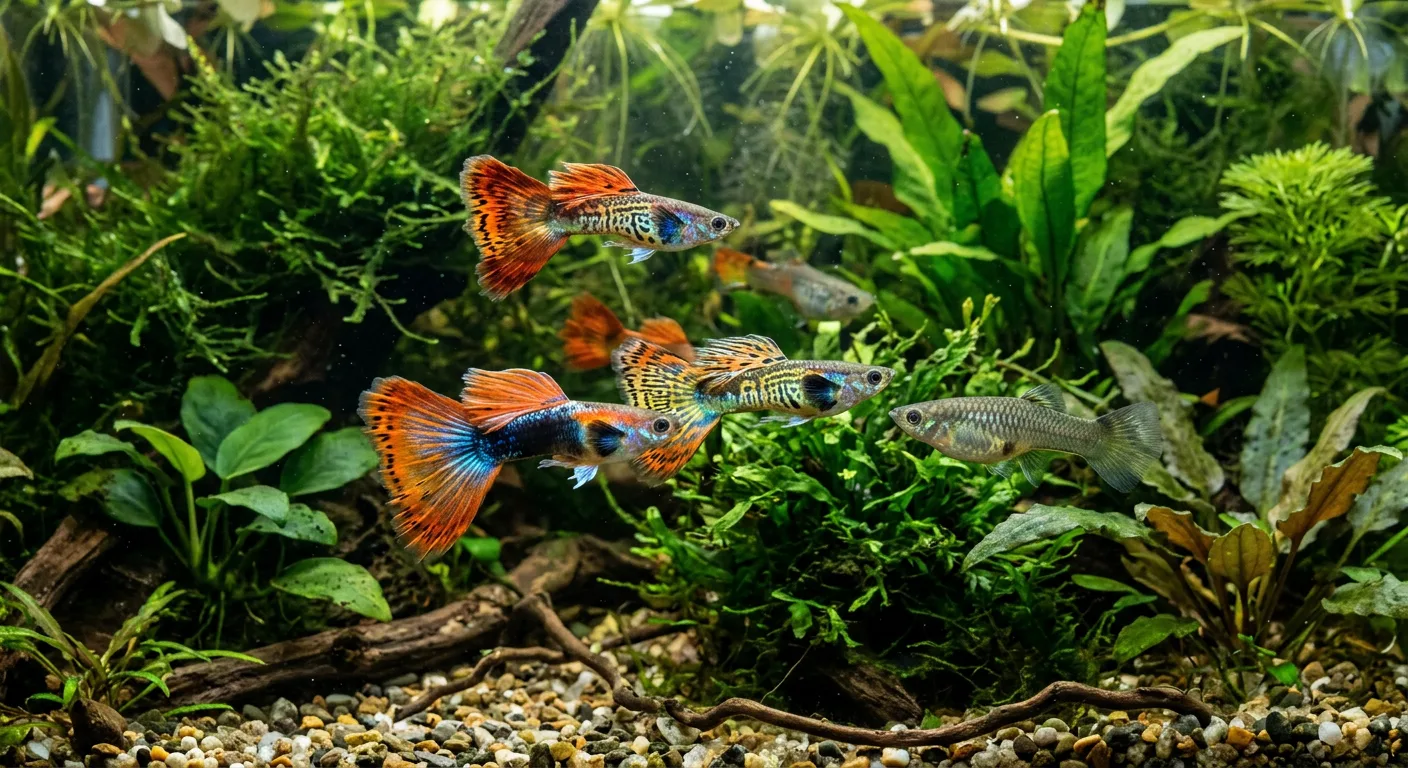
Signs of too much courtship pressure include a female staying near the top corner, clamped fins, rapid breathing and less eating. If you see these, the chasing is no longer harmless.
Why are my guppies chasing each other when all of them are male?
All-male tanks still show chasing, though it is usually lighter. Males flare and nudge each other to compete, and sometimes they mistake another male’s bright color or tail for a mating target. A group of males is often calmer than a mixed group with too few females, but a small tank can make sparring worse. If a single fish is relentlessly picked on, treat it as bullying; our guide to guppy bullying signs explains what to look for.
How to stop guppies chasing each other
Work through these steps in order. Most tanks improve with the first two.
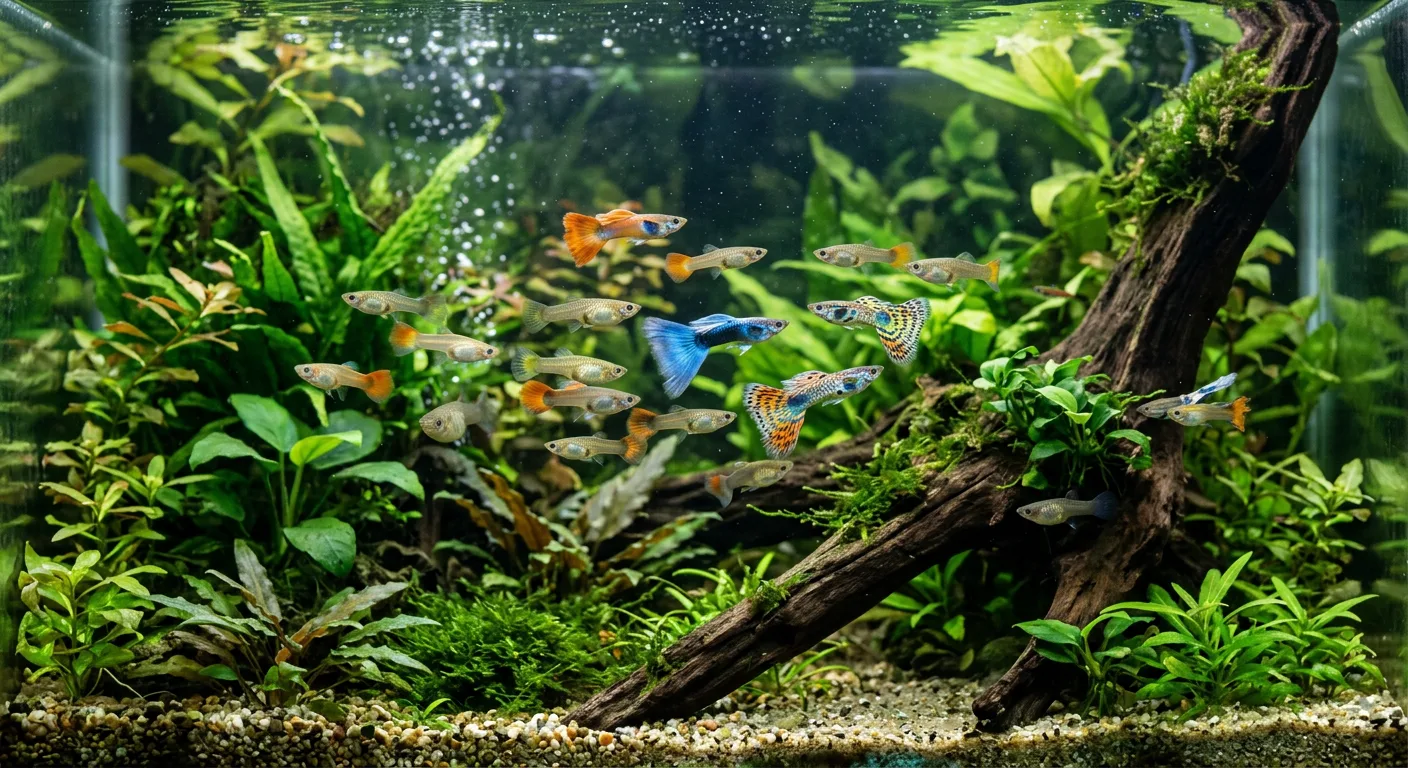
- Fix the ratio. A common aquarist guideline is two to three females for every male, which spreads the attention. Adjust to your own tank and watch the results.
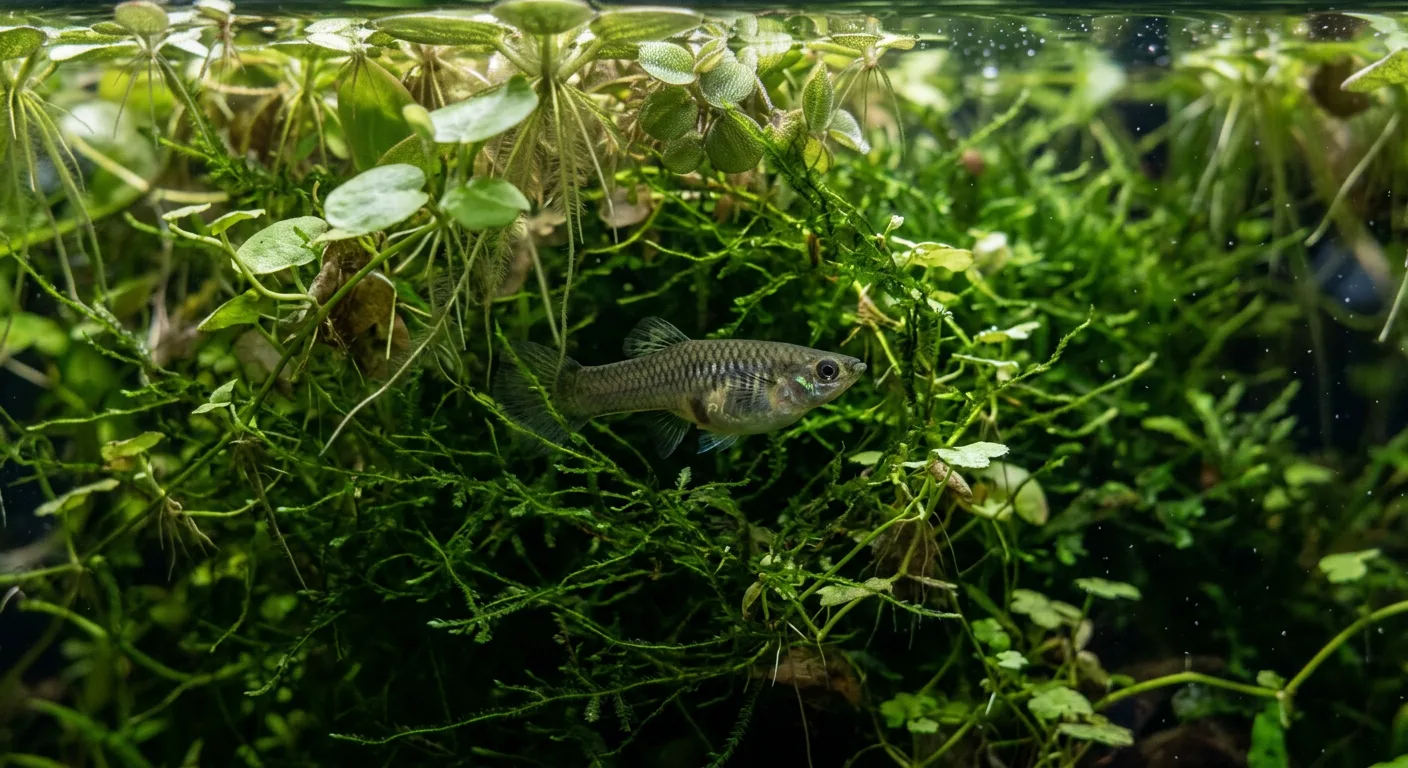
- Add cover. Dense plants, floating plants and java moss give females places to rest out of sight.
- Check the space. Overcrowding raises stress. Our guide on how many guppies per gallon helps you size the group.
- Feed well. Hungry fish bicker more. Small, regular meals keep everyone occupied.
- Separate if needed. Move a badly harassed female or an overly aggressive male to a spare tank or breeder box.
Ideal group makeup to keep a tank peaceful
| Setup | Chasing level | Comment |
|---|---|---|
| 1 male, 1 female | High on the female | She has no relief |
| 1 male, 3 females | Moderate, shared | Often a calm choice |
| Several males, few females | High | Females get worn down |
| All males | Low to moderate | Sparring, no breeding |
| All females | Low | No courtship, but may already be pregnant if bought mixed |
If you plan to breed, a trio is a classic starting point; see the pair vs trio guide. You can browse our breeder trios if you want a ready-made group with a better ratio.
When chasing is a sign of something else
Sometimes the cause is water quality rather than behavior. Poor water, ammonia or low oxygen can make fish restless and edgy. If chasing appears together with gasping, clamped fins or lethargy, test your water first. Our guppy water parameters guide lists what to check. Fix the water before changing anything else.
Chasing after new fish or a tank change
Adding new guppies, rearranging decor or doing a big water change can reset the social order. For the first few days, fish may chase more as they sort out who goes where. This usually settles on its own. Quarantining newcomers first, as described in our quarantine guide for new guppies, also protects the rest of the tank from disease, and introducing them after a rearrangement helps because no fish owns a territory yet.
How to tell harmless chasing from harassment
Harmless chasing is short and bounces between fish. The female swims away, rests, eats and comes back to the group. Harassment is continuous. One fish is always the target, she cannot rest, her fins look ragged or she stays pinned in a corner. Spend ten minutes watching at feeding time and again in the evening. If every fish eats and the chasing comes in short bursts, you most likely have nothing to fix. If one fish is always hiding or never eats, step in.
- Harmless: short bursts, fins open, fish eat normally, females rest between chases.
- Harmful: non-stop pursuit, clamped or torn fins, a fish hiding for hours, refusing food.
Practical tank tweaks that help
A longer tank gives fish room to break line of sight, which lowers the pressure on a chased female. Floating plants and tall stems add visual barriers so a male loses track of her. A few smooth decorations create more resting spots, but avoid sharp items that could tear fins. Keep lighting on a steady schedule so fish get a real night, and avoid sudden changes that make them restless. These small changes cost little and often work better than removing fish.
If you are starting from scratch, choose your group before you buy. Buying a balanced set, with more females than males, from a source that ships healthy fish saves you from fixing the ratio later. You can see current options in our premium guppy pairs and, for more variety, build your group around one or two males and several females.
Wrap up
Chasing is part of being a guppy, and a few chases an hour are not a worry. Balance the ratio, add cover and keep the water clean, and most problems fade. For routines beyond this, read our full complete guppy care resource.
FAQ
Why are my guppies chasing each other all day?
Male guppies court females almost constantly, so frequent chasing is normal. If the same female is chased all day and starts hiding or refusing food, add females, add plants or reduce the number of males.
Is it normal for male guppies to chase female guppies?
Yes. Males follow and display to females to mate. Moderate chasing is expected, but a female that never gets a break needs a better ratio or more cover.
Why are my male guppies chasing each other?
Males compete over females and may spar even when no female is present. Light flaring is usually harmless. Torn fins or one fish being targeted means you should separate the aggressor.
How many female guppies per male should I keep?
A common guideline is two to three females per male. This spreads courtship across several fish. Adjust it to your tank size and watch how the group behaves.
Can chasing kill a guppy?
Persistent harassment can stress a guppy, wear down her health and lead to injuries or illness. Fix the cause early by adding cover, correcting the ratio or moving the fish.
Behind the care guides
Care begins with steady systems
Our guppy guides focus on practical routines: keep water stable, observe fish closely and allow for natural variation.

Care systems
Steady water, thoughtful care
Gentle filtration and regular observation support healthy aquarium routines.

Natural variation
Every guppy is different
Color, size and fin shape vary with strain, age and each individual fish.
Editorial illustrations for context; they do not depict HiGuppy's exact facility or current fish stock.