The HiGuppy Journal
Can Guppies Live With Platies? Compatibility and Tank Tips
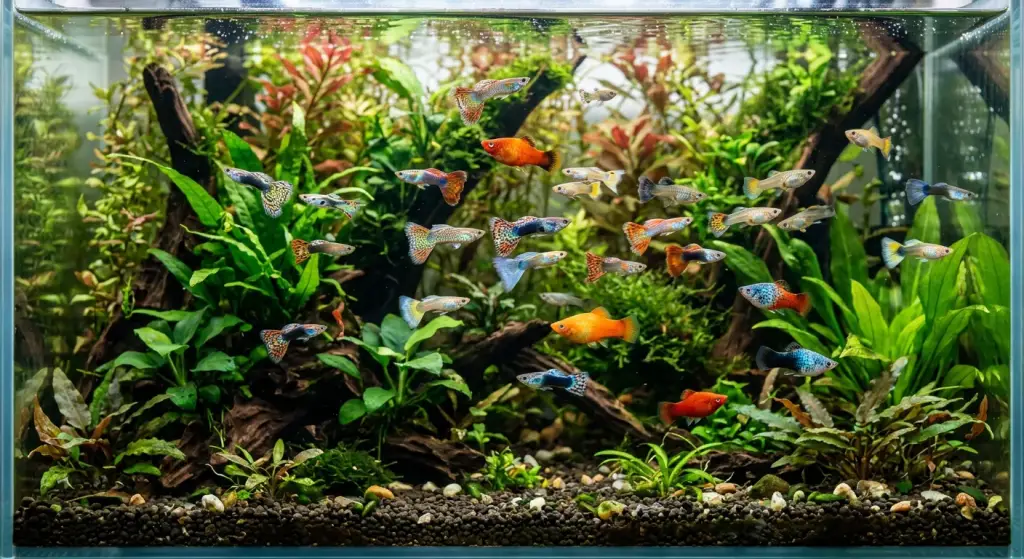
Can guppies live with platies? Yes. Guppies and platies are both peaceful, live-bearing fish that like similar water and food, so they are one of the easiest community pairings. The main things to plan for are tank size, the ratio of males to females and the fact that both species breed quickly. For the basics, see our complete guppy care guide.
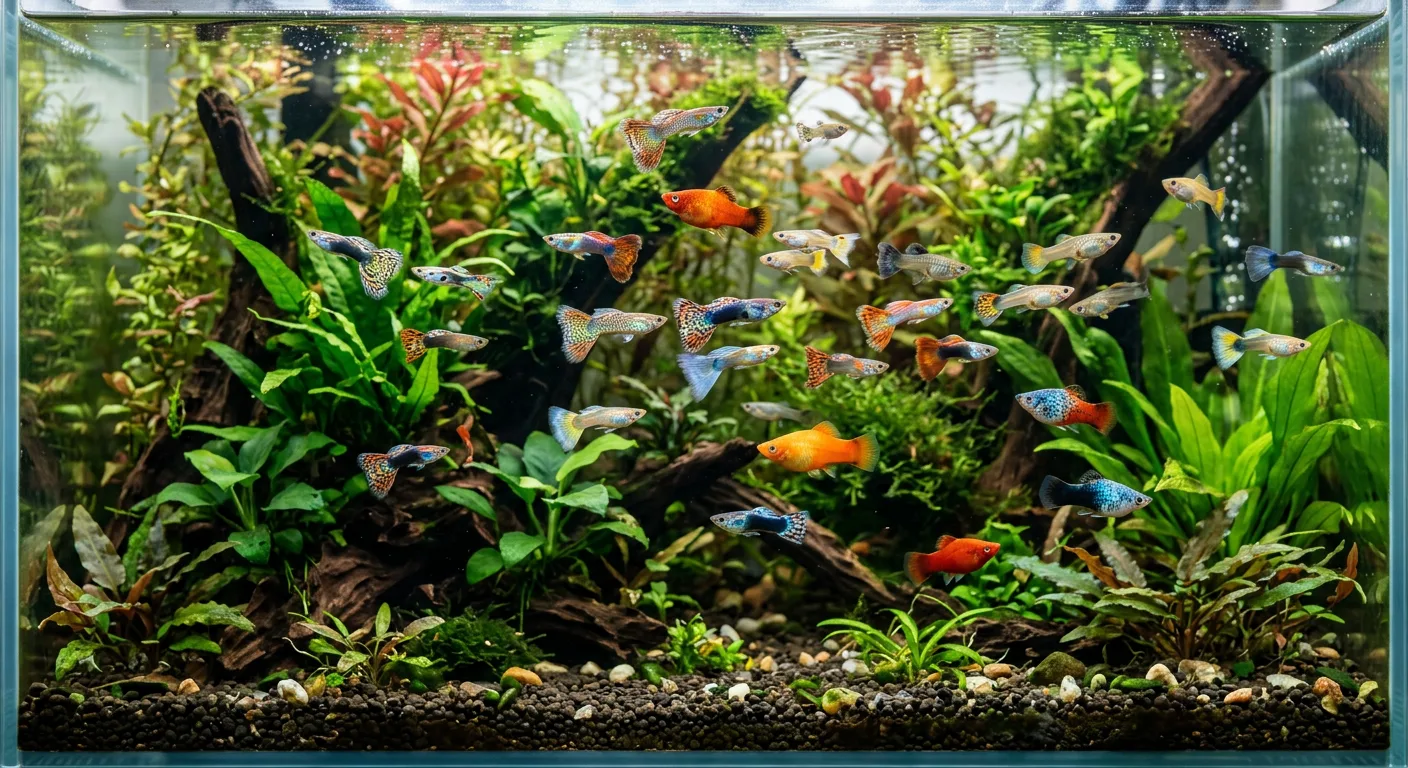
This guide explains why the two fish get along, what could go wrong and how to set up a tank where both stay healthy. Ranges below are typical hobby guidance, so always watch your own fish.
Can guppies live with platies? Why it usually works
When people ask can guppies live with platies, the answer is usually a happy one. Both belong to the livebearer group, which means they give birth to free-swimming fry instead of laying eggs. Both are active, social, easy to feed and comfortable in tanks that are not extremely hot or cold. Neither species is known for hunting tank mates.
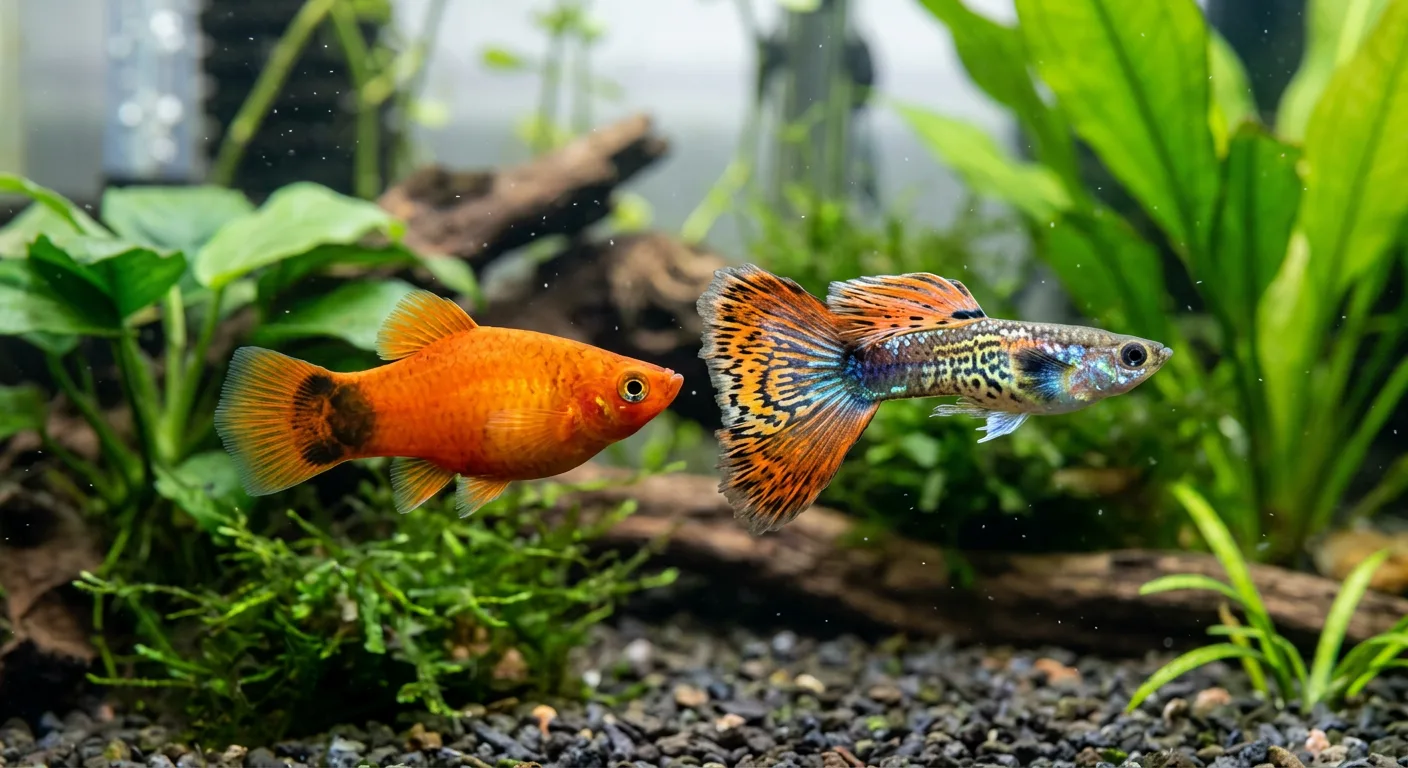
Platies are a bit sturdier and more robust, while guppies are smaller with flowing tails. That size difference is mild, so adults rarely bully each other. Wikipedia’s overview of the guppy notes how adaptable the species is, which is part of why it mixes well with other peaceful livebearers.
Guppy vs platy: key differences
| Trait | Guppy | Platy |
|---|---|---|
| Typical adult size | Smaller, about 1 to 2.5 in depending on sex | Often a little larger and stockier |
| Temperament | Peaceful, active | Peaceful, active |
| Diet | Omnivore, flakes and small foods | Omnivore, flakes and veggies |
| Breeding | Livebearer, frequent broods | Livebearer, frequent broods |
| Fin style | Showy tails, especially males | Shorter, rounder fins |
Water and care needs they share
Both fish do well in clean, stable, heated freshwater. Rather than chasing exact numbers, aim for steady conditions and regular partial water changes. Our guppy water parameters guide and guppy temperature guide cover the details, and platies generally accept the same range.
Feeding is simple too. Offer small portions of quality flakes or micro pellets once or twice a day, plus the occasional blanched veggie. Platies can be quick eaters, so make sure slower guppies still get their share, and avoid overfeeding, which fouls the water.
How big a tank do you need?
Because both species breed readily and platies are bulkier, a small tank fills up fast. A 20 gallon tank is a comfortable starting point for a small mixed group, and larger is better. Keep numbers modest at first and use our how many guppies per gallon chart as a rough guide, remembering that platies take up more room per fish.
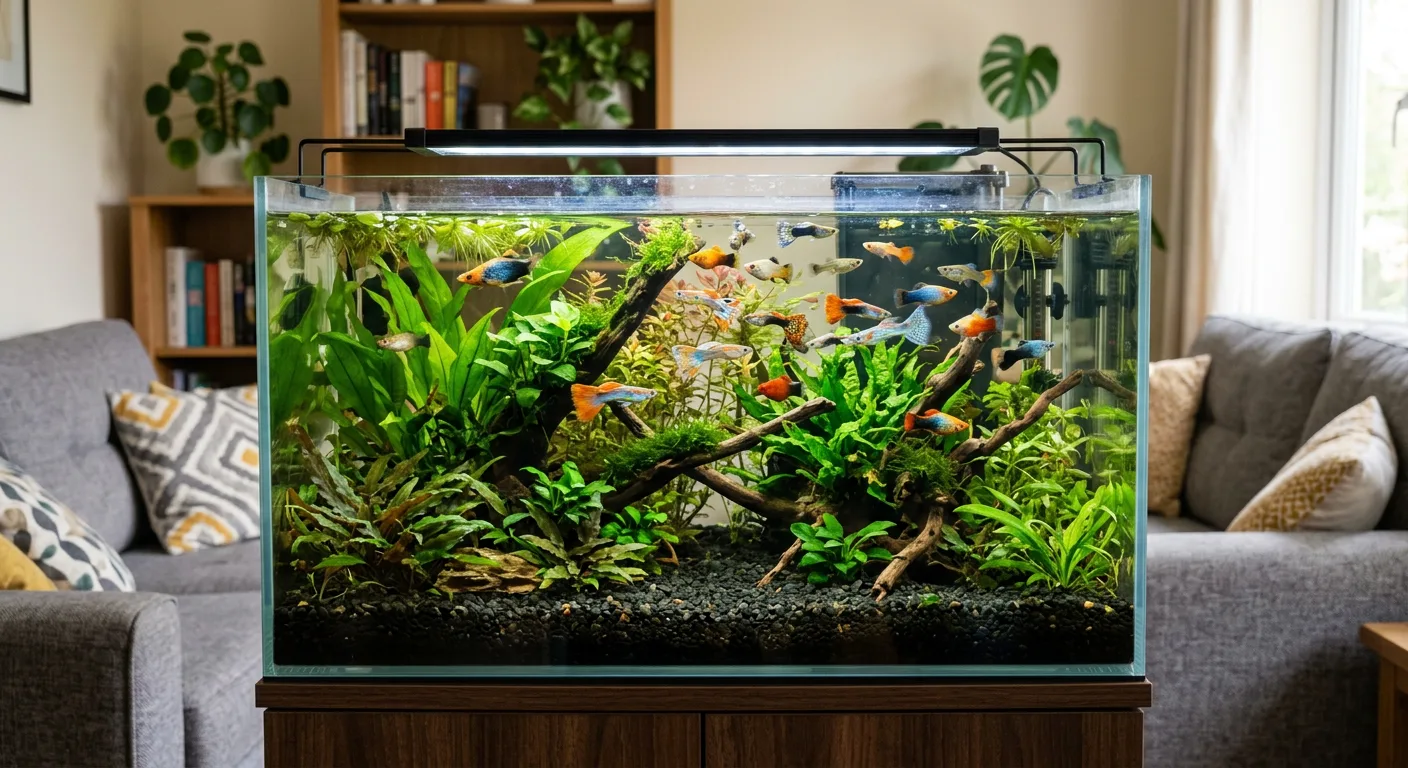
Add live plants, driftwood or other safe decor so fish can rest and break line of sight. See best live plants for guppies for easy options.
Can guppies live with platies without overbreeding?
This is the real challenge. Both species can have fry again and again, so a mixed tank can become crowded in a few months. Ways to manage it:
- Keep only males of one or both species if you do not want fry.
- If you keep both sexes, expect babies and plan where they will go.
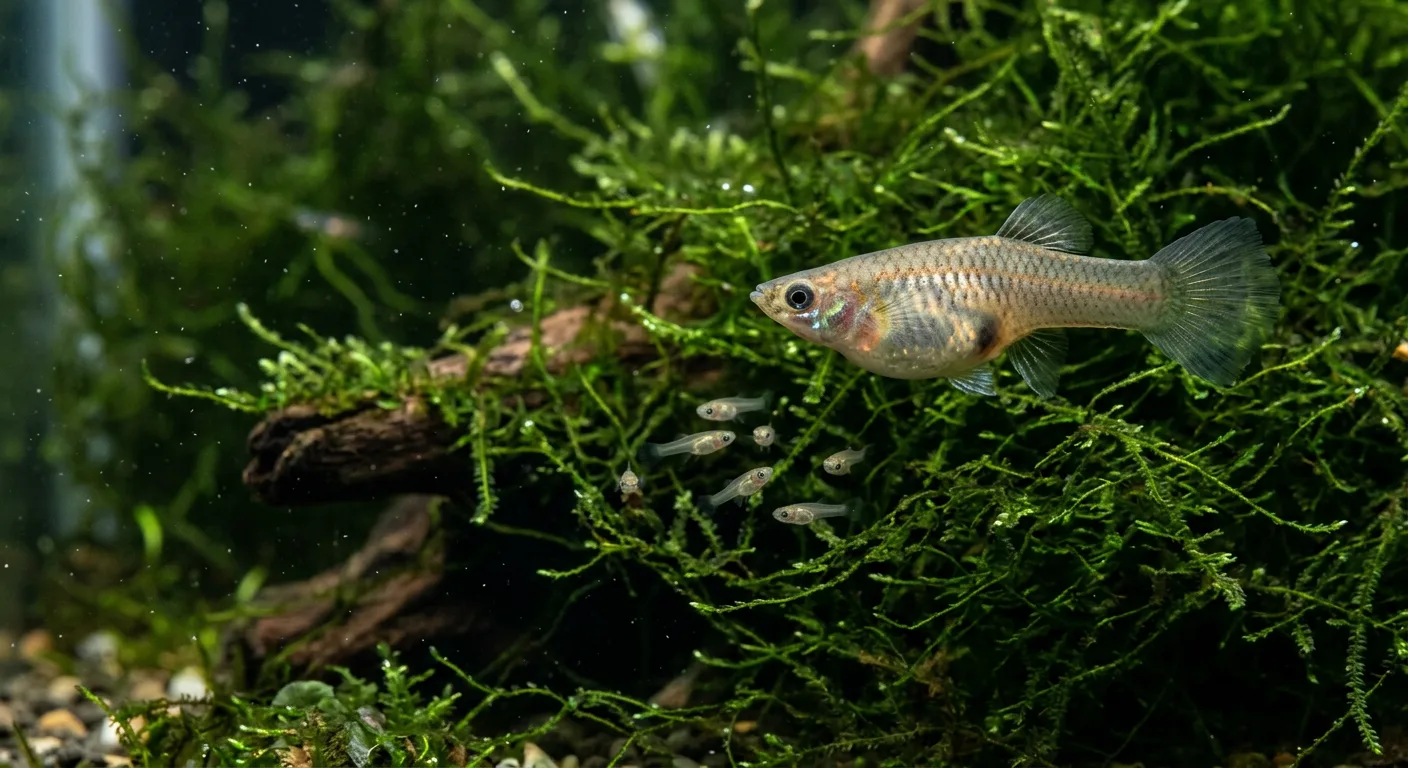
- Provide dense plants such as java moss so some fry can hide.
- Do not overfeed, and keep up with water changes as the population grows.
Guppies and platies are different species, so they generally will not produce hybrid offspring with each other. Each breeds with its own kind. For ratios, read our male to female guppy ratio guide.
Problems to watch for
Male harassment
Males of both species chase females constantly. Keep more females than males per species so no single female is worn out, and use plants to give breaks.
Fin nipping
Platies are generally not fin nippers, but a stressed or crowded tank can cause nipping. Long-tailed guppies are easier targets, so watch for ragged fins and read our guppy bullying signs page if you see damage.
Disease spread
New fish can bring illness. Quarantine any newcomer first, as explained in how to quarantine new guppy fish.
Tips for a peaceful mixed tank
- Add the fish at the same time if possible, so no group claims territory.
- Use a filter with gentle flow, such as a sponge filter.
- Test the water regularly and change part of it each week.
- Feed small portions and remove leftovers.
- Have a plan for extra fry before they arrive.
Other peaceful options are covered in best tank mates for guppies.
Stocking ideas for a first mixed tank
If you are planning your first mixed livebearer tank, think in small steps instead of filling it on day one. Start with a modest group, let the filter settle and watch how everyone behaves for a couple of weeks. This slow approach gives the beneficial bacteria in your filter time to catch up with the extra waste that active fish produce. Our guppy tank cycling checklist explains how to prepare before the fish arrive.
| Goal | Suggested approach | Why it helps |
|---|---|---|
| Avoid fry | Keep males only | No broods, calmer water quality |
| Enjoy a few fry | More females than males, lots of plants | Spreads out male attention and gives fry cover |
| Show-style colors | Keep guppies in a separate tank | Protects fancy tails and strain lines |
Think about the long term as well. Livebearers can fill a tank faster than many new keepers expect, and a crowded tank leads to stress, disease and poor growth. Decide early whether you will rehome extra fish, keep a second tank or stick with a single sex. A clear plan makes mixed tanks far easier to enjoy.
Finally, observe your fish daily. Healthy guppies and platies swim openly, eat eagerly and have clean, intact fins. Hiding, clamped fins or constant chasing are early signs that something needs to change, whether that is more cover, a better ratio or a larger tank.
Start with healthy guppies
If you are building the tank now, choose active fish with clean fins. You can browse our premium guppy pairs to start a small group, then revisit the guppy care resource as your tank grows.
FAQ
Can guppies live with platies in a 10 gallon tank?
It is possible with a very small group, but platies are bulkier and both breed quickly, so a 20 gallon or larger tank is more comfortable.
Will platies eat baby guppies?
Adult fish of many species may eat fry if they can catch them. Dense plants and a separate fry setup improve survival.
Can guppies and platies breed together?
They are different species and generally do not produce hybrids. Each one breeds with its own kind.
Do guppies and platies need the same food?
Mostly yes. Both are omnivores that accept quality flakes, micro pellets and occasional blanched vegetables.
How many guppies and platies should I keep together?
Start small, with more females than males of each species, and increase only if your tank size and filtration can handle the extra fish.
Behind the care guides
Care begins with steady systems
Our guppy guides focus on practical routines: keep water stable, observe fish closely and allow for natural variation.

Care systems
Steady water, thoughtful care
Gentle filtration and regular observation support healthy aquarium routines.

Natural variation
Every guppy is different
Color, size and fin shape vary with strain, age and each individual fish.
Editorial illustrations for context; they do not depict HiGuppy's exact facility or current fish stock.