The HiGuppy Journal
Aquarium Salt for Guppies: When to Use It and How Much
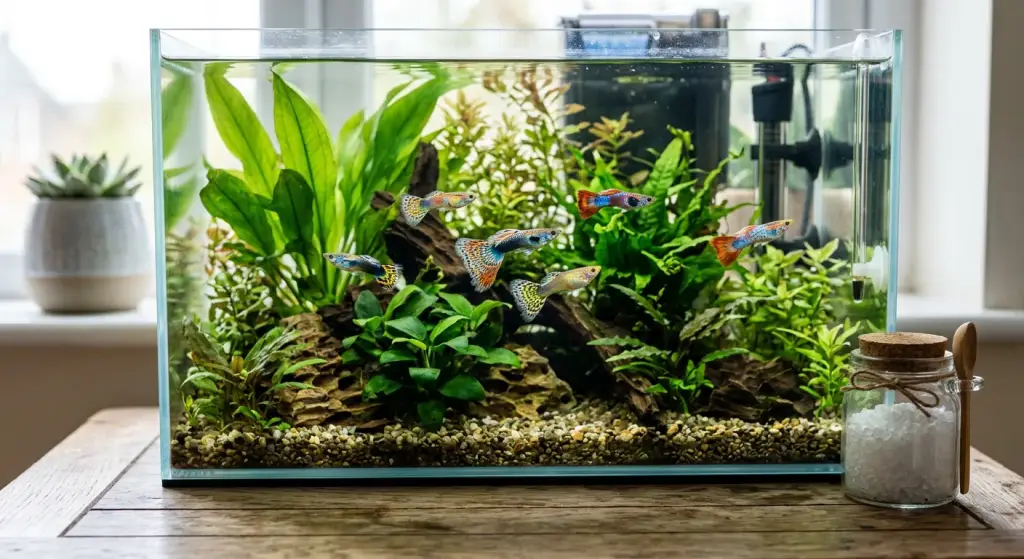
Is aquarium salt good for guppies? Sometimes. Aquarium salt for guppies can help as a short, careful treatment for certain stress or external problems, but it is not a daily additive and it does not belong in every tank. Guppies tolerate a little salt better than many freshwater fish, yet plants and some tank mates do not. For the full routine, see our complete guppy care guide.
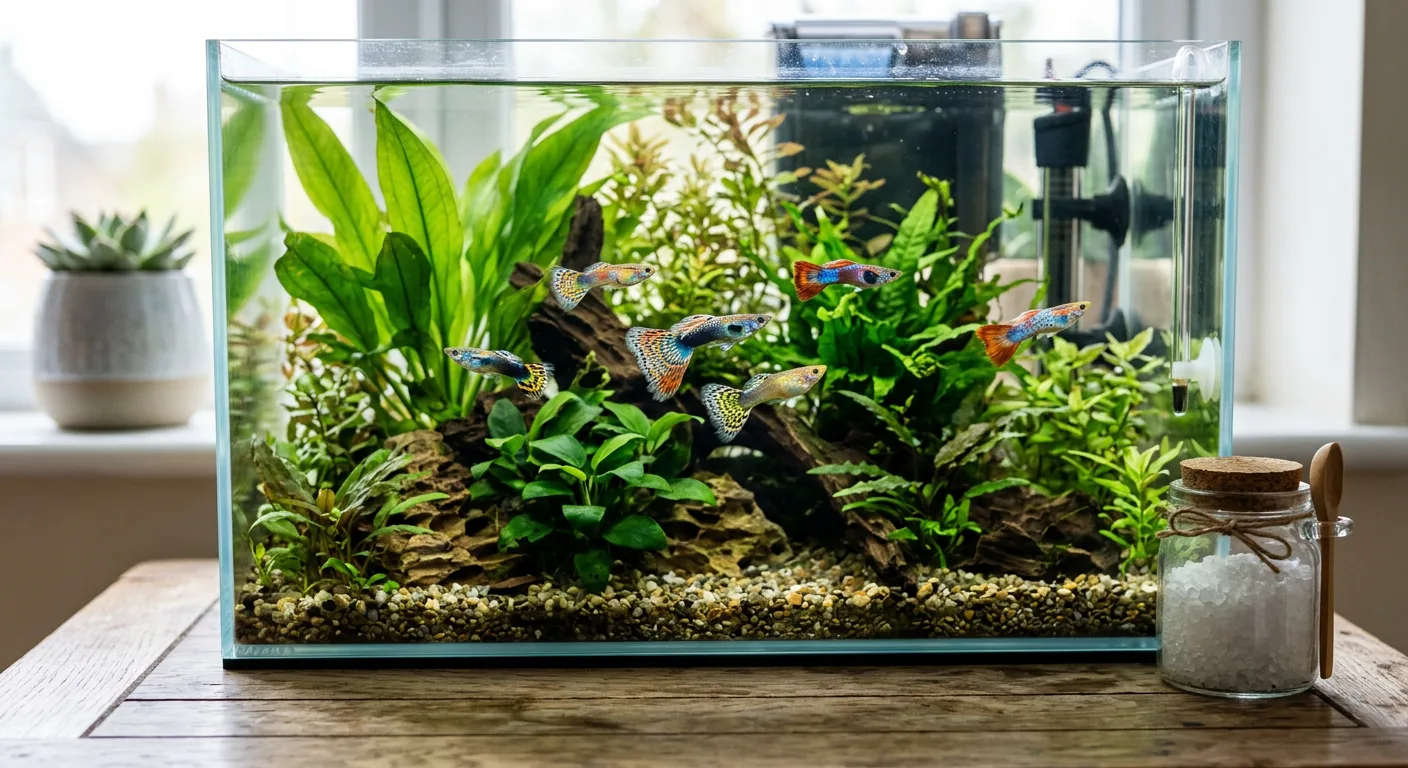
This guide explains what aquarium salt does, when hobbyists use it, how to dose it cautiously and when to skip it. Dosing figures vary by source and product, so always read your product label and watch your fish.
What is aquarium salt and what does it do?
Aquarium salt is plain sodium chloride sold for fish keeping. It is different from marine salt mix, which contains many other minerals, and different from table salt with additives like iodine or anti-caking agents. Many keepers use it because small amounts can ease osmotic stress, the effort a freshwater fish spends balancing water and minerals inside its body. Guppies are hardy livebearers that are often kept in slightly harder water, which is part of why they handle modest salt well. Wikipedia’s page on the guppy notes their wide tolerance for different water conditions.
Salt is not a cure-all. It does not fix ammonia, poor filtration or overfeeding, and it never replaces clean water. It also does not evaporate, so it only leaves the tank when you remove water.
When aquarium salt for guppies can help
- Mild stress after shipping or handling, used briefly in a separate container.
- Some external parasites or early fungus, as a supporting measure during treatment.
- Nitrite exposure, where chloride may reduce uptake, while you fix the cause with water changes.
- Minor wounds or torn fins, in a clean hospital tank.
If a fish looks sick, first test your water and read our guides on guppy ich treatment and guppy fin rot, because the right treatment depends on the problem.
How much aquarium salt for guppies?
Hobbyist guidance differs, so treat the table as a cautious starting framework rather than a rule. Always follow your product’s label, dissolve salt in a separate container of tank water first, and never pour crystals directly onto fish.
| Situation | Typical approach | Notes |
|---|---|---|
| General stress | Very light dose, short period | Use a hospital tank, not the display |
| External parasite support | Light to moderate dose, raised slowly | Follow label and watch behavior |
| Planted community tank | Usually none | Plants and snails can be sensitive |
| Long term daily use | Not recommended | Gives no benefit for healthy fish |
Step by step: using aquarium salt safely
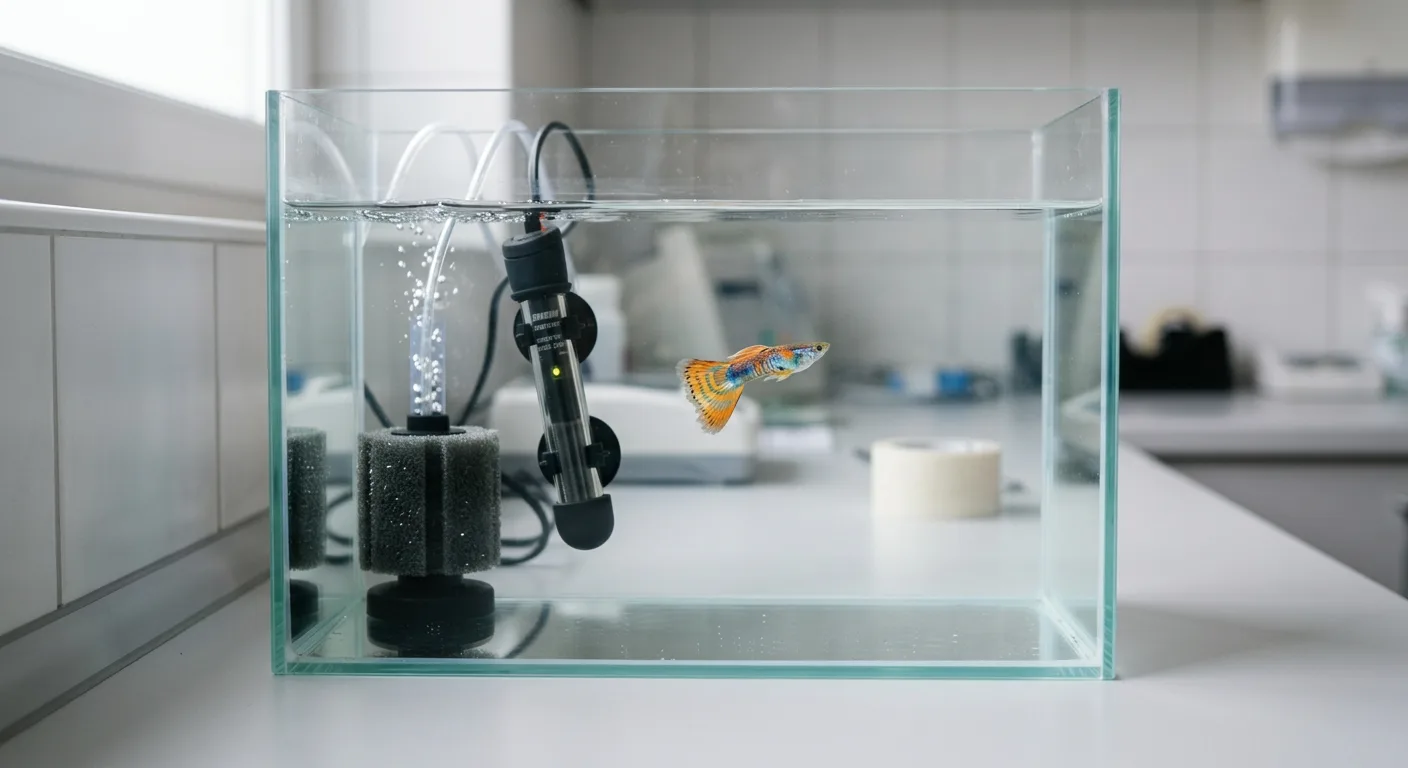
1. Move the fish to a hospital tank
Treating a small bare tank protects plants and healthy tank mates. Our guide to a guppy hospital tank shows a simple setup.
2. Measure and dissolve
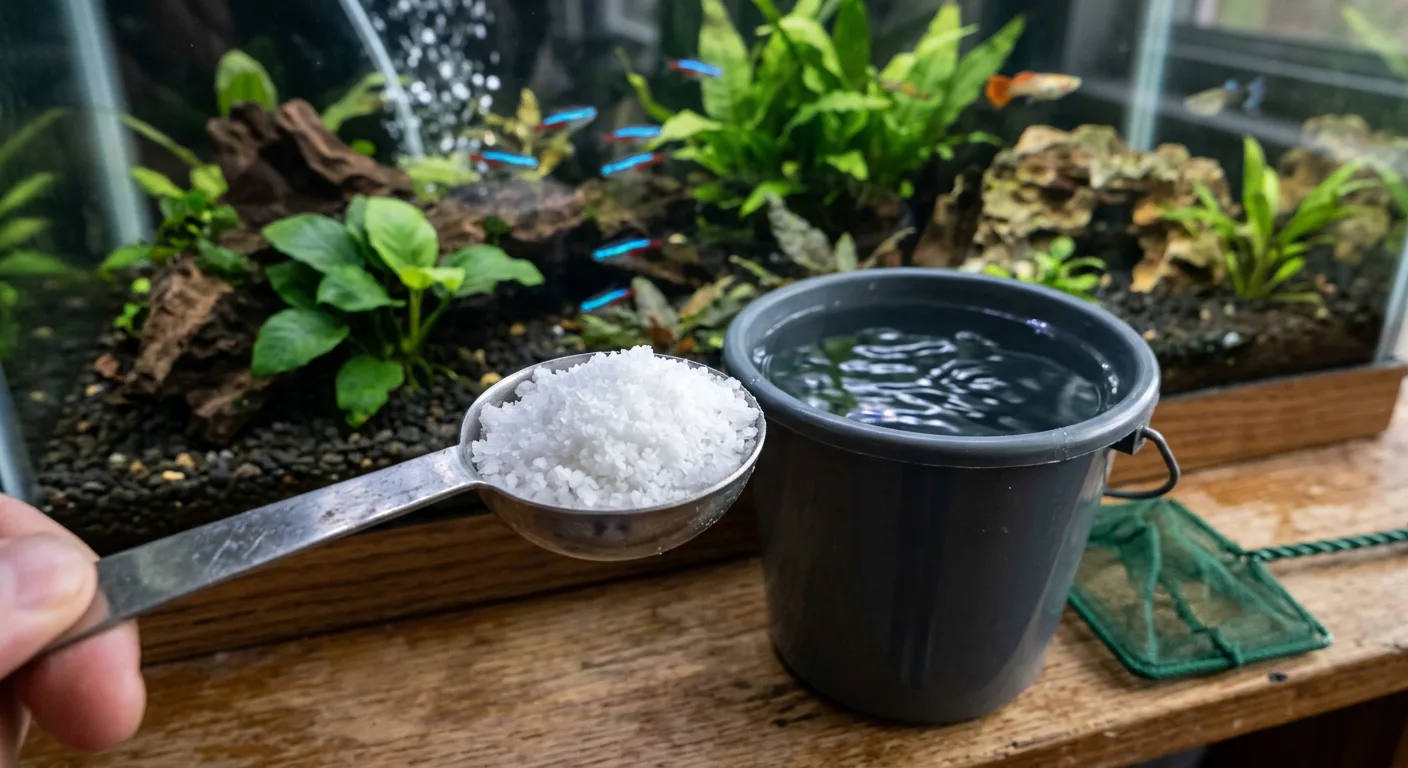
Weigh or measure the salt, stir it into a cup of tank water until fully dissolved, then add it slowly. Rapid changes stress guppies more than the salt does.
3. Keep the water clean
Salt does not remove waste. Keep testing and doing small water changes, and match the salt in replacement water if you want the level to stay steady.
4. Taper off gradually
When treatment ends, remove salt through repeated partial changes with fresh dechlorinated water instead of a single large change.
When not to use aquarium salt for guppies
Skip salt in a healthy tank. Many live plants dislike it, and species like snails, shrimp and some bottom feeders can be sensitive. If your display has java fern, anubias or similar plants, see best live plants for guppies and keep salt in the hospital tank only. Fry are also delicate, so avoid salt for them unless an experienced source advises it.
Be careful with salt on fish that already show swollen bodies or advanced illness. Our pages on guppy dropsy and swim bladder disorder explain why those cases need different handling.
Salt vs other treatments
| Option | Best for | Main risk |
|---|---|---|
| Aquarium salt | Mild stress, support during treatment | Harms plants and invertebrates |
| Water changes | Ammonia, nitrite, general health | Temperature or chlorine mismatch |
| Medication | Specific diagnosed disease | Wrong drug or dose |
| Quarantine | New or sick fish | Needs an extra tank |
Signs your guppy may be reacting badly to salt
Even a well-meant dose can go wrong if the fish is already weak. Watch closely for the first hour after adding salt and again over the next day. Warning signs include rapid gill movement, clamped fins, lying on the bottom, scratching against decor or sudden loss of appetite. If you see them, do a partial water change with dechlorinated water at the same temperature and stop adding salt.
It also helps to keep notes. Write down the date, the amount you added, the volume of water and how the fish behaved. Hobbyists often forget how much salt is already in a tank after several water changes, and a simple log prevents accidental overdosing. Salt meters or a hydrometer can also help if you treat often, although a careful record is usually enough for occasional use.
Salt and water hardness
Guppies prefer water with some minerals, but aquarium salt is not a replacement for proper hardness. If your tap water is very soft, look at remineralizing options instead of relying on salt. Our guppy water parameters guide explains how to think about hardness and pH together.
Quarantine first, medicate second
Many keepers reach for salt when a new fish looks off. A calmer approach is to isolate the fish, observe it for several days, test the water and then choose a treatment based on what you see. Isolation alone often reveals whether the problem was just shipping stress or something that needs real medication.
In short, treat salt as a tool for specific moments, not a habit. Healthy guppies in a stable, well-filtered tank rarely need it, and the best results come from good water, calm handling and early attention to small changes in behavior. When in doubt, ask an experienced keeper or your fish supplier before adding anything to the water.
Prevention beats treatment
Most reasons to reach for salt come from stress. Stable temperature, clean water, gentle flow and a sensible number of fish prevent most problems. Check our how many guppies per gallon chart, and quarantine every newcomer so illness never reaches the display tank.
Start with healthy stock too. You can browse our male guppies, then keep this guppy care resource handy as a reference when something looks off.
FAQ
Is aquarium salt safe for guppies?
In small, short-term amounts it is generally tolerated well by adult guppies. It should be used with care, in a hospital tank, and never as a constant additive.
Can I use table salt instead of aquarium salt?
Plain, additive-free salt is chemically similar, but many table salts contain iodine or anti-caking agents. Aquarium salt is the safer choice.
Does salt cure ich in guppies?
It can support treatment alongside gradual heat or medication, but results vary. Follow a dedicated ich plan and the label of any product you use.
Can I add salt to a planted tank?
It is usually better not to. Many aquatic plants, snails and shrimp are sensitive, so treat sick fish in a separate tank.
How do I remove salt from the water?
Salt only leaves through water changes. Do several partial changes with dechlorinated water over days rather than one big change.
Behind the care guides
Care begins with steady systems
Our guppy guides focus on practical routines: keep water stable, observe fish closely and allow for natural variation.

Care systems
Steady water, thoughtful care
Gentle filtration and regular observation support healthy aquarium routines.

Natural variation
Every guppy is different
Color, size and fin shape vary with strain, age and each individual fish.
Editorial illustrations for context; they do not depict HiGuppy's exact facility or current fish stock.